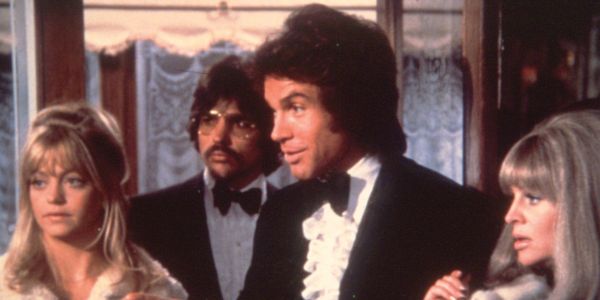
Something rarely commented upon is how old movies act as
cultural artifacts of the time they were made in. But seldom are films actually intended as cultural artifacts
as Shampoo is. The film is a cultural
artifact about another cultural artifact. Made in 1975 but set in 1968 in the
days leading up to and after Richard Nixon’s election, the film is attuned to
the jaded, frustrated American zeitgeist of the post-Watergate years, where everyone was deeply
disillusioned by their government.
The film tries to use that foreknowledge of what was to come
against its characters, who are blithely oblivious to the devil hiding in plain
sight. It is a nice little conceit that Shampoo
doesn’t really take full advantage of. The election is background noise for the
exceedingly self-involved drama of the characters. But the film’s real flaw is
that the deep, dark strand of bitterness doesn’t read as fully as it ought; Shampoo is a silly, loose, farcical
comedy, and the darkness just doesn't bleed through that warm, swinging appearances like it ought to. It's all so very miscalculated.
Warren Beatty plays male hair dresser George Roundy, who has
chosen his profession to pick up chicks. He is currently in the middle of a
byzantine web of affairs, and he is leading on all of them. The naïve, doe-eyed
Jill (Goldie Hawn) is his live-in partner but George is disconnected and
distant from her. Then there’s Jackie Shawn (Julie Christie) Jill’s close
friend who is possibly the person George should be with but he can’t bother to
commit. Finally, there is Felicia Karpf (Lee Grant), a wealthy socialite. She
convinces her husband Lester (Jack Warden) to pay for George’s new salon business.
And as if that weren’t enough wrinkles in the story, Lester is having an affair
with Jackie.
If that feels unnecessarily complicated, well, that’s because
it is. Most of this intricate plot is almost an afterthought. Besides George,
Jackie is the only character given enough screen-time to feel meaningfully
developed. This is a film where (the guise of) sex positivism is filtered
through a male point of view and it feels clumsy at times. All of the
characters matter only in so far as they relate to George and his growing
deceit catching up to him. George, in some ways, stands in for the American
government and Nixon’s infidelities. But the pathos of George’s existential,
Don Draper-like burden over the hole he is filling never completely registers. The
script, written by Beatty and Robert Towne, doesn’t earn the moment and it
isn’t tight or savvy enough to take advantage of the underlying cultural and
political meanings at work. Shampoo may have been timely in its own time but that has prevented it from being timeless.
Grade: C
Grade: C

No comments:
Post a Comment