Sunday, June 30, 2013

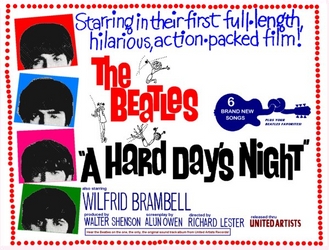
"A Hard Day's Night" - Film Review

Considering it’s on one level just a long ad for The Beatles’ latest album, A Hard Day’s Night is a surprisingly fun movie. This is a film with remove from its release that could feel very dated and artifactual. And to an extent it is that (We get a glimpse into that cultural milieu and the phenomenon of the band). But it’s also a film that stands on its own unexpectedly well.

The film has a number of slighter elements. This is best represented by Wilfred Brambell as Paul’s grandfather. Brambell seems to revel in having the old man do things that seem a little naughty for a man of his age and disposition.

The film is essentially about the bands journey to a studio to film and record a concert. Along the way shenanigans ensue. The band trades some memorable quips in between sets. The film is really cheeky and therefore really funny (There’s some humor here that is very much British from its delivery to its content). The band is having fun at the expense of everyone around them who expects them to be dumb because they’re young and rock stars. In one memorable scene, reporters interview the band mates and they proceed to take the questions incredibly literally to the consternation of their interviewers.    

The film is at its best when it’s playing up the personas of the band members. The band plays themselves and make fun of themselves and perceived conceptions of themselves. The film’s best sequences involve the band getting chased by screaming fans and by beleaguered police officers. 

The film is pretty much an extended music video. The movie plays the songs from the then upcoming album of the same name (a set list of one great song after another). There are a number of points where songs play over scenes or the band plays song, occasionally spontaneously. The film is considered to have widely influenced film musicals and even modern music videos. 

What is perhaps most striking is how young John, Paul, George, and Ringo seem. They’re old enough to be off at college, and as they goof around there’s an easy, youthful, bro-mantic banter to it all. The film works as well as it does because of their youth. There’s physicality to some of this and there’s also a sense of youthful abandon. 

The film has an energy to it, in line with the youthful character. Director Dick Lester appears to have taken cues from the French New Wave, then in full force. There’s a free form, loose quality to the way the film is shot. And this style suits the band’s music and the film’s cheekier sensibility.   

Through the film, The Beatles were trying to reach out to their fanbase and win a greater connection (Not that they needed any more. This was at the height of Beatlemania). Here we see them being down-to-earth, affable, charming and mildly rebellious. They're still rather winning, even if it isn't 1964 anymore. 

Grade: A

"Man of Steel" - Film Review

There’s a series of sequences in the last third of Man of Steel that all sort of blend together. They are a number of action sequences and after while they’re indistinguishable from one another. It’s as if the editor didn’t realize he had about at least thirty minutes of screen time that was absolutely unnecessary to telling the story. And in the middle of this constant, ceaseless action, you could be forgiven if you started to zone out here or there. You could probably fall asleep and wake up some time later and have missed rather little and still manage to follow the plot.

After a while this starts to become draining. This isn’t storytelling. This is CGI gone awry. This is someone yelling, “Hey! Isn’t this cool!”  

There are a lot of other things that take place in Man of Steel but that third act is so frustrating and poorly done that it becomes exemplary of the things that the film gets wrong.  

Man of Steel doesn’t really feel like it’s a Superman movie. There’s rather little that ties it to the comics or the older films. The infamous superhero outfit doesn’t get broken out until rather late in the film and Superman doesn’t work at the Daily Planet disguised as Clark Kent until there's five minutes left. 

The film keeps asking us to accept thing at face value simply because it’s asking it of us. Character’s motivations are rarely explained, and things just seem to happen for the sake of the plot. Take the film’s villain General Zod (Michael Shannon). He tries to destroy Earth to create a new Krypton. That’s his goal … but his reasoning is vague at best. We spend a fair amount of time with the character and yet it only becomes more convoluted as the story advances; the answer seems to be, “Because it must be done!” 

The film has a disjointed quality. It keeps jumping around its narrative but this detracts from its clarity and its pacing. After an unnecessarily lengthy opening sequence where we watch Superman’s father (Russell Crowe) send his son off to Earth and battle for excessive lengths, the film jumps ahead to when Clark is in his thirties, disillusioned and aimless. It’s never entirely explained how Clark got to this point. We get flashbacks to his childhood, but the film does more telling than showing here. We see Clark get bullied, but it’s never entirely clear why except for plot convenience. And the explanations by Clark’s adoptive father (Kevin Costner – in one of the more memorable parts of the film) always come off as didactic. 

The flashbacks are bad storytelling. It’s putting the cart before the horse, giving us questions than answering them after the fact (which wouldn’t be a problem except for these questions aren’t really a mystery so much as defining character traits of the protagonist). But since we don’t see Clark grow up in real time, the film treats his childhood as a less important part of the story despite the fact it holds the very answers to why we should be invested in his character. It doesn’t help that Clark in the present day (Henry Cavill) is a barely audible, gloomy and lurking figure. He’s more of a hovering presence than an actual person.

I said earlier that this film almost could act largely as a film that isn’t a Superman movie. In fact, it often comes off as a science fiction film done by someone who wasn’t aware that they were making a science fiction movie. An alien comes to Earth, befriends humans and defends them against other aliens. That’s science fiction (without the comic book origin story stuff happening elsewhere).  But instead of treating the film like sci-fi, the film treats the story like it’s an action movie. The action sequences feel like something out of a big action film. There’s a scope to it all, and there’s many, many explosions. But it also feels like a disaster movie. Countless people die and the destruction waged upon the planet is devastating. Superman weirdly enough seems to take little interest in how much destruction he and Zod wrack up in the course of their fighting. But the film has got none of the careful visual composition of the best science fiction or action movies. The special effects in these scenes are less about being part of the overall story but rather exist as attention grabbing sights. It keeps returning to these visuals but they’re not all that interesting to watch, especially since they’re so poorly edited (jumping around shakily a lot). And there’s simply not enough stakes behind what is taking place to care. We don’t know enough about either Superman or Zod’s motivations to be all that interested in what they’re doing or the property damage they’re accumulating.    

Director Zach Snyder is taking a cue from Christopher Nolan’s Batman trilogy (Nolan is a producer of Man of Steel). Nolan’s films brought a gritty, dark take to that franchise, and Snyder is clearly enamored by that approach. But Snyder fails to understand what made those films work. It’s like how so many television series copied the sex and violence of The Sopranos in the wake of its success but failed to understand that there was more to it than these elements. There was good, thoughtful storytelling there as well. Nolan’s films were more about using Batman as a lens for sorting through whatever philosophical and ideological questions were floating around his head. It gave the films a depth that went beyond the blockbuster bluster. Man of Steel is all the sheen and none of the luster of the Batman films.  

Weirdly enough the film I kept coming back to as I watched Man of Steel was 2001: A Space Odyssey.  Not because they have anything remotely in common and not because I wished I was watching it instead (though I did), but because 2001, besides being a great movie and sci-fi, is a film where it’s so easy to see Stanley Kubrick’s vision coming through every single scene, every single shot. You may not like it, you may find it weird or boring, but it’s shot by someone who knows exactly what they want to say and how to say it. Kubrick has such a command of visuals in 2001. Zach Snyder does not in Man of Steel.  

Snyder’s previous efforts show someone who’s more enamored with style than substance. Suckerpunch is a self-indulgent mess of someone letting their obsession with stylistic excess run amuck. 300 is so over-the-top that it almost transcends how dumb and loud it is. There are moments in Man of Steel that feel like someone who watched The Dark Knight or Tarantino movies or European arthouse (or all of those things) and failed to understand all the things that make those types of films work. There are all these little flourishes that seem so unnecessary and they become distracting. And this is made all the more problematic because the film is in a fight between its formalistic touches and the fact it’s a big action movie. It never really reconciles the two. When it does settle for one in its third act, it just becomes messier than ever (make of that what you will).  

By film’s end, we’ve been so heavily pummeled by confusing, repetitive and uninteresting action that it becomes mind-numbing. The film overstays its welcome, and then overstays it ten times over (It's an overlong slog at times). Man of Steel is not enough fun to make up for its poor storytelling and bad characterization.  

Grade: D+

Friday, June 28, 2013

"Gomorrah" - Film Review

The Comorra is one of the world’s largest criminal organizations based in Italy. Based on true events, the film Gomorrah shows the poisonous influence the criminal outfit has on everything around it. An early sequence shows a man distributing money. Every experience in every home he goes into is rather casual. They offer him food and they exchange pleasantries. This is par for the course. Everyone is used to it.

This is why it’s not all that surprising when one the film’s protagonists, a young boy, is drawn into the criminal proceedings. We want to yell out, “Don’t do it!” But he’s participating in initiations rituals before we know it. No one can seem to escape the reach of the Comorra. 

The film is more interested in people on the fringes of the criminal operation. We don’t see the bosses all that much. The film’s interests lie with the little people who get caught up in this. There’s the money distributor. There’s the boy initiated into the Comorra. There are two young men acting as would-be gangster, free agents, who foolishly go up against the Comorra. There's a tailor who attempts to work for a competing garment factory.

Much of the film’s story takes place just off camera. There’s a gang war taking place, but we see little of this. We learn about it mainly from word of mouth. The film rarely wants to shift its perspectives from the characters it has its eye on. There are other scenes that contextualize the messes the many protagonists have gotten themselves into, but they’re the least important parts of the film. 

There’s a sense of inevitable tragedy hanging over the film. We know that bad fates are on the horizon for these characters and the film draws out these fates with an increasingly unsettling feeling of dread. It’s a film interested in how no matter how hard you try or how smart you think you are, you can’t escape the reach of the Comorra. It may not be death that awaits you, but you’re sense of self-worth or your innocence or your control over your own life is in the balance. 

The film has a grittiness to it. This is not a film that attempts to make the gangster lifestyle look pretty or appealing. Many of these people are living in poverty or just above the poverty line. A criminal organization such as Comorra can be as successful as it is because it fills a certain role. People living in Naples and Caserta accept the Comorra’s existence because it’s simply become matter of factly part of life and because many of them also benefit from it.      

The film is also interested in depicting the mundanity of much of this. There are long stretches where people are going about their lives. This also plays to the film’s favor. The film wants to cut through the cliches and lies about the gangster lifestyle. These mundane stretches are often broken unexpectedly by excruciating moments of violence. The violence is bubbling just under the surface. It’s inescapable.  

The destruction by the Comorra isn’t just through violence though. The film spends a large amount of time showing how the Comorra dumps toxic waste that will ruin the environment. They’re literally poisoning what they come into contact with. One man working for the waste management company is so disgusted he quits, but the operation keeps going. 

Gomorrah intertwines the many different stories of its characters to build up a mosaic, bleak portrait of the Comorra and their criminal operations. While its grimness, and scathing realism can be unpleasant to sit through at times, the film's exacting look at the toll of the gangster activities and those caught up in it is powerful. It's often times too slow or too impenetrable or too scattered, but the accumulated effect and end result is something that's hard to argue against.

Grade: A-

Thursday, June 27, 2013

"Sleeper" - Film Review

Sleeper is a silly movie, but it’s a movie that knows it’s silly. It feels like a live-action cartoon. Benny Hill-esque music plays at a number of points. Woody Allen comes off as though he’s playing a caricature of himself, as he does in so many of his films.

Part of this silliness comes from the goofy satire of science fiction in the film. It’s not always attacking any given film (though there’s an obvious one directed towards 2001 that’s spot-on, and some vaguely reminsicent tinges of 1984), but the film takes fun in aiming its sights on sci-fi clichés more generally including technology, bureaucracy, cryogenics, and dystopian dictatorships. The humor of this largely stems from how corrupt, inefficient and idiotic so many things have become 200 years into the future. The robot servants are more trouble than they’re worth, and the weapons utilized by the police and military end up doing more harm to themselves than the people they chase.

Allen’s Miles Monroe was cryogenically frozen for what was meant to be a few days and ended up being two centuries. Scientists, part of a resistance movement against the current autocratic government, awake him to use him in part of their scheme to overthrow the government. This quickly goes awry and Myles finds himself on the run. He disguises himself as a robot servant, which leads to him being employed by a ditzy woman Luna Schlosser (Diane Keaton – his frequent film collaborator and complicated real life romantic interest). Luna is a great foil to Miles. She, of course, misunderstands all his sarcastic comments.   

So much of what makes the film funny is how understated the humor is. Allen is constantly underselling jokes and never feels the need to explain a joke. Much of the humor is irrelevant to the genre its set its eyes on. Many of the funniest moments are just Allen making a well-timed quip. It’s the exasperated off hand comments as his protagonist Myles traverses an unfamiliar future society that really sell the film. 

The film’s satire isn’t all aimed at sci-fi though. Many of the best moments in the film are satirically pointing their attention at contemporary society. The film keeps returning to mocking how Myles ran a health food store. In one memorable scene, scientists show photos to Myles from contemporary culture and he has fun at the expense of the questioner’s lack of knowledge.  

Myles is assigned by the scientists to meet up with the resistance movement to discover what the government's secret project is. This is the film’s Macguffin. It hardly matters what the project is, and we only learn within the films last twenty minutes or so what it is. The plot is simple and not entirely that interesting. But it doesn’t really matter. Allen is more interested in making us laugh. Myles attempts to escape the government, reveals his identity to Luna, has to deal with her being hysterical, gets caught, has his memory erased, gets rescued, remembers everything, and stops the secret project from succeeding. 

But what you really need to know is there is a point where Myles holds a gun at the disembodied nose of the dictator as if it’s a hostage. Everyone takes this absolutely seriously despite how ridiculous it is. That’s the sort of movie this is. Allen strings the film along through a series of wonderfully executed sight gags and slapstick.

This is all thinly strung together but it’s also so funny, irreverent, and intelligent that it doesn’t matter. There's an absurdity to it, but Allen is aware of the absurdity, constantly acknowledging it through the way scenes are shot or how he undercuts them. It's at once a film that parodies sci-fi and yet embraces the elements inherent to the genre. And it's all filtered through Allen's hilarious and inimitable worldview.

Grade: A-

Wednesday, June 26, 2013

"Swing Time" - Film Review

I’m not sure how to classify Swing Time. It’s a comedy, a romance, and, most importantly, a musical. It’s one of those Old Hollywood crowd pleasers that throws in many different elements to entertain everyone.

Swing Time is best remembered as one of the films that paired together Fred Astaire and Ginger Rogers. This was the sixth film they starred in opposite eachother. There’s a sense of ease between them; they work well with one another and they know how to bring the best out of the other. The chemistry between the two is electrifying, and it carries the film during its more dated moments. 

The dance sequences are the films best, most memorable scenes. Astaire and Rogers are such magnificent dancers that they make the tricky routines feel effortless.  They're complicated acts, but Astaire and Rogers are so graceful, so elegant that it feels spontaneous even though we know it isn't.

There’s also some musical numbers sung by them. The musical numbers aren’t noteworthy but they have their own charm about them, particularly in the hands of these performers. Though the number "Never Gonna Dance" is fairly devastating due to how convincingly the two sell it.  

Much of the film feels hokey and predictable, which gives it a clunky feel at times. But it’s not meant to be logical or tell a fantastic story. It’s clichéd and thinly put together, but sequences taken on their own are such pleasing and fun bits that they make it worth the price of admission. 

The film is still rather funny. Victor Moore especially as the bumbling Pop is fairly amusing. The way Moore mumbles his words and makes him awkward is a great bit of character work. 

The romance is one of such obvious by the numbers that the film is really putting the plausibility on the shoulder of Astaire and Rogers, but they’re absolutely game for it. They meet up by accident, resent one another, grow to have feelings, and then dance around (quite literally) acting upon them. The film throws an interesting wrench into it though. Astaire is engaged to another woman from back home, but he’s split as to whether he wants to still be with her. 

The most dated, and most offensive, part of the film is a blackface routine. It’s a low point for the film and it almost detracts from the goodwill the film has built up elsewhere. The film remains good in spite of this, but it’s a little upsetting to watch.  Though that number "Bojangles of Harlem" has its own impressive dancing.

This is a film largely meant as a showcase for Astaire and Rogers’ talents. They’re great stage performers. The film has a stagey quality. The sets are grand and clearly on a sound stage. They recall the decadence of Old Hollywood. The film is theatrical in the sense that you could imagine this being some sort of play. Everything flows with the logic and timing of a theater performance, and that is part of the film’s effectiveness and charm.

Everything is expressed through song and dance. Astaire and Rogers fall for eachother through the music, through the dancing, and through the beauty of these acts. The dances are virtuoso, and Astaire and Rogers danced like few people have or ever will. There was a spark between them that went beyond dancing well-together. They made the dancing somehow more than just dancing. Something magical.

Grade: A

Tuesday, June 25, 2013

"Holy Motors" - Film Review

Sacrebleu! 

I have no fucking clue what happens in Holy Motors. I sat there increasingly baffled and, more importantly, delighted by my baffledness. And you know what; I don’t want to know what happened or what it all means. It’s not really one of those movies you comprehend but that you contemplate. And the more you contemplate, the greater the pleasures of its weird mysteries and ambiguousness become.  

The film is about a man Mr. Oscar (Denis Levant) pretending to be (or who actually might be) several other people. He goes around in a limousine, and every so often gets out dressed up as a new person. He has costumes, make up, and disguises in the back of the car. And along the way he becomes more people. Initially it appears as though it might be some strange profession. He keeps calling the jobs as “appointments” that he needs to be at, at precisely the right time. As the film moves along it begins to get weirdly metaphysical, and it feels as though there might be more to these assignments and odd jobs than appears on the surface. It seems to be simultaneously a commentary on the nature of life, the nature of acting, and the nature of films. 

I won’t go into too much detail on the specifics of these people he poses as. It’s far more interesting to go in without much knowledge of what’s to come. It’s just that sort of movie. The different sequences play out like little vignettes. The film lets these various sequences meander around, discovering their own rhythms. The intriguing thing is how everyone in these different sequences buys into the reality of them. In some of them the man has a strong connection with the people he interacts with. At times it’s easy to forget that this is a man in costume and buy into him being the person he claims to be. These sequences are often oddly mesmerizing, occasionally exhilarating, sometimes hilarious (if only due to shock value), and certainly never ever dull.

The film does give glimpses of what’s behind the curtain of the disconcerting logic to its mysteries, and we’re provided just enough to get the gist of it, but the mystery is left unresolved in all the right ways. The film devolves further and further into strangeness and mystery, providing us dozens more questions for every answer it gives us. The strangeness continually ramps up, the weirdness multiplies, and then the film ends.     

This lack of answers might sound frustrating, but it’s all so thoroughly engaging, entertaining, and beautifully shot throughout that it’s a pleasure to simply go along for its odd, twisty ride. 

Grade: A

"Stoker" - Film Review

Stoker isn’t always a good movie but it’s at least almost always an interesting one, which saves it during its less well-handled moments. The general offbeatness of the film isn’t surprising from director Park Chan-Wook whose film are known for their arresting, strange imagery with excessive stylistic touches. This is best seen in Oldboy which is a great movie but also gruesome and bizarre.

The film is immaculately framed and composed by Chan-Wook. It has a picturesque feel. The look of the Stoker’s family home and the costume choices all recall a simpler, 1950’s era (the film also coincidentally has some complicated gender depictions). This is all juxtaposed against a brooding, dark undercurrent. The film buzzes with a dark sexual energy, one that’s often unsettlingly incestuous. 

India Stoker(Mia Wasikowska)’s father passes away in a car crash on her 18th birthday, and suddenly her uncle Charlie (Matthew Goode) whom she’s never seen (nor has her mother) appears. He starts living with India and her mother Evelyn (Nicole Kidman). Evelyn is a little unstable. She’s overbearing towards India, and not the most understanding or caring of parents. Evelyn’s easily taken advantage of by Charlie. Soon a weird sexual triangle forms between the three. India is oddly attracted to her uncle (seeing a kindred spirit to her loner self) but she’s also a good deal wiser than her mother, realizing that there’s something not quite right with the guy. 

The reveals later in the film don’t entirely work, and the film is much more interesting in its first half where a greater sense of mystery exists. There’s a sinister quality to the film, particularly early on. Later on though, the film becomes at times too outright strange and occasionally hard swallow. The film would have benefitted from a greater continuous sense of mystery. The film is at its best when its great, opaque imagery is matched with a sense of surrealness.  

As is, it’s not entirely certain why characters behave the way they do, and it all feels like a way to disturb us (which it does). Charlie is a frightening character played with charisma and understated anger by Goode like Robert Mitchum in Night of the Hunter. Wasikowska is never really given much to work with but her nubile appearances are important to how unsettling the scenes between Charlie and India are. She feels like a lamb being preyed upon, but she’s also smarter than her youth would suggest. Stoker is creepy, atmospheric and interesting to experience but it's not always very good as an actual story.   

Grade: B

"Side Effects" - Film Review

Side Effects is a “rabbit hole” movie. It takes us down the rabbit hole further and further, becoming increasingly cerebral and intense.

Emily (Rooney Mara)’s husband Martin (Channing Tatum) was just released from prison for insider trading. Soon after his return Emily starts acting strange. Her old mental problems resurface and she attempts suicide. She drives into a wall and claims it was a brief lapse. The doctor on call Jonathan (Jude Law) asks that she take psychiatric sessions with him.

The medications he prescribes for her depression don’t seem to be working. They start having wonky side effects that change her behavior. She erratically sleep walks; something that goes incredibly awry when Jonathan starts giving her a new drug still in the clinical trial phase. He recommends the drug Ablixa at the behest of Emily’s former psychiatrist (Catherine Zeta Jones). The end result is that Emily in a sleep walking state murders her husband.

Soon a trial begins that jeopardizes Jonathan’s career and sends Emily away to a mental institution. Something isn’t right though, or so Jonathan seems to believe, in time to the point of obsession. He’s seeing a conspiracy. Is he right, or perhaps he’s just as mentally unstable as the patients he treats?

As Jonathon investigates the film becomes headier. It turns into a fluttering pulse, pounding in time to its score by Thomas Newman. Here the film becomes an exciting, dark thriller. Director Steven Soderbergh nicely balances the contemplative side of the film with its tenser one, and in turn the film becomes mind-bending and riveting. The examination of pharmaceuticals, and mental and drug culture is a fascinating one, smartly looked at by Scott Z. Burn's script. The film at times has the adrenaline of a drug trip and the murkiness of someone mentally unstable.  

Part of what makes the film so compelling in Mara's performance. The other actors are great but Mara is given the meatiest role. There's a wonderfully seductive ambiguity to her performance. She's beautiful but dangerous; intelligent but vulnerable. We're never certain how much of what we know about her is true.  

Side Effects is a smart, dark, gripping psychological thriller.

Grade: B+

Monday, June 24, 2013

"Magic Mike" - Film Review

The first inspired decision of Magic Mike was to cast Channing Tatum in the titular role. Tatum plays against type undercutting our expectations from his pretty boy romance days. It’s fitting that the film does this as it’s a movie that’s concerned with expectations. Tatum gives a darker, more cynical side to the performance than we might anticipate possible from an actor who starred in Dear John. Behind those chiseled features is a scared person who’s been bullshitting for so long that he’s not sure what’s true anymore.

Magic Mike tells the story of how Mike takes in Adam (Alex Pettyfer), a rudderless, susceptible nineteen year old, under his wing and brings him into the male stripping enterprise that Mike’s life revolves around. On the surface, it seems like the type of lifestyle that’s pretty great for a young guy. You make a lot of money, you sleep with a lot of women, and you drink and party all night. Adam is quickly caught up in this lifestyle. He’s a nervous, shy guy when we first meet him, but he’s also a little cagey. He doesn’t realize what Mike knows deep down: this is all a little empty. 

Mike doesn’t really want to lead this life. He’s thirty, looking to start up his own business (custom furniture in fact). He wants to save up enough money and then get out of dodge. He doesn’t want to end up like the owner of the strip club Dallas (Matthew McConaughey) who’s in his forties and spiraling the drain. How long can you keep at this lifestyle? Eventually, you have to grow up is the underlying argument of the film. There’s an element of man child-ism brewing in the film. 

In the relationship between Dallas and Mike, the film finds one of its twisted mentor-mentee relationships. There’s a predatory, manipulative quality to Mike’s relationship with Dallas, and later Dallas’s with Adam. Mike pretends to have it all figured out and have all the answers when he’s with Adam, but it’s increasingly obvious that it’s all bluster. Mike and Adam’s relationship eventually breaks down as Adam becomes more engrossed in the stripper lifestyle. Adam starts doing more drugs and even selling drugs, and it’s not long before he’s trapped. Just another Magic Mike, destined to keep reaching for dreams that will never come; allured by money, pseudo-fame, and easy sex. 

The camerawork in Magic Mike is unintrusive. In the non-dance scenes, the camera seamlessly disappears for the most part; it rarely draws attention to itself. It’s simple, distant, direct. The script by Reid Carolin is the real star here. Outside of the elaborate dance sequences, the film is one of people speaking, and the dialogue is what gives the film its panged nature. The camera is just an observer of these people, as they self-deceive and try to make connections.

These connections are unsurprisingly not very successful. Mike’s relationship with Adam becomes increasingly complicated as Adam starts to fuck up. Mike’s romantic track record is also in need of examination. He sleeps with numerous women casually, but there’s an emptiness to it all. He sleeps on-and-off with Joanna (Olivia Munn), a psychology grad student doing a study of the strip joint, but there’s no real intimacy there, as much as Mike would care to think otherwise. Mike’s best chance to connect comes with Adam’s levelheaded sister Brooke (Cody Horn), who has little time for Mike’s bullshit. She sees the sincerity and goodness underneath all the gusto but she’s also just at arm’s length. We can see where Brooke might be won over by Mike. Tatum is such a generally charming and good looking person that it’s hard not to root for him through all his bullshit.

The film has a glossiness to it. Everything is made to look just a little prettier, a little more glamorous than it actually is. The strip club isn’t a dirty, dank place; it’s open, colorful, strangely inviting. It’s telling the dirtiness is more apparent in the wings backstage where the performers wait. At face value this is a nice, clean, sexy place. Just behind the curtain, behind the facade, it’s all a little darker, a little sadder. 

Magic Mike is an intriguing character study that takes its characters seriously even though they’re just male strippers. Beyond it's elaborate dance sequences and other funner moments is some thoughtful exploration of masculinity and capitalism.

Grade: B+

Mad Men - "In Care Of" - Review

One of the arguments Mad Men has persistently made throughout its run, and in this season in particular, is about change. For much of season six it appeared as though the argument was that people couldn’t change, but, in fact, we saw plenty of people changing, they just weren't Don Draper. His protégée Peggy was becoming more confident and business-like, turning herself more Don Draper at heart then she’d care to admit. Pete learned from the mistakes of his past and didn’t expose Bob (although that may have proven more trouble than it’s worth – but more on that later). Joan took up the Avon account to get more out of her career that had been missing previously. Sally stopped monolithically loving her father. Betty lost her weight and took more charge in her life. Meghan got fed up with Don and walked out. Bob Benson reinvented himself and got a job at SCDP.  

And yet Don is perpetually calcified. This season for myself and many others has been a frustrating season for the show. Many argued that the show had a “Don Draper Problem”. It’s easy to see why; dramatically speaking, it’s not entirely the most interesting thing to watch someone hit the rock bottom that Don has been mired in this season. Don often became the least interesting part of the show. Intellectually, it was still interesting to see, but emotionally my mind was intently hoping for more Joan stories or more Peggy or more Roger (all of whom didn’t seem to get nearly enough screentime this season). But the finale appears to make a case for Don actually changing. 

Don in the episode’s last moments opens up to his children, and most importantly to Sally. He takes them to the whorehouse where he was raised, and had a shitty childhood. This childhood he recounts at a sales meeting with Hershey. This scene is sort of surreal; it feels almost as if it comes from another show. Don is revealing information that he’s kept so close to the vest for so long that it’s like the show breathing a sigh as a great weight is lifted from it. May be Don is ready to change. 

Not all that change is coming directly from himself though. The partners have a meeting where the topic is “Don Get Your Shit Together”. The partners tell Don that he needs to take some time off because he hasn’t been doing anyone any good this whole season. He’s been flailing at best and destructive at worse. It’s been a long time coming, but this is an episode that attacks long time coming plot points and jumps at them with relish. 

Peggy and Ted finally act on their feelings (helped along by sexy dress and some knowing cleavage). But instead of this being a happy moment (this is Mad Men after all), the event turns Ted into crisis mode. When he returns home to his wife, the look of guilt and pain is despairing. I was struck in this episode by how much Ted comes off like Don (not entirely surprising from a season obsessed with doppelgangers and posed Ted as another version of Don). There are some incredibly pointed pieces of dialogue spoken that aren’t about Don, but might as well be. For instance, when Ted tells Peggy “I don’t want anyone else to have you”, it’s exactly how we know Don feels and acts towards Peggy. Similarly, when he later tells Peggy he’s leaving for California, he says about his family, “I need to hold onto them or I’ll get lost in the chaos”. When Don lost Sally this season, he spiraled downward. It was the worst we’ve ever seen him at. The chaos also can doubly refer to the state New York is falling into with the race riots and general violence arising. 

Pete’s trouble with Bob Benson and his mother also come to a head. His mother marries Manolo, before he apparently throws her into the ocean killing her (um, because why the heck not). Pete in his anger and frustration goes after Bob. But Bob is shrewder than Pete gives him credit for. Pete said last episode that confronting people like Don and Bob, who have thrown away their former past, never ends well. And here we see that on full display. Bob takes advantage of his knowledge that Pete can’t drive stick to make Pete look like a fool in front of the Chevy executives. There’s a Camaro on display in the hotel lobby, and Bob insists that Pete get behind the wheel. In a very funny scene, Pete flustered backs up into a display sign, toppling it over and barely avoids hurting anyone. He’s immediately taken off the Chevy account, and soon after decides to head out to California to head up the Sunkist account. Pete has proven good time and again at recognizing trends and embracing them, but rarely is he ever good at affecting change himself. He can change with the times but he can’t change the times. To quote David Bowie, “Time can change me. But I can’t change time”. 

Change is happening all over (I haven’t even gotten to Roger or Meghan). But by far the strangest element to this episode and the one that is likely a deal breaker for whether you really liked it are the flashbacks and the thematic material they bring into the episode. Mad Men has struggled with flashbacks lately. They haven’t felt organically placed into the episodes they’ve been in, and they’ve also felt somewhat unnecessary. They have shown Don’s time growing up in a whorehouse; he watches his step-mother whore herself out to his douchey uncle, and he gets deflowered (and technically raped) by a well-meaning prostitute who was the closest thing to a mother figure he had. It’s some fucked up stuff and it played into the season’s interest with prostitution. At the end of “The Crash”, Don bluntly equates the office with a whorehouse. He’s whole relationship with Sylvia had a quality of prostitution (he pays her off at one point) and when Sally walked in on them Sylvia was repaying a favor. 

The flashbacks, howeverm aren’t about prostitution but religion and faith. Don’s uncle throws out a priest from the whore house who was attempting to help save the prostitutes from eternal damnation. When we return from the flashback, we learn that Don has gone to prison for drunkenly punching a priest who was describing freedom from pain through Jesus. In the flashback, as the priest left he tells Don “the only unpardonable sin is to believe that god will not forgive you”. So Don believes he’s beyond saving. He’s beyond forgiveness. This is for a host of reasons  but the crucial one is for fucking things up so bad with Sally. The way he dances around avoiding picking up her and calling her demonstrate just how strained his relationship has become with her. When he calls her, Sally is as fiery and spiteful as ever. She spits in Don’s face: “I wouldn’t want to do anything immoral”. The scene ties into the larger question of salvation and doing the right thing.

Can Don be saved? That’s sort of been the question the show has always been asking. Can Don change? Can he find inner peace and just lead his life without all this self-loathing? We won’t know for sure until the final season, but “In Care Of” seems to suggest there may just be hope for Don. It’s not complete and total hope. The way the partners confront him suggest he still has a lot of work to do to fix himself, but taking his kids to the whorehouse also feels like a necessary step towards acceptance and forgiveness. Perhaps Don has accepted the priest’s advice. Perhaps he has forgiven himself. Perhaps he can change. 

Stray Thoughts:
*Peggy sits in Don’s office with the shot from behind her. She is Don Draper. She just doesn’t realize it. Also the line about Don's office: “It’s where everything is” is a great one.
*Stan wants to go to California until he learns Don is going. Don is rotten and he hurts everything he comes in contact with. Why would people want anything to do with him?
*Roger gets to have Thanksgiving with his son. It’s a small step forward. Baby steps people. Though, he’s going to have to get used to Bob’s presence.
*The Grandma Ida burglary has not yet been forgotten. It’s the reason Don has to call Sally to tell her that she’s been subpoenaed to make a statement.
*Roger giving a performance review to Bob (who of course has never had one) is a great little scene. Roger’s struggle to accept his relationship where it is with Joan plays out really briefly in this episode.
*Sally is suspended for buying beer with a fake idea. Sally is such a rebel.  
* When Ted tells Don, “I know there’s a good person in there”, it really seems to trigger something in Don. It also ties in nicely to the religious/salvation themes.
*There’s Don’s initial ad pitch to Hershey which is a comforting lie (and, not coincidentally, his best sales pitch this season) and then his story about his real childhood which in juxtaposition just reminds us how bad Don’t life was. The monologue about his childhood is one of the best scenes and Jon Hamm, not unexpectedly, nails it. It’s not the right time or place to tell such things but Don needs Ted to understand where he’s coming from before letting him take the spot to California.
*Meghan was pretty happy about moving to California but she’s done with Don’s crap once he tells her that the plan has change. And how terrible and stupid it is that Don thinks they could live on opposite sides of the country and it would be work.
*Pete's scene with Trudy another great scene. Trudy suggest that Pete has finally gotten what he want all along. If only he had accepted what he wanted sooner. As if the Don parallels weren't strong enough!
*Of course, Peggy thinks it’s Don fault that Ted is leaving, but nope Ted’s own initiative. Next season very well could be very large on the relationship between Don and Peggy which still hasn’t really been confronted entirely.

Grade: A
Sunday, June 23, 2013

"Warm Bodies" - Film Review

Warm Bodies feels like a film that shouldn't work. It's harebrained premise seems too silly and lame to really amount to much. And certainly, there are elements to the film that fall flat. There are entire inner monologues from our protagonist all in the name of exposition or convenient thematic explanations. There's also a number of flashbacks that never fit in neatly into the film's storytelling. There are also a fair amount of things that feel too cute, too cloyingly attempting to be sweet and win us over. But as the film moves along you might just find yourself enjoying the film in spite of yourself. Sometimes a daffy, inscrutable charm is enough to carry a movie for the day, and Warm Bodies abounds in silly, syrupy charm and tone.

The film's central star-crossed, paranormal romance doesn't try to rise above its cliches embracing the obvious and inevitable relationship between zombie with a soul R (Nicholas Hoult) and human Julie (Teresa Palmer) who he rescues after falling maddeningly head over heels for her at first sight. We root for it to work out for these two crazy kids because the relationship is all very sweet and sincere. Watching R attempt to win over Julie slowly is far more fun than it has any right to be. If where all this is heading seems too obvious and predictable than this movie probably isn't for you, but it fits with the light subversion of the genre the film plays around with throughout. The film poses zombies as products of circumstances who only eat humans because its in their nature and not because they have anything especially against the human's they snack on. And the film finds a convenient way for an easy target to step up and take the place of the role of villainy in the freaky looking Bonies (zombies who've desiccated to the point where all humanity has been removed).

The film isn't anything special, but it's surprisingly entertaining. There's enough charm and sincere (refreshingly unapologetically so), easy going storytelling throughout the film to make it a pleasant if unassuming viewing experience.

Grade: B-     

Saturday, June 22, 2013

The Domestic Drama (and Spy Capers) of the Great First Season of "The Americans"

 Spoilers Below:

Meet your neighbors. The Jennings. Phillip and Elizabeth. They’re your average American family, with two kids, running a travel agency. What could be more normal?

Of course the Jennings aren’t entirely what they seem. They’re undercover Russian spies who have integrated themselves entirely into a typical, boring suburban American life of the 1980's. The real interesting thing here though is that they’re the protagonists of The Americans. We’re meant to root for them in spite of the fact that you might imagine them as the “bad guys” and they’re destined to fail (History, go figure!). We root because the spy stuff the show pulls off is pretty exciting, because if the Jennings ever get caught their kids would be taken away (and likely devastated), and because they have a lot in common with us.     

For all the cool intrigue inherent to the premise of The Americans, the show works as well as it does not because of the spy capers (although it can pull them off with aplomb) but because of the personal relationships the series examines. Much like The Sopranos was a domestic drama with mob action on the side, The Americans is a show that’s about the domestic and mundane more often than it is about international cat-and-mouse games. This might make it sound boring, but it’s not. You get to have your spy caper cake and eat it, but you also get some of the best exploration of marriage happening on television (among many other very nifty thematic aims). 

The character work on The Americans, more than anything else it gets right (and gets a lot of things right) is what makes it so fascinating to watch. This is particularly true of the relationship between Phillip and Elizabeth Jennings (Keri Russell and Matthew Rhys), but it’s also true of a number of other equally interesting and complicated supporting characters. The series has done a fine job of building a supporting bench filled with characters that are compellingly written and acted. Noah Emmerich’s performance as FBI agent Stan Beeman, who’s hot on the Jenning’s trail and living next door to them, is every bit as interesting to watch as our spies next door. In the last stretch of episodes, Emmerich gives in some career best work, blowing the lid off the quiet rage hiding under Stan. 

This rage is frightening to see unleashed, unexpected and unsettling, and it demonstrates another thing the show does well: unstated states of mind. The series is one of great subtly and ambiguity. This fits well with one of the show’s biggest themes: trust. The Jennings are married only in appearance but it’s a marriage of convenience, created as a cover for their spycraft. They only met when they first got married, and there’s little love between them, especially from the direction of Elizabeth. Phillip cares about her but receives minimal reciprocation. Elizabeth has so thoroughly dedicated herself to the cause that she has trouble seeing or understanding anything else. She’s pragmatic in her relationship with Phillip but a tad overly passionate when it comes to work. Conversely Phillip is pragmatic when it comes to work but overly emotional when it comes to his family (He spends the pilot considering flipping). Phillip is also much better with the kids; Elizabeth finds herself having trouble relating. 

They spend the season contemplating perhaps making an actual go of their marriage (Perhaps best captured in their later separation which is filled with lovely soulful longing and unstated desires). They’ve been pretending to be married for so long that they’re within spitting distancing of establishing the necessary connection of the real thing. But the two have spent so much time doubting and mistrusting one another, keeping secrets and treading lightly, that they’re not sure what’s real in their relationship and what’s an act. This is further complicated by the fact that both have former lovers that neither is quite over.

And this is to say nothing of the spy narrative that’s also a major part of the series’ appeal.  There are plenty of low tech spy adventures filled with some crackling pre-millennial tension throughout the season. The spy stories are typically tied rather nicely together into the domestic storylines of the episode. A good example of this is “Trust Me” (which also coincidentally restates the show’s big theme). In it Elizabeth and Phillip are separately abducted, leaving their kids, Paige and Henry stranded at a shopping mall. The stakes for the scenario are that they might die or get hurt in the line of duty and that their kids might get hurt as well (which is quite possible as they choose to hitchhike and are picked up by a big old creeper – Don’t worry! They make it out safe). The balancing act between the tension of home life and, um, work life is part of what gives the show much of its tension and drive (This is a quite nicely stated in the final shot of the season which features Paige just shy of discovering the truth about her parents).   

But the spy stories are also the thing that sticks with me the least. Fun in the moment as they may be (I mean: that car chase in the finale is freaking awesome). But the specifics sort of get lost in the fabric. Bugs get planted. Elizabeth and Phillip pop on some cool disguises (with some ridiculous wigs) and fool people into believing they’re someone else (which provides one of the season’s best subplots where Phillip’s alternate identity as “Clark” gets him into a serious relationship with a woman, Martha, working for the FBI – they eventually get married of all things). Stan does some counterintelligence work to figure out what the Russians are up to, and the aims of the Americans and Russians so often nicely parallel or dovetail. But honestly all you need to understand is that there’s a covert secret war taking place between the Russians and the Amercians. This is a Cold War, people! And the show is really one of cold wars, rarely hot ones. There’s a cold, distant quality to the series, and it’s got a surprisingly slow pace for a show about undercover spies. But then again, The Americans isn’t a show concerned with politics, or even war. It’s interested in the personal. People tend to do things in the name of self-interest or to please people not for any cause (They might espouse that it’s for the cause but that’s usually just self-deception and an easy excuse). 

But it’s okay that we don’t spend as much time watching people play cat and mouse. They’re already doing it constantly in their own life. This isn’t just the case for the Jennings, but for the Beemans as well. Stan and his wife Sandra (Susan Misner)’s marriage is on the rocks, and his increased focus on work only expands the gap between them. This is made all the more problematic as Stan falls for Nina (Annet Mahendru), the Russian woman working at the Russian embassy that he’s turned. When they consummate their feelings and begin an affair, Stan’s marriage all but falls apart.

The issues of trust work twofold; this is the Cold War (with spies!) so no one is quite sure who they can trust, but in the situations where they should have the most trust of all, they’re waters are even less certain. Everyone is deceiving everyone else. The show doesn’t make all that many blatantly explicit parallels between the Cold War and the personal conflicts at hand, but the Cold War acts as a good general metaphor for these messy relationship problems. 

The Americans has turned this intimacy to its advantage. It’s never certain when someone will force the conversation towards confronting the issues in their relationship. And by pushing these confrontations further and further off, making them bubble up every so often but never resolving them, the show has created tension out of moments that aren’t all that intense in of themselves. This emotional reserve has made the show all the more engaging and all the more devastating. (The show has wrung devastation out of the deaths of rather minor characters, such as Amador and Gregory, in a way you wouldn't have anticipated). The shows rhythm make for a style of storytelling where this is completely unexpected while entirely plausible, and it mines tons of emotional resonance even when it doesn’t entirely seem possible. This is a credit to a combination of the writing and the acting which can elevate even some of the more contrived or shoehorned elements.   

The Americans personal approach to spy capers has made for one of this season’s best television shows, and you should check it out.

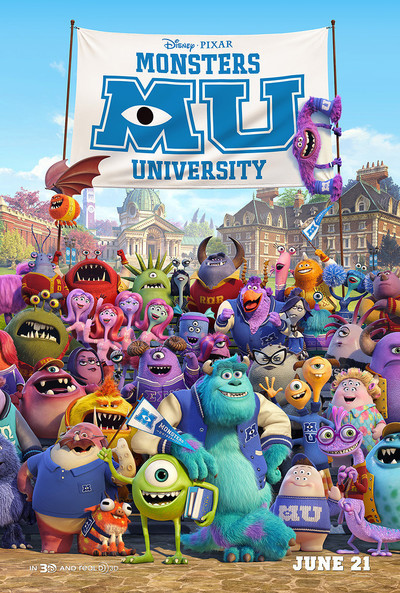
"Monsters University" - Film Review

About a little over halfway through Monsters University, Mike (Billy Crystal) and Sully (John Goodman) look down into the Monsters Inc. factory we know they're destined to be employed at. They jinx eachother while seeing a supposedly famous monster saying, “He’s lost speed but his technique is flawless”.  And in that quote the two have unintentionally described Pixar. When Pixar came on the scene back in 1995 with Toy Story, it was revelatory, with its impressive CGI animation and equally impressive storytelling. Since then the studio has garnered both critical and commercial success for a number of films that are all rightfully well-praised. So it almost felt inevitable when Cars was released and it appeared to signal that the studio had lost some steam (something reconfirmed even more strongly with the release of the widely panned sequel Cars 2). Post-Cars hasn’t been bad. In fact, the studio came back with a string of their best film’s to date including Ratatouille, Wall-E, Up, and Toy Story 3. But there was still a hanging dread that the next film could be that film that shows Pixar has lost its touch (or even worst: sold out). 

There’s almost a dividing line in the filmography of Pixar that starts with Cars 2. Now the two films (including this one) produced after Cars 2 haven’t been bad (Brave was a favorite film of mine from last summer). But all the same, Monsters University and Brave feel like they’re missing something. The animation is still gorgeous. There’s still plenty of funny, fun, heartwarming storytelling that works for both kids and adults. But there’s also inexplicably something missing. It’s hard to put your finger on it, but to my mind it’s that special creative spark that sets a film apart. 

Pixar has become a brand name, and so perhaps they’ve become just a little bit comfortable. They’re not making things as ambitious or creatively exciting as they used to. Even Toy Story 3, as fantastic as it was, isn’t anything new. Monsters University is a prequel. The fact the studio is relying on sequels in itself is a little unnerving as if they’re running out of ideas and need to put out a sequel to please their overlords at Disney. Monsters University is even less of a necessary sequel than the Toy Story sequels. The story has so few places to go that it goes backwards rather than forward, setting the story back when Mike and Sully met at college.     

I don’t want to overstate my problems with the film because it’s really not a bad movie. But it’s also just slightly disappointing (which itself is a loaded term I realize) to see it coming from a studio that used to be capable of far more (and who knows, I still trust Pixar, they might still come out with something that blows me away – it’s just not this). 

The film takes us back to the odd couple, buddy comedy days of college. The two get on eachother’s nerves and eventually get themselves expelled. Sully is a lazy fratboy; Mike is a studious geek (The film does a good deal of reduction to these two characters, painting them in fairly broadstrokes). Shenanigans ensue. They begrudgingly team up (along with a bunch of losers in a lowly, nerdy fraternity) to play in a competition to regain their position in the university. They strike up a deal with the sinister dean of the school (Helen Mirren). It’s all just a little too neat and predictable. 

There’s no special premise to the film. You could easily have this film take place without the monsters. There are plenty of films set on college campuses where people get expelled and strike up some desperate deal to reclaim their place at the school (i.e. Animal House, Old School - but much less raucous). There are callbacks to the original film and they’re cute and fun, but they don’t even need to be there. This film has little connection to that first film besides the characters.

Most of the characters besides Sully and Mike are gone. We’re introduced to a number of new characters. The supporting characters become pretty fun in their own right. This is especially true of the luckless fraternity members that Mike and Sully team up with. 

There’s an ending that somewhat redeems all the familiarity. It’s a very Pixar-y mode of storytelling where they deepen the basics of the story and throw us for a turn we’re not anticipating. I won’t spoil it (not that’s it that big of a thing to even spoil) but it’s the most surprising thing that occurs in the film.   

Expectations can kill a film. We’ve come to expect so much from Pixar (perhaps too much). And if you expect too much from Monsters University it might just be a letdown. But I think it’s still worth giving a chance. It’s still colorful, funny, fun, and moving and sad in places.  

Grade: B