New Year's resolutions are almost inherently designed to fail. They're drunken, stupid false promises to ourselves, trying to make us feel better about the soon to be over year's stumbles, setbacks and shortcomings. Realizing this I made a resolution that I was certain I could keep. When I inform other people about my resolution, they take it as a pleasant, chuckle-worthy joke. Coming into 2013 after a lull in watching movies frequently, I decided I wanted to make up for some lost time and watch more movies, and so this became my, admittedly slightly comical, resolution for the following year: To watch more films.
I already watched movies often enough and I figured I'd actually make something of substance out of it. Thus sprung out this blog here, which already existed but had become woefully underused. My intention was to write about every film I watched and to make as many of those films seen and written about as possible films that were new to me -- of course, I've since failed to achieve this, feeling burned out at points or being too busy to write reviews or write-ups. Some of the films I watched, for cinephiles, at least, will seem like massive embarassments that I'm only just getting around to them -- and I absolutely agree -- while others were recent releases, and still others were personal choices specific to my tastes.
If you look back at some of the earliest reviews, they're a bit -- well, they make me a little red in the cheek just thinking of them. Some of them are woefully underwritten while others have poorly articulated opinions or pretty awful or underdeveloped critical analysis. There's largely a clear progression in my writing I'm mostly quite proud of. I still have a long way to go before I can stand by my work entirely. However, there are gems here and there that I believe perfectly captured what I wanted to say.
I'm aware not many people visit this blog and read what I have to say, but I'm really grateful if you have and for the occasional feedback I've received. Writing about films is often unexpectedly rewarding and I've been able to write about a number of excellent films, both old and new. In the process of writing and reading more about film, I've discovered more films I never would have otherwise -- visiting the canons of directors and actors after seeing a great film -- and I've strengthened my affection for the medium.
I used to write television reviews but I've mostly learned I'm not exactly cut out for episodic tv reviews. God love those who can come up with something to say episode after episode but I typically don't have that capacity in me. I love television and watch it voraciously but I have a harder time conveying my thoughts in long-form writing. My tv reviews are often even more hit and miss than my film reviews -- and I hesitate posting my film reviews as is. But perhaps I'll write some more general pieces in the future if I have the time.
I apologize for my grammatical errors. Some of the stuff I overlook is unforgivable, but in the rush to get things posted as quickly as possible errors - at times, very regrettable ones -- are made. I hope the content of what's written rises above my lapses and mistakes. (I feel like I'm apologizing for this all the time in posts like this, but it's because I find myself to be a pretty lousy editor)
2013 was a great year for new releases and old discoveries. Anyone who argues that films are dead is looking in all the wrong places. There are more good films out there than I know how to begin to even tackle. It can honestly feel overwhelming. If you love films or enjoy thinking deeply about films, it's a great time to be alive -- in terms of access, in terms of dialogue, in terms of restoration, among many other reasons.
However, I mean being alive not just in terms of viewing films but being a human being on this planet in 2013. After all, this blog came out of a resolution to make more of my year in 2013, utilizing films to enhance what I was getting out of my year. 2014 looks to be another great year and I look forward to what it has in store -- films or otherwise.
Tuesday, December 31, 2013
"Hard Target" (1993)
There are action films and then there are John Woo films. Action films often feel like pale imitations of Woo's work and that's because the genre has since absorbed his flamboyantly excessive style. Woo's films invented much of the ridiculous internal logic action films thrive on -- single gun shots instantly causing explosions, people improbably avoiding flurries of bullets. But Woo never seems to do it because it looks cool but because he actually believes in his stylistic exercises and the heightened emotional drama (more familiar to Asian audiences than Americans). Hard Target is a pretty good example of this, despite some bland Hollywood genericness at work, especially in the first half of the film. Sure, the central story about a Most Dangerous Game-type scenario in which rich people hunt down homeless people for sport and the man who seeks to put an end to it (Jean-Claude Van Damme, still unable to give a believable line reading but, in Woo's hands, more plausible than he has any business being) is mental, but Woo gives it a style suitably as over-the-top as the premise. In its best moments, Hard Target is a dizzily balletic dance of practical effects. Don't deny yourself the simple pleasures of an action film done with no greater pretensions or intentions than to blow up its own excesses with yet more excesses.
Grade: ★★
Grade: ★★
"The Secret Life of Walter Mitty" (2013)
When the trailer for The Secret Life of Walter Mitty was released, it was widely praised for how great it was. Now having seen the film, it's easy to see why the trailer was so effective. Walter Mitty is a trailer designer's wet-dream. This is a film filled with so many moments and scenes almost willfully designed to play well in trailer form. Beautiful scenic sights, highly inspirational codas, a sweet romance, a journey of self-discovery -- all the makings of something worthy of being set to the sounds of Of Monster and Men's "Dirty Paws".
Walter Mitty is so very nice. It looks really nice, and the story is oh-so-pleasant. But it's all so hollow. Walter (Ben Stiller), a shy daydreamer, pines for Cheryl (Kristen Wiig), a new co-worker at Life magazine's offices. Walter works with the negatives that become Life's fantastic covers. The company is producing their last printed issue and their famous photographer Sean O'Connell (Sean Penn, an ingenious bit of casting) has left the final issue's photo in Walter's care, which Walter promptly loses. In his efforts to recover the photo, Walter ends up taking adventures as gorgeous and memorable as anything he has cooked up in his head.
To underline this point, the film makes it unclear early in Walter's initial journey to find himself, or whatever else nonsense, whether it's another one of Walter's exuberant fantasies. Walter zones out constantly, in order to cope with failing to live up to his full potential, or something exceedingly dull like that. In these moments, Walter finds himself transported to the great, worldly plans he always intended for before life reared its ugly head.
Between his daydreams and his real madcap adventures, the film crafts a number of gorgeous scenes. Through anamorphic widescreen compositions, the film creates cool, crisp, painterly images. Walter Mitty looks extraordinary, but under its lovely to look out surfaces is a far too ordinary story. Walter is a deliberately boring character. The thing happening around him are wonderful to behold but we could care less that they're happening to him.
Grade: ★★
"Not Fade Away" (2012)
The Rolling Stones song "Time is on My Side" plays a crucial role during an early moment in Not Fade Away (titled after another Stones' song describing how "real love" never "fades away" -- a minor theme of the film). Douglas Daminao (John Magaro) is the drummer in a local band trying to get anyone to notice them. When the band covers the Stones' song, they suddenly gain a modicum of popularity, and Douglas draws the eye of the girl he has long pined for since high school. But the song seem purposely ironic, underscoring how, well, time is not on these characters' sides -- even as they feel like it is. The coming of age story is set in the 1960's and uses the period as backdrop for a bittersweet tale about life's disappointments, whether it be for a no name band trying to get famous or a young man trying to find his place in the world. In a similar way to Something in the Air, inevitably adulthood and responsibility make it clear to the characters that life is rarely as fair or neat and tidy as they'd like to believe. There was more opportunity for self-exploration and discovery starting in the 1960's and Douglas takes advantage of this before realizing he doesn't quite have all the answers. This is beautifully articulated in the film's subplot where Douglas fights with his father (James Gandolfini) who he slowly learns is not a stick in the mud but just somebody with more life experience and his best interests at heart.
Grade: ★★★
Grade: ★★★
"The Young Girls of Rochefort" (1967)
Jacques Demy's The Young Girls of Rochefort features all the sweetness and whimsey of the MGM musicals turned up to eleven. But rather than this becoming saccharine and excessive, it's infectious. The film is giddy and eye-popping and pure escapism. Yet Demy's guidance also never lets the affair turn mawkish. The film is tempered by an underlying sense of melancholy -- people keep missing opportunities or yearning for the past. But still, the music is playful, and the characters use music as an expressive way for livening up dreary and dour times. The elegiac emotional counterpointing of the pop-rock lightness creates a musical quite unlike any other (except perhaps for Demy's own exquisite The Umbrellas of Cherbourg). There's still room for unabashed romantic swooning, but it ultimately feels more earned due to a real sense of struggle and bitterness.
Grade: ★★★
Grade: ★★★
"Melancholia" (2009)
Melancholia is possibly director Lars Von Triers most restrained film, and that may seem strange for a film where a planet named Melancholia threatens to crash into Earth and end life as we know it. The apocalyptic concern plays out in the background, ever creating a portent of doom and gloom over the proceedings. This feels right for a film largely about a character's struggle with depression -- something Von Trier personally dealt with. Melancholia is one of the most original and keenly observed films on the issue of depression. The film really gives a great sense of the struggles of someone burdened with the mental illness, but it even more strongly gets right the ways in which people around the afflicted individual confront this knowledge. Most precisely, the film understands how people fail to truly grasp what the person is going through, think it's an easy fix, and often make it about themselves. Mental illness is still something most of society doesn't quite fully comprehend, and the stigmas associated with it make it difficult for those who experience it to overcome it and relate to the people in their lives. Depression hangs over people like a giant planet just biding its time to crash.
Grade: ★★★
Grade: ★★★
"Anchorman 2: The Legend Continues" (2013)
The films created by actor-director duo Will Ferrell and Adam McKay (Stepbrothers, Taladega Nights) are puerile. They thrive on juvenile, silly, weird, hugely digressive jokes, and they live on the assumption you'll find Ferrell and his co-stars saying seemingly inappropriate, random or surreal non-sequiturs inherently funny. Enjoying a McKay film isn't a matter of being agreeable with its story but its anarchic disregard for politeness or logic. If you find Anchorman 2: The Legend Continues offensive or frivolous, you're right -- but that's the whole point!
The stories in these films are loopy, loosely strung together, and ramshackle enough that a light wind of critical analysis could upend it. The film picks up with drunken buffoon, seventies caricature, and news anchor Ron Burgundy (Ferrell) and his wife and co-anchor Veronica Corningstone (Christina Applegate), working at a New York news station. Veronica is offered the nightly news position and Ron is fired, which causes the manically selfish, and none too subtly prejudiced and sexist, Burgundy to spiral into his own meglomania. Ron walks out on his wife and young son. When offered a job at the new experimental twenty-four hour news channel, Ron reassembles the news team (Steve Carrell, Paul Rudd, David Koechner) in an effort to show up his wife.
It's the illusive, volatile flights-of-fancy between the actual plot where Anchorman 2 will either win your favor or leave you feeling meh. The film indulges free-wheeling, improvisatory moments here and there that more than occasionally don't feel entirely justifiable. For instance, a subplot involving the special needs Rick Tamland (Carrell) and an equally mentally challenged love interest (Kristen Wiig) is unbearably dull and unnecessary. It's not like its prequel was much better at this but it was leaner and more plot-oriented.
Still Anchorman 2 is funny. Too many moments fall flat, but there are some moments where the silliness is hard to resist. Some lines and jokes are surprisingly subtle and thrown out so causally and unobtrusively it's easy to miss the layers of meaning at work. In it's efforts to skewer the mega-corporation, twenty four-seven news cycle era, it never goes quite far enough. By moving from local to national news in its leap to sequel, Anchorman 2 similarly goes broader and loses some of the abundant charm in the process. Like a 24 hour news network, there's still charm -- you just have to be tuning in at the right moment.
Grade: ★★
Monday, December 30, 2013
"The Hobbit: The Desolation of Smaug" (2013)
Like its prequel An Unexpected Journey, The Hobbit: The Desolation of Smaug isn't simply an adaptation of a portion of J.R.R. Tolkien's novel, but an adaptation of multiple Tolkien works, including extratextual sources written by the author. By attempting to squeeze more into the film than just the the simple narrative of the book, the film consistently bites off more than it can chew.
The Hobbit is a simple adventure story and it's really the antithesis to The Lord of the Rings. Lord of the Rings is intended as a fantasy epic, while The Hobbit reads more like a folktale. As a follow up to the massive Lord of the Rings though, taking the novel on its own terms simply doesn't jive for attempting to up the ante. By trying to turn a small story into one that's gargantuan in scope, director Peter Jackson sacrifices a lot of the heart at the center of the story. In particular, Jackson completely loses perspective of his main character, modest homebody Bilbo Baggins (Martin Freeman), who has been swept up in a journey beyond his wildest imagination. Bilbo returns again with the Loony Toony band of dwarves looking to reclaim to their homeland and treasure. They go through many trials, notably facing the dragon Smaug (voiced by Benedict Cumberbatch) who guards their treasure.
But that is not the only story at play. Jackson adds subplot after subplot until the film seems incapable of doing justice to any single one of them. Gandalf (Ian Mackellan) seeks the returning threat of Sauron and his evil minions. A female elf (Evangeline Lily) unrequitedly pines for Legolas (Orlando Bloom), while also falling for one of the dwarfs -- surprisingly one of the sweetest and most affecting subplots. A smuggler (Luke Evans), at the base of the mountain where the treasure lies, desperately attempts to protect his town from the threat of the dragon.
As it is, the film never feels like all these elements are completely necessary. The barest bone concept for the film sounds entertaining enough: rapscallion misfits and their reluctant companion face trials and misfortunes as they try to reclaim lost treasure. That seems like the making of something pretty fun. In deed, when the film is just about a band of travelers on a single-minded quest, the film really clicks. A mid-film scene involving the dwarves and Bilbo escaping an elven prison by taking barrels down a river is far more crowd pleasing than it sounds on paper.
However, the film is draggy. There are too many false starts, and it ends both abruptly and in dreadfully bleak ways. Middle Earth is still an interesting world, and Jackson is still good at world-building, but there's simply far, far too much taking place and too often not enough reason is given to us in order to be invested.
Grade: ★★
"The Spectacular Now" (2013)
The interesting thing about The Spectacular Now is how, well, unspectacular it is. In one sense, it's just another one of countless films that tell coming of age stories -- a genre that is full of cliches and conventions. In another sense, the unspectacular nature is the honest mundanity of the story, and that's to the film's benefit. In the broadest strokes, The Spectacular Now is just another coming of age story, but in its more idiosyncratic story-beats and its attention to detail, the film rises above its conventions to become a deeply felt and sincere portrait of a specific time in young people's lives. It's youthful, hopeful, messy, intimate and sweeter than it has any business being.
Class clown Sutter's (Miles Teller) girlfriend just broke up with him, which, like most people, sends him into a spiral of depression. This is complicated by the fact that he's an alcoholic, although he can't fully admit this to himself. After a night of excessive binging, he wakes up on the front lawn of willowy nerd Aimee (Shailene Woodley). Miles initially seems to be using her to get over his ex (Brie Larson), but he also likes her for being so completely different than the crowd he's so used to surrounding himself with. Meanwhile, Aimee is so unfamiliar with relationships and romance that she's just happy to be noticed by someone -- anyone -- for once. An awkward, haphazard and sweet courtship between the two begins with neither quite sure what to make of it. They've both been insulated so long in their different cliques that they aren't quite sure what they've stumbled upon.
Everyone, including to an extent themselves, believes their relationship is all but doomed to fail. But somehow the very impossibility of it becomes its greatest boon as the two push eachother to get what they want out of life -- this might make it sound all too sappy but there's a certain naivete to this that makes it work. It's here where the story loses itself a bit, taking a detour into a subplot about Sutter trying to meet his absent father (Kyle Chandler, terrific as always). Outside of the relationship, the film stumbles, but inside the relationship it succeeds, forming a well-observed look at young love.
Sutter and Aimee remind me of more than a few people I knew from high school, and I mean that as a compliment. The characterizations of Scott Neustadter and Michael H. Weber's script are realistic and recognizable. The film is ably helped by its casting of its two leads. Teller and Woodley give two fantastically unaffected performances, and actually look like the age they're portraying. Woodley is especially adept at expressing the naivete of someone who has had so little experience with relationships that she's functioning off cultural expectations and fairy tales. But there's subtler things throughout the film -- such as costume choices: never made to look cool or hip but like what high schoolers might actually wear -- which add to the verisimilitude. The film, with such nuance and heart, captures the peculiar rhythms of high school romances.
While, especially in its final third, the film skirts dangerously close to maudlin and familiar, it's hard to resist its earnestness. If anything, the film overreaches with its course correction to teen romance depictions just before embracing some ill-advised excessive sentimentality. That it succeeds in avoiding this sentimentality for as long as it has is a testament to how well rendered the tender story has been.
Grade: ★★★
Friday, December 27, 2013
"The Wolf of Wall Street" (2013)
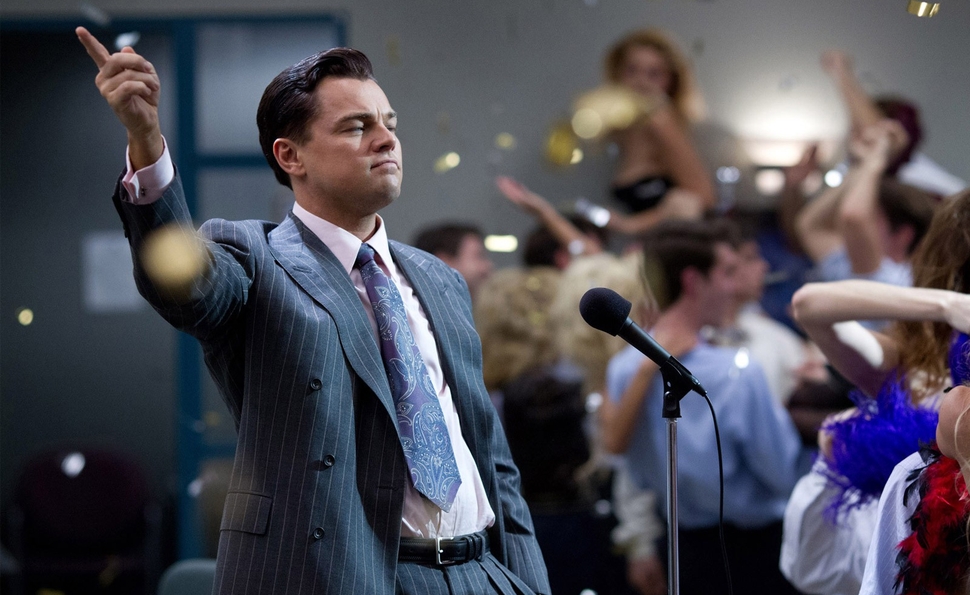
For Jordan Belfort life as a shark on Wall Street is an ever escalating series of quests for insatiable pleasure, and this is how director Martin Scorsese chooses to film his journey into ever increasing debauchery in The Wolf of Wall Street. Based on the memoirs of the real life story of Belfort, Scorsese uses the story of the ever-deluded and narcissistic climb towards wealth for its own sake as a searing, gob-smacked take down of capitalism. Terrence Winter's superbly constructed script utilizes Belfort's story as a bitingly satirical, highly hysterical window into the time period of the 1980's/1990's and the underbelly of the stock broker world, but, in truth, it's even more broadly aimed at America's dark side embraced by our disgusting economic appetites. Scorsese takes the energetic, virtuosic period crime drama storytelling of Goodfellas and sets his sights on putting us into the perspective of Belfort as the character enthusiastically guides us through his ludicrous story -- which he tells us in voiceover with a deranged pride in himself, his accomplishments, and his unhealthy behavior. Belfort here is Henry Hill if he were transplanted to Wall Street.
Belfort goes in fresh faced and naive into the late 80's stock market scene only to be blitzed by the mindset that bred Gordon Gecko -- introduced by a brief but pitch-perfect appearance by Matthew McConaughey as Belfort's first mentor. This simple-minded, straight edged all-American good boy is seen for a handful of minutes before transforming into a depraved, drug-addled, fraudulent man who is all too proud to call himself a "degenerate". It's a ferocious performance by Leonardo DiCaprio. He brings all his usual charimsa and charm to the role of a character who is by all rights monstrous. Yet Belfort is depicted as just selfish and deluded enough to fail to see past his limitations and the general idiocy of his misguided efforts.
Belfort is in Wall Street for a month before the 1987 stock mark crash causes him to be out of the job. He soon takes a job at a company working with penny stocks, where he cruelly screws over working class citizens who can barely afford stocks in the first place. Realizing the value of these worthless stocks being sold at a marked up value, Belfort creates his own company, Stratton Oakmont, that grows into, an all consuming broker giant. Even as he garners the attention of the SEC and FBI, Belfort carries on his illegal stock games and illicit personal habits.
Scorsese seems to want us to be swept up in the allure of this lifestyle. The delirium of his ever roving camera, pop and rock soundtrack, and the gameness of all actors involved gets us as addicted to the appeal of this little world as those actually popping pills and snorting coke. More importantly, Scorsese gets us caught up in this lifestyle before slowly stripping bare the atrociousness of these people, what they stand for, and everything they choose to be. There are some instantly memorable moments, particularly a sequence, we'll call it the "Quaalude Scene", which sees DiCaprio and his broker confidante and pal Donnie Azoff (Jonah Hill) in despicable, cringe-inducing, and very funny ways exposing how far their addictions and their belief in their own invincibility has gone.
In some ways the film feels like a dare to itself, introducing us to one deliriously shot, ludicrous situation after another. Though it clocks in at three hours, the film never feels long. Scorsese makes every moment as entertaining, surprising, and a piece-of-the-whole as the one that came before it. The incongruity between the way the characters perceive themselves, and the way we're meant to perceive them gives ample room for Scorsese to make us laugh at these awful human beings, who are sadly all too human -- Scorsese ultimately tries to get us to uncomfortably to see a potential version of ourselves in them -- despite how hyper and heightened the humor and style of the film is.
Grade: ★★★★
Thursday, December 26, 2013
"Fast Five" (2011)
In an age where blockbusters have gotten increasingly complex and convoluted to a fault, Fast Five stands out for the simplicity of its storytelling. That might make it seem hokey or corny or even dumb, whatever that means, but it also means the story never gets caught up its own ass. The clarity of its storytelling would put many films -- even more widely praised ones -- to shame. The film always has a exact sense of its characters, plotting, pacing and stakes -- things even the most simple-minded of films frequently fail to have, and therefore fail to properly engage us. Because the film has the audacity to be about some low-culture based things like high-octane car chases we label it as a stupid, disposable film, but Fast Five is a damn entertaining film. Some of recent action filmmaking's finest shot sequences are behind Justin Lin's carefully choreographed direction. The final action sequence, in particular, is beyond insane and implausible, but Lin always lets us spatially comprehend the craziness and that's crucial, and also adds to the thrills in subtle but vital ways. It's an adrenaline shot of action, but one that knows how to properly give the dosage.
Grade: ★★★
Grade: ★★★
Wednesday, December 25, 2013
"Saving Mr. Banks" (2013)
The image Disney projects as a company is sold primarily through its films, and if we take those as any measure of what the company wishes us to believe than they are the cheeriest, merriest, most whimsical do-gooders the world-over. But that's simply not true. The company has a darker side and one it's all too keen to sweep under the rug. Saving Mr. Banks, a film about Walt's efforts to obtain the rights to P.L. Traver's Mary Poppins, re-writes some of the historical truth in its story. Travers was never completely won over by the charm and grace of Disney, and she ultimately gave up the rights do to being strong-armed by Disney and also desperately requiring money.
Saving Mr. Banks sugarcoats this history. It turns Disney into a sage old fella who loves Travers property, wants to do right by it, and also wishes to help her come to terms with her past. The capitalist interests in Travers' book largely play out in the background.
Though marketing has attempted to sell the film as a battle of wills between Travers (Emma Thompson) and Disney (Tom Hanks), the film is less about their relationship than it is Travers being haunted by the personal history that informed the book. Much of the film focuses on flashbacks to Travers troubled childhood where her free-wheeling father (Colin Farrell) turns life into a series of imaginative tall-tales to cover up an awful reality of financial insecurity and domestic strife. The film makes a series of one-to-one pop-Freudian psychological suggestions as to why Travers is the stubborn, prickly individual she is and why the story of Mary Poppins matters so deeply to her.
Though some of this feels under-baked and woefully sentimental, the film is ably supported by some strong performances, particularly Thompson. Travers is purposely a hard character to like but Thompson earns our sympathy, turning her self-righteous wisecracking into a cynic's weary defense. And there may be no one better suited to play the Disney of myth than the charming every man of Hanks. Notable among supporting roles is a pleasingly upbeat Paul Giammati as a unfailingly hopeful limo driver who drives Travers around and slowly garners her trust. Annie Rose Buckley gives one of the best performances by a child actor in a while as the young Travers, wonderfully conveying the unblinkering rose-colored idealization of a child and the earnest confusion of someone witnessing things beyond her years.
Saving Mr. Banks plays its hand far too neatly with its conscious PR-efforts. But it's still a pleasant film -- in a way Disney movies irresistibly, sometimes cloyingly, are -- though perhaps too pleasant considering some of its darker moments it too often attempts to soften. The film breezes by with the cheer that a spoonful of sugar offers. But then again that sugar comes with some bitter medicine the film wishes for us to ignore.
Grade: ★★
"Universal Soldier: Regeneration" (2009)
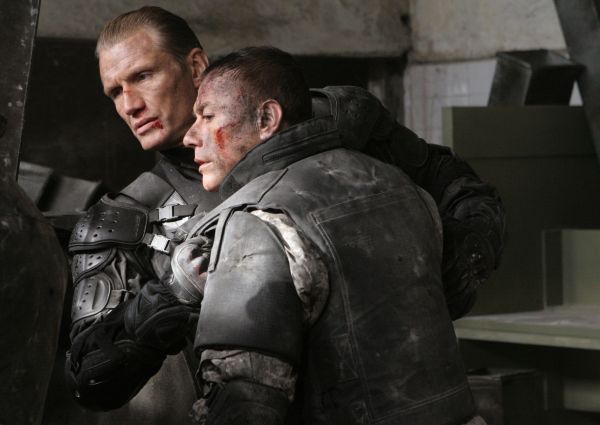
Universal Soldier: Regeneration is a lean, unpretentious action film. It's so single-minded in its goals and so direct and too the point that it can be easy to overlook the surprising elegance of its action. Plot matters little in this direct-to-video film about Russian terrorists holding hostage the children of the Russian prime minister inside a Chernobyl jury-rigged with bombs to release its pent up radiation (try saying that ten times fast). The film doesn't dwell on what's taking place, constantly pushing forward to the next action beat, all formally controlled and well-choreographed. Action heavies like Jean-Claude Van Damme and Dolph Lundgren, and new underground action star Scott Adkins are given opportunities to show off their capability as fantastically muscular brutes able to withstand blow after blow. As Regeneration proves, action movies don't need to be showy in order to show off.
Grade: ★★
Grade: ★★
"Stories We Tell" (2013)
There are directors twice Sarah Polley's age who don't come anywhere close to how perceptive and sensitive her films are. Her debut Away From Her, a beautiful story dealing will Alzheimer's, displays the skill of someone far beyond their years. While her second film Take This Waltz felt a little too trifling for its own good, it was a warm and compassionate film dealing with relationships and the complicated history of those relationships. Polley's latest film Stories We Tell is possibly her most accomplished film to date.
Polley delves into her family's history after discovering the father who raised her is not her birth parent. She interviews many members of her family and friends of her mother to try to understand what happened. Polley's mother, a vivacious woman stifled by her second marriage, is alleged to have had an affair which led to the conception of Sarah. However, since her mother passed away, it is difficult to really know what exactly happened.
While telling the story, and Polley sees it foremost as a story, Polley begins to investigate the limitations of film as medium to grasp the truth. Her main interest is in acknowledging the distortive power of documentary film. As a recognition of this, Polley purposely chooses not to remove herself as the documentarian, leaving in talking heads and pointing to her role as the arbitrator of what got left on the cutting room floor.
Though Polley wants to give equal weight to all voices affected by the events surrounding the infidelity, she also notes the impossibility for a complete picture of what took place to be revealed. Memory, opinions and gaps in information will cause an inability to fully realize what really took place.
Polley makes too fine of a point on her themes and her intents towards the films end, but this lack of subtly serves a purpose. Polley, like the film's title implies, believes that in telling stories we will into existence "truth", crafting the perceived reality of events. In this regard, Polley is the ultimate storyteller and determined the "truth" we see in the film.
Speaking of the film in these terms makes it all sound like a playful exercise in structure, but Polley is also an affectionate filmmaker. She likes listening to her subjects. She enjoys hearing a good story told and she enlists many people to lovingly recount their version of what took place. She's sympathetic to all of them, and she grasps as hard as she can to figure out the mysterious woman who was her mother. In the end, Polley uses her filmmaking as an act of coping, of working through her feelings about her discoveries.
Grade: ★★★★
"Sullivan's Travels" (1941)
As I watched writer-director Preston Sturges comedy classic Sullivan's Travels, I was struck by how brilliantly the film skewers class privilege. It's a film about a man, film director John L. Sullivan (Joel McCrea), who has been so insulated from the struggles of working class Americans that he thinks it's an ingenious idea to set out on a roadtrip to find out how the other half lives. Anyone who has even had the tiniest taste of money-problems knows that it's not anything someone wants to willingly have to deal with. Yet Sullivan dives into the journey with the enthusiastic brio someone taking a trip to the Bahamas might express. He starts the journey unable to escape his publicist, producers and other members of his entourage, but even when he convinces them to let him do the trip on his own he keeps winding up right back in their company -- like some great cosmic joke on his silly and ultimately self-serving scheme. In time, Sullivan does learn a great deal about those less fortunate than himself, and suffers through terrible ordeals which finally cause him to wind up as a prisoner on a work-gang. The ending finds him crawling back into the cocoon of his privilege. His great lesson in all of it is not to make a drama based on his experiences but to scrap his knowledge in favor of making comedies to give the poor an nice escape from their difficult lives. It's a funny tail-end Depression Era film with Sullivan constantly out of his depth, or believing himself to be but really obliviously not. Though it tries to expose the trying-poverty of the working class, the film is so broad in its criticism that it hardly says anything other than "man, it sucks to be poor". The film is really better at the flipside of its engagement, revealing the limitations of those who have the money to affect large scale social change. They're really too ignorant of the situation they wish to fix to actually create meaningful change and reform.
Grade: ★★★
Grade: ★★★
"It's a Disaster" (2013)
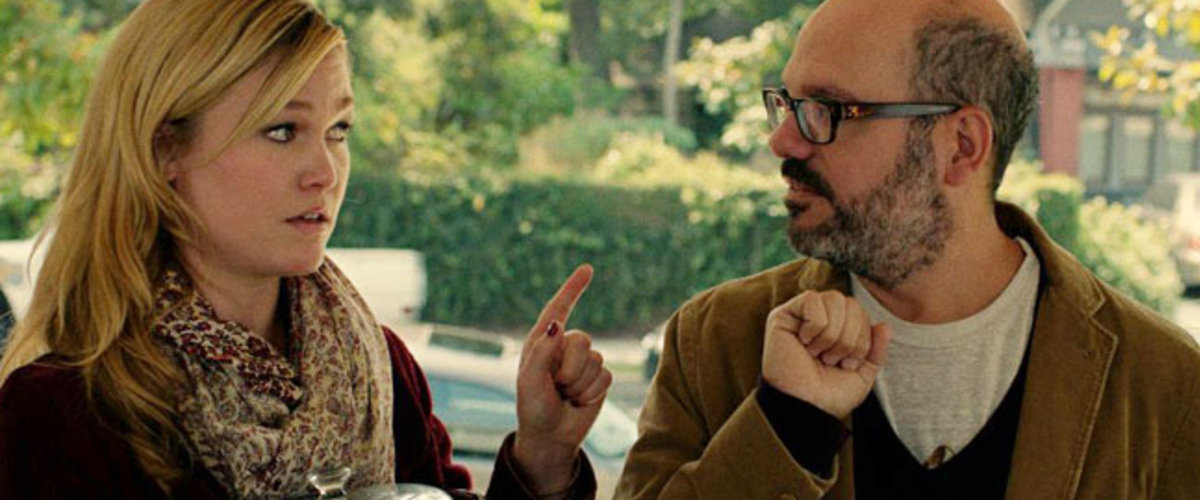
You're dating this person and things are going well, well enough that they want to introduce you to their closest friends. So they take you to small get-together, a couples' brunch, and suddenly you're thrown into the middle of all their drama and history. It's a Disaster understands how nerve-racking and strange, but all-too-familiar, this type of situation is, and uses David Cross' excellent straight-man act as a gateway into the souring group dynamics of old friends harboring bitter resentments and secrets. For the first third of its run-time, the film plays like a well-scripted stage drama, like a Neil Simon farce. People exit in and out of rooms, and talk past one another sharing important information in an Altman-esque fashion. Things go nuclear with affairs, divorce plans and other terrible truths revealed.
And then things literally go nuclear, and the film's title takes on duel meanings. Dirty bombs destroy every major city in the United States, and, at first, the characters don't even pick up on it, they're so caught up in their drama that it doesn't even register. They scramble to make the house sustainable against nuclear fall-out. But even as they make the house hospitable, they can't stop bickering, fighting and sticking their nose into everyone's business. The apocalyptic circumstances serve to heighten the drama and forces them to face up to their problems.
The film's strength derives from letting apocalypse simply play out in the background while the relationships take precedence. The film doesn't aim for high concept. Everything is suggested off-screen, never actually shown and it rarely upstages the characters, acting as catalyst to watch the characters expose the anger and irritation hiding behind barely sustained facades. It's a Disaster is aided by uniformly great performances for well-written and distinguished characters. Every character reacts to civilization's downfall in different ways which are granted their craziness by the equally crazy circumstances. People begin exposing all manner of hidden tics and inner states, demonstrating the dysfunctional nature of these individuals and their relationships but also oddly reaffirming their codependency.
Grade: ★★★
Monday, December 23, 2013
"Once Upon a Time in the West" (1968)
Sergio Leone's films were really little more than exercises in style, but they looked so different from the westerns that had come before them that it became impossible to ignore what they were doing. Plus, Leone's style is self-consciously splashy to the point of causing it to almost transcend mere style. It's often style as substance with Leone utilizing the languorous build-ups, obtuse cuts and sensuous close-ups in order to ratchet up tension and craft long stretches that act like mood pieces. There's also more at stake in Leone's films than just style for stye's sake as seen in Once Upon a Time in the West. Through the story of multiple individuals vying for control of invaluable land cut-through by future railroad tracks, Leone tells a tale of ever-changing alliances, double-crosses and fights for power, revenge and dignity. It's never just a story of good and evil, but a complex investigation of honor and the meaning of honor in a place only just starting to come to terms with being law-abiding. It also features a great cast, including Henry Fonda getting to be atypically villainous, Charles Bronson taking an excellent stab at the "Man With No Name" archetype, and Claudia Cardinale taking on the rich role of a resilient, recently widowed woman who refuses to succumb to the viciousness of the world around her.
Grade: ★★★
Grade: ★★★
"Wes Craven's New Nightmare" (1994)
Wes Craven's New Nightmare could so easily have been an exercise in meta, and to an extent is that. But it also keenly taps into what has always made the Nightmare on Elm Street series so playful and truly frightening: the inability to differentiate between reality and dreams (and also fiction and reality). On the most basic level, bringing back the actors from the original film, particularly Heather Langenkamp and Robert Englund, in order to play themselves is part of what makes the film self-aware fun, and really altogether work. But it also cuts out almost all expectations. There are no longer any of the pre-established rules the franchise had crafted over the course of its six film run, and that breathes new life into a very tired and well-worn premise, leading to some surprisingly tense and scary moments amidst the meta-ness. But the self-awareness of the film also posits some interesting questions about how actors deal with the real world success and popularity of films they're associated with, and how storytelling can become an act of myth making. And Langenkamp and Englund never seem to be merely pulling in an easy paycheck. They bring a real sense of weariness over the ways the franchise has come to consume their professional and personal lives.
Grade: ★★★
Grade: ★★★
"Ms. 45" (1981)
The rape-revenge story is one of exploitation cinema's trickier set of films to get behind. Too many of the films sexualize the rape incidences or use it as a convenient plot device to justify the vengeance that follows. Ms .45 largely avoids both of these by coming at its story from all sorts of unexpected angles. The two successive rape scenes are brief yet painful to watch, and complicated by the fact that the protagonist (Zoe Tamerlis) immediately kills her second attacker in the process of trying to save herself. The film turns initially into her disposing of the body bit by bit, while also recovering from the trauma of what happened to her. The film takes her trauma seriously and acknowledges the psychological damage this kind of event would leave on someone, and her actions, at first, stem from an uncertainty about how she feels over what's been done to her and how to handle it. Soon she channels this trauma into a hell-hath-no-fury empowerment, seeking vigilante justice not on her attackers but on all of mankind. She finds chauvinistic assholes who deserve some comeuppance and brings about a distinctive brand of feminist smackdown, which garners her the increasing attention of the police and media who dub her "Ms .45" for the caliber of pistol used. The empowerment is all the more potent for the mousy nature of the character who literally is unable to speak -- she's voiceless in a way Holly Hunter's character is in The Piano -- and the film suggests she was exploited and taken advantage of long before she was sexually assaulted; the incident simply awakens something deep inside her that she's been holding back. And yet director Abel Ferrara never lets the blood-strewn path she creates go completely indulged. The film notes the progressively morally slippery slope she's falling down as the targets she pick become more and more arbitrary. It's the rare rape-revenge narrative which often earns its bloodbath and seriously considers the consequences both of its protagonist's victimization and the questionable actions she takes to regain her sense of self.
Grade: ★★★
Grade: ★★★
"The Driller Killer" (1979)
Piggybacking off the success of the slasher film, Abel Ferrara's Driller Killer is a gory exploitation film about an impoverished painter who simply snaps. While it owes a debt to so many slashers, it's often more subversive and unconventional than the prototypical slasher. Ferrara seems more content indulging whatever interests him, observing underground subcultures and punk scenes, than telling a generic horror film. In fact, the film is more in lock step with other 1970's films like Taxi Driver and Martin about restless loners done in by urban decay and isolation. Though wildly uneven and unfocused, Ferrara creates some startling and vivid, almost hallucinogenic, images out of the trashy violence on display. There's a reckless energy to the film that aligns with its protagonist and his decaying state of mind.
Grade: ★★
Grade: ★★
"Crystal Fairy" (2013)
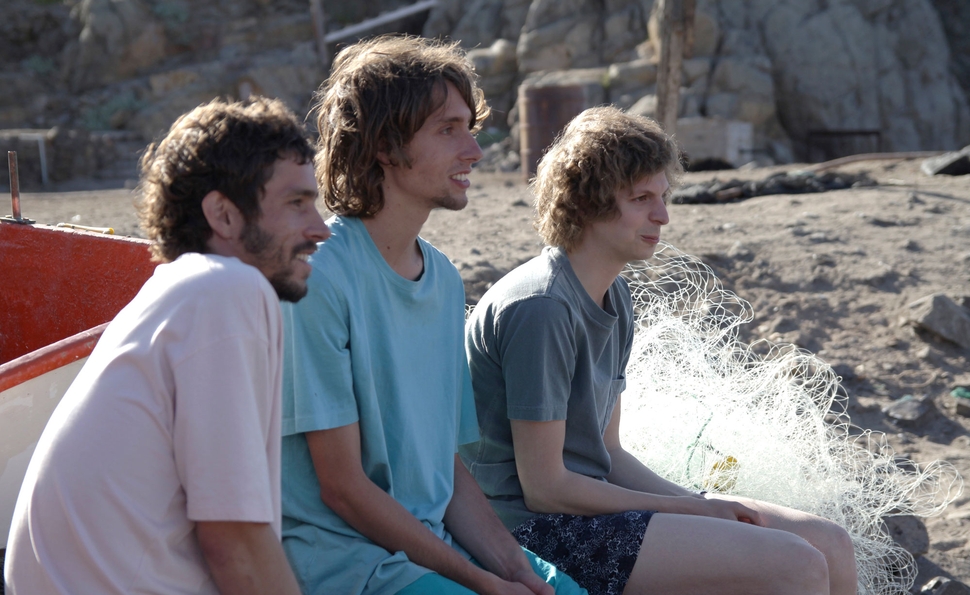
Most people, heck, all people, are afraid of expressing themselves, of showing genuine emotion. We hide behind a carefully crafted veneer, built for the world to see and to hide our true selves. Crystal Fairy is a film about a young man, Jamie (Michael Cera), who can't stand to be emotionally honest. He can only show his true colors when buzzing on a drug high. He's visiting Chile and at a party meets a free-spirited woman named Crystal Fairy (Gaby Hoffman) who is also from the United States. In his stupor, he invites her on a trip that he and his Chilean friends are going on to a distant beach. The big-to-do for this trip is acquiring a San Pedro cactus, which when ingested have hallucinogenic effects.
After the revelries of the previous night, Jamie wakes having completely forgotten about his invitation to Crystal. She calls and he is suddenly miffed like a petulant child. His friends are decent and realize they can't go back on their promise. Crystal is a quirky indvidual, but she is no manic pixie dream girl. There is hidden sadness behind her oddness. She seems the most open of all the characters but she is putting on a show like everyone else. Jamie keeps trying to convince the other members of the trip that it might be wise to ditch Crystal and her strange behavior, but they are kinder and less selfish than him. Cera strips himself of all vanity in his performance. This is a character who is utterly unlikable at times. During the roadtrip, Jamie gets on the other characters nerves, but he slowly gets on ours as well.
Cera's put-on attitude is petty but it belies the internal struggle of an indvidual who can't stand to be honest with anyone, especially himself. When confronted with an indvidual who so outwardly chooses to be everything he is afraid to be, he fights back against it. When they ingest the cactus, the drug trip makes him more willing to open up, but it can't get him to go the full mile. Consider the stories Crystal and tell at the end of the film. They reveal how little his narcissism has come, and how far he has to go until he really exposes his inner life.
Grade: ★★★
"John Dies at the End" (2013)
Some films are so overstuffed that when you start to think about them a little bit, they start falling apart at the seams. John Dies at the End should be such a movie, but it moves with so much energy and speed that it becomes hard not to simply get on its level. The greatest virtue of the film is is its abundance of genre-mashing ideas. It's a film overflowing with so many original and nifty ideas and it blends them together into an impossibly dense and slightly convoluted narrative. Moreover, it realizes its a convoluted mess, constantly acknowledging the very unwieldy bonkerness of its premise.
David Wong (Chase Williamson) recounts a strange tale to a skeptical journalist (Paul Giamatti). David is a paranormal investigator along with his friend John (Rob Mayes). After a wild party, David receives a strange phone call from John that sounds crazy even coming from somebody who stops demons for a living. From there things only get worse as John and David are both dosed with a drugs they call "soy sauce" which heightens their senses and allows them to foresee future events. David essentially becomes a bumbling begrudging, noir-esque detective in the middle of a time traveling, universe traversing, supernatural-sci-fi conspiracy. It's Primer by way of Sam Raimi.
Director Don Coscarelli is no stranger to crazy horror with surreal comedy, having helmed films like Phantasm and Bubba Ho-Tep. Coscarelli's familiarity with handling delightful genre films just on the right side of junk keeps Jon Dies from completely derailing. Unraveling its story, the film eventually plays around with nearly every genre imaginable, dabbling in horror, science fiction, and comedy, and has lots of fun throwing everything but the kitchen sink at us. Though it loses steam towards its end, for a long time the film's sheer self-delighted exuberance in telling its story is hard to resist.
Grade: ★★★
"Frozen" (2013)
Frozen begins on a simple, powerful moment as devastating as anything in Disney's repertoire. It recalls Bambi in how direct and economical it is at establishing the emotional core of Frozen's premise, and it gains resonance the further the film pushes what the moment means for its two protagonists. More importantly, it is a moment, much like the rest of the film, about the relationship between two sisters, Elsa (Idina Menzel, of Wicked fame) and Anna (Kristen Bell). There is time for romance in Frozen and it takes on a Disney Princess film vibe at times, but the film is most concerned with what is at stake for the bond between the sisters. In that sense, this is a surprising and pleasing departure from Disney's usual animated storytelling.
Tangled's success caused Disney to produce another non-Pixar CGI animated film, and Tangled is part of Frozen's DNA. It is about young women locked away from the world, only to be forced to leave and discover the virtues, wonders and treacheries of the world beyond their castle. Elsa has secret magical powers which allow her to control and create snow and ice. Anna lacks magical abilities but is in awe of her sister's magic. Elsa shows off her powers and by accident hurts her sister. Her parents take her to magical trolls, rock-like creatures, who erase memories and inform them that if she does not hide her powers she could be in grave dangers. And so her parents keep Elsa hidden away, and separated from Anna. Once so close, the sisters' relationship is slowly strained, and we watch them grow into adults, wanting to make a connection but unable to. When their parents die, Elsa turns even further inward unable to tell her secret to anyone. When she comes of age, Elsa must open the castle gates and become coronated as queen. Yet things go awry at the ceremony and Elsa's secret is revealed, and Anna tries to reconcile things with her sister.
Frozen shares much of Tangled's lovely animation -- perhaps too much so. It is a colorful film with smooth, round animation. It is also a film with plenty of wonderful music, and the music as good as anything to come out of a Disney movie. It is fun and catchy, but also rich with emotion. Anyone not stirred by the show-stopper "Let It Go" is a heartless bastard.
Though it's storytelling feels consistently text-book to a fault, the devil is in the details. Frozen is often playful and unexpected in its storytelling. It pokes fun at itself and Disney films more generally. Anna gets engaged to a man she just met and rather than being pleased Elsa is absolutely baffled. Later befuddled a character says, "You just met the guy, and you're getting married?" And in its climactic moment, the film chooses to take a surprisingly different route than what we might anticipate and it is cheerworthy in its audacity. It's small touches but for any fan of Disney films, it will bring a smile to your face.
Grade: ★★★
"The Heat" (2013)
There seemed to be a near universal agreement after the release of Bridesmaids that Mellisa McCarthy was the film's undisputed breakout star. So it was only a matter of time before a studio hoped lightning could strike twice with McCarthy's signature brash, filterless truth-telling smack. By pairing her with Sandra Bullock, no stranger to comedy, the film seemed poised to re-create the raunchy femme humor which garnered Bridesmaid much love and attention. But The Heat feels like a toned downed version of all the things which made Bridesmaids so well-regarded. Director Paul Feig, who also directed Bridesmaids, always seems to be holding back his stars, never letting them go too far. With McCarthy now in a lead rather than a supporting role, she's no longer allowed to run amuck nearly as much, always being pulled back in order to serve the needs of the narrative. At every turn, there always feels like studio notes stepping in to censor McCarthy's lovable recklessness.
There's certainly untapped brilliance in crafting a female equivalent to so-many 80's and 90's buddy cop comedies, such as Lethal Weapon and 48 Hours. The police case is almost besides the point serving as a convenient structure for whatever silliness the writers and actors can come up with. McCarthy and Bullock play familiar roles of straight-woman and loose-cannon, but they bring their own distinctive spin on it and have a great deal of fun and have a good rapport. Bullock is an FBI agent trying to get a promotion and forced to work with McCarthy's local Boston officer in order to take down a drug kingpin. In time they come to respect and understand one another, and yada, yada, yada.
For being an action-comedy, The Heat disappointingly skimps on the action. In stead, the film focuses on the give-and-take and the comedy of manners in the mismatched pair. While it's funny, the action almost becomes an afterthought. The film primarily borrows the comedy portion of its sources, and ends up being shaggier, sillier, and even a little more lightweight as a result. Now, the combination of McCarthy and Bullock is winning, especially McCarthy who is in command of her caustic schtick.
Grade: ★★
Friday, December 20, 2013
"Drug War" (2013)
Drug Wars is a relentlessly taut crime thriller, always seeming like it's on the verge of spilling over into explosive action or extensive bloodletting. Though it owes much to a number of East Asian genre films including John Woo's oeuvre and Infernal Affairs, it's wholly its own work and often more thematically hefty than its genre counterparts.
When the police attempt to stop a drug ring specializing in methamphetamine, they discover a complex hierarchy of connections and players out for a piece of the pie. In the middle of this is, a drug manufacturer taken in by the police who makes a deal to take down the illegal enterprise in exchange for suspending his death sentence. Much of the film's tense excitement comes from wondering whether Timmy Choi (Louis Koo) will keep his promise to the police. Timmy appears to be playing the criminals to bring them to justice but it consistently becomes hard to tell how much of this he's also doing for his own self-gain, and potentially at the expense of the police. The police captain Zhang Lei (Honglei Sun) gives him the benefit of the doubt while his colleagues are more skeptical, and it's the relationship between the captain and Timmy that stands out most sharply. A begrudging partnership is created between the two men where they tentatively trust one another even as they harbor major, justified reservations.
The film goes out of its way to humanize both the criminals and police. This isn't a film that condemns the criminal lifestyle or choosing to be involved in drug trafficking. The police are often not nearly as competent or smart as they believe themselves to be, and though there's some bungling on the part of the drug pushers, they show skill and intelligence in their own way and, at times, outwit their pursuers. The film is more of an indictment of drug wars of any kind. It's critical of the cost of waging war on drug trafficking; how it only increases violence and instability and makes selling and manufacturing drugs more profitable and thus more likely to continue regardless.
The expense of gazing into the abyss though plays out in the background. The film is firstly an expertly crafted crime drama, unfolding with the assured deliberation of a procedural but acting more like a game of cat and mouse. The film reveals all the gritty details of the process involved in the creation and sale of illegal drugs. The police follow up the food chain, moving away from petty low-lifes making chump change to the heads of the operation. Through it all, the police try to stay one step ahead of their targets with the uncertain help of Choi. The task is at its most intense when police members put on disguises and pretend to be members of the criminal operations, wondering whether they've been left out to hang high and dry.
Grade: ★★★
"Something in the Air" (2013)
Something in the Air is director Olivier Assayas semi-autobiographical, bittersweet love letter to the peak of the 1960's revolutionary activity in France. High school student Gilles (Clement Metayer) and his friends live in the uncertainty of post-1968, where it has become less and less certain as to what makes a person still true to the rebellious spirit of yesteryear. As point of proof, Gilles often seems like he's taking on the affectation of a revolutionary. He comes off as someone who likes the outward appearances of the movement, even as he's not sure he likes the more radical tendencies of the counter-cultural movement and reactionaries.
The movie is first the giddy high of sticking it to the man, and experimenting with drugs and sex. But this is followed by a sobering come down from the rush of discovery and youthful abandonment. The characters start as wayward high schoolers spraying graffiti on their school's front wall, and they all end up in different places but broken and with it only just dawning on them the indvidual loss they've made in the name of various causes. As Gilles, and everyone more generally, becomes disillusioned with the world, and, more importantly, the people around them, they are left uncertain as to where they stand and what to do with their lives. It was easy to hand out some pamphlets to some classmates and more difficult to try to grasp how hard it is to actually create meaningful large scale change.
Assayas' film is at its best when it subtly suggests how the personal and political intersect, grounding it in the specific cultural milieu of the era. In the film, people, especially Gilles, do things for highly selfish reasons that frequently have little to do with any political motivation. Assayas' directions suggests a strong affection for this time and place, but he rarely filters it through nostalgia, drawing into question some of the stickier and more questionable and contradictory aspects of the counterculture, sexual liberation and political radicalism.
Ultimately Assayas' nostalgia comes through his protagonist, who seems to stand in for the director himself. There's an earnestness to Gilles' journey, part coming of age story, and part episodic reminiscence of the time. Assayas may not go far enough in his depiction of the era, simplifying many aspects, but the journey is sweet and yet still grounded in a weary awareness.
Grade: ★★★
Thursday, December 19, 2013
"The Big Knife" (1955)
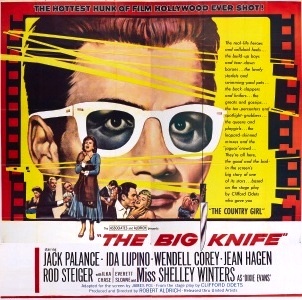
Hollywood as an all consuming hell-hole is a story that has been told many times but few quite as compellingly as The Big Knife. Director Robert Aldrich turns Hollywood into a seedy and violent place where even a pristine Beverly Hills home -- the sole shooting location -- can seem like not just a corporeally empty setting, but a highly rotten one. Aldrich also emphasizes the treachery of Hollywood by portraying characters who, though flawed, are good people. They're chewed up and spit right back out by the machinery of the studio system and its interest in money and power. Charlie Castle (Jack Palance) wants to make pictures with meaning and substance and believes in movies as a potentially great art-form with great opportunities for actors, but he simultaneously finds himself blackmailed into a seven year contract to make films with profit-minded producer Stanley Shriner Hoff (Rod Steiger). What's at stake is not only Charlie's artistic integrity but also what little remains of his soul, which has slowly been eaten away by being a Hollywood insider for far too long.
Grade: ★★★
Grade: ★★★
Wednesday, December 18, 2013
"The Lone Ranger" (2013)
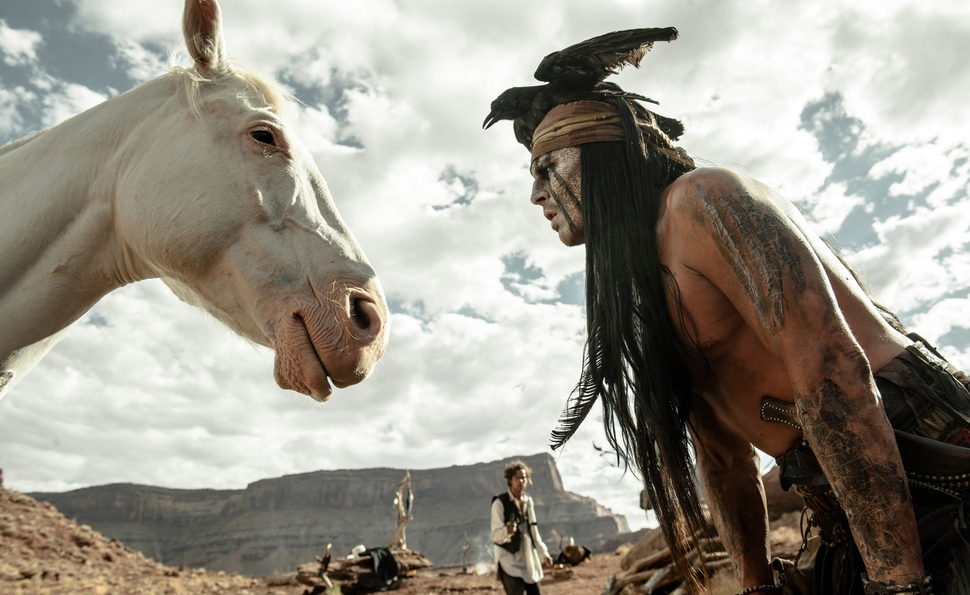
Of all the potential adaptable properties out there, the television series The Lone Ranger surely must be one of the least logical, and box-office receipts seemed to confirm this when its film adaptation tanked at the box office. The other reason may have been due to how much of an oddball film Lone Ranger is. Rather than aping the kitsch-ieness or quaintness of its source, Lone Ranger goes for dark, brooding and overblown. There's very little of the lightheartedness that defined the television series -- perhaps due to an assumption this would be too corny or cheesy. Though the film starts with a rather playful, old school pulp serial vibe, it quickly devolves into a sprawling, bloated western epic that draws into question the myths of the western, historically, nationally and cinematically.
The film shares a lot of qualities with director Gore Verbinski and producer Jerry Bruckheimer's efforts on The Pirates of the Caribbean. Most apparently, Johnny Depp returns for another eccentric, garishly-garbed supporting role that, for better and for worse, ends up stealing the spotlight. Depp plays Tonto, the Native American who plays stone-faced companion and frenemy to Armie Hammer's Lone Ranger, a lawyer forced to turn vigilante when his brother and posse are viciously murdered by bandits. Ranger features the Pirate series' expansive sweep, and pyrotechnic, overwrought action and storytelling.
It's ultimately the self-involved, exceedingly complicated and overdrawn narrative which brings Ranger crashing to a screeching halt. The film tells its story in sputtering fragments of clashing tonalities -- silly slapstick is closely followed on the heels of tremendous violence -- and intentions. It's consistently an overlong slog to get through with the film never truly picking up momentum.
The film's haltering pacing also is, in part, due to weird thematic ambitions. The film boils down to a massive indictment of the skeletons in America's closet, in particular the genocide of the Native Americans and the nation's failure to fully atone for its past sins. The film questions the myths the country was founded upon and how we collectively and actively write these myths at the expense of historical truth.
Though the film does manage to use its scope and its excess for some lively action sequences, they come far and few between in a story that's often tedious to get through due to how uncertainly and unevenly told it is.
Grade: ★★
"Berberian Sound Studio" (2013)
Some people just can't tolerate horror films. The scares, the blood and the apparent tastlessness of the genre turn off more than a few. Even the staunchest cinephiles have objections. Sound designer Gilderoy (Toby jones) seems like exactly the type of person who should not be working on the production of a horror film no matter the circumstances. He's a mild-mannered, soft-spoken Brit, and he's completely out of his element as he works at Berberian Sound Studio on one of Italy's infamous, fantastically ludicrous exploitations films, the giallo.
Berberian Sound Studio is set in the heyday of the giallo's peak popularity, in the 1970's. At first it seems like the film is taking on the path of a homage to the genre. The film has the look and feel of the giallo, taking on its sumptuous imagery and sexy stars. The film slowly drops hints of something more insidious just around the edges of the film's production and a growing sense of dread kicks in.
However, the film takes on a less bloody and less giallo-esque route. The film treats itself more like an unhinged psychological drama. In due time, the film resembles Muholland Drive more than Bird with the Crystal Plumage. Director Peter Strickland creates a hypnotically dreamlike state where reality and fiction begin to blur.
The sound designer is used to working on prestigious dramas not trashy horror flicks. The more he works on the film, the more uneasy he becomes working on such an exploitative film. Though the exploitation at hand appears to be over the young actresses degrading themselves to make a break in the industry, perhaps the greater exploitation is of the sound designer, whose fragile psyche can barely withstand this environment. He stabs melons and to him it's wickedly close to stabbing an actual person. And it is: it's a shiny knife piercing his own constitution.
Grade: ★★★
Tuesday, December 17, 2013
"Sightseers" (2013)
It's all too fitting that The Cars' pop hit "Tainted Love" should play over the opening credits of Sightseers. But tainted here implies less of a love gone bad than a love that is totally fucked up. Initially Sightseers seems like a fairly conventional, quirky indie about a couple (Alice Lowe, Steve Oram) who goes on a roadtrip of discovery. Chris is a would-be writer hoping to gain some inspiration; Tina is trying to escape her overbearing mother (Eileen Davies) who still blames her for the death of the family dog.
But a growing sense of inexplicable surrealism -- there from the the film's opening moments but hard to pin down until a little ways in -- starts to creep into the film's narrative. Chris advises another man to pick up a piece of litter, and when the man refuses to do so, Chris backs the car over him. Chris plays it off as a morbid accident and Tina with her desperate optimism overlooks the incident. However, as they start going from campground to campground with the trailer, Chris begins picking off more people for perceived slights and wrongdoings. Once it becomes clear that Chris is responsible, Tina is at first unsettled but soon reveals a strange attraction to this behavior, demonstrating her own brand of subdued psychopathy.
The film from here turns into a series of escalating acts of needless, brutal violence against people who upset the two of them in one way or another. But their own worst enemy is one another; each of them spurs on even more destructive, narcissistic, and pathological actions and ways of thinking.
In many ways, the film feels like a watered-down Badlands. The protagonists are remorseless, seemingly killing for the sake of killing, and their actions take place against beautiful natural landscapes that dwarf them. The film also leaves events and actions muted and purposely under-explained. At times, the film has the dark edged, heightened absurdism of a Charlie Kaufman film, though softer and less boldly and insightfully used. It's a darkly funny film, a mocking tale piercing jagged daggers at codependency and the honeymoon phase of relationships. However, its absurdity and quirkiness often make it as conventionally, banally indie-whimsical as it tries not to be.
Grade: ★★
"Cutie and the Boxer" (2013)
Ushio and Noriko Shinohara are married artists. Noriko met Ushio when she was only nineteen and he was in his forties, and they shortly after married and had a son. Ushio has just turned eighty at the start of the film, and Noriko is just shy of sixty. Ushio was a well-known avant-garde artist in Japan who moved to New York in the 1960's. He makes action-paintings by putting on boxing gloves and punching at the canvas, and he makes sculptures out of cardboard, mostly of motorcycles.
Ushio has always had more fame and notoriety for his artwork than Noriko. He calls Noriko his "assistant", a term she resents. She has her own art, but she has often had to set it aside for the sake of Ushio and her son, Alex. Noriko makes paintings, and is currently working a graphical novel-like series of images about the struggles of her marriage. The film animates a number of her works to illustrate some of the couple's history. Old home movie footage is also used -- some powerful and surprising -- but it's mostly footage filmed in the present and their day to day lives in their small New York City apartment.
Cutie and the Boxer is a documentary about their relationship as much if not more so than it is about their art. The film spends much of its time quietly giving voice to Noriko's justified grievances in her thirty-nine year long marriage. Ushio is selfish and an alcoholic who has put his addictions and art above his family. When she was younger, Noriko appreciated Ushio's love of art above all else and no matter the cost. As time has past though, she regrets not considering a more stable and secure lifestyle. The couple is barely making rent, and have difficulty finding buyers for Ushio's art. Ushio sells a sculpture for several thousand less than its price just to make money of any kind.
The film is a beautiful exploration of a longstanding marriage. Noriko has her regrets and resents Ushio at times, and Ushio doesn't always understand what bothers his wife. But they still love eachother in spite of their differences and difficulties. These problems aren't settled and they likely never completely will be, but such is often the case with the compromises in a marriage.
Grade: ★★★
"Pain & Gain" (2013)
Of all the working directors, arguably the one who would seem the least well-suited for making a satire is Michael Bay. Bay has made a career out of making low substance action films. He's come to represent bankrupt film culture, with ADHD editing, thin characters and thin plots and an emphasis on action over narrative. But somehow all these qualities make him well-suited for making Pain & Gain, a broad critique of, well, the kind of people who worship at the altar of Michael Bay films. It's a film about the type of people who surely must think Armageddon is a certified masterpiece, who party and drink like it's their life mission, and vainly, unhealthily work-out. Bay cuts back on his typically excessive action, but maintains his distinctive, hyperactive style, and uses it to poke fun at the meat-head American subculture -- and is legitimately funny in the process. But though its jabs are often coarse and simple, the film is weirdly sympathetic towards its protagonists Daniel Lugo (Mark Wahlberg), Paul Doyle (Dwayne Johnson) and Adrian Doorbal (Anthony Mackie), bodybuilders who want their piece of the American pie but feel like they've been left behind. It recognizes their stupidity, and increasingly self-destructive and misguided actions they take to make bank -- namely kidnapping a wealthy narcissistic client of the gym they work at. Yet it also understands what's led them to obsess over their appearances and to desire success and wealth at any cost. It's a vulgar and violent look at the fallacy of the American Dream. The film seems willfully, intentionally designed to be divisive, consistently stooping to the same level of idiocy and self-indulgence as its characters -- cheap, childish, broad humor and loud, brash stylistic choices -- and often losing its intended message in the process. Yet there's still an odd vibrancy to the film, and it's undoubtedly the best work Bay has done in ages.
Grade: ★★★
Grade: ★★★
Monday, December 16, 2013
"The Hunger Games: Catching Fire" (2013)
The opening scene of Catching Fire, the second film in the Hunger Game film trilogy, opens with Katniss Everdeen (Jennifer Lawrence), winner of the police state of Panem's Hunger Game competition in the last film, out in the wilderness, doing essentially nothing for a few minutes. The moment is simply us watching her think, trying to understand what's going on inside her head. It's Lawrence's nicely expressive face and quiet contemplation. It's ballsy; blockbuster films don't stop to consider the consequences or stakes of their world. Yet the Catching Fire essentially does exactly that for half its run time.
It's underneath the Hollywood gloss and crowd-pleasing. Catching Fire is surprisingly subversive, taking jabs at the film and media culture that, weirdly enough, allows for this type of big budgeted film to exist in the first place. It's not too far of a stretch to see Panem's propaganda spouted by its all-seeing news programs as not that far removed from today's partisan, attention grabbing news. The gaudy neon-pop look of the Capitol and those who live there is a conspicuous but all too spot-on consideration of empty, crass reality tv culture and disgusting wealthy privilege and ignorance. The film is also suspicious of those in power and seriously asks for political reform, and fears how political power can so easily slide into corruption, fear and inscrutability. Sure, the studio could care less about the underlying messages as long as lots of money is made off ticket and DVD sales, but they've unwittingly made a film that criticizes the very excess they promote.
But for those who want their ideas to go down easy, there's plenty of eye-candy spectacle, romance, colorful characters, and sweeping action. And granted, inevitably these elements become the film's primary concern, and that's totally okay. Catching Fire is a thrilling and fun film first and foremost, and it's a handsomely mounted production with a stellar cast -- with returning stars like Elizabeth Banks, Stanley Tucci and Woody Harrelson, as well as newcomers like Jenna Malone, Sam Caflin and Jeffery Wright.
The President (Donald Sutherland -- turning cuddly paternalism into something wickedly unsettling) fears the symbolic and revolutionary status Katniss and Peeta (Josh Hutcherson) have taken on since their victory in the previous games. The story comes down to the president in conjunction with the showrunner of the next year's game Plutarch Heavensbee (Phillip Seymour Hoffman) plotting to dismantle this status in hopes of shutting down rebellious undertones in the country. Katniss and Peeta have to prove their fake love created in the last game is real and not an image designed by the state to keep citizens submissive. When this fails, the president cracks down harder on the state, but he soon realizes that his only out is to ensure that Katniss dies. He can't do this directly, however -- lest it create more problems of rebellion -- and Heavensbee comes up with the idea to force her and other former victors to fight in the games once again -- for the stated purpose of the 75th anniversary of the games.
The games are deep into the film though. The film takes its time getting to the big moments, especially those of the game itself. In stead, the film delves into the consequences of the events of the first films and how they've affected the world and the characters. Katniss is going through PTSD during much of the early parts of the film, guilty over her survival. She's also coming to terms with the fact that though she lives, her life is never going to be her own as long as the state carefully watches her every move. Yes, she's also sorting out her feelings between Peeta and Gale (Liam Hemworth), but the film, thankfully, treats this as just one tiny portion of her life, and certainly never the most important. Katniss is a bundle of contradictions, impulses, wants, and needs. She's vulnerable at times, but never weak -- an important distinction.
By the time the film gets to its finish, with a surprising amount of economy and verve despite its length, the film has been a quite satisfying studio blockbuster that's not entirely short of introspection. More importantly, it leaves you wanting more, prepared for the next installment. I can't say many other of this year's blockbusters achieved a similar effect.
Grade: ★★★
Subscribe to:
Posts (Atom)