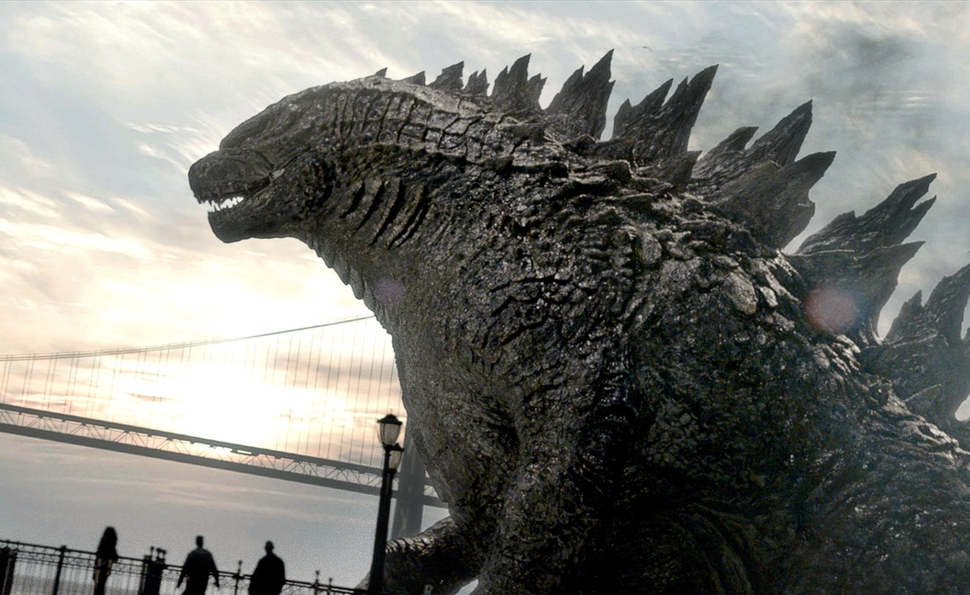
A fair amount of criticism has been laid upon Godzilla for the sketchy nature of it
characters. It’s true that the destruction brought about by the giant beasties
is the film’s primary interest and it provides that in spades. But I’d counter
that the film provides a surprising amount of humanity and warmth amongst the rubble
and wreckage at hand. It’s limited by the necessities of blockbusters, and
especially a giant monster film, but the film is smart to always contextualize the
action on display so it has a recognizable and identifiable human face at stake.
This begins with Bryan Cranston as a scientist who loses his
wife (a murderously underused Juliette Binoche) at a nuclear power plant and
becomes suspicious of a cover up that proves to be related to kaiju-business; this extends to Cranston's son (Aaron Taylor-Johnson), his wife (Elizabeth Olsen) and their son (Carson Bolde). But
Max Borenstein’s script writes in other scientists, soldiers and concerned
individuals to fill out the edges, and while rarely ever given much to do, the
film has some largely superb casting with actors adding so much to rote roles
(One of director Gareth Edwards’ favorite shots is a medium close up shot of
people looking off into the distance; it eventually becomes overplayed but it
emphasizes people’s awe and fear in the face of such overwhelming circumstances
– and it simply feels very raw and real).
Edwards also has a very strong visual sensibility. He shoots
action so it almost always has the greatest sense of wonder. In this regard,
Edwards has an extensive amount in common with Steven Spielberg; making big
blockbusters feel humanly grounded and yet still allowing for visual splendor.
Godzilla will likely
get compared to last summer’s Pacific Rim,
another throwback to giant monsters brawling at the expense of human life and
large cityscapes. It’s not entirely unwarranted; both are incredibly earnest
about their storytelling, almost archetypical in their visions and affectionate
towards the genres they inhabit. But Godzilla,
to an extent, has smaller ambitions. The scale is less global and it has a more
consistent interest in the humans on the margins of its spectacle. In in its
final twenty minutes, my argument will seem like it’s grasping for evidence,
but the fact is that the film wisely pushes back so much of its mayhem until
then (and there’s a good thirty or so minutes before any monsters are revealed
whatsoever); more importantly: it’s the undeniable raison d’etre.
Grade: B+

No comments:
Post a Comment