Friday, March 29, 2013

"Would You Rather" - Film Review


I watch a lot of bad movies. Sometimes I watch these bad movies by choice with the intention of making fun of them. And sometimes a film is so bad that there’s no room to make fun of it but to sit there displeased at the failures of the films. Would You Rather isn’t the worst movie ever, but it’s frequently pretty odious.

It’s a film with a thinly conceived excuse for torture porn horror excesses. I can take violence and gore and blood spatters galore, and a number of my favorite films and tv series use violence to great effect. But Would You Rather fails to understand the point of violence and especially of violence to excess in a film. 

It establishes a scenario (desperately in need of money, people choose between two awful, violent actions to win said money and stay alive) in which people are forced to do awful things; awfully violent things. At first it’s tolerable and then the justifications and the nominal thoughtfulness fade away and what remains is a film doing terrible, terrible things to its characters for seemingly no other reason than because it can. The film takes a weird, semi-fetishistic pleasure in forcing its characters do despicable things to themselves and eachothers in order to survive and to make money, as well as to fuck over other people. 

And what all this eventually leads to is you feeling like total, absolute shit. I felt lousy and a little unclean after watching Would You Rather.

There are familiar faces in the film, notably Jefferey Combs hamming it up endearingly as the sadistic host Shepard Lambrick, but also Sasha Grey as the peggable winner (she’s not there to make friends!) and an underutilized John Heard. Obligatory blonde Iris (Brittany Snow), the protagonist, is provided a thin prologue backstory to make us sympathize with her, a pat, generic story involving a sick brother in need. But we end up caring about really none of the character because they’re so underdeveloped and none of their motivations make real sense (even often from a primal stand point). 

It's not a totally unentertaining film, but it never earns the excessive bloodiness or the scenarios they take place in.

Grade: D

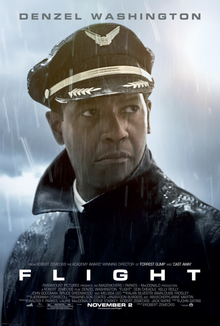
"Flight" - Film Review


There are those films that come straight out of the gate. They’re fully formed right from the very first scene. This doesn’t mean they’re necessarily good. But films that have identity crises, that can’t settle on what they want to be, are often too problematic to fully work and be enjoyable. Flight is an example of this latter type of film.

It’s all over the place. There’s entertaining things happening on occasion but for what purpose, it’s frequently tough to tell.

Denzel Washington was nominated for an Oscar for his work as in Flight, and though I don’t know if the nomination was justified, Washington is one of the better aspects of the film. Whip Whitaker is an airline pilot with major addictions, largely to alcohol. He shows up to work drunk and high on cocaine, and when the plane malfunctions, going into a nosedive, he flips the plane upside down to level it out in order to make an emergency landing in a field. The plane crash sequence is genuinely exciting and one of the film’s highlights, but afterwards the film becomes something far more brooding. 

It chooses to delve into the self-destructive tendencies inherent in Whip. Whip initially decides to go cold turkey after discovering the flight attendant he was having a fling with died in the flight (saving a child no less). He quickly returns to his old ways, however, when he learns that the toxicology report has him pegged for manslaughter for the six people who died on the flight. A fact that’s complicated by the fact that the real cause of the crash seems to lie in the plane’s mechanical failures and Whip appears to have pulled off a feat that no one else could have.

For awkwardly developed, slightly contrived reasons, Whip befriends Nicole (Kelly Reilly) a recovering heroin addict he first meets at the hospital. She tentatively tells him where she lives, and in a drunken haze, after failing to rekindle relations with his estranged son and ex-wife, he saves her from the deadbeat she owes drug money to. With his help, she kicks her drug habit (eventually joining AA – he goes along for one meeting, but quickly leaves, turned off by the whole idea), but has to watch as Whip continues to destroy himself slowly, guilt stricken by the crash and consuming increasingly excessive amounts of liquor. 

This has all happened within the first hour of a film that’s over two hours long. And it isn’t that it’s not entertaining or not well-acted or poorly directed, in fact, Flight is entertaining, well-acted, and well-directed by Robert Zemeckis (though it has some major pacing and structural problems). The individual moments and scenes work well in of themselves, but holistically it’s kind of a mess. The film early on is bouncing between Whip’s relationship with Nicole and his preparation for the trial. These two aspects are interesting but they’re often at odds with one another, having little to do with eachother and clashing tonally. 

At times, it’s cheesy or clichéd but Washington and a really great cast that also includes Don Cheadle as the lawyer Hugh Lang assigned to him for the case, who’s simultaneously disgusted and in awe of Whip, and John Goodman as his druggie best friend Harling Mays (who’s incredibly underdeveloped and who’s introduction is terribly handled). However, the ending undercuts much of the moral complexity the film had established and shoves a far, far too simplistic message down our throats.

Flight is an entertaining film, but the its initially interesting premise gets lost in the shuffle of a grab bag of ideas that work with varying degrees of success. 

Grade: B-

Thursday, March 28, 2013

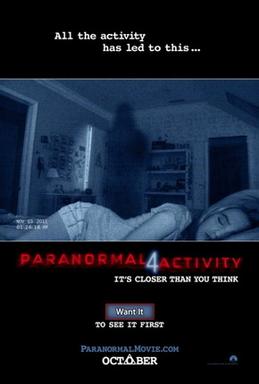
"Paranormal Acitivity 4" - Film Review


Why do we like the found footage genre?

I’ve always found it to be due to our desire for being immersed into something that appears, at least on the surface, real. In the first Paranormal Activity film (the best of the series), there isn’t a big budget and there aren’t any large scares (besides a conclusive moment). Nothing really happens. In the first film this works because there’s a sense of verisimilitude: this could happen in real life.

By the fourth film, what’s the appeal of watching people be occasionally, abruptly be freaked out by demonic beings (beings which they can’t even see in the first place)? If the story were to immerse us into this world, and have us buy into the notion that there’s a legitimate threat to the people we’re watching than perhaps we might care. Or perhaps if these were fully realized, well-developed characters worth liking and worrying about. 

Instead we’re made to watch unrealistic, one-dimensional people … and mostly they’re not even being haunted. They’re going about their daily lives and every now and again we’re reminded that oh, right there’s demonic foul play afoot!
 
Paranormal Activity 4 features long stretches of voyeuristically witnessing the day to day lives of a family. There’s dialogue that’s repetitive, uninteresting, and doesn’t advance the plot. And every once in a while the film remembers that it’s supposed to be a horror movie and has some moment that has us jump.

The would-be protagonist teenager Alex (Kathryn Newton) suspects something is up when the neighbor’s son Robbie (Brady Allen) creepily keeps appearing at their house. He’s forced to stay with them when his mother takes ill (the mother being the demonically possessed woman from the first film, but that’s almost beside the point). He’s helping the demon try to take possession of the family’s son Ben (Matt Shively) and in the meantime the demon dicks around and messes with this family in some supposedly, but not really, scary moments.      

Not only is Paranormal Activity 4 not very scary, it’s also very illogical. It’s necessary to accept the found footage concept to buy into the premise, but the film doesn’t even do a nice job establishing the basis of this found footage. Why is the daughter filming all the damn time? Does she have an interest in filming? Does she like documenting stuff? Why is she recording stuff with computers all the time? Why do they have so many damn computers?

A boring film that fails to achieve the one thing it’s supposed to (ya’ know: be scary), and that’s frustratingly, distractingly fallacious.  

D

New Girl - "Chicago" - Review


The best television comedies have a zany spark. This inspired energy they exude. An unpinnable je nais se quoi that makes them a pleasure to watch. It’s that quality they give off when the writing, the acting, and the production design culminate in a finished product that’s simply a pleasure to watch.

Even when New Girl isn’t making me laugh (and this episode wasn't its funniest), it leaves me smiling, self-satisfied at watching a show that’s in its prime; that’s new, exciting, and immensely fun. New Girl doesn’t always re-invent the wheel. In fact, it’s often very formulaic. Its bigger arcs for this season are relationship narratives we’ve seen time and again on sitcoms. And yet those stories remain a delight to watch because it’s all so fresh, charming, and, yes, funny.

The moments that sell this inexplicable joyousness to a good series is captured, for me, best in “Chicago” by Jess’s Elvis impersonator performance. Not only does it come totally out of left field but it’s also hilarious and it provides the episode’s biggest laugh. And yet it’s heartwarming, goofy, and lovable and completely in the vein of jokes that New Girl is known for. The second best example of this style of joke-telling comes early in the episode. In a moment that’s equally funny and sad, Nick tells his roommates that his dad has died just at the moment that they’re sucking in helium from balloons, and thus they are forced to provide sympathy while sounding like munchkins from the Wizard of Oz. 

This balance between humorous and sad continues throughout the episode and is handled incredibly well. Funeral episodes are often about characters taking stock of their lives. Death forces us to consider where we are at with our lives. New Girl does this largely with two of its characters.

In the less serious storyline, Schmidt is being very Schmidt-like. He, of course, makes the funeral for Nick’s recently deceased father all about himself. We don’t learn anything new about Schmidt from this story, but Max Greenfield continues to nail Schmidt’s bizarre enthusiastic, neurotic commitment to everything he does. In this case, Schmidt is scared of death almost to a fault, and he’s afraid to see Mr. Miller’s corpse. This leads to the first very amusing Schmidt scene. Winston coaches him through his fears by pretending to be a dead body, a method that’s working up until the moment Winston shifts out of his coffin pose and freaks Schmidt out. In the second of Schmidt’s thanatophobia scenes, Schmidt protects the chain on Dennis Farina’s corpse from one of Nick’s family members (played by Bill Burr – who some might remember for his memorable cameos in Breaking Bad). The kicker where he finally overcomes his fears and then continually bobs his head into the coffin like a drinking bird toy is a very funny capper. 

The largest chunk of screentime though is dedicated to Nick reacting to the news that his father has passed. We learn the odd, amusing fact that when Nick’s dad left town, he was forced to pick up the slack and take responsibility for his family. “Don’t laugh when they call him responsible,” Schmidt quips. Nick immerses himself in the plans for the funeral, becoming more responsible than perhaps we’ve ever seen him. The big task, the one he’s hesitant about, is giving a eulogy, at the behest of his family. He assigns the writing of the speech to Jess, who not unexpectedly fails at this task. This causes Nick to spiral, getting super drunk just before the funeral. Jess helps sober him up just in time to make the eulogy, a moving, funny, honest speech that is one of the episode’s highlights. 

In the early days, New Girl would never been capable of the delicate balance between sentiment and jokes. But now it does it as effortlessly as an impromptu Elvis karaoke sing-a-long. 

Stray Observations:
-The casting for Nick’s family was epic. Nick Kroll, Margo Martindale, Bill Burr. Doesn’t get much more perfect, and the little details of this worked so well (Grandma: “Don’t trust the cops”). Those Chicago accents were just on the right side of exaggerated.
-Lamorne Morris is very funny in the scene where Winston's attempts to stall the funeral fail when his feelings for his father figure overcome him.
-Though the death of this character comes out of nowhere, and it is a secondary character, the show sold it to me.
-“He loved me more than he loved you” “Yea, he told me that too”
-“Except for that 1 hour I committed fraud with him” “That’s all you need to know”
-“It’s bad to see a body before a funeral”
-“You’re mad at me. You’ve got your mad face”
-“This is every day in North Korea”
-“I really feel transported to the ghetto”

Grade: A-

Tuesday, March 26, 2013

Thoughts on Season 1 of "Parenthood"


Many series’ first seasons are uneven. Few series come fully formed out of the gate. Some of the best television series ever made have had to take time to find themselves. Buffy the Vampire Slayer’s first season is pretty awful at times, and its spin-off Angel had possibly even larger problems in its first season. Breaking Bad’s shortened first season didn’t give it enough time to develop itself properly.

Television is a medium we give leeway to when it’s bad; in the hands of the right creative talent tv shows can go from bad or guilty pleasure to must see series (This is definitely the case with The Vampire Diaries). Often times shows are better off for sucking early in their runs because it allows them to figure out what does and doesn’t work for them. In the long run this means they’re less likely to stumble (not always – odds are they’ll still stumble, but the crème de la crème will still produce some good episodes even past its peak, take Lost or Friends for example).

Parenthood is a series with great pedigree. Creator Jason Katims was fresh off of producing the excellent Friday Night Lights. Peter Kraus had starred in HBO drama Six Feet Under, and Lauren Graham had honed her dramatic and comedic chops on Gilmore Girls. 

Despite this talent though, and the talents of a mostly very good ensemble, the series struggled in its infancy. The same note kept being repeated for Erika Christensen’s Julia whose conflict always kept being her high-strung workaholics undermining her relationship with her daughter. Dax Shepard is an actor of limited range who often failed to capture the seriousness of Crosby discovering he has a son. A number of storylines stretched credulity, particularly mother and daughter Sarah and Amber simultaneously falling for the same teacher. 

The show initially struggled to rise above its clichés. A family with sons and daughters at far too perfectly spaced out ages is something we’ve seen a bit too much before. But it’s an idea that in the right hands could be used to deal honestly and earnestly about the titular theme of the show: parenthood. But not just parenthood, but growing up and small scale problems we face on a daily basis. Shows don’t need crazy nonsense happening on a regular basis. I love Game of Thrones as much as the next guy, but I certainly don’t need to see sword fighting and dragons to become invested in a series. 

There was promise in Parenthood though. In time the show became better and better at observing the small moments its concept assured. Jason Katims’ last series was the great tv drama Friday Night Lights. What set Friday Night Lights apart from the rest of the dramatic pack was how emotionally raw the series could frequently be. As critic Alan Sepinwall described it, “Most dramas, even the really good ones, will take you so close to the characters' emotions and no closer, as if they fear the audience will grow uncomfortable if there isn't some distance between themselves and the characters… [Friday Night Lights] shatters any kind of barrier between viewer and viewee.” When you watch Friday Night Lights, an odd bond is formed where it almost seems as if we’re feeling everything the characters are feeling. Though this sense of powerful, intense emotion isn’t felt nearly as often in Parenthood, there are a number of moments where the world around me faded out and I was there with the characters experiencing their joy and their pain. That’s a powerful experience that few shows are capable of and it was happening enough that (coupled with the tremendous likability of the cast) kept me coming back.

When these moments weren’t occurring though the cast of Parenthood drew me in time and again. This is a great, very large cast. It’s so big that a number of actors were short shrifted or given material that didn’t appropriately show off their talents. It took a long time for the series to utilize the grandparents Zeke and Camille (Craig T. Nelson and Bonnie Bedelia). Thankfully when they did it was possibly the strongest storyline of the season, dealing with the possible divorce between the long suffering couple, and it subsequently trickled down to elevate everything on the edges of this plot. Other actors were simply being given material that was weaker than what they were capable of, including Mae Whitman and Erika Christensen.  

Overall though this is a very pleasing start to a series, especially one with a shortened season. I look forward to what I’m told is a series that continues to get better as it progresses.

"Seven Psychopaths" - Film Review


Seven Psychopaths is kind of a mess, particularly in the early going.

It feels like the sort of the movie the studio greenlit even though it had an incomplete script, and much of the movie comes off as if it’s based on the first draft of a screenplay. Many of the ideas are half-formed and amorphous, never truly amounting to much.

The first half the movie is filled with scenes of varying quality that don’t seem to flow in an easy, natural order. The scenes seem to be tossed together haphazardly with no consideration for their placement. 

Though it picks up halfway through the film (the film’s best scene occurs a little over halfway through, involving one of the characters describing his imagined perfect film ending), it continues to be hamstrung by everything that’s come before it. The early portion of the film never finds its footing and it hurts everything that comes after. 

A struggling screenwriter Marty Faranan (Colin Ferrell), whose an alcoholic (because why not), is writing a movie entitled “Seven Psychopaths” (Man, how meta!). A number of these he ends up adopting from real life, including a mysterious murderer who only kills mid to high ranking Italian mafia members or yakuza. Some he makes up and, get this, they turn out to be real (Woe, man). 

He’s joined by his lousy best friend Billy Bickle (Sam Rockwell) who makes a living kidnapping dogs, only to return them to their owner to garner the reward. When one of these dogs belongs to a crazy criminal boss Charlie Costello (Woody Harrelson), he tracks down the dog and Billy and Marty, along with Marty's business partner Hans Kieslowski (Christopher Walken), suddenly find their lives in grave danger. 

It’s one of those films that thinks it’s a whole lot smarter than it actually is. There are a number of self-aware, meta commentaries on films in general and the film itself, and some work really well, but others just feel half-baked. It’s also a film that squanders a great cast, and the cast is frequently better than the material they’re being given.

It's got a lot of zany energy and at times it's pretty amusing, but it's too loosely formed to work as well as it should. 

Grade: B-

Monday, March 25, 2013

How I Met Your Mother - "The Time Travelers" - Review

For the entirety of “The Time Travelers”, something is completely off about How I Met Your Mother. Barney is attempting to persuade Ted to go see Robots vs. Wrestlers, and his trump card is to have Barney from 20 years from now show up. Well, clearly, Future Barney can’t be there, nor can any of the later future incarnations of Ted and Barney. And so much of the episode revolves around us trying to figure out what the catch is to this. Because obviously within the logic of the HIMYM universe, Ted and Barney can’t be seeing their future selves, and if they were they certainly wouldn’t be accepting of it so quickly and easily.

The B-plot here also isn’t jiving well. It’s actually fairly amusing. Marshall invents a fruity, “girly” drink and has been too embarrassed to order it. Since he’s been making Robin get it for him, Carl the bartender decides to name it after her and puts it on the menu. Marshall proceeds to fight for the drink’s name. There are a number of funny moments involved in this plot. The one-upmanship of Marshall and Robin is one of the better stories the show has done this season, and the conclusion where Marshall doesn’t know Carl’s last name made me laugh harder than many jokes in recent memory. 

However, this plot keeps rubbing up against the main plot in all the wrong ways. Whenever Robin, Marshall, and Lily go over to the booth, the time travelers suddenly disappear. And even if the idea of the time travelers is completely unfounded, I would have like it if the writers had at least maintained consistency for the rules of the time travelers.  

And then the last five minutes of the episode happen, and all my complaints about the episode were blown up. 

Turns out Ted is in the bar by himself. The Robin and Marshall fight happened five years ago, and he imagined the time travelers. He’s alone. 

It’s a gut punch. The last time the show did a twist reveal like this was “Symphony of Illumination” where Robin talks to the kids she never had, and, just like in that episode, “Time Travelers” strikes an unexpected nerve with you.

And though I still have major problems with this episode, when Ted imagines himself running to the apartment of his future wife, that he hasn’t met yet, and Josh Radnor performs possibly at the best I’ve ever seen him in the series, well, let’s just say the dust kicked up in the room. 

Despite this though, the episode is filled with strange choices. The time travel material is undermined by the constant fact that time travel would never be possible on a series such as this. Though the show manages some funny jokes about future version after future version of Ted and Barney showing up, the jokes just don’t land as well as they should because we know something isn’t quite right about the scenario. And as much as liked the moment where the always lovely Jayma Mays reprises her role from way back in season one as the coat check girl (particularly where she appears as two future versions and poignantly notes that Ted’s relationships always go one of two ways: with him or the person he’s dating getting tired of the relationship), my attempts to surmise the real reason for the time travel hijinks undid much of what was funny or touching.

And yet that end reveal is fairly devastating and sad, so much so that it overrides many of the bothersome sentiments that were hamstringing my ability to like the episode. It’s a reveal that attempts something more than factory output sitcom situations and pat emotional moments. It’s a moment that says something meaningful about this character. It’s a moment that finds a way to use the flaws and problems of the series in recent memory to its advantage, as if they were a necessary component to get to this moment (even though I’m guessing the writers didn’t ever plan this far ahead). 

Though I wish the writers had built to this moment better and that they had laid the groundwork more strongly, the moment is so good, it’s almost justification enough for the episode’s problems. If the series can still manage moments like this, it’ll keep me coming back in spite of myself and in spite of my mixed feelings towards the series at this point.     

Grade: B+

"The Master" - Film Review

I don’t believe I’ve ever seen a movie quite like The Master.

On a technical level it’s near flawless. Every shot is impeccably, immaculately conceived and rendered. But this is to be expected from writer-director Paul Thomas Anderson. He’s a filmmaker’s filmmaker. 

Anderson has never shied away from tackling subject matter that’s … well, different. His breakout film was 1997’s Boogie Nights, a film about a porn patriarch.

The Master tells the story of Freddie Quell (Joaquin Phoenix), a disturbed WWII veteran, who’s won over by the charismatic Lancaster Dodd (Phillip Seymour Hoffman), frequently called the Master.

Freddie is leading an aimless life after returning home from the war and finding it hard to adjust to post-war society. Bored at work, sexually frustrated, and taking pleasure in nothing but making and drinking alcohol, he’s always on the verge of bursting out in fits of rage. 

Lancaster, a magnetic orator, sees how easily manipulated Freddie can be and converts him to his following. At least, that’s one interpretation. The Master’s son Val (Jesse Plemons – in some spot on casting) believes that the man is making it up as he goes along and doesn’t actually believe in anything he’s saying; something that he tells Freddie, which deeply unsettles him. One skeptic describes Dodd's religious movement, “The Cause”, as a cult, and it does bear a resemblance to a cult at times.

But perhaps the Master does believe in the seeming pseudo-science of spirits time traveling (Though I personally didn’t interpret the film that way). 

Whatever the case may be, Dodd immediately takes a liking to Freddie, who he claims to see something in (what exactly that might be is never made completely clear). Or maybe he simply feels bad for Freddie, who’s mentally unsound and not the brightest of the bunch to boot. 

In either instance, Freddie’s drinking problems become untenable. He makes his own drinks filled with odd concoctions such as paint thinner (he accidentally kills a person at one point). The Master’s wife (Amy Adams) becomes fearful of the situation. He keeps attacking people who question Dodd’s work and teachings. The members of “The Cause” try to rehabilitate Freddie, but it doesn’t work, and soon after they’re forced to cut ties. 

Whether you find this too strange to enjoy, there’s no denying the film is filled with great performances. Joaquin Phoenix is completely unhinged as Freddie, perpetually crooked smiled, mumbling most of what he says in a low growl . Phillip Seymour Hoffman is a sight to behold as Lancaster; he’s so calm and charismatic that at times it’s hard not to buy into his philosophical propositions, no matter how unfounded.

On top of this, the film is beautifully shot and visually striking, which often makes up for how its plotting is occasionally haphazard, leaving something to be desired.

A challenging, dense, enigmatic movie that's certainly not for everyone.

Grade: B+    

The Walking Dead - "This Sorrowful Life" - Review

One of the underappreciated aspects of television is editing. The best tv series use their editing to add to the tension, humor, etc. But above all else, the editing prevents a show from being boring. The Walking Dead is a terrible offender of having swaths of dead air time. There are such large gaps of time where nothing happens, to the point where it’s distracting. Silence isn’t a bad thing for a show, but that silence needs to be used for a purposeful effect.  But on The Walking Dead, the time where there’s neither action nor people talking isn’t used for any other purpose than as transitions between scenes.

It’s annoying because the show should just jump from one scene to the next but instead it’ll cut to a new location and nothing’s happening yet. And the feel from such a visual choice is that the writers aren’t quite sure what they want to do and so they’re filling up air time with these transitionary breathing periods. The writers on The Walking Dead have never been quite certain as to what they’re doing either in the large scheme of things or in the individual moments, but it’s in these moments where nothing is happening that it becomes apparent that they really don’t have a full conception of what they want to do. They’re just filling up episodic time with this location establishment/dead air time because they were a few minutes shy on a script’s adaptation to the screen. That’s how it comes off. 

It’s a shame they chose to do this because, The Walking Dead actually on occasion has stories that are somewhat interesting, on paper at least. The conflicting feelings over whether to hand over Michonne to the Governor are a clearly stated problem that has the potential to bring out some interesting thematic questions and character reactions. Merle’s story arc in this episode also had the potential to be something incredibly engaging and complex. And they could have become these fascinating pieces of television to watch, but rather than using the extra screen time to add a few more scenes to round out the conflicts and characters, they kill screentime so we get a full hour of television. 

Michonne is a cool character; I fanboy up whenever she wields that samurai sword, but we know next to nothing about her. Yea, she’s resourceful and she’s handles herself well in a fight, but what exactly makes Michonne tick? I’m not quite sure. Similarly, Merle’s sudden desire to do the right thing and go out in a blaze of glory does seem to come slightly out of nowhere. If the writers wanted to build to this, they could have hinted at it a few times before hand. All we needed is a couple scenes where Merle talks with some other characters and we learn more about how he’s tired of being the bad guy and tired of being looked down upon by everyone, particularly his brother.

The choice between giving up Michonne to the Governor and allowing her to stay is also a problem never quite developed to its full potential. It almost feels inevitable that Rick is going to retract his decision to hand her over, mainly because Rick needs to be the better person in order for the conflict with Woodbury to work the way the writers have established it. The conflict between Woodbury could have been more nuanced and less one sided, but the Governor (as of last episode) has now gone into full-on villain territory, and so we’re far past a conflict where our opinions and feelings are divided and complicated. Rick’s decision to call off the “Ricktatorship” just doesn’t build from a well-established, organic place. Rick’s choosing it because these are the “good guys” and not because it was something he struggled with and had an epiphany about.

The first eight episodes of this season had problems but what made them far superior to nearly everything that came before them was the level of certainty with which they moved forward the story. There was still dead air time, but it seemed like the writers had a much clearer vision of what they wanted to achieve. After the smoke cleared from the mid-season finale, it became obvious that they didn’t know how to handle the aftermath of the conflict between the prison and Woodbury. They’ve been stretching out a conflict that logically would have happened much sooner except for the fact there’s more episodes of this series that need to be aired.  

Stray Observations:
-The car alarm scene is legitimately exciting even if Merle doesn't act to logical in it.
-“That’s a good idea” “It was Michonne's” – I don’t think you could be any more on the nose.
-“I’ll do whatever he says” – Rick is the leader because Rick is the leader, and not because he’s necessarily qualified.
-Glen asked Maggie to marry him. So, yea, that happened. He amusingly steals a ring off the finger of a zombie.
-Norman Reedus's acting is great when Darryl comes across zombie Merle.

Grade: B-          

Sunday, March 24, 2013

"Smashed" - Film Review

Stories depicting addiction are never comfortable to watch. They’re often exacting examinations of the destructive power of addiction holds over people, and Smashed is no exception. The film draws us in with its intimate portrait of a marriage where the strongest connection is the couple’s mutual addiction to alcohol.

The plot of Smashed is fairly predictable and the writing is on the wall from very early on. A woman, Kate Hannah (Mary Elizabeth Winstead), who’s always drinking alcohol goes in to her job as a teacher after a night of heavy drinking and throws up in front of her children. She lies and says she’s pregnant, and, too slow to correct it, the whole school soon believes she’s got a baby on board. Things continue to escalate from there to the point where she starts to question whether there might in fact be a problem with her drinking habits. One drunken night leads to her smoking crack with a complete stranger from the bar, and she finds herself waking up out on the street the following morning.

The principal of her school Dave (Nick Offerman) confides in her that he’s a member of AA, and she joins him at his next meeting, where she finally admits to herself that she has a problem. She finds a sponsor, Jenny (Octavia Spencer), there. 

Things become problematic though between her and her husband Charlie (Aaron Paul) as he continues to drink while she starts up the twelve step program. Their relationship is increasingly strained; tensions mount when he can’t comprehend why she’d want to stop drinking, and the whole basis of their relationship starts to unravel. 

Although the wedging of the two apart is easy to see coming, Winstead and Paul’s performances are so raw that it becomes mesmerizing to watch. There's an unnerving, uneasy level of realism to these characters and their relationship.

Painfully realistic and touchingly humanistic, Smashed is a sad, honest look at alcoholism and a well-acted character study.     

Grade: B

Saturday, March 23, 2013

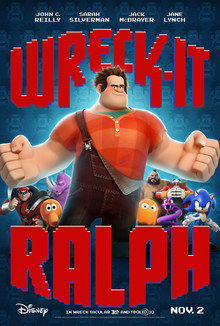
"Wreck-it Ralph" - Film Review

Wreck-It-Ralph has an initial premise that sounds really cool. It’s Who Framed Roger Rabbit meets Toy Story. When the customers are away from the arcade, the video game characters have their own lives. Each game is interconnected so that characters can leave their own game and go to therapy in Pac-Man or get a drink at Tappers. The film gets a lot of mileage out of the many in-film references to various video games, both from the arcade era but also about more modern games such as Call of Duty and Gears of War.

While this intriguing premise is part of the film’s charm, what really sells it are the more original elements thrown in. There’s a surprisingly touching story about misfits and finding your place. I was just pleased to see an animated Disney movie that didn’t have anything to do with a princess. The film’s central relationship is about Ralph and Vanellope von Schweetz. The two of them are both unwanted in their games and attempting to do things to earn their place in their respective games. This relationship ends up becoming the heart of the film. 

This is a case of the animation and the voice acting complimenting one another. There’s some wonderfully luscious, rounded animation that’s warm and inviting. The film really gives each video game world we enter a distinct feel. The animators have fun playing around with the fact that we are inside videogames. In the more retro games, characters move in stilted and clunky movements when they attempt to do different actions. The newer games are more fluid and, as Fix-It-Felix puts it, HD. This animation is brought to life by an impeccable cast. John C. Reilly is perfectly suited for Ralph, providing a real soft spot to the lug. Sarah Silverman is also well-chosen for Vanellope, providing the right amount of lisped, cutesy enthusiasm to all her lines but not so much that it becomes annoying.   

Ralph is tired of being the “bad guy” of the game he’s in, Fix-It Felix. He decides that if he gets a medal, it’ll be proof that he’s just as good as the “good guys”. So he sets out to earn a medal. His first stop is in a big shoot-em’- up.  He eventually gets the medal but in the process releases one of the bug monsters from the game, and outside their own game these creatures start to wreak havoc. 

He then finds himself in a racing game set in a candy-based world. Here he meets, who is a glitch that wasn’t meant to be part of the game. Ralph immediately sympathizes with her outcast status and tries to help her achieve her dream of winning the race.

After Ralph leaves, kids stop playing the game assuming the game is broken. The arcade owner puts an “out of order” sign on the game and plans to have the game removed. Felix (Jack McBrayer) scrambles to find ralph and save the game from going on the trash heap. 

The stakes are raised due to the fact that if a character dies outside their own game, they die for real. A problem exacerbated by the alien bugs and a meddling candy king who’s obsessed with maintaining his power, and also may not be all he seems to be.

The film works as well it does because it isn’t just a handful of amusing, randomly strung together jokes about video games. There’s a really well told, original story. Though the story has lot of familiarity to it, no one ever said a good film had to reinvent the wheel. The film’s ability to build up whole new worlds that feel rich and detailed adds to the viewing experience. Above all else though, this is a really fun movie. It’s funny, heartwarming, and filled with tons of great visuals. 

Grade: A-

Friday, March 22, 2013

Community - "Economics of Marine Biology" - Review

To be quite honest, I’m not really sure what’s going on in Community anymore. There are plenty of series that decline in quality in their fourth season. On tv right now, there’s Cougar Town, Archer, and The Vampire Diaries, all diverse series that haven’t lost their sense of purpose but aren’t operating at the same level of output they were at their peak. And yet I really just don’t know what’s happening on Community anymore.

Part of it is the natural evolution of a television comedy. Shows are often weaker in later season and pushing to squeeze out any jokes they can, and fourth seasons are a common time for this fatigue to start setting in. The show probably wouldn’t be as good as it was in the past even if Dan Harmon was still showrunner. The third season had a lot of problems that were very clear, but even with those problems the series was still producing some of its best episodes. And even in the episodes I had qualms there were plenty of funny moments that made up for their flaws.  And yet, the series isn’t all that funny anymore. Humor is subjective and tastes will vary, and so it’s a little unfair to judge a series on how funny it is, and that’s why when I review I try to get at the other matters at hand that make something work or not. But when something is funny it can raise a series above its shortcomings and when a series is not funny, well it just stinks. 

Part of it is that the episodes are overstuffed, and this is the most overstuffed of them all. Abed is hardly even in the episode, and none of the storylines are given enough room to go anywhere. But the series has been overstuffed before and made it work. And being overstuffed isn’t bad when in the hands of capable talent, but when done wrong very glaring. A lot of these stories could have become bigger premises but they’re never fleshed out enough.

I like the idea of Jeff and Pierce making an unexpected connection, and this is the most engaged Chevy Chase has appeared to be all season, but it’s barely given screentime. The Troy and Shirley storyline is incredibly pointless and never given enough room to make an impact or provide a purpose for itself.

The Annie-Dean storyline is so broad and unfocused that it doesn’t really work. While I like the idea of Magnitude being forced to retract his catchphrase, the sentiment never hits the emotional note it ought to.   
    
These are very good performers but they’re stuck in stories that even they can’t save.

Grade: C+

The Vampire Diaries - "Because the Nights" - Review

Something I’ve noticed lately in The Vampire Diaries is that it’ll have one plot that is great (arguably even one of the best it’s ever done) and then the other one or two storylines will feel slight. It’s usually been the A-plot (which is what you’d likely expect in a tv series) and for the most part these awesome plotlines are so good that they make up for the weaker portions of the episode elsewhere. This was true of last week’s episode where the newly transformed emotionless Elena was the highlight of the episode, and it’s true once again of “Because the Nights”.

It’s not just that Nina Dobrev is great in this new role. It’s the fact that this character is so completely unhinged that I have no idea what she plans to do. Klaus broods and complains, but he doesn’t really stir up unanticipated trouble. Silas is another one-minded villain hell bent on a singular goal. But, much like Katherine, emotionless Elena is a devious, calculating individual who is beholden to no one.

When Elena tells Rebekah how she’s aware of how Damon is playing her, and how she’s simultaneously playing him back, it had me grinning. This is the type of delicious scheming that is the raison d’etre of The Vampire Diaries. 

That this story is paralleled with a story of Damon’s involvement in the 1970’s punk scene is even better (Though I’d have liked to seen them play up the period detail more). Plus we get the return of one of the series best guest stars, Arielle Kebbel as Lexi. Lexi attempts to fix Damon and get him to embrace his emotions again, but Damon plays her, sleeping with her before leaving her stranded on the roof. Present day we find Elena (with the help of Rebekah – an unexpected but great pairing, which is the return of another classic Vampire Diaries element:  ever shifting alliances) doing the same thing to Damon. Karma is the worst sometimes.

While this storyline features some of the best elements to a great Vampire Diaries episode, the Silas storyline feels bland in comparison. Klaus and Caroline’s bickering has gotten repetitive and isn’t being taken in any new directions. The scheme to stop Bonnie from using expression magic to create a witch massacre also should have had more weight to it. Why isn’t’ the cavalry being called in? We get three characters trying to stop what could potentially cause the end of the world. 

The NYC storyline covers for a lot of the problems in the other storyline but I wish the episode was more streamlined. Although that ending paid off both stories nicely dovetailing them when Steffen and Damon talked only to realize they’ve both failed and thus things have gotten much, much worse. It’s the mixed bag that this season has ultimately been, but recent episodes have had enough fun and enough forward momentum to make up for the problems. And, hey, with a story as punchy as this, I can’t complain.  

Stray Observations:
-Great music choice: Talking Heads - “Psycho Killer”
-Back in the 70’s, Damon was killing people so their ID’s could be used for vampires on the run, including, unintentionally, Katherine.
-Man, they’ve done an awful job with using Bonnie’s dad.
-The crosscut of the feedings was weirdly erotic.
-“I hated the moral self-righteous you”
-Though much of the Caroline-Klaus stuff was a re-hash, this last scene between them I found to be really effective. Candice Accola’s acting was excellent.
-Caroline kills the witch to save Bonnie and in the process causes the massacre. How do we feel about this?

Grade: B+ 

Thursday, March 21, 2013

"The Loves of a Blonde" - Film Review

There are some films that feel true to life. They’re filled with so many nicely observed moments that there’s an authenticity to them. They feel real. The Loves of a Blonde is obviously staged because it’s a movie, but, in the hands of director Milos Forman, there are so many of these joyous small scenes that sometimes it’s easy to forget and slip into its world.

Andula (Hana Brejchová) has gotten engaged to a man that she hasn’t seen for a month. She says she loves him but she’s upset that he hasn’t gotten back to her in so long. 

In the meantime, she goes to a party hosted for reserve troop brought in to undo the gender imbalance in the small town (A ratio of 16 women to 1 men - There's some social satire here about communism in Czechoslovakia). She and her friends notice that three soldiers keep looking over at them and they’re certain they want to dance with them. The girls are embarrassed, but also a little flattered. The soldiers, who are much older than these young girls, argue as to whether the girls would be cool with them going over to ask them to dance.

In the film's first incredibly charming and funny moment, the men send over a bottle of Champaign to the girls and the waiter accidentally sends it to the wrong table. Due to the crosscutting, the meaning of the whole situation is made further funny; the girls are relieved while the men are flustered and angry.

Eventually the soldiers do dance with them. It’s a slightly awkward but mostly fun night. After one of the soldiers pressures them to drink wine and then to go somewhere else with them, they head off to the bathroom to discuss what they should do. Andula isn’t interested though. 

She’s about to leave, but then she runs into the piano player from the band at the party. She’s been occasionally eying him all night. He convinces her to come back to his room, but she keeps saying that she’s going to leave soon. He jokes around and teaches her self-defense, and before you know it she’s won over. They sleep together, and she sneaks out in the morning. In another one of those perfect little details, at the same time she’s doing her walk of shame, she runs into one of the women from the table who falsely received the Champaign doing the exact same thing.    

She returns to her normal life. She works in the factory and lives in her dormitory. The piano player, Milda (Vladimír Pucholt), is still on her mind though. When the boy she’s technically engaged to suddenly shows up, he berates her for not wearing the ring he gave her. He makes her go back to her dorm to get the ring. When she won’t come back down, he storms in and yells at her. But her roommates defend her, and she finally tells him off. 

Inspired by this, she decides she’ll hitchhike up to see Milda. However, she never tells him that she’s coming, and it leads to a series of awkward encounters with his parents. She shows up at his apartment, but he’s at a gig. She leaves but asks them to hold onto her suitcase. The parents contemplate and argue why Milda would have a girl come over like this; the mother is particularly frustrated. Andula returns because the frontdoor is locked and she needs help leaving, but the mother has her stay since she wants to get a look at the potential beau of her son. The mother questions the lack of thoughtfulness to her decision making (where was she planning to spend the night in Prague?).   

They tell her that she can spend the night. Everyone goes to sleep, and Milda (who has been out having dinner with another girl) returns home in the middle of the night. His father hears him come in and asks him who the girl is. He claims that he doesn’t recognize her and didn’t invite her. Andula wakes up and he gets a better look at her and makes the connection as to who she is. They talk, the spark between them seems rekindled (or Milda at least feigns that it is). 

But soon after, the mother will not tolerate them sleeping together and drags him into the parents’ bed. This leads to one of the funniest and most realistic scenes, where the three individuals find it near impossible to get comfortable with the lack of space they now have in the bed. It also doesn’t help that they’re bickering the whole time (mainly about Andula’s sudden arrival). She sneaks a listen into this and it makes her cry.  She's been disillusioned by the whole incident and heads home.

Not much happens, but it all has a sincerity to it. We’ve all had those days where these odd but meaningful series of events have occurred. We’ve all juggled romantic commitments. The greatest aspect about it is how it undercuts these moments to make them all the more real. Andula showing up at Milda’s doorstep is that grand romantic gesture everyone has thought of making and seen in the movies, and she shows up and nothing goes as planned. More importantly the guy she thought she was in love with and her romantic longing turn out to both be false. A funny, poignant, breezy film.

Grade: A

Wednesday, March 20, 2013

New Girl - "Quick Hardening Caulk" - Review


Will they-won’t they tension is very easy to handle. For some pairings it will be infinitely more entertaining to watch the dance.  But any show can throw together two individuals with some chemistry and play out endless variations of sexual tension never amounting to anything. What’s far more difficult is to break that comfortable barrier and throw the will they-won’t they individuals head long toward eachother. 

When New Girl finally acted upon the clear development of feelings between Nick and Jess, reactions were mixed. It was a great moment and near perfectly executed, but the moment after being pleased at how well done it was, the next feeling many of us had was a sense of dread: there’s no way they can pull off the aftermath of this. But New Girl has continually proven itself incredibly capable of dealing with the aftermath of the Nick-Jess kiss.

In fact, the newly arisen tension between the two characters has sparked even more energy and life into a series that was already very good. Nick and Jess’s dynamic pre-kiss was amusing but it’s in some ways even more entertaining now post-kiss. Part of the success is due to Jake Johnson and Zooey Deschanel’s performances, but it’s also due to some great writing.

Having Nick be suddenly sexually attractive once more due to him being ambitious and goal oriented is a brilliant idea. Having it be due to him trying to win the affections of his new boss (a relationship Nick hilariously describes as, “going to end badly. But the middle part is gonna be awesome”. Oh how right you are Nick) is an even better decision. This is smart writing; it’s a surprisingly complicated conflict that requires a lot of tough balancing and it effortlessly establishes an ending that gives us a Nick-Jess hook up that doesn’t bring them together. There are other things along the way. Jess fawns for Nick in spite of herself while Nick is too oblivious to notice, and his obliviousness leads to Jess ultimately being in a drugged up state that leads to the removal of all his naivete about her feelings. This scene also ends up unexpectedly causing problems for their eventual hook up since both are too injured to properly make out. It’s an excellent series of bread crumb trail laying that pays off great. 

The will they-won’t they is still there but it’s far more complex now. Putting the cards on the table hasn’t made the show any less enjoyable; the show still has me so thrown that I have no real inclination as to what’s in store for these two, but with the feelings out in the open, there’s a livewire energy that is trickling down into all other aspects of the show. New Girl is also really good at having stories intersect and dovetail. Schmidt and Winston have their own plot going on, but before they gallivant off, they find themselves giving advice to Nick. It allows both plots to be pushed forward while finding ways to have the stories not feel entirely closed off and unrelated. 

Schmidt using a lionfish as a bizarre metaphor for losing Cece is also very funny in its own right. The way Max Greenfield plays Schmidt’s commitment to his delusions is so well-done. In the hands of many other performers, Schmidt could become grating, but it’s to Greenfield’s credit that we find Schmidt so damn endearing. When Cece shows up at the hospital and Winston has to tell her that it’s best that she leaves, it’s terribly heartbreaking. Like the Nick-Jess story, the Schmidt-Cece storyline has worked really well this season (though I’d have to say less well then Nick and Jess).

Grade: B+

Hannah Horvath and Co. Hit the Self Destruct Button: Thoughts on Season 2 of "Girls"

Spoilers on Season 2 of "Girls" Below
Was season two of Girls a perfect season of television? No. It was a season, much like its characters, constantly in flux. It was a show changing from episode to episode to become something unexpected and occasionally incredibly experimental (“One Man’s Trash”, aka the Patrick Wilson sex romp, anyone?). Though it was an uneven season (at times more so than last season), it remained a great season of television.

There are very few shows attempting what Girls is. It isn’t even that it’s about twentysomethings (we’ve seen plenty of series like that); it’s that it’s a series about frequently terrible people who it wants you to simultaneously be disgusted by and yet still like. Part of this is because we can often see ourselves in the characters; I’m twenty so I sadly do see much of myself and people I know in them. It's a show about people doing terrible things because they’re not completely tied down and they don’t know what they want to be yet (The series plays around with the idea of characters trying on new identities, pretending to be someone they’re not just to see how that new identity fits).  They're often too naive or feigning naivete about the consequences of their actions or the dickeshness of them.

But more importantly, the series manages this tricky feat by often calling the characters out on their nonsense. It may have done it less this season than last, but generally, Girls is a series that doesn’t let its characters do terrible things without saying, “Hey, that’s a pretty terrible thing. You shouldn’t do that!” And sometimes it can be far, far too subtle about this point.

By season’s end my sympathies for the character were mostly undone by the penultimate episode. I chose not to write a review for “On All Fours” because it was a deeply dark and depressing episode, and my heart just wasn’t into the whole idea of reliving that episode in minutia. Besides the now infamous sex scene between Adam and his girlfriend, there are numerous cringe-worthy moments (some funnier than others – particularly Marnie’s strange rendition of Kanye West’s “Stronger”). All in all, it’s a painful episode to sit through, and it even made me angry with the show's most likable character, Shoshanna, who has a taken a turn for the worse. 

The finale isn’t the season high point (“On All Fours” is arguably the best episode but there are other contenders). Much of it feels rushed. Shoshanna has been underutilized this season (despite being better utilized than last season), and while her decision to break up with Ray isn’t unexpected (it was something clearly in the making), it does come off very abrupt. On the whole, everything is tied up a little too nicely and the episode feels like its leaping over a few plot points to get to these endings.  Part of the problem is that this season is shorted which means the season feels less holistic than last season. 

What shines through this all though is the distinctive vision of Lena Dunham. Dunham has in her mind what she wants to do with the show, she sets out to do it, and you can love or hate it but it’s her product through and through. Frequently the show is more concerned with establishing a tone than pushing the plot forward in some direction. There’s this cool, autumnal color scheme that pervades every scene. It’s a dulled, earthy tone and it’s a look and feel quite unlike any other show. It’s hard to anticipate where an episode, or even a season is going, because big moments don’t have this tragic aura to them. They’re not built towards in the traditional plotted sense. The plot could go anywhere at any moment, and any character could carry the story at any given time.

No one has learned anything by season’s end. They typically avoid learning lessons. Hannah keeps being given opportunities for self-actualization and she never takes them. Jessa marries Thomas-John despite the fact on some level she knows it’s a bad life decision. She visits her father, knowing that there’s nothing to be gained from such a frustrating experience from a man who was never there for her. Does up and leaving mean she’s learned anything? Probably not, but only time will tell. Marnie keeps turning back to her ex Charlie, out of familiarity, though their relationship felt claustrophobic and boring in the past. In the process, she wrecks his relationship with his current girlfriend. Charlie knows getting back together is a terrible decision; it can only end badly between again, but he’s so obsessively infatuated that he can’t escape Marnie’s control. Shoshanna purposefully goes out of her way to wreck her solid, stable relationship with Ray because it doesn’t align with her fairy tale visions. She cheats on him and lies about it (with the most awkward and awful euphemism: “I held hands with a doorman”). In turn she wrecks Ray who is the only person willing to accept himself for what he is. Ray hates everything (or so he claims), but the one thing he didn’t hate was Shoshanna, and maybe he was wrong about that. 

And then there’s Hannah. The show sometimes leans to heavily on just the character of Hannah and this can be frustrating. Many characters are short shrifted screentime because the show keeps returning to focus on this character even when it isn't her story ("Video Games" is an episode about Jessa that some what awkwardly shifts the focus to Hannah to put the thematic button on the episode). But for better or for worse, Hannah is the show's protagonist. And what an awful protagonist she is. By season’s end she has isolated herself from every person around her. She’s pushed away Marnie, forced Elijah to move out for hooking up with Marnie, got dumped by Sandy, and cut ties with Adam for getting stalkerish, while Jessa has bailed. With no one to turn to her OCD kicks in. Initially this feels like it comes out of nowhere, but it ends up becoming a great part of the season (Hannah’s descent into mental illness parallels everyone else’s lives falling apart around her wonderfully). She’s bizarrely enough rescued by Adam, who romantically runs to her apartment and kicks down the door. 

Though the endings of the finale appear happy, it’s only surface level. Charlie and Marnie can’t sustain a relationship with one another. Adam and Hannah have been proven to be no good for one another. Shoshanna might need some time to hook up with people, but it’s likely to leave her empty in the end. So we’re back to the status quo of the Pilot but everyone is even more fucked up then when we first met them.  

"The Night of the Hunter" - Film Review

If you met a preacher, you’d trust them, right? They are a man of God after all; a community figure that helps those in need.

The Reverend Harry Powell (Robert Mitchum in a phenomenal, chilling performance) is anything but your typical preacher. He’s a conman who swindle widows out of money. When he learns from a fellow inmate on death row that he’s left some money behind at his home, he leaves prison with the desire to claim the money. He woos the widow, Willa Harper (Shelly Winters), and marries her. 

Ageism is major theme of The Night of the Hunter. The real protagonist of the film is the son, John (Billy Chapin), who despite his protestations can’t seem to convince his mother or anyone else that the preacher is up to no good. Even the preacher tells the boy that “it’s my word versus yours. No one is going to believe you”. And so the boy continues to persevere.

Chapin gives a surprisingly assured performance. It’s not one completely marked by cutesy or whimsy, and both John and his sister Pearl (Sally Jane Bruce) are put through deeply trying and difficult circumstances.  

His father (Peter Graves) told him to keep the location of the money, inside his sister's doll, a secret, and he holds onto this secret for the love of his father. Pearl on the other hand is slowly becoming ingratiated to the preacher, who has an abundance of charms and an uncanny ability to use religious scripture to win anyone over, including a now infamous example re-appropriated for Do the Right Thing describing the war between love and hate. 

The preacher is a wily one. He wins over the townspeople, including the mother’s close friends and employers, who tell her that she needs a new husband. He plays her to a tee, refusing sex on their wedding night by claiming that he’s here to help raise the children and nothing else. The mother soon finds herself a devoted religious follower; she yells out speeches about staying true to scripture and how the preacher has shown her the way of the righteous. 

By the time she’s wised up, matters have gotten far out of hand. He kills her and the children are left in an even more precarious situation than before. It’s an incredibly nerve-racking film where it feels like something could go wrong at any moment (and in a number of instances certainly does). The calculated, shadowy imagery (that beautifully contrasts scenes of night and day) ramps up the tension. Night scenes have an eerie, surreal quality and there are scenes that take advantage of their studio set nature to form disturbing, jaggedly framed shots reminiscent of German expressionist films such as The Cabinets of Dr. Caligari.

Walter Schumann's score serves to heighten every moment even further. While sometimes the score is overblown, during the intense cat-and-mouse moments the score parallels the action perfectly. 

The film is underscored by significant religious undertones. The woman, Rachel Cooper (Lilian Gish), who will later become a major figure in the film, and actually believes in the religious views she’s preaching, starts the film in talking head-like pose against a dreamy, starry background discussing “wolves in sheep’s skin”, a fitting description of Mitchum’s character. Powell manipulates the religious language for his own gains, but the film doesn’t buy into his mocking of scripture. In fact, the film seems to be set in a very moral universe where actions have consequences and tend to be punished in the long run.     
   
Though the ending feels a little like a cop out, everything up to that point is superbly shot and acted. It’s a frightening, mesmerizing film that’s still thrilling and riveting. 

Grade: A