Monday, March 31, 2014

How I Met Your Mother: "Last Forever"

 Spoilers Below:

“Last Forever” was a bumpy episode. Though filled with some touching character moments, it was ultimately hindered by a choppy overall narrative, which attempted to squeeze a ton of plot in (leapfrogging around to a number of future events post-wedding) for a final setup that will likely frustrate and divide fans. 

We may have gotten the answer to this series’ title but it did feel like a little bit of a cheat. We do see that moment and the life Ted built with her, and Cristen Milioti’s palpable chemistry with Josh Radnor makes this ending feel slightly disappointing, as well as the fact that whatever feelings we may have had towards Robin and Ted as a couple are way, way back in the rearview mirror.

Had the series ended sooner, and had it had fewer seasons, this reveal, that the mother is dead in 2030 and that Ted is telling the story to find out if his kids don't mind if he asks Robin out (hinted at a few episodes back) might have felt rewarding and like a neat twist. It stays true to the narrative's heavy focus on the relationship of Ted with Robin. But too much character change regarding Ted, Robin and Barney over the series’ run doesn’t allow it the same oomph it might have had. 

The fact that the show focused so heavily on Barney and Robin’s wedding only for that marriage to dissolve only served to make this final season feel a little bit like a waste. 

And yet this finale was not devoid of goodness. 

What surprised me was how thoroughly the show embraced the deep pool of melancholy and disappointment it had accrued. Ted’s increasingly desperate efforts have made him a somewhat tragic figure. He’s a romantic Charlie Brown who had practically stopped trying even to kick the football from Lucy (Forgive the lousy metaphor). Here we see how that change from romantic idealism to something more grounded, even fatal, has made him who he is. He almost doesn’t go over to talk to the mother on the train platform, doubting his faith in destiny. 

More saddening still was Barney’s regression into his old ways after failing with the one woman he could see himself building a life with. Barney in this episode became the dark, pathetic core at the center of his womanizing throughout the series, and it was a strange direction that almost felt like a meta commentary on the character. 

That bitterness of life not working out exactly as the characters had planned gives the episode a few really touching and moving moments. Robin confronting Lily about the sorry state of the “gang”. Barney looking at his newly born child. Ted talking to the mother under that yellow umbrella. 

The series long-con didn’t work, but I also don’t feel let down. I’ve abandoned series before, but I stuck with How I Met Your Mother because its characters and its perspective and its humor, when firing on all cylinders, could create something really great. So few shows last nine seasons, and so few are any good when nine seasons deep. I don’t hold it against the show or Carter and Bays that it wasn’t what it was at its peak. It was a sitcom, and occasionally one that was quite funny and quite poignant. May be its longterm narrative was a mistake as it began to consume the show’s aims whole, but, hey, the world is still spinning and we have four really excellent seasons and lots of highlights besides after.

"Johnny Guitar" (1954)

The titular character of Johnny Guitar (Sterling Hyaden) is not the protagonist. He is a supporting figure in this Western, a genre notorious for being masculine and macho. But then Johnny Guitar relegates all of its male characters to the sidelines. The figures who take charge and drive the action, who dominate and manipulate are all women; men are, at best, their all too willing pawns. The protagonist is Vienna (Joan Crawford), a saloon owner who is easily the most commanding and strong presence in the film. She squares off against Emma (Mercedes McCambridge) the leader of a town mob who thinks Vienna is behind a recent train heist. Vienna calls in Johnny, a former lover, to use his gun-slinging to protect her, but he has turned pacifist and plays a guitar. He speaks like a beatnik in cowboy gear. Emma is so vehement in her hounding of Vienna because Vienna holds the attention of the Dancin’ Kid (Scott Brady), who actually led the heist, and who Emma jealously pines for. Vienna and Emma play the men around them like fiddles. Both the Kid and Johnny want Vienna to love them but they let her define the terms of their relationship. The greatest sparks of fiery passion take place between Vienna and Emma. Under the surface the film suggests some surprisingly kinky sexual things. Ask yourself where the real romance of the story is. Emma’s mob mirrors the witch-hunt of the House Un-American Activities (the film was ghost written by the blacklisted writer Ben Maddow); Emma ferociously demands people be implicated no matter the evidence. Johnny Guitar sells itself as delicious camp (it’s almost self-consciously, low-budgetly artificial and obsessed with a lascivious but buried psycho-sexual drama), but Nicholas Ray is sneaking ridiculously subversive messages throughout this bizarre, wonderful film. 

Grade: A-

"Red River" (1948)

In Red River there are only two named female characters and one of them dies within the first few minutes, but this makes sense for the film’s story. The world of Red River is a man’s world, defined by strong, stoic men suffering the harshness of the untamed West. This is a deeply masculine film based around male friendship and bonding, roughing it, and keeping and codifying an honor code. At its center it is a film about father-son relationships that buries the hatchet of its two main characters Tom Dunson (John Wayne) and his surrogate son Matthew Garth (Montgomery Clift, in his first role) through a bruising fistfight. But in an environment only just witnessing the advancement of civilization, Red River argues that this aggressive testosterone can-do spirit is necessary to survive and tame the land. Dunson buys a piece of land and raises some cattle over more than a decade, but when the value of his livestock begins to diminish he sets out to sell them. The film’s story pivots around a long, exhausting cattle drive, the first drive along the Chisholm Trail. As Dunson and his hired hands become mired in setbacks, including a cattle stampede that kills one of their own, Dunston starts losing his head and his demand for total control threatens to tear apart the drive. Howard Hawks' direction and Russell Harlan’s cinematography take advantage of beautiful, sweeping vistas and continually reminds us of how daunted by the natural environment the men are. As the environment thwarts them at every possible opportunity, Matt and Dunson’s differing views on how the journey should be handled helps unravel their long simmering relationship. Wayne gives in one of his best performances. There's a subtle transformation at work where Dunson's wounded pride and years of hardship gradually, ruthlessly harden and wreck him. 

Grade: A-

Saturday, March 29, 2014

"Cat on a Hot Tin Roof" (1958)

To watch Cat on a Hot Tin Roof is to watch two of the most insanely attractive stars of early Hollywood verbally spar it out. Elizabeth Taylor and Paul Newman were ridiculously good looking, a fact that does not go uncommented upon in the film, but they were also commensurately talented, and they are easily the most interesting part of this uneven but often searing film, besides Burt Ives’ excellent turn as Big Daddy. Taylor and Newman’s Southern good looks are worth pointing out because the film is deeply concerned with the rottenness underneath the decadent surfaces of a Southern aristocratic family. Brick (Newman) and Maggie (Taylor) look like the perfect couple but a gaping rift has formed between them. Brick, a former football star whose best days are behind him, has taken up drinking incessantly; he quietly shuts out the world and gazes into the distance as if barely aware of the presence of other humans. Maggie, who on some level married Brick to marry into money, is partly responsible for Brick’s funk, seducing his close friend Skipper, who guilt-strickenly killed himself in response. But Brick’s problems run deeper and extend further back to his upbringing in a family so obsessed with money and status that they failed to actually build any meaningful, affectionate connections. At its center is Burt Ives as the patriarch, a lumbering man unaware that he’s soon to be dead from a cancer that might as well symbolize the barely veiled decay of the family. The film writes much of Tennessee Williams’ Southern languor into the tone and mood of the film; the cinematography and direction give the sense of a long summer day that just won’t seem to end; sweat accumulating and clinging to every fabric until it matches the heated passions of the characters it sticks to. While the film is unnecessarily sluggish and wooden (it handles transitions between scenes pretty horrendously), Taylor, Newman and Ives are still electrifying. 

Grade: B

Thursday, March 27, 2014

"Le Corbeau" (1943)

Le Corbeau was made in France during the occupation by Nazi Germany, and it is a film heavily informed by the historical context in which it was produced. Set in a small provincial French town, the film deals with a series of mysterious “poison-pen letters”, venomous pieces of gossip and slander making claims about various members of the town and turning the town into a deadly rumor mill. The author of these letters signs off simply as “Le Corbeau”, or the Raven, and the anonymity of the claims causes the town to start looking around at one another for the person responsible. The film exudes a palpable sense of paranoia as everyone starts suspiciously eyeing their fellow townspeople and turning on their neighbors. As Doctor Remy Germain (Pierre Fresnay), who specializes in pregnancies, is accused by the letters of being an abortionist he starts losing clients. He also finds himself pegged as an adulterer due to his close but platonic relationship with Laura (Micheline Francey), the much younger wife of a psychiatrist friend (Pierre Larquey). Note the name of the main character; Germain is just a letter short of German, and Germain is an outsider who recently settled in the town. But Germain is not the villain of the film. Rather, it is the French people who start selling out one another out of a desire for self-preservation and status. They give themselves over to greater irrational forces beyond them rather than sticking to their beliefs and communal bonds. They begin ratting out one another, and every time a new potential suspect arises mob-mentality sinks in and they’re sucked into a vortex of hatred and pettiness. Henri-Georges Clouzot tells the story like it’s a mystery, keeping us guessing who is responsible. But who the “Raven” is doesn’t really matter (It’s significant that it could be anyone because it suggests everyone is complicit). Like the best mysteries, it’s not about the answers provided but how those answers are arrived at.  

Grade: B+

Wednesday, March 26, 2014

"L’Enfant" (2006)

In L’Enfant, Bruno (Jeremie Renier) has no allegiances to anyone but himself. He would, and does, sell his own child if it served his own ends. Bruno has the looks and the charm to have been a big shot in high school but has amounted to little since. Barely scraping by off petty thievery, Bruno is looking to do anything to make some cash and has few scruples as to how that cash is attained. His girlfriend Sonia (Deobrah Francois), who recently gave birth to his son, is a study in contrast: shy, kind and meek. She must have been swept up by Bruno’s brash rebellious charisma when she was too young (and she is still very young) to realize the reckless amoral pit underneath. The film’s centerpiece involves Bruno selling his own son Jimmy to thugs who claim they’re going to find people to adopt him. What little measure of conscience Bruno has shows itself when it dawns on him what giving up the child means for the little bit of stability and contentment in his life. Sonia reacts as well as we might expect, passing out from shock and disowning Bruno upon the delivery of the news. Bruno, panicked both because he doesn’t want to lose Sonia and because she draws the attention of the police, attempts to retrieve his son back. The film’s title, which translates to “the child”, doubles for Bruno’s son as well as Bruno’s apparent arrested development. Directors Jean-Pierre and Luc Dardenne tell the story with a sense of kitchen sink realism; the film is interested in the struggles and tiny details of working class life. While Bruno’s eventual actions are troubling and dark, the film doesn’t entirely lapse into somberness. The film, in its final stretch, is painfully thrilling as Bruno’s criminal activities finally catch up to him. Early on the film observes Bruno and Sonia’s relationship and it is warm and tender. These are two people who are in love, or, at least, think they, and that makes Bruno’s actions all the more despairing. 

Grade: A

Monday, March 24, 2014

How I Met Your Mother: “End of the Aisle”

Regardless of your feelings towards how How I Met Your Mother has treated the relationship between Ted and Robin over the course of the series run, particularly in more recent seasons and with Ted’s lingering feelings towards Robin, “End of the Aisle”’s treatment of where the writers had taken that relationship felt right. It felt true to the developments and character arcs of both of these characters and it put a necessary and touching button on the relationship. So much of the show’s run had sapped the vitality out of this relationship and Ted’s undying feelings only served to make it all the more unbearable, but this is what we got and it was tremendously satisfying. 

Of course Robin would see through Ted’s gambit, and, in that moment, sticking with this direction for these two characters over the show’s run paid off. The scene between them played off the show's history with the kind of emotional honesty I cherished from this show at its peak. This episode is filled with plenty of call-backs and a few too many feel like call-backs for their own sakes, but that worked here, in this instance, and it worked because it wasn’t mere fan service but where this story needed to go. 

As Older Ted tells us that he’s heard what he has long died to hear, that Robin loves him, and that hearing it for real snaps him to attention, it was the culmination of the story this show has been telling about Ted and Robin. You may not have liked the turns it took, and I certainly got fed up with it, but in this moment I could almost forgive the series for its shortcomings. 

This was far from a perfect episode. The answer of the strangely orchestrated mystery of why Robin asked for Ted to come and see her on her wedding day was built up far too much prior to this episode for the payoff here to really work. And too much time here is spent marking time until the finale when the real answers were looking for, regarding Ted and the mother, are dealt with (including the potential that the mother is dead in the future – which I dislike as an narrative possibility, especially if Robin is the kid’s step-mother, as it feels like slight cheat) and the episode feels a bit flabby, with jokes and moments stretching out longer than they ought to, particularly with Marshall and Lily and the wedding vow gags. 

But as a penultimate episode of a series that has been on for nine years, this worked very well. It released tensions between Ted and Robin, and Robin and Barney that were necessary, and it did it in very acute, relieving and pleasing ways. 

HIMYM may have had it rough for a while, not least of which during this final season, but when it has its sights on its characters and what they need going forward versus what we as an audience supposedly want (which Carter and Bays seem to have lost a grip on at some point, and that was coupled with typical sitcom aging), well, it can still hit a sweet spot.

"Carnival of Souls" (1962)

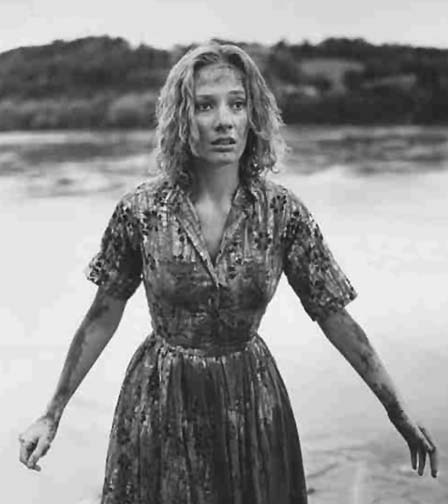
Herk Harvey is a creepy looking dude, and, with the make-up effects used on him in Carnival of Souls, his every appearance as the mysterious figure the Man is deeply unsettling. But sometimes all you need is a few memorable images such as the ghastly looking creep of Carnival of Souls to give you some chilling goose bumps. Harvey also directed the film and he turns the film’s B-movie limitations into its greatest asset. In the Val Lewton mold, the film plays around with suggestion, lighting and use of space to instill fear in us by playing on our expectations and by what we don’t see as much as what we do. A woman (Candance Hilligoss) who survives a drag-racing car crash into a river is haunted by her survivor’s guilt, and as she moves away to take up a job as a church organist she’s drawn to a bizarre run-down carnival. The image of the giant carnival structure looms over the film like a frightening eyesore and it sets the mood for the film. The film plays like a more modestly-budgeted Repulsion, watching the mental state of the protagonist deteriorate, and it also has the vibe of a David Lynch or George Romero film. The woman has a lout of a suitor in the form of her next door neighbor, and she draws concern from her landlady and a psychiatrist. The film’s strangest and most disturbing moments are its quietest; she seems to slip out of reality and finds herself incapable of communicating or being seen by anyone. Does it really happen, or is it just in or head? The film’s great surreal and unnerving ending suggests it may still be something else entirely. But the film doesn’t need to make sense; it’s playing on our fears, and looking surprisingly great and mesmerizing while doing it, and that it does it so effectively with so little is still deeply impressive. 

Grade: A-

Sunday, March 23, 2014

"A Woman, a Gun, and a Noodle Shop" (2010)

East Asian films are far more comfortable with situating broad humor side by side with serious drama. For American viewers there can be a bit of a whiplash with the rapidity and ease with which this is achieved. A Woman, a Gun, and a Noodle Shop is set in a world, filled with characters, elasticity and humor that the Roadrunner and Wile E. Coyote might be comfortable with, but its action is, by contrast, consistently, and perhaps questionably and strangely, dark and bloody. The film is loosely remaking the plot of the Coen Brother’s debut Blood Simple. And while anyone who’s seen the original will recognize the basic shades of the story, Zhang Yimou fills the film with touches that are very un-Coen Brothers-like. A noodle shop owner discovers his wife is having an affair with a low-level employee, so he hires a soldier to kill his adultering, but also sexually abused, wife and her lover. The soldier, however, finds himself incapable of going through with the murders, but he isn’t above killing the owner and trying to break into his safe loaded with money. No one’s actions go as plan and the universe seems to be playing a cosmic joke on all of them for their moral transgressions. Yimou has the characters react with comic disbelief as impossible shit piles onto their troubles, but when the violent scheming occurs he shifts the tone to be appropriately thrilling, tense and serious. The film benefits from Yimou’s attention to action which re-calls his other action-adventure efforts House of Flying Daggers and Hero. The film is sure to give tonal whiplash to even the most unconcerned viewer, but Yimou provides a gorgeous sense of scope and atmosphere and never loses sight of the slippery slope his characters have set themselves upon.

Grade: B

Friday, March 21, 2014

"Nymphomaniac: Volume I" (2014)

Lars von Trier, ever since the day of Dogma 95, has always hated complacency. He finds Hollywood narratives lull us into a false sense of comfort, and his films seek to shake us out of our supposed stupor. His latest film Nymphomaniac: Volume I is yet another provocation right from the tantalizing and twisted hook: a sex addict recounts the stories of her many, many sexual encounters. But von Trier has more in mind beyond shock and awe for anyone who cares to pay attention. The film is doubtless to end up as no one’s cup of tea, and, intentionally, that’s part of the point. Yet von Trier is reaching for his usual obsessions of gender, sexuality and power; he simply buries the lede (purposely, I hasten to add), shoving them to the background of situations either shocking or caustic. There’s a consistent sense like many of von Trier’s other films of shoving our face in things we don’t particularly wish to witness and lingering on them to an excruciating length. 

Nymphomaniac begins with Joe (Stacy Martin as a young woman and Charlotte Gainsborough later in life) being discovered by the kindly Seligman (Stellan Skarsgård) bloody and bruised, lying in a snow covered alleyway. A deeply self-loathing Joe has resigned herself to certain Puritanical notions of her sexual conquests, seeing an unforgivable, even highly sinful, destructive path left in the wake of her bottomless desires. Joe tells of her sexual adventures starting from her earliest discoveries of her own sexuality, while Seligman consistently butts in, trying to bring order and possibly insight to Joe’s clinically portrayed life story. Von Trier tells the story in chapters, breaking down Joe's life into different segments, told in highly different tones and styles. The story isn’t entirely painful or disturbing; von Trier manages some hilarious moments, and not always through sheer discomfort. 

While a lot of sex drives the narrative, it really isn’t the singular concern. Von Trier is interested in how we use sex to define ourselves, to control people, to empower and undermine ourselves, and how sex can be an act of performance. He’s using sex as a complex intersection between gender, class, privilege, power and identity. He also takes seriously Joe’s addiction and how it slowly and insidiously eats away at every aspect of her life. For Joe, sex provides pleasure but it is also an act of sublimation and self-annihilation. Much of Nymphomaniac concerns itself with the ways people fall into holding patterns; it’s at times frustratingly repetitious but that’s because it forces us into the mind of someone who doesn’t know how to, and possibly doesn’t even want to, change. Joe thinks she’s doomed, but von Trier offers up something far less fatalistic (thankfully and surprisingly after the despairing Antichrist and Melancholia)

This is an incomplete work, and not all of this works, but anything this ambitious and audacious is more interesting and, at times, more compelling than anything else currently out there. But even if part two misses the mark, it will likely do so in highly over-reaching and fascinating ways. 

Grade: B+

Thursday, March 20, 2014

"Les Biches" (1969)

“She has a perfect center of gravity,” a comic supporting character says coyly and humorously early in Les Biches. The line represents the film in a nutshell: sexy, dirty and intellectual. The premise of Claude Chabrol’s film sounds tawdry: a story of lesbian lovers torn apart by a man who catches both of their attention. But Chabrol handles the film in far too sophisticated and intelligent ways for it to ever devolve into anything truly lurid. The film is far more concerned with human nature and human behavior and observes it through beautiful pastel cinematography and lilting camerawork. The selfish and self-serious Frédérique (Stéphane Audran) is drawn to a struggling artist drawing does (“les biches” in French) on the streets of Paris. The artist identifies only as “Why” (Jacqueline Sassard), and the sexually inexperienced young girl is seduced by Frédérique. Frédérique brings Why to her summer home in Saint Tropez where at a party they meet Paul (Jean-Louis Trintignant) and both fall in love with him. Chabrol hooks us with the sexiness and the naughty suggestion and this engrosses us and leads us to observe and question the characters’ actions more seriously. The last third of the film loses some of this delicate balance (entering into out-and-out sensationalism), but it also does it with continued ambiguity and casual sensuousness, remaining both enticing and intently meditative.  

Grade: B+

Wednesday, March 19, 2014

"The Lego Movie" (2014)

The directing team of Phil Lord and Chris Miller have a solid track record for taking seemingly disreputable film properties and turning them into finely tuned pieces of entertainment. With Cloud with a Chance of Meatballs and 21 Jump Street, they proved they could make clever, witty, all-around entertaining films that didn’t insult your intelligence or forget to tell a meaningful story with some thematic resonance. On one level these films worked because they were about films. They were carefully keyed into the pop culture-addled age we reside in: eye-catching, mixed and matched, and weird and absurd yet oddly endearing and warm. But though these films were self-referential, that was always a third or fourth goal. With The Lego Movie, however, they turn up the self-reflexivity up to eleven.

But it is not entirely in a meta-way. Self-aware cultural mash up and deconstruction is the part of the goal here, but it’s also simply to be constantly fun. The Lego Movie isn’t just about films; it’s about culture. The Lego Movie’s defining feature is a child-like love for taking the most fun and memorable elements of the pop culture we adore and putting them side by side as if it’s no big deal. 

The world it is set in is one that embraces the Lego’s quality as a toy. The film’s animation looks like nothing else because it not only models itself after stop motion animation (though it's actually CG animation) but also because it’s a film that seems to love the occasional clunkiness or handmade quality due to the animation featuring Legos. This might sound like something found on Youtube, but the film embraces a sense of depth and scope unimaginable on that homemade scale. One of the Lego Movie’s defining traits is its desire to build up a world and keep inhabiting it with destinations and characters who are interesting, bizarre and lovable. 

Emmett (Chris Pratt, channeling some of his Andy Dwyer goofball charm from TV's Parks and Recreation), a not especially special Lego person, finds himself caught in a grand scheme to overthrow the evil President Business’ (Will Ferrell) autocracy and segregation of the massive Lego Universe. A prophecy, created by a wizard (Morgan Freeman, spoofing himself), has foretold of the Special, a person who will find the “piece of a resistance”, a magical piece that will put an end to President Business’ mass consumer conformity. 

The Lego Movie, despite being technically a giant piece of product placement, is a deeply anti-big business film. At its heart, it’s about the fear of films, and culture more generally, becoming too corporate, cold and calculated. The odd irony here being that despite the Lego Movie being a certain corporate product, it has resisted being a part of the crass mass culture it critiques. It genuinely has an abundance of character and personality. 

The film’s strength lies in relying on what has always made the Legos so beloved: the ability to create worlds, to let your imagination run wild and an infinite sense of wonder and possibility.

Grade: A

Saturday, March 15, 2014

"Mon Oncle" (1958)

Jacques Tati loves intricate contraptions that require a lot of set up before having all the gears click and letting his slapstick antics go off like a well-oiled machine. Tati is reaching back to a tradition of comedy more in line with Charlie Chaplin or Buster Keaton than anything recognizably being made when his films were released. More precisely, in Mon Oncle, Tati’s character of Monsieur Hulot feels like he belongs in a silent movie. He barely has any lines and everything he does is conveyed through actions, gestures, and sound effects. While the modern world wants to suck Hulot into its over-refined ways he’s still stuck up in the clouds, always affably bumbling by. Other characters have lines, notably Hulot’s sister and her husband, who are getting fed up with Hulot’s daydreaming and aimlessness, and they feel like they could possibly belong to the real world. Well, more than Hulot at least; Tati at times seems to be working in caricature, but he really has an affection for the human element underneath his calculated comedic machinations. There is a light bit of satire regarding bourgeoisie pretensions, but Tati intends it as all in good fun. Tati’s larger aim is to capture the rhythms of city life, using his Hulot as a gateway into how work, play and everything in between are gone about. Tati delights in a number of precisely arranged comedy setpiece and he keeps the tone breezy and charming, but he’s reaching for deeper emotions of melancholy and disappointment.

Grade: A

Thursday, March 13, 2014

"The Tenant" (1976)

It’s never entirely clear what is occurring in Roman Polanski’s uneven but arresting The Tenant, but it’s always clear why it’s happening. Polanski’s interested in getting at us on a level beyond intellectualism; it’s a purely emotional response built on inhabiting the mind of one person. Polanski plays Trelkovsky a mild-manner, nervous clerk who takes up residence in an apartment where strange things begin to take place. Whether these things are real or not doesn’t really matter, what does is that Trelkovsky does. Like Polanski’s Repulsion and Rosemary’s Baby, the film is about slowly unraveling the psyche of its protagonist and making us feel his distress and paranoia. We inhabit his headspace and we question along with him the peculiar behavior of his neighbors and the odd circumstances under which the previous resident died. By blurring fact and fiction Polanski heightens the story’s off-kilterness, and it slowly becomes impossible to tell what’s odd yet real and what’s just pure insanity at work. The Tenant takes the outward appearances of a thriller or mystery but it’s more of a character study. Polanski turns the apartment into an outward representation of Trelkovsky’s crumbling mind, utilizing the cramped space to make us feel trapped in his palpable anxiety and psychosis. 

Grade: B+

Wednesday, March 12, 2014

"The Thing from Another World" (1951)

The cold is almost another character in The Thing from Another World. Set at a cramped science station out at the North Pole, the film is constantly reminding you that damn is it ever cold this far north. The wind howls and the snow blows, and the chill seeps into our bones as much as the characters’. The other key factor that continues to make the film successful is its sense of space, or rather its lack of it. The characters are confined in small buildings, and they feel trapped in, which creates a sense of claustrophobia. When a UFO crash lands, a group of soldiers and scientists extract the frozen corpse of an alien, but the block of ice thaws and soon the creature is on the loose. How director Christian Nyby and cinematographer Russell Harlan choose to shoot the Thing (James Arness) adds to the effect of dread and discomfort. The film shoots the alien at a distance or in shadows, which, coupled with the makeup and special effects design, still serve to disturb. Minimizing the monster’s actual presence leads the film to nicely focus on the conflicting opinions and dynamics of those stuck at the station. Though Howard Hawks was only a producer on the film, his presence can be felt throughout the film. The film seems carefully attuned to Hawks’ directorial mantra: “Three great scenes, no bad ones”. It also features Hawks trademark sense of “macho heroics and succinct wit,” as Nathan Rabin described it. We may no longer be in the Atomic Age, but The Thing from Another World still works as efficient, well-crafted science fiction entertainment regardless of era. 

Grade: A-

"Suzhou River" (2000)

It’s impossible to think of Suzhou River without thinking of Alfred Hitchcock’s Vertigo. Writer-Director Lou Ye is clearly loosely borrowing the basic narrative and thematic predilections of Vertigo, as well as a handful from Hitchcock’s Rear Window. Low-level gangster Mardar (Jia Hongsheng) falls for Moudan (Zhou Xun), a woman he’s assigned to watch over but ends up falling in love with in the process.  However, things go sour in their relationship and Moudan jumps off a bridge, presumably to her death. But when her body is never found, Mardar presumes that Moudan is still alive and searches for her. When he meets MeiMei, a woman who looks uncannily like his former lover, Mardar assumes that she must be the same woman, or, at least, that he can convince her to adopt the same image. The story is told by MeiMei’s lover, a videographer who seems more infatuated by the images and idea of his girlfriend than the real thing. While Hitchcock’s interest was more in desire and obsession, which is still present here, Ye is more concerned with love. Why do we ask, demand even, so much from our relationships?  Why do we ask people to be something they aren’t?  Ye, like Hitchcock, is interested in surfaces: the ways images manipulate us and how we use appearances to mask our true selves and influence other.  In Suzhou River, love and obsession are a blur, feeding into volatility and passion. Ye forgoes the calculated exterior narrative of Hitchcock to focus on the untapped, raw emotional core interior. It’s ultimately messier but it glimmers with a the riveting force of its character's passions and cinematographer Wang Yu's alluring imagery. 

Grade: B

Tuesday, March 11, 2014

"The Scent of Green Papaya" (1994)


Notice the houses in The Scent of Green Papaya: huge, sprawling, and yet, deeply, almost uncomfortably, empty. There are people in the two houses where the majority of the film’s narrative occurs, but director Tran Anh Hung frames his actors so the space seems to overwhelm them. It’s constantly confining them. There isn’t a whole lot of plot to the film; it’s sustained more by tone and atmosphere, and it’s partially as compelling as it is due to how Hung shoots the film. But his stylistic choice makes sense: the film is about loss, isolation and muted passions. Set in 1950’s and 60’s Vietnam, the film is really two very different stories, a family drama and a love affair, connected by protagonist Mui, who becomes a servant in a fractured household at the age of ten. The first story dominates the narrative: Mui is not only a servant, and an observer of some tragic and overwhelming drama, but she’s a reminder of the family’s own loss of their daughter. She’s the age that their daughter would have been if she were still alive. This is one of many voids that need filling: the grandmother’s husband has long been dead (and she has an unrequited suitor who she refuses to let into her life), the eldest son is hardly ever around, and the father’s crippling gambling habits make him a flighty presence at best. The film flashes ahead ten years later: the family is still broken, perhaps irreparably, but they’re managing. Mui is hired by a bachelor, a friend of her former employer's eldest son, who’s nearly engaged to a woman, but he appears disinterested and disconnected. The second story turns Mui from an observer and to an agent of her own destiny. She and her employer slowly fall for one another. But this isn’t sordid; it’s flush with real emotion, and it’s the culmination of a lifetime of standing idly by watching the world crush spirits and dreams. 

Grade: B+

"Scandal vs. House of Cards"

Frustrated by consistently hearing people around me talk up House of Cards when it is a glossy but deeply hollow show, and equally frustrated that Scandal has not gotten enough of its fair due as one of the best television series currently airing, I wrote an article for my college's newspaper comparing the two shows. Hopefully I can convince you why one show is much better at telling its story, which are essentially the same story of a broken American political system.

"The Scarlet Empress" (1934)

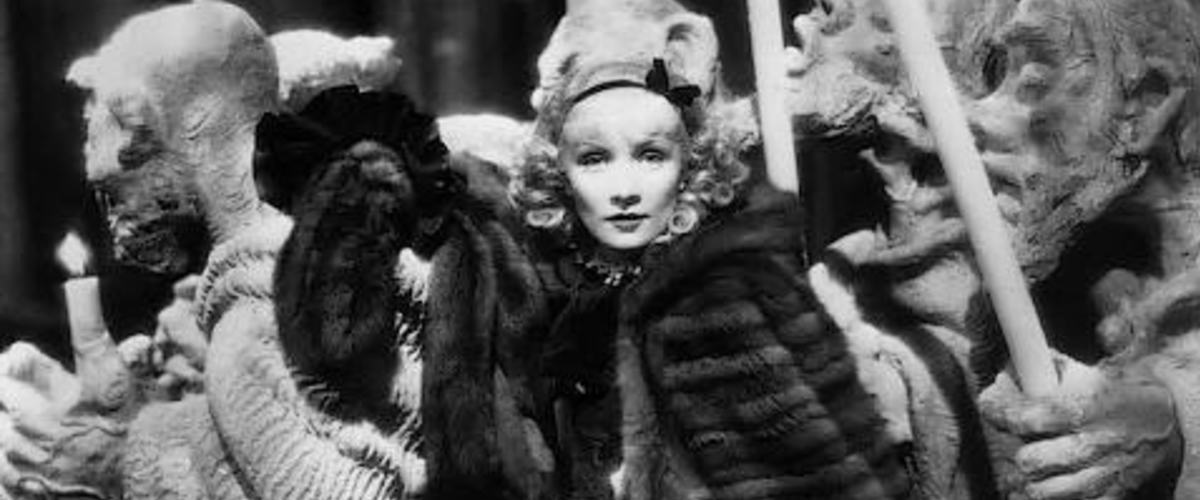
There’s a tendency to perceive Josef von Sternberg’s films as decadent or indulgent; his films looks exquisite and he likes focusing his lens on and packing his frames with lavish objects. But the graceful gaze of von Sternberg is ultimately deceptive. The Scarlet Empress is a film about the rise of Catherine the Great (von Sternberg’s frequent collaborator and muse Marlene Dietrich) to power, and it’s slightly unsettling just how little message or pointedness von Sternberg provides to the journey. He’s ambiguous, another consistent complaint. However, he’s less ambiguous than usually given credit. The film has its eyes set on the trappings of aristocratic life, but it also pauses to consider what the real price is to all of this decadence. This primarily comes in the form of dark power politics and fascinating gender politics. Catherine slowly discovers agency and a sense of self inside a system that sees her as either a pawn or ornamentation. The Russian tsarist system wants her around only for the sake of producing an heir, but when she grows dissatisfied, after discovering her arranged marriage is to the dimwitted and brutish Peter III (a delightfully bonkers Sam Jaffe), Catherine realizes that she can play the game to her advantage. All she has to do is produce heirs -- not necessarily by Peter's constitution -- and play nice around the right figures, but outside of her duties (which, it’s worth noting, are based on appearances) she can find satisfaction and power. She just has to play her cards right. Part of this comes from playing to her expected role as a female. Catherine is exploited here, but she’s also quick to realize how she can subvert gender roles. She’s not the only one. The ruling Empress before her, her mother-in law Empress Elizabeth (Louise Dressler), understands the realities for women in the 18th century but she never succumbs to them. The place where von Sternberg’s ambiguity can be troubling is in its treatment of Catherine’s character arc.* Catherine’s enters a naïve child and exits a ruthless monarch, and von Sternberg makes no judgment of it. The film ends its final moments as if they’re triumphant, but they’re also fairly disturbing. Catherine has gained so much, but at what cost? Well, it doesn't really matter when Dietrich is on screen and von Sternberg seems to forget he's supposed to be telling a story. He focuses on, really fetishizes, her, and in these moments von Sternberg's detractors might be right in letter but scarcely in spirit. I could watch those gorgeous surfaces all day.

Grade: A

*I'd just like to note I'm fine with its ambiguity and prefer it that way.  

Saturday, March 8, 2014

"Scanners" (1981)

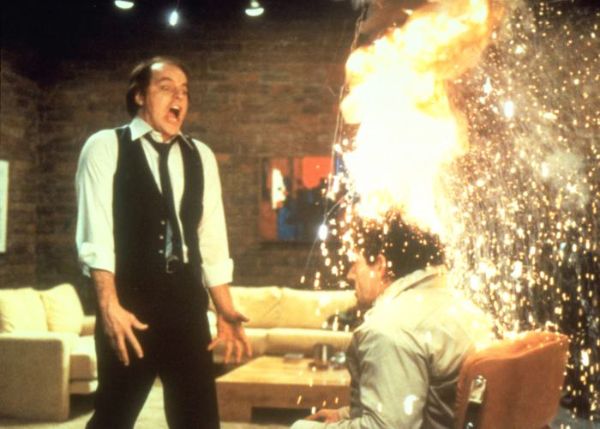
David Cronenberg has a knack for crafting images that are instantly and ghastly memorable, surreal and unsettling. He doesn’t use special effects to merely put you in awe but to get under your skin, to get at something more fundamental and hard to shake. In Scanners this moment comes early in the film in the film’s infamous exploding head scene. It’s disturbing but Cronenberg plays it beyond realism, emphasizing the excess and gruesomeness., which serves to make it even more macabre. Scanners is a film about identity, conformity and even mental health, but, above all, it’s a film about the body under stress. It is body horror, which is one of the more distressing and creepy forms of horror. This is largely due to the fact that the horror on display isn’t an outside force but an internal one and one that leads the body to go under contortions and damage no one really wants to witness. In the film, “scanners” are individuals with telekinetic powers who have become social outcasts and basket cases due to their abilities overwhelming them. ConSec is a corporation looking to turn these scanners into super soldiers, but they’re running into the problem of an underground scanner group attempting to dismantle the company and their research. Cameron Vale (Stephen Lack), a young, uninformed scanner, is sent to infiltrate this organization led by an exceedingly powerful rogue scanner (a delightfully committed Michael Ironside). Nothing quite lives up to the head-splosion moment, but really what could? It serves a purpose, getting us invested in the weird and wonderful world of Scanners where such perverse incidences are, gloriously and consistently, a natural occurrence. 

Grade: B

Friday, March 7, 2014

"Ashes and Diamonds" (1958)

“You can’t change things?” -Krystyna, Ashes and Diamonds

Forging a new nation requires compromises, and yet in the process of crafting a new national identity nations tell themselves, "This time things are going to be different: we’re not going to fall into the same traps as people did in the past". Ashes and Diamonds is about identity and compromise, nationally for Poland and personally for Home Army Soldier Maciek Chelmick (Zbigniew Cybulski), a resistance fighter who takes an assignment to assassinate a Russian official – representative of the new, growing communist threat from the Soviet Union. The film is set on the closing days of World War II in a small Polish town celebrating the end of the war with occupying Russian troops. Everyone in the film claims they are content with themselves, but we can tell they’re settling for second best. When the Maciek botches the assassination attempt, he hangs around the town in hopes of getting a second chance to eliminate his target. While killing time, his eye is drawn to the attractive and equally uncertain bartender Krystyna (Ewa Krzyzewska). Maciek falls for her, and not simply because he’s necessarily in love with her but because she represents for him a whole life he’s missing out on by being the gun for hire he is. Maciek contemplates getting out of the resistance life, realizing its futility, but if he doesn’t finish his assignment it will cost him his life. There’s no victory here for him. No matter what choice he makes he loses, and that’s the problem with the dawning of new eras: eventually they end, reality sets in, and everything is back to square one. Set against the gorgeous black and white cinematography of Jerzy Wójcik and marked by the coolness of Cybulski’s James Dean-aura, the fate of Maciek and his country is made all the more devastating and poignant. 

Grade: A-

Thursday, March 6, 2014

"Ernest and Celestine" (2013)

Ernest and Celestine is a film of pure joy for an hour and twenty minutes. There is simplicity to its storytelling and its imagery that belies a precision and exceptional craft. The film reminds me of the films of Charlie Chaplin, or, perhaps more appropriately, Jacques Tati: pure, beautiful, and utterly enchanting. Celestine is a mouse and Ernest is a bear, and they live in a Metropolis-like world of above ground and below ground cultures, divided by differences and reasons that have long faded into memory. The mice tell their children about the “big evil bear”, but Celestine, adventurous and precocious, doesn’t buy it. The film builds up a fully inhabited world, defined by its own logic and rules, and filled with memorable characters and locations. The mice steal the baby teeth from the bear world above to be used replacing their more delicate canines. They’ve built a culture around dentistry, but Celestine has aspirations to be an artist. Ernest, bumbling yet well-intentioned, is down on his luck and desperate to find some food. When he comes across Celestine he intends to eat her but soon becomes fast friends with her when she introduces him to the storage basement of a candy shop. The hand drawn animation is gorgeous: picturesque, delicate, and charming. Ernest and Celestine’s friendship makes sense to no one but themselves, and in that way it is, like all great friendships, a world onto itself. 

Grade: A-

Wednesday, March 5, 2014

"Born Yesterday" (1950)

Classism is sharply written into the plot and characters of Born Yesterday. But my favorite place it appears is in Judy Holiday’s wonderful, unconventional voice. Her voice is high yet soft, just a register off from shrill. It has working class written into its every syllable. But her voice also makes us almost immediately endeared to and interested in Emma "Billie" Dawn, a woman thanklessly engaged to crass businessman and con-man Harry Brock (Broderick Crawford). Harry has moved down to Washington D.C. in order to make some illicit deals with members of Congress, but Billie sticks out like a sore thumb in the polished, tasteful elitism of capitol culture. To remedy this Harry tries to pull a Pygmalion on Billie by hoisting her off on refined journalist Paul Verrall (William Holden) to be educated. Instead, Billie falls for the journalist and, through her studies, begins to realize Harry’s mistreatment of her. The drama and critique here are tame, reminiscent of Mr. Smith Goes to Washington. But it’s not really the point; the Capra-ian sincerity caters to a screwball sensibility, clashing Billie’s lack of formal learning with her crash course in culture. Throughout all of this, Holiday’s remains a thoroughly appealing presence. It’s easy to overlook what Holiday is doing here. She's playing a dumb blonde but the film doesn't pigeonhole her as only that persona. Notice the subtle changes in Holiday's voice. She's not only got great comedic timing, but she’s also doing small but significant vocal changes that not only win us over but also build an inner world, one that’s yelling, or, rather, squeaking, to be free. 

Grade: A-

Tuesday, March 4, 2014

"Gabbeh" (1997)

How much of Gabbeh is memory and dream? It’s hard to say; what is certain is that a young woman, named Gabbeh, is looking to marry a man who her father does not approve of. But it really isn’t about this because these events happened many years before, and Gabbeh, whose story is now woven into an old rug, suddenly appears and recounts this story to an elderly couple washing the carpet. This is a simple, what might be called magical realist, story but director Mohsen Makhmalbaf tells it in atypical ways. The film lacks really anything resembling a typical narrative structure. The old couple interacts with the people of the past, and they watch, almost as if watching a film or a theater performance, these memories, these parable-like stories, just off screen. Makhmalbaf will then intercut the story with digressions about life. And the film is ultimately about, nothing short of, life. The film tells its story in fragments, stops and stutters, and slowly accumulates meaning. Under what appears to be abstraction is a story of fable-like transparency. Memories do not flow out of us in nice, straight-forward packages but in shapeless, formless staccatos, and fables may resemble fairy tales but they are rooted in a much harsher reality. 

Grade: B+

"Glengarry Glen Ross" (1992)

Writer David Mamet’s dialogue has a distinctive cadence to it that makes it instantly recognizable. In Glengarry Glen Ross, Mamet’s foul mouthed, stylized dialogue is the showcase of the film. Wonderfully recited by Jack Lemmon, Al Pacino, Ed Harris, Alan Arkin, Kevin Spacey, and, in a scene stealing cameo, Alec Baldwin, the dialogue is fueled by an internal logic that creates a world onto itself. Glengarry Glen Ross is Death of a Salesman for a modern age. The film is about salesmen of worthless real estate property in a company that is long past being on its last leg. These men are informed that if they do not improve their sales they will be fired by the end of the month. They scramble to make sales to people desperate, foolish and dumb enough to buy into what borders on a scam. These salesmen should be slimy; they are often duping people, and they scheme and lie in order to get the sale done. Yet we never feel anything but sympathetic for these sad, sometimes awful, characters (and there is never a time where they don’t feel like larger than life presences that make them read more like characters than humans). Like Willy Loman, they’re oddly noble even when they’re pathetic. How much of this is due to Mamet’s dialogue? Mamet gives such interesting things for these people to say that we can’t help but listen, even when they’re selling bullshit even they wouldn’t buy. 

Grade: A-

Monday, March 3, 2014

"The Ful Monty" (1997)

The Full Monty is a bawdy comedy built on a foundation of melancholy. The film centers on a story of working class men out of work who turn to stripping to make cash off of one big performance. These men are desperate, and trapped in the  formerly prosperous industrial town of Sheffield, now slowly decaying. Flighty yet lovable Gaz (Richard Carlyle) needs money to maintain custody of his son Dylan. To ensure that the crowd comes out to their act, the men decide that they will make their burlesque act the “full monty”, aka a completely nude strip. Simon Beaufoy's script scores some convenient points off of the sexual and farcical nature that this story entails, but it also seriously considers some relevant issues about what it means to be a modern man. These are not conventionally attractive men, and they know it. They worry about their appearances and body image, and they fret over no longer being bread winners. The Full Monty is consistently uproariously funny but inside its traditional narrative structure is an insightful and incisive examination of masculinity. While these men shouldn’t be sexy, especially not performing a Chippendale number, the film provides sharp characterizations that make us sympathetic to their crisis of identity and remind us that beauty is far from skin deep. To be a real man means allowing yourself to be as emotionally naked as a striptease might leave you physically naked.

Grade: B+

"The Burmese Harp" (1956)

Rarely has the use of sound and silence been used as effectively and evocatively as it is in Kon Ichikawa’s The Burmese Harp. Private Mizushima (Shoji Yasui) has learned to play a Burmese harp for his Imperial Japanese Army regiment. His harp and the regiment’s singing are the only things that maintain the troops’ peace of mind. They’ve fled war-torn Japan to Burma when British troops inform them that Japan has surrendered. The scene where the British soldiers approach the regiment is a work of beauty by Ichikawa. The Japanese soldiers do not yet know of the surrender, and they play music to make it appear as though they are unaware of the British soldiers. There is a tension between the sorrowful joy of the music and the stakes of the situation. When the British give them the news, the music slowly transitions to something just as potent and poignant but with a completely different context. Mizshuma’s story leaves him stranded from the regiment. He poses as a Buddhist monk to make it safely back to his company. In his journey across Burma he witnesses the tremendous destruction wrought on the land, told in near silence. Ichikawa’s compositions are elegant and yet haunted, and the sights transform Mizshuma. He becomes a monk and vows to bury the nameless soldiers scattered endlessly across the country. Once such an affable individual, the war has broken what little remains of his constitution, and even his regiment’s sincere, warm outpourings of loyalty and friendship cannot restore him. Though The Burmese Harp is an anti-war film, it more often has the ethereal quality of a ghost story, with the specter of lost souls from the fighting hanging over everything. 

Grade: A-

Sunday, March 2, 2014

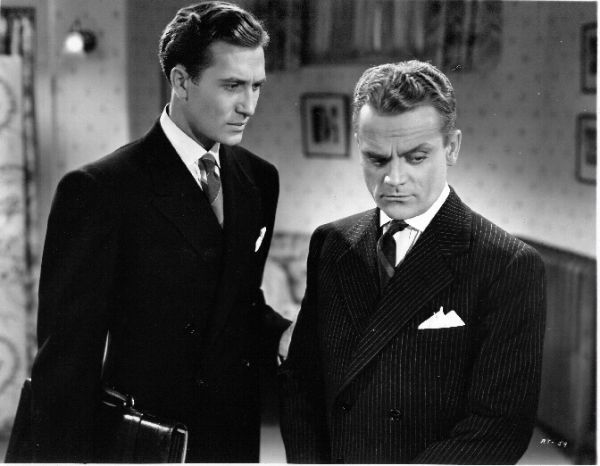
"The Roaring Twenties" (1939)

The 1920’s are often remembered for being both glamorous and gritty, overflowing with decadent excess built on questionable and troubling enterprises. The decade is consistently depicted as a time of reckless abandon right before the Great Depression put the carefree lawlessness of the Jazz Age to an end. Whether this is true or not, Prohibition was inextricably linked to this allure, and nowhere was this more noticeably seen than in a number of 1930's James Cagney gangster films. The Roaring Twenties nostalgically looks back on the illicit enterprises that made the twenties so “roaring”. Cagney plays Eddie Bartlett, a WWI veteran who can’t find work when he comes back home, and falls into criminal activity out of necessity. He soon discovers a knack for bootlegging and rises to the top of the gangster underworld, only for the repeal of the 18th Amendment to turn Eddie into a man with a useless skill-set. With a charming, hard-nosed mug, Cagney was able to make his gangster characters highly absorbing and likable but also tragic and repellant. Eddie’s motivations are deeply sad, even when he’s at his grandest. Raoul Walsh’s thoroughly energetic and stylized direction snappily moves the story along and grounds Eddie’s exciting and fateful rise and fall. "He used to be a big shot," goes the film's great closing line, and the nobility implied rings true. Eddie may have been a bruiser, but it's hard to resist that Cagney grin.

Grade: A-

"The River" (1951)

“Films have grown so aggressive and jittery that it takes patience to calm down into one like ‘The River,’” Roger Ebert wrote about Jean Renoir’s great film. Renoir’s characters are not characters, but people, humans, and his story is more observationally than narratively driven. Renoir was praised for his humanism, how he seemed to have such deep affection for his characters. “I didn’t know growing could hurt,” young Harriet informs her mother late in the film, and she does a lot of growing up, and just as much remaining the same. Harriet (Patricia Walters) lives in colonial India, and she has her first crush on a man visiting, Capt. John (Thomas E. Breen), who lost his leg in the war and has grown sullen. She is naïve and young, and her story is told to us in voiceover by a much older Harriet (June Hillman), fondly recalling her memories. The film does not confront the issues of colonialism and racism that pervade the film; Renoir, in stead, lets them subtly play out in the background. The older, but still guileless, Valerie (Adrienne Corri), also likes Capt. John, as does the half-Indian Melanie (Radha), though her relationship remains quiet and unnoticed by most. They each vie for the man’s attention in their own way and this is the main narrative thrust, but otherwise this is a film about time and place. Renoir filmed on location in India, and he captures the beauty of not just the country but the culture as well. This is some of the best color cinematography ever put to film. The River looks beautiful but it is also a deeply felt film. It is beautiful for its simplicity but also for its powerful understanding of human nature. Life goes on, and life repeats itself, and it keeps flowing on and on.  

Grade: A

Saturday, March 1, 2014

My Film Review of "Robocop" (2013)

I wrote a review of the re-make of Robocop for my college's newspaper, The Lafayette. So if you're interested in my somewhat pointed take-down of the film, I would direct you to the online version of the article. I'm really pleased with how this came out, and it's one of my personal favorite reviews I've done so far writing for my school's paper. I also get to make transparent but thoroughly amusing metaphors, so that's always fun.

"Closely Watched Trains" (1968)

Milos Hrma (Vaclac Neckar) is a go-getter. What he’s trying to get, and how good he is at achieving it, well, that’s up for debate. But he will try to get it none the less, and that’s what counts. Closely Watched Trains is Milos’ coming of age story -- and what a delight, for us, it is. He works as a train dispatcher in Nazi occupied Czechoslovakia, and he spends his days desperately trying to impress everyone around him, especially a young, sultry female train conductor (Jitka Bendova). Milos is naive and clueless, but he’s also chipper and enthusiastic. He’s teased, which he doesn’t quite mind, except on the subject of sex, which he’s still a bit inexperienced with. The film suggests realism, observing the everyday lives of Milos and his co-workers, and frankly and wryly depicting and discussing sexual mores. But the film is also buoyed with a fanciful, whimsical sensibility. Often the film plays like a delightful farce, and more than one moment is a piece of pure comic absurdity. Director Jiri Menzel contrasts the seriousness facing the Czechs under the Nazi regime with Milos desperate and irreverent journey to get deflowered. Like the titular trains that should be but aren’t watched, Milos misses the very history that he is part of and even occasionally defining. But like all of us, he's got bigger concerns on his mind.

Grade: A-

"Performance" (1970)

Life is one giant performance. Shakespeare’s old adage about the world being a stage is accurate. We act differently around different people, and we change our mannerisms or appearances to impress or deceive individuals. Performance is about this performance, but it’s also about other performances. It regards a low level gangster, Chas (James Fox), who takes out his sadism as a piece of performance art on the individuals who’ve crossed the criminal outfit he works for. When his boss seeks to rub him out, Chas goes out on the lam and hides out in a bohemian pad, inhabited by Turner (an electrifying performance by Mick Jagger), a musician, a performer you might say, who quickly sees through the fake persona Chas has adopted in hiding. Chas might be gay, and this adds another layer to the film’s thematic interrogation: Isn’t hiding your homosexuality a type of performance, posturing hyper-masculinity to feel safe and hidden. As Turner deconstructs Chas’ many performances, reality begins to breakdown and their identities blend together. The film is like Persona filtered through the late swinging 1960’s milieu. But even this sells it short; Performance is a deeply experimental film, as much about experience as narrative. Frantically paced and edited, it is a film that feels surprisingly modern, a precursor to music videos and jumpy action blockbusters, where its finger prints can be seen all over. 

Grade: B+