Monday, September 30, 2013

"The Rules of the Game" (1939)

Jean Renoir has a lot of affection for human beings and human behavior; his view of humans is somewhere between delighted, bemused and frustrated. The Rules of the Game is gently mocking its characters but there's still an odd sense that Renoir sort of still loves them all the same. If it's not initially clear that this is a send up than the film's wonderful third act makes that point very clear. Renoir allows the whole proceeding to devolve into one giant farce. So absurd and hilarious is this sequence that a character even exasperatedly comments at one point "What is this a farce!". But the whole joke really is that it is a farce; far before we get to the breathless sequence where character's paths endlessly intertwine and escalate to dizzying heights of exhilarating silliness the film is treating everything we see as a figurative farce. The literal farce is just a recognition of how petty and stupid the lifestyles of the French aristocracy are. The oh-so-noble and heroic Andre responds to Christine finally admitting she loves him by saying "But darling the rules ..." He's noting the titular "rules of the game" which in one sense is the charade that passes for codes of romance and love amongst the upper class -- a honor code with so many contradictions and general hypocrisies that it can hardly qualify as a set of rules. But in another sense it refers to the rules of society that determine what's appropriate for the different social classes. At the crux of The Rules of the Game is a strong critique of classism. And yet there's still the affection for humanity in spite of societal strictures; Renoir's signature, naturalistic style is so warm and tender in the way it observes the characters. The camera glides with such effortless gracefulness and Renoir's renowned use of deep focus allows for him to capture the many stories simultaneously which proves a vital asset as the plot leaps into its delirious, heady final stretch.

Grade: A

Breaking Bad: "Felina"

 **Spoilers Below**:

“I did it for me. I liked it. I was good at it. And I was really … I was alive” – Walter White

Expectations for how Breaking Bad was going to end were exceptionally high. And considering we place so much weight on how tv shows end in the first place that meant things were so loaded against it being completely satisfying no matter what happened. But I have to say, all the same, that as far as things can give you everything you’d hope for, Breaking Bad did a pretty phenomenal job right up until the bitter end. 

This was Breaking Bad revisiting every last meaningful aspect of what made it great. On a character level this was pretty perfect. This was a version of Walt we haven’t ever seen. He came full circle to accept that he was selfish and vicious and simply wrong. The quote above is to me the crucial moment of the episode. I expected, and I’m sure many of you might have anticipated, that Walt would still skirt the question of responsibility. If you think about it the one thing Walt has wanted for so very long is death. When his cancer was in remission he punched the towel dispenser because now he no longer had an excuse to justify his behavior. Death would be the ultimate reprieve for him but he hadn’t quite earned it yet. He had yet to show remorse and guilt. 

The cold open of the episode is essentially Walt having a conversation with this twisted universe that has allowed him to get away with so much. This world has become a character unto itself; it’s a world with a certain logic and with a high conception of morality. For a while the quote that I thought would appear above was a completely worn down Walt whispering “Just get me home… I’ll do the rest”. And for once the universe was like, “Well, dag-nabbit, may be Walt is being honest for once! Let’s see how this plays out!” (For some reason apparently the universe is a wizened hillbilly in my mind). 

For a brief window the episode is misdirecting us into considering that perhaps Walter means to take down Elliot and Gretchen as part of his plan. But after an excruciatingly intense and drawn out sequence where he enters their home (unbeknownst to them) and then threatens them into giving Walter Jr. what remains of his money, we realize that nope: the Nazis and Gretchen are the real intended target, as many suspected.  I think there would have been some level of catharsis to Walt taking down the two individuals that really were, supposedly, the first to bring out the worst to his pride, but it also likely would have been a little hollow. Walt has shifted mental gears and there would be no real pleasure in this kind of vengeance. 

The callbacks in this episode are actually quite astounding. Think for a moment how the show gives us one last appearance of Skinny Pete and Badger. It didn’t need to, but man if it was not really pleasing (A big old grin was on my face at the sight of them and their low-brow antics). The stoner Abbott and Costello duo pointed laser pointers at Gretchen and Elliot to trick them into thinking hitmen were watching them. The initial moment is pure badass, pulp Breaking Bad where Walt watches as the red dots land on his former colleagues chests and forces them into submitting to his scheme. But the moment after is pure black comedy Breaking Bad with Skinny Pete and Badger bickering. And then the show shifts into morality play Breaking Bad. Another contender definitive quote of the episode comes when Skinny Pete and Badger question the morality of their actions. Walt hands them some money and ask them how their actions feels now; a little better they reply. That scene is Breaking Bad in a nutshell. People do bad things, feel bad about it but find excuses to justify their immoral actions. 

The show then quickly pushes through the events we’ve already seen in the flashforwards. It only pauses briefly to have Walt once again contemplate what he’s done. He looks at the “Heisenberg” written in spray-paint on his old living room wall. He flashes back to the pilot episode when Hank suggested he take a ride with him some time to check out one of the meth labs he busts up. “Get some excitement in your life,” Hank presses. “Someday,” Walt mutters. There was no turning back from that moment. Walt used the cancer as an excuse to finally step outside his milquetoast self. 

Walt then takes on the first of his intended targets. Even if director Vince Gilligan hadn’t done that really explicit shot of the stevia into the coffee we would have picked up on the fact that the ricin was slipped in. Sometimes Gilligan underlines points too much. But it’s rare enough that it doesn’t matter. Gilligan really is a ferocious, daring and intelligent director. Gilligan makes an excellent use of visual space in this episode. Notice how he shoots Gretchen and Elliot’s home. There are the more obvious shots such as Walt hiding in the shadows to the obliviousness of the couple. But there are more subtle things at work as well; look how he creates the spatial relationship between Walt and the unsuspecting Gretchen and Elliot and builds up the tension to the point where Gretchen and Elliot will realize that Walt is there. Take another scene, that of Skylar and Walt. If my use of the term visual space is confusing then hopefully the placement of Bryan Cranston in this scene will make it clearer. We think we know everything about what there is in this apartment, but Gilligan uses that sneaky pole (reminiscent of the one in Pete Campbell’s old office on Mad Men). In the restaurant scene Gilligan doesn’t overstate the point that Walt is sitting at a nearby table; he lets us come to that realization on our own. 

Walt also uses the opportunity at the restaurant to gain entrance to the Nazi compound, using his shaggy state to alleviate worries of any foul play. Walt then proceeds to go to Skylar, but not before Skylar receives a phone call from Marie warning her that Walt is back in town. The coup de grace of this scene is Anna Gunn’s stifled, painfully mustered “Thanks”. The character, relationship coda given to Marie and Skylar is one in a checklist that Breaking Bad exactingly goes through in the finale. We start with Gretchen and Elliot; barely visible characters after early on. We then proceed to minor but lovable characters Skinny Pete and Badger. We then move on to Marie’s send off. She’s as prickly and self-concerned as ever and we wouldn’t have it any other way. 

Walt and Skylar’s conversation is brief. Skylar is broken-down. Her voice is barely audibly above a whisper. She’s furious but she’s suffered too much to really display anymore emotion. Walt gives her the lottery ticket and notes its significance (“It’s a burial site”). The best moment in all of this, if you couldn’t tell from the quote that opens this piece, is where Walt attempts to explain himself. “If you say you did it for the family one more time,” she begins fed up. Walt calmly steps in: Nope, I did it for me; I’ve come to accept that. The best part of that moment and that quote is the last part. Walt begins, “I was really” before trailing off; he could say any number of things but he quickly lands on the truth. He felt alive. He had become so white bread bland and self-loathing for everything he could have been but never was. 

Walt briefly visits Holly. The great part of this scene is how Walt exits. He doesn’t even say good bye to Skylar, look at her or pay her notice. He walks out recognizing that there’s no more appropriate way to leave than as quietly and without protestation as possible. He then watches Flynn from a safe distance. The camera lingers on this moment for a long time. There’s a fantastic camera choice where the camera slowly dollies in onto Cranston’s face and it’s just maybe twenty or thirty seconds but that’s infinity in television time. It’s the last inhale of breath before the action that follows. 

The last stretch of the episode is really about Walt and Jesse, and, well, that felt absolutely appropriate (if anything I wanted more time spent with these two, but c’est la vie). We know the Nazis are going down (at least, we’re pretty sure – knowing Vince Gilligan it could very well have gone very wrong in those last moments) so it’s less about Walt taking them down and more about him having this final bit of time with Jesse. 

The action is, of course, a wonderfully intense sequence. From the moment Walt drives up to the gate, Gilligan draws out the sequence. When Walt attempts to get his car keys to set off the jerry-rigged remotely activated M-16, it’s every bit as exciting as anything the show has ever done before. 

But the best part of these last few scenes is Walt and Jesse. Walt tackling Jesse to save him is almost cheer-worthy. Their confrontation in the aftermath where Walt kicks a gun over to him and begging Jesse to kill him is a necessary, cathartic one. For a second we think perhaps Jesse could go through with killing Walt but it’s not in him and then he gives himself the out when he notices the gunshot wound to the chest. And then Gilligan gives one last capper to the relationship. They stand at a distance from one another, drenched in shadows. They nod to one another. The nod speaks volumes; it’s an action that speaks depths of emotions I could not begin to articulate in writing. 

All that’s left is for Walt to die. He goes to the meth lab and looks at the equipment. Is he remembering all the thrilling times he had making meth? He looks at the equipment with a weary grin; he’s self-satisfied. He’s perhaps the most truly satisfied he’s ever been. And then he collapses, smearing blood on the pristine silver lab equipment, dirtying things as much in death as he did in life. We end with a bird’s eye view, pulling up and away from the dead, spread eagle Walt. At that moment it’s as if we’re the universe looking down at Walt in judgment and satisfaction. 

Stray Thoughts:

-The song selection for this episode is pretty fantastic.  Marty Robin’s “El Paso” which plays at the end of the opening scene and provides the episode with its title “Felina” in its prescient lyrics:  “Maybe tomorrow/ A bullet may find me/ Tonight nothing's worse than this/ Pain in my heart”. Badfinger’s “Baby Blue” which plays over the final scene and has the fittingly opening lyrics: “Guess I got what I deserve”.
-Betsy Brandt never is given enough credit. Her appearance here is brief but it’s every bit as good as ever. Marie was a purposely grating character and Brandt made her sympathetic even occasionally likable despite her shrillness.
-Marie has some hilarious trouble attempting to remember Becky's, uh, I mean Carole's name. 
-The moment the keys fall out from the car visor felt like a Schrodinger's Cat kind of moment; the keys could or could not have been there all along, the Universe just had to decide whether Walt deserved them to be there.  
-“Should make one hell of a story”, says Walt posing as David Lynn, New York Times journalist. It sure did Walt.
-I love how Walt closes the doors to the Schwartz’s home. He’s patient and precise even in this moment. The scene feels like a horror movie right down to Elliot pulling the knife on Walt. “If we’re gonna go that way you’re going to need a bigger knife,” Walt replies. I don’t think he believes it but he’s aware they’ll buy it all the same.
-The counterpointing classical music in that scene is just perfect and a little eerie. It makes the shift to Dave Porter’s menacing electronic score when the laser pointers appear all the more disturbing.
-I don’t know if the orange glow fantasy sequence in Jesse’s head was necessary but it’s still heartbreaking all the same. They made Aaron Paul look awful and more fractured than ever. Anyone have any ideas about the box he was making in the dream and what it meant?
-Uncle Jack’s pride ultimately does him in. He can’t be associated with a rat. And that gives Walt just enough time to kill him. Pride does wonders in the Breaking Bad universe, doesn’t it?
-How do we feel about Jesse killing Todd? It’s well-earned but I was hoping that Jesse didn’t have to kill any more people.
-Uncle Jack has one last cigarette like in an Old Western.
-Oh, how Walt has changed. He doesn’t even care about Uncle Jack’s babble about the money.
-I wish we had been able to spend more time with this new version of Walt as it’s so radically different from anything we’ve seen from him before. However, the show did an excellent job of believably earning this new state of being in such a short time.
-“Say you want this,” Jesse implores Walt like he did back in “Confessions” and for once Walt is completely honest and says that he does want Jesse to kill him. Jesse can’t give Walt what he wants at this point though. It’s interesting but this is the most honest we’ve ever seen Walt. There’s no manipulation or falsity to his conversations with Skylar or Jesse. Even when he’s playing Lydia, Todd and the Nazis, the act is nowhere near as convincing as it was when Walt was at his finest acting.
-It’s very telling that Walt feels Jesse has earned the right to kill him.
-Second to last scene of the episode: Jesse escaping triumphantly; Walt standing isolated, bleeding out. The way Gilligan cuts it draws a connection between the two characters. It’s a triumphant moment for both even if for Walt it feels a little less so.

Grade: A

Sunday, September 29, 2013

This Week in Film (9/15/13 - 9/28/13)

This wasn't a cult week in the most exact sense of the definition but on the whole it might as well have been. Even going back to some of the movies from last week (with Jason and the Argonauts and Sonatine -- even Cabin in the Woods feels like it's got cult potential) and carrying into this week, I've been watching more cult films than not and I can't say that was intentional but it makes an odd sort of logic for understanding my impulses this week. Even the exceptions (Days of Living Wild and The Celebration), while not being cult movies, have cult vibes to them (Other Wong Kar Wai and Dogme 95 films have been labeled cult films so it's not too far of a stretch). So enjoy the kind-of-sort-of cult week. Lets tally it up:

Sweet Smell of Success (1957)  - This excellent late noir film finds Tony Curtis as the wonderfully slimy Edie Falco, a press agent trying to rise up in the newspaper industry by any means necessary. He desperately wants to get out from under the thumb of J.J. Hunsecker (a scarily commanding Burt Lancaster) even going to great, despicable lengths to crush Hunsecker's kid sister's relationship with a small time jazz player.

Breaking Bad: "Granite State" - It's essentially just a bridge to the finale but Breaking Bad makes it feel like less like a bridge and more like a hellish descent into absolute decay and resignation. All that means is the show is, as always, doing things on its own fearless terms and what could be better.

Wet Hot American Summer (2001) - The film takes pot shots at every last 80's movie and trope it can think of with really mixed results but there's enough inspired silliness so that it mostly doesn't matter.

How I Met Your Mother: "The Locket"/"Coming Back" - For the most part, HIMYM starts off its final season strong, proving its odd structuring centered around the wedding can be mined for genuine, deeply felt pathos as well as some pretty good laughs. 

Kiss Me Deadly (1955) - A dark and punchy film that sends up film noir by embracing the darkest, ugliest aspects of the genre. It also features one of the most memorable and cool endings in the history of cinema.

Bride of Frankenstein (1935) - A worthy expansion of the Frankenstein franchise that is moodier, more thoughtful and more provocative than its predecessor while losing none of the high camp and expressionist values that made the first so good.

The Celebration (1998) - One of the better examples of Dogme 95's quest to distance itself from traditional, conventional Hollywood filmmaking. The Celebration is a searing and honest portrayal of the psychological fallout that comes with sexual abuse.

Insidious: Chapter 2 (2013) - Once again I was given the chance to write a review for my college's newspaper. This time around it was for a scary but not necessarily very good film.

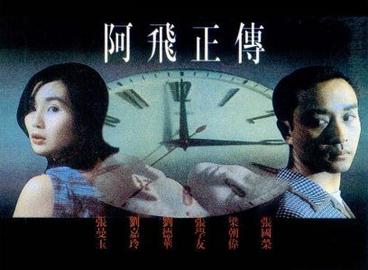
Days of Being Wild (1990) -  One of director Wong Kar Wai's earliest films is an eerie, alluring mood piece about unbridled passions and the toll they have on a group of young people that Kar Wai observes with a hauntingly beautiful, evocative gaze.

"Days of Being Wild" (1990)

Days of Being Wild has two modes of storytelling: melancholic contemplation and uncontrolled passion. The film mostly sticks to the former, but at times bursts into fits of fiery intensity. Everyone in its small cast of characters is yearning after something. In the moment that seems to be romance or affection, but it's also often something more soulful and primordial, something they lost long ago that they can't attain, that they're searching after. The look and feel of the film is quite lovely at conveying this; director Wong Kar Wai is wonderful at composing imagery that's evocative and gorgeous yet very understated. The film's story is also part and parcel with this minimalism often being elliptical and brief (There are random inner monologues that seem to come out of nowhere and nearly everyone gets at least one detailing massive amounts of information in tiny clips of time). But the the information put across in these small windows is rich, moody and at times thoroughly erotic. Set in the 1960's Hong Kong -- mostly to align with the sexual revolution -- Yuddy (Leslie Cheung) is a young, frustrated man who has unbridled passions that he unleashes on two very different unsuspecting women (Maggie Cheung, Carina Lau) -- both of whom he's withholding towards even as he clearly has feelings for them. Meanwhile he's confronting the discovery that the woman that raised him isn't actually his biological mother -- an irascible, hard to please spinster -- which only serves to make his outbursts all the more unpredictable and explosive.

Grade: A- 

Friday, September 27, 2013

My "Insidious: Chapter 2" Review

Once again I was fortunate enough to get the chance to write a review for my school's newspaper The Lafayette. Not sure this review is quite as well written as my previous one but I'm still really grateful for the opportunity, and hopefully you' ll read and enjoy it (Also, I did not come up with the headline for this one. Although I'm not entirely sure I could have come up with anything much better). 

I also wrote an article for last week's edition previewing a recent film festival, but that's merely for those who really want, for some odd reason, to read everything by me, which isn't at times even me.

Wednesday, September 25, 2013

"The Celebration" (1998)

The first thing you're likely to notice while watching The Celebration is its look. It's a film of stark minimalism; the lighting and camera quality is very low budget; the cameras are handheld and shaky and besides a handful of scenes there's not a whole lot of incredibly technically impressive shots beyond the fact that it's kind of impressive that anything got filmed under such limited circumstances. This is all deliberate though; writer-director Tomas Vinterberg was a founding member of Dogme 95, a Danish film collective that wanted to make movies that stayed away from Hollywood conventions of filmmaking. The emphasis was character, theme, etc. and all that good stuff that special effects and big studio budgets had increasingly been diluting movies of. The Celebration could easily be told without sticking to the rules of Dogme 95 but the style of the film feeds into the story. It's shot with a claustrophobic intimacy that only makes the revelations at the 60th birthday of Helge Kligenfeldt all the more unbearable and relentless to witness. Helge's son Christian proposes a toast during the festivities -- except it's not your typical toast -- he says he and his recently deceased twin sister, who committed suicide, were sexually abused by their father -- and the confession suddenly starts making everyone more combustible and surreally, unpleasantly in denial. Christian, and the family in general, has to keep pushing forward to crush the denial and to come to terms with what has happened. 

Grade: B+

"Bride of Frankenstein" (1935)

The Bride of Frankenstein picks up right where Frankenstein left off but you could get away with not seeing the first film as the connection between the two is tenuous beyond a handful of characters. The Bride of Frankenstein assumes you know who Frankenstein and his monster are and proceeds on to becoming weirdly soulful and lyrical. Frankenstein had made the monster (Boris Karloff returning to the iconic role) a sympathetic, misunderstood outcast but Bride really goes out of its way to underline this point. Everyone is hunting him down or running away at the sight of him until he comes across a blind man who sees the inner beauty of the monster; they both lack a sense (sight and the ability to speak respectively). The blind man teaches the monster some words and shows him kindness only for the hunters to catchup once again and ruin it. If nothing else, it strengthens the monster's resolve to finally make a friend and start asking deep questions, like whether it was best he was never brought to life in the first place. This dovetails with Frankenstein's mentor Dr. Pretorius's (a wonderfully campy Ernst Thesiger) plan to create a female monster to marry off to the poor misunderstood guy. But the Bride (a fantastic bit of costuming and makeup design) rejects the monster as well and he accepts that he's not meant for this world, in a poetic and deeply sorrowful ending. The film is filled with a moody vibe, from its wonderfully atmospheric lighting to its Gothic sets, and expands nicely upon the themes from the first film.

Grade: A
Tuesday, September 24, 2013

"Kiss Me Deadly" (1955)

Kiss Me Deadly is quite unlike any other film noir. Where most noir hint at deadliness and brutality, Kiss Me Deadly hits first and asks questions later. There's a strange, pleasant subversiveness to the film where the film increasingly embraces the inherent implausibility, density, and darkness of its narrative, leading to one of the most bizarre and awesome endings in all of cinema (one that influenced Quentin Tarantino's Pulp Fiction). It's a B-movie but it's fine embracing its low budget, pulpy thrills, which makes it on the surface a little abrasive and rough -- as well as ahead of its time. But though Kiss Me Deadly functions on its own as noir, it's also a commentary on noirs. Everyone gets told they're in over their heads in noirs but few times has it been so totally accurate; the conspiracy in the film is so broad reaching and cynical that it somewhat becomes a critique of the genre. And Ralph Meeker's hard-boiled detective Mike Hammer -- a character who's barely likable or charming -- is so obsessed with the case almost to the point of nihilistic self-destruction that it's simultaneously suggestive of Cold War paranoia as well as the singular obsessions that abound in noirs.

Grade: A

Monday, September 23, 2013

How I Met Your Mother: "The Locket"/"Coming Back"

"The Locket" and "Coming Back" play out much like the last mid-season finale "The Final Page". The hour has a longer story it's telling but the two halves have enough stand-alone narrative that they could function as their own episode.

At times it feels as though the writers don't really know what to do with this extra time and "Coming Back" is the stronger of the portions of the episode on the whole as story elements begin to snap into focus. But the extra time allows the writers to drop in smaller moments that I don't know they would have otherwise, for good and for ilk. Much like the extended appearance of Seth Green in "Final Page", things in the first half get a little too goofy and needlessly unfocused for their own good.

The freshest moments are those that feature Cristin Milioti. The series, not surprisingly, highlights her brief moments. Not only that but they have a creative spark to them. In those moments, it doesn't feel like the show is dragging its feet and spinning in circles. In fact, it likely should have made these moments really stick and have some breathing room (When Future Ted says, "And that's how Lily met your Mother", the show passes over it far too quickly). It's something completely new and different, as well as something we've been dying to witness for over 8 years.

There's stuff that doesn't work. Marshall has the weakest of the stories, especially in the first half. His story highlights the series biggest problem at the moment: the characters are far too fragmented in their interactions at the moment. Though Sherri Shepherd gets some good fodder out of her lines and is a suitable match for Jason Segel, it can't help but feel like the writers are just killing time in Marshall's part of the story.

Critic Todd VanderWerff once described the power of television as accumulation. Movies can have more texture and they can have less loose ends but television has staying power. You don't just watch a tv show; you live through it. And so though there's a bit too much excess in this hour, the moments that need to stick and are intended to really get you in the gut do. Take the final moments of the episode where future Ted, now with the mother, recalls sitting at the same table a year earlier. What's so powerful about that moment, and moments elsewhere like it the series has pulled off, is how achingly real it is. The facade of sitcom antics fades away for a brief moment where the show rewards our investment and reassures us that it has been and will continue to be worth it.

I laughed for sure at the premiere, although not as consistently as I did when the show was at the top of its game. But the show can still be daggers. And ultimately it's just nice to be in this world for an hour or a half, to revisit some old friends and start to say good bye. Whatever complaints I may have had, it's been a lot of fun How I Met Your Mother.

Stray Thoughts:

 -Thus far the weird structure for the season, letting it unfold over just the wedding weekend, is proving to be a fruitful device -- especially for relating to us the mother's role in it -- but we'll wait and see how long they can sustain it. The more they get out of the discussion of fate and fateful coincidences the more I will be able to ignore it (As I eat that stuff up). If they get into too much minutiae about weddings though, it could start getting rough. 
-Though Marshall's story was the weakest -- in part because it feels like there's a lot of the show's ill-advised stall tactics and narrative contrivance --  his mother's attempts to take down the Facebook photo, for me at least, provided some of the most solid laughs.
-Marshall's story was the overall weakest but, for the most part, I also could have done without the "Barney and Robin might be cousins" story; left to their own storytelling devices in recent years these two characters can get a little too sickeningly cute and too over the top.
-Christin Millan and Josh Radnor have some killer chemistry as demonstrated by that brief flash forward scene and that makes me absurdly pleased after waiting and wondering for so long what that might be like.
-“King Joffrey’s parents were brother and sister, and he was a fair and wise leader.”

Grade: B+

"Wet Hot American Summer" (2001)

Wet Hot American Summer is a weird, silly movie filled with a scatter-shot of every last goofy joke it come up with. It's a send up of every 80's movie cliche the film can think up, chewing up and spitting back them to see what comes back up. Some of these jokes don't land or go on for far too long but the smorgasbord style of joke telling allows for the film to move past the gags that fall flat and onto something funnier. In its mid stretch the film is moving so rapidly from one shenanigan to the next that it doesn't quite matter that the film is fairly inconsistent. By embracing the awfulness of the cliches of late-70's and early 80's movies (particularly summer camp movies but really everything and anything to the point of off-putting specificity to anyone outside the know) the film occasionally makes the same mistakes those movies do. The film is perhaps most interesting for its large number of then largely unknown actors and comedians that would blow up in a few years time, including a scene stealing Amy Poehler, Paul Rudd, Bradley Cooper, and Elizabeth Banks. This is a movie throwing everything it has at us to try to make us laugh, and thus it's fitfully funny -- though it too often fails, those moments where it is funny are pretty hysterical and inspired.

Grade: B-

Breaking Bad: "Granite State"

The problem with judging an episode of a serialized television series is that some episodes only make sense or feel good in hindsight. After such breathless action, “Granite State” takes a big gulping breath to remind us of the consequences of what has unfolded while also bridging us to the end game for the show. In doing so it feels much more like its marking time, which makes it less notably memorable than some of the events of recent weeks. But you have to admit, few shows mark time like Breaking Bad.

Take the extended stretch of Walt out in New Hampshire. Not much happens, but it’s the way that happens that sets apart Breaking Bad from lesser series. Zach Handlen noted recently that what sets the show apart is how it turns its blatantly familiar serialized tv storytelling into one of its strongest assets. In the third season, we knew Walt and Jesse would partner back up but it was the way the show took seriously their divide and then carefully plotted out every little point leading to their reunion so that it felt totally earned that made it so much more than most serialized narratives. The show’s premise plays into the serialized model because we’re not watching a man stave off one consequence after another or turn from Mr. Chips to Scarface, as so often has been overused to describe the series, but rather we were watching Walter White slowly lose his soul. And watching every little thing that leads to that justifies the time spent so deliberately watching things unfold. 

This is why I point to the stretch in New Hampshire. It feels so very much like something we might have seen unfold in season two through four. Walt goes into hiding thinking that he’s going to plot revenge on the Nazis, and we slowly watch the little steps unfold where he barely has motivation to keep going – let alone plot this revenge. Note the little telling details that speak volumes to Walt’s state of being: His glasses prescription long having expired, asking the vacuum guy fixer to stay a few hours to keep him company, his wedding ring falling off his finger after large weight loss. Walt has given up on himself; there’s even a sense we’re given, for a time, that Walt could just live out his days in that isolated, idyllic New Hampshire cabin.  

This being an episode that takes its time (having extra episodic time to begin with) feels a little shaggier than our typical episode of Breaking Bad. It’s very loosely told and jumps around a lot. But there’s still a lot to like. Like how absolutely insane Todd is (Well, I guess “like” is the wrong word – more like love that you hate it). The only reason Jesse is still alive is so that Todd can try to please Lydia who he has a huge, creepy crush on (As far as justifications for keeping Jesse alive, it’s one I find to be great. It’s the kind of twisted, non-straightforward but intricate plotting the show has). Just look at the way he stares at Lydia, leaning over the back of his chair. He’s not experiencing love or infatuation – because who the hell knows if Todd is even capable of that – no, he’s experiencing obsession. And as if Todd weren’t atrocious enough he throws on a black ski mask and threatens the life of Skylar and baby Holly (!); this to protect his dearest Lydia. Somehow that’s still not the worst thing Todd does. No, that would be killing Andrea, but I'm getting ahead of myself. 

It’s hard to say who has it the worst out of the characters at the moment but at least Walt has choices. Jesse is as trapped as anyone can be. Imprisoned by the Nazis, he desperately makes an attempt to escape (MacGyvering his way out of his handcuffs with a paper clip – Jesse is far smarter than he’s often given credit). But alas he’s caught while climbing up the fence of the compound. He begs for them to just kill him already (and in that moment you’ve never wanted such mercy to be permitted upon a character). But nope: they’ve got to make him watch Andrea get shot in the back of the head. When she unlocked the door I was screaming out “No! Stay inside!” Now Brock is a poor orphan, a damnable piece of leverage to hold over Jesse. 

And then there’s what drives Walt to finally return to Albuquerque. Walt’s conversation with the fixer about whether he’d give the money to Walt’s family after he died made him realize he’s been a massive failure in the one regard he’s always at least claimed to be living up to. So he makes up a package of nearly a hundred thousand dollars and calls Walter Jr. (with a kindly bar patron pretending to be Aunt Marie in a phone call to the principal’s office). But Flynn has had enough of Walt’s crap. “I don’t want anything from you!” he yells. 

Walt has resigned himself to being caught, putting in a call to the DEA so they can locate him. He pours a drink and waits for the cops to arrive. When all of the sudden, the powers that be flicker the Charlie Rose talk program on the television featuring none other than his former Grey Matter partners who deny that Walt had any part in the creation of the company. “Virtually nothing,” they say. It stirs something deep down in Walt. This is the primordial pride that drove him to get into the meth business and refuse any and all handouts. He wanted to be acknowledged for his contributions. His money. His meth. His empire. His family. His name. Walt is super-possessive, and damn if he isn’t going to let things end on his terms. 

Stray Thoughts:

-I'm not sure the episode entirely justifies everything that occurred but it's a necessary bit of leg work to get us to the finale and so I'm willing to overlook it. If nothing else that last stretch with Walt's progression elevates the episode to a new level.
-Saul joins Walt in disappearing. The best moment here is Walt attempting to re-create his infamous “It’s over when I say it over” but coughs so badly midway through that he’s unable to. Saul can no longer be intimidated after a flub like that.
-Skylar barely hears any of the deposition; it sounds like screeching white noise. Similar to the funk Hank was in at the start of “Blood Money”.
-Walt was self-treating himself with the chemo while in New Hampshire. His inability to put the needle in himself before just nutting up and doing it is a wonderful little touch.
-Gretchen suggests one argument made about the show that the Walter that we saw at series start is long since gone and what remains is a shell of that man.
-The great character actor Robert Forster played the fixer Ed. Not sure I entirely understand or buy his continued relationship with Walt post-"witness protection", but a welcome presence none-the-less.
-Walt confirms that the things he said in his phone call to Skylar were, as some had argued, all intended to make her look blameless.
-Yea Todd, giving Jesse some Ben and Jerry's totally makes up for imprisoning him in a dungeon and turning him into your meth cook slave.
-Love that the show brings us way, way back to its roots by reminding us yet again of Grey Matter and tying that into Walt's decision to return home.

Grade: A-

"Sweet Smell of Success" (1957)

Sweet Smell of Success exists in that realm of films where people talk fast and think faster. It's a noir wrapped up in a more conventional drama about newspaper insiders. Everyone is trying to out think, out talk and out succeed the next guy, and few people seem above getting themselves a little dirty to get ahead. Journalist Sidney Falco believes himself to be too smart and too crafty to be stuck playing second fiddle to his boss columnist J.J. Hunsecker -- he writes a sensational, gossipy entertainment column that Falco wants to take over. Falco is Sweet Smell of Success's best creation; he's amoral and nearly without scruples but he's utterly compelling and charming in the hands of Tony Curtis. Its a performance that's matched at every turn by Burt Lancaster's cold, commanding Hunsecker. He's a man who's always in control and sends out Falco to go out and fix his every problem by any means necessary. Falco is fed up but he plans to turn his current task into sure-fired career advancement. He's been assigned to undoing J.J.'s kid sister's relationship with a small time jazz musician. Falco plays all the angles, attempts to force people into compromising and unpleasant situations, and sweet talks (occasionally slimily talks) his way in and out of every corner. He's not always as on top of things as he thinks but he's smart and ambitious and not afraid to do just about anything get what he wants -- even when it might not sit well with him as it slowly eventually does. The most memorable part of the film is the dialogue from Alexander Mackendrick (who also directed), Clifford Odets and Ernest Lehman's script; it's sharp, acidic and impeccably delivered by the cast.

Grade: A

This Week in Film (9/15/13 - 9/21/13)

A belated Master Post has arrived for last week's films. This week we have a lot of heartbreaking movies, a lot of movies about making movies, and simply a lot of good movies. Let's tally it up:

Blackmail (1929) - One of Alfred Hitchcock's earliest films and his first sound film. It's got nothing on his later classics but it still shows a lot of familiar Hitchcock trademarks: disdain for authority, links between sex and violence, and, of course, lots of suspense.

Breaking Bad: "Ozymandias" - If last week's Breaking Bad didn't make you just a little sick to your stomach than I'm not sure it succeeded but for all of the rest of us it continued the series brutal, scathing intensity that it has so expertly achieved in these last few episodes.

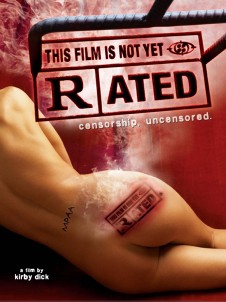
This Film is Not Yet Rated (2006) - Kirby Dick's insightful documentary about the shadowy, evasive and questionable Motion Picture Association of America takes tactics that undermine its message but its subject matter is so ripe for criticism that it's hard to get mad.

New Girl: "All In" - New Girl kicked off its third season with a premiere that proved that hadn't lost much steam coming off of its excellent second season, tackling the consequences of Nick and Jess becoming a couple and simply being as fun and endearing as ever. 

Who's Afraid of Virginia Woolf (1966) - Mike Nichol's domestic drama is difficult to get through and it's to the credit of Elizabeth Taylor and Richard Burton's powerhouse performances in the lead roles that it still has this effect.

Claire's Knee (1971) - Eric Rohmer's breezy, sumptuous small scale character study and examination of romance is like a nice little vacation away from reality filled with self-discovery, witty travel companions and beautiful French countryside locales.

Jason and the Argonauts (1963) - Come for the Greek mythos stay for special effects extraordinaire Ray Harryhausen's phenomenal pioneering stop motion effects.

The Cabin in the Woods (2012) -The Cabin in the Woods is part horror, part comedy, part meta-commentary, and all pretty damn fun. It's about why we watch horror movies and the ways in which they tell their stories, but it's also its own weird, idiosyncratic, wholly original work that deflates the genre even as its embraces it.

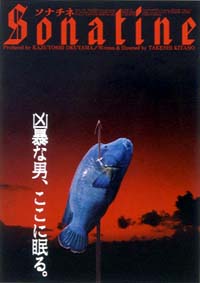
Sonatine (1993) - Takeshi Kitano's surprisingly affecting gangster drama shows gangsters as would-be machismos in way over their heads. It's a film that's rather funny even as its elegiac and sad. The gangsters get an unexpected break from their yakuza business and spend it goofing around, demonstrating their inner, care free selves but the reprieve is bittersweet as it is not long to last.

Sunday, September 22, 2013

"Sonatine" is as Playful as It is Heartbreaking

For a large portion of its run-time the gangster film Sonatine treats itself more like a sincerely goofy, playful comedy than a gangster drama. The simple task of negotiating a truce between small time criminal outfits goes awry and Murakawa (Takeshi Kitano -- who also wrote, directed and edited) and his surviving outfit are forced to go into hiding at a beach house. Here they play practical jokes, and care-freely mess around. And yet it's also a truly melancholy and sad film. Sonatine is interested in playing against gangster expectations; these aren't tough, masculine yakuza. They are just a bunch of guys who fell into this lifestyle, and the gangster life ultimately forces them to pay a price (Watch as people keep repeatedly discussing retiring, weary of the whole enterprise -- poignant even as it's ironic). Kitano underlines the film with a dry deadpan style (compositionally but not texturally, where it is often hauntingly beautiful). The big moments of action almost feel matter of fact and the characters treat them as business as usual (they can't afford to see it any other way). The time at the beach house is reprieve for them where they can be their true selves away from all the posturing and business, and that makes it all the more heartbreaking even as it is really funny.

Grade: A-

Saturday, September 21, 2013

"The Cabin in the Woods" is Smarter, Funner and More Rewarding Than the Average Horror Movie

If The Cabin in the Woods were merely its elements of horror, it would be a better-than-average but disposable addition to the genre. But you add in the other half of this film to the equation and the film almost ceases to be a horror film. It becomes, in part, a comedy, yes. But it also becomes a well-honed piece of postmodernism, deconstructing and playing off of our knowledge about how horror movies tell their narratives. To tell you how it does this though is to give away a great deal of the pleasure of watching the film. Like all good horror, it is built on surprises and expectations. It gives us the scares and the post-Saw bloody excesses we've come to expect, but it also wants to be so much more. It's smarter than the average horror movie and far more rewarding as well. It is about horror and why we watch it -- making it intellectually more satisfying than the typical studio fare -- but this also ignores the fact that it's a damn fun film, always trying out new things, affectionately riffing on and embracing the genre, and slipping in a Whedon-ism or two or twelve.

Grade: A-

Friday, September 20, 2013

"Jason and the Argonauts" Continues to Please with Ray Harryhausen's Top Notch Special Effects

Jason and the Argonauts is a quaintly dated epic about a Greek mythic hero's adventures. It is overly melodramatic, occasionally creaky, and very, very corny. However, what stands above all this is special effects pioneer Ray Harryhausen's fantastic special effects, using miniatures and stop motion animation to bring to life the mythical monsters and dangers Jason and his crew comes across. The story almost feels like an excuse for Harryhausen to dazzle us with skeleton warriors and giant bronze statues with a mind of their own, and that's totally okay because it's worth it just to get to the scenes where Harryhausen puts every ounce of imagination, skill and craft into building amazing action sequences, worlds and monsters.

Grade: B

Wednesday, September 18, 2013

"Claire's Knee" is a Smart, Witty Romance

It's to the credit of director Eric Rohmer that none of the behavior in Claire's Knee feels predatory, but rather romantic, sweet, delicate and aloof. When Jerome goes to sell his family's home, he ends spending the time playing out an odd experiment for old friend Aurora. Neighbor Laura, who's only 16, clearly has a crush on Jerome and Aurora wants Jerome to test how far Laura is willing to push her infatuation. Jerome finds it a bit silly but goes along with it; he says for the sake of Aurora but he's also sorting out some of his own feelings now that he's about to get married to a woman who he's had a tumultuous on-and-off-again relationship with for nearly six years. Jerome is the kind of person who claims he could never settle down and love one person, not fully at least. He's a lover of the world who's not satisfied with any one lover, but yet he ultimately finds himself cold towards everyone but his bride-to-be (who we never actually see, except once in a photo). He and Laura recklessly push forward with a game of chicken as to how far they're will to push their little affair but it ultimately doesn't amount to much (a simple kiss that never leads anywhere), and Jerome's eyes start falling upon Laura's recently arrived step-sister Claire who he finds himself mesmerized by even though he says he has no desire for her. The title refers to his fascination with her knee, which he claims holds the key to her psycho-sexual feelings, and imagines if he can just caress will alleviate any strong feeling he has for her.

There's a breezy, amiable, at times sensuous feel to the film marked by its gorgeous French countryside locales and meandering, casual dialogue. Rohmer pokes at the issues of romance, love, and fidelity from multiple different angles never suggesting to us that there's any one right away about them.

Grade: A

The Powerful, Painful "Who's Afraid of Virginia Woolf?"

Mike Nichols' domestic drama Who's Afraid of Virginia Woolf is a test of willpowers. Firstly it's a test of willpower between the larger-than-life Martha and George (Elizabeth Taylor and Richard Burton giving equally excellent, powerful performances, although Taylor has the slight upper-hand for how catty, unvain she's allowed to be) and the struggle for supremacy in their rotten, long suffering marriage. But it's also a test of the will of the audience to witness this slowly unraveling domiciliary hell. Ernest Lehman's script (adapted from the play by Edward Albee) lets the affair unfold so that we see every bitter, dirty little detail to this caustic, codependent nightmare. As the night goes on, secrets are revealed, old wounds and resentments are revisited, and the two test how far they're willing to push the other before the captive audience of another younger couple who has no clue what they've signed themselves up for (dragging them unceremoniously down to their level). It's searing, painful, all-too-real and powerfully acted.

Grade: A

New Girl: "All In"

Throughout most of New Girl's fantastic second season I reviewed it week-to-week, an experience that I enjoyed a lot, especially as the series hit a well-spring of countless memorable, hilarious episodes. New Girl didn't just become a better show from season one to season two, it became one of the best network comedies (I'd still say Bob's Burgers is ahead of every other comedy on network television but that's a whole other argument) and simply one of the best television shows period. In its best moments the series became that water cooler program that is electrifying to witness because not only is it a pleasure to watch, a treasure trove of jokes, tone, timing and character, but it was also earning deeply rewarding, satisfying moments that had something worthwhile to say about not only these characters but also about being in your thirties.

I unfortunately don't have the time to continue reviewing New Girl regularly, and that's really a crying shame. If the season three premiere is any indication though, the show doesn't plan to lose much of its momentum, charm or quality. Picking up where the season two finale left off, it dives right into the real implications of Jess and Nick dating as well as the consequences due to this of the four roommates not having eachother to tie one another down. The other unanswered question from the finale about Schmidt's choice between Cece and Elizabeth which dovetails with the division of the central four as Schmidt, lacking the help of Nick, stupidly chooses ... both of them, to infuriating and, not surprisingly, very funny results. Everyone is avoiding confronting their problems and this only causes things to escalate to a point where Nick is arrested by hotel police in Mexico and, in her scrambling efforts, Jess asks for the help of Schmidt and Winston, to Nick's chagrin. Plus we get Lamorne Morris saying some perfect line readings such as "I've decided to start a puzzle!" If that didn't have you laughing, you may not have a soul, but thankfully New Girl has a gooey, sweet one that sells moments like Jess's sappy "We're family" speech.

I've elided over a lot of plot here but the most important thing is that New Girl hasn't changed ... and that's great news! I might check in on it every now and again, but if it keeps this up it'll just be a lot of me saying "Wasn't that fun!"

Monday, September 16, 2013

"This Film is Not Rated" is Provocative and Insightful if Not a Little Brash

There's no denying that director Kirby Dick's documentary This Film is Not Yet Rated is exploring and exposing some interesting and important issues about the Motion Picture Association of America (especially for anyone interested in film or freedom of speech). But he often does it in ostentatious and showy ways that hurt how his message comes across. Hiring private eyes to discover the true identity of MPAA raters is invasive and unflattering. And it speaks to a larger tone of pretentiousness that does a disservice to the film. The film is at it best when it simply interviews directors and film insiders about their experiences dealing with the board, which provides more careful, revealing insights than Dick's tactics for getting his message across elsewhere.

Grade: B

Breaking Bad: "Ozymandias"

 Spoilers Below:

Last night’s Breaking Bad episode “Ozymandias” made me uncomfortable and I mean that in the best way possible. When movies and television shows are operating at their peak capacity they can grab our emotions and wrench every last possible ounce of feeling possible from us in a way few mediums are capable of. And Breaking Bad has always been very deliberate and calculated about earning every single last emotion. It’s never being manipulative but it almost always comes as a gut punch. And while this last stretch of episodes has been supremely intense, I’m not sure any came anywhere near as close to being quite as devastating as “Ozymandias”.  

Where to begin is really the question. If the episode hit you like it hit me, you ought to be flabbergasted. Plot turn after plot turn was piling on to form moments that were utterly sickening even as they were thrilling. It was like the twists of “To’hajiilee” but built more from emotional and character shifts rather than cat and mouse games. 

Only Breaking Bad would be so bold to end one episode in the middle of a gun fight and pick up the following episode not during that gun fight but in a flashback. But the flashback makes all that comes after it all the more despairing. Walt and Jesse in one of their earliest cooks out in the desert, pissing each other off; Walt calls Skylar to make up some lame excuse about he’ll be home late. It’s powerful stuff and then director Rian Johnson does something that really sells the moment home. Everything fades out like old ghost who have long since stopped haunting a favorite hallowed ground.

Johnson fades back in after the theme to return us in frozen motion to the gunfight where we discover that Gomez is dead but Hank is alive although wounded. The business with Hank, Walt and the Nazis feels almost a perfunctory bit of throat clearing. I don’t think many people suspected Hank would make it out of this alive but it gives us one last moment where Walt attempts to wheedle his way out of some inextricable situation and for once it doesn’t work. In fact, it backfires miserably. Not only does Hank die (in a moment that’s given no gravitas and quickly moved passed) but Walt has disclosed the location of his money which is promptly taken away from him. Uncle Jack leaves Walt one barrel as a twisted sort of finder’s fee and to look good in the eyes of his golden boy Todd. 

I say it’s throat clearing because it’s only the first of many moments that stick with your gut and make you want to look away even as you’re unable to. Another moment that follows shortly thereafter which feels perfunctory is Walt telling Jesse he watched Jane die. The show seems to be checking off plot points it needs to get through before things really start going wrong. Oh, don’t get me wrong. Aaron Paul’s contorted expression and his anguished wriggling as he’s carried away are pitch perfect, but the show treats it as something it just needs to get over with before it gets to the truly emotional, knock out material. 

The first truly terrible moment, I think at least, is Marie coming to tell Skylar that Walt has been arrested. Skylar’s dawning sense of what she’s done and Marie’s haughty pride are undercut by our own knowledge that Walt is free and Hank is – as Marie put it – dead to rights. Skylar’s face crumples as she comes to terms with everything she’s done even though she’s hated herself for it. 

It’s a moment that is topped soon after by Skylar and Marie revealing the truth to Walter Jr. about his father. R.J. Mitte has never really gotten much screen time to show off his acting skills but he’s powerful here in his disbelief and even more so later when he defends Skylar from Walt. This is the one character who has been totally innocent and without culpability. It was a character I really never wanted to discover the truth and it’s painful to witness his realization. 

Arguably the worst moment in this episode – in terms of: Holy shit, is this really happening? -- occurs when Walt returns to his home and tries to convince Skylar and Walter Jr. to pack their things and leave with him. If his wheedling with Uncle Jack went terribly, it possibly goes even worse here.  Not only does Walter Jr. know the truth about Walt now, but Skylar, from her conversations with Marie and Walter Jr., has come to accept the depths of immorality she’s sunk to. And Walt’s attempts to talk his way out of an impossible situation and win them over goes south little by little until Skylar has pulled a knife on him to defend herself and Jr. 

The fight that ensues has no thrill to it. It’s brutal, slow, and all too real. It’s not the badass desert shootout; it’s a quiet, searing domestic abuse struggle. Look at the way Walt grabs her wrists. He’s no longer interested in her well-being. She’s in so much pain and yet he keeps twisting and viciously fighting for control of the knife. It feels like at any moment someone could get stabbed or potentially die: Skylar? Jr.? Worse still: Holly? 

And as if it weren’t bad enough already, Jr. steps in to stop the struggle. He gains control of the knife and stands between Walt and Skylar. Walt is stunned and hurt in a way possibly he has not been previously. His family has turned on him, and so he does something desperate and awful. He takes Holly with him. My stomach dropped when that happened, and then it sank further in a way that I didn’t know was possible as Skylar futilely attempted to get Holly back. 

It’s the last act of a desperate man. It’s nothing in line with the “I’m one who knocks” vision Walt has been so pathetically trying to sell to everyone. It is a desperation that is just as apparent in his wiretapped phone conversation with Skylar – which he surely must know is wiretapped -- where he says every mean thing he can think of to her. It’s despicable and loathsome, plain and simple as that. Imagine the man from the cold open saying such things. That man could barely pass off a lie about working late at the carwash.

But now before us stands “Ozymandias”. The titular “Ozymandias” takes its name from an Egyptian ruler, famously described in a poem by Percy Bysshe Shelley (recited by Bryan Cranston in one of the promotional trailers). Ozymandias built up an empire only to watch it crumble before him. The title seems more appropriate than ever. It’s hard to look at that shot of Walt standing alone in the vastness of the desert after the gunfight and not imagine a man coming to grasp that everything he’s achieved has gotten away from him and been destroyed. To quote Shelley: 

"My name is Ozymandias, king of kings:
Look on my works, ye Mighty, and despair!" 

Come look upon Heisenberg’s works. And despair. 

Stray Thoughts:

-I didn’t even get to talking to Jesse in detail. I think we knew Jesse would make it out of this alive and it’s telling that Walt has so given up on Jesse even in the face of Hank dying that he lets the Nazis have him to do with him what they want. But death would have been a better fate for Jesse who has now been made Todd’s prisoner and forcible meth cook. The device Todd created to keep Jesse locked up in the meth lab is horrifying; it’s like a dog’s leash meets a torture device. And the leverage over Jesse is the knowledge the Nazis now have about Andrea and Brock. Ugh.
-The sound design for re-entering the gunfight is interesting. Heavy gunfire over a black screen followed by absolute silence. The calm before the storm. An unmistakable feeling of dread before the inevitable. The acknowledgement of how much has changed since that day in the cold open.  
-“Sorry for your loss” – Todd, always the polite gentleman.
-Walt must assume Jesse will be dead soon, so to tell him about Jane is all the more horrible. He’s just being cruel. It doesn’t serve to gain anything. I wonder how those two’s paths will cross again; because who are we kidding: they will.
-“You killed Hank”
-“What’s wrong with you. We’re family” – Walt lying to himself to the bitter end. 
-“He crossed me” – False baddassery, as always.  
-And Marie's reaction to Hank being dead was crushing. 
-The way Skylar just takes the abuse from Walt during the phone call is just awful.  
-“You’re the smartest person I know … and you’re too stupid to realize they made up their mind ten minutes ago” – Dean Norris makes those few moments he has left on the show really count.
-It seems oddly appropriate that Walt is done in by his family. This was supposed to be for them; at least that was the excuse in the beginning. Now, they want nothing of it.
-“I have some unfinished business” 

Grade: A

Sunday, September 15, 2013

"Blackmail" is a Minor, Formative Work of Hitchcock

Alfred Hitchcock's Blackmail is a formative film. Made in 1929 as his first sound film (initially filmed as a silent film and converted into a sound one after the fact), Hitchcock had only made a handful of film's prior and, though it's a pretty good, at times shaky, movie, it doesn't have the competency, rigor or fullness of Hitchcock's later works. There's still lots of interesting ideas floating around, a surprisingly dark grey area of moral standards and behavior, and, not all that unexpectedly, a good deal of well-crafted suspense and tension. If it were just an interesting work to see to understand Hitchcock's evolution as a filmmaker that might make it enough to write it off but there's a fairly compelling story of a woman who kills a man she's having an affair with in self-defense and while being torn apart about it, she and her husband, a detective, soon find themselves blackmailed by a man who's put the pieces together about the incident. She and her husband try to stay afoot of the police while the man makes demand after demand. It's dated at times to its detriment but the film is still entertaining. 

Grade: A-

This Week in Film (9/8/13 - 9/14/13)

It was another average week at Popcorn and Existentialism where I continue my, thus far, year long trek into the depths of cinephilia. And if the films yet again seem to abide by no coherent logic or order it's because my tastes and interests and desire to explore as far flung afield neutered any opportunity for such a semblance of unity. There are some winning, strange horror movies, two very different historical dramas, a poetic road movie, a gangster movie that refuses to be a gangster movie, and brutal samurai epic. So needless to say, it's exactly what you'd expect from me here. Let's tally it up:

Paris, Texas (1984) - Wim Wender's road movie takes advantage of gorgeous Texas locales to create a stunning film about suffering and loss. It's meditations and enigmatic beauty create something poetic and achingly real.

Breaking Bad: "To'hajiilee" - Well. Fuck. Words can't really begin to not-spoilery describe the epic events of last week's fourth to last episode. Watch it.

Videodrome (1983) - David Cronenberg's thoroughly bizarre and unsettling horror movie feels ahead of its time, contemplating issues of technology and our dependency that are still relevant today. Also, there's some moments that will make you go "What the fuck!"

The Battleship Potemkin (1925) and What Movies Owe Us - I sort through why we place the kinds of expectations on film that we do and why that can be problematic.

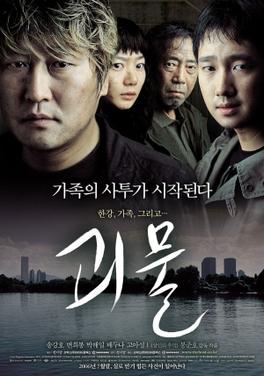
The Host (2006) - Joon-ho Bong's horror blockbuster broke box office records in South Korea and for good reason: it's a lot of fun. Part horror movie, part political commentary, part melodrama, part idiosyncratic family drama, and all very entertaining.

No (2012) - Pablo Lorrain's latest film about the Pinochet government tackles the corruption of the regime with a good dose of humor as seen through an anti-Pinochet ad campaign that looks more like a 1980's Coke commercial than a political ad.

The Killing of a Chinese Bookie (1976) - John Cassavettes' loose film about a club owner who's ego and massive gambling debt suck him deep into a criminal underworld that's too seedy for even him to comprehend. It's got too many moments that awkwardly linger for far too long but the noir action is top notch.

Le Samourai (1967) - Jean-Pierre Melville's gangster movie is buttoned-down cool. The stylish and massively fun story of a contract killer who tries to lose the heat of the cops and the people who hired him after a job goes awry.

13 Assassins (2011) - This samurai epic owes a great deal to Seven Samurai and other classic samurai films but it takes their get-the-gang together narratives and brings them brutally into the modern film age without losing any of their contemplativeness.

"13 Assassins" is the Samurai Epic For a Modern Era

13 Assassins is a film heavily indebted to Akira Kurosawa's classic samurai epic Seven Samurai. It takes the simple premise of bringing together samurai for a noble task and turns it into something more brutal, violent and showy. In the shogunate era of Japan, a number of samurai hatch a desperate scheme to kill a sadistic feudal lord and heir apparent to become shogun. The lord's sadism is displayed to almost excessive gruesomeness within the film's earliest moments that all but belies any attempt to sympathize with him -- although this brutality is fitting for director Takashi Miike, best know for his extreme horror films. The film is surprisingly soulful despite being very one-sided. The fighting is cool, but it's also fairly depressing. The film's primary message is about futility; about how there's essentially no point to this conflict and little to be gained from it. It's a suicide mission. The film has heavy, simplistic storytelling but it uses it in the first hour to establish characters and make us understand their motivations before unleashing a furious, imaginative, and fantastically staged extended action sequence. The film drags in places and could use some trimming down, and a few too many of the titular assassins don't get enough development. But it's that rare action movie that has some things it's trying to work through and think about and that actually earns its hugely entertaining climactic moments. 

Grade: B+

"Le Samourai" is a Cool, Slick Neo-Noir Thriller

Scott Tobias in his New Cult Canon columns mentioned a type of movie called the "'cinema of cool' that pantheon of movies with enough style and attitude to reduce critical thinkers into drooling fanboys and fangirls". He was referring to Army of Darkness, a pure unabashed, unashamed thrill ride with not much else going on, but that does it with so much panache that it ends up being hard to fault it. Jean Pierre-Melville's Le Samourai could fall similarly into this category at times. A hyper-stylized neo-noir thriller filled with pop sensibilities and a suave, cold-as-ice contract killer taking heat from the cops (Alain Delon) as its protagonist. The film is a throwback to 1940's gangster movies but updated for a contemporary setting. While it adopts the whip-smart dialogue of older noir, it takes leave to become more stylistically bold and freely formed. It's also a film that's incredibly fun; taut, thrilling, and utterly cool.

Grade: A    

Friday, September 13, 2013

"The Killing of a Chinese Bookie" is Pure John Cassavettes For Better and For Worse

John Cassavette's gritty, bruising neo-noir The Killing of a Chinese Bookie sags in places (particularly in its unnecessarily extended night club scenes); but when it embraces its crime drama, it's a thrilling, intense, audacious piece of film-making. Ben Gazarra is fantastically sleazy as strip club owner Cosmo Vitelli, who acquires a gambling debt that he can't pay off; in order to reduce the debt and save his club, he is forced to commit an unthinkable criminal act, kill a "Chinese bookie". But nothing goes quite as planned in the story. Cassavette's directorial style gives the film a loose, languorous quality that doesn't always tonally suit its subject matter. It's shot in an uncomfortably intimate, claustrophobic style with lots of close-ups. Cassavette didn't compromise, even in the face of a genre narrative, which surely will displease those going in for its action rather than its philosophical musing about human nature.  

Grade: B

"No" Tackles Its Serious Subject Matter With a Wry, Intelligent Sense of Humor

Humor is Pablo Larrain's No's defense mechanism. The film's story of an ad campaign that helped topple the dictatorial Pinochet government is a bleak one that withholds no punches. But it's livened by a dark, intelligent humor. The ad campaign is filled with cliches, showboating, grandstanding and attention grabbing tactics. It's a desperate sunny side up attempt to slip in some political critique of Augsto Pinochet and his regime. Pinochet has only allowed a counter campaign to the 1988 referendum vote on whether he should maintain power to appease the United Nations; the Chilean government allots fifteen minutes of ad time at a God-awfully late hour. Most of the people working on the campaign, including and especially ad man Rene Saavedra (Gael Garcia Bernal), don't suspect it will have any impact and do it because as Atticus Finch said "real courage is ... when you know you're licked before you begin, but you begin anyway and see it through no matter what". The election is going to be rigged so that Pinochet ultimately wins even if he doesn't get the votes and there's still a good chance he actually wins legally. But if they can used the blessed little television time they have to actually get across an alternative, rarely heard opinion than perhaps that will be its own reward. The film is fantastic at capturing the vibe of the late 1980's and rich with tiny period details. It's shot as if being played on a worn out videocassette tape -- which could be gimmicky but is fitting for the film's look at the subversive, malleable power of news, video and television can have on us. At times it falls into the trap of hitting too many by-the-books, historically-based dramatic beats but it overcomes it with its sharp thematic underpinnings and a good, biting sense of humor.   

Grade: B+

Wednesday, September 11, 2013

"The Host" is a Damn Entertaining, Genre Bending Horror Film

The strange world of Joon-ho Bong's The Host is hard to put into words. It is a surreal and absurd horror comedy about a fish monster created from the improper disposal of toxic chemicals into the Han River. A fish monster so gloriously schlocky that you might think you'd stumbled upon a sci-fi original movie if it weren't for the film's dark as night black comedy. The film is deeply cynical about humanity and human nature and takes stabs at it from the decidedly political (even geopolitical) to the mundanely character specific. And in the middle of this inventive, insane and amusing horror is a surprisingly moving family drama with a man and his family chasing down his daughter who has been taken by the monster. Bong's tonality is quite unlike that of any film, at points dead to rights hysterical and at others unexpectedly moving and filled with sentiment without ever getting sentimental, and, as any proper big spectacle horror movie, filled with lots of scares and thrilling action.

Grade: B+

"The Battleship Potemkin" and What a Movie Owes Us

I've discovered that, at times, moviegoers have this weird pre-existing assumption that movies owe them something. As if we sign some unstated contract with a movie the moment we plop ourselves down in front of screen to watch it. When a movie does something we don't necessary like but fits in with what a film has been attempting, we may react against it -- frequently strongly. Now this isn't to suggest I don't think movies owe us something; I think, if anything, they owe us a complete, interesting story and one that hopefully satisfies what it set out to do. But beyond that movies don't owe you anything.

Moviegoers also sometimes mistake not liking a movie for a movie not being good. But those are two entirely separate things. We have different tastes and different types of movies will appeal to different people. But just because you're not a fan of romance or action or horror does not mean that those sorts of films are always bad. Something that critic Roger Ebert helped convince people of was that each movie ought to be judged on its own terms. Not every movie can be the next Citizen Kane. A daffy little comedy may not be the arthouse drama of the year but if it wasn't trying to be in the first place than what does it matter.

This leads me into a brief discussion of Battleship Potemkin, Sergei Eisenstein's influential Soviet silent film. Now I didn't really enjoy Potemkin; it's naive and propaghandistic. But there's no denying it is excellent movie. The famous Odessa Step Scene (memorably paid tribute to in Brian De Palma's The Untouchables) is still an exquisitely crafted scene, heavy with tension, chaos and human drama. The film manages to create compelling conflicts fraught with tension and televised through some striking imagery (the infamous, disgusting maggots scene or the plate smashing scene). Eisenstein was able to make some innovative stylistic and storytelling choices within a restricted Soviet studio system.

There's a gap between our own expectations and the intentions of the film. Eisenstein gets across his patriotic message of revolution and civic pride and he does it with a lot of flare (through stylistic choices fed into through theoretical beliefs in line with his political ones). Now is it the film I pop in on a lazy Saturday afternoon? No. We watch Battleship Potemkin more for its influence and historical significance than for its lasting entertainment value. But that doesn't (or shouldn't at least) detract from our ability to appreciate it.

Some movies will be those you simply appreciate. They aren't trying to make you feel good. They're trying to make you think or examine an important, serious topic or they're trying to attempt something with film that's more than distract you for two hours or so.

Because of their mass appeal though we often fault films that aren't merely crowd pleasers or comfort food. We wouldn't call into question a novel attempting to tell some high minded or rigorous narrative.

So I put it before you to call into question your assumptions whenever you start to doubt a film; it may be for misplaced reasons.

Monday, September 9, 2013

"Videodrome" is a Strange, Chilling, Intelligent Horror Movie

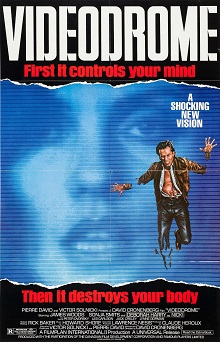
The creepy, trippy and thoroughly disturbing new age horror film Videodrome has a lot to say about our codependency with technology, particularly video and television, that still feels surprisingly relevant. It's also a film that's horribly chilling regardless of its social commentary. Max Renn (James Wood) works for CIVIC-TV, a television company in the business of acquiring videos for its clientele, everything from soft-core porn to torture. They argue its for the greater good of society as they allow people to filter their worst, most destructive fantasies through these videos. Max is looking for something fresh to market to his clients and comes across a video series called "Videodrome" where people are brutally beaten and murdered. The more Max investigates the origins of the videos the more things get bonkers, and the line between reality and video recording become eerily one in the same -- "Videodrome" might just be a far more than just a screwed up video service. The world of Videodrome is a world where everyone is plugged into their television set, craving videos and looking for new and disgustingly sensational programming. Everyone is desensitized; everyone is becoming one with their television and the tape in the VCR. It's weird. It's hard to stomach. It's a visually fearless. And it's arguably more relevant today than it was upon its release.

Grade: A-

Breaking Bad: "To'hajiilee"

Even if Breaking Bad were to falter in these last eight episodes (which thus far it hasn’t), I’m not sure it would matter. First off, the show has crafted such compelling and high quality television already over the past five plus years, but also because I’m certain it would be faltering in such ambitious, audacious and interesting ways that it largely wouldn’t matter. What I want more than anything else from the television series I watch is to never know what’s going to happen next, and Breaking Bad has always kept me guessing. Not only that but it has only become harder to determine where it will take us as it has headed into its end game.

The ending to last night's "To'hajiilee" is likely what most comes to mind when I say this but throughout this was an episode thick with edge of your seat tension and wonderful twists and turns. It is a chess match between Walt and Jesse to try to outwit the other. Jesse shares with Hank his plan to discover Walt’s hidden money, while Walt tries to flush out Jesse so that Todd and his uncle can kill him. Walt is clever but he’s getting desperate; he’s been cornered since “Blood Money” and more than ever there is a sense that he’s running out of ideas and options. His visitation with Andrea and Brock is smart (and a little awful – but what more would you expect from Walt by this point), but he is two steps behind Hank and giving too much credit to Jesse, who he outright calls family to Uncle Jack. 

Hank and Jesse stage Jesse’s death (using some gross looking animal brains) for an unsuspecting, and far from the brightest, Huell. Huell spills everything he knows which is enough for them to set a trap for Walt to reveal the location of the money. I think it’s brilliant for Huell to be the loose end that helps catalyze this. Breaking Bad has always been great at taking tiny parts of the story and reconnecting them to the bigger picture. 

The final stretch of the episode is another breathless bravura from the show. Whenever we think the big final moment has come (because we’ve been taught by this point that the final episodes will be heavy with searing intensity and forward momentum) it is suddenly aped by a moment even more intense and bold. Walt drives at breakneck speeds, revealing nearly everything on the phone, which must be wiretapped, to Jesse. But it is only the beginning. Walt pulls out his gun to face off against Jesse only to realize he’s been played and preps Todd’s uncle, providing the coordinates. He calls it off though when he learns that Hank is with Jesse. He gives himself up, gets his Miranda Rights read and is tossed into the van with handcuffs (not before a cheer worthy moment where Jesse spits in his face). 

But then there are still seven minutes left in the episode and we know something else has to happen. Hank calls Marie and lets her know he nailed Walt (a moment that’s meant to be happy and triumphant but rings false; something is off) … and then Walt sees something in the rear-view window: cars driving in. And we know it must be Todd, his uncle and their crew. They pull up and draw their guns. Hank and Gomie point their guns back at them. We’re just waiting for it to all go wrong. Hank informs them that they’re the police, Todd’s uncle asks for some identification to prove it (though we can tell he could care less), and they stare down for an uncomfortable amount of time. 

Walt is screaming that the hit is off but he’s muffled by the car and his handcuffs prevent him from getting out of the car and calming the crisis (though it might not matter even if he was able to). Guns start going off and a gun fight ensues, Jesse tries to flee the car to a safer hiding place, Walt throws himself down (glasses flying off his face), and Hank and Gomie take cover behind the van… And the episode just ends. In the middle of the gun fight.  

It’s as if Vince Gilligan is saying, “Yea, that’s pretty cool, but trust me this is only the start of things” (I imagine with his ever charming Southern grin wide across his face). The last few episodes have faded out of moments that felt inextricable: Hank and Walt staring down in the garage, Jesse dousing gasoline on Walter’s house. And then just cutting away, begging us to return for next week.

But I’m okay with that. Some shows, most shows really, wither away long before they end, and even the best of them get to their endings uncertain about what should be done or how to go out. Breaking Bad, by contrast, has been looking at its final episodes with a gleeful pleasure. It’s as if the writers are saying, “We can do that now?! Well, dammit let’s do it then!”  

Stray Thoughts:

-I want Jesse to find out about Jane but I guess that may not happen by this point. I thought Walt might tell Jesse during the phone call.
-How Huell and Cuby became such memorable characters in their own right is a testament to how well the writers make their supporting characters.
-Walt hid his money at the titular To’hajiilee, AKA the first place he and Jesse ever cooked. There’s a shot in the episode where Walt looks down the road anticipating Jesse’s arrival that recalls the opening shot in the pilot.
-That Walter White Luck Jesse described last episode is on display in those last moments except in a way that Walt is totally against.
-People have speculated about Walt killing off one or more main characters, including Hank and/or Jesse, but he may not even get that chance if things continue to go the way they were at episode’s end. My money is on at least one of them surviving (more likely Jesse).
-Skylar gives Walter Jr. some lessons on how to deal with customers. Jr. questions the “Have an A-1 day,” slogan as I’m sure many of us have.
-"Coward," Walt spits at Jesse. It might be the most pathetic and despicable thing he's ever said. He doesn't care that it's his fault Jesse turned to Hank or that it was in Jesse's best interest. He only cares about himself and having thought too much of Jesse.
-Todd's emotionless reaction to the hit being called on Jesse is really fucking creepy. 
-The director for the episode is once again the fantastic Michelle MacLaren -- directing her last episode for the series -- who over the course of Breaking Bad’s run has composed some of its most striking and memorable episodes. One personal favorite shot is the low angle shot we first get of Hank with the blue sky coming through overhead; Hank is bathed in a dark, blue glow and paces back and forth – the scene is shot and lit like Hank must feel. That final stretch is beautifully composed from the way Walter's speeding car is shot to his slow walk across the desert to Hank. It’s simply another gorgeously shot episode.  

Grade: A