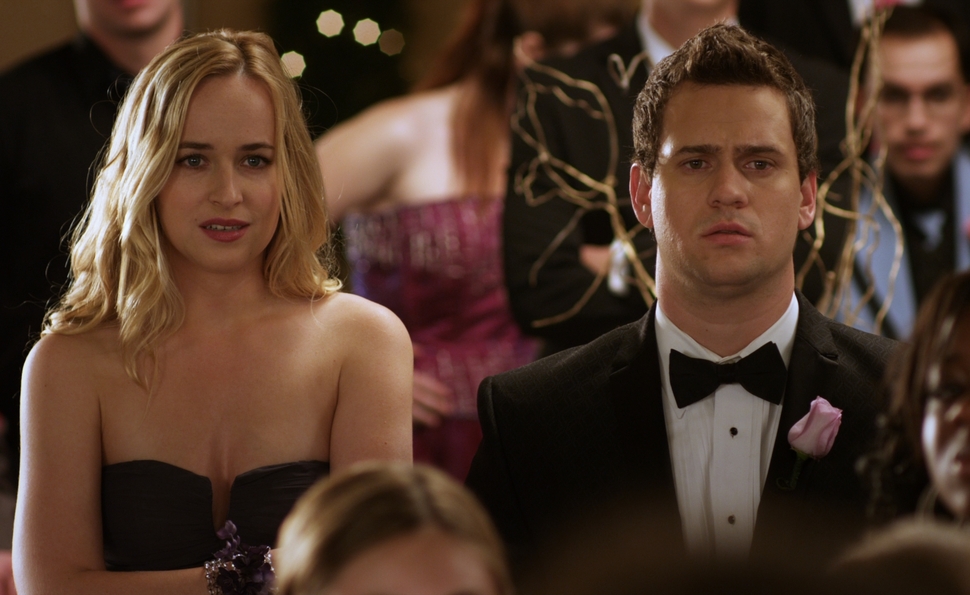
Skins, a British
teen drama that aired from 2007 to 2013, seems, like many teen dramas, easy to
write off.
Initially, anyway, that is.
Skins is a strange
series that was bred out of unique circumstances. The series was produced by
E4, a companion channel launched by Channel 4 in hopes of attracting the
profitable 15–35 demographic. For its first few years, E4 aired American
programming that it had acquired syndication rights to. But by the mid 2000’s,
E4 was looking to make a name for itself (If you’re trying to get a picture of
this network’s brand, think edgy WB/CW). Skins,
created by the father-and-son writers Bryan Elsley and Jamie Brittain, was the
channel’s first stab at scripted original programming. With that came a certain
degree of creative freedom, and that can be read in a lot of the series’ odd,
distinctive, free-wheeling storytelling. This freedom soon became coupled with
the fact that the series quickly proved itself to be E4’s most successful
program, and it proceeded to grow into a British cultural phenomenon, drawing on
the fervency of its young fan base and the coinciding rise of the internet to help
cull fandoms.
While it has since become influential in England, here in
the states it has remained more of a cult favorite. This is something I wish to
see remedied. The show uses its stories and its freedom in telling them to address
subjects that are pressing and relevant, and yet it always packages this into
something so raucous and lively, overflowing with unmistakable spirit and
spunk. But underneath its silliness, whimsy, and flippancy lay something
darker, bolder and often hugely affecting. All the sensational elements were
merely a way to grab your attention in order for the series to deal with the
things that it was truly concerned about. Conceptually, it is a series built as
if the stoner class clown and the valedictorian feminist got together and made
a show. Raunchy, vulgar contours sit comfortably side by side with thoughtful,
pointed, emotionally florid, centers.
The series’ concept starts off familiar enough: an ensemble
piece that follows the lives of Bristol teenagers as they finish up their final
two years of secondary education in sixth form (essentially high school). The first
kink in that traditional design: Every two years a new generation of characters
is introduced, allowing for new subjects and issues to be broached, and
ensuring the series didn’t attempt contrived reasons for keeping characters
around that would have no business of logically sticking about. The second
kink: the series is primarily written by young writers who are actually the age
of, or, at least, close to the age of, the main characters, writing their
personal experiences and perspective into the series and helping make it more
true to life.
These teens fall into love, and they fall out of it. They
pine for people, some unattainably out of reach. They hook up. They have sex,
lots of it. They drink and do drugs and throw parties -- it’s quite possibly
the only thing they do more than obsess over sex. We observe their home and
family lives, working and middle class and not always cushy. We observe them by
themselves, alone with their thoughts and feelings, anxieties and insecurities.
We observe them amongst peers. And when they’re not amongst their friends, who
they like but also have the sneaking suspicion they might be better off
without, they contemplate how bored and lonely and utterly lost they are. They
believe in the singular uniqueness and tragic unfairness of their life. They
are you. They are me. They are us in our late teens. It is painful and poignant
how notably they remind us of ourselves. And just as things are getting too unbearably
deep and jagged and raw, the show makes an absurd, juvenile joke to cut through
the cloud of angst.
That prior description encapsulates much of what I love
about Skins, but, before I go
overstating my adulation for the show, I must caution that wonderful as the
series is, it is undeniably flawed. Good intentions can only go so far.
Execution is what really counts, and it is here where I have to do a slight bit
of walking on egg shells. I will be the first to admit that Skins is somewhat messy. It has a
penchant for broad, silly, sometimes plain dumb, humor, and it too often gets
caught up in relationship drama that doesn’t always ring true. The show also
doesn’t have a strong handle on long-term plotting (outside of its excellent
third season, easily its best) and occasionally it makes some rather outlandish
or flat-out bad storytelling choices – most defensible, some not so much.
That said:
Skins
is a good, sometimes great, always singular series. And, at its best, the show nicely
matches its pleasurable surface charms -- a playful, irreverent sense of humor,
delectable romance, angsty drama – to some interesting, even under-examined,
issues and topics. While a fair amount of defenses and praises of the series
are guarded and likely to begin with some variant of “I’ll admit…” (look no
further than to earlier in this post), for everything
Skins gets wrong (more than I’d care to admit and sometimes
breathtakingly so) it gets a dozen or more so genuinely and refreshingly right
that it often erases away a lot of the potential ill-will its shortcomings
create (As
Flavorwire’s Judy Berman
noted, “It’s hard to explain if you haven’t seen the cult British series … but
Skins can somehow get away with things
that would just seem cheesy and overwrought”. The elements that should clunk
more often than not don’t because they aren’t a bug but a feature). These types
of gauged defenses are slightly unfair though. They treat the series like it is
a guilty pleasure. Besides the fact that guilt or self-flagellation over the things
we like/enjoy, and in the process crafting a moral cultural hierarchy, is
needless, pretentious, outmoded, helps no one, and adds little of critical
value; we should also simply accept that the show when it was on its A-game was
honestly just a pleasure, purely, simply and with little need for justification
or qualification.
The show’s distinctive ability to create admiration and
amusement began with its unusual formatting. Skins is one of the most structurally audacious series of recent
memory, which is both one of its greatest assets and something that lead to all
sorts of weird storytelling issues. Each episode focuses on one, or in some
instances multiple, characters. Essentially the show takes on the form of a
collection of short stories with serial elements playing out in the background.
Its odd structure was a boon to what was something the show was always good at:
character and characterization. (Even at its worse, the show’s storytelling
typically made sense on a character level even if on a plot level it could be
eyebrow raising).
The show’s structure opened it up to trying on new
identities and personalities week-to-week and season-to-season. One week it
could be a raucous comedy, the next a peculiar avant garde play, and yet
another a quiet family drama. This meant that some episodes could reach brilliant,
ecstatic highs – acting as fantastic examples of what this tv genre is capable
of at its finest – and still others could crash and burn as fevered,
frustrating blunders – sometimes these drastic tonal shifts existed from scene
to scene leading to greatness and significant enjoyment buried even amongst the
most misguided efforts (This was especially true in the third generation’s
seasons, the most divisive and uneven, and the ones to have the lowest lows to
counter the highs. The show was simply running out of steam by that point, but
there is still some good and especially some very curious stuff there). Thankfully
the counterweight typically balanced out more towards the good than the bad. Like
other shows with outsized ambitions and that changed markedly episode to
episode, such as Lost or Community, this made diving into each
new installment of Skins thrilling to
watch. You never knew quite what you were going to get (or whether it would be
fully, successfully pulled off), but you knew it would look nothing like any
other episode, and sometimes like nothing else on television.
Each episode starts from a place of: “Let’s hone in on this
one character and dig into what makes them who they are, and why they matter”.
It’s that last point that makes the show stand out;
Skins is a deeply empathetic show and sympathetic towards and
interested in people that films and television have never really had a good
handle on. This begins with having an earnest, meaningful look at teens, but it
extends to the writers’ choices in who those teens are – from people from
rarely seen ethnic backgrounds and people from rarely depicted subcultures to
individuals with atypical personalities and identities.
Skins was noted
upon its release for its “authenticity”. Others were critical of it for its
lack of realism. These differing opinions aren’t as hard to reconcile as it
might sound. Skins, to an extent, is
a soap opera or melodrama, and in the best tradition of that genre the series
uses a heightened sense of emotion and dramatic storytelling – and, like the
best melodramas, Skins’ underlying
true interests are also unexpectedly incisive and provocative.
This heightened, exaggerated sense of reality began with the
show’s depiction of and attitude towards carnal pleasures. Skins was criticized for the excessive drug use, drinking and
sexual escapades of its characters. “Teens do those things, sure,” enraged
parents and introverted youths said, “but not to this ludicrous extent!” But critics
missed the point. No one was depicting these aspects of young people’s lives –
not really. Either you got something really, really earnest (which isn’t
necessarily bad: just ask Switched at
Birth) or something heavy on having a message (a la Degrassi -- that makes it
sound worse than it is, but it’s very after school special-y). Yea, you have other
series that feature these things in a non-preachy way, but those series often
tend to glamorize it (your Gossip Girl’s
and 90210’s) -- and their general
sense of storytelling and character are too often odious. Skins, instead, just sort of matter-of-factly has it as atmosphere
and minutiae, a meaningful part of the environment: teens do these things, so
it makes sense that you would have them. (I’ve always seen Britain’s far
greater tolerance of drinking – England has a massive, widely accepted drinking
culture – and their always cheeky treatment of sex as having a big impact on this.
It’s hard to imagine these depictions happening or working on American television.
Something proven by an American remake of Skins
failing due to extensive outcries – some claims went so far as to equate it
with child pornography. The amorality just doesn’t fly over here).
In particular, the most true to life element of this
sticking point was the adolescent sexuality. Due to social prudishness and cultural
denial, we don’t really consider the sexuality and sexual experiences of
adolescents (especially young females, of whom Skins does a much better job of fully, seriously putting front and
center than most media content). We couch sex in innuendo, suggestion and
winking knowingness, but we exclude the actual messiness of its realities –
which only serves to make it all the more confusing and complicated for those
first discovering and learning about it. Skins
is, by turns, sexy and tantalizing, but it has a real eye for the underlying messiness
of sex and sexuality. The show finds its character having their first sexual
encounters and their first real relationships, and the show takes time to
portray what that entails, how simultaneously perplexing and thrilling those
first discoveries and experiences can be (Plus, it's also one of the most sex positive shows, showing a variety of sexual experiences and refusing to criticize or pass judgement). In the world of Skins, romance is all consuming. Sometimes that could make love
seem like an inescapable addiction – one of the more problematic underlying
suggestions of the show and its obsession with one true pairings -- but it also had a more logical gravitational
pull, something viewed with a fervent, delirious attentiveness familiar to
teens; a thing marked with signifiers of status, self-worth and identity.
The implausibility of some of this party readiness (from
“how the hell do they afford this” to “how are they not dead”) is intentional.
The show isn’t supposed to always make literal sense. It trades in tactile
authenticity for emotional authenticity. By placing us thoroughly in the
perspective of these characters, we are meant to understand to a large extent
this is a subjective presentation of events (This often makes a lot of the
sillier, broader elements, such as the caricature-esque depiction of parents, a
lot more forgivable and palatable than they might otherwise be). On one level,
it’s faithful to the all-consuming emotional surplus of the age-group it
depicts, with the associated self-involved drama in tow.
Moreover, and more importantly, the show utilizes its
heightened emotionality to create a more direct emotional connection with its
characters. Perhaps the show’s greatest value and most admirable feat was its
desire to take seriously its young characters. Characters on Skins can, and do, act awful and take
some terrible, impulsive actions. But the show reserves judgment. The show’s
interest lies in understanding motivations, aspirations, and desires. In other
words, it aims to do nothing short of recognizing, identifying, and
appreciating the complex inner emotional lives of its young characters. This is
something frankly pop culture tends to avoid doing. The culture at large has
infantilized our comprehension of what it means to be a young adult. We presume
children and teens don’t have complicated, fascinating inner lives. Skins recognizes and understands that
simply isn’t true.
Skins has a deft,
intuitive sense for the psychology of its characters, and each installment asks
us to consider some new character, sometimes someone the show has gone out of
its way to make us dislike. That distaste may not necessarily go away but it
needn’t for the intended effect to work.
Skins
doesn’t always beg for your sympathy (though it usually achieves it) but it
does insist on your empathy – something too infrequently seen of tv series.
Some of this probably makes Skins seem more serious-minded and heady than it actually is. First
and foremost, the show is interested in being entertaining and it’s largely
very good at that. Skins places the
“deep stuff” in between lots of amusing comical digressions – dramatically and
emotionally dark as the show can get, it often plays more like a racy and lewd
yet effervescent comedy -- and involving interpersonal drama. The ongoing drama
makes for something that’s easy to get invested in, as it creates relationships
(romantic, platonic, and familial), and complications for those relationships,
that are absorbing and even a little resonant.
The series is also progressive, transgressive, and
subversive, and that makes it exciting, surprising and fascinating. While it
features a number of the outward appearances of the average teen drama, and
indulges occasionally in a few tropes, Skins
is consistently smarter and deeper than its genre counterparts.
For instance, the first generation’s ostensible central protagonist
Tony (Nicholas Hoult) has all the outward appearance of the vacuous, pretty-boy
nice guy lead, but he reveals himself to be a Human Monster, a manipulative
sociopath. Tony’s disturbing behavior becomes a way into indirectly deconstructing
all these wonderful issues of masculinity, privilege and the hierarchies of
young social orders. Meanwhile, the wounded, bleeding heart of the first
generation slowly proves itself to be such unexpected, winning presences like
bottoming out pill popper Chris (Joseph Dempsie) and spacey head-case Cassie (Hannah
Murray) (The show benefited tremendously from its stellar casting, which paired
fantastically capable, largely untested, young actors – actually the age of
their characters, for a change -- superbly well with particular characters that
they then made their own).
The second generation’s seasons -- for my money, even better
than the already quite good first two seasons -- confidently doubled down,
inviting us to look at a range of challenging and underserved issues, including
depression, sexual identity, immigration, and autism (as well as the more
familiar, but no less important, issues of race, class and gender). This made
the show rather controversial, but the show’s treatment of this material
demonstrated tact and sincere engagement. Throughout its run the show would
tackle remarkable, difficult subjects, and often with relative insight and
understanding. The show was perceptive and sincerely concerned about such
rarely dealt with topics as living a religious life in a modern world, combatting
and learning to live with mental health problems, and learning to accept and
embrace having non-traditional sexual orientations and identities (The latter
of which produced, in the third season, the show’s single best storyline: a
beautiful, poignant tale of first love, played with achingly real vulnerability
by Kathryn Prescott and Lily Loveless. This is, simply put, the best treatment
of the discovery of sexual orientation I’ve ever seen, and it acted as a lovely
center that spun outward to elevate everything around it, turning the third and
good portions of the fourth season into exceptionally good television. I’m not
sure what’s more admirable and impressive: that, to my mind, there has never
been a lesbian story like this or that at the end of the day it’s just
matter-of-factly a story of young love). Then there were the non-controversial
stories still underwritten in media that
Skins
less brashly and more quietly depicted: female friendship, fundamental human
decency, and the acceptance of the consequences of one’s actions.
The series is highly evocative of a particular time and
place. It is flavored by the distinctiveness of taking advantage of its setting
in Bristol (It never feels generic or bland; it very much feels like its slice
of life of a certain locale). But it also feels very much of its time; in a few
years’ time, we may look back on the show as something of a time capsule of
what it meant to be a teen in the early 2000’s. But Skins has a universality to the experiences it depicts that cuts
across generations. The details may not be the same but the general evocation
of that feeling of confusion, disaffection and ennui; of close but tenuous
bonds; of heartache and heart-break; of loneliness and connection during that
fleeting but defining point in our lives is unmistakably familiar.
More than anything else that made Skins a good show was its generosity. Warmly, intimately,
invitingly, the series kept its arm wide open to embrace its characters, to
suggest that they mattered, and that if you were like anyone on the show you
mattered too. But it rarely achieved this cloyingly. It would put its
characters through hell and high water for some compelling drama, but it would usually
only dangle them over the ledge so far. Its heart – so transparent under all
that supposed edge and grit, and boundary pushing – was something it wore on
its sleeve. It cared a heck of a lot, and it made us have a heck of a lot of
fun doing it.
Sure, Skins is far from
perfect, but, then again, whose teen years are?