Monday, April 29, 2013

How I Met Your Mother - “The Bro Mitzvah” - Review

How long can How I Met Your Mother sustain itself on twists? Many of the show’s most recent episodes have only been elevated above their shortcomings by some reveal that forces us to reconsider everything we’ve watched prior. “The Bro Mitzvah” is another example of this and besides its reveal it's a very middling episode.  

Part of the problem is that it’s just not a very funny episode. At times the laugh track would play and I would find myself saying, “But that’s not funny!” That’s not to say none of this is amusing. Ralph Machio’s appearance is a well-chosen if underutilized cameo. The clown jokes provide some chuckles. Even the misunderstanding of Robin being a virgin is sort of smile inducing.

The actors do their best to sell lines and gags. Alyson Hannigan is stuck in a really inane joke about her obsessing over Ralph Machio and it’s only funny because Hannigan is selling the hell out of it. 

But the episode suffers from being yet another effort to stall once more before the series can get to the wedding.

I also don’t know how long the series can continue to reconcile Barney’s dickish ways with his choice to settle down. The events of the episode only occur because Barney is such a total asshole that he’d unknowingly fall into this trap set by his friends. 

There’s no way around it. This is just a truly disappointing effort from the show.

Grade: C+

Game of Thrones - "Kissed By Fire" - Review

 
“Kissed By Fire” is a lot less explosive and propulsive than last week’s installment, but it’s none-the-less another great episode from the series. There are moments in the episode that are as compulsively watchable as Dany’s city sacking and the mutiny at Craster’s, but there are also a lot of the quieter moments that make Game of Thrones so much more than a fun, action-packed fantasy romp. There are plenty of political machinations for every epic trial by combat, and there are a number of great character moments for every holy shit moment. And on the whole, this is another episode that does what Game of Thrones does best, it engrosses you in its storytelling so much and so thoroughly that it’s almost like watching magician doing a magic trick. It distracts you from all the manipulations (and scattered plot strands) with some deft sleight of hand.

This is all helped by the fact that a number of major plots are suddenly in full motion. Jon is finally given the first big test of his commitment to his current double agent status. Jaimie and Brienne get to the destination they’ve been heading towards since the second episode (and their relationship advances even further to a mutual understanding and respect). Littlefinger continues his scheming and continues to push for Sansa to leave with him for the Vale. Stannis is made to feel a little guilty about imprisoning Davos (due to his daughter Shereen – man this show’s casting is phenomenal, but if you want to really see just how good it is look no further than the child actors). Robb makes a questionable decision to kill one of his lieutenants and it forces him to make a bold, possibly foolish decision to court the Frey’s favor. Arya is forced to confront all the increasingly tragic crap that’s been thrown at her. 

Now I could go on and on about the Hound’s trial by combat (which was very, very cool), but for a moment I’d like to talk about some of the smaller moments of the show. Big moments are cool in of themselves but what really sells them is having a reason to care about the characters that they’re happening to. Take Jaimie telling Brienne about how he got the nick name “Kingslayer” and the absolute burden he carries for killing the Mad King Aerys. This is the moment where I really started sympathizing with the show version of Jaimie (it’s also a great moment for evolving the relationship of Jaimie where Brienne isn’t just sympathizing with him because his hand got cut off but because it’s one more damn insult to the life he’s living). It’s also a really good way that the series takes things, in the book, that would typically be learned largely through inner monologues and finds way to elaborate on it that are just as interesting and just as telling.

This is all posturing on Jaimie’s part. He accepts the hatred of everyone around him for breaking his oath because it was a necessary evil. The king would have killed thousands, and so Jaimie killed the king and took the flack that came with it. Posturing takes place all throughout the episode. Jon acts tough in front of the wildlings, but we can see it’s only a thinly veiled disguise. He’s suppressing his actual feelings (he clearly still supports the Night’s Watch – just look how incredibly hesitant he is to give up the details of the Watch's defense). Stannis acts like he can never forgive Davos but he knows that Davos is too loyal of a supporter and friend and too good of an advisor to give him up so nonchalantly (it also doesn’t help that adorable kids are questioning his decision making). Robb gives off the appearance that he’s in control, killing Lord Karstark so he doesn’t look weak, but he’s increasingly desperate in his war efforts. Tyrion is masking his true self all the time; he hides behind wit and barbed jests, but it’s all to hide his inward self-loathing and his hatred towards all the constant judgments he receives. 

Not everyone is posturing. Olenna has long since stopped caring for what others believe about her, and immediately gets straight to the point. We see this when she cuts to the chase as Tyrion asks for help financing the upcoming royal wedding. Cersei acts rather giddy as Tywin gives the news about Tyrion’s new betrothal to Sansa (a nice oh shit episode coda). But she’s quickly put a façade back on the moment Tywin notes that she’s to marry Loras. Tywin rarely postures and he retorts coldly, “My children: you’ve disgraced the Lannister name for far too long”. 

This brings me back to the trial by combat. Arya is a character who is almost always trying to convince other people that she’s somebody that deep down she’s not (in the books this is even more explicit as she adopts new identity after new identity). Arya is a tomboy and she pretends she’s much fiercer and stronger than she is. But deep down she’s a troubled little girl who misses her dad. The fight between the Hound and Beric Dondaron is thrilling, but what’s exceptional about it is how little it often has to do with these two warriors. If anything, the fight is more about Arya. The scene is constantly being framed from her perspective as she barely avoids getting caught be some side blow from the swords. Aray watches the whole fight with a feverish intensity and when the Hound survives, she rushes out to stab him with a dagger, barely failing to get the knife in him. The fight scene works because we know what’s at stake for everyone involved, for the Hound, for the Brotherhood With Banners, and especially for Arya. 

It’s only after the fight that we see the true colors of Arya. She wishes for her father’s life back and tearfully yells at Gendry for choosing to leave her (When she cries out, “I could be your family!”, you have to be dead inside not to get a little teary eyed).

People rarely get what they want in Game of Thrones though and it’s why there’s such a large desire for creating a persona to hide behind. Anytime you try to be yourself, say to be the good guy who saves the day (Ned Stark) or  the young, naïve maiden (Sansa), you get seriously screwed over. Davos shouldn’t be in a prison sell (his assassination attempt on Melisandre is one of the boldest things he’s done to date), and Arya should get justice, and Tyrion shouldn’t have to marry Sansa or be the Master of Coin. But that’s what life has dealt them, and in Game of Thrones you accept your lot in life with a brave face or a quick jest and hope no one sees through the act.

This may have been less high octane than last week's episode, but it was just as compelling and gripping. This series has become first and foremost about its characters, and this was a really good episode for economically and memorably exploring and moving these characters forward.

Stray Observations:
-New location on the map: Yunkhai.
-Flaming swords are never not awesome. Also, the chants of “guilty” during the fight formed this wonderful, dark atmosphere to the fight.
-On the whole, this was a fantastic episode for Maisie Williams. The range of emotions she had to play was really diverse and yet she was great in all of the scenes (this is an angry, sad and confused kid who has come to believe violence is the only solution to her problems now).  
-“You swore some vows. I want you to break them”
-Roose Bolton is a maniacal one; when he makes Jaimie squirm by temporarily convincing him that Cersei died in the Battle of the Blackwater, it’s an all-around dick move. But it’s a nice little piece of character information; Roose is conniving, cold individual.
-Olenna is disappointed that Tyrion is a clever individual.
-“It took five of you to kill two unarmed squires?”
-“Hang him last so he can watch the others die first”
-Berric Dondaron has now died and come back to life six times. Also, the Brotherhood worships the Lord of Light (aka Melisandre’s god)  
-So Stannis’s wife is crazy (the stillborns preserved in jars – What in Seven Hells?) and a devout follower of Melisandre. She won’t accept Stannis’s apology for cheating on her because Melsandre says it was god’s will.
-Littlefinger sends one of his spies to sleep with Loras to acquire information. Thankfully it wasn’t just another random sex scene.
-Brienne standing up in the tub was a a nice, defiant moment.

Grade: A

Sunday, April 28, 2013

The Office - "Paper Airplane" - Review

One of the greatest assets and also biggest weaknesses to television as a medium is longevity. Sometimes we wish a film had a few more hours to tell its stories. There might be some aspect we would have liked it to play up but it had to cut down on for time constraints or maybe we just want to inhabit that world for a little while longer. Television, on the other hand, has time to spare. But the downside of television having all this time to tell its story is that it sometimes overstayed its welcome. Films might under stay their welcome but they often don’t have enough time to feel as if they’ve expired countless hours earlier.

Everyone has a different point where The Office began to feel like a stale but comfortable show (it was starting it for me somewhere around the fifth or sixth season). You knew what you were getting and it was perhaps a safer bet to watch The Office than take up a new show that might get canceled or whose lack of familiarity made it difficult to get into. The series was clearly declining before that point but you got trapped in the series like a security blanket. Longevity does that. It builds up a connection between you and the show, and that’s one of the crucial aspects of television, but it also allows television to get lazy and stop trying as hard to be appealing. 

There’s nothing wrong about a show acting as comfort food. Some of the best television has been purely about creating a nice little space to kill a half-hour or so. But The Office has increasingly become a show without a rudder. There are a lot of the same characters and there’s a lot of the same style and outwardly it looks much the same as ever (minus a Michael Scott and a Kelly Kippur). But often times I’ll be watching and asking myself, “What am I watching?” This season and recent seasons have felt like Office-lite. It’s similar jokes and occasionally similar scenarios but they don’t make me laugh as often or consistently and sometimes the jokes and the plots have me raising an eyebrow and actively questioning my viewing experience. 

Final seasons have a harder time than almost any other season of a series (besides may be the first season). A good final season has to achieve closure. The finale in particular needs to do this but on the whole if a final season isn’t doing something where there’s a sense that you know what happened to these characters and this world beyond the series end point than the show has failed. And right now besides a very, very small number of characters, I’m incredibly nervous that The Office is oblivious as to what it’s seeking to do with these characters. What is the show doing with these characters? Angela and Dwight are … skirting coupling. I think; it’s honestly hard to tell if that’s just a plot point to kill time in this episode or if that will go somewhere down the road. Andy is getting into acting, which has no real end goal in sight other than to keep being used as a gag. Erin and Pete are dating and it’s mostly cute, but there’s nowhere for that to go if they just stay together or if it doesn’t take a step further, which is doubtful.  What else from this episode has any potential to go anywhere? Kevin sucks at making paper airplanes as only Kevin can. Nellie is oblivious and apparently likes refereeing events. Toby is generally awkward and gets his eye temporarily eye patched – None of these stories have the ability to grow into something where we might be pleased to see the show expand upon it and use it to tell some final story about the characters. 

Take what they’re doing with Andy. Now Andy is a character this season has dropped the ball on. A show doesn’t need to have real characters, but The Office has led us to believe that it exists in a world that’s mostly very close to our own (though it’s lost that sense in recent seasons). And yet I have no idea what is going on with Andy. Granted, sometimes Michael Scott’s antics were so goofy and outlandish that they could take you out of the moment, but for the most part they kept him likable and believable enough that you were willing to put up with his craziness. There’s a type of logic that many individuals abide by and I’m a strong supporter of it. It has many names but the common one is “Fridge Logic”. In essence, it’s the notion that if you didn’t question the logic or the plotting of something in the moment you were watching it, you can’t really have qualms with it. If a tv show or a film engrossed you enough to convince you that its logic and storytelling was sound, it doesn’t matter that that in hindsight there might be problems with the plot or logical inconsistencies. It succeeded. The Office lately hasn’t been winning in the Fridge Logic department. Andy is prime example where the show is failing at this. I can roll with the idea that Andy would want to get into acting (even if I think it’s a pretty useless storyline) but the way Andy treats his acting gig is so completely strange and so completely unreal that it was hard to buy the way Andy was behaving. 

Now I don’t really give a fuck about Andy anymore. I could probably list the handful of characters that interest me on this show and Andy isn’t one of them. Kevin occasionally makes me grin, mainly due to Brian Baumgartner’s commitment to the performance. Erin is a tall glass of whimsical cutesy and Ellie Kemper is admittedly delightful at times due to her abundant enthusiasm. Other bit players still make me chuckle here and there such as Stanley, Phyllis, Darryl, and Creed. But on the whole, I just don’t care what happens to these people. We had a vested interest in Michael Scott’s story and it paid off really well. Now the only story we still have a vested interest in is Jim and Pam.

Because we have a vested interest in this story and the writers recognize this fact, Jim and Pam’s story remains to be really, really good. When Pam runs to Jim and then Jim can’t even begin to find the words to express how sorry he is and simply hugs her, it’s spine tingling. 

It’s almost as if the series knows this is technically the only story it really needs to tell in full at this point and everything else is merely filler to fill up the edges of the rest of the half-hour. I perk up in my seat when I see Jim and Pam on screen, but I slouch down immediately after the story cuts to anyone else. The moment it pops in on any other character I know it will at best be mildly amusing and at worst disappointing. When a show goes on as long as The Office has, it reminds us of the downside of the television medium. Television has always been given flack for creating content that’s passable but not great because television’s real goal is to sell ad space and last as long as it possibly can to do that. Television was created with the mindset of appealing to the broadest base of individuals to sell ads and NBC will keep on a sizable hit like The Office on long after its expiration date if we’ll tune and drop out for a little while longer; even if we’re mostly only doing it out of a desire for completism and a vague hope of closure. 

Grade: C+

Saturday, April 27, 2013

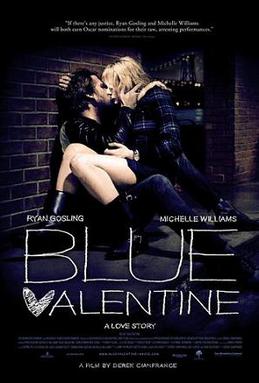
"Blue Valentine" - Film Review

There’s a soul aching pain that pervades Blue Valentine. The film contrasts the breakdown of a married couple’s relationship with their initial meeting and courtship. In the present, they have fallen out of love with each other and there’s a world weary, sad, and unnerving tone to the story. This is made all the bleaker by how sweet the flashbacks are. It’s observing two people unexpectedly being swept up in romantic spontaneity. But now they have a kid (who as it turns out isn’t the husbands, which complicates matters further) and they’ve become bitter and resentful.

The film owes much of its power to its cinema-verite style. The docu-realistic take on the subject matter leads to some truly chilling moments. There is an emotional intensity that it hard to sit through at times. The film has a shaggy quality, letting moments linger just a little longer than the typical film might which makes the impact of the scenes even stronger. This is particularly true in the more uncomfortable and claustrophobic moments in the film. 

This is notably the case in a number of sex scenes in the film. These scenes are some incredibly honest and intimate depictions of sex. They’re painful and awkward at times; one scene gets uncomfortably close towards being a rape scene. But they’re also, in a separate instance, tender and sweet (the sex scene when they’re younger is fun and hot, and yet completely advances the story of the characters and never feels like it’s there merely for the sake of having a sex scene). 

Much of the film’s realism stems from the improvisational, raw performances of Ryan Gosling and Michelle Williams. Watching the relationship unravel is as upsetting and affecting as it is due to Gosling and Williams. Not only do they have great chemistry, but, more importantly, they also make the jumps between the past and present carry the weight of change and time. The contrast between the past and present gives it all a terrible bittersweetness. Switching back and forth between the two times, it’s almost like seeing a different set of individuals, and the the youthful love affair is simultaneously all the more joyous and yet all the sadder due to this. 

It’s at once painful and sad, but also at times sweet and funny. Williams and Gosling create fully formed characters, which makes the relationship’s break down all the more disheartening and harrowing. The film’s intimate, personal portrait of a couple is powerful and poignant.  

Grade: A-

Thursday, April 25, 2013

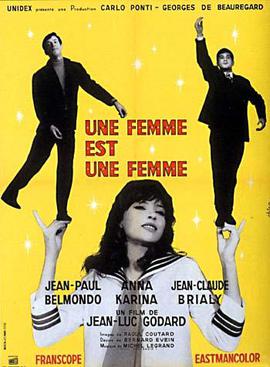
Patrick Vs. "A Woman Is A Woman" (Thoughts on "A Woman Is A Woman")


Patrick Versus A Woman Is A Woman 

In this week's episode: Patrick takes on one of the slighter efforts of director Jean-Luc Godard

I don't have time for a complete review so here are some random thoughts:

-Very colorful, light and fun. It would have been nice if it were more substantial but the film generally has enough charm that it doesn't matter.
-Slightly pretentious at times. Jean-Luc Godard at times seems really self-aware that he's being completely flippant and unconventional and that becomes distracting and frustrating at times.
-Though typically classified as a homage to American musicals, it has very little in the way of music. The sound is unnecessarily experimental at times. Music plays in synch with people's talking at times, and, in one instance, Anna Karina does actually sing, but the music is almost besides the point.
-Anna Karina is a lot of fun; she's young and vibrant and it's pleasant to watch her coo or play coy, but overall Angela is a less of a character and more of a delivery system for whatever Godard wants her to say. The same is true of most of the characters.
-Did Angela need to be a stripper? It almost seems pointless, and that sure is a tame strip club.
-Angela's desire to get pregnant is also totally unexplained. Although it does lead to a great ending.
-I guess the real problem is nobody's motivation for anything is clear and the plot doesn't have a strong enough sense of forward momentum to overcome this. (For instance, the love triangle almost seems to exist solely for the sake of existing rather than because these people actually have a genuine interest in one another)
-The scene where Angela and Emile use book titles to express themselves is really cute and funny.

Consensus: Overall it's all very light and the film jumps around a lot, uncertain as to what it wants to be. It's amusing but forgettable, and Godard produced better works.

Grade: B-

Tuesday, April 23, 2013

"The Red Balloon" - Film Review

You know when you feel really good; you’re all giddy and smiley and exuding a bubbliness. Well, that feeling is pretty comparable to The Red Balloon, which is a straight shot of pure unadulterated good to God happiness.  

It’s so fucking twee that you might think it’s exuberance of positiveness and colorfulness and general cuteness might be overwhelming and excessive. But it’s not. It’s charming and delightful from start to finish, and your soul has to be pretty black and empty not to smile.

A boy (Pascal Lamorisse) finds a balloon of the red persuasion and soon grows rather attached to the big shiny ball of helium. He begins taking it everywhere with him. 

What quickly becomes clear is that the balloon has a sort of consciousness to it. It moves by its own freewill as it damn well pleases. 

The boy tells the balloon to stay put but it just can’t help itself and follows the boy around. Some Looney Toons-esque classical music plays as the balloon sneaks behind the boys back and hides in doorways to avoid him looking back in time to see him. It’s adorable; actually correction: it’s the most adorable thing I’ve seen in a long, long time. 

The boy goes to school and he’s forced to leave the balloon outside. When the schoolmaster puts the boy into detention, the balloon follows the man outside of the school and taunts and harasses him to highly amusing effect. 

The red balloon sees a girl (Sabine Lamorisse) holding a blue balloon. Ah, it’s destiny! The two balloons attempt to escape their owner’s clutches to be together, but the kids are too young to get the heads up and keep moving along. 

A gang of kids keep chasing after the boy. They want the balloon, but the boy won’t let them get it. He outruns them for a while but inevitably they catch up. A rock hits the balloon and it deflates, collapsing to the ground. The boy is forced to euthanize his friend by stomping on it. And damn if it isn’t the most oddly moving thing you’ve ever seen put to celluloid. The balloon has become a character in its own right, if not the outright protagonist of the film. The film has just killed its main character!

Suddenly, in the film’s most effervescent moment yet, every balloon in the city, as if immediately aware of the balloon’s death, swarms to the boy and he finds himself lifted up by countless balloons. He’s flying high above the city. 

The film is at times like a silent film. It tells most of its story through eye catching and vivid visuals that are highly effective and leaves the sound to a minimum. This is actually a really great decision. The film doesn’t need much dialogue to impact us; it’s visuals are so wonderfully pleasing and simple that they do the job just fine on their own. 

This short film pops. The colors are bright and a whimsical, child-like wonder pervades it at every turn. Fun, charming, and utterly feel-good, it’s an absolute joy. 

Grade: B+    

Mad Men - "To Have and To Hold" - Review

One thing Mad Men does almost better than any other television series is letting its stories carefully unfold and trusting its audience to be patient enough to let the stories go where they may go. Many stories will feel as if nothing is happening and then suddenly everything will be happening all at once. The show is also great at having characters whose stories in a given episode were separate suddenly find their stories collide and, granted Mad Men isn’t explosive, but in those moments there’s a strange thrill to it all. The pleasures of Mad Men aren’t just the moments that cut across everything (that are hugely funny or deeply moving or unexpectedly powerful), but these moments when it needs to do them work incredibly well.  

A number of characters who typically don’t receive a lot of screen time in Mad Men are suddenly given a huge amount of story time in “To Have and To Hold”. Harry Crane every now and again will receive a plot, but perhaps even more unexpectedly is how Don’s secretary Dawn is given her first major story ever. Another thing Mad Men does so well is its ability to lean on supporting characters for large amounts of story time without it losing any of its storytelling capabilities. Harry isn’t the character we necessarily care the most about, but when he’s given his own plot it can be just as entertaining and interesting as anything we might see major players like Don or Pete or Peggy do.  

Which brings me back to my first point made in the opening paragraph, Harry’s story is less interesting for what it tells us about Harry (who has become a total useless asshole by this point in the series) and more for what it tells us about Joan (and it's in one of those "explosive" moments that this is really true, but more on that in a little bit). When Ken complains about his father-in-law, Harry comes up with an idea to help Ken soften his insufferable in-law. They help get Dow Chemical, Ken’s father-in-law’s company, ad space for a variety hour. But the best part of Harry’s story is the point where it starts to reveal its true motives in the moment it collides with Joan’s plot. Harry is so happy after the success of this sales pitch that when he returns to the office to find his secretary Scarlett fired by Joan he flips out. 

Joan has been in the background for the most part this season. There have been occasional reminders of what she did to gain her partnership (which comes up again in this episode as well) but she’s mainly been there as a reminder of her existence. And for a while it seems as if Joan isn’t going to have much to do in this episode once again. But suddenly she fires Harry’s secretary and her story really begins to pick up unexpectedly (but totally wonderfully). 

The third story of the episode intersects with these first two in interesting ways. Dawn doesn’t really enjoy her job at SCDP, but, as the animals in the Flintstones might say, it’s a living. Apparently she’s the maid of honor in a friend’s wedding, a task she’s neglecting due to her heavy work load. Dawn covers for Harry’s secretary (who I’m assuming has been there the whole time, but I couldn’t say for sure) by clocking in her time while she’s away. She’s reluctant to do it, but she doesn’t want to displease anyone. Now I really like the expansion of Dawn’s character, and it’s a surprising and bold choice that largely works. But my real problem is that the show doesn’t go far enough with this. The most interesting part of Dawn’s story and the one most underplayed is that fact that she’s African American and the only black worker at SCDP.  Mad Men has uneasily skirted around race, mainly giving it the good old college try, but never taking it to the level that it arguably should be for a show about 1960’s America. Granted, the show likes to show history through the experiences of characters rather than by blatantly shoving a historical event down our throat, but it still feels very surface level for a show that examines other things very well. 

So getting back to Joan (because this is her episode really in my eyes), the best scene of the episode comes after Joan and Harry have their confrontation (which is another excellent scene – that’s uncomfortable, sad, perfectly setup and equally well-executed). Harry looks in on the partners meeting, envying the position that Joan is in and wishing he were there (although as Roger and Bert note later in the episode, there’s no way in hell spineless Harry Crane is ever going to be a partner). He storms in and argues that he’s done more for the company than Joan (which really isn’t at all true, and this is all further shaded by the fact that Joan proved herself to better at Harry’s job in television back in season three before getting cut out due to being a woman). Then he goes one step too far and reminds everyone of how the company prostituted Joan out to Jaguar (they all sit in awkward silence and the camera lingers for just the right amount of time). It’s a sickening, sad, pathetic moment spurred by a desperate, narcissistic man who thinks he deserves more merely because he’s a man. 

This is capped by a great but slightly on the nose moment (Mad Men does this more times than you’d think); Joan is talking with her friend Kate who is in the city on a visit. They’ve just had a carefree, drunken night where they hooked up with random strangers. Her friend wants to do it just to try out the experience, but she says she couldn’t live this life Joan does. “I’m not you, aren’t I?” “Why would you want to be,” Joan replies, “I’ve been working there for fifteen years and they still treat me like I’m a secretary”.  To Harry, Joan has it all, but she sadly still doesn't.

Meanwhile, Don leaves a pitch to Heinz to find his protégée ready to make a sales pitch. He listens in and he’s simultaneously frustrated and pleased. Peggy has learned well, even stealing mantras that Don provided her such as “If you don’t like what they’re saying, change the conversation”. Metaphorically Peggy is cheating on Don by attempting to steal away this client. (A point made all the more explicit by the fact that SCDP paid for use of the hotel room - But then again Don is doing a very similar thing to Raymond of Heinz Beans that Peggy is doing to him).

Don is none too pleased to learn that Meghan’s career is advancing, especially when she’s been written into an affair storyline in her soap opera. Don watches as the scene is filmed and sees his wife pretending to have an affair, all the while knowing he’s having an affair for real, and he hates himself all the more. The only time Meghan would dare consider “having an affair” is all an act for a television show.   

No one gets what they think they deserve. Harry isn’t made a partner. Dawn isn’t fired but is put in charge of the keys for the time cards and supply closet. Joan isn’t given the respect she deserves. Meghan doesn’t get the support of her husband. And, well, Don still doesn’t get his piece of mind he so longs for.

Stray Observations:
-Are the Vietnam War and pot smoking references too on the nose?
-Meghan’s bosses Mel and Arlene are swingers. Not sure why this happens, but it’s really funny.
-The way Joan is shot in the scenes with Kate show how totally disconnected she is from all that’s going on.
-“I was different from you in every way Mr. Crane” – How awesome is Bert Cooper?
-Stan flipping Peggy off in a wonderful, nicely paid off moment.
-They’re really playing up the prostitution theme this season.
-Lisa Cardellini is a great actress but Sylvia can’t help but feel like she’s a plot device. -Ginsberg and the spy joke just didn’t work for me. Felt like it tried too hard and was too out of place

Grade: B+

Monday, April 22, 2013

Game of Thrones - "And Now His Watch Is Ended" - Review

When Game of Thrones is excelling, it’s mesmerizing. The series is addictive and when it’s firing on all cylinders, the show propels forward with such intensity that it becomes incredibly thrilling. And I wish I had more insightful or thoughtful words to give you, but all I can say is hot damn that was awesome! There are arguably better shows than Game of Thrones but there are few that have such a huge momentum to them where every story picks up at exactly the same time and the holy shit moments are pulled out in such large numbers that all you can do is stare in awe at how exciting, intense, and fun it all is.

It helps that this episode actually has some thematic unity. “I resolved to live,” Varys tells Tyrion early in the episode, and it’s something that we find to be true of almost every character’s story. Now this is a theme that’s arguably inherent in every episode, but it’s particularly true in “And Now His Watch Is Ended”. 

The first character we see is Jaimie, a character who has lost all the will to live. With his swordfighting hand cut off he knows that the one valuable asset he had is gone. Besides his wealth, he’s pretty useless now. Jaimie has become a hot mess; Nikolaj Coster-Waldau is fantastic in these scenes. He’s so completely dour that it’s easy to almost instantly forget that this character a short while ago was tossing a ten year old out of a tower. He’s come a long way, and he’s lost his center entirely. If it weren’t for how he has unintentionally sparked a new resolve for life in his companion, who recognizes how much she currently owes him for saving her own life (she likely would have fought to the death for her chastity if Jaimie hadn’t lied about her family’s supposed wealth) Jaimie would remain wallowing in self-pity and resigning himself to die. 

Resolving to live means staying alive, and when someone’s desperate enough to live, they’ll do just about anything. Take our beleaguered Night’s Watch members for example. “If we’re going to live, we’re going to have to look out for ourselves,” one crow says. Crastor continues to strive for the award of Worst Person in Westeros, and eventually it leads to a breaking point. The members of the Watch are underfed, freezing, and scared for their lives. Commander Mormont can only do so much to hold back their thinly veiled rage.  “All Hell breaks loose,” I wrote in my notes and it’s an apt description of the scene (and yet oddly enough this isn’t even the most explosive moment of the episode – more on that later). Everyone starts killing left and right and Mormont is stabbed in the back. Sam recognizes that shit is going down and resolves that he’s not going to die. More importantly he’s going to save his beloved Gilly and her son. 

However, resolving to live often means much more than just merely choosing to live. Tyrion barely survived the Battle of the Blackwater and yet he can’t be content with this fact. He has to immediately try to discover proof that Cersei is behind the gruesome assassination attempt on him. He wants revenge but has no power to achieve this. Tyrion has little reason to live if he finds himself useless (he was given a taste of power after being looked down upon his whole life and seeing his whole life as a joke). However, as Varys explains to Tyrion, gaining “influence” takes time and Varys only managed to accumulate power after years and years of hard work. Most people in the world of Game of Thrones don’t desire to live solely for the sake of living; they always have some angle. Usually it’s to vie for power or position. 

Cersei tries to convince her father to take her seriously. In Cersei’s eyes she’s Tywin’s perfect child. But Tywin doesn’t lack respect for her due to her sex but because Cersei isn’t as smart as she thinks she is. Tywin, on the other hands, has power; his reason for living is to rule the kingdom and keep power in the hands of his family (a task undermined by his children who keep screwing up constantly at every turn). 

Margaery is almost a cracked mirror image of Cersei. She’s a beautiful girl with an eye for the political maneuvering in King’s Landing. But she’s also an astute manipulator; she has Joffrey wrapped around her finger, and she puts on the visage of a giggly teeny bopper for the sake of Sansa. Cersei lets her emotions get in the way; she’s too maternal towards Joffrey and too jealous of Margaery to effectively make any power plays at the moment. 

Which leads us to that conclusion; Dany starts the series as a meek, subordinate individual. She had loss all will to take action for herself. And now, she’s sacking cities like it’s no big deal. Did anyone really think Dany would give up one of her dragons? Of course not! Dany is already playing the “game of thrones” despite being a continent away from King’s Landing. The whole scene where she gives over Drogon, we can see the gears shifting in her mind; she’s calculating whether the risk she’s taken is working. And HOLY SHIT did it ever! Dany resolved to live back in the Khalasar; she decided she wasn’t going to live for her brother. She resolved to live in the Red Desert. She has strived to keep going through constant setbacks (and less than great storylines). When you resolve to live and then you resolve how you’re going to live, and you succeed at both: well, you can walk away with an 8,000 man army and three dragons.

"Storm of Swords" (the book being adapted) when it hits it stride is a book that is near impossible to put down, and the show, similarly, when it's doing what it does best feels like something you can't stop watching. This episode captures that feeling. It's like being a junkie needing the next fix. And when we get such well-earned, wonderful moments as Dany's sack of Astapor or the breakdown of order at Craster's, nothing else really matters. The show pulls off these moments better than almost any other series and they're so cool, intense, and engrossing that little else matters. Next Sunday can not come soon enough.   

Stray Observations:
-Some excellent Varys scenes in this episode. Conleth Hill has been underutilized prior to this episode, but he gets a number of wonderful moments. The best of these is possibly the monologue where Varys describes just how he became the eunuch he is and how the incident led him to the particular life he’s chosen. It’s a powerful scene that fills in so much information about this character. Just as telling is Varys talk with Lady Olenna. When he describes Littlefinger as the “Most dangerous man” in all of Westeros; Varys reminds us just how aware he is of the political machinations taking place and where he stands in the midst of it.   
-Jaimie is forced to wear his rotting hand around his neck (as if his circumstances weren’t bad enough). This opening scene is deeply painful. Watching Jaimie sink down in the mud and flail with his nonfighting hand is  sad and pathetic. If you’re not sympathetic about Jaimie by this point (I am), than Brienne’s opinion is certainly changing. This pairing = too good for words.
-Bran has another effectively creepy dream vision in which Catelynn (in her only appearance in the episode – Robb makes no appearance) pushes him off the top of a tree while yelling “No climbing!” in a call back to the very first episode. Bran's story is one of the less interesting stories, but it's been better handled this season than in the past.
-Ros continues to get much more screen time and it’s intriguing how the character is being used. She’s playing off both Varys and Littlefinger and it’s hard to say where she stands in all of this. However, she picks up Littlefinger’s eye towards Sansa where Varys doesn’t.
-Joffrey’s small talk: dragon’s killing people.
-“Sometimes severity is the price we pay for greatness” – Margaery, your way with words is awesome! Natalie Dormer gets some other choice lines but this one resonated with me (especially for how it works on multiple levels).
-Theon’s supposed helper returns him back to the torture chamber he left in the first place and claims that Theon killed the men that he was responsible for murdering. Theon's story is probably taking up more story time than it needs to.
-Alfie Allen is given a great monologue where he acknowledges his failures and how he screwed over his actual kin, the Starks. I know we should hate Theon, but in that moment, Theon is so vulnerable and Allen plays it so well, that it’s hard not to be slightly sympathetic (especially after what comes next).
-“Porridge Plague”? Sansa, you really are clueless. 
-Margaery suggests that Sansa be betrothed to Loras (at the behest of Olenna who is scheming with Varys)
-Arya’s story is left on a cliffhanger: The Hound is sentenced to trial by combat by Beric Dondarrion (Eric Dormer).  Because apparently there were just too many awesome moments for one episode as is.
-Maisie Williams’ delivery of “You murdered Micah” was just all kinds of awesome.
-I set aside the power rankings model from last week but I may return to it in the future. 

Grade: A

Sunday, April 21, 2013

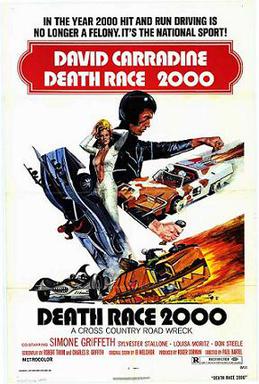
"Death Race 2000" - Film Review


Death Race 2000 (if it wasn’t clear from the title) is not a film that is meant to be taken seriously. Its premise is absurd and the film doesn’t try to take itself seriously.

It’s a campy, absurd romp with all the best elements of an exploitative low budget film. There are explosions, bloody violence, and nudity. 

The film never tries to be anything more than it is and that’s one of the joys of watching it. It’s not trying to be something that plays off your intellect but just revels in how cool and outlandish its premise is. Leather clad individuals in super powered cars driving at top speeds in a race with the goal to kill people for points. It’s a delightfully fun premise and the film takes a lot of pleasure in playing up its absurdity. News crews analyze every aspect of the race in detail, groupies obsessed with the "sport" try to sleep with the racers, and rebel forces attempt to dismantle this world’s dystopic dictatorship by tossing roadblocks in the paths of the racers.

The racers themselves are all so cartoonishly bizarre. The most amusing of these are a pair of neo-Nazis who bear swastikas and mock fellow racers whose shtick is being old timey cow boys. The protagonist is the mysterious Frankenstein (David Carradine), a racer who’s been in so many racing accidents that most of his body parts are less than original. He appears to love racing but he’s also oddly altruistic, doing things for the greater good based on his dark self-serving moral code. One of the more interesting parts of the film is the fact that a young Sylvester Stalone plays the villainous "Machine-Gun" Joe Viterbo, a bratty, selfish dude who will win at any and all costs. 

The race is at the heart of the new world order, numbing the viewers at home with endless violence so they forget about the fact they’re being ruled by a corrupt government with a secret police force. The commentary on society really is never taken far enough for it to matter and largely seems tacked on. The film doesn’t really get into the specifics of the functioning of the world or the race. Instead it leaps right into the race and gets in as many propulsive action sequences in as it can. The action is sometimes incredibly over the top but that’s ultimately part of its charm. The film as a whole, in deed, is over the top.

One of the most entertaining things about the film is how funny it is. The film plays up the blood and explosions to a point of dark, absurd comedic effect. There’s also some satire that though mostly mild and middling is occasionally really funny.

There's even a romantic plot thrown in because, of course, this film isn't trying to rise above its cliches. Frankenstein and his "navigator" (essentially a co-pilot) Annie Smith (Simone Griffeth), who as it turns out is working for the resistance, slowly fall for eachother despite constantly being at eachother's throats. Those crazy kids better figure it out in time to stop the dictator Mr. President! 

There's a fair amount that's clumsily handled. Dialogue is at times awfully written and even more poorly delivered. But it's not exactly the type of film that's concerned with having a precise ear for the way people speak or even having an actual basis in reality.

The cult classic hasn’t exactly aged well but its low budget thrills remain surprisingly fun.

Grade: B-

The Vampire Diaries - "Pictures of You" - Review

“Pictures of You” is a busy episode. That’s not to say it’s a bad episode but there’s quite a lot going on, and in the end it's simply too much for the episode to deal with. The show seems poised for the final stretch of episodes where shit looks like it's going to blow up in a fashion that only The Vampire Diaries is capable, but until we see the way this play out, much of what we see in "Pictures of You" will remain a messy set of exposition. Now a good portion of it this delectably fun in that Vampire Diaries kind of way, but the excessive number of stories (a few of which aren't very good) does make for an episode that comes off as if it’s trying to get in every idea it has with no room for a nice logical order.

The messiest of  stretch of the episode takes place in the middle. The episode gets away with most of this by having it mostly go down at the senior prom (dances and parties have always been a nice central location for this series, but the lack of scheming and lack of sense of dread do retract from some of the enjoyment of these scenes). There are a number of isolated little plots occurring simultaneously and each of them largely in their own right gets in a wonderful little slice. But taken together, it’s just way too much for a single episode to be trying to tackle.

If there’s a throughline to all this though, it’s emotionless Elena (who needs a better name because it doesn't do justice to describing her) and the episode does a really fabulous job of mapping out this new version of Elena’s relationship with all of the characters at this point in time. The episode obviously reaffirms her standing with characters like Damon, Steffen, and Rebekah that we already knew about, and these are well done (Rebekah and Elena are a surprisingly good pairing and they have a sort of odd couple banter). But what’s far more interesting is seeing how this new Elena acts around characters we’ve yet to see her with such as Matt and Bonnie. Yea, on the face she’s simply a total bitch to all of them (but in a wonderfully fun way), but all the interactions are specific to the characters she’s with. 

While this is all entertaining, there’s a fair amount else to keep up with. Elijah makes Rebekah spend one day acting like a human (i.e. not using her vampire powers) in order to get the cure from him. Bonnie has weird visions of Jeremy courtesy of Silas. Damon and Steffen try to pry some emotions out of Elena (although it's hard to care when they're going to be stopping the most fun to watch part of the show right now), while simultaneously contending with Silas. Caroline continues to be moody about Tyler’s absence (then he shows up because, hey, prom!). Rebekah spends most of the episode trying to win over Matt who is still being cold towards her. And because the episode didn’t have enough going on as is: April makes an appearance to remind us that she exists.  

Emotionless Elena as always is a total delight and I could watch Nina Dobrev do this all day. A number of her actions push the character forward into darker territory that it’s really nice to see the show broach; she takes the initiative to try to kill Bonnie, all smartly to stop Silas and Damon and Steffen simultaenously, although she fails because that would be too many dead main characters of late. But it’s what the show has been hinting is possible with this character’s new direction, and it’s the most exciting thing to happen in the episode. 

Or there’s the other contender for most exciting moment: the twist where Silas steals the cure from Elijah. Now this twist could have been dealt with better. There could have been stronger suggestions as to Silas’s scheming, but it’s still a cool moment.

The twist doesn't entirely work though because of everything the episode does with Rebekah. We can tell something is up because Rebekah has just had the lovely scene where Matt finally gives her the compliment she’s been seeking that she would make a good human. And the crosscutting with Klaus and Caroline also undermines and confuses the moment. But the twist is still an exciting moment that could have proven better if the show figured out what it wants to do with silas and brought him to the forefront of the story.

But otherwise, the Rebekkah storyline is really affecting. Claire Holt provides shades of bittersweet sadness to this character. The Rebekah-Matt scenes are really sweet and sad, and this pairing works really well. The choice between not using her vampire powers and saving April is also an excellent moment. The murkier the show makes the moral lines, the better it typically tends to be. In the moment, we almost can understand the decision not to save April and yet by choosing it despite it being the “right choice”, Rebekah will be forced to give up everything she wants. 

Not everyone is making the "right choice" though. Steffen is falling for Elena again even though he knows it’s just not worth it anymore. Damon, more smartly, has largely fallen out of loving her. The whole task to get her emotions back is almost out of a paternalistic sense of duty (which is sort of problematic even if it’s easy to understand where it’s coming from). 

Bonnie is also just making horrible life decisions in a way Bonnie seems to almost always weirdly do on this show. She meets the “real” Silas, who looks like some deformed old man (okay, then?), but she also appears to have joined his cause. Because … reasons … I’m not quite sure actually. I had always assumed Silas was lying about the magic getting out of hand, but that doesn’t look to be the case. 

We don’t know much about Silas beyond the fact that he’s hugely powerful and has this grand plan to unleash dead supernatural forces. The balance between concerns for emotionless Elena, the cure, and Silas are a fair amount of story to balance and while this is a mostly fun; it’s a slightly all over the place, hopscotching from story to story with a lack of direction. It doesn’t help that the show is continuing to push the exit of Klaus from the show for the new series The Originals (Katherine sends him a letter mentioning some witch who has it out for him in New Orleans). Not a standout episode but not a bad episode; just a middling effort. 

Stray Observations:
-Candice Accola has proven herself a great actress, but this funk they’ve got her in over Tyler just isn’t a pleasant note to keep her repeating. It's not interesting and the show always stops in its tracks when we find Caroline complaining about Tyler. This is a stronger character than what we've seen of her lately. 
-“Nice dress” “I stole it”
-“Princess Grace of Monaco hot” – The scale by which pretty much all hotness should be measured.
-As a Cure fan, I can dig the shows continuing references even if they seem kind of arbitrary and surface level.
-“Hindsight is an even bigger bitch than you”
-Silas as Steffen was a great twist and played well by Paul Wesley.
-Damon and Steffen plan to use fear to coax emotions out of Elena. The writers almost come off as if their scared to allow particular story threads to reach their inevitable conclusion. Elena becomes a vampire but they never take that development to its logical conclusion, but in stead mull around in stories about sire-bonding and finding a cure that undermine anything interesting about this change in Elena. And now they're immediately trying to get her back to status quo even though that totally defeats the point of ridding Elena of her emotions.

Grade: B-

Thursday, April 18, 2013

"Rebel Without A Cause" - Film Review

James Dean is Rebel Without A Cause. Most people can’t remember many of the specifics about the film but if you mention the title, odds are that they’re going to have at least cursory knowledge that Dean starred in it.

That’s probably not a coincidence; Dean is the best and most memorable part of the film. There are some clichéd and questionable things going on in the film and yet it mostly doesn’t matter because Dean is so good. Dean’s character troubled teen Jim Stark is described as “sincere” by a number of characters throughout the film and it’s an apt way to describe Dean’s performance. He’s not a traditional actor; sometimes he appears to be ad-libbing and he nervously mumbles a number of lines. But there’s an utterly intense, raw power to Dean’s performance that it makes up for weaker elements in the film.

The moments everyone remembers still pack the punch. When Dean yells, “You’re tearing me apart,” he sells the hell out of the moment and the ending has a kinetic fervor that makes it deeply affecting.

The acting is largely very good. Natalie Wood is given some amorphous material but she finds the sadness underneath her character Judy. Sal Mineo’s Plato is one of best tragic figures in all of film; he’s a kid whose hero-worshipping of Jim borders on infatuation and when he feels abandon he overreacts and brings about his own demise.   

However, much of the narrative is forced and stretches at the seams. Characters act in illogical and contradictory ways depending on what the story is asking of them. The first half of the film and the second half of the film feel like they’re two separate entities, and the tragic midway break is largely overlooked despite a character dying (pretty gruesomely in fact – even more troubling is Judy quickly getting over the guy’s death since they were technically dating). 

The film is also thematically inconsistent; oh sure there’s something in there about teen angst but the film seems so uncertain as to what it wants to say about the subject. 

There’s some intriguing subtext underneath it all if you look carefully. Plato is clearly gay and in love with Jim which makes his interactions and death all the more complicated. Judy’s father has either sexually assaulted her or come very close to it, and she’s not entirely adverse to the idea. The film doesn’t play up these aspects but they tinge everything we’re watching, making the youthful malaise something even more inexplicably painful and dark. 

This was the last film Dean starred in before his death in a car crash in 1955. Dean had only starred in three films, but he reached an iconic status after the release of Rebel, and it’s not difficult to see why. Dean has a quality about him that makes you stop and take notice; there’s a gravitation to his screen presence. 

Rebel Without A Cause is a problematic film, but parts of it taken by themselves have an energy that carries them and makes them still rather intriguing, sad and occasionally powerful.   

Grade: B

Wednesday, April 17, 2013

Mad Men - "Collaborators" - Review

Back in season five, Jon Hamm directed his first episode of television, “Tea Leaves”. Whether it was Hamm’s direction, the writing for the episode, or both, “Tea Leaves” was a weaker episode in the fifth season, which on the whole was one of the strongest seasons of Mad Men. “Collaborators” is the second episode Hamm has directed, and, once again, perhaps its Hamm’s direction or perhaps it’s the content of this episode, but “Collaborators” is a real step down from last week’s premiere “The Doorway”.

It’s not all bad because this is Mad Men, and it’s the top prestige drama on television so invariably there are moments that are strikingly lyrical and bitingly funny. But on the whole, the episode suffers from gluttony. There is simply too much going on in this episode. “The Doorway” could get away with its wealth of stories because it had an extra hour to tell those stories, but with the standard episodic length here again, the episode has trouble telling all of its stories (which I hope I'm not overstating; it could be more overstuffed, but the stories are balanced a little awkwardly). 

Initially the episode looks like it’s going to be an episode where we learn some more information about Don’s past, which I wouldn’t protest against because episodes featuring flashbacks have been this series strength since season one’s “The Hobo Code”. But the flashbacks are almost an afterthought, acting solely as bookends. It adds in a tinsy bit more backstory relating to the mysterious figure Uncle Mac and Don's time growing up in a brothel, but we probably could have guessed what the deal was with that portion of Don’s life was. It might have been justified if there were a few more flashbacks, but otherwise it’s one more element of story that strains the episode's storytelling abilities. The episode is trying to reach this poeticness utilizing the bookends but it just doesn’t reach it (the flashbacks just aren’t as interesting as the writers seem to believe). 

What the episode really is about is paralleling Don and Pete. Pete has been slowly falling into bad habits that are turning him into a sort of young Don Draper (though with much, much less charm). He hits on a neighbor’s wife Brenda (Collette Wolfe) (like Don is) and invites her to the city to “give her tickets”. They sleep together, but it all turns disastrously quickly. She tells her husband who beats her horrifically. Rather than letting Pete get away with his adultery, the show doesn’t let him keep his success like Don has been with neighbor Sylvia. This provides the episode with its best moment when the superb Alison Brie as Trudy scolds Pete. She’s not upset with his indiscretions (heck that was why she let him have the apartment) but his idioticness in choosing the neighbor’s wife. She tells Pete not to come home until she tells him to. 

Where Pete is failing to be successful with his affairs, Don is, as always, too good at his infidelity. He hates it and Sylvia is still doubtful of it. She particularly begins to doubt the whole affair after Meghan confides in her about a miscarriage. It shakes her whole worldview, and when fate conspires so that she and Don end up alone at dinner, she’s quickly won over by Don’s commanding (but honestly pretty awful) argument that “You want to feel shitty right up to the moment where I take your dress off” (that was disgusting. I was uncomfortable throughout that scene).

Another thing the episode does well, in a way Mad Men has always been good, is taking a character (in this case Sylvia) that is essentially a plot device and giving them enough of their own story time that they become humanized. Sylvia likes sleeping with Don (because: holy shit, have you see Jon Hamm’s body!), but she also doesn’t want to be a home wrecker and she sympathizes with Meghan and hates herself for wedging Don’s relationship with her.  

If this were all the story this episode featured, it would be pretty compelling because much of this is very good. But we get more story time with other characters as well. The creepy Jaguar guy, Herb, hits on Joan, who denies his advances. Hey, I love Christina Hendricks as much as the next guy but it’s one scene we could do without and we only get it to establish the presence of this character again (although: Hendricks knocks it out of the park). Then Herb demands the ad agency sell his partners on the idea of more local ad space (as opposed to a national campaign). Pete, “yes man” that he is, acquiesces to this, but Don realizes it’s an awful idea. Don kills the idea in the pitch meeting; he “sells” it to the other Jaguar clients but he purposely does a terrible job (he's enthusastic about it to a fault). It’s a really funny scene and it brings together Pete and Don’ts stories in a nice way. Pete’s no good at being Don, and Don hates that he’s good at being this persona he keeps adopting. 

Meanwhile Peggy gets more story time that is awkwardly fitted into the episode. Elisabeth Moss is a fantastic actress and I like this new more confident version of Peggy, but the story mostly comes off as an excuse to check in with this character. Stan (in another of his late night phone calls) lets it slip that the head of Heinz Beans, Raymond, is feuding with the head of Heinz Ketchup, Tim, a much younger guy who’s had everything handed to him (sound like Don and Pete, huh?). Peggy tells her boss, also named Tim, offhand about this and regrets it because Tim wants to go ahead to and steal the displeased client away from Sterling Cooper Draper Pryce. This plot appears to be more about setting up future story than about actually going anywhere. Peggy and Don may soon be in conflict over an account and that’s a story that could potentially be fascinating.   

Don sits outside the door of his apartment at episode’s end, unable to enter. Inside is his wife, a woman he doesn’t want to see because she reminds him of all his failures. Don never had a mother and his mother figures (such as his aunt seen in flashbacks) were pretty lousy. Don has projected his motherly needs onto the woman he’s in relationships with. Meghan tells Don about the miscarriage and he’s suddenly like a child again. All he wants to do is please her (especially considering he's feeling bad for sleeping with Sylvia). He tells her he’d do whatever she wanted to do. “Don’t you have your own room?” the prostitute tells Don in the flashback. No. Don doesn’t. Pete does though, but it’s off alone in the city. He had everything and he fucked it up and lost it. Don should have everything he wants … and yet he doesn’t.   

It’s a slightly overcrowded episode and some of this feels forced (the appearance of Herb and the Heinz people each feel awkwardly placed and don't completely rub up with the affair plots entirely well) but it’s not without its moments. May be this is just the curse of Jon Hamm directing (although: this is much better than "Tea Leaves"). 

Stray Observations:
 -The title of this episode (like most Med Men episode titles) is rife for deconstruction. Of course it refers to the appeasement of Hitler by France and England which is paralleled to what Pete was trying to do with Herb. But it also speaks to the "collaboration" between Trudy and Pete in pretending their marriage was still the happy little enterprise it looked to be on the surface. There's also Don's "collaboration" with Sylvia in their affair. 
-"I thought there was no smoking" "I found out the maid does"
-Peggy is awful at pep talks. But then again her heart was totally not in that. If she were Don (and a man), she wouldn't feel the need to do that and she definitely wouldn't be given advice like that by her secretary. 
-Pete was so awkward at making sexual advances on Brenda in the apartment.
-Don essentially pays off Sylvia at one point, which is deeply unsettling.
-If it hadn't been a miscarriage, Meghan says she'd have gotten an abortion. Although he upbringing would have her raising kids at some point in the future.
-Once again: Alison Brie was excellent. I got chills. 

Grade: B

How I Became a Better Film Watcher by Watching More Television

I had always loved films but starting in college I had far less time to watch them. Not only that but there was much less easily accessible film content in the college setting. Television became an alternative to films largely out of convenience.

However, I was watching television shows at a great time to be watching television. In the wake of The Sopranos, television had the creative ambitions to match and occasionally outsize its prestigious film cousin. This coupled with easier ways to watch this content through online streaming services, and I suddenly found myself much less interested in films and watching a lot more television shows. 

I caught up on Breaking Bad, Mad Men, Battlestar Galactica, and Buffy the Vampire Slayer, and I was left wanting more. 

But eventually I felt like I was neglecting watching movies and so I decided to jump back in began watching films. But my experiences with television watching had actually proven really useful. Watching and analyzing television, you’re constantly assessing a show’s aims and whether they’re succeeding at them. 

Movies and television are different mediums with different goals, but they’re both playing around with similar structural concerns on the whole. You’re constantly much more aware of whether an episode of television does its job well or not. If its structure is out of whack, it’s much more noticeable because it stands out from well-crafted episodes. But in turn that made me stop and wonder what makes a well-structured episode and why do certain episodes prove good at achieving what they set out to do.  

It might seem odd to say so, but watching television made me a better movie watcher.  Once I got back into viewing films, my paucity of film viewing made me lap up every film I had been neglecting to get around to. I became re-obsessed with the medium that had made me such a pop culture devotee. But I was also much more hypercritical of it and that made me get more out of my experience.  

Oddly enough, now film watching is pulling a similar awareness on my writing and my viewing of television. Writing television reviews can get repetitive and sometimes it’s like grasping at straws to find some new angle to take on a show. But writing about films reminded me that the most important thing is to tackle what does or doesn’t work in the simplest and most direct terms. Just tackle what’s there. 

Our understanding and awareness towards other mediums can help make us better viewers of content, and we don’t have to treat films and television as mutually exclusive. They both are good at different things and though films are typically seen as the better of the two; films just can’t match tv shows for their ability to form a bond, develop characters, and build up its story. Television has the time to do that. Film doesn’t, but films also can usually get away with a spectacle that television simply can’t and certain stories just don’t warrant the large amounts of screentime television requires.  

Neither is better. They’re just different. And until I understood that and the things they’re trying to accomplish I couldn’t truly appreciate or properly analyze either. Granted, I’m a long way from being really good at this whole reviewing thing, but I’m working on it and using television to understand film and vice versa, and is a good place to start.

Tuesday, April 16, 2013

How I Met Your Mother - "Romeward Bound" - Review

Ted asks Barney something towards the end of “Romeward Bound” that I’ve been asking for weeks now. Why is he still acting like the womanizer he’s been for ages when he’s soon to be married? Yea, Robin might be cool with it, but it’s still bothersome.

The show has had Barney continue to ogle at women even as his bachelor days are supposed to be essentially over. It’s frustrating to see him continue this way. At first just because it didn’t add up with where his character was at anymore, but now it looks as if the writers want to use this detail to form a conflict between Ted and Barney... which is ... strange (to say the least).

Ted’s lingering affection for Robin isn’t the most interesting longstanding plot element; it’s been played out until that beaten up horse resembled little of its original self or charm. It keeps being utilized to diminishing returns. It remains to be seen just how exactly Robin fits into the whole picture of Ted meeting the mother, and after eight seasons playing the same note over and over of Ted’s weirdly obsessive feelings towards his ex just isn’t all that enjoyable to watch. 

The rest of the content for the Ted-Barney story is very filler-y. Ted’s fawning for a woman he describes as “redonkulous” who turns out (in a meh twist that’s crafted to bring Robin into the picture) to be Barney and Robin’s wedding planner. It’s all rather lightweight and there’s a lot of questionable objectifying going on that the show keeps just on the side of not offensive (though we still could have done without it; there are far, far better ways to do stories without having to objectify women). (Although I have to admit that Robin’s enthusiasm for discovering what’s underneath the coat is played wonderfully by Colbie Smulders)  

Marshall and Lily’s story is more original but it features a lot of rehashed jokes (Marshall using lawyer speak to misdirect, cuts to imagined futures) and twists that pile up to the point where their devoid of value. However, I’m intrigued by the decision to uproot two of the five main characters to Italy. It’s not a decision that exactly works within the medium of television but it’s a bold one (perhaps the boldest the show has done in about three seasons depending on where they go with it). 

This was an ultra-lite episode; it was mildly amusing but not all that funny, which is a nice way to describe this season as a whole. It’s usually doing things that are oh that’s pleasant I suppose but you usually forget most of what happened soon after you’ve finished the episode.  

Grade: C+

Monday, April 15, 2013

Game of Thrones - "Walk of Punishment" - Review

These reviews I’ve been writing have been way too long and I’ve been trying to figure out a better way to approach them, and then it dawned upon me while talking about the reviews with my friend Eric Luby (Yea, I listen to my readers’ thoughts, people, so if you have anything you want to tell me or suggest, go right ahead). I realized that theme is largely not a good way to write about these reviews; instead, since Game of Thrones is largely built around characters and not theme, it makes sense to do these reviews with that in mind. I intend to lovingly adopt the “power ranking” model that Grantland does for its Mad Men reviews; this seems fitting since the overarching theme of Game of Thrones is power and who is winning or losing at the “game of thrones” is one of the key aspects of the show. For those of you unfamiliar with power rankings, this is how it goes: I’ll rank who is or isn’t in the best position of power in the latest episode. There are 10 ranks to be filled and I’ll try to cover as much as I can through the lens of characters and their rising or falling of power and fortunes (or just how good the material for the episode was for them). It’s won’t all be serious though; sometimes I’ll get a bit cheeky with it (this is a good episode to do that with too, but more on that below). Most of all, remember, it's pretty arbitrary and meant as a fun way to tackle examining the episode.

1) Dany – After being put into the middle of one of the most God-forsaken stories in all of television history (as far as I’m concerned: Qarth never happened), we’re reminded why Dany was such a great character to follow in the first place as well as just how phenomenal of an actress Emilia Clarke is. Clarke is largely reacting to things here and yet she communicates so much with so very little. Jorah and Ser Barristan argue over the proper course of action, but neither of them is in control in this situation: Dany is. Dany is young and she’s idealistic, but underneath it all she hides an inner power. She takes charge and purchases all 8000 plus Unsullied soldiers. The price is one of her dragons, but the lack of concern Dany gives off has got to leave you wondering what she’s up to (she’s definitely got a trick up her sleeve). If anything this demonstrates how smooth of an operator Dany is. The fact she doesn’t claw off this slave trader’s face takes all the willpower as is, but then the fact she plays the situation to get exactly what she wanted: well, damn grrrl. 

2) Littlefinger – Littlefinger doesn’t do anything especially memorable in “Walk of Punishment” but he does weasel his way once more to an even stronger position of power. Varys may mock his titles, but titles can be much more than a claim on paper, they can be gateways to real power. Peter Baelish intends to marry Lyssa Arryn (aka Catelynn’s batshit crazy sister we met way back in season one). Lyssa has been holding up is the Eryie with her sickly son Robin, keeping the Vale out of the war. Littlefinger may not have armies or money, but he’s an exceedingly clever individual and not one to be trifled with. 

3) Mance Rayder – “I’m going to light the biggest fire the North has ever seen,” Mance growls and by the old gods and the new, we can tell he’s not fucking around. The action north of the Wall is finally starting to pick up to a pace where events feel like they are going somewhere as opposed to just stalling slightly for chronological reasons. This is something that’s true of the episode as a whole; there’s much more focus and there’s a lot less jumping around. Some stories are put on hold but those that aren’t take up the majority of the episode and land some memorable moments. Mance’s plan is finally in action: Tormund Giantsbane (Mance’s second-in-command) is going to climb the Wall, along with Jon, and route Castle Black. 

4) Brynden “Blackfish” Tully – After a slew of awkward character introductions, the show sticks the landing for the awesome Blackfish, Catelynn’s uncle, and Edmure, her mostly useless brother. Edmure is kind of pathetic (his failure to accept chain of command cost them the chance to stop the Lannisters from getting back to King’s Landing). He fails to light the funeral pyre, not once but three times, and the Blackfish has to step up all epically and show him how to get shit done. The scene provides a lot of laughs, but it also perfectly establishes just who these two new characters are.

5) Poderick Payne – Well, damn. Who knew Poderick, Tyrion’s squire, had the way with the ladies? Tyrion’s thanks for Poderick saving his life at the Battle of the Blackwater is to buy him a gaggle of willing courtesans. We cut to Poderick with a skip in his step, returning Tyrion’s gold; he pleased the prostitutes so much that they refused to accept his gold. Now I know this is almost a throwaway joke, but it’s a really funny one and though it’s not exactly the best way to further develop this character, it’s just too funny not to be amusing. This is on the whole a very funny episode (while simultaneously, in that Game of Thrones way, being a very grim episode).

6) Theon’s Rescuer – Well, Theon is getting his comeuppance for his actions at Winterfell. Not only is Theon tortured but he’s nearly raped before being saved by this newly appeared nameless savior. I dislike Theon as much as everyone else probably does right now, but there are some things that even I can’t tolerate occurring to a character and rape is one of them. Who is this mysterious figure and what’s he aiming at? He claims to work for Yara, but Yara wasn’t where he claimed she was. 

7) Melisandre – Though her and Stannis's appearance is probably far too brief, it does a very good job of showing the increasing hold Melisandre has over Stannis. Melsandre has this way about her where even when she essentially has no power, she has all the power. She has taken an even stronger hold over Stannis who just wants her to have his babies. She insists that someone with his same blood needs to be sacrificed, but keeps it mysteriously unspoken as to who that might be.

8) Hotpie – Sometimes the best way to play the “game of thrones” is to get out while you can. Though this is Arya’s story (and I’d much rather follow Arya who is played by a better actor and who is just all around a more interesting character), you can’t help but feel a little sad about Hotpie’s decision to settle down and become the baker his name always suggested he was destined to be. Much of this is far more touching then it has any right to be and it’s carried mainly by the actors who have sold much of this relationship when the writing just didn’t make the friendships of Arya, Gendry and Hotpie any more than a plot device. Now who wants a wolf cookie?

9) Tyrion – Tyrion was nominally the main character last season, but now he’s no longer the most powerful individual he was.  Not only did he not get title to Casterly Rock, but he’s been left with the unpleasant duty of being Master of Coin, a job that formerly belonged to Littlefinger, who seemed to make money appear magically. He’s not pleased by this task nor should he be; it’s one more added injury to insult for saving the King’s Landing from Stannis’s siege (the Kingdom is seriously in debt and Tyrion has been given the job because it's pretty much an impossible task).

10) Jaimie – Technically if this list were truly just a list about power and the positions of power people are in, Jaimie wouldn’t be on the list, but the fact is that there’s no way I can not mention the fate of Jaimie. Jaimie is a character that we know little about if we’re to be honest. Much of our ability to like him is being sold by Nikolaj Coster-Waldau’s (whose name is ripe for copy and pasting and never actually learning how to pronounce) performance; he’s a very charming guy and he captures the biting, good-humored wit Jaimie uses as a defense mechanism. It helps that were finally getting development moments such as Jaimie’s decision to save Brienne from being raped. It’s a great moment and it provides just enough humanizing to make Jaimie’s hand getting cutoff be as truly awful as it is. It's a holy shit! moment in a way that this series pulls off like few others. And then we cut to credits left wanting more!

Not Ranked/Other Thoughts:

Tywin - If I really was being honest Tywin would be number one pretty much every episode (he's the most powerful person in the Seven Kingdoms), but since he doesn't do much here, I'll be polite and leave my hero worshipping of Charles Dance to this here dangling participle section until he does something major.

Sam – The Crow’s return to Crastor who continues to be an absolute asshole, and Gilly has a son (a problem since Crastor offers sons up as sacrifices to the White Walkers). The tension crackles wonderfully in these scenes.

Cersei – The small council scene is really funny. Littlefinger pushes ahead to the first seat with flourish; Cersei moves a chair so she’s at her father’s right hand side. And Tyrion, finding this all absurd, drags a chair to the opposite head of the table. 

Varys – HE RETURNS! (Though with very little to do)

Davos – Still locked away in the dungeons of Dragonstone. 

Missandei – Dany takes the former servant of the slavemaster as a gift. 

Bran – Is missing once again but presumably is still trudging ever on towards the Wall.

Catelynn - Michelle Fairly is a great, great actress but there's got to be more to do with her than moody monologues where she regrets her past actions. 

On the whole this is the best episode of the season. It’s was at times fun and at times thrilling, moved forward with purpose, and utilized the characters well without coming off as if the writers and editors were overwhelmed by the sheer volume of story they need to tell. 

Grade: A-

Sunday, April 14, 2013

The Office - “Stairmageddon” - Review

“Stairmageddon” suffers from a number of problems that many episodes this season have suffered from. For starters, it’s got way too much going on and the storylines that are the stronger ones don’t get the amount of screen time they deserve.

Pam and Jim’s struggling marriage is a storyline that I can get behind. It’s a well-acted, well-written story about two of the series best characters who have long been at the heart of the story. When the show does a story like this it pushes back the veneer of absurd antics and goes spine-tingingly deep. 

By contrast, I have no clue what the hell is going on with Dwight. Seriously. There were multiple moments where it begs all plausibility. Why is this happening? Why is no one preventing this? It was flippantly bizarre. Dwight gives Stanley bull tranquilizer and carries him out of the building for a paper sale. If it were just filler, well, that would be problematic as is, but it’s just so utterly weird and the show seems to accept it at face value. 

Andy’s subplot is equally unnecessary if much more logical. But it’s just not very funny (I at least laughed at a number of moments in Dwight’s story in spite of myself) and repeating story we've already seen from this character. 

It was a messy episode that privileged stories that the episode could have done without while giving mere slivers of the material this show is still nailing. 

While it’s an episode not without its moments (i.e. Kevin brags about keeping Oscar’s secret, the security guard could care less about Dwight absconding with Stanley, and almost everything with Jim and Pam), it’s an episode that’s far too hit or miss. 

Grade: C+