Thursday, January 31, 2013

"The Umbrellas of Cherbourg" - Film Review

“They don’t make ‘em like they used to,” the old saying goes, and far and few between has that sentiment been more apt than for The Umbrellas of Cherbourg. This is filmmaking at its purest; here is a film crafted to be fun, entertaining, and immersive. And yet it still manages to say something meaningful about the human condition and all that good junk us serious film types like to discuss. The film is a French operatic (every single line is sung) story of romance, love, and loss that utilizes its music and its striking atmosphere to perfectly exude the feelings and emotions of its characters.

Think back to the first time you were in love; now consider the devastating heartbreak that accompanied being unable to be with that one person you were so maddeningly, deeply in love with. That’s The Umbrellas of Cherbourg in a nutshell. The film manages to remarkably distill that kind of experience and the hold such experiences have over us.  

Carried by it all is the happy-go-lucky, wide eyed visage of Catherine Deneuve as Geneviève Emery. Her popularity blew up in the wake of the film’s release and it’s not entirely surprising. Though Deneuve’s lines were dubbed (by Danielle Licari), it’s the youthful vigor and enthusiasm of Deneuve that makes so many of the great hyperbolic, starry-eyed, love-struck lines work. 

The film is eye-popping with dazzling colors, and it’s hard to decide whether Michel Legrand’s music or the brilliant visuals is more wonderfully infectious. It’s difficult not to be smiling at the utter sincerity and charm of the film. While many modern films have a level of cynicism or a jaded vision, the film, even as it takes darker turns later on, never succumbs to a totally bleak or miserable worldview. 

Director Jacques Demy is one of the lesser known figures of the French New Wave. Not as interested in political or structural concerns as his contemporaries, what makes Umbrellas stand out is how fantastical it feels. Demy chooses every detail (the ties, the wallpaper, etc.) so its colors will visually explode out from the screen. The film resembles a heightened fairytale; only instead it lends this imaginativeness towards describing the events of ordinary, everyday people. 

We’re lucky the film still exists. Almost all the negatives for the film had become faded and unusable. But thankfully the film was restored in the late 90’s, which allows us to still watch this fun, vibrant gem. 

Grade: A

Cougar Town - "I Should Have Known" - Review

Tom is a character Cougar Town has never really taken a stance on. He’s funny in his awkward, kind of sad way, and he works well in small doses. However, the characters keep walking all over him like a doormat and feeling little regret afterwards. This couldn’t keep going on much longer; as selfish as the Cul-de-Sac Crew is, “mean spirited” would not be the appropriate adjective to describe them. They’re deeply clingy and codependent, and they can do mean things to one another, but what pervades it all is a well-intentioned, loving sense of goodwill and affection for one another. So feeling no guilt towards their terrible (escalating) treatment of the misanthrope just could not last.

Though this and other aspects of the episode in theory feel like they’re good ideas, they’re not nearly as well-executed as they could have been. Bobby and Ellie are an underused pairing that I would like to see more of, but their storyline comes off as if it’s just going through the motions. Andy and Grayson are very amusing for how they subvert the “change approved” rule making that Ellie and Jules have monopolized, and providing a new perspective on it, but it’s never really followed through on. 

We haven’t spent enough time with Tom to know him as anything more than this cartoonish oddball who pops in every so often and does peculiar things. So attempting a main plot about him, and how Jules and Laurie (selfishly) protect him from a gold-digger doesn’t have enough stakes. If the series is going to make Tom a larger fixture of the cast, and not just somebody who pops his head through the window every now and again, they need to start humanizing him.    

Stray Observations:

-“That exact moment happened in my dream as well” – The “best friend kiss” isn’t just a funny gag but well-integrated by being made the catalyst for Tom’s anger towards the groups.
-“Cousin stuff can be hot … It’s like they instinctively know what want” – Busy Phillips is having a great season, and the writers have provided her with some great monologues including this episode’s one where Ellie has Laurie let her know when the midway point of the speech is by raising her hand (a nice meta commentary).
-“Did she still not like Ellie?” “Why would you say that?” “Because”
-“Your shirt does seem to come off a lot for no reason” – There was a lot of self-awareness to this episode.
-“That explains the bronze penises in your closet”
-“He’s washing his food pushing pinky”
-Tom’s photo of himself with a sleeping Jules.
-“Laurie thrown wine at her!”
-Great emotional moment: “Do you really think he’d be happy?” “No!”
-Adorbs: Andy and Grayson’s response in unison.
-Laurie climbs into Tom’s house through the roof in heels … and falls.
-I love the hug pact. There was another gag they used for some great emotional effect. 
Title Card of the Week: " Welcome to Cougar Town. Donny made the title cards about him, so he's gone now."

Grade: B-

New Girl - "Cooler" - Review

Television series (and especially tv series of the last twenty years) are largely about world building. Creating a sandbox to play in and that we as an audience want to return to. Television’s major advantage over movies is its ability to uses its extra time we spend with the series to establish locales and characters, as well as to build towards certain events (some more obvious than others). New Girl isn’t The Wire, but it’s created likable characters who (well Winston is still a bit of a wildcard) we know the behaviors and personalities of. Television’s goal is to do unexpected but plausible things with these characters, and it did one such plausible but expected thing (and one the series has been hinting at since practically day one) on the latest episode of New Girl.  

“Cooler” gives us the moment we know would happen, and, for many of us, wanted to happen, but then smartly leaves the door open for a boatload of complications down the road. It’s a well-executed moment led up to by a series of a well-executed moments between Nick and Jess beforehand in the episode. Or in more layman turns: OH MY GOD! NICK AND JESS KISSED!

“Cooler” is an episode largely about contriving a reason to get this particular moment, one the series has been building towards for almost the entirety of its run. We might have expected the two of them to get together as a couple before the incident happened, but it’s a far more interesting and exciting narrative choice than to so easily guide the always destined couple to their inevitable pairing (and there’s some potentially good story to be mined from this down the road). It might have been nice if the show had built towards this moment a bit more cleanly and with greater precision and focus; however, it’s not implausible, and as someone who’s an ardent shipper when it comes to his shows, I’m down with this. And I’m even more down with the mechanics that lead us down this rabbithole. 

The mechanics before the hangout in the apartment are more scatterbrained in terms of plotting. The episode is largely unfocused in the first half, splitting up into two plots and then three (and then finally grafting in a Cece plot in), before drawing everyone back into the apartment. While this is a hodgepodged, hazardous mess at times (the episode appears to have no idea what it wants to be until about the halfway mark), things become sharper, more focused, and more interesting after everyone comes back to the apartment.

Once we return to the apartment, the episode becomes much more entertaining and much more satisfying. There’s some funny moments to be had beforehand (Jess’s montage is a perfect set of little character beats at once adorable and yet rather funny, Winston mumbling his way to failure trying to pick up girls is also amusing, and the woman who has a thing for sad people is surprisingly entertaining despite having no resemblance to a real human being), but it really can’t compete with the return for the first time of everyone’s favorite, incoherent drinking game “True American”. 

However, the wandering aimlessness of this narrative, in hindsight, feels like it’s merely distracting us like a magician, providing us with so many red herrings that we don’t anticipate the true end game of this episode. The plot leads to an unexpected, inspired sequence where the attraction between Jess and Nick is put front and center. I didn’t see this coming, and it’s a nice piece of plotting that creates believable enough stakes to breakdown their defenses and lets their sexual tension seep out. Part of the rules of True American apparently includes some bylaw that forces two people to makeout behind the iron doors of the apartment. Jess brings it up to try to get either Schmidt or Nick to hook up with the crazy girl addicted to sadness. But it backfires. 

Nick and Jess complain at length but no one will let them out, and so they consider going through with it, but then they argue with their usual banter about how the kiss should go down which leads them to talking themselves out of it. When Sam, Jess’s boyfriend, arrives at the behest of Jess, he doesn’t stop this but instead joins in the fratboy style chanting of “Kiss! Kiss!” Fed up by all of this, a frustrated Jess insists they just get the dirty deed over with. “Kiss me!” she yells; “Not like this!” Nick cries, unintentionally revealing his true feelings. The look on Jess’s face says all we need to know: whatchu tryin’ to say Nick? *Raises eyebrow* Nick can’t deal with this; it’s too real for his fragile mind, and he dashes out the nearest window to climb back to the adjourning room. 

Cue some time passing, and this moment appears to have blown over. As Jess walks back to her room though, Nick can’t handle it anymore, and grabs her arm and pulls her in close, kissing her, and she doesn’t fight back at all. “That’s how I would have done it,” Nick lets her know, and quietly, sadly returns to his room. 

Begin the countdown to Nick and Jess dating by season’s end!

Stray Observations:

-“Now are you two going to have sex with me?”
-There’s an odd running gag involving Nick accidentally receiving a package containing a woman’s coat and deciding to wear it for the rest of the episode. It’s funny and Jake Johnson's very committed to the gag, but it’s still strange.
-Jess’s melon with Nick’s face drawn on it is creepy and funny, and has got a fair amount of subtext to it: Subtext that by episode’s end has become text!
-Winston is befriended by a seemingly engaged chick played by Brenda Song that tries to help him overcome his flirting problems. Anyone else see her being single from the get go? Well, at least Winston has a new beau. (Also, did anyone else feel the age difference was odd?)
-“Nick I need you”; with lines like this, I should have seen the end coming. The writing was on the wall.
-“Lets suck it up and French a little”
-“I don’t really know what that accent is but please speak English”
-“We’ll talk about this in the morning … but now I’m going to do things to a girl”
- The only thing that we learn from the Cece plot is that Schmidt and Cece are totally going to get back together at some point since she seems disinterested in every other person she dates.

Grade: B-

Despite the Nick and Jess stuff, this is one of the weakest episodes this seasons that had some major identity crisis problems in defining and deciding what it wanted to be

Wednesday, January 30, 2013

"The Player" - Film Review

 The Player starts off with a tracking shot, a long take that’s incredibly tricky to pull off. The scene clocks in at 7 minutes and 47 seconds without a single cut; it’s an impressive and memorable sequence that establishes what the film is all about: a satirical hyper-meta film about movies and the film industry.

Griffin Mill (Tim Robbins) is a writer’s executive for a major unnamed film studio. His job is endangered by up and coming Larry Levy (Peter Gallagher). If this weren’t enough, David Kahane (Vincent D’Onofrio), a screenwriter whose story he dismissed, keeps sending him postcards threatening to kill him. He goes to confront Kahane to get him to stop, but this only causes things in Mill’s life to spiral even further.  

The film has a twisted, sardonic, self-aware sense of humor, undercutting conventions or lovingly buying into them to dark or cynical effect. The film is thoroughly immersed in references to cinema and it uses these references to pay homage and to make commentaries on its own structure. When a dead screenwriter begins to figuratively haunt protagonist Mill from the dead, a poster for the film Laura is framed soon after in the background of one of the shots. Laura is an Alfred Hitchcock film about a dead wife’s lingering presence causing trouble for all the people still alive from her life. When Kahane harasses him, he calls into the office with the name of Sunset Boulevard’s doomed protagonist Joe Gillis to tease the imminent demise he seeks to bring upon Mill. Besides these more subtle references, there’s an abundance of cameos from notable Hollywood actors too long to count; a fair number of whom lightly mock their established public personas (including an amusing appearance of Julia Roberts as herself in a fake film and Malcolm MacDowell angrily scowling at Mill for no seeming reason other than star based egotism). 

Director Altman had never been a fan of the Hollywood studios. He had made politically bent films in the past (i.e. M*A*S*H* and Nashville) and purposefully went out of his way to challenge his audience’s viewing experience (he would record actors talking over eachother to make it more naturalistic as well as more difficult to follow). Here in The Player, the film studios are stripped bare before us, depicted as shallow, callous, selfish, greedy entities who have no interest in making “films as art” (as Mill so eagerly, falsely lies to us about in a speech at one point). 

The film has a Jackson Pollock like energy to it, and like many of Robert Altman’s previous films it features a collage-like quality of strung together vignettes and smaller incidences that carry a larger narrative. Altman establishes peculiar personalities and interesting scenarios, but he lets his stories meander and wander, emphasizing character work more often than plot.

The Player deftly handles its satire (as well as its homages and meta commentary) whilst managing to tell an intriguing story of its own. It’s populated with extensive, talented casts; none of whom, besides a sweaty, crazy-eyed Tim Robbins, dominates the film but instead are given small, well-observed scenes. This is a very funny film that uses satire to imaginative, smart, and hilarious effect. 

Grade: A-

Tuesday, January 29, 2013

"The Lady Vanishes" - Film Review

Alfred Hitchcock was always very good at balancing widespread Hollywood appeal and artistic auterustic stylishness. This finesse for balancing an entertaining story with interesting artistic flourishes is apparent in The Lady Vanishes. The film was one of the last films Hitchcock made in England where he first gained notoriety. Despite being one of his earliest films, it’s also one of his most competent and efficient films, as well as one of his most entertaining.

Though the film starts out slow and unfocused, it allows itself to take the time to establish the characters so that when they eventually get onto the train, we have a sense of who everyone is and a reason to care about them. Once on the train, the action really starts to pick up. Iris Henderson (Margaret Lockwood) befriends elderly Miss Froy (Dame May Whitty) after getting hit on the head with a fallen plant holder. When she falls asleep and finds kindly Miss Froy missing she begins to inquire, but everyone else seems to have no recollection of Miss Froy ever having been on the train. As she investigates the incident, the more baffling and conspiratorial the case of Miss Froy’s disappearance turns out to be. 

The film excels at slowly escalating events; gradually earning it’s more audacious and exciting turn of events as it goes along. It remains indelibly exciting in spite of the seventy plus years that have passed since its initial release; the film deliberately paces itself to effectively draw us in more and more as the film progresses. 

The film also manages to be surprising comical and humorous. Charters and Caldicott (Basil Radford and Naunton Wayne) in particular provide some of the film’s most memorable, funniest lines as cricket enthusiasts rushing back to England to see a match. There’s also an incredibly memorable sight gag in one of the fight sequences involving a height deficient Iris having trouble taking away a knife from her attacker. 

Some of the most distinctive shots of the film are the stylish touches that Hitchcock added, but rather than being empty and pointless they’re used to progress the film. Seeing “FROY” written in the mist clinging to the window as the train passes through a tunnel is both a very cool visual and a great way to further Iris’s investment in her suspicion. The incredible shot of Gilbert (Michael Redgrave) climbing on the outside of the train as another train passes by is wonderfully exciting and a plausible challenge (especially since that's something that a stunt person would have to actually have done) for Gilbert to confront while attempting to get into the neighboring passenger car. 

Hitchcock always had a tremendous gift for getting great character work out of his actors. The chemistry between Lockwood and Redgrave is incredibly palpable and sells much of the film. and even minor, fleeting characters are given some nice screentime including Cecil Parker as Mr. Todhunter and Linden Travers as “Mrs.” Todhunter.

Though it’s almost too obvious that Iris and Gilbert will end up together, and that Miss Froy will show up again at some point, and the “good guys” will triumph over the “bad guys” up to no good on the train. And though a lot of these characters are lovable but clear stock characters, there is something to be said about being the first to do something and to do it well. As critic Ryan McGee so accurately noted, “Another trope? Sure. But tropes often last because of their continual applicability, not simply because they are an easy go-to for a show looking for a plot.” Though McGee was referring to television, this is also true of films; when put in the right, capable hands of talented individuals, it doesn’t matter that we’ve seen some of this before. When it’s this entertaining, and this exciting, and this engrossing, and at times, deeply, purely fun, why would we want to get nitpicky about the structure? Not only that, but in 1938, the film industry was still on a learning curve, and Hitchcock was an innovative, smart guy that took advantage of the medium to make interesting, engaging stories and he was the first to make them quite like he did.  

Grade: A

Monday, January 28, 2013

Bob's Burgers - "Broadcast Wagstaff School News" - Review

Damn if Bob’s Burgers isn’t having one of animated television’s best seasons, and one of this tv season's best and most consistent seasons of television. The series appeared to have peaked in “Mother Daughter Laser Razor”, but last night’s episode “Broadcast Wagstaff School News” is wonderfully funny and features some of the series best gags to date. It may not be nearly as heartwarming and touching as “Mother Daughter Laser Razor” and it may not be as maddeningly absurd and laser focused as “An Indecent Thanksgiving Proposal”, but it still demonstrates much of the idiosyncratic, offbeat humor and character driven comedy that makes Bob’s Burger the endearing, quirky comedy that it is.

The show has always been brilliant at taking something that at face value is a dark, weird Family Guy-esque piece of humor that in the wrong hands could be childlike and forgettable. In this case the show tackles scatological humor and finds a story worth telling while also making joke after joke about poop. It’s a good thing that at the heart of this story is Tina, who’s so utterly sincere that the idea of her investigating a serial pooper is totally amusing. 

The formatting of the school news show, and the ideas for some of their stories for the news program allows for a faster pace and rate of jokes than typical for the series. The quick establishment of Tina’s story and heading straight into the story makes for one of the most efficient episodes the series has done. The news channel also allows for the return of some of the series best supporting characters including Ollie and Andy, and  Jimmy Pesto (dancing as always).  

The highlight of the episode though is an amazing sight gag where Gene, after learning his father looked a lot like him as a kid, decides to reform himself in the exact, spot-on image of Bob (bald-spot and all). He proceeds for the rest of the episode to imitate his father with surprising, hilarious accuracy (causing even his mother to forget at times that she’s talking to her son as Bob and not Bob himself – to the chagrin of Bob). The best scene to come out of this is one where Bob and Gene have an increasingly escalating “’Bob’ Off” in their crowded bathroom.

It’s not by any stretch of the imagination this series most memorable piece of storytelling, but it is very, very funny and it’s a wonderful example of this show having the confidence to tell understated, amusing, smart stories with an ease and comfort level that many other series lack. 

Grade: A-

Girls - "Bad Friend" - Review

“It seemed like you two shouldn’t have been roommates” – Laird

Girls isn’t just about Hannah Horvath, depressingly self-centered protagonist, but rather it’s often just as much about her former roommate and nominal best friend (and equally selfish, narcissistic human being) Marnie. The last two episodes their relationship has been sidelined, which make sense since they’re no longer roommates. There was a single scene in each episode where Hannah spewed out the polite bullshit of “I’m so busy” as to why they haven’t hung out as much since their fallout last season. However, there’s more to it than these simple epitaphs holding back the two of them from continuing their bond uninhibited, and it’s not merely that Elijah and Marnie had the obligatory awkward sex scene written into the contracts of the regulars of the series. The simple fact, as the surprisingly spot-on quote from downstairs neighbor and recovered drug addict Laird notes, is that Hannah and Marnie aren’t exactly the most suitable pair of people for eachother. Their deep seeded self-interest and their naiveté about other people’s feelings and the way the world works is easily combustible when put under enough pressure (as we already saw happen last season).

This blow-up didn’t need the spark of Elijah and Marnie boning for an infinitesimal amount of time. Some action or event was going to lead to this down the road. However, no matter the cause of the blow-up, Hannah probably wouldn’t have reacted much better had she been cocaine-free when the big reveal came. She might not have headed over right away to pseudo-intellectual poser Booth Jonathan’s apartment and created an even more disastrous mess than already existed. But she would have confronted Marnie and it in all likelihood would have ended very, very badly.

This aspect of the episode intrigued me immensely, but elsewhere a fair amount felt cartoonish. The internet company “JazzHate” (its name bizarre and funny, but stretching credulity) is oddly broad and unbelievable. I totally buy into Hannah attempting to get a job with some company; I buy even more so that at best she’d only manage to scrounge up a freelancing gig. However, it begins to descend into a Dhali’s melting clock like self-aware oddness when the interviewer Jame (Not Jamie!) provides freelance suggestions, including having a threeway with people on Craig’s List, and, the one she eventually attempts, to write about her experiences trying cocaine. The strangeness of this scene isn’t from the typical observation of small character beats or the peculiar nuances of something (which the series is very good at writing), but the wholesale imagination of a company whose motto is: “This is where the magic happens” (a joke hard to describe in fullness without the visual imagery and Jame’s explanation accompanying it). However, Hannah is so desperate for a job and money that she goes to her junkie neighbor Laird (who of course until Marnie brings it up Hannah didn’t realize was a junkie but thought instead he had leprosy) and has him buy her cocaine.

Similarly, Booth Jonathan is an almost implausibly fucking weird dude who isn’t cool, but rather just deeply dickish and even possibly disturbed. If his pet project art designs have any indication (the dollhouse inspired by newspaper accounts of murder featuring the iconic Shining phrase “Redrum” would suggest Marnie is an idiot for having an interest in this guy), the guy is just a weirdo with not much real talent (WHAT IN FUCKS NAME WAS THAT BOOTH WITH THE TELEVISIONS??!!). But as Hannah notes, Marnie is perhaps a little “obsessed” with the guy. She finds (in that young twentysomething way) his art to be transcendental or “fucking genius” when it’s really just empty and pointless and makes no real meaningful statement. But as we’ve seen the past (e.g. last season's "All the Adventurous Women Do", in fact, where we first meet Booth) Marnie is very naïve, hopeless and desperate when it comes to relationships. She’s emotionally unstable and vulnerable. She’s susceptible to the charms of people confident enough (and honestly skeevey and douchey enough as well) to tell her what they want her to do and be. She became frustrated with her relationship with Charlie because Charlie was a “yes man” who didn’t challenge her or push her to be anything she didn’t want to be (and at the same time now, she truly does miss Charlie being in her life and the hole now left in his wake). So of course she has the creepiest, most awkward, most unsatisfying sex of the week with Booth (who has her describe a creepy, blank gazed China doll he has placed watching them fuck). It’s totally in-character that Marnie would do this sort of thing, but Booth reads like a walking cliché, spouting off such string thin faux intellectualism as “The early 90’s were so suburban”.

If we’re being honest, all this previous build up made the episode into the least strong of the first three episodes thus far this season. At least, that is until Hannah arrives at Booth’s apartment to yell feverishly at Marnie. That final scene feels like it put everything that came before it into sharper focus, as if everything prior was “all prologue” to the oncoming train wreck. It actually took me completely by surprise that Elijah’s coke-fueled state would push him over the edge and lead him to confess to Hannah that he slept with Marnie. It’s the type of plot development that in the hands of a lesser show they’d drag out melodramatically, hanging it like a dark plague over all the forthcoming events of the season. However, Dunham pulls the rug out from under us and provides a far more interesting and exciting direction for the series that will hopefully lead to some much needed exploration of the relationship between Hannah and Marnie.

I haven’t even gotten to the best part of this blow-up, which is the piece of dialogue which provides this episode with its title. “May be you’re not the good friend and maybe I’m not the bad friend!” Hannah accusingly sneers at Marnie and a heartbroken Marnie has no course of action but to stand there and take the piling on of crap against her. It’s all true to an extent but it’s done so tactlessly and mean spiritedly that it once against makes Hannah look like a total asshole and leads our sympathies to shift to Marnie. I have my qualms with Marnie, but when she blurts out, “Alright! I’m a bad friend,” it’s a painful and sad moment that’s coming from an incredibly damaged individual.

Drugged up Hannah leaves infuriated and unfulfilled, not even able to enjoy her coke-filled adventures from earlier in the episode, and so she wants to forget her troubles and bury them. What better way to achieve this than to hook up with some random schlub? Well, perhaps, that rando shouldn’t be your downstairs neighbor (who has a weird stalkerish obsession with you). But Hannah has never been one to shy away from doing something rather stupid and questionable, and this is actually perhaps her least eye raising action to date. In the wake of breaking up with Sandy, unhinging Adam, and falling out with Marnie, it’s not entirely surprising, but it’s hard not to cry out: “Why Hannah?!” Hannah may never learn, and her taking to heart a life lession in full would probably make this series stale and unmemorable; however, she’ll still coke up and rage out even when there’s no sensible logic to it. But then again, who needs logic when you’re in your twenties?

Stray Observations:

-“Yea, all the junkies at my place hang out by the mailbox” – Why is there not more Shoshanna?! She is the best underutilized character. We do, however, learn that she’s still with Ray and has the sort of relationship complaints next to no one cares about (Hannah, in perfect character beat, ignores Shosh and cuts her off midway to discuss her cocaine plans).
-Also: next to none Jessa, who is illegally selling wares of clothing on the street in front of her apartment.
-“I get that it takes what it takes to get through life” – Hannah feigns to know what it’s like to be a drug addict.
-“You work here… that’s depressing” – Booth may be a total weird dick, but he has a point. I also can’t stop thinking about Elijah’s beautifully spot-on description of Marnie’s work outfit from last episode: “Slutty Von Trapp”. It is burnt into my mind.
-Apparently there’s a proper dress code for doing cocaine. I never would have guessed. Elijah describes his outfit choice for Hannah: “It’s inspired by a girl I went to middle school with who fucked her uncle and dad”.
-“She’s feeling sassy…?” “No she’s sad” - Does it really matter? I’ve heard of fetishes before but …
-“I was supposed to be your last” – There’s a level of new patheticness to this whole statement. How insecure do you have to be that this holds some value for you?
-Laird wants Hannah and Elijah to take his heroin away from him. Elijah is very enthusiastic about this prospect, while Hannah is not.   

Grade: B-

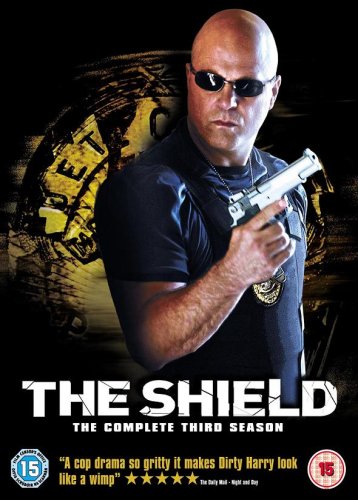
My Thought on Season 3 of "The Shield"

Spoilers on Season 3 of "The Shield" Below:

The 3rd Season of The Shield isn’t nearly as good as the previous two seasons that came before it. It’s not that it was bad (the show was still far outperforming most other tv series), but the show had become more unfocused. The stakes didn’t feel as high and a number of characters felt poorly utilized (Danny is barely given any major story time). The reason for this became clear to me at the end of episode 9’s “Slipknot”; the Strike Team really hadn’t been the Strike Team all season long. Under the watchful gaze of Claudette as their new supervisor, the Strike Team wasn’t out on the street beating up on drug dealers, prostitutes, and the like.

There were still complications as per usual; most notably the consequences of the Money Train blowing up in the Strike Team’s face, but the Strike Team didn’t feel like the ground would come out from them at any moment like in the second half of the 1st season or almost the entirety of the 2nd season. 

Much of the conflicts thrown at the Strike Team were contained, too brief, or episodic, and this led to a stop-and-start feel that undermined the season. The consequences of Tayvon and Shane’s gruesome, bloody fight and the undercover squad blew over too quick and too forgettablely.  

There remained to be some incredibly interesting character and plot decisions. Aceveda getting forcibly raped was unnerving and disturbing, and ultimately brought out a battered, damaged side out of the character seen too infrequently. The Dutch received the opportunity to show a bit of the shattered, dark psyche underneath the brilliant (albeit desensitized) investigative mind (when he kills the cat to recreate the emotional experience of a rapist, it’s not just unsettling but tinged with deep isolation and sadness). Shane was given more screentime that humanized him far more than in the past, where he could at times be too needlessly, caricaturely mean and cruel. Racial questions that had been dealt with fleetingly or as subplots garnered entire episodes that handled them more fully, including “Slipknot” and “Riceburner”.

But too much of the third season was territory far too well-trotted; Vic and Claudette being at odds was too familiar at times, as was Vic and Aceveda butting heads. When the Dutch and Vic came into conflict at the end of the season (Wagenbach got the inclination that Vic had a hand in the money train) it felt like the plausible and grounded, but unexpected character turns and plot movement that had got me invested in the series in the first place.

The Shield in some respects remained inimitably, indelibly good. But in failing to shake up its formula enough this late in its run, it began to feel like it was just going through the motions.

Saturday, January 26, 2013

"Audition" - Film Review

 Splatter films re-emerged at the turn of the 21st century, but many lacked the intelligence or craftsmanship of their forbearers (e.g. Dawn of the Dead, Eyes Without a Face, Black Sunday, and Bad Taste). These new splatter films were dubbed by detractors as “torture porn”. They excessively turned up the blood and nudity (often at the expense of the characters and character development). Some of the films noted as part of this trend, such as the Saw and Hostel franchises, literally feature torture. The newer films misunderstand the point of the buckets of blood of their predecessors. Older films used gleeful amounts of blood (on smaller budgets) not just because it was entertaining, but because it began to broach a level of uncomfortable, self-aware absurdity; the blood and violence was a commentary. The new films feature all the blood but none of the brains. The blood is a means in of itself for the latest batch of splatter horror. For the older films, there was something entertaining to be had from it for sure, but not at the cost of making an interesting, memorable, thoughtful film.

While Audition is more of a psychological horror film than a splatter movie, it does end very bloody. However, Audition builds the groundwork to justify its use of the blood and the context in which it’s used. It earns the moments where it shocks and disturbs us.

Audition is a film that’s meant to provoke; to get a reaction. The last 30 minutes are so disturbing, unsettling, and jarring that they feel like a very different film at times from what we’ve seen before it (including a dreamlike montage that’s disgusting and disconcerting). But there have been hints that this is the ultimate direction the film is leading to. The suggestions up to this point should lead us to believe that Yamazaki Asami (Eihi Shiina) is perhaps not the most stable or normal or even sane of individuals (including a particularly memorable, creepy scene where we first get to see the inside of Asami’s apartment).

Aoyama Shigeharu (Ryo Ishibashi) may be a lonely widower desperate for, and encouraged to, marry someone. But the way he goes about finding someone to marry is rather misogynistic and devious. Shigeharu, at the behest of a friend who works for a television company, fakes a tv show audition in order to "audition" young women for the “role” of his wife. Shigeharu narrows the resumes down to the top 30, but becomes fixated on Asami when he reads her essay about an injury that stopped her from performing ballet ever again. Imagining she has real emotional depth, he becomes absolutely obsessed with Asami, too blinded to pick up on the fact that sometimes emotional depth is caused by deep psychological damage and trauma.  

Shigeharu ultimately gets payback for his questionable actions. I won’t get into much detail, but boy is it fucked up. Asami may be crazy but she’s definitely been wronged in the way she’s been chosen as Shigaru’s future wife, and so on some level we root for her vengeance against the man who objectified and mislead her. The ending is a slight cop out though that ties up things a little too nicely for a film that is so thoroughly marked by deep, vivid psychologically unnerving imagery. 

Audition will disturb and unsettle you; it gets uncomfortably under your skin, and it doesn’t hold back its horror punches that it builds up wonderfully to and then forces you to stew in. There are better horror movies, but there aren’t many quite like director Takashi Miike’s Audition. 

Grade: B+

Archer - "The Wind Cries Mary" - Review

Jokes at the expense of gay characters for being gay is overplayed and often in poor taste. Archer manages to get away with it though because the character that’s the target of these jokes and jabs is paragon of masculinity Sterling Archer.

The high concept of the Bob’s Burger crossover has subsided, and though we don’t get anything nearly as interesting or memorable, this episode is far more focused, standard fare for an Archer outing that gets in more jokes per minute than the previous episode (which became so hung up on how to justify the Bob’s Burger crossover that everything was overshadowed by it).

While a good deal of the supporting players aren’t nearly as involved as I would have liked (there’s  not a whole lot of Cheryl, Pam, and Ray – and besides a bizarre running gag involving radioactive ants, there’s not much Krieger ). But that’s okay because this half-hour is all about Sterling and chipping away at his drunken, womanizing exterior. Archer is forced to accept more and more that his good friend Lucas Troy (an always welcome Timothy Olyphant) was probably gay and, more importantly, probably gay for him. This is territory well-worth exploring and the series does it in typically absurd, funny fashion.  

Grade: A-

Vampire Diaries - "Catch Me if You Can" - Review

So much of “Catch Me if You Can” is about table setting. By episodes end Damon is locked away in the Salvatore basement, Rebekah and Stefan are bumping uglies, Bonnie has finally wised up to Shane and has begun being consumed by black magic, and Jeremy has a new plan (courtesy of Elena) for dealing with his hunter’s tattoo problem.

There are a number of anticlimaxes and odd plot decisions that undermine some of the forward momentum of this episode. Like, where does Elena come from during the cold open scene? She pops up out of nowhere. Yea, we know she was headed down to the lake house, but it’s peculiar that she just seems to appear suddenly. Similarly, Stefan shows up deus ex machine style to stop a compelled Damon from killing Jeremy though he really doesn’t want to. Damon’s compulsion appears to be a nicely handled way to sideline Damon for a while (which the series hopefully will use to do interesting things with Elena’s relationships within the love triangle). While Kol remains alive, Damon will stop at nothing to kill Jeremy, which would totes upset Elena, his beau. But it’s unfortunate that in order to earn this moment the cliffhanger from last episode has to be so completely undercut. Kol comes out of the blue and demolishes all the newly baked vampires. It feels as if the writers are aware that it’s far too soon in the season for Jeremy to finish the tattoo and thus they formed an (initially) annoying plot decision to undo the horde of vampires.  

Over in our first subplot, Bonnie (aka most stupidly frustrating character ever) finally discovers what everyone and their mother has known forever and always: Shane’s an asshole and a bad human being. He had a hand in the mass murder/suicide caused by the late Reverend Young. After distrusting every worthwhile character in the series up to this point (including both of her best friends Elena and Caroline), she decides, ya know what, why don’t I give trusting someone a shot, and guess what: guy plans to unleash an immortal evil on the earth in the form of Silas. Not only that, but Bonnie can’t control her dark magic anymore which has begun to consumer her. Well, that’s just great for everyone. 

In the much more interesting sub-plot, Stefan and Rebekah team up to steal the headstone of Silas from Shane. But, more importantly: the sexual tension could be cut with a knife. I’m totally down for this pairing. Someone is going to get with Elena, and the only way we can have the series end on a note that leaves pretty much everyone happy is if either Damon or Stefan finds another love interest. Sure, at the moment, it’s only about sex. Hot, steamy sex. But Rebekah and Stefan did date at one point, as Rebekah so astutely notes (in a damn hot, sexy scene), they had fun in the 1920’s drinking, killing, and having “crazy sex”… Oh, and there was something about the possibility of another unknown group of people also attempting to find the cure… but I was too busy writing fan fiction and shipping different couples. 

“Catch Me If You Can” isn’t the best episode the series has done, but it’s still sexy, smart, and fun. It ultimately suffers from the challenge of (in an overstuffed manner) establishing plots that for now feel like they will be important for BIG PICTURE STUFF. Only time will tell.

Stray Observations:
-“I’m taking artistic licenses”
-The opening was very moody, and beautifully shot despite how shakey it may have been
-“This is Mystic Falls. That’s actually the least ridiculous thing I’ve heard”
-“You don’t know what I look like when I’m not in love with you”- Paul Wesley’s performance becomes so much stronger when Stefan is being the bad guy.

Grade: B

30 Rock - "A Goon’s Deed in a Weary World” - Review

Most series are content to spit out mediocre work in their last few seasons. 30 Rock, however, is producing some of its best episodes to date. Not only is “A Goon’s Deed in a Weary World” a great episode and possibly the best episode this season, but it may very well be one of the series best episodes. Period.

The quality, variety, and amount of jokes feel like they’re at the level of craftsmanship when the series was at its best in early seasons. There’s parody (a sub-plot lovingly in homage to Willy Wonka), sight gags (the skeleton co-worker dream where Lutz still fails to get things right), meta humor (the greenscreen joke; “Expensive musical cues are the sort of thing you can’t afford anymore”), play on words (“I’ll see what I can do, but through back channels” “BET?” “Back channels”), and even the cartoonish (“Tramp Store”; a German cannibal advertiser: “Even Gunther is thinking of backing out”). Highbrow and low brow reside side by side, and so many jokes are blink and you miss them, and take a second to process. 

However, not only is this one of 30 Rock’s funniest half-hours yet, but also one of its best plotted. Unlike other series that cram in as many jokes as possible without remembering their characters or story arcs at the heart of it all, 30 Rock has always succeeded at telling stories in the midst of the crazy at 30 Rockefeller.  

The stakes feel high with TGS put in peril, and Liz attempts to rally the troops, but with little results. No one is taking Liz seriously. Advertisers are dropping out and the show has to be made on a shoe string budget. The writers goof off and fail to write anything, while Tracy and Jenna stir up trouble with the press and end up doing no promotion for the show. Jack can’t help his protégé because as much as he admires and is endeared to Liz, it’s not the most sound first decision as the person soon to be CEO of Kabletown. Liz is so high strung and dedicated to TGS that she’s even willing to miss the arrival of her newly adopted kids. When her co-workers hear of this, it shames them so badly that in an odd but touching act of solidarity they all quit in front of the board members of NBC. Liz rushes to the airport just in time to meet her adopted twins, who look suspiciously liking mini-Tracy and Jenna’s (apparently her time practically raising Jenna and Tracy will pay off in her real-life parenting concerns). 

The no less significant sub-plot (especially for how it ends with Kenneth Parcel the most unlikely of Presidents of a television network), involves Jack in Willy Wonka fashion challenging the top candidates for the NBC President position he formerly held. They’re all terrible, including the one Kenneth has pegged for a “pure heart” (the guy intended to strip the building for parts as broadcast television is totally an unviable prospect these days). Jack ultimately realizes that everything he tried to do for the company (even his dubious attempts to tank it) never went as he planned them to and always played against his hand. He finds himself convinced that perhaps someone who actually deeply cares about television and not the bottom line might just save NBC from disaster.

This isn’t a show plodding towards its inevitable end. This is a show confidently telling with laser precision interesting stories about characters we’ve come to like and never sacrificing quantity or quality of jokes in the process.   

Stray Observations:

-“Boy, women who to try to do things sure do die a lot”
-“My whole life has been building to this moment! – Wait really? That’s terrible”
-Jack admires Willy Wonka. There’s no government regulations in his factory.
-“TGS sounds like am STD you know I’ve got”
-George Clooney had the perfect role lined up for him post-“ER”: “Dumb gay batman”.
-The moonlanding was staged at studio 30.

Grade: A

Parks and Recreation - "Women in Garbage" - Review

One of the great things about Parks and Rec is its willingness to try out the seemingly endless number of combinations of pairings of its large, lovable cast. Yes, there are pairings that will always be great such as the utterly adorable combination of April and Andy. But there’s not a single character I don’t particularly enjoy or like, so whenever a new pairing of characters and actors is made, it ends up bring out new sides to the characters and new ways for jokes to be told.

I don’t think we’ve ever seen Andy, Ben, and Tom go off on some adventure together by themselves. But it’s completely plausible, while also being very funny. Tom’s “Rent-a-Swag” clientele are into basketball, but since Tom lacks knowledge of the sport to use in his sales pitches, he enlists the help of “an athlete and a nerd who loves stats”. They head over to the local gymnasium and fail to play basketball miserably. They even lose to the middle schoolers that Tom sells his wares to (very, very badly in fact, amusingly yelling that the kids must be cheating), utterly shaming him. However, Tom turns this around using the kids to advertise how when you win a basketball game, you’re going to need one of his suits for the after-game interview.

I’m even more certain that we’ve never seen Ron and Anne paired together, but it’s the acknowledgement of how little time they spend together (Ron thinks her last name is “Hanson”) that sells the pairing. The show is quite aware that Anne’s dorky enthusiasm and Ron’s masculine calmness would have to be brought together by desperate (well, desperate, for the goofy caricature world of Parks anyway) circumstances. Diane needs Ron to babysit her kids, but Ron Swanson is … well, Ron Swanson and so he’s thoroughly uncomfortable and completely out of his elements. And so he enlists the help of Anne, who is seemingly just as inept with kids as Ron, only managing to connect with them by showing them her medical equipment. Guess what: the kids end up loving both Anne and Ron.

Though we’ve seen April and Leslie paired together recently due to their shared interest in building a new park, it’s an underutilized combination that really works. April’s deadpan cynicism contrasts wonderfully with Leslie’s happy-go-lucky enthusiasm. Leslie and April take up the challenge of being garbage collectors to prove a point about gender inequality in the public sector of Pawnee. Sanitation apparently has the worst track record on hiring women in the local government. To show them women are capable of these government roles, they perform a local trash pick-up route, and succeed with flying colors. And when it turns out to be that April (not Leslie) who is the anti-defeatist, finally shedding the façade of sarcasm and pushing Leslie to go the step further to “win” by moving the fridge (their last task needlessly, meanly assigned to them), well, it feels well-earned. It also demonstrates the connection these two characters have. April really isn’t as pessimistic or dogmatic as she makes herself seem, and she respects and admires Leslie, who, though she’d never admit it, is her role-model. 

Park’s cast runs deep, and its continued ability to find new ways to use these characters allows it to be as sharp and funny as it is five seasons in. 

Stray Observations:

-“It’s not a tissue. It’s a receipt”
-“Men are better than women … we must obey!”
-The kids on Jerry: “No” – No one wants anything to do with Jerry. Not even kids.
-“She’s my special friend”
“No need. My only plan for today was to buy skittles”
-“If I were only 300 years older councilman”
-“I’ve run out of things for them to do so I’m having them play with a landmine”
-“Did I do basketball”
-How adorable is Adam Scott wearing sport goggles?
-Anne and the kids egging on about his love for so funny and sweet. His response: “I love nothing!”
-“I think I dribbled an idea. No make that double dribbled”

Grade: B+

Friday, January 25, 2013

The Office - "Customer Loyalty" - Review

During the last few seasons of The Office, the series has lost its footing. Jim and Pam got married and had kids. What else was there to tell about their story? But this season has been making it feel as if that period of stagnation was purposeful for the relationship’s story, arguing that the comfortable repetitiveness of married life has caused an absence of excitement and adventure in Jim and Pam’s lives. This season has provided the most interesting story about the couple since the first pregnancy arc, and the payoff is beginning to show in a painfully realistic scene where discovering who’s behind the camera “Bryan” is undercut by how deeply sad the conversation between Jim and Pam is. “What am I doing wrong, Bryan?” Pam asks tearfully. And then she keeps repeating, “What am I doing wrong?” If you’re not moved by this, no matter how disappointed you’ve been by the series up to this point, you must have a heart of stone.

The series seems poised to break the strongest coupling it’s had, and its second most tried and true iconic watermark, and that scares and heartbreaks me. That’s a testament to great writing, and the hallmark of the development of great fictional characters. I love Jim and Pam. Those characters are under my skin. I rooted for them getting together from day one, and we’ve seen them build a relationship. A deeply loving, affectionate, realistically depicted coupling that grounded all the antics of the series.

Though I find the reasons for the heated argument between them to be a bit of a stretch and even a bit clichéd (you can see it coming from the get go), it didn’t matter once the other shoe fell and it came together, John Krasinski and Jenna Fischer play the scene so well and there’s so much history from seven plus seasons’ material that there didn’t need to be a deeply interesting set-up for it. And it’s totally plausible; I’m not married nor do I have kids, but this feels like the type of small-scale thing that could cause an argument between a married couple. Though it seems to blow up a bit too much, this has been building for a long enough (we have watched the two of them drift apart and Pam become more and more disaffected) that it rings true and its all the more devastating for that fact.

There were other things going on in this episode and some forgettable things at that (Darryl and Dwight’s storyline is rather “meh” and not very funny), but the Jim and Pam stuff was enough to make up for these elements. Plus the scenes in the meeting room, where Nelly broaches the point of just how questionable the flirtation between Erin and Pete is, is very funny and well played by everyone involved. Everyone reacts as to be expected; Kevin blurts out that the mystery man Nelly keeps referring to is obviously Pete; Creed is immediately on-board with role-playing to be this mystery fellow; Angela badmouths Erin’s actions despite having cheated on Andy during the time they dated; Stanley is immediately rifled by questioning someone cheating in a relationship. It’s a scene that effectively makes great use of this large, disparate cast that doesn’t make it feel like the cartoonish mob that the supporting characters have sometimes become in later seasons. 

Stray Observations:

-I like Meredith’s new curly blonde wig, which so does not suit her.
-The cold open with Dwight discovering a long waiting prank Jim made several years before is funny for how well it harkens back to earlier seasons.
-Toby is very funny and very creepy hitting on Nelly. But he does have a point; Andy hasn’t exactly been the best boyfriend lately running off like he did.
-Nelly is freaked out by adding fire to the flame of the Pete-Erin relationship by having had them work on Dunder-Mifflin’s social media presence. She’s fearful how Andy might react since they just got on decent enough terms that he was willing to write her a recommendation for adoption.
-“Not that I’m into girls. Not that I’m into Pete” – No matter how bad the series may get, Ellie Kemper’s portrayal of Erin continues to be a highlight.

Grade: B+

Thursday, January 24, 2013

"Silent House" - Film Review

The first two-thirds of Silent House are an interesting movie carried by a nice performance by Elizabeth Olsen. But the ending undoes everything that had been working for the movie by providing bizarre answers to the horror elements that had come before it.

I’m a fan of stylistically and structurally ambitious choices. The film is shot as if it’s one continuous take, filmed in real time. This decision to focus on Olson as she struggles with whatever unknown people/forces threaten her is both to the narrative’s advantage and part of its problem. Olson is at times the only person on screen for large stretches of time and watching her search the house is wonderfully suspenseful and nerve-racking at times. But by the same token though, many of the film’s reveals are too jumpy and poorly executed because of the single camera nature and lack of cuts to the shot.

Having almost total screentime, Olsen carries the film rather strongly, conveying the fear and confusion of the circumstances around her, largely without any dialogue. It’s hard to really imagine this much talent coming from the younger sibling of Mary-Kate and Ashley Olsen, who‘ve mostly done forgettable family or romantic fare. Elizabeth Olsen’s film debut Martha Marcy May Marlene gained widespread praise for her portrayal of a damaged, paranoid young woman coping with her former experiences with an abusive cult. I largely enjoyed Olsen’s performance here; the panged expressions on her face and the raw unhinged fear, anxiety, and desperation as she barely holds back from screaming or weeping often elevates some honestly third-rate material.  

There are elements to Silent House that demonstrate an effective horror movie. There’s plenty of the sort of buildup that one finds in the best of horror films, but the ending derails the film and undermines everything that came before it. Despite a largely very good performance from Olsen, it’s rather disappointing.  

Grade: C+

My Thoughts on Season 3 of "Deadwood"


 Spoilers on Season 3 of "Deadwood" Below:

I knew what I was getting into for Deadwood’s third (and final) season. Everyone told me to avoid it; to not watch it. That I would be let down and disappointed. That so much is left incomplete. That without a 4th season, the series feels unsatisfyingly unfinished. And though this is very, very true, and as it stands this is my least favorite of the 3 seasons of the series, that doesn’t mean this is a bad season of television.

In fact, Hearst’s appearance in Deadwood as the season’s antagonist, and a proper villain the series has never truly had before gives the show a sense of purpose it’s lacked for a long time. The first season was so meanderingly aimless, and so without direction and drive that it wasn’t nearly as satisfying as the 2nd season which handled its serialized elements far more cleanly and efficiently.

With Hearst put in proper conflict with Al, and Al attempting to maintain his hold on the camp and win over everyone to his cause, the series more tightly and nicely handles many of its major plotlines. Al finally seems to have met his match. He won over Bullock; things never truly boiled over with Cy; he handled Wolcott and co. when they appeared last season. But it was never really as doubtful that Al would ultimately be successful; it was only a matter of time. Season three changes that prospect with Hearst. Hearst is so much more in control than Al; he can’t be bullied or bought, and killing him would raise too many questions. He can’t be attacked directly. Al has to keep telling Bullock not to arrest or go after him whenever something goes awry (and when he doesn’t listen and imprisons him it doesn’t solve anything, but only serves to amplify Hearst’s loathing of the town and cause him to hire armed men to come to the town). During the election speeches at the end of episode 2, Al is trapped in Hearst’s room and thoroughly beaten in an attempt to get information on how to swindle Alma out of her claim. He refuses, but Al has never been so powerless before, and now he’s a finger shorter. Meanwhile, Hearst continues to kill his employees as he pleases to squash unionizing. He threatens to rape Alma when she tries to set her owns terms for selling her claim (which eventually he is able to take from her through intimidation). He turns Cy into his lapdog by exposing his false blackmail (Making Cy even weaker and more pathetic than his worthless peon self has ever been). Alma’s weakness for laudanum is exploited by Tolliver and because of it her marriage to Ellesworth is in peril. Dan is left deeply disaffected after killing Hearst’s bodyguard in a bloody, awful street fight. E.B. meanwhile is on the outside looking in because he sold his hotel to Hearst. Hearst conspires with Yankton to rig the election and put in place individuals favorable to him. And towards the end, the Pinkertons finally arrive after all this talk of them (and they’re just as much of problematic assholes as Al’s been making them out to be). If that weren’t enough, the crappy cherry on top is the death of Ellesworth at the hands of the Pinkerton; they couldn’t have chosen a better human being to end the life of, and it’s an infuriating moment that unites the town further against Hearst. 

Al thinks he’s playing checkers when he’s really playing chess. One upping the territorial government in Yankton seems impressive (and it really is), and Al initially believes that Hearst can’t be any harder to overcome. It’s why he goes by himself to see Hearst and never calls for backup. And after that moment, he spends much of the rest of the season being flabbergasted that he has been so thoroughly outmatched and outwitted.

Meanwhile, civilization keeps working its way into the camp. Alma uses her wealth to back a bank. A theater troupe decides to setup shop in the town. A school house is built in Joanie’s former brothel. There are more buildings (and they’re far neater, tidier, and “proper” looking) than ever before; there’s also an abundance of new townsfolk. Most obviously, there are the elections that are at the background of the entire season.    

While these aspects are great and make Deadwood’s 3rd season a treat, the season has more problems than not and without another season we may never know just how well some extraneous feeling elements of this season would have carried over. Much of the season simply fails to be effective. So many characters feel disconnected from the plot or are poorly utilized. The theater company doesn’t fit in at all and doesn’t really feel like it has any right to be in the series. Meanwhile, longstanding characters, such as E.B., Charlie, Merrick, Doc Cochrane, Jane, and Joanie, are hardly used at all. There are entire episodes without some of my favorite characters, and the cast kept expanding and expanding when there didn’t feel like a huge need for it. Underservicing these characters and their stories, and not fully telling other ones made for the 3rd season of Deadwood to stick out like a sore thumb of the 3 seasons. It’s arguably better than the first season, but the first season was at least able to tell the story it wanted to tell and ended rather satisfyingly. The 3rd season simply has too many damn stories and not enough about the characters we’ve come to know and like; it feels overcrowded and overstuffed.

The show had its problems. It couldn’t write children characters if its life depended on it. It could become unnecessarily self-involved, intricate and complex. It could become overly dense and meandering. However, when it was firing on all cylinders, far and between, few shows could touch it. Many of my biggest complaints against the series went out the window in the last three episodes of the season, which are such tightly crafted episodes. The finale is a beautiful piece of television with great tension, high stakes, and a sense of a community rallying to defend itself.  It’s arguably the best and most compelling episode the series ever did, and while it leaves a fair amount open ended, it’s not nearly as unsatisfying as I had anticipated. The season provided enough great things that it didn’t really bother me so largely (although I was finding myself less interested midway through the season than at any other time in the series’ run). The growing relationship between Joanie and Jane was pleasantly surprising and sweet; Seeing Cy so weak was very pleasing since I find him to be one of the most loathsome series regulars; Brian Cox’s turn as John Langrishe was often too delightful for me to be upset at how little I cared about the theater troupe. As always, it was always entertaining to watch Al scheme, and Bullock barely contain his rage.

This is a season of television that now is too overshadowed by the fact that it shouldn’t have been a last season. But there’s so many great series that never get to properly tell their stories fully. At least we now have a “beautiful corpse” rather than a monstrosity that kept living long past when it should have as so many series often do.

Good bye Deadwood, a revisionist Western (that eventually moved beyond its Western beginnings) with a strange (but wonderful and precise) use of language. You were filled with such rich characters and a lived-in feel. You were optimistic when almost every great drama is cynical and angry about human nature and the world. I’m happy to be disappointed by a series not finishing its story rather than telling its story poorly.  

Wednesday, January 23, 2013

Does Being Funny But Lacking a Good Plot Hurt TV Series?

There’s always a tricky balance in comedy between telling stories and telling jokes. More and more tv comedies are going for getting as many jokes in at the expense of the plot. The question though is: “Does the show suffer for weaker narratives?”

New Girl’s most recent episode “Pepperwood” was arguably the funniest episode this season, but it skimped on the plot. Its B-plot was so underwhelmingly developed (despite being low-key and sincere like the best New Girl plots), while the A-plot danced a fine line of eye-raising broadness. It was easy to forgive the lack of plot grounding the narrative because it was packed with jokes; hilarious, varied jokes that it could make it easy to forget just how ridiculous it was to see Jess and Nick stalking one of her creepy adult students.

To a lesser extent, How I Met Youth Mother’s recent episode “Ring Up” experienced similar circumstances. The plot devices of the episode were iffy at best (Ted is getting old! Robin’s engagement ring makes her invisible!), but there were more jokes in the episode than there has been since early seasons of HIMYM. While New Girl managed it a bit better 1) because there’s no serialized end game to get to and 2) it’s newer and fresher, the fact remains (that for me at least) the abundance of jokes slightly makes up for just how little I cared for or believed in the plot. 

Happy Endings is one of the most joyously funny series on television. It crams in a cornucopia of jokes, and so we often forgive just how awful its plots can sometimes be. But if you actually stop to consider some of the stories that Happy Endings bases its jokes around, they can be fairly idiotic, weird, mean-spirited and generally questionable. However, what most people admire about Happy Endings is that this is pretty much solely what it aims to achieve. It thins the plot to a minimum and ramps up the jokes per minute.  

On the other hand, New Girl and HIMYM’s best episodes were not “Pepperwood” or “Ring Up”. In fact, we know both series are capable of producing much more neatly and interestingly plotted episodes than these two episodes. HIMYM’s best episode this season remains to be “Final Page” (the mid-season finale where Barney proposes to Robin), while New Girl has had a number of really good episodes this season that are arguably better than “Pepperwood”, including “Fluffer”, “Models”, “Menzies”, “Eggs”, and “Santa”. While these episodes were not nearly as funny as “Pepperwood” or “Ring Up” (“Final Page” reaches a bit too hard for jokes at times – especially in Part 1 of the episode – and the A-plot of “Models” does not stack up with just how good the sub-plot about the cookie is), they’re not nearly as good as other work we’ve seen from these series. Telling a good story seems to trump just how funny that story may be.

Let’s take Cougar Town as a different example. Cougar Town isn’t always a massively funny series; at times, it’s very amusing but it’s not typically gut-bustingly laugh worthy. However, Cougar Town is perhaps a better series than New Girl, HIMYM, and Happy Endings. Though I may not laugh as much when I watch Cougar Town, I almost always finish an episode satisfied. Characters face issue and problems; they confront them; there are resolutions. Sometimes the characters evolve; other times status quo remains. But it tells believable, practical stories about characters I like and care about, and it does it consistently, and effectively.

However, I maintain a good deal of respect for series that have the ambition or the fortitude to pack an episode with jokes and do it mindfully enough that the episode doesn’t go off the rails. It brings with it difficulties of a different sort than telling a fully realized, well-arced narrative. It’s hard to determine just what will or won’t make people laugh. Sometimes an episode is going to please some but totally alienate others.

If a show’s plot is going to be suspect though, it needs to be at least making me laugh so much that I could care less that it’s all rather pointless. 

What does everyone else think?