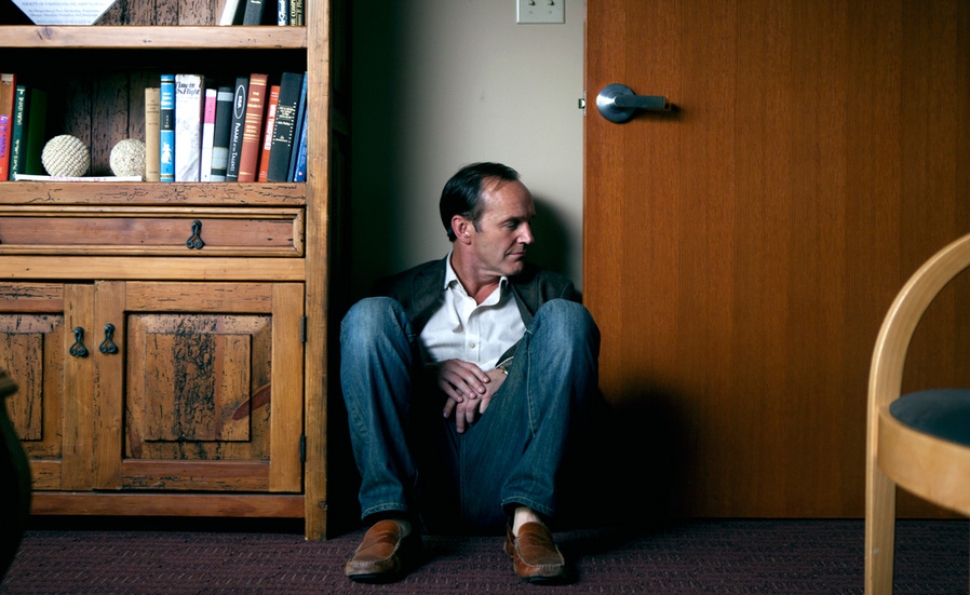
Gregg plays to the nice guy image he’s cultivated. Here he
plays Howard Holloway, a former child star turned agent for child stars, who is
barely scraping the bottom of the barrel in the cut-throat world of Hollywood. Gregg
splits Howard between nebbish sensitivity and desperate bastardom. It’s not
a flawed characterization though. Howard
is fighting to retain nothing short of what little remains of his dignity, not
to mention his soul, as he degrades himself to strike it big. Howard is failing
hard and if he doesn’t catch a break soon he’s going to bottom out.
Gregg’s vision of Hollywood is a traditionally seedy one and
he deploys a vocal, but vague, satire reminiscent of The Player (In this regard, and that of its mismatched pairing of
stifled middle-age man and loquacious adolescent, it also feels like God Bless America). It’s pleasant but
also jagged insider baseball not without cute passing references to well-known
stars but Gregg is scathing in his criticism of how soulless the industry has
become and how it is at its worst when attempting to create the next young starlet.
Howard’s greatest struggle comes when he encounters the
astoundingly talented young actress Lydia (a very promising Saxon Sharbino), a
smart, precocious thirteen year old in need of a new agent. Howard and Lydia
are established as kindred spirits; she’s in the same child acting complex that
wrecked Howard, and he’s the proper father figure lacking in her life. Her
actual father Ray (Paul Sparks) is an alcoholic who constantly seems poised to
ruin any opportunity for success Lydia might have. Casting matters and Sharbino
is tremendously effective here; her hyper-intelligent, impossibly sharp dialogue is too
precious and unrealistic but Sharbino is convincing and shades it all with a
melancholy suggestive of experience beyond her years.
Some of Gregg’s plotting comes a little too easy. Lydia
immediately stumbles into a chance for remarkable success in a major studio
franchise (a vampire period piece based on a book series -- Gregg’s jabs aren’t
always subtle but they’re pointed and amusing); what should probably require months to occur takes place over just a few days. The lightness of plotting and development
feels fine when the film is a simple satire but it becomes more problematic as
the film enters more dramatic territory. Some of the third acts twists threaten
to derail the film as they’re bracingly dark and uncarefully advanced. Howard
is essentially given a choice between making a success of himself or to give it
up to protect Lydia (while in the process destroying her chances for success).
Trust Me is at its
best when its showing how desperate and pathetic the industry is and how it inevitably
chews you up one way or another. It’s an abattoir killing innocence and the so-called
“nice guys” who try to remain good people in spite of the immoral abyss. That
leads the film to embrace its blackly cynical perspective and take it to its
logical conclusion. But it also feels oddly unearned; the film is simply too
thinly and broadly conceived to carry the heft of some of its later
developments.
Trust Me has
ambitions far exceeding its modest budget. The film never seems to have the
ability to portray this world in full and earnest. Locations stand in for
a bigger, more complicated world and the script is thin at filling out the
machinations or politics of the industry. Its critiques occasionally feel like they’re
grasping as a result. That said, Gregg
doesn’t hold back punches and despite how questionably breezy it occasionally
is (including a grafted on romantic subplot featuring neighbor Amanda Peet),
Gregg allows the sickly bile and ugliness of his dark vision to unpleasantly roil
up for not only comedic effect but occasionally disconcerting dramatic ones as
well. It’s undercooked and, ultimately, underwhelming
but Trust Me’s vitriolic heart is in
the right place.
Grade: B-

No comments:
Post a Comment