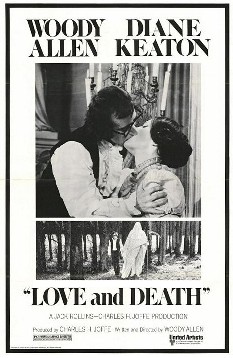
Set in Russia during the Napoleonic Wars; the film tells the
story of Boris (played by Allen, who for all intents and purposes is
practically playing himself). There are two plots at the heart of the film. The
first is about how Boris finds himself in love with his cousin (Diane Keaton), but unfortunately
she has no interest in him. The second involves him being drafted into the war
effort against France despite his total disagreement with the war.
Love and Death
doesn’t lean on any particular type of joke. It’s the sort of comedy that
throws everything at its disposal at you in order to provoke a laugh. When it’s
effective, it’s incredibly effective and Allen makes you laugh like no one
else. But when the film fails to be funny or becomes self-indulgent, it
noticeably falls flat. However, credit has to be given to Allen for
incorporating everything from slap stick to more subtle literary references. There’s humor targeting existentialism, stereotypes, racism, death, love,
war, and everything in between.
Allen’s trademarks are all here. There’s a flare for the absurd
and surreal at turns. A white cloaked visage of death keeps popping up and
having amusing conversations with Boris. The man that proposed to Sonja dies
the moment she announces the engagement. Boris is shot out of canon and lands
in the enemy’s officer tent thus ending the battle. It also features Allen’s
trademark fourth wall breaking; he continually looks right at the camera and
makes a summarily thematic speech or quip.
The film reminds me most of all though of Mel Brooks. Brooks
became less and less interested with plot over the course of his career and increasingly
tossed too many jokes to count at his audience. This method didn’t always work
but you could always appreciate the effort, especially because the films were
often too entertaining to care otherwise. This film has a similar sensibility
of humor to Brooks, perhaps not surprising considering they were Jewish
comedians producing films around the same time.
Love and Death is uneven
(and it’s best not to read into the plot too much), but that’s mostly made up for by
how funny it often is.
Grade: B+

No comments:
Post a Comment