Monday, September 8, 2014

"God Help the Girl", and the Problematic Conversation About Twee

God Help the Girl is one of the most delightful films released this year. This will make, and has made, more than few skeptical about its actual quality.

The film doesn’t exist in reality. It is a pop song as film. It is an ode to an endless summer. It has an aesthetic of youthful romanticism. It has the silly, playful improvisatory feel of early Godard and Richard Lester. It has very little plot and an abundance of charms. 

Films like God Help the Girl, quirky, self-consciously whimsical affairs, tend to get written off. We bulk them together under the label of “Twee”. These films, admittedly, are easy to nitpick. This is because they don’t run on plot or traditional logic or even typical storytelling or structuring. But nitpicking misses the point entirely about these films. They’re about a mood and a tone; a perspective regarding the world and how to live in it. Yes, sometimes in their concern for creating an artificial, fantastical vision, they can sometimes feel a little too hollow or empty. 

But “Twee” has become a dismissive term. It has become a blanket statement. It allows for the ability to refuse to actually fully engage with a work. There are elements to twee that we just aren’t reckoning with. There are certainly things to twee and its aesthetic that can be questionable. It can be indulgent and disconnected from reality to a fault (Michael Gondry is a prime example for this sort of criticism, see especially in regards to his most recent film Mood Indigo). But there’s a more problematic underlying motivation for criticizing these works. Twee is defined by being feminine, and, by virtue of this, we tend to take it less seriously. Feminine works, to oversimplify, typically focus on things like emotion and character over plot. They also tend towards stories that are more low-key and less propulsive.
Masculine works, by contrast, are more deliberately self-serious and dark, and this quality has begun to infect not only our films but also the way we talk about them. We have begun to equate gritty and dark with important and good. The recent evolution of this is often tied back to Christopher Nolan’s Batman films, which were so popular and successful that their style and tone started to seep into many major mainstream works. But that serious, gritty tone doesn’t work well for every type of story and every type of film. For instance, Man of Steel very consciously apes that tone and style, and it is an absolute mess because it takes a style that was great for one character and utilizes it for another character who required a different touch. Man of Steel was one of the most divisive films of last year. The critical split was largely drawn around what side of the argument over the Nolan Touch and its effectiveness you fell on. 

In regards to both gritty revisionism and twee, we have failed to create nuance in using and defining our terminology (James Parker in his review of Marc Spitz’s book Twee notes that Spitz’s definition for it is so broad as to be impossible to pin down), and we’ve started to do it at the same time that filmmakers are widely using these popular, though loosely defined, styles and sometimes inappropriately for the given material. We don’t necessarily always have the best grasp over what “twee” means, and thus we use it a little carelessly, not to mention mean-spiritedly. One stereotypical conception of it is Zooey Deschanel Incarnate. But looking on Deschanel’s filmography as a whole suggests that this is a reductive argument and perspective. It’s far more diverse than just “twee”. Almost Famous, The Assassination of Jesse James by the Coward Robert Ford, and even The Happening paint a different picture. 

Even accounting for a seemingly crucial, oft-cited example of Deschanel’s twee-ness, (500) Days of Summer, demonstrates cracks in the designation and its sloppy, needlessly scornful use. It’s worth noting that much of Deschanel’s labeling as twee centers on her playing supposed Manic Pixie Dream Girl roles. But (500) Days of Summer is a valuable critique of the manic pixie dream girl archetype. The film is told entirely from the perspective of protagonist Tom (Joseph Gordon-Levitt), and the film slowly reveals how Tom’s failure to imagine Summer as a human being rather than an Ideal erodes their relationship. All the supposed empty whimsy of (500) Days of Summer actually speaks to far more meaningful, thoughtful ideas. It isn’t merely quirk for its own sake. So, to some extent, we evidently haven’t really fully considered the implications of the term twee. (Another consistent piece to the argument of Deschanel as a prime example of twee is her tv series New Girl. But, in many ways, that series is a compelling argument in favor of twee as both a life philosophy and a storytelling style).
But on a more lighthearted note, I just find that we could use more twee in our films now – specifically what I desire in relation to it I’ll get into in a moment. I’m tired of all these dark, gritty films. When they’re done well, they can be really good. But our obsession with this tone and style of storytelling has limited the types of stories we tell and the possibilities of the ways in which we tell said stories. These dark, gritty films are about how terrible, insecure and corrosive the world and the people in it are. They are about breaking things down rather than building things up. (A good example from television is the contrast of Breaking Bad and Parks and Recreation. Both are excellent, but both also have vastly different views of the world. We have plenty of what the former was attempting scouring the television landscape and not enough of what the latter aims for).

I think we tend to devalue things that are light and feel-good. We prize drama more highly than comedy, for one thing. And we value darker, sadder responses to works over responses of joy and contentment. Yet when we go to the movies we wish to watch over and over again, that we turn to when we’re feeling down, those are films that are about lifting us up. So why do we treat them as lesser and or less valuable? 

Which brings me back, finally, to God Help the Girl. The immediate reaction to it is perhaps to treat it as frivolous. The film, written and directed by Belle and Sebastian member Stuart Murdoch, is about three twenty-somethings who decide to make a band. The film centers on them performing a number of infectiously feel-good indie pop rock numbers. Murdoch emphasizes a vibe, a sustained mood of carefree buoyancy. There is loosely a plot center -- Eve (Emily Browning) is recovering from an eating disorder and has a possible romantic relationship with flat-mate James (Olly Alexander) -- but it’s just a point from which to pivot off of to create a bunch of musical sequences.

Those musical sequences are indelible. As shot by Murdoch, matching the winsome, catchy rhythms of the songs, they craft an irresistibly effervescent experience. There is little else here though. As previously noted, it’s the film equivalent of a pop song. While inhabiting its cheery, lovely airtime, it doesn’t matter that it’s all ultimately a little airy and light. It makes you feel good and that’s what ultimately matters.
And yet, it isn’t total escapism. Murdoch understands that the best songs are created by infusing life experiences into the music, some that aren’t always pleasant, and transforming them into something beautiful even transcendent. The songs written and performed by the band members are based on difficult, trying life experiences, especially Eve’s struggles with mental illness – and, even more accurately, Murdoch’s life experiences. We take for granted that quiet sadness often underlines some of the best pop songs, just as we take for granted that twee is one of many available, not necessarily bad, options for telling a story. God Help the Girl is far too personal and intimate a film to be written off; it’s filtered far too thoroughly through Murdoch’s perspective to be seen as just mere fluff. Ultimately, twee, at its best, consistently masks this sort of deeper emotion and more personal visions through its artifice of whimsy and cute affectation. (Indeed, Wes Anderson is one of the most notable examples of twee and also one of our best working directors. His films are a perfect example of quirky artifice that conceals troves of melancholy).

We need more films like God Help the Girl. It isn’t perfect, but it’s perfect at what it’s trying to do, and not enough films are trying to what it attempts. It’s an invitation to temporarily depart reality. To escape into someone else’s vision of what the world is like. It’s a pleasant one. I think I’ll put it on repeat.  

Sunday, September 7, 2014

Thoughts on "Ida"

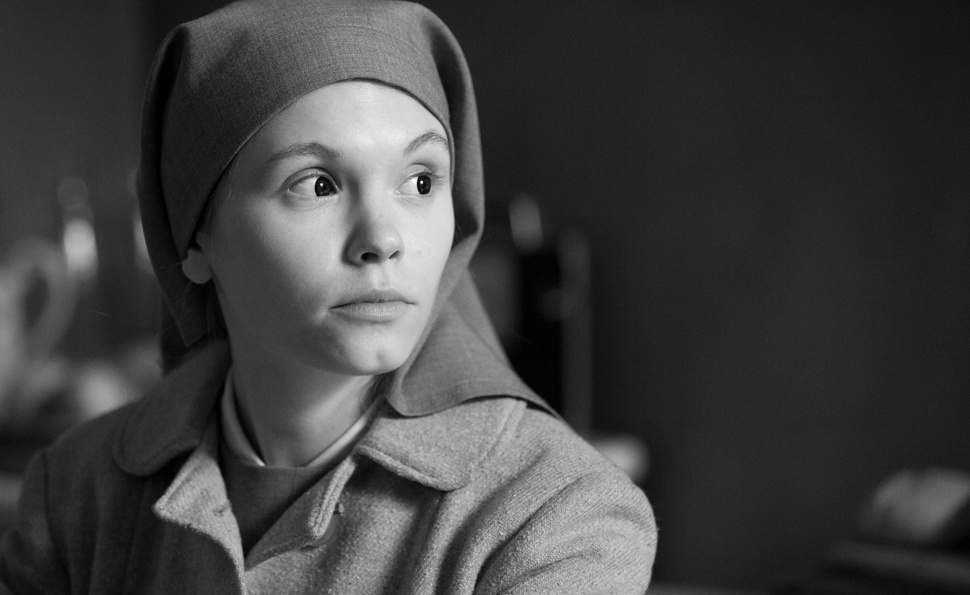
Every frame of Ida is immaculate, framed and shot with a rare precision and thoughtfulness – and shot unconventionally in the aspect ratio of 1.37:1 (or the Academy ratio). Shot by Lukasz Zal and Ryszard Lenczewski, and directed by Paweł Pawlikowski, the film looks gorgeous. Shot in a stark but frequently expressionistic black and white, the film looks something like a cross between old post-WWII photography and neoclassical paintings. The film has the quality of the imagery of Polish master Andrzej Wajda’s films (especially Ashes and Diamonds), and, like Wajda’s war trilogy, its interests also lie in placing a small story as a stand-in for a larger story about Poland in flux. 18-year-old Ida (Agata Trzebuchowska), who initially believes her name to be Anna, has been raised in a convent and will soon take her vows. The Mother Superior asks her to visit her last living relative, her aunt Wanda (Agata Kulesza), before she goes through with her vows. Wanda -- stubborn, flighty, boozy, and sexed-up -- is initially reluctant but eventually starts discussing Ida’s deceased parents and family. Ida wishes to visit her parents’ graves, but this proves to be problematic. Ida is given a great shock when she learns that she is in fact Jewish. She survived through World War II and the Nazi occupation of Poland due to being in the convent. The news understandably shakens her and causes her to question her beliefs. Much of the film finds Ida in a crisis of faith, contemplating whether she truly wishes to be a nun. The film finds tremendous value in Ida and Wanda’s odd couple pairing, and a dry, bitter humor understatedly runs through the film. Wanda and Ida are firm opposites, and Pawlikowski gets a lot out of each confounding, and subtly growing on, the other. But this is an unconventional road trip movie that is in no rush to get where it’s going, content to contemplate a moment or a mood. And for good reason: Wanda is helping Ida seek out where her parents may have been secretly buried, returning to the old village where their family grew up, and, in the process, angering and upsetting a number of people who wish to see the past stay in the past. Set in the 1960’s, the recent past of World War II and its aftermath are a fresh wound still bleeding fresh. The memories remain in the form of the new Stalinist regime that installed itself immediately in the wake of the Nazi government’s collapse. The black and white cinematography has some degree of austerity which fits with Ida’s unfailingly serious and reserved demeanor and the intensity and solemnness of the story. For all its seriousness, however, the film doesn’t feel stodgy. Rather, the film is absorbing, filled with stunning beauty, both in the quiet, stark moments on display, as well as its spectacular imagery. Like the films of Ingmar Bergman, which it shares a degree of thematic and visual similarity, there is a transcendence to the narrative, interrogating spirituality for uplift and insight, as much into the protagonists as into ourselves.  

Friday, September 5, 2014

"The Leftovers": Sometimes Brilliant, Sometimes Baffling. Always "Bleak", Always Peerless.

There is nothing like The Leftovers on television. It is uncompromising. There are few shows like it that are so doggedly interested in putting its viewer off, or quite so stubbornly devoted to telling its story on its own terms, for good and for ilk.

Television has gotten a little obsessed with dark programs, and The Leftovers makes some of the most disturbing series look pleasant. “Bleak” is the word most commonly used to describe the show. It is unrelenting in how miserable and hopeless its vision is. Where some shows might crack a joke at their own self-seriousness and portentousness, The Leftovers can be humorless to a fault. It bathes in how unpleasant and unforgiving its vision is. 

However, the show doesn’t revel in misery for its own sake. It beats its audience over the head with how achingly dissatisfying its world is and how numbingly empty the characters who inhabit it are. (It takes the sort of constant, unshakable unfulfillment and dissatisfaction of the characters of Mad Men and ramps it up to eleven). But it does this with a purpose.
The show’s premise starts from an intriguing concept that the show takes full advantage of: 2% of the world’s population inexplicably vanished on October 14th, 2011   – and there’s no clear pattern to the sudden disappearances, some are innocent while others were awful people. It’s not enough people to destabilize the world but it is enough to be noticeable and impactful. As Maureen Ryan succinctly describes it, “life is the same, but it isn't”. Life has become both far more meaningful and simultaneously more meaningless. The show jumps ahead to three years later, as the remaining people of earth, the leftovers, try to understand what the event meant while putting their lives back together. Life in The Leftovers is kind of like ours, except everyone constantly, gnawingly hates existing.  

All the things we ask ourselves on a day-to-day basis -- What is the meaning of life? Is there a higher power? What does it mean to be a good person; is it even worth it?, etc. -- are still there but they feel ten times more pertinent. The rapture appears to have happened and yet life keeps going on, as mundane, boring and a little unpleasant as ever. At its core, the series is about living with grief and loss, and how we come to terms with it -- and also the ways we never fully do. 

Much of this grimness is, in fact, not very different from a lot of dark, violent content on television, but it is the context in which it is presented which makes it feel so desolate and morbid. It comes from what Phillip Maciak calls the “aesthetic of the ordinary”, or the show’s willingness to portray the ordinary, everyday, and mundane – to be plotless and aimless, and to capture the details of the day-to-day, of simply being and existing. “This is what seems to be frustrating. It’s not that the show is sad or that it’s brutal, it’s that we don’t have a propulsive plot that distracts us from that sadness or that brutality,” Maciak argues. The Leftovers lingers on it, dwells on it, and what it lingers on is emotional, not plot, turmoil: ennui, guilt, longing. The big moment has passed: it’s all aftermath, all the time.
The show centers on the Garvey family, an interesting choice, since they haven’t lost anyone. Yet the Garveys are, in some ways, even more broken and sad than a lot of people who have lost far more. The reasons for this aren’t immediately apparent and are part of the show’s ongoing mysteries. Kevin (Justin Theroux, initially a bit bland but slowly reveals a wonderful, manic desperation), the police chief of a small New York town called Mapleton, is trying to maintain order in his town, while also possibly losing his mind. He lives with his quiet, rebellious teen daughter Jill (Margaret Qualley, great in a role that could so easily have fallen into cliche), who provides a window into the way adolescence life and ritual functions in this new world. 

It’s quickly revealed that the remaining Garveys are disconnected in ways beyond the emotional. Tommy’s wife Laurie (Amy Brenneman, stunning in a largely wordless performance) has joined a nearby newly formed religious order/possible cult called the Guilty Remnant that formed in the wake of the Departure. Finally, son Tommy (Chris Zylka) has dropped out of college and lives on the compound of a cult messianic figure who claims he can hug away people’s suffering and has an unhealthy obsession with underage Asians. 

Mapleton acts as microcosm of the larger world, and co-creators Damon Lindelof and Tom Perrota (who’s book the show is based on) do an excellent job of building up this world, filling it out with all sorts of weird, distinctive details. The most notable example of this is the Guilty Remnant, which is possibly the show’s greatest, most fully realized creation. They take vows of silence, chain smoke, and wear all white, and their constant presence lingers over everything, as they stalk or hang around in judgment in order to amass more recruits. The Mapleton chapter is led by the menacing mother hen Patti (Ann Dowd, also fantastic in another primarily silent role). The Remnant are bizarre and sinister, but they’re not really the villains of the show, so much as one odd corner of this world trying to cope with their loss and faith in their own peculiar way (They take actions that mark them as dangerous, but they also offer up one of many, not entirely unreasonable, perspectives). 

The show’s focus extends beyond the Garveys and the Remant though. Indeed, the show’s two best episode are deep-digging character studies centered on the two Jamison siblings. The third episode centers on Matt (Christopher Eccleston), a local preacher, who finds his faith and beliefs put to the test. Meanwhile, the sixth episode deals with how Nora Durst (Carrie Coon), who lost her husband and two children on the day of the Departure, grapples with such overwhelming loss.
Trying to find comparisons for the series are somewhat futile. There are parallels, but they fall short. Lindelof’s most famous work, the television series Lost, has some overlap. Both have confounding ongoing mysteries at their center that never entirely get explained, and both play around with some narrative ambiguity that can be as frustrating as it can be riveting. The closest thing the two shows have in common is their interest in their characters above all other elements, and thankfully The Leftovers has a number of distinctive, well-acted characters. Otherwise, Lost is a far more inviting series, inclined to use genre elements and throw in a nice dose of levity to make the crazy go down easier. 

More accurate comparisons might be to the work of auteurs working in the medium. The show is distinguished by how uncompromising it is. It has the quality of Louie in its willingness to simply not give a shit about what anyone thinks or feels about its singular vision. If you can’t get on its particular wave-length, the show isn’t going to try to do anything to make you feel more at ease or at home. 

Perhaps an even better analogous example is David Lynch’s work on Twin Peaks, a show that was super bizarre and surreal, and that could care less about its central mystery. Instead, the show was concerned with the lack of answers to that mystery and the way it haunted and confounded the characters surrounding the mystery (This, of course, frustrated viewers and helped lead to the show’s cancellation – and it did lead to answers being given, but they were never as satisfying as hoped for. Sometimes a lack of answers is exactly what a show needs to thrive). Looking for and receiving answers is beside the point, a wild goose chase at best. 

The simple fact is that the show is not for everyone. The show significantly goes out of its way to alienate its audience, and even when it’s understandable why the show feels the needs to be so brutal and dark, it doesn’t make the experience of sitting through it any easier.
And yet, if you can get on its level, The Leftovers is exhilarating. It’s a series concerned with mood, tone and atmosphere, crafting an intense, singular experience. In its desire visually, tonally and narratively to push our discomfiture and unease, it has a lot in common with Hannibal. Like that series, it is also visually arresting, as well as equal parts pointed symbolism and dark, twisty narrative (For one thing, the show is essentially a giant parable with many installments acting as mini parables).

Sonia Soraiya, in her review of the pilot, compared the experience to trying to dissect a novel for a high school English class. Admittedly there is a certain self-importance to it that can be a little grating. The show winds and wends, twists and turns in on itself. It has a modernist novel quality, where it seems to have deeper significance, if only you’re willing to dig a little deeper and ask what it all means. (But at the end of the day, the meaning of the series is whatever we and the characters ascribe to the events taking place). 

The show doesn’t always work. Sometimes the strange structuring to the show – sometimes huge and sprawling, sometimes laser focused and penetrating -- feels like a gambit that hasn’t quite paid off yet – and may be never will. The structure also makes the series occasionally feel scattered and fragmented and like it hasn’t kicked into high gear yet (potentially problematic for a show with one episode left unaired in its first season). Episodes often don’t feel like a standard episode of television, beginning in one place, meandering all over, and then ending in an unexpected, not entirely understandable place. Some stories just aren’t compelling enough to warrant the attention they’ve been given, especially Tommy’s story -- which is too disconnected from the rest of the show. And then there's the basic frustration borne from its general opaqueness and strangeness.

Yet there is something overall to the show that is unshakable. It’s ambitious and reaching, and probably trying to do far more than it is really capable of. The series is like someone speaking in tongues. It doesn’t always make sense and perhaps it’s not as meaningful as it seems, but it’s also so fascinating and striking that it’s hard to resist. 

Thursday, September 4, 2014

Review for "Kelly & Cal"

My most recent film review for Way Too Indie is on the oddball friendship film Kelly & Cal, which is a surprisingly dark, up to a point, story about refusing to change. Here is a sample:
"Kelly and Cal bond over their outsider statuses and the fact that they are kind of terrible people. It is easy to imagine pre-disability Cal as a jaded loner who believed himself to be better than everyone else. The accident has only given him a convenient excuse to gripe about how awful everyone is. Kelly also carries a holier-than-thou attitude that similarly borders on grating. Kelly & Cal’s real strength draws from how dark and weird it is willing to be. Like earlier 2014 indie release Adult World, Kelly & Cal finds unexpectedly offbeat and bleak notes within conventional narrative limitations. Unlike other “unlikely friendship” films, there is no whimsy or a sense of doomed beauty to the events on display. Up to a certain point, the film makes just about every character deeply unsympathetic and unlikable. Kelly is selfish and narcissistic, and her funk stems as much from arrested development as it does from postpartum depression. However, her husband is often an inattentive, emotionally unavailable asshole, and this makes Kelly’s bizarre relationship with Cal all the more plausible."

"The Lunchbox", Rom-Coms, and Expectations vs. Reality

The Lunchbox is a film about the gap between expectations and reality; between the way life is and how we wish life would be, and how the twains shall never meet.

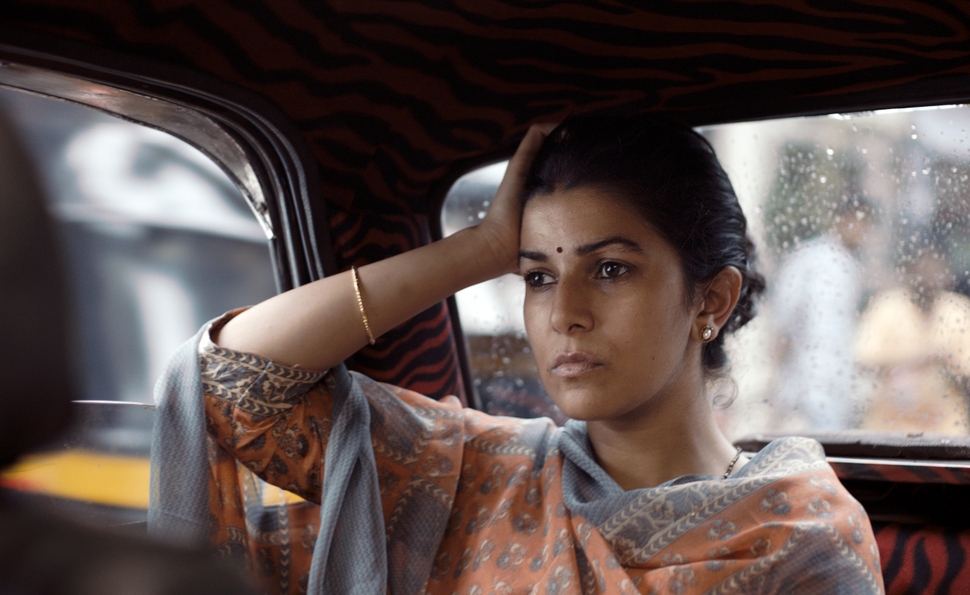
The film begins with a daffy little romantic comedy premise: The Mumbai delivery service accidentally gives the lunch Ila (Nimrat Kaur) intended for her husband to another man Saajan Fernandes (Irrfan Khan).

Ila is having marital problems. Her husband is distant and cares more about his work than her. Ila had believed that if she could win her husband’s stomach than she could win his heart as well. 

Saajan loves her cooking so much that he eats every last morsel. Ila and Saajan soon begin exchanging notes, initially to clarify the mix up, and slowly they start offering deeper contemplations. The more they reveal in the exchanges, the clearer it becomes that they are both disappointed and unfulfilled by their respective lives.  

The anonymity of the messages offers an opportunity to state things one normally wouldn’t, a letter counterpart, in a way, to the walk and talks of Before Sunrise. The more the two invest in the meaning of these exchanges, the more they begin seeing it as an out to their humdrum lives. 

The film sets up a situation in which we desire to see them together, these two individuals who have create a beautiful bond. But the film is continually being tempered by reality. The film is not a Bollywood romance; it is a grounded neo-realist tale, flavored with the spark of a love affair. Writer-director Ritesh Batra keeps emphasizing the changing, modernized landscape of India. It is not a setting to be romanticized. Mumbai is bustling city, crowded and dirty. It’s beautiful for the docu-realistic lens Batra frames it through, noticing the humanity bubbling over in the setting. On more than one occasion, Batra pulls back to suggest that Ila and Saajan’s story is merely one small story amongst countless other stories taking place in India. 

Where a Hollywood film would find some way to bring these two individuals together, to grant them a little happiness and reprieve, The Lunchbox keeps finding complications. Running away together to Bhutan is hopelessly romantic, but it certainly isn’t practical. Missed opportunities and missed connections define the film. It doesn’t argue that this romance is impossible, but it allows its characters to take actions that undermine their dreams and satisfaction in the name of being realistic. 

And yet, the film is still deeply romantic. The brief window of time in which the exchanges take place is dreamy and exciting, and also raw and tender as secrets and regrets are revealed. The mid portion of the film is colored by a sunny, warm quality where the film indulges in low-key humor and a fluffy sense of possibility. Even as the film takes on an increasingly bittersweet tone, the possibility of consummating the romance is held out (the film’s ending is ambiguous on this account, even as it’s a doubtful ambiguity). While it may never occur, the way the conversation has affected and altered both carries through. Both take control of their lives and refuse to quietly be consumed by their grief, sadness and frustration. They have become better, more capable people who can now take charge of their lives. 

That somewhat oversimplifies the film’s aims, however. The characters’ journeys are about accepting that life is a little dissatisfying and difficult. It’s about learning to ground yourself within the life you have and not the one wish you had. That’s a little bit headier than the film’s seemingly commercial premise would immediately suggest, but it’s also richer and more rewarding. Saajan and Ila are real people struck by a moment of serendipity, not dictated by cosmic fate but a mishap of modern infrastructure. No matter what its causation though, it still remains serendipity and The Lunchbox remains a delight, a crowd pleaser that never simply settles for just being pleasant.

Monday, September 1, 2014

"Young & Beautiful", Voyeurism, and the Male Gaze

Young & Beautiful is a film fascinated with voyeurism; with people watching other people; with people looking at themselves; with us, as a viewer, watching these people gazing. In short, it is a film concerned with the male gaze.

The film begins with an unknown observer surreptitiously watching the titular young beauty Isabelle (Marine Vacth). On a beachside, she undresses to sunbathe. Director Francois Ozon uses the voyeurism to undercut the potential pleasure of the moment. We are seeing a nude body, but there is also something perverse and sinister due to the framing of the moment. We become self-conscious of our act of viewing. 

Throughout the film, there are many scenes where men will look upon Isabelle, but the power dynamic of the situations are consistently complicated by the way Ozon films these scenes. Ozon is constantly showing Isabelle returning the gaze of the males who wish to possess her, and, in turn, returning the gaze of us, the viewer. 

After a brief introductory sequence where Isabelle awkwardly loses her virginity to a German hunk (a situation which he controls and Isabelle is largely a passive participant in), the film spends most of its time to showing Isabelle’s involvement as a call girl. Ozon never explains where this desire stems from. Isabelle actions, instead, become ever more curious. She doesn’t seem to derive a whole lot of pleasure out of her encounters. Vacth portrays Isabelle with a tantalizingly blank expression (shades of Catherine Denueve in Belle de Jour). 

The pleasure that Isabelle gains seems to be in the power the sexual acts provide her. The money seems to give her little interest and the sex is often icky and degrading. But Isabelle enjoys the power over men this gives her (though she probably couldn’t quite ascertain and pinpoint this herself). She is in control. She is desired. She commands the “to-be-looked-at-ness” of her. 

Ozon plays to the to-be-looked-at-ness of his protagonist. Isabelle is well aware of her beauty. People note it with some frequency. She knows that people desire her and that this is an asset. The film starts with a shot where Isabelle has no control over the way she is looked at and it slowly moves towards her dominating the way she is viewed both within the narrative and by the camera. 

In the traditional analysis of the male gaze, the act of gazing was given acceptance because the men we do the vicarious gazing through were nice people, heroes. The majority of the gazers in Young & Beautiful, Isabelle’s clients, are the antithesis of the expected male gazers. They are old and not especially good-looking. They also are not charming or charismatic individuals. Put simply, they are casual assholes. They treat Isabelle crudely and misogynistically. They are dismissive and rude. We can’t identify with them, and our identification aligns ever more closely with Isabelle.  

Our awareness of our place as spectator causes us to judge the behavior of these men more harshly. We become more cognizant of the way these men objectify and sexualize Isabelle; and the way this sexism extends to more normal, traditional realms of Isabelle’s life. 

Midway through the film, Isabelle’s call girl activities are discovered. A client dies, and the police inform her family. Suddenly, everyone in Isabelle’s life is deeply self-aware and self-conscious of the power of Isabelle. They are hyper-mindful of the capacities of her young ingénue appearance. Soon every encounter with a male in her life becomes a charged moments, potentially freighted with meaning, read into or otherwise. 

There is a fair amount of meta-textual-ness taking place throughout the film. The film’s chief narrative pull comes from attempting to comprehend the enigmatic motives of Isabelle. But Ozon underlays this with a significant degree of subtext about the way we watch films. In a way, we are just as possessive of Isabelle as her clients. We are drawn to her beauty and possibly even desire her. It’s acceptable though, right? It’s solely within the context of a film. However, Ozon keeps challenging that notion by making the act of viewing a fraught experience with complicated responses to the actions on display.

Sunday, August 31, 2014

"Veronica Mars" and the Fear of Being Vulnerable

**Spoilers for the First Season of Veronica Mars**  

(NOTE: I have not seen beyond the first season, and I'm interested to see how much of my assessment holds up going forward)

Veronica Mars, like most great shows, is about a lot of different things. It’s about race, class, and the way socio-economic status creates divisions within a town. It’s about family ties and the way we are defined by and reject the influence of our parents. It’s about the way people act out expected gender roles and masculinity and femininity. It’s about the hierarchies of social orders and the fluidity and instability of those divisions.  

Most obviously, it’s a show about the intricate murder mystery of a young female, Lily Kane (Amanda Seyfried), a popular girl who had a knack for causing and getting into trouble. Lily is a femme fatale, but her ability for the fatalism of that title is one of many subversions Veronica Mars brings to the film noir genre. 

But if I had to say what Veronica Mars is about at its core, it’s really a show about vulnerability. Moreover, it’s a series about the fear of being vulnerable. It’s about people posturing and pretending to be so much more than they are. Film noir is a genre with deeply damaged people trying to act like they’re above the shattered world around them. It features archetypes who are haunted by dark, complicated pasts they wish they could outrun. Veronica Mars plays to those archetypes, but it ultimately creates an emotional realism to them that transcends their genre origins. These are fragile, flesh-and-blood people who break on more than the philosophical, abstract level noirs can seem to exist in. (It ties that emotional wellspring to the volatile, complicated emotional lives of teenagers and high school as the incubator for those feelings)

At the center of the show is the titular character. Veronica (the excellent, perfectly casted Kristen Bell) begins the series dealing with the fallout of her father’s investigation into the murder of her best friend Lily. His insistence on pursuing Jake Kane, a software mogul who caused Neptune to reach an economic boom. This creates a rift between the Mars and much of the rest of the town. Keith Mars (Enrico Colantoni) loses his position as sheriff, and when Veronica sides with her father, she finds herself ostracized and ousted from the popular crowd. If this weren’t enough, in the aftermath, Veronica’s mother flees town. Another story dovetails with the murder investigation throughout the season; Veronica was drugged and raped at a party shortly after the murder. 

All of this has understandably hardened Veronica. Her choices in outfits are markedly different from her time with the cool kids, less girly and more reserved, for starters. But her whole personality has shifted as well. She’s steelier and more cynical. She hides behind sharp, sarcastic quips. Veronica is burying her feelings through conscious decisions. Veronica has become scared to experience what she’s feeling. She’s not sure she could handle it.
Stylized as the visuals of the show can get, in that moody, shadowy noir manner, they mask deeper emotions behind their surfaces. They also hint at a sense of darkness hiding behind the sunny California surfaces. Appearances matter in the world of the show. They mark status, privilege and wealth. Veronica Mars is a highly class conscious show. Veronica’s friend Eli "Weevil" Navarro (Francis Capra) is a Latino who comes from a working class background. His race and lower class standing garner him a lowered reputation -- while the community’s in-crowd is run by rich white kids. Weevil is forced to continually put up a front in order to survive the heated environment (yet, of course, he’s a nice guy at heart). 

But everyone is acting out a certain version of themselves to the outside world. This becomes most apparent in Logan Echolls (Jason Dohring, exceptionally magnetic in the role). Initial appearances would peg Logan as a supposed bad boy. But his outwardly faux-douchieness is a form of play-acting. Logan’s family life is troubled. His father is not only a serial adulterer but regularly beats his own son. Logan is also burying his emotions. 

Logan begins opening up in the wake of his mother committing suicide. Logan is desperate to believe that his mother’s death was staged, and he hires out Veronica to discover the truth. When her death turns out to be true, Logan, in a rare display of emotion, breaks down in front of Veronica. This is all the more peculiar for the displays of antagonism and distrust Logan has demonstrated towards Veronica up until this point. 

This proves to only be the start of Logan’s transformation. He soon shows unexpected shades to his personality, revealing a sensitive and noble side to Veronica. Late in the season, Veronica and Logan share a passionate kiss in the heat of the moment. It leads to deeper intimacy and eventually a relationship. Neither quite knows what they’ve gotten themselves into. They’ve stumbled into a relationship they describe as “illogical”, shared as it is with a supposed rival. 

Notice the way Dohring changes his voice, softer, lower, more cautious, in portraying Logan when he’s around Veronica. It’s the genuine article. It’s the voice one uses when they completely trust someone. In Veronica’s world, trust is hard to come by. As a budding gumshoe, she takes on cases where it is never entirely transparent as to who is responsible and who is trustworthy. The one defining element to their relationship going into the end game is how much Veronica can really trust Logan. She considers whether she is being used by him. Veronica is scared of letting people in. People have let her down too much – from her classmates and former friends to her flaky mother. Beyond this, her brittle demeanor comes from her experience of being raped. The show doesn’t extensively dwell on the incident, but it is clear that she has avoided romantic relationships (and relationships more broadly), in part, for this reason. 

Interestingly enough, the couple’s past relationships – Logan’s with Lily and Veronica’s with Lily’s brother Duncan (Teddy Dunn) – in hindsight, seem like their own form of playacting. As revealed in flashbacks, these relationships come off as stereotypical romances, clichés not of high school romances but something closer to a cheap teen comedy. They were rich, privileged kids doing what rich, privileged kids believe they are supposed to do, rather than what is necessarily most fulfilling. The charade of these relationships clarifies in the corrosive nature to Lily and Logan’s coupling. The two frequently were breaking up, and Lily was known to have a number of other boys on the side (in another bit of subversion, Logan is the faithful one). Logan and Veronica’s relationship which outwardly makes no supposed logical sense, is actually a healthier and better relationship for both than the seemingly sounder fairytale romances they previously held.
The Veronica-Logan relationship, at once, comes out of the blue. And yet, it feels like it was inevitable. There is an emotional validness to it that eclipses the messiness to the way the plot arrives at it. Its organicness derives from taking advantage of television’s long-term storytelling strengths. Slowly Veronica’s chipper demeanor and impeccable sleuthing peel away to reveal someone uncommonly damaged and who is sometimes not always right in her convictions. Logan initially comes off like an asshole, but by the end, he’s more akin to a lite anti-hero status. He’s a good person whose fundamental moral footing has gotten out of step. 

The last stretch of Veronica Mars’ first season dedicates a significant amount of time to their relationship. It’s easily the most charged portions of the season. It feels exciting because the show has been playing a long game, hinting at not only answers to its mysteries but deeper emotions as well. The show becomes ever more baroque as it heads towards its finale, and it begins relying more on a character-based, emotional emphasis over the more plot focused concerns of the earlier goings. Much of this stems from the writers’ carefully constructed plot which starts delivering payoffs with a wonderful precision in the homestretch. As the show starts revealing its hand, the emotional material takes front and center more and harmonizes with the plot mechanics ever more elegantly and satisfyingly. As the emotional underpinning become text rather than subtext, Veronica and her peers are allowed to expose more of their inner selves, disregarding social mores and betraying their own human frailty. 

Veronica Mars’ central narrative comes out of the death of a damaged person. Lily was never good enough in the eyes of her parents. She harbored a sadness that led to a self-destructive streak, and ultimately to her death. Her death opens up a crack in the carefully crafted facades of the Neptune community. In the process, of solving the murder case, Veronica allows herself to come to terms with the events that took place and to accept her complicated emotions towards what occurred. In other words, she allows herself to finally be vulnerable.