Sunday, July 20, 2014

Review: "They Came Together"

I’m not the right age to fully appreciate Wet Hot American Summer David Wain and Michael Showalter’s insanely true to detail send up of a very, very specific subset of movies set at summer camps. The films they lovingly parody were before my time and so my affection for them is at far more of a remove. They Came Together, Wain and Showalter’s follow up of sorts to Wet Hot featuring many members of that cast, more easily connects with a broader audience, but it’s also, in some regards, a less admirable, less ambitious effort. The film is every bit as specific in its comical ridiculousness, but it parodies a genre that is so much more obvious, and therefore tailor-made, for parody: the rom-com.

It’s an easier target than Wet Hot. However, Wain and Showalter largely avoid going for the easy or obvious joke. The film is broad enough that this could be any romantic comedy its poking fun at but filled with all sorts of tiny digressions that go after very exact works. That said, even when you can’t quite put your finger on what the film is making funny of, it still remains really funny. Wain and Showalter, as well as the many great comic talents they bring on board, have a background in sketch comedy, and it can be felt in the film’s go for broke quality. Don’t like one joke? Well there are a dozen more on their way to try to floor you. And the jokes run the gambit, from sly visual jokes to surreal, absurd blackout gags.  

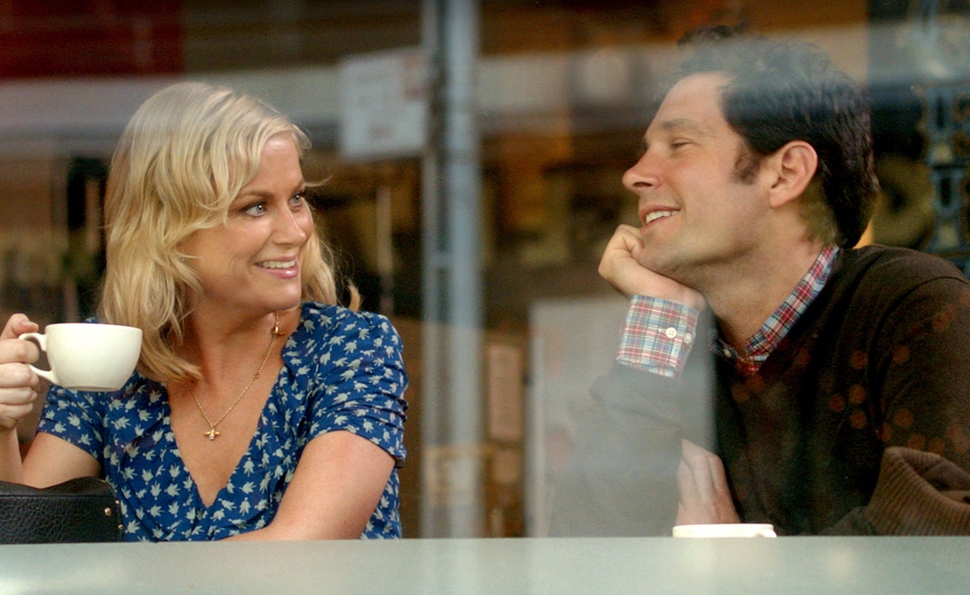
They Came Together, starting with its unassumingly bland title, gets the fluffy genericness of rom-coms right, and it writes that into film’s every detail. Take the way everything is shot: the dull, pleasingly blindingly bright lighting and the carelessly under thought, boring directorial scheme of switching between one shots and two shots. Even the two main characters’ names Joel (Paul Rudd) and Molly (Amy Phoeler) remark upon the under-baked nature of the scripts for the genre – the characters never even receive last names. The couple’s story involve staples of the genre: Joel’s corporate company has designs to put out of business Molly’s candy store (a fantastic commentary on the inane, unlikely professions that often seem to only inhabit rom-coms). From there their close friends hope to set them up but they end up hating one another, but, of course, only to fall for each other. Only then for exceedingly pointless complications to set in, after which they get together. On the margins of the story, a revolving door of supporting players, including friends, siblings, and parents, arrive for one or two scenes to dissect all sorts of tropes from the genre.  

In the broad strokes, it’s every rom-com you’ve ever seen, and the film plays almost everything straight. If you passed this on television, you might be fooled for a while. But the devil is in the details, and They Came Together is constantly, slyly wild and flying off the handle. I’m not an avid watcher of the genre – among cinephile circles the genre has become one of the most poorly regarded and maligned – but I still found myself laughing hysterically. Much of this stems from the film working on another level. Much like Wain and Showalter’s previous effort, the humor comes from a general sense of out of left field silliness.  

But what really elevates the whole effort is how little disdain is shown. The film has affection for the works it’s mocking. It notes the idiocy and laugh at it, but it also kind of loves that idiocy. It’s easy to look down on something as too many spoofs do these days; it is another to make fun of something from a real place of good will and endearment.   

Grade: B

Saturday, July 19, 2014

Review: "The Immigrant"

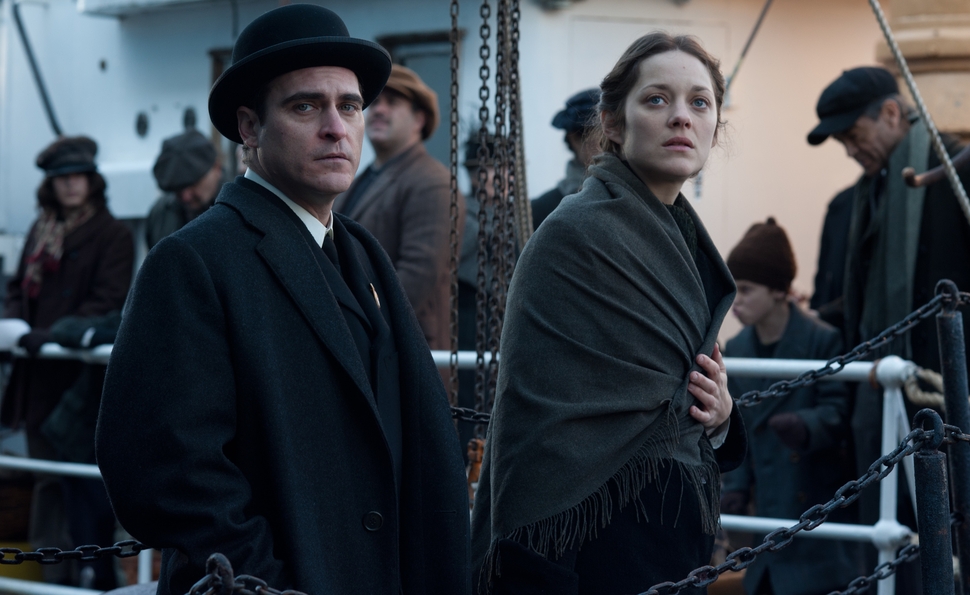
The Immigrant is a transportative film, taking us back to New York City in 1921 with stunningly detailed period piece accuracy. But it also absorbs us through the specificity of its experience; that of a woman fleeing World War I ravaged Poland. Ewa (Marion Cotillard) is an immigrant just off the boat from Ellis Island. Her sister Magda (Angela Sarafyan) is ill with tuberculosis and so the guards won’t allow her to leave and will likely deport her. This is only the beginning of Ewa’s troubles. She learns her aunt and uncle are not there to claim her and apparently the address they have provided her is false.

Some of this is clearly being orchestrated by huckster and small-time pimp Bruno Weiss (Joaquin Phoenix), who’s put upon kindness is a ruse to slowly manipulate her into entering prostitution – all in the name of security and the salvation of her ailing sister. Ewa doesn’t entirely understand this at first though. She is a highly devout Catholic who believes in the fundamental goodness of humanity. This despite the many trying, terrible experiences she will come to face in the days ahead. The film doesn’t paint Ewa as wholly innocent and pure though. Ultimately she is a survivor who is trying to make the best of an awful, desperate situation. 

Bruno brings Ewa back to a tiny apartment that he shares with other women he has eyed at Ellis Island and pulled strings in order to enter his web. The apartment is an excellent work of location scouting and production design. It is exceedingly cramped and worn down, and director James Gray fills out settings like this with carefully chosen period appropriate props and items, general tchotchkes (There is a whole essay to be written just about the film’s costumes. For instance, Bruno’s outfit speaks volumes about how he wants himself to be seen – a classy gentleman – but it always feels ill-fitting). Bruno runs a theater where bawdy burlesque performances are held, and Ewa joins in hopes of saving her sister – she believes she is sending payments for the cost of her sister’s medical treatment. Wealthy men ogle and cat-call at the women, who have learned to take it because they like Ewa have no other options – and that is because Bruno has made certain that is the case. Ewa believes this will be the full extent of her work, but by this point the film has already provided a sense that it is only the first of many small, accumulative tragedies that will fell Ewa. 

Ewa will come to meet Emil (Jeremy Renner), stage name Orlando the Magician, a theater performer who happens to be Bruno’s cousin. Both Bruno and Emil become fond of Ewa, for reasons that are entirely selfish and possessive. The film depicts Emil as a nicer, gentler man, but he is really just the lesser of two evils – an individual as consumed by his flaws and addictions just as much as the more obviously horrible Bruno. While we are always meant to feel a little disgusted by Bruno and his self-serving actions, Phoenix’s performance and James Gray and Ric Menello’s script do wonders to humanize the character; Bruno becomes sadder and more pathetic than initially imaginable. His first appearance is predatory but he is far more pitiable than that initial glimpse would suggest.

Gray and cinematographer Darius Khondji shoot the film like we are seeing dusty, faded photographs, slightly yellowed and greyed. The look of the film is understated, drifting into the background and effortlessly blending together with the story. It creates a sense of authenticity and realism, but it also fosters a dual sense that we are watching something dug up from recent memory. It is deeply evocative of its time and setting without calling too much attention to the incredible pains gone through to achieve period accuracy. Gray and Menello’s script doesn’t overplay the sense of disconnect between present and past mores and values. The film is delicate in its treatment of a cultural environment that looks highly different from our own, subtly noting gaps in beliefs. The most apparent of these come in the form of gender, where the treatment of women and their worth was far more patronizing and demeaning. The film, however, doesn’t pass judgment, rather casually emphasizing these elements to reinforce the complicated nature of Ewa’s circumstances. 

There is no denying the bleakness of the story. Gray doesn’t cut corners in his vision, slowly depicting every last detail of Ewa’s confinement and loss of agency. But in keeping the film’s perspective so fully aligned with Ewa, the film is sensitive and compassionate towards her experience and its desire to understand it. Cotillard’s performance is crucial to our identification. The film’s performances are all really subtle and unshowy (outside of occasional bouts from Phoenix’s manically mannered performance), and the writing downplays and understates a lot of the action. But Cotillard’s beautifully expressive face cues us into every haggard, pained feeling. Ava is a diminutive figure, but Cotillard always cuts through to an inner will and strength fighting to remain in a state of grace and dignity no matter how low she must stoop.  

The film is not directly hopeful. It has the blunt reality of the Italian Neo-Realists, refusing to sugarcoat or flinch away from hard truths and harsh realities. That can, at times, make the film a deeply harrowing film to sit through. Even as Gray demonstrates a gentle, even hand and sensitivity, moments like the first time Ava has to give her body over for money are overwhelmingly horrifying and painful to watch. The film never totally succumbs to being entirely unforgiving however. This is largely due to Ewa’s fragile faith. Her faith is increasingly put to the test, but she remains devout in her belief in God and His design and that God has a reason for testing her and will save her in the end. The Immigrant puts its central character through the ringer and us along with them, but it ultimately doesn’t leave you feeling drained but rather fuller. 

Grade: A-

Thursday, July 17, 2014

Personal Post: "Elaine Stritch: Shoot Me", Stritch's Passing, and My Grandmother

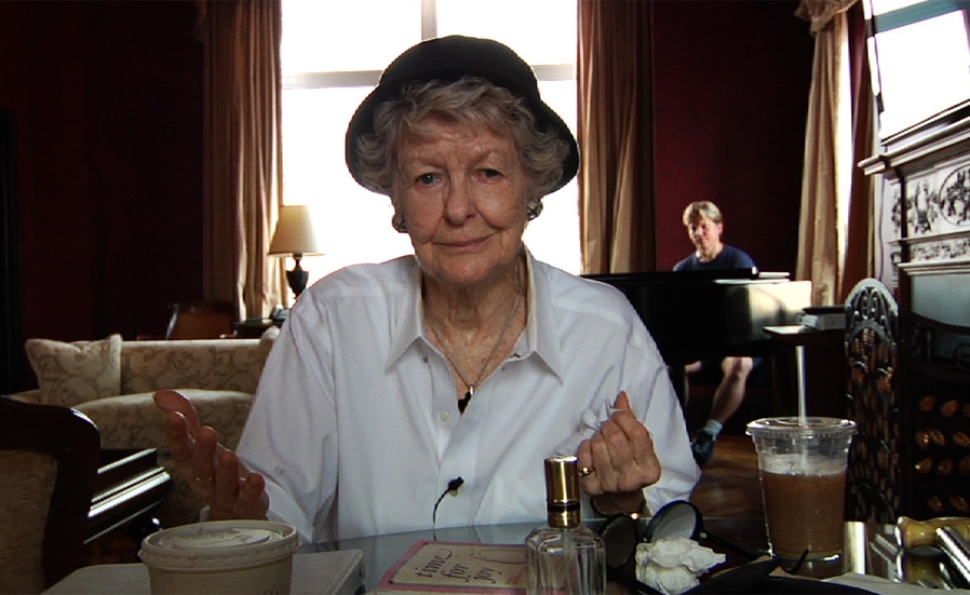
I was planning on viewing and writing about Elaine Stritch: Shoot Me eventually. It sat on a lengthy list of films I needed to catch up on and I kept telling myself, “I’ll get around to it”. And so it ultimately is with a bit of shame and regret that I’m only watching this good film and amiable portrait of the great performer now, upon news of her passing.

It doesn’t feel appropriate to review the film now or to couch it in a conversation of that sort. The film gives us a glimpse of the octogenarian during her 86th year of life and shows how she’s was as ruthlessly feisty and strong-willed as ever. Most performers would have retired long ago, but Stritch was a workaholic, who was as lively and alert as she was due to keeping herself active late in life. She’s a difficult personality – and “personality” is perhaps the most apt descriptor for the eccentric, steely, shit-talking Stritch. The film is largely an entertaining one, bolstered by Stritch’s ability to work an audience. She’s a great camera presence, who can tell a story or joke with effortless candor and sharp wit. She lets it all hang out, and she has no time for bullshit, speaking her mind with a defiant attitude that’s refreshing and alarming in equal measure. But the film doesn’t shy away from showing her flaws. She cursed like a sailor, dropping f-bombs with furious delight, she was egotistical to a fault, and she was a self-justifying alcoholic. The film also shows her insecurities and fears as she moves towards the last days of her life. She is sent to the hospital at one point for a diabetic attack, and from her bed she tearfully confesses how frightened she is. But Stritch has an odd way of putting a spin on it: “fear is exciting, isn’t it?” 

I kept thinking of my own grandmother as I watched. She is eighty years old, and yet so strong – and yet so frail. My grandmother’s fears are growing, and they only make my fears grow alongside them. In quiet, stolen moments, I can see her spark diminish. It’s still there, but it glows a little less brightly with each passing year. She keeps up with housework and occasional outings, and her activeness helps her be stronger than most individuals her age. But she’s painfully aware she has more days behind her than ahead. She has casually, wearily mentioned that she hasn’t got too many years left. I’m forced to do the decent, well-meaning, and regrettably false thing and assuage her fears, rebuking her comments. I know she’s right, but I refuse to let her give into her fears, real as they are – and hard as it is for me to fully relate and understand them. 

My grandmother is also a personality. Few like to spar with her anymore. They treat her as if already delicately in formaldehyde. I have family members who judge me for having heated arguments – often about the most inane, fruitless topics – but I do it for her as much as me. I can see the glimmer, the rare pleasure in her eye as someone takes time out to treat her like the human being and feisty, intractable force she is at heart. 

As Stritch notes, fear is exciting. But it’s also, in the vulgar parlance of Stritch, scary as fuck. But to see your fears and your worries and your concerns reflected in a film is helpful and informative and relieving.

Stritch lived one hell of a life, right up to the – I refuse to say bitter – end. My grandmother has as well – though she still has time.

Tuesday, July 15, 2014

"Life Itself" (2014)

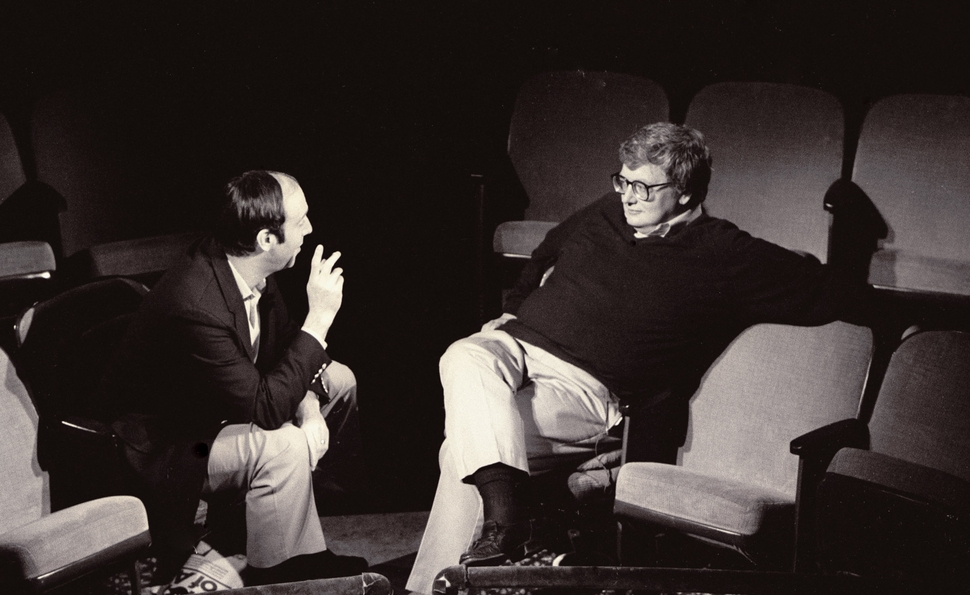
My true film education didn’t begin in earnest until rather late in my junior year of college. I had watched films with some frequency but I was aloof and uncritical. That year I began writing, seriously and extensively, and filling in gaps in my knowledge and realizing just how little I actually knew. I also arrived late at the writing of Chicago Sun-Times film critic Roger Ebert. I was cynical, but once rogerebert.com was formed I caught up on his work and was drawn in by the precision and generosity of his writing, like so many before me were. I now can’t get enough of his writing. I was only just getting into his work when Ebert passed away. I’m sure this is rambly, unnecessary and slightly incoherent, but it’s what crossed my mind as I watched the moving Steve James documentary about Ebert’s life. Life Itself is the sort of film that initiates those kinds of personal reflections as you watch it -- about film, about writing, and about life more generally, and that goes doubly so for anyone passionate about or interested in film.

Life Itself is based on Ebert’s memoir of the same name – passages of which are read by a voice actor passably recreating Ebert’s distinctive Midwestern drawl. The film begins with one of my favorite statements from the writer: “For me, the movies are like a machine that generates empathy. It lets you understand a little bit more about different hopes, aspirations, dreams, and fears. It helps us identify with the people who are sharing this journey with us.” Life Itself is not only empathetic but sympathetic towards its subject. It is affectionate towards and fond of Ebert, but it also never tries to paint him as anything less than human. He was, in the words of one friend, “nice, but not that nice”. He had terrible taste in women prior to meeting his wife Chaz in his early fifties -- the film understandably dedicates a significant amount of time to their relationship – and had an unhealthy obsession with buxom women that led him to briefly write films with skin flick director Russ Meyer. He struggled with alcoholism (We learn that he met his wife at AA; a fact she admits for the first time publically). He could also be quite arrogant and had an incredibly high opinion of himself. This could best be seen in his contentious relationship with fellow critic Gene Siskel, whom he co-hosted the television program Sneak Previews and later At the Movies. 

The film features standard documentary filmmaking on the whole: talking heads are interspersed with old footage and photos. The film’s most remarkable, powerful element was driven by outside circumstances. The film began production prior to Ebert’s death. Ebert insisted James film his time in the hospital leading up to his passing. Ebert tells James at one point, “This is not only your film”, and he helps provide such great, unexpected moments as his G-tube being suctioned out (disgusting but also kind of wonderful). Wearily but understandingly James responds, “It makes for a better story”. And that really is the case, as it turns a solid but familiar biopic into something more resonant and poignant. James cuts back and forth between the past and the present, and the worn down but still vibrant Ebert lying in a hospital bed colors so much of the largely chronological discussion of his life. Friends, colleagues and filmmakers (many whose career he helped launch, including Martin Scorsese, Werner Herzog, Errol Morris, Ramin Bahrani, and Ava DuVernay) warmly re-call Ebert’s life and the film becomes a memorial or elegy. 

The warts-and-all of approach of the film, especially in Ebert’s earlier years, paints him as a good but flawed person. Ebert’s greatest legacy arrived in his final years as he was diagnosed with cancer that took his jaw and his voice. Ebert dug deeper into his writing, utilizing the internet to engage more directly with fans and film lovers. Ebert’s writing become ever more personal, precise and lean in these years and his illness instilled a greater sense of empathy in him. He did his best work during these years. Similarly, the further the film moves along the more generous it becomes. Even his staunchest critics, Richard Corliss and Jonathan Rosenbaum -- who feel Ebert and Siskel devalued criticism and oversimplified the process to a simple thumbs up or thumbs down system (something the film dismisses a little too quickly and easily) – have a deep respect for the man. 

The film is a loving tribute to an important public figure that was influential and meaningful to so many different people who loved watching, and writing and arguing about films. The film is a love story: between Ebert and his wife, between Ebert and Siskel, and between Ebert and film. Ebert used to like to say that a film isn’t about what it’s about but rather how it’s about it. James doesn’t try to earn gravitas or to gloss or gussy up the story. He shoots the film in a direct, reserved way that lets Ebert’s life speak for itself. The film is emotional (I cried at more than one point) but those emotions come from a sincere, inviting portrait of its subject. 

Throughout watching the film I kept thinking of what critic Nathan Rabin wrote from Sundance where the film first screened; Rabin wrote, “Life Itself is a film worthy of Ebert, and that is just about the highest praise it can possibly get.” 

Grade: B+

Monday, July 14, 2014

"Snowpiercer" (2014)

Snowpiercer is director Joon-ho Bong’s first English language feature after four features made in South Korea. Often times when a foreign director makes a film using the larger budgets of a Hollywood studio, their vision doesn’t translate well. This is typically, though not always, due to the studio interfering and taking away a lot of the distinctive flavors that made the director so fascinating to watch and so worthy of backing with more sizable funding. Snowpiercer is a rarity in that nothing has really been lost in translation. But that has been at a price: The film has been a much discussed subject recently as the Weinstein Co. asked for twenty minutes to be cut; eventually due to backlash the film was released as the director intended but by a boutique company, Radius, owned by Weinstein, with a much smaller theatrical output. If you’re going to see it, and you should, you’re probably going to see it on demand (Though you should check out your listings to see if it’s playing nears you, on the off chance it is). The fight might have cost eyes seeing Bong’s vision but that vision -- offbeat, delirious, striking -- deserves to be seen.

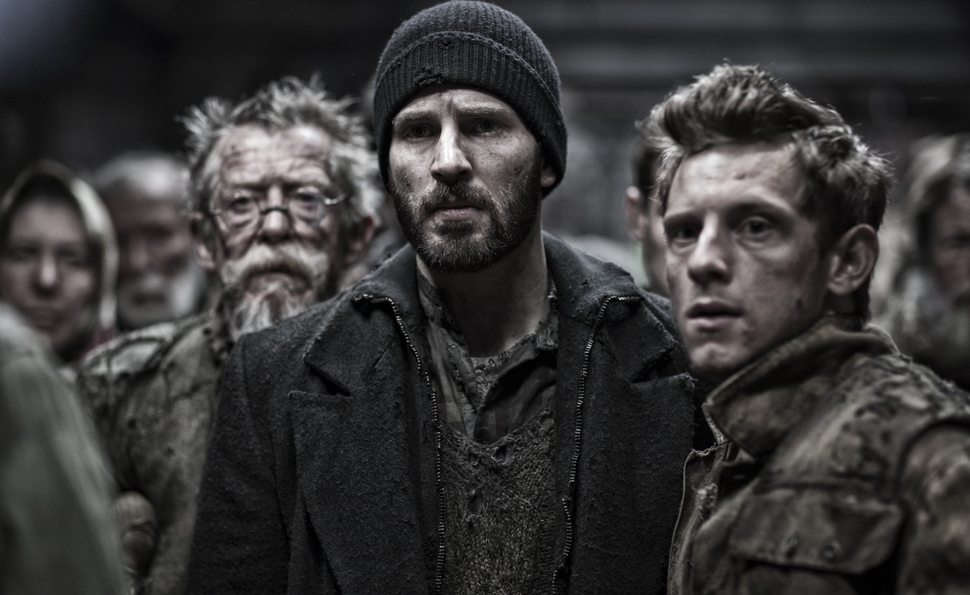
Snowpiercer is a blunt metaphor in the guise of a sharp action thriller. Its plot is almost entirely symbolic of a class struggle, and yet Bong invests it with such an idiosyncratic vitality that it never feels like its beating you over the head with its underlying messages about the broken, entrenched class divide. This begins with its strange, fantastical vision: in a not so distant post-apocalyptic world, spurred on by failures to combat climate change, the remnants of humanity live in the titular train, which protects them from the deadly subzero temperatures that have engulfed the planet; the Snowpiercer circles the planet, completing its journey once a year. The train uses its compartments to literally compartmentalize, placing the haves in the front and the have-nots in the back. 

The members at the back of the train are planning a revolt, headed by none other than Captain America himself, Chris Evans. Revolts have failed in the past, but they are certain it will succeed this time because they know where the tech-savvy creator of the train’s lock systems (Bong regular Song Kang-ho, who uses a nifty translator in order to speak in Korean; he’s joined by a female partner in crime played by Go Ah-sung) is, stowed away in the train’s prison – designed like the filing system of a morgue. A kink is thrown in the plan when it seems like their best bet is a drug addict, hooked on Kronole, what amounts to hardened industrial fuel. Song and Go’s character’s become the film’s soul, finding wonder and beauty in the midst of gripping agony and loss while others fail to stop and appreciate how the world still thrives even in damnation. 

The rest of the cast is rounded out with a murderer’s row of actors, including Octavia Spencer, Jamie Bell, and William Hurt as lower class revolutionaries, and Tilda Swinton as a Margaret Thatcher-like (in deeply unsettlingly conservative politics as much as toadie, toad-like appearance) second in command sent out by the ominously mentioned conductor of the train Mr. Wilford – he seems to have essentially developed a cult of personality through conscientiously deployed propaganda and indoctrination. The film is an international co-production that feels that internationality, boasting a consciously diverse international cast. 

With each new train compartment, Bong comes up with another distinctive setting; the train cars don’t blend together, though there’s a fluid logic to their order. Painstaking set design is put into each so that they all have a personality; crafted with tiny, thoughtful detail. The earlier cars are grimy and dirty, industrial and worn; Bong makes sly distinctions through careful aesthetic choices, such as the way he dresses characters -- the clothing of the upper class figures gratingly pop, and flow with curved angles. As the rebels fight their way up to the front, Bong becomes ever more creative, providing us with cars we might not have anticipated and using them to provide us with tremendous amounts of information about this world’s past and the rationale of the system.    

Bong knows how to choreograph an action sequence and utilizes the tight spaces to add to and enhance the action. There is more than one moment where the rebels enter a new cart facing a crowd of thugs and have to face off because there is simply nowhere else to go but forward. Bong and Kelly Masterson’s script take advantage of this by constantly keeping the story moving forward and never providing a chance for you to question some of the implausibility of all of this. It isn’t necessarily meant to make literal sense but works, instead, in a heightened, florid manner. 

At times, the film is brimming with countless ideas, as if it wasn’t entirely sure it would be able to manage to fit them all in. It never settles to solely be a metaphor but a kickass thriller as well, and a weird sci-fi techno- and ideo-scape. At times, this can be exhausting, and by its end it seems to dare itself to consider one heady conceptual argument too many (It’s both a cynical film and a hopeful one – and that isn’t a contradiction: that middle ground is what makes progress take so damn long). But the film is also invigorating; it is quite unlike anything else, and that makes it delightful and infectious, as if it’s getting away with something a little more audacious than it is. 

Bleak and, at times, bracing as the film’s story is, a dark strand of humor runs throughout ensuring it never spills over into something truly morbid. This comes out in little character details (Swinton and Song really play up their characters to joyous effect) and little bits of absurdism that double down on how unrealistic and bizarre the film’s premise is. The film’s abundance of imagination also helps steer it into more charming and whimsical territory – a number of the carts are little tossed off jokes that leaven things in between the brutal, close quarter fisticuffs. 

The film’s metaphor is transparent, but it’s also subtler than it initially appears to be. It isn’t just about oppression of the poor or the rigidity of the class system. The film is interested in the ways and reasons we maintain such a lousy capitalist system. The ways ideology is translated through generations and the ways those in power ensure that no one rises up, because that wouldn’t benefit them. The way capitalism and consumerism, and their inherent class struggles, have become our religion (The engine and the conductor are referred to in hushed terms of religiosity). The crucial role the education system has in perpetuating problems. The way we ensure that working class people self-police themselves, assuming it’s their own responsibility for circumstances that are systemic. Perhaps the film’s most interesting question is why the system remains in place, why we can’t see outside or beyond it towards a better possible future – people think they’ll be figuratively “left out in the cold” as much as literally.      

Like Bong’s previous efforts (Memories of Murder, The Host, Mother), the director uses genre elements to ask and consider things far more reaching and meaningful than those genres might suggest possible. Bong wants to tell a good, energizing story, but he also seems intent on refusing to settle for simple, or “good enough”. His films are about the failures of societies and families, and especially individuals; people haunted by actions taken and untaken, wishing they could go back to a time before the events of the film. They dig themselves deeper into quagmires (both literal and emotional) of their own making; but they also refuse to allow themselves to be put down and that makes us root for them. They fight to the bitter end, even if that ending might be as bad in its own way as the present situation. What matters is the fighting, whether you’re fighting a lost cause or not – you have to try at least, bullet train in a post-apocalyptic tundra or not.

Grade: A-
Sunday, July 13, 2014

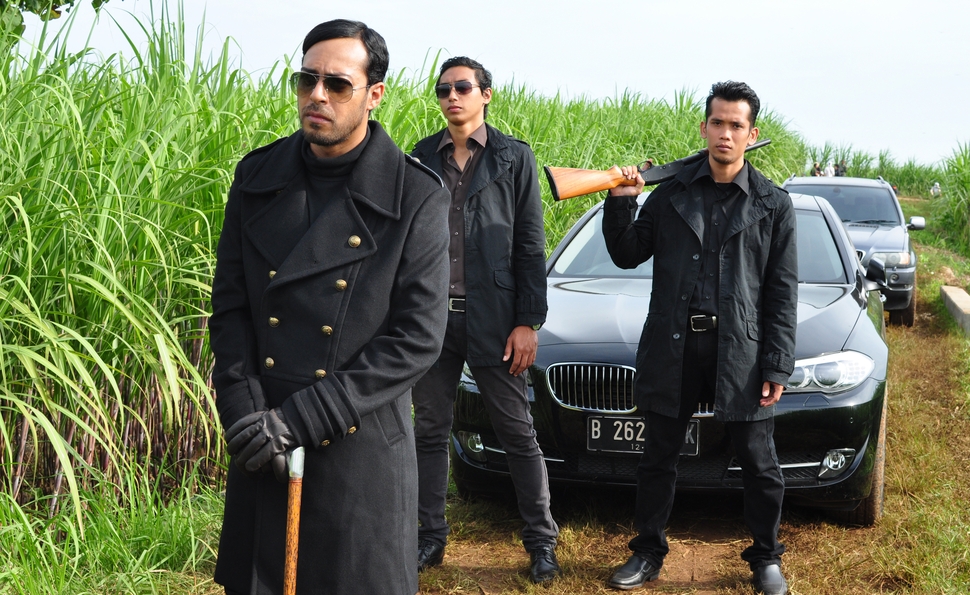
Thoughts on "The Raid 2" (2014)

I watched The Raid 2 prior to going on vacation, and so I was unable to write a full review of it, with the film fresh in my mind. I did, however, want to put out some thoughts about what was a very good film and a very good sequel.

The first Raid is a film that feels easy to dismiss. It’s light on plot or really narrative of any kind. Instead, it’s almost pure “termite art”; a film that is a relentless action-packed thriller, crafting one breathless, mesmerizing action setpiece after another. The film follows a SWAT team in Indonesia attempting to oust a drug kingpin from the apartment high-rise that he has lay claim to as his base of operations. 

The film is essentially an exercise in style and one that’s obsessed with genre elements. Regardless though, it is the kind of expertly crafted, tightly edited and intelligently staged action film – indebted to martial arts films as much as Hong Kong action – that just doesn’t really get made anymore. The Raid has one goal in mind: ninety minutes of neck-breaking, ungodly intense action – all forward motion and no time for a second thought, or breath. 

This sequel has that same desire as well. But it also yearns to be so very much more. It’s insanely ambitious. Compared to the last film, there’s actually a fairly meaty story involving Rama (Iko Uwais), the protagonist of the first film, going undercover to weed out corrupt cops working with the mob. Rama spends two years in prison to earn some cred and befriends Uco (Arifin Putra), the son of a mob boss (Tio Pakusadewo). 

The film still features the first’s riveting action sequences but they’re spread out, punctuating the larger narrative rather than defining it. Where the first was a lean ninety minutes, the sequel is a muscular two and a half hours long. Where the first film used one apartment building as its playground, the sequel uses the city of Jakarta as its stomping grounds. 

The Raid 2 is certainly attempting to go bigger but it truly wants to earn that grander scale. Claustrophobia is exchanged for an operatic vision where Rama’s struggle to maintain his sense of honor while compromising his integrity is part and parcel for the fight of the city – which may or may not already be beyond saving. The themes are still minimal but they’re fuller than they were in the first film, taking the background question of honor and duty (and their ties to masculine identity) and putting them to the forefront. 

None of the first film’s “coolness” has been lost; indeed, it’s even branched out into new areas, adopting some American gangster chic of the past two decades, including Goodfellas and Quentin Tarantino’s films. Some of this style becomes a bit overplayed and needlessly florid at times (i.e. a female assassin who uses only hammers, cuz why the heck not; it looks awesome!!). But more often than not, the film nicely matches its heightened criminality to its Spartan fighting and violence; and it’s every bit as exhilarating as the first film, if not more so. 

In a lot of ways, the film outmatches its predecessor by reaching to be so much more. The Raid 2 could have just given us more of the same and that likely would have been acceptable and entertaining for fans of the first. Instead, it challenges itself to be better – and it largely succeeds. It may slag in places – it comes to a halt in places where it needs to refuel the tank to build up to another action sequence -- but its shortcomings seem to come from a place of trying to be better and do more, and occasionally, understandably, missing the mark.  

Tuesday, July 1, 2014

"Jersey Boys" (2014)

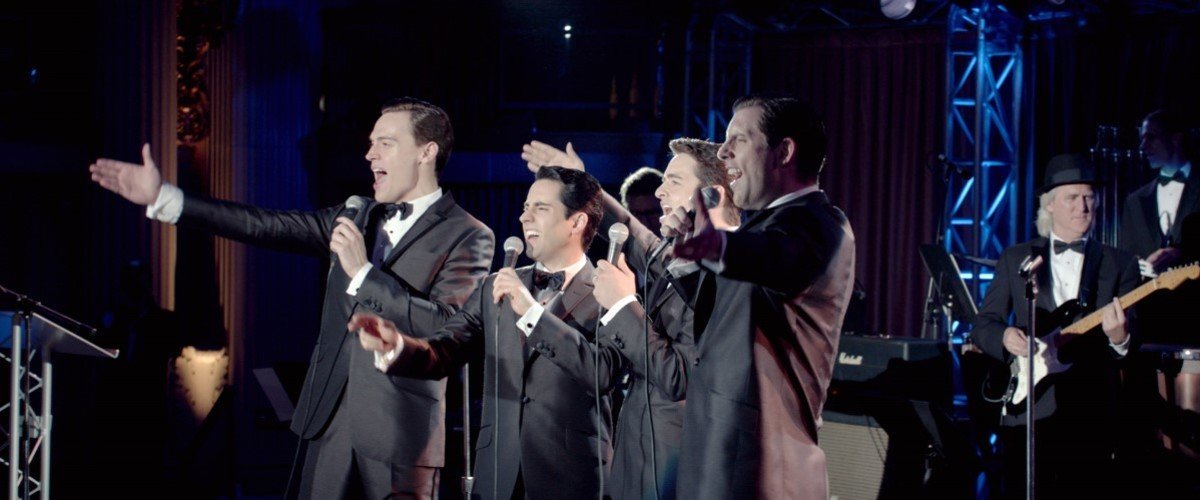
Jersey Boys is adapted from the Tony Award winning Broadway musical, based on the life and music of Frankie Valli and the other members of The Four Seasons. But though it’s based on a musical, like Ray and Walk the Line, it feels less a musical than a biopic that just happens to be about a group of musical talents.

The film muddles around half-heartedly in stories revolving around the band’s rise to fame and then the consequences of that fame, starting in 1951, but the film has no sense for modulating the different periods in the lives and careers of its subjects. An inordinate amount of time is spent on Frankie Valli (John Lloyd Young), Nick Massi (Michael Lomenda), and Tommy DeVito (Vincent Piazza) doing odd jobs for the New Jersey mafia while they sweat it out in local night clubs hoping to strike big. Eventually the fourth member of the quartet Bob Gaudio (Erich Bergen), the composer of most of the band’s music, is introduced and he helps cut a record deal. But this isn’t before the film extensively soaks up Jersey Italian mafia culture that’s reminiscent of The Sopranos, even featuring some alum from that series. The film’s nearly two and a half hour run time never once feels justified, instead allowing for all sorts of questionable digressions that take away from the film’s raison d’ĂȘtre: the music.  

And even when the film does remember that it’s partially a musical based on one of Broadway’s most successful shows, the musical moments feel as blandly and disinterestedly shot as everything else. Despite bringing back the stars featured in the musical to reprise their roles -- crucial especially in the case of Valli’s falsetto -- the music just isn’t filmed with enough care or visual panache to come alive like it surely did in the stage adaptation. This isn’t helped by the singers not looking at all like the ages of the people they’re playing – they’re all far, far too old -- or that none of them have a really strong screen presence. They shoot awkwardly in front of the camera, incapable of commanding your attention or handling a lot of the dramatic material. 

Marshall Brickman and Rick Elice’s script fumblingly maintains the Rashomon style narration from the play of the characters randomly talking directly to audience. But there’s simply no good, logical justification for this fourth wall breaking -- especially since outside of Frankie the film has such minimal interest in the group’s members (Frankie is the only one who we see the family life of, and even then it’s such an underwritten element that it often comes off like a vestige of a very early draft).

The screenplay is also girded by a casual misogyny, as the film too often uncomfortably aligns and agrees with the central foursome’s questionable, narcissistic, retrograde view of women. The film is a Conservative one, in love with fast cars, a smooth glass of a scotch, and a woman who cares for the kids and pleases her man. It’s a man’s man film, built on a classical sense of manhood and masculinity. The film doesn’t quite grasp how odious this is – even when Frankie’s daughter dies late in the film due to his selfish, arrogant machismo, the rotten, deluded enterprise is maintained and the incongruity is missed. 

Clint Eastwood’s directorial choices are largely at odds with the story he is filming. The film is shot like it’s filtered through a grey, faded prism that provides a sense that this is a period piece but also adds to the feeling of colorlessness that abounds in so many other areas of the film. The most recent film Jersey Boy’s storytelling and directorial choices are reminiscent of oddly enough is The Amazing Spider-Man 2. Both film feel like they were slapped together with the minimal required effort, and their plots move forward with a slow, plodding indifference. They’re overlong, bloated, and mechanically orchestrated. It’s a Cinema of Auto-Pilot.

Grade: D+