Wednesday, June 25, 2014

"Under the Skin" (2014)

Science fiction has always been one of the more contemplative genres. It uses cool visions to explore big, meaningful ideas. It can also be a genre that isn’t the most inviting; if you’re unable to get on its particular wavelength, it can be alienating. This is truest for the most abstract visions, your 2001: A Space Odyssey’s and Primer’s, which refuse to explain themselves and increasingly become impenetrable.

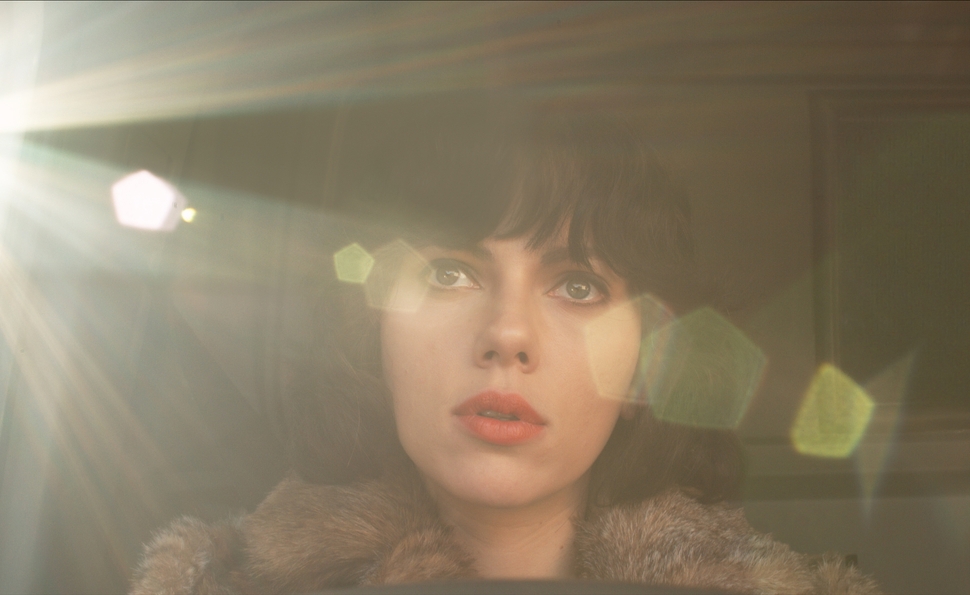
Under the Skin is a film that provides more questions than answers. The film tells its story with almost no hand holding. It is inscrutable and features an inscrutable protagonist, played by Scarlett Johansson, who goes unnamed. We’re given clues as to who she, her motives and what she’s doing. But we’re primarily left with a sense of vexing mystery. What is clear is that she’s some sort of alien, and that she is pretending to be a human and preying on unsuspecting people along the coastline of Scotland. 

The film tends to act more like an art-house film than a science fiction one. The sci-fi elements are understated. The interior of a lair where men are brought back to be devoured is portrayed as totally black, with sleek reflections indicating the floor – like the bedroom towards the end of 2001 it seems to exist outside of reality itself. The woman’s arrival to earth is told through shapes and lines and some voiceover indicating the English language being learned. The film loves its geometric designs and uses them towards a form of storytelling that is almost entirely visual; expository dialogue is almost non-existent and important details are provided in clipped, thrown-away moments.

The film primarily follows Johansson around in a white van, the kind so often associated with sexual predators, and the film lays out the woman’s actions as predatory and sexually latent. We witness her pretend to be in need of directions in hopes of luring men into her van, and then she seduces some of them – though she fails with a few. For the men she is successful with, many of whom are desperate and a little miserable, including one man with a severe facial disfigurement she seems to take pity on, she suggestively stripteases as they walk to their doom. The floor of the building she takes her victims back to slowly absorbs the men into a viscous black fluid. 

She isn’t human but she becomes increasingly interested in questions related to the human condition and slowly seems to desire to be a human. She’s playing at being human and appears almost human but the seams show. There’s a child-like wonder and uncertainty to her; she has knowledge of the world she moves through but it’s impractical for truly making sense of it. She begins to feel more human and tries to embrace that new side of herself even as she can never be fully human.

Jonathan Glazer’s direction and Walter Campbell and Glazer’s script keep drawing connections between the alien seductress and the lonely souls she hunts. “Are you alone?” she asks on more than one occasion, and the question more often than not applies to her as well. She lives a solitary life, and there is a sadness and longing underneath the surface of Johansson’s performance. She looks in the mirror in two separate moments late in the film and there is a look of unbearable loneliness and self-loathing in the reflection gazing back. 

Glazer and cinematographer Daniel Landin shoot the film with a sensuous moodiness. Single, muted colors often dominate: red, green, yellow, black, white – overwhelming the screen and adding to the elegiac tone. Mica Levi’s score is a minimalist piece of electronica that amplifies the sense of isolation and the desperate longing for connection. She appears to want to connect but keeps being done in by her essential nature.

Johanne Burn’s exquisite sound design is crucial to the film’s overall effect. The film mostly spends time occupying the headspace of the main character and trying to understand what drives her. Burn’s helps create the headspace of the character by emphasizing the sounds, the endless chatter, the diegetic music, of the environment and how they seem to fascinate and engulf her. 

Steven Noble’s costume design for Johansson is fantastic. She wears a bright pink top underneath a gaudy brown fur coat with green tiger striped, tight pants; Johansson sports short, jet-black hair and is constantly applying bright red lipstick. The effect is one that turns her into something alien, other and utterly distinctive. Even when shot from a distance -- as she is, in some instances, with extreme long shots -- the character is immediately recognizable. 

Glazer uses Johansson’s body and image like a prop. She’s another piece of the landscape, like the beautiful, grey-skied, windswept shores of Scotland, as alluring and captivating but hard to reach as the story she’s at the center of. 

As elliptical and enigmatic as Under the Skin is, it isn’t completely cryptic. It is apparent that the film is reaching for some thematic truth and relevancy, but it achieves it from oblique and indirect angles. The film just doesn’t feel the need to unnecessarily underline every point it’s attempting to make. 

For instance, there are repeated examinations of gender roles and body issues. An early scene finds the character going to a women’s clothing store to listen in on women’s thoughts on appearances and fashion. Glazer cuts amongst multiple women putting on makeup and trying on clothes. She’s learning the expectations of women and about what outward image will best suit her task of hunting men. But there’s also a sly, subtle commentary about gender. The occasions where she stares into mirror find her judging her self-worth and appearances, like society so frequently does to women. The scenes where she takes her victims are calibrated to undermine the male gaze; she’s in various states of undress but she has the power and controls how she is viewed. 

The film, even at its most illusory, creates something intended as experiential, like last year’s gorgeously elusive Upstream Color. Under the Skin’s pleasures are not solely its puzzles but the sensory quality to the film. There is wisdom to be found and the film creates a space in which to ponder its deeper meanings, if any. It’s an odd, jagged character study, but it also acts as a mood piece, enveloping you rapturously in its melancholy contours. 

Grade: A

Monday, June 23, 2014

"22 Jump Street" (2014)

Sequels are inherently tricky to make. Take away too much of what made the first film tick and you may lose interested audiences, but create a film that does too much of the same and you’ll leave most people slightly disappointed. Sequels, which are partly what 22 Jump Street is consciously in conversation with, typically double down on what made their predecessors successful; more is more. They mostly fall flat but some stalwarts admirably collapse under their burden, and that’s largely the case with 22 Jump Street.  

The dynamic writing-directing duo Phil Lord and Christopher Miller return to helm the film. Lord and Miller have auspiciously proven themselves capable of producing high quality mainstream films, and from highly disreputable, seemingly unadaptable properties. Their films, whether it’s Cloudy with a Chance of Meatballs or The Lego Movie, sparkle with personality and wit, and they feature clever, smartly written stories. 

More importantly, in the instance of 22 Jump Street, these films are movie-movies, self-conscious of their existence as a movie. This meta-exercise was teased out to an extent in 21 Jump Street and it reached its zenith in The Lego Movie, and it’s written all over 22 Jump Streets’ DNA. Lord and Miller constantly poke fun at the inanity of this sequel’s existence and the pitfalls and pratfalls that happen more generally time and again in second films. 

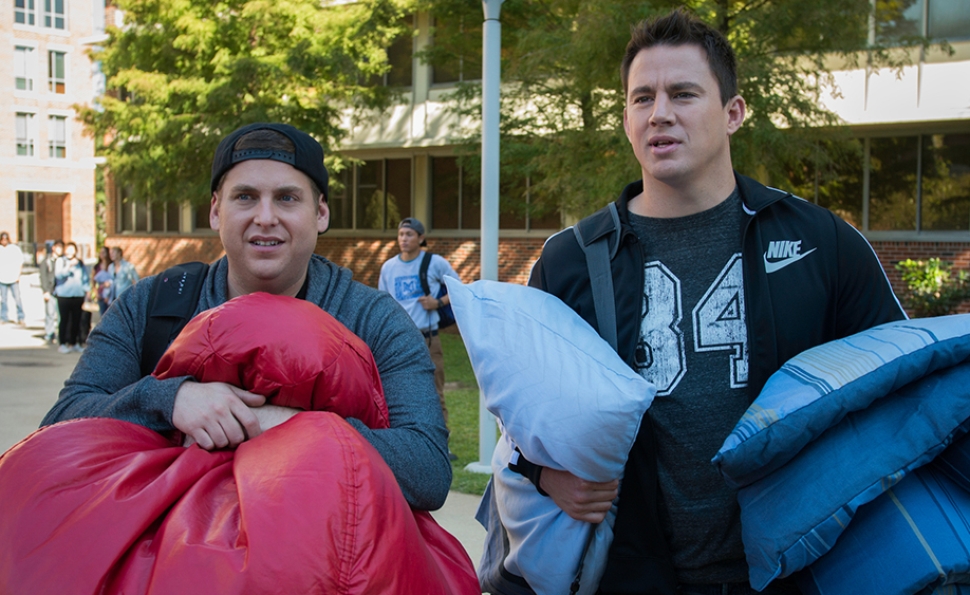
The problem here is that the film falls for the very issues it makes light of. “Give them more of the same,” a weary police chief tells best buds and police partners Morton Schmidt (Jonah Hill) and Greg Jenko (Channing Tatum) early in the film, and the film proceeds to do mostly that. The film acknowledges the tropes, as if subversively, before playing to those tropes.

But even if Schmidt and Jenko are loose cannon cops who do play by the rules, 22 Jump Street retains much of the humor of the first film. There are diminishing returns, but the film remains funny by accepting that it is a sequel and thus unlikely to top itself, hard as it does try. 

Rather than being sent to high school like in the first film, Schmidt and Jenko are sent undercover at a college to bust a drug ring of Adderall-heavy drugs called why-phy (pronounced wi-fi) by Capt. Dickson (a more widely and effectively used Ice Cube). The partnership and friendship is once again strained and tested, and the film has fun joking about the two being what amounts to an old married, gay couple, including a great "couples therapy" scene and a hilarious women and gender studies-inspired put down of the word “faggot”. 

There are Apatow-ian fundamentals of storytelling here: it's a story of male homosocial bonds that reaffirms the value and importance of those relationships. Schmidt and Jenko’s relationship is that of the bromance variety, and the film examines what drives and gives strength to the bonds of male friendships, especially codependent ones like theirs. As Richard Lawson notes, “But clearly the ‘aren’t sequels dumb’ action-comedy framework of ‘22 Jump Street’ is just a cover for these two fine actors to investigate a particularly close bond between two men.” The film is laden with jokes about the homoeroticism inherent to the action genre and stays just on the right side of not falling into the homophobic traps of the films it mocks. 

Schmidt starts dating Maya (Amber Stevens) who lives across the hall from the deceased woman who sparked the investigation, and she turns out to be more than she appears on the surface -- in a twist that is brilliant and hilarious and that is too good to spoil here. Jenko befriends a quarterback (Wyatt Russell), with possible ties to the drug trade, and the dude seems to be a blonde-haired doppelganger, as airheaded and puppy dog enthusiastic as Jenko.

The case is almost beside the point though (it hits the same storytelling beats as the case from the first film, a fact that doesn’t go unnoted); this is first and foremost a mismatched buddy cop comedy that derives its entertainment value primarily from letting its two talented, funny leads riff off one another and on the increasingly absurd situations they are in. While Hill has long been known to have comedic chops, Tatum again proves himself hysterical by playing up vapid idiocy.  

Calling attention to the ways sequels conspicuously fail to live up to expectations due to quality control and profit motives only takes the film so far. 22 Jump Street is brazen about its disregard for being anything other than an exercise in navel-gazing-heavy deconstruction, at times to a fault. It’s a movie that knows it’s a movie, that's aware of the fault-lines of the films it mocks and caricatures, and then does everything it claims it’s a tiny bit above. The shtick is amusing for a while but it wears thin – then again, it’s aware that it wears thin, right?

Grade: B

Sunday, June 22, 2014

"The Grand Budapest Hotel" (2014)

Wes Anderson’s script for The Grand Budapest Hotel is based on the writings of the Austrian author Stefan Zweig. Zweig fled from the Nazis and in exile fondly remembered and yearned for Vienna. But more specifically, Zweig pined for the Vienna of his youth, a decadent, flourishing, old world culture that had peaked. Anderson’s sensibilities as a filmmaker have always tended toward the melancholy and a sadness tinged by regret for and longing for a honey-dewed past; his sensibilities nicely align with the ache of Zweig’s work. Zweig’s writing was elegant and refined but contained an unrelenting somberness, and similarly Anderson traps deep glum in tightly, perfectly crafted dollhouses.

The Grand Budapest Hotel is possibly Anderson’s most mannered film to date -- and that's saying something for the notoriously meticulous auteur. It’s written within an inch of its life, but it never feels overwritten. The film is fleet, clocking in at an hour and thirty-nine minutes, but like Anderson’ other films, it’s also dense, rich with detail in every frame. 

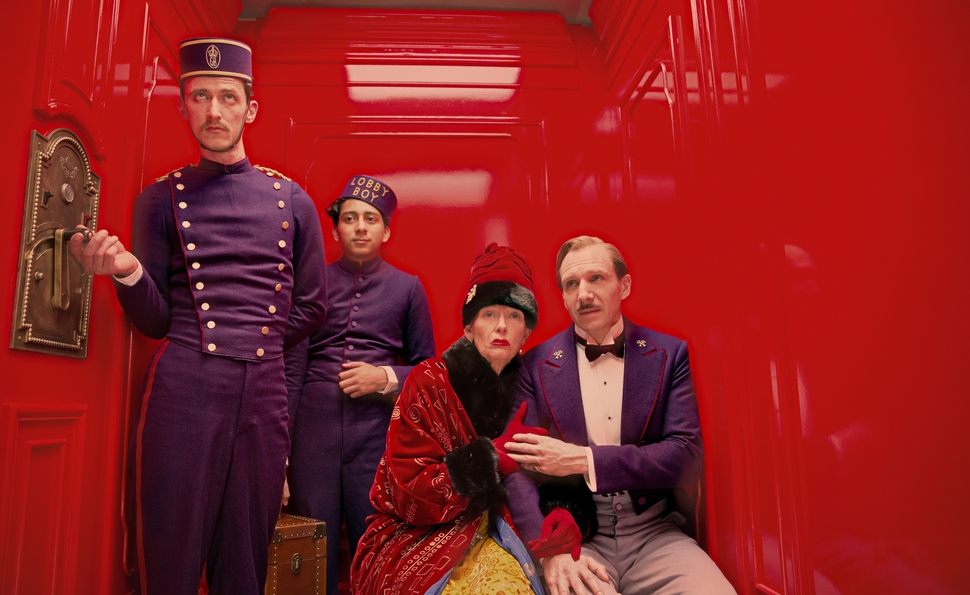
The hotel is another diorama like the submarine in Life Aquatic. The film is designed like it's constantly situated in a proscenium; everything is framed immaculately as ever. More than ever Anderson’s film seems to not take place in reality but in a heightened dream state. The film is shot with a confectionery color-palette and feels like a child’s daydream gone sour. The hotel (fictional and set in a fictional place) feels like it exists outside of time and space. It’s a hodgepodge of European nationalities and sensibilities, especially aristocratic and bourgeoisie ones.

While the film still has the feel of being a “Wes Anderson movie”, the film feels distinguished from Anderson’s past efforts. Anderson calls upon his usual film nerd creds (Richard Lester, Orson Welles), but he expands them here, drawing on sources from a wider range. It’s certainly Anderson’s most European film. Beyond its Old European sense of nobility and gentility, there is the subtle insinuation of Max Ophuls and Ernst Lubitsch, among others. 

The film is set in the fictional country of Zubrowka, a possible nod to the Marx Brothers’ classic Duck Soup about fictional warring countries Freedonia and Sylvania. Anderson also borrows the comic anarchy of that film; this might be his goofiest film yet. But it’s also his saddest. The misfortunates of his characters are matched by the misery of a dying world and dying culture. Fin-de-Siècle was brilliant but brief; it burned fast and bright and the hotel is a remnant of a bygone era. 

The film has multiple framing devices; it involves multiple individuals recalling the past wistfully and nostalgically. In the present day, a young, bookish girl approaches a monument to an unnamed author and begins reading from his book. The Author (Tom Wilkinson as an old man, and Jude Law as a young man) has written about the titular hotel, and the older version, in the 1980's, recounts how the younger version learned of the hotel’s story in 1968. But most of the story is told by the elderly Zero Moustafa (F. Murray Abraham). In 1932 the younger Zero (Tony Revolori) worked as a bellhop at the hotel where he became a friend and confidant with Monsieur Gustave (Ralph Fiennes), the ranking member of the staff. 

It is a nostalgia-ception, but it’s also more meaningful than that. It’s about the underlying sadness and bitterness that drives nostalgia and remembering the past. It’s also about shared experiences and emotions that translate through the decades. 

The plot is exasperatingly intricate and moves with a sugar-high forward drive. Gustave befriended a wealthy patron of the hotel Madame D. (Tilda Swinton) and the Madame died under suspicious circumstances. She wished to leave her most valuable possession to Gustave, a painting called Boy with Apple. The Madame’s son Dmitri (Adrien Brody) refuses to have what he sees as rightfully his go to some hotel manager.

Gustave is denied the painting so he steals it and hides it in the safe of the hotel. Dmitri sends his personal hit-man J.G. Jopling (Willem Dafoe) to kill Gustave. Gustave ends up in prison for the Madame’s murder. At a certain point during all this, Gustave makes Zero his heir and Zero falls in love with and becomes engaged to the baker girl Agatha (Saoirse Ronan). Farcical shenanigans ensue involving a prison break and a heist plan to recover the painting. 

Throughout Anderson shoots the film like a storybook. Establishing shots have the quality of a pop-up book, perhaps more than any of Anderson’s previous oeuvre; locations often resemble the animated designs of The Fantastic Mr. Fox, like carefully molded paper-mache and hand-crafted animation. The story is narrated with a disarming, charming simplicity but Anderson consistently counters it by packing every frame with throwaway details that hint at something deeper and wounded beneath what’s outwardly wacky. 

It’s simultaneously Anderson’s most immature and mature film. Its plot is the stuff of cartoons. But it’s intellectualized silliness. Like so many of Anderson’s other films, it’s about grown men acting like kids and kids acting like grownups and arrested development reigning supreme. 

Anderson’s plotting and storytelling have never been more precise; it’s economical and completely without waste. It’s his most elaborate, long-spanning narrative but he refuses to expand it beyond his pleasant ninety-minutes or less storytelling mode. This could have been told in two or three hours, but it would have felt protracted and indulgent. Instead, Anderson has made another short film that doesn’t feel slight but full.

This may be Anderson’s most classical film. It has the style and content of an old Hollywood studio movie, as filtered through a subversive lens. Anderson is drawing upon a very specific subset of film, going back to 1932’s Grand Hotel, about capers and antics being had at fancy hotels, often in Europe. But like Grand Hotel, there is something more resonant to the colorful story, which ends with a cloud of sadness hanging over the proceedings. But that’s what nostalgia is: taking pleasure in things that have long since died and faded from memory. 

Grade: A

Thursday, June 19, 2014

"Trust Me" (2014)

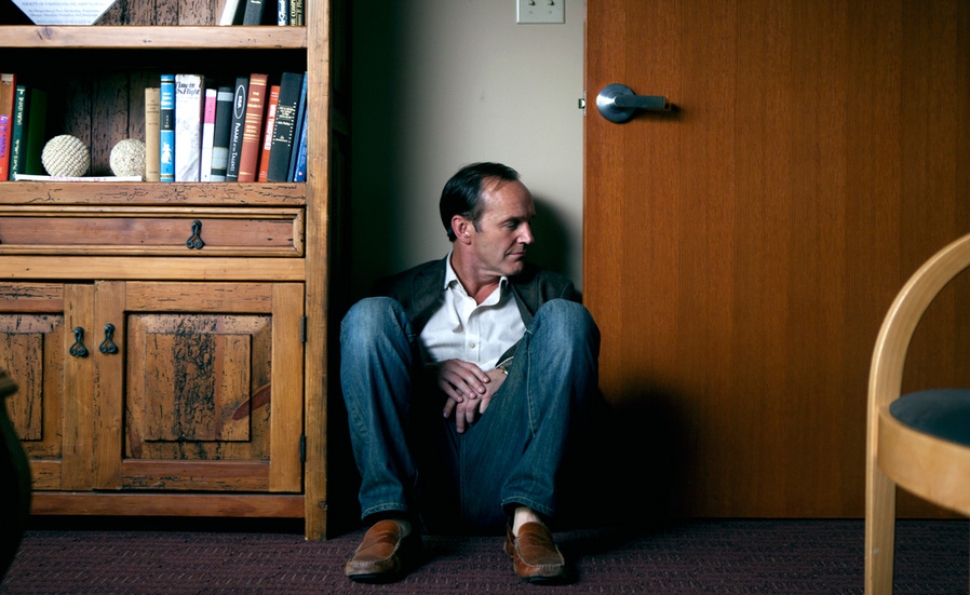
Clark Gregg doesn't look like a leading man. He’s likable but he has the appearance of someone Hollywood would prefer to have in a supporting role. He’s bookish, like a nice middle school teacher or an understanding uncle. It shouldn’t be entirely hard to see why Gregg wrote and directed a vehicle, the jaded, smirking dramady Trust Me, for himself then.

Gregg plays to the nice guy image he’s cultivated. Here he plays Howard Holloway, a former child star turned agent for child stars, who is barely scraping the bottom of the barrel in the cut-throat world of Hollywood. Gregg splits Howard between nebbish sensitivity and desperate bastardom. It’s not a flawed characterization though. Howard is fighting to retain nothing short of what little remains of his dignity, not to mention his soul, as he degrades himself to strike it big. Howard is failing hard and if he doesn’t catch a break soon he’s going to bottom out. 

Gregg’s vision of Hollywood is a traditionally seedy one and he deploys a vocal, but vague, satire reminiscent of The Player (In this regard, and that of its mismatched pairing of stifled middle-age man and loquacious adolescent, it also feels like God Bless America). It’s pleasant but also jagged insider baseball not without cute passing references to well-known stars but Gregg is scathing in his criticism of how soulless the industry has become and how it is at its worst when attempting to create the next young starlet.  

Howard’s greatest struggle comes when he encounters the astoundingly talented young actress Lydia (a very promising Saxon Sharbino), a smart, precocious thirteen year old in need of a new agent. Howard and Lydia are established as kindred spirits; she’s in the same child acting complex that wrecked Howard, and he’s the proper father figure lacking in her life. Her actual father Ray (Paul Sparks) is an alcoholic who constantly seems poised to ruin any opportunity for success Lydia might have. Casting matters and Sharbino is tremendously effective here; her hyper-intelligent, impossibly sharp dialogue is too precious and unrealistic but Sharbino is convincing and shades it all with a melancholy suggestive of experience beyond her years.  

Some of Gregg’s plotting comes a little too easy. Lydia immediately stumbles into a chance for remarkable success in a major studio franchise (a vampire period piece based on a book series -- Gregg’s jabs aren’t always subtle but they’re pointed and amusing); what should probably require months to occur takes place over just a few days. The lightness of plotting and development feels fine when the film is a simple satire but it becomes more problematic as the film enters more dramatic territory. Some of the third acts twists threaten to derail the film as they’re bracingly dark and uncarefully advanced. Howard is essentially given a choice between making a success of himself or to give it up to protect Lydia (while in the process destroying her chances for success). 

Trust Me is at its best when its showing how desperate and pathetic the industry is and how it inevitably chews you up one way or another. It’s an abattoir killing innocence and the so-called “nice guys” who try to remain good people in spite of the immoral abyss. That leads the film to embrace its blackly cynical perspective and take it to its logical conclusion. But it also feels oddly unearned; the film is simply too thinly and broadly conceived to carry the heft of some of its later developments.

Trust Me has ambitions far exceeding its modest budget. The film never seems to have the ability to portray this world in full and earnest. Locations stand in for a bigger, more complicated world and the script is thin at filling out the machinations or politics of the industry. Its critiques occasionally feel like they’re grasping as a result. That said, Gregg doesn’t hold back punches and despite how questionably breezy it occasionally is (including a grafted on romantic subplot featuring neighbor Amanda Peet), Gregg allows the sickly bile and ugliness of his dark vision to unpleasantly roil up for not only comedic effect but occasionally disconcerting dramatic ones as well. It’s undercooked and, ultimately, underwhelming but Trust Me’s vitriolic heart is in the right place.     

Grade: B-

Tuesday, June 17, 2014

"Enemy" (2014)


A fair amount of critical judgment of director Denis Villeneuve’s Prisoners seemed to regard the film as handsomely mounted but ultimately a little hollow. I think some of that criticism is misplaced, failing to accept Prisoners as an uncommonly well-made and involving mainstream thriller despite how unoriginal, and occasionally thin, it may have been. In fact, most of the criticisms aimed at Prisoners would be better pointed at Villeneuve’s follow-up feature Enemy.

Enemy has similar immediate surficial pleasures, boasting some great cinematography by Nicolas Bolduc. But where Roger Deakin’s cinematography for Prisoners was unmistakably inviting, Bolduc’s cinematography, while not without its allure, is shot through with a sickly yellow glow. The film’s outward appearances hint at something sinister but it rarely actually manifests. It remains a quiet, anxious hum just beneath the surface of the film’s story. 

This isn’t to say that Enemy’s story isn’t without its unsettling peculiarity. The film’s central premise involves meek professor Adam Bell (Jake Gyllenhaal) discovering the existence of a man, the confident actor Anthony St. Claire (Gyllenhaal), who looks exactly like him (This after coincidentally renting one of the movies he’s all but a glorified extra in). Javier Gullón’s script keeps dancing right up to the line of explaining the reasons for their identical looks, suggesting there’s some malicious or strange explanation for it. But we never receive answers and the film slowly falls off a cliff into convoluted abstraction. 

This has been a banner year for doppelgängers, including Muppets Most Wanted and Richard Ayoade’s oddly similar sounding but superior The Double. The Double also features a man, played by Jesse Eisenberg, meeting another man who is precisely the same except for drastically different personalities. Unlike The Double though, Enemy never uses the doppelgänger angle to instill the film with any greater meaning. There’s a literary tact in The Double where the yin-yang of mirrored individuals becomes symbolic of the main character’s internal desires and frustrations. Enemy, by contrast, merely uses it for total weirdness and disappointing, one-note psychosexual nonsense. 

Enemy makes grasps for weighted meaning. Villeneuve’s shoots the film elliptically and has the film fold in on itself. The film pretentiously opens with the epigraph “Chaos is order yet undeciphered”. Early scenes feature Adam, in all too obvious thematic exposition, lecturing to his class about control and repetition (featuring casual references to the Roman Empire and Karl Marx as if it’s all so very deep), and it’s all intended to imply greater substance. The film doesn’t follow through on these themes with enough care or interest for them to feel like they matter though. 

Again as in Prisoners, Gyllenhaal gives a performance stronger than the film he’s in. Gyllenhaal imbues his characters with small gestures that make Adam and Anthony feel like two distinguished and recognizable people. Notice the way he delivers his lines as Adam, stumbling, constantly doubting; this is a man who is uncertain of every tiny thing he does. He falls over his words and chokes on his own over-heated mind. The other performers are given hardly anything to do. Melanie Laurent and Sarah Gadon star as the romantic partners of the two leads. Little is done to characterize them. They’re presences, not people. 

The film splits its storytelling modes between a straightforward thriller narrative and a trippy arthouse oddity. The further it moves along though, the more the film flows with the logic of a dream. Haunting, disturbing imagery presents itself and is then never explained. There is a reoccurring image of a tarantula; at one point it seems poised to destroy the city of Toronto, where the film is set. The gonzo final scene of the film, which I won’t reveal, is as baffling as it is unnerving. It’s hard to tell how much of what we see is actually happening (at one point, a character even asks, “What is happening?”). 

In case you couldn’t already guess where this was headed: Adam and Anthony’s live start to bleed into one another. Anthony becomes interested in taking advantage of the situation for personal gain, while Adam is reluctant. It’s hard to get invested though. Beguiling surfaces aside, Enemy is pointlessly dark and obscure and it is hard to get too committed to it. Yet it’s not elusive but evasive, failing to follow through on the story it informed us it intended to tell and only half-heartedly telling what it does at that. 

Grade: C

Sunday, June 15, 2014

Game of Thrones: "The Children"

 ** Spoilers Follow: **

The Red Wedding is widely agreed to be (and rightfully so) the greatest thing George R.R. Martin has ever, and probably will ever, write. Good as the books after A Storm of Swords (which is, for the most part, what was being adapted this season) are, they pale in comparison and they seem desperate to try re-create the breathless set of developments that made their predecessors so good.

Yet a post-Red Wedding Game of Thrones has felt oddly invigorated in some ways. I’m of the opinion that creators David Benioff and D.B. Weiss were being incredibly delicate towards their adaptation of the books pre-Red Wedding, and now they’ve been freed up to be much more fast and loose with telling the story. Fans are far less concerned with how some of this later material is handled, and we’ve seen much more liberties taken this season than in any other season. 

This hasn’t always worked. There have been loose plot threads and wheel spinning – the show still isn’t entirely comfortable being centerless and some characters it doesn’t have a clue how to handle. But more often than not it’s felt like we’re Arya setting off onto the horizon. The future is uncertain but it sure looks pretty darn good. 

I gave a fair amount of praise to last week’s episode, and I seemed to be critically in the minority. Yes, it was an episode that was pretty low on good storytelling. But it was peerless technical craft and spectacle. Sure I should be knocking it a few grades down, but then I think of how this show is first and foremost a delivery system for entertainment and it was way too much sheer pleasure to get too cranky.

That being said, this finale “The Children” is a reminder of the ways in which Game of Thrones’ unique weekly storytelling modes can be really advantageous. 

For all its lack of colossal battles, “The Children” nicely wrapped up a number of ongoing stories while looking ahead to the future. It was also a reminder that sometimes limiting our exposure to some characters and locations can be highly dissatisfying and restricting. (Oh, how I’ve missed so many of these familiar faces in the one week’s absence). 

It’s a busy episode that manages to never feel overcrowded. A few characters are missing (Sansa, Theon) but we end up stopping in on mostly everyone. And not only that, but the episode also ties together these stories with precision and cohesion. 

The theme is subtle and just beneath the surface (suggested, but not overstated), and hinted at by the episode’s title. It could easily be referring to so many different things. The most obvious place is the place it appears literally in the episode; Bran, Meera and Hodor (RIP Jojen) meet a small individual who says that men used to call them “children”. This is one of the Children of the Forest, a group of people who were the first of inhabitants of Westeros before men arrived. It’s a part of the evermore complicated mythology of the show. 

Children could just as easily refer to the Starks who have been scattered to the winds, and here we see accomplish major goals long in the making. Jon (who even brings up his father at one point) goes to negotiate with Mance Rayder only for Stannis to arrive with his army and eliminate the remaining threat of the wildlings. It plays unexpectedly despite how much it’s been hinted at. With Stannis, Davos and (an eerily shot through flames) Melisandre at the Wall, the status quo has been uplifted in one of many places (but more on that in a bit). 

Bran finally meets the Three-Eyed Raven he’s been having weird visions of since season one. Meanwhile, Arya has one of the most eventful storylines (in a very eventful episode). Brienne and Poderick come across the Hound and Arya. Brienne recognizes her, and the Hound and Brienne battle over Arya and the safety they claim to give her (in an intense and draining fight for both viewers and fighters). It’s a testament to the relationship the show has developed between Arya and the Hound that our feelings are so complicated during this sequence. We believe in the Hound’s real investment in Arya beyond a desire for a payment and we know Brienne’s sincere about her intentions even if she has difficulty proving it.   

I don’t know what’s more devastating: the fight or the long, slow, painful death scene of the Hound. The Hound loses the fight (but only barely), and as he bleeds out he begs Arya to put him out of his misery. Maisie Williams has rarely been as good as she in this moment as she contemplates her next action and her mixed feelings towards this man who she claims she wants to kill but who she has also made a real connection with. 

Children could also refer to Dany’s dragons, which she has increasingly lost any control over. One of her dragons has gone awol and has killed a three year old girl (a child); this causes Dany to chain-up and lock away the other two dragons. Dany looks crushed as she walks away (in a wonderfully shot scene by director Alex Graves, who makes such great use of light). These are the closest things to children Dany will have (now that as was suggested in the first season that she is incapable of bearing children). Game of Thrones loves taking a typical fantasy scenario and then flipping it on its head, and so it shouldn’t be too surprising that Dany isn’t immediately and always a master over a trio of full-grown dragons. 

Outside of the Stark child trio and dragon child trio, we had the three Lannister children. Cersei refuses to stay under the thumb of her father Tywin, openly flaunting the truth of her incestuous relationship with Jaimie. (As the Stark kids continue to do right by their parents in death, the Lannisters at first in life and then in death actively flout their parent’s memory). Cersei goes to Jaimie with this news which appears to rekindle their relationship (We’ll see how long that lasts with Tyrion freed and Cersei on a downward spiral). 

Yet Jaimie still is pro-Tyrion and helps free him from prison with the help of Varys. But Tyrion can’t help but take one last opportunity to see his dear father. What he discovers is Shae in his father’s bed, and he proceeds to strangle her. He then finds his father on the privy. Tywin tries to talk him down from it but he’s insensitive as always, failing to acknowledge his son as, well, his son. Tywin ends up with two crossbows to the chest, and, while I will dearly miss the great Charles Dance, Tywin had it coming. He thought he was getting his house in order but failed to accept the reality of his children as anything but an extension of himself and the family name. 

We end the episode with two people on ships. Tyrion and Arya, in different ways and for different reasons, lacking other choices, set out across the Narrow Sea. Arya to Braavos, and Tyrion to parts unknown. The show ties together their respective bottoming outs while suggesting it’s ultimately for not only these characters but the show as a whole.  

Game of Thrones, for the most part, has been pretty lousy at finales. Outside of the first season finale, the series hasn’t really had a clue how to set up the new season while crafting an episode that doesn’t play like a giant recap. We stop in a lot of places in “The Children” but it largely feels well integrated while also being forward looking. The final shot of Arya reads like a mission statement: there are good things to come. 

Stray Thoughts:

-Other children business: Brienne and Arya discuss their fathers’ different approaches to their interest in swordfighting. Cersei talks about the situation with her own children. 

-The theme also ties nicely to the show’s interest in how children survive in a medieval world where there’s no real conception of a transitionary period between childhood and adulthood. This is especially fitting for Arya, who keeps sliding into darkness. That whole death scene with the Hound is so fucking stone-cold and disheartening. (It also ties nicely with Sansa’s transition from two episodes ago – which is further neat because of the two sisters’ shared relationship with the Hound)

-The first appearance of Stannis and Davos through the mist is so well shot. The overhead shots of the assault on the wildlings were also pretty nifty. The episode held out the reveal of Stannis for a long time in clever little ways. 

-Qyburn (the sort-of-maester Jaimie met on his way back to King’s Landing) is ordered by Cersei to revive the dying Mountain; he says, “He may not be the same”. Pycelle doesn’t approve (but who really cares about that untrustworthy dude). Lots of ominousness hinted at here folks. But then again, most things feel ominous these days on this show. 

-Dany Learns to Rule a City: Dany has more troubles with freeing the slaves of Mereen. A former slave wishes to be reinstated as a slave because his lot in life was better. 

-That skeleton warrior fight before Bran’s arrival at the Three-Eyed Raven was cool, but it still has nothing on Brienne and the Hound’s fight which was weighted with so much emotion and was so brutal and bloody. I didn’t expect the show to actually have their paths cross and especially not like this, but it ended up being a really smart, effective decision. 

-Arya thinks first to try to get passage north, presumably to Jon at the Wall. In her mind, that’s probably the last of her familial connections.  

-Jon helps Mance’s life get spared. He claims it’s what his father would have done but I think he also has too much of a personal bond with Mance at this point to see him get killed. 

-I mentioned the shot of Melisandre already, but I wanted to also note how she stares weirdly and suggestively at Jon. There’s an implied connection of sorts there. I also like, during the same scene, the glance given between Jon and Stannis who already have an almost immediate understanding of their obligations to one another. 

-Tyrion shoots the crossbow after Tywin calls Shae a “whore”, a very big sticking point for him ever since (as discussed in season one) he once married a prostitute who then Tywin had Lannister guardsmen all pay to have sex with. 

-The Three-Eyed Raven is pretty creepy looking, and this is helped by how he’s shot, which has an almost Guillermo del Toro vibe (I’m thinking Pan’s Labyrinth). 

-Jojen’s death didn’t really affect me. There just wasn’t enough build-up. But I do like the notion that he gave himself up in order for Bran to make it; that’s something hopefully Bran will have to come to terms with. (God, Bran really fucking needs a good storyline; here’s hoping for next year).

-According to an interview Maisie Williams gave, the script direction for Brienne and Arya's discussion of swords and fighting read:  "Arya smiles. She likes this weirdo. Brienne smiles. She likes this weirdo." I loved the meeting of these two very similar women with very similar aspirations, and it only makes the ensuing conflict all the sadder and more heart-wrenching.

-Well, it’s been fun guys. Here’s hoping that I see you guys here in a year’s time when more of Game of Thrones will be had.

Grade: A

Saturday, June 14, 2014

"How to Train Your Dragon 2" (2014)

DreamWorks Animation’s track record has always been spotty at best. For every Shrek, there’s an Over the Hedge or Shark Tale that makes the studio feel indifferent and mercenary in their efforts. One of the studio’s most surprising efforts, one that was both a critical and commercial success, was How to Train Your Dragon a clever and colorful hero’s journey based on Cressida Cowell’s book series of the same name. How to Train Your Dragon left off in a place that didn’t seem to necessitate a sequel, but the dictates of the current film climate have led to this second film.

While its pleasures are less abundant than its predecessor, How to Train Your Dragon 2, like other questionable but still fun animated sequels like last year’s Despicable Me 2 and Cloudy with a Chance of Meatballs 2, is still a dependable piece of family entertainment that even occasionally manages more mature stories and themes. It's unmistakably a cash-grab but it admirably attempts to be a dark companion piece to the first film -- even if it isn't wholly successful in its efforts.

The film picks up five years after the first film. (The film’s five year jump almost feels unnecessary. It allows for the establishment of a new status quo, but it also causes all the formerly fifteen year olds who drove the first film’s narrative to be in their early twenties. The film’s treatment of these characters and their emotional inner states too often makes them feel like they’re that of adolescents, not individuals on the cusp of adulthood -- Side rant over!).

Dragons have firmly been established as harmoniously part of the formerly anti-dragon town of Berk. The characters inhabiting this world are a strange but joyous blend of Nordic Vikings and Scottish highlanders (think Brave). They live in medieval thatched-roof cottages perched upon rocky mountainsides that look like islands floating in a sea of mist and accentuate the need for flying creatures to maneuver anywhere. 

With outside threats non-existent since Berk learned to tame (or, more appropriately, train) the dragons, the pressing concern turns to the village’s chief Stoick the Vast (Gerard Butler) insistent on his son Hiccup (Jay Baruchel) preparing to take over as the town’s leader. Hiccup is sensitive and pensive, and he stands in stark contrast to the more rowdy and boisterous members of his community. Hiccup doesn’t believe he’s well-suited for the position. 

It’s easy to guess where this is going; Hiccup is ready, even if he doesn’t realize it yet, and will learn through a new adventure to accept the responsibility and recognize his qualifications for the job. 

Writer-director Dean DeBlois, who directed the last installment, has two significant developments play out to expand the film’s universe and to deepen the emotional stakes. The first comes in the form of a Big Bad who goes by the name of Drago Bludvist (Djimon Hounsou). Drago is a shadowy figure who is sending out soldiers, including hunky leader Eret (Kit Harrington), to trap dragons to become part of his dragon army. Stoick tells of tales of Drago’s destructive wrath, but Hiccup, despite his father’s wishes pursues Drago in hopes of negotiating peace. Drago’s not an especially memorable villain and his motivations are pretty blasé, so much so that at one point in the film Hiccup self-awarely notes how uninteresting and empty Drago’s plans are. 

In his journey, Hiccup accidentally stumbles upon his long-lost mother Valka (Cate Blanchett). In the twenty intervening years, Valka has taken it upon herself like an environmental enthusiast and preservationist (resembling something of a Jane Goodall, except with dragons not apes) to save and protect dragons, creating a sanctuary safe from both the formerly violent Berk and Drago. It’s a nice little way to tie together the two different films without overreaching, and, with the help of Blanchett’s performance, the film creates some really emotionally resonant scenes between Hiccup and Valka, and Valka and Stoick.  

For a time, the film appears to be moving towards an Empire Strikes Back-like second film narrative positioning. The film has the potential to leave the film in a very murky, complicated and devastating place, but it backs away in favor of a more pleasant, sun-shiny one. This isn’t completely detrimental to the film’s story, but it does leave one wondering just where and how DeBlois and Dreamworks intend to take this story forward in the pending third film. 

The film retains the vibrant animation of the original. A more sizable budget and ambitions only allows for more wonderful displays of spectacle and world-building. In one scene Hiccup enters a stone and grass atrium flowing with countless varieties and colors of dragons, some we’ve never seen before, flying in a spiral like a kaleidoscopic tornado. Moments like these are so exuberant and carefree and they demonstrate the series playful penchant. The film also still retains the humor of the first in Hiccup’s friends (America Ferrera, Jonah Hill, Christopher Mintz-Plasse T.J. Miller and Kristen Wiig) and his uncle Gobber the Belch (Craig Ferguson). 

Despite whatever may have been lost in the process of cashing in on the first’s success, How to Train Your Dragon 2 is charming and entertaining. It lacks the snap of the first film, that sense of unrestrained discovery, but once you’ve trained a dragon, isn’t it safe to say that it’s likely the high point of your existence. 

Grade: B