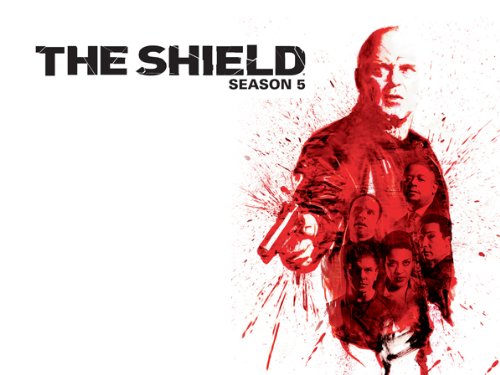
The Shield has always been a heavily serialized television series. It’s a show with a sense of continuity where past actions, events, and character development carry over time to affect the story. But the fifth season (and to a different extent the fourth season as well) felt more so than ever as if the show was always building towards some end narrative. The fifth season, perhaps more than any other season prior, took a number of story threads from the past and wove them into a new narrative that added weight and meaning to these old story points while expanding them outward to create greater emotional stakes. The Strike Team finds itself haunted by its past like never before, forced to face the consequences of past actions including the money train (the major plot of season two and three), the fight with Antoine Mitchell (the major plot of season four), and the killing of Terry Crowley (a major plot point of season one). These were all things that could have jeopardized them in the past on their own terms but the team managed to weasel their way out of it. But these now past problems combined with a new looming threat posed the fifth season as the season where the shit officially began to hit the fan for the seemingly always beleaguered Strike Team.
Now the team was up against arguably their toughest
antagonist yet, Lt. Jon Kavanaugh, a cunning, magnetic and ferocious Internal Affairs
agent ruthlessly investigating the past misdeeds of Vic and his partners.
Kavanaugh is played with electrifying intensity by the great Forest Whitaker, and
the season pits him against the Strike Team in a cat-and-mouse game of wits.
The fifth season is one heavy with obsession. Kavanaugh ceases
to merely investigate the case and make it his vendetta to take down Mackey by
any means necessary. This in turn stirs an obsession in Vic to take him down.
But obsession plays out in smaller scale versions throughout the season. The
Dutch continues to worry about Claudette’s growing illness with unyielding concern.
Claudette attentively, desperately attempts to take down a serial killer who is
clearly guilty, if they just had the evidence to shake him down. Corrine’s
fears for Vic and herself lead her to worry excessively about the investigation
against the Strike Team. Rookie cop Tina Hanlon worries about how she’s
perceived by everyone in the department, needlessly considering her appearances
at the cost of effective police work.
These obsessions, micro and macro, proved themselves albatrosses
for all concerned. Dutch’s concern wasn’t unfounded but strained his
relationship with Claudette and hindered their ability to get the job done.
Tina’s image consciousness nearly got herself and others killed and let
criminals escape. Corrine’s fears magnified the problem when she let it slip
information that could build a stronger case against Vic. Kavanaugh’s
obsession inevitably brought him low but not before he managed to drag down Vic
and the Strike Team down through the much with him. This also came at the cost
of effective use of police department as Claudette furiously says at season’s
end (an impassioned speech that wins her the captain’s position). This relentless
focus didn’t lay low everyone; Claudette eventually got the confession out of
her perp. Preoccupation, when well placed, can yield good results.
Kavanaugh’s fixation on the Strike Team isn’t bad in of
itself, but in time he approached it in such a self-serving and destructive way
that we couldn’t help but root for the Strike Team. He leaves the realm of
reasonableness into the area of bullying and revenge.
The other element that plays out heavily throughout the
season is loyalty. This is most apparent in the Strike Team itself. It’s initially
uncertain whether Lem will turn on his fellow members when pinned with the
illegal possession of heroin. The season quickly dispels this and turns to the
group’s attempts to combat the case against them. They stick together even
though those most at risk are Lem and then Vic. Ronnie serves to gain the least
from this with his near spotless record. But they come together to put up a
front against Kavanaugh. Kavanaugh is loyal only to himself and the advancement
of his career. In this way, he’s not far removed from Aceveda who has
throughout the show’s run chosen political advancement over the considerations
for anything else. Loyalty is tested elsewhere in the season, largely between
partners. Claudette and Dutch’s relationship becomes strained throughout the
season as they move in different directions. Tina and Julian’s partnership is
put to the test as Julian’s trainee screws up and he refuses to relent.
The ultimate test of loyalty closes out the season though.
Uncertain of Lem’s allegiances, Shane makes a drastic, devastating choice to
kill his friend. Believing his ass was on the line, Shane chose
self-preservation. The Shield is a
show that’s always been interested in self-preservation. Farmington doesn’t
want to upset the waters too much. People will give a pass to the Strike Team
if it means people are happy and safe. Corrine will ignore the clues that Vic’s
unfaithful and corrupt if it means her family is well off. The department will
hire out Billings because he’s a “yes man” who will keep things status quo. The
Strike Team will do everything in their power to ensure they don’t go to prison
and lose their jobs.
Loyalty and self-preservation occasionally dovetail, but
they’re also fundamentally different value systems.
The Shield has
continually raised the stakes as time has gone on by incorporating its past. It
accepts past events and the writers build in undercurrents of the past into
present stories. It would be easy for the Strike Team to overcome one problem
and then to never hear of it again. But the show constantly refers back to its
past, making for an increasingly claustrophobic feel. Tensions rise because it
becomes less certain who can be trusted and what people will do to save
themselves.
In this way, The
Shield uses serialization to novelistic effect. As the show heads into its
penultimate season, we begin to gain a sense that things are falling apart. We
sort of always knew this was always going to happen, but the fifth season marks
a point where it seems all but inescapable. People have cornered themselves into
fates that will be the end of them (I’ve yet to see how the show ends, so this is
only a guess). People have been provided escape hatches and safety nets and
they’ve continually rejected or ignored them. Vic could have let up on
Kavanaugh. The other members of the Strike Team could have chosen to turn on
Lem. But people fall back into old ways, attempting to avoid responsibility.
Billings’ nanny cam to discover whose been stealing from the vending machine is
this in miniature. He never learns but instead causes more problems for other
people and the department when photos of Tina half-naked are leaked. Rather than accept he fucked up, he bribes
Tina with career options. Self-interest is the never ending name of the game on
The Shield.

No comments:
Post a Comment