Friday, June 21, 2013

"Downton Abbey" Hits Some Sophmore Slumps in Its Less Than Stellar Second Season

Downton Abbey has always been soapy, but in its second season its more overtly soap operatic elements threatened to derail the show. The first season was a soap wrapped up in period piece gloss and the immersion prevented the soap from getting too crazy. The show was doing stories that were both specific to this time period and these characters, and in that blend the writers found a sweet spot. I would have never guessed that my affections would fall so heavily for a show about turn of the century aristocrats and their servants, but the show managed it by never letting the soap become the sole reason for tuning into the show. Soap dramas often get dissed for their outlandish plot twists and reveals to convince viewers to tune in next time. Season one had largely avoided this. But season two dabbled in it more and it caused the show to be too often insane (and also insanely stupid). The show became less character centric, and that meant plots seemed to be dragging characters along rather than character affecting change and driving the narrative (as had been the case in the first season). There were no clear arcs like there had been in season one. Stories just seemed to happen and then never get mentioned again. And some of these stories were baffling and laughable in their absurdity. Take the example of the burn victim who claims he’s a long lost heir. It’s a story that stretches all plausibility and feels like it belongs in a very different show from the one we’re familiar with. And it takes place over the course of a single episode after which it never gets mentioned again.  

World War I wracked some serious damage in real life but never would you have imagined that it would enervate Downton Abbey so immensely, making it feel like as if it was mired in mud. At times, the show dragged, where in the past it had felt so breezy and light on its feet. The schmaltziness that had defined the series from the start (and also was part of its pleasure) failed to avoid falling into excessive, pandering idealism and sentimentality. The demonstrations of patriotism got a little too pointed at times and the show became far too self-serious at times (any time anyone discussed the “war” and what it means or how important it is was a time where the show just felt like it was shoving a message down my throat). Too many stories felt as though they were running in circles repeating themselves for diminishing returns (case in point, Mary and Mathew’s tension of “will they/won’t they” is a contrived and poorly handled  long term storyline that always felt like it was hitting the same notes over and over). This repetition comes at us like a sledgehammer. Hitting us over the head with much less subtly and nuance than the first season had offered (The series has never been exceptionally subtle but the first season looks thoroughly subtextual in comparison to this season). For instance, Bate’s arrest and trial is so heavy handed, so attention grabbing (and feels rather pointless) that it stops being a dumb narrative direction and simply a baffling one. 

There were stories I liked throughout the season’s run but they were far too often buried, solid sub-plots suffocating in favor of less engaging storylines (I've always been a fan of Sybil's stories - and it helps that Jessica Brown Findlay is one of the better performers - and anytime Maggie Smith is on screen its golden). This was part of a larger problem of the season having much less focus and attempting to fit far more stories than usual into each episode. Without a center to hold it together like last season (with the question of who would be heir), things muddled around a lot more.

Downton Abbey is still a fun show but it was much less uniform in its sophomore efforts, more fits of delicious soap drama than stretches where you can't stop watching. Shows that burn through lots and lots of plots have this problem (see other plot burners: Vampire Diaries, The O.C.). Effective plot burners are rather entertaining but more uneven series because of the way in which they churn through so many stories. In the process of consuming so many stories, some of those stories will be bad or at least poorly executed. Plot burners will still reach highs though. The Vampire Diaries' fourth season this year has been bumpy but it still remains something I really enjoy watching. And Downton Abbey remains a show I like watching but my love affair with it (much like that of Mary and Matthew's) became a little more complicated and less universal during the second season.    

"Late Spring" - Film Review

Yasujiro Ozu mostly made films that were about family. They were about the things we do to eachother and to ourselves in the name of family. They’re quiet melodramas. Austerely, minimalistic films that are unassuming. The camera rarely moves, and the story moves along at a slow but assured pace. It's hard to not make this sound textbook or to cheapen the impact and craft of this. Best put, he's observing these people, not telling a story about them. Ozu’s simplicity is deceiving; the tales he spins are specific and yet highly universal.

Late Spring is about marriage and father-daughter relationships, and out of such subject matter we might expect a watered down and overly familiar story about the value of family and the meaning of marriage. But the real genius of Ozu is how he paints out the perspectives of multiple characters, all differing, and then never states which should be the one we take home with us. These perspectives are all the more affecting as they come from people of different generations (another Ozu thematic favorite).

There’s an understated generational conflict at the center of this film. The daughter Noriko (Setsuko Hara) doesn’t want to marry. The father Shukichi (Chishu Ryu) wants her to get married. But the father doesn’t want her to marry because he’s being paternalistic and patriarchal (he never forces her to get married, only makes the suggestion). Certainly he’s doing it because of the values of traditional Japanese society, but he’s more importantly doing it so he’s no longer a burden to his daughter. She’s taken care of him her whole life, to the point where being his caretaker has become her life. She doesn’t mind this though; she loves her father and is upset that she won’t be able to help him anymore. 

Here we see a generational gap. The daughter is part of a generation moving away from traditional values, in this case in regards to marriage. Her friend is a stenographer, living for herself. She considers entering this line of work.  

Everyone in the film throws out their opinion on marriage and its importance. It’s telling that nearly everyone who gives an opinion isn’t married. They’re widowed, divorced, or single. But they’re all quick to speak the praises of marriage and its virtues. Everyone keeps attempting to set her up with someone. They’re looking for it to happen so much that they mistake an engaged man as a potential suitor. 

She does end up marrying by film’s end, but it’s on some level a great sacrifice for both her and her father. There’s a lot of undeniable love and affection between these two and they’re giving up something they care about dearly to ensure the happiness and betterment of the other.   

Her father convinces her to marry when he tells her that he himself is getting remarried (He's lying). This is something that startles, and slightly repulses, Noriko. Despite her shift away from tradition, she's still traditional in this regard. These are humans; selfish, jealous, sometimes thoughtless, sometimes too thoughtful. They contradict, they compromise, they hurt, they settle. And life keeps moving along. 

Ozu really makes the story hit home. It feels so true to life that it's emotions are deeply felt. Ozu has this inexplicable, mesmerizing power to slowly draw us into the story; the first half is leisurely, languid, while the second is driven, eventful, drawing in events from earlier on. We sympathize with these characters because we all know someone like this. Late Spring quietly and movingly makes you consider your own family, your own life. This father and this daughter try to make eachother happy, and in the end they tear eachother apart.

Grade: A   

Thursday, June 20, 2013

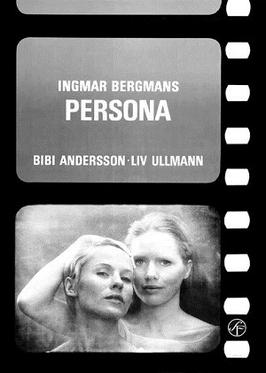
"Persona" - Film Review

If I told you I understood what took place in Persona, I’d be lying to you. It’s not really one of those films you understand but you just let wash over you with its imagery, knotty ideas, and intricate, slightly convoluted storytelling.  David Lynch took inspiration from it for Mulholland Drive if that gives you a sense of its frustrating, weird nature.

The film is somewhat experimental. It begins with a flashing set of random, avant garde-like imagery that is a bit unsettling (Make no mistake this initial imagery is disturbing and also feels slightly unnecessary). Eventually we get to an actual story, but the early montage parallels the film’s later quality of being surreal, dream-like, and fractured. The film is about two women. One is quiet, reserved (she almost never speaks). The other talkative, warm. The first is a stage actress (Liv Ullmann) who just had a mental breakdown (claimed to be insane). The other is the nurse (Bibi Anderson) assigned to help her. As the film progresses this relationship becomes ever more complicated. Initially it appears that the nurse is helping her patient but then it takes a turn to make it seem as though the patient has helped her caretaker achieve a breakthrough discussing her own problems.  

Or does she? The film is one about identity. Both women are coping with troubled pasts. Pasts that might just have a lot more in common than they realize. Pasts that are weighing on them; forever preventing them from leading entirely normal lives. The one woman is an actress. Actresses (as the film notes at one point) are performers; they swap out identities constantly. They pretend to be someone else. They put an outward appearance of what people believe them to be. And both these woman are doing that to an extent. 

As the film advances it becomes increasingly difficult to determine what is real and what is imagined. Is this all in the head of one of them? Both of them? Is their difference? The less certain what is reality, the more the visuals take on a hauntingly hypnotic quality. If the story feels too convoluted and confusing than perhaps the imagery will win you over here. I found the film thematically rich but that of course isn’t for everyone, especially in a film that chooses not to give us answers. Like a maddening horror film that descends into a chaos and insanity, the film becomes frantic and strange in its final stretch of sequences. Imagery repeats and perspectives shift. Our understanding of past and current events becomes increasingly farther out of reach. And if that weren't enough: the film keeps reminding us that we're watching a movie. At one point, the film stops projecting, burning up in flames; the problem is fixed returning us to our previously scheduled programming.   


The film's combination of director Ingmar Bergman's exceptional direction and the performances is what makes Persona such a rich, tantalizing film. In the hands of some other director, this would feel self-righteous, pretentious. Bergman lets the ideas simmer intentfully. He's just as much interested in sorting through the film's ideas as he is its images, and the images and the weighty ideas behind them compliment one another. The ideas almost take on new purpose without a more straightforward narrative; they're more ponderous, sticking with us like a sick sinking feeling in the pit of our stomach.     

Grade: A

Wednesday, June 19, 2013

"This Is The End" - Film Review

This is the End has the feel of a sketch comedy. Sketch comedy’s goal is to get you to laugh as often and hard as it possibly can. It’s a format of comedy that’s loose on plot and that isn’t afraid to go for anything and everything in the name of getting a laugh. This means that not every joke will land, but when it does whew boy.

This is the End is loose, and lumpy and loopy. There’s a plot in there but it’s a really thin one that you shouldn’t really concern yourself with all that much. The world ends, there’s the rapture, and a bunch of actors playing themselves try to survive in the midst of all this. There’s also a surprisingly good story of friends growing apart as they get older and life changes them. But fuck it. That’s not really what you’re going to care about. What will sell the film for you is whether you find it funny or not.

Initially the film isn’t terribly funny. It’s trying to do the heavy lifting of getting us to the better comic setpieces that are the highlight of the film. There are some funny moments, particularly involving a parade of cameos where celebrities play hilarious versions of themselves, but it’s all just marking time until we get to the really juicy material. However, as the film progresses it starts to take on a weird, delirious momentum. The film picks up speed and immerses you more into its absurdity and everyone is so utterly game for whatever crazy joke is at play that it works in spite of its ridiculousness.

The film has the sensibility of a bunch of good friends getting together and just filming things they find funny. A lot of this could feel as if you’re missing out on some inside joke that you’re not in on (where the actors are having more fun than we are), and at times it has that quality. But for the most part, the film avoids being a vanity project and there's enough self-deprecation that it doesn't fall into total self-indulgence. The actors (who all play themselves) make jokes that are very specific to their perceived Hollywood personas and film careers. This specificity doesn't always work; there’s a parody/reunion of Pineapple Express that never lands because it pushes the film into an area of comedy where the writers and actors are just dicking around way too much. It’s also a portion of the film that speaks to how much the film is a series of sequences that are very loosely strung together. Some of these sequences made me laugh more than I have at a movie in theaters in a long time (There's a Rosemary's Baby parody that is brilliantly, screamingly hysterical). And yet others were really tedious and felt somewhat pointless. 

Ultimately though, the sequences that do work are enough to carry the movie. The promotional material involving Emma Watson was not leading you on; her appearances in the film are some of the more memorable sequences of the film. The cameos in general are all rather effective – including a surreal one from Michael Cera and one from Channing Tatum that I won't spoil for you. The film has just enough critique of celebrity and Hollywood excesses, with a wry winking self-aware irony, that these cameos don’t seem attention grabbing but simply part of the films larger goal to make us laugh by any means necessary.    

This is the End falls into a tradition of comedy where the writers and actors throw everything at us they can possibly come up with and hope it sticks. It’s anarchic, with little logic. It’s silly, and at times stupid and outrageous. It plays up these actors’ (Seth Rogan, James Franco, Craig Robinson, Danny McBride, Jonah Hill, Jay Baruchel) perceived personas, and yet the excesses of their persona’s and this celebrity lifestyle somehow fit in surprisingly well with the excesses of apocalyptic, end of the world movies. Much of the film’s humor comes from the characters’ total ineptitude in the face of their circumstances. The actors are willing to make fun of themselves, and the film isn’t afraid to not take itself seriously. And in this the film discovers some jokes. Weird, ballsy, satirical, occasionally stupid, jokes. Some work; some don’t. But those that do are pretty damn funny. 

Grade: B-

Tuesday, June 18, 2013

"Seven Samurai" - Film Review

Seven Samurai is one of those film epics that don't seem to get made anymore. It's at once grandiose, filled with action and adventure, and yet also filled with a good deal of intimacy and thoughtfulness. It's a film that even non-film buffs seem to have at least a passing knowledge of; perhaps this is due to it being remade, most notably in the form of The Magnificent Seven. But it's influence can be felt in countless action films and it spawned the whole genre of samurai films.

The story is a simple one; a poor village is threatened by bandits and so, desperately, decides to hire out some samurai to defend them. They have no money to pay these men though and so can only offer to feed them. This means anyone who would take the job is either really nobleminded or luckless. Much of the early going of the film is about finding the titular seven. In deed, the film's notable action doesn't come until well over two hours into the movie. There's nothing wrong with this though; the film does some establishing here, introducing characters and tone. The characters are colorful; they're archetypes at times but they're also a lot of fun in the hands of these actors, particularly Toshiro Mifune as a brooding badboy Kikuchiyo and Takashi Shimura as the weary, noble leader of the samurais Kambei (both of whom were regulars in director Akira Kurosawa's films). The characterization is sharp and well realized; Kurosawa manages to find ways to balanace the many characters, giving them all little shining moments. While he leans more heavily on some characters than others, it's always clear who's who.

The tone is important here. The film is serious and buys into the lofty virtues of loyalty, honor and bravery it espouses. But it's also far more playful, fun and occasionally silly than your average action blockbuster. The film spends a fair amount of time showing character joking around and pulling pranks. What's surprising is how funny the film is. The film does a nice job of balancing between being fun and merry, and also sad and tragic. The tonal shifts are always well-handled, and Kurosawa keeps the film humming along with a sense of purpose and energy. The film never feels its length.

In the hands of Kurosawa, the film has a big budget scope with an arthouse heart. Visually the film is at times moody, shadowy. The film consistently takes stock of what's at stake and the cost eventually exacted upon the characters. The film isn't really concerned with propulsive action; it takes it's time to get to the fighting and even once there it finds downtime between battles to have the characters reflect upon their feelings about the conflict. Kurosawa understands that the action isn't the real purpose of Seven Samurai. It's about telling a story, and Kurosawa is storyteller, weaving a tale of fading dreams and broken hopes that just also happens to have some very entertaining swordplay in the third act. The battle is not a goal in of itself to get to, but an outward reflection of the fight for the values that the characters believe in.

The samurai were a dying class in the period Kurosawa brings us back to (The Warring States Period). The villagers are initially scared of the warriors arrival; samurai in their new found desperation were doing anything to scrape by. To find samurais that still believed in the virtues that idealistically had defined the group was unexpected. The ending reaffirms the sentiments carried throughout the film. This is a film showing us the end of an era; this is the last hurrah for the kind of men who find it a worthy cause to defend an ailing farming village for three square meals. This bitter-sweetness underlying the conflict makes it all the sadder and more poignant.

There's clunky elements to the film, and there are stories here that just don't really work (there's a romantic subplot involving the youngest samurai that never takes off or feels necessary - though how that story ends almost redeems it). However, the film has solid storytelling, wonderful visuals, exceptionally staged action and great performances. It's thrilling, funny, sad and just a whole lot of fun. I wish more action movies had half the brains or at least half of the inventiveness of Seven Samurai.

Grade: A

Monday, June 17, 2013

Mad Men - "The Quality of Mercy" - Review

You grow up dirt poor. You want to escape but you’re trapped. Your parents are terrible and treat you like crap. You want out. So one day you see an opportunity and you reinvent yourself. It’s mostly harmless. No one will miss the old you. The new you starts succeeding and people starting questioning “Who is this person?” They start digging deeper and they discover that you’re not who you say you are. But at this point the reinvention is so ingrained and feels so real that it might as well be the real thing. And so everyone shrugs it off. 

That’s the story of Don Draper but as we learned tonight it’s also the story of Bob Benson. Bob's big secret is not that he's gay as last episode suggested (although he is gay) nor is he what any of the wacky theories out there have suggested. No, he’s just a man who had a crappy life and decided to flee it. He adopted a new identity and was lucky enough that no one chose to question it. That is until now when Pete takes over for Ken’s Chevy account and is forced to work with Bob. Pete looks to get Bob fired and asks Duck Phillips to help him with this. Duck does some digging and learns that there is no "Bob Benson". 

Pete has learned from experience though that it’s not worth attempting to take down this kind of person who isn’t who they say they are (a nice resonance of the first season). He lets Bob stay; he isn’t harming anyone, he’s apparently pretty good at the job, and as long as he gets rid of Manolo and flirting with Pete, Pete will let sleeping dogs lie (there's potentially more to be gained from letting him stay than forcing him to leave).

You have to imagine Don was Bob at some point. In flashbacks in the past we saw his eager, can-do attitude get his foot into the door of Sterling-Cooper. This attitude likely persisted until he got to the place of power that he has. In contrast, the Don of today is a mess. He starts the episode looking haggard, sleeping in Sally’s bed, unable to shake the memory of what he’s done to her (something felt more strongly due to the heavy presence of Sally in this episode – but more on that later). Don ends the episode being called a monster by Peggy, and it’s a reminder (a little bluntly) that Don has fallen far from the days where he looked like Bob Benson. He’s pushing everyone away from him; he’s lost Betty, he’s lost the respect of Peggy, he’s lost the love of his daughter, and Meghan is slipping away from him. 

Don is out of sorts initially but he seems to snap back in place when he runs into Ted and Peggy at the movie theater (seeing Rosemary’s Baby). Don goes out of his way to wreck what exists between Peggy and Ted. At the campaign meeting with Saint Josephs, Don suggests to the client that Ted has “personal reasons” for choosing a campaign centered around a Rosemary’s Baby parody. Don lets the suggestion linger there long enough that everyone gets the hint that he means Ted and Peggy are interested in eachother before swerving in another direction and claiming it was the last idea of the late Frank Gleason.

Don is right that the office romance is no good but he’s not really concerned about it for that reason. If he can’t be happy, if he can’t have Peggy, well, than no one can. Ted may want his juice (a company he loses this episode) but Don wants his juice too. And Sunkist, not Ocean Spray, is ultimately the company they go with, for the sake of money. Don has the money to get whatever he wants and inevitably money corrupts. Money made the company chase after Jaguar, money caused Lane Pryce to commit suicide, and money could buy off Betty, Sally, and Meghan (for a time at least). When Sally tells Betty that her father never gave her anything, it’s true up to a point. He bought her lots of nice things and gave the semblance of a strong relationship, but Don’s interests have continually drifted elsewhere. He loves his children, and he wanted to be the good parent that his own parents never were. But he’s just so goddamn selfish that misses the forest for the trees.  

Though Sally wants to distance herself from her father, she’s behaving quite destructively herself. Sally is no longer speaking to or visiting her father. She decides she wants to go to boarding school to get away from both her mother and father (both of whom have now disappointed her). She stays overnight and the girls she’s stay with hold over her the fact that they will be evaluating her. Sally has Glen bring over alcohol and pot. She ends up alone with the friend Glen brought who tries to hook up with her. Sally has Glen beat up the guy, claiming he tried force himself on her (which he didn't but came very close to doing). On some level she does it because, hey, Rollo is a fucking creeper. But it also seems as though Sally wishes it were Glen making a move on her. Does she want to ruin Glen’s chances with the other girl? Or does Sally want to screw over both guys? It’s probably a combination of all these things (and the fact the guy was a pretty creepy). 

This is in an episode that has a lot of say about what you want versus what you need. Sally doesn’t want to go to boarding school, but she doesn’t see any other options. She’s trying to fill up that hole inside herself that comes with the territory of being a Draper. Don wants to fix things with Sally (and probably needs to as well for his piece of mind). Don wants Peggy to answer to him and not Ted. Ted wants them to go with Ocean Spray out of loyalty rather than Sunkist, who they need for the money. But sometimes what you want is just not the best option. Ted and Peggy want eachother, but that’s likely not a good thing to act upon. They need to keep it professional. 

You want to reinvent yourself into a new person. You don’t need to. But now that you have, you need to make sure no one reveals who you really are because that could be the end of you. 

You can become Don Draper. You can become Bob Benson. You can become Sally Draper 2.0 (more defiant than ever). But you’re still fundamentally yourself, trapped with your lonely self at the end of the day. And you know this, and so perhaps you lash out because you don’t know how else to act. It’s better than confronting the real problem, confronting yourself and asking yourself what you really need.    

Stray Thoughts:
*Lots of violence or potential violence in this episode. The Nixon ad that plays in the episode talks about violence and crime. Ken gets shot in the face and now wears an eye patch (yea that happens, largely without comment). There’s the potential sexual violence bubbling under the surface of Sally’s story.  The psychological abuse of Peggy and Ted could also possibly be tied to this as well.
*Also lots of blackmail or the threat of blackmail. Sally gets blackmailed by the girl’s at the school. Bob fears getting blackmailed by Pete. Don holds his knowledge about Ted and Peggy over them. So, not entirely blackmail I suppose, but there’s an element of coercion there.
*Rosemary's Baby is oddly one of the more effective pop culture choices the show has utilized. Don refuses to grow up!
*Ken getting shot is a very WTF moment.
*Don sees Meghan on television. He’s closer to her in this moment than in real life.
*Don isn’t the only one picking up on the feelings between Ted and Peggy. Ginsburg is frustrated by Ted ignoring all ideas that aren’t Peggy’s. (And Joan clearly picks up on it as well)
*Using Rosemary’s Baby for a children’s aspirin’s ad seems incredibly bizarre.
*Children’s aspirin could thematically tie to the relief for pain that Don can never get and him acting like a child.
*Sally eats McDonald's on the car ride up. Although those fries do not look like they came from McDonald’s.
*Betty gives Sally a cigarette. They’re bonding! Sort of.
*Of course, Sally doesn't want to sleep with Rollo after seeing her father having sex last episode. That shit will scar you.
*Lot of effective, crackling tension throughout the episode. The meeting with the aspirin company, Pete confronting Bob, and Sally defending herself were all intense moments.

Grade: A

Sunday, June 16, 2013

"Antichrist" - Film Review

Going into watching Antichrist, you will likely be forewarned that it’s “fucked up”. But that doesn’t even begin to scratch the surface of its strangeness. It’s at times ploddingly dull and tedious, and at times surreally painful and uncomfortable.

There’s not much in the way of plot to the film and the best way to enter the film is to not really know what to expect. Antichrist has a story (one that eventually descends into convolution) but that story is almost secondary to the feeling the film gives off; it’s a film about an experience (frequently a repulsive one). 

This is true from the film’s first scene, a bizarre slow motion scene that’s so self-serious and overly stylistic that it’s almost laughable. It is both a sex scene and a death scene. A couple loses their son when he falls out of a window (while they’re having sex and opera music plays over – because: why not). The incident shakes both of them but particularly seems to breakdown the mother (Charlotte Gainsbourg). The father (Willem Dafoe), a psychiatrist, takes on his wife as a patient and has her toss out her prescribed medication. 

He delves into what is hanging over his wife that she’s so endlessly grief stricken. This leads to a sojourn to a cabin they own that holds some power over her. As he attempts to discover the reason, things get … weird. Except “weird” is putting it lightly. The boundary between real and imagined break down and new information is revealed that doesn’t clarify but makes things all the murkier. And did I mention that it gets weird? 

I won’t get into specifics because part of the effectiveness of the film is in the craziness of events taking hold of you and upending you. But needless to say they seem to come out of nowhere and they get under your skin. They’re bloody and sexual and disturbing and possibly religious. The film is potentially a metaphor for the story of Adam and Eve (the cabin is located in a place called Eden).  

The film is sumptuous. It’s visually dark, intimate and lush. But it’s beautiful, opaque imagery may not be enough for you to sit through the film in its entirety. The film has inspired controversy and is critically divisive.

I was disgusted by film’s end. And yet, it made me think and it made me remember what films can do when they take advantage of their strongest asset: their visuals.  Director Lars von Triers is thoroughly in command of his vision and getting it across, even if that vision is almost entirely hard to stomach.

Like a thorn in your side, Antichrist will stick with you long after you’ve finished watching, even if you wish it wouldn’t.

Grade: C+