Lake Bell is one those talents who's been floating around the film industry for awhile with no one really sure how to utilize her. It's the story of countless performers, especially female ones. Bell decided to take things into her own hands, writing and directing a film, In a World..., perfectly suited for her, but also for many of those she has fill out supporting roles (This is some of the best work Rob Corddry and Demetri Martin have ever done). While providing some humorous insight into the ironically little talked about voice-over industry, Bell tells a story about a woman, Carol (played by Bell), struggling to make it by in a male dominated profession. There's romance and goofy, lighthearted subplots, but it's also a razor-sharp witted look at the sexism built into the entertainment business (but the film also taps into larger, more problematic gender expectations). The voiceover industry has literally caused women to be voiceless and Bell contends that how we use our ability to speak matters just as much as that ability itself.
Grade: ★★★
Friday, January 24, 2014
Wednesday, January 22, 2014
"12 Years a Slave" (2013)
Director Steve McQueen has chosen to make films with brutal
subject matter and told with a brutal frankness appropriate for those subject
matters. Whether it be a prison hunger strike (Hunger) or sex addiction (Shame), McQueen
looks on his subject matter with an unbearable unflinching gaze and dares you
to not turn away. This makes McQueen well suited for telling the most frank and
honest depiction of slavery ever put to film in 12 Years a Slave. Based on the real
life account of Solomon Northrup, a free black who was kidnapped and forced
into slavery in 1840, the film tells its story from a distance but never
without a real empathy. McQueen’s detachment shows horrible, atrocious incident
after incident that afflicted Solomon, forced to take up the slave name Platt, and
makes us simply take it in. But the film’s strength isn’t just in the physical
toll on display but also the psychological undercurrent. There’s a ruthless psychological
realism that takes what is already gut-wrenching and turns it into something
harrowing. The depth of characterization isn’t just given to the slaves but
their masters as well, who are thoroughly complicated. Solomon’s first master
(Benedict Cumberbatch) is seemingly a “good white”, but is equally as complicit
a part of the systematic abuse of the slaves as anyone with more externalized racism.
His second master (Michael Fassbinder) is more obviously monstrous, but he’s
also not a caricature. He has complex motivations on display, particularly in
regards to Patsey (Lupita Nyong’o), the slave he takes as his comfort slave
despite his wife’s (Sarah Paulson) obvious infuriation. He has deep feelings
for Patsey but hates himself for loving someone who he sees as less than human,
and these contradictory emotions come out in searing, violent and sad ways. What
sets apart 12 Years a Slave apart from its other period counterparts that deal
with race is how it immerses us back in the time it depicts. The film never
projects modern values onto the past. Most racially charged period dramas boil
down to this: “Racism is bad, but, boy, things have gotten a better. White
people are bad, except for some who are decent”. 12 Years a Slave’s thematic concerns
are far more nuanced. It uses Solomon’s story to examine the numerous
intersecting factors that led to slavery to exist. It’s also interested in the
very culture surrounding slavery, the twisted, contradictory justifications and
bargains made in its name. At its center is a fantastic performance by Chiwetel
Ejiofor. At every turn, Eijifor is the story’s anchor, a broken man who suffers
indignity after indignity, and tries not to lose what little of his humanity
remains. As Solomon suffers, we see Eijifor show us the depths of Solomon’s despair
and sadness while he puts on a brave face to survive yet another day in abject cruelty.
This is America’s history. We know it happened but we push it to the back of
our mind and act like it’s just some awful thing from our past, but it’s not.
This is something we must own up to every day as we live in a society that may
not have slavery but begs ignorance to the ways its effects still endlessly
ripple into the present. Perhaps more than any other reason, 12 Years a Slave
is difficult to sit through due to the fact that we rarely look this head on at
the subject.
Grade: ★★★★
Grade: ★★★★
"Beyond the Hills" (2013)
Director Cristian Mungui's deal with people working within larger structures and finding themselves overwhelmed. Of course, the people don't see their circumstances as being the product of forces beyond their control. It's well-intentioned people trying to do the right thing, only for the right thing to become a more complicated and difficult task than initially imagined. The structure is Nicolae Ceausecu's former dictatorship in Romania and the corruption and infrastructural shortcomings that caused people to be limited in there options. Beyond the Hills is a story dealing with exorcism, but it looks almost nothing like any exorcism ever told. It's not a horror film, but a sparse, austere neo-realist narrative based on a real life incident. The film is set at a remote monastery, where a young nun (Cosmina Stratan) invites her lonely childhood friend (Christina Flutur) to briefly stay, only for her friend's personal demons and illnesses to disrupt the modest way of life of the church. The woman is likely suffering from schizophrenia or some similar mental health illness but the near-by hospital is underfunded and can't keep her, and she has no one else to take her in, having grown up in an orphanage and foster care. She's asked to stay at the church until she recovers, much to the displeasure of the nuns and the doggedly conservative priest who runs the place. It's not really a question of whether things will go wrong but when they will go wrong, and they do in horrifying and unsettling ways. Mungui's superb 4 Months, 3 Weeks and 2 Days carries the weird honor of being the only film to nearly make me hyperventilate. He sets his eyes on tragic subject matter and tells it in long, unbroken takes that make what already feels unnervingly real all the more vital and palpable. While Hills is deliberately paced, Mungui sets about observing the daily beats of monastery life and how the orthodoxy has colored every aspect of the lives of those individuals who live there. Everyone means well, but this was possibly the worst place the young woman could have gone for recovery, and yet sadly it was the only place she could have gone, making it all the more moving and harrowing.
Grade: ★★★★
Grade: ★★★★
Double Feature: "Captain Phillips" (2013)/ "A Hijacking" (2013)
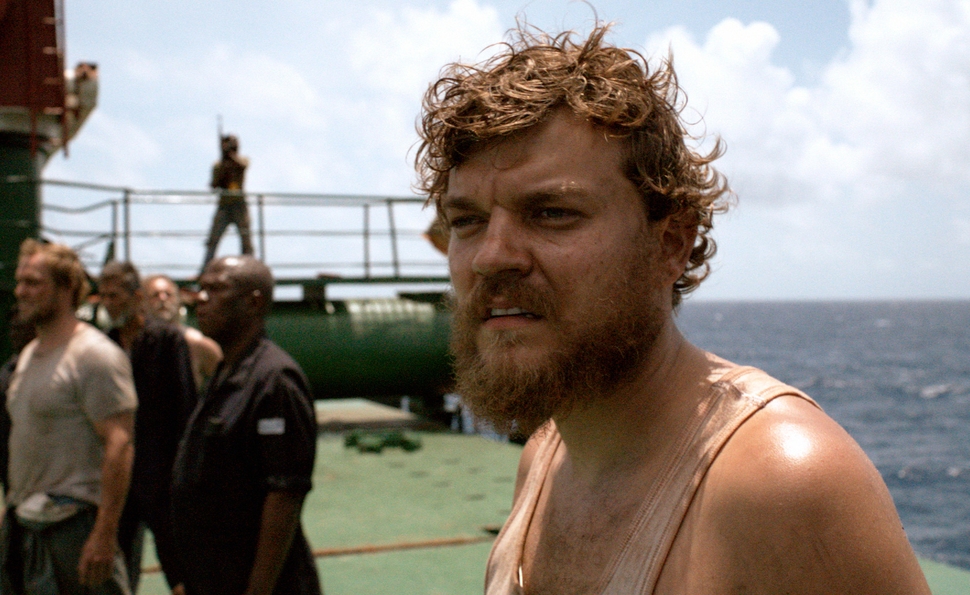
When re-creating historical events, it's really easy for films to simplify, moralize or demonize and that does a massive disservice to that history they try to tell in the name of entertaining. Captain Phillips is the rare historical film which is rigorously told and yet highly engaging. It's a ceaselessly intense thriller based on the 2009 Somalian pirate hijacking of the USS Alabama. But what really makes the film stand out is Paul Greengrass's direction and Bill Ray's script, which together blow up any binary of good versus bad. In Captain Phillips, everyone is a victim, in their own way. The biggest villain of the film isn't the pirates but globalization. Greengrass makes parallels between Phillips (Tom Hanks, never better) and captain of the pirates Muse (Barkhad Abdi), suggesting they have more in common than we might think. Both are answering to bosses that care about nothing greater than the bottom line, both have crews who don't think all that fondly of them and question their command, and both are in way over their head. Greengrass forms a film that is deeply humanistic. It's a story about people under stress and duress, and the central humanity that bleeds out in these moments. It's a story about how economic structures uncaringly chew up and spit out people. It's a story about people just trying to do their job. Nobody is in the wrong here. The pirates don't want to be hijackers but need to in order to survive in a cruel world. Most of them don't actually want to hurt the crew, but don't see any other options. And Phillips and Muse begin to realize their shared commonalities, but also understand that there's still an unbreachable gulf between them. But such is often the case in the modern, interconnected world.
★★★
By strange coincidence, there was another film about a Somalian pirate hijacking released in 2013, the Danish film A Hijacking, about a fictional ship hijacking. While less conventionally thrilling than Captain Phillips, it's often a perfectly paired thematic counterpart to Phillips. The film doesn't solely focus on the hijacking but on the negotiations between the pirates and the company that owns the ship, and the story is even more concerned with how larger, modern business structures eat up the little man. Counterpointing the desperation and humanity aboard the ship with the clinical, rational negotiations (which are treated more like a business meeting in a board room rather than a hostage crisis), the film underscores the inhumanity, greed and destructive power of corporations and their singular interest in the bottom line. There's tension in the film, but the film often purposely sucks some of it away to emphasize the awful conditions that set in once the negotiations become protracted. Unlike Phillips which occurs over a brief but harrowing period of time, A Hijacking's story sprawls over a nearly two hundred day period, during which the ship runs out of supplies, everything begins to smell foul, and cabin fever and psychosis sink in. While it's a film keen on showing how corporate capitalism is inhumane, there's plenty of humanity in the film, as the film finds the human cracks in the business attire and reminds us of the human cost expended amidst the negotiations.
★★★
★★★
By strange coincidence, there was another film about a Somalian pirate hijacking released in 2013, the Danish film A Hijacking, about a fictional ship hijacking. While less conventionally thrilling than Captain Phillips, it's often a perfectly paired thematic counterpart to Phillips. The film doesn't solely focus on the hijacking but on the negotiations between the pirates and the company that owns the ship, and the story is even more concerned with how larger, modern business structures eat up the little man. Counterpointing the desperation and humanity aboard the ship with the clinical, rational negotiations (which are treated more like a business meeting in a board room rather than a hostage crisis), the film underscores the inhumanity, greed and destructive power of corporations and their singular interest in the bottom line. There's tension in the film, but the film often purposely sucks some of it away to emphasize the awful conditions that set in once the negotiations become protracted. Unlike Phillips which occurs over a brief but harrowing period of time, A Hijacking's story sprawls over a nearly two hundred day period, during which the ship runs out of supplies, everything begins to smell foul, and cabin fever and psychosis sink in. While it's a film keen on showing how corporate capitalism is inhumane, there's plenty of humanity in the film, as the film finds the human cracks in the business attire and reminds us of the human cost expended amidst the negotiations.
★★★
"Pandora's Box" (1928)
I've never seen a performer like Louise Brooks. Sure, I've witnessed stars with some of her qualities (the rapturous sexuality, the stunning allure, the devil may care attitude, the almost borderline self-awareness that she's got the audience wrapped around her finger), but never to this degree and combination. Brooks was a silent film star but she'd fit right at home in a modern film. Everyone in Pandora's Box is unmemorable, playing the close to cliche schtick, except for Brooks, who is unforgettable. In G.W. Pabst's film, as Lulu, she found material extraordinarily well suited for her talents. She's a seductress, a sex idol, a con, a drifter, and, though the film doesn't says it, probably a prostitute. But there's no moralizing or denigrating here. The film is fascinated by the raging blackhole that is Lulu. She destroys everything in her path, and then is so charming and indifferent and totally in control that we and the characters forgive her. And Brooks is simply a force of nature. She's such a distinctive presence that everything else just fades away. The film creates a space for her to simply be, and Brooks relishes in the opportunity -- and we relish in watching her have at it.
Grade: ★★★★
Grade: ★★★★
Friday, January 17, 2014
"Inside Llewyn Davis" (2013)
Inside Llewyn Davis feels like it's designed to get an initial reception to another earlier musical: Nashville. There will be voices who say Inside Llewyn Davis is mean-spirited and unsympathetic, and that it's not entirely accurate about the time and place it's depicting. Firstly, the Coen Brother's are sympathetic. They've simply set their focuses on a character, failing folk singer Llewyn Davis (Oscar Isaac), who is highly unlikable. Secondly, the Coen's eschew period accuracy for emotional and tonal accuracy. The 1960's Greenich Village folk scene is textured so it feels right rather than looks right. For their latest film, the Coen Brothers look back to O' Brother Where Art Though?, borrowing its folk music flavorings and Odyssey-inspired storytelling, but stripping away the humorous romp nature. Inside Llewyn Davis is a film spiked with bitterness around every corner. Llewyn is living from gig to gig, and crashing on the couch of whoever he hasn't currently pissed off. And he tends to do a lot of pissing people off. Llewyn is somewhat of an ass, and a whole lot of a narcissist. He's failed to make a name for himself, and he keeps fighting for artistic integrity over commercial success. He's had children by two woman, both of whom want nothing to do with the guy. He can't even strike up a proper friendship with a cat, two of which he loses on separate occasions. But lingering over all of this is the fact that Llewyn's singing partner Mike Trimlin recently committed suicide. From what we pick up about his musical better half, Mike was the kind of individual who, in a more conventional Hollywood film, would make for a better leading man. Mike was a happy, go-getting, far less curmudgeonly dude, and Llewyn is an incomplete person without him. Lllewyn was always a dick, but circumstances have served to heighten his unpleasantness. Like many Coen films, Llewn Davis often plays like one big cosmic joke is being performed at Llewyn's expense. Llewyn can't catch a break: He's essentially homeless (and in the dead of winter, without a winter coat), he's never going to make it big in the music industry, and the woman he (possibly) loves, Jean (Carey Mulligan), despises him, is married and wants to terminate her pregnancy (of what is likely his child). Actually, this isn't completely true: Llewyn is given many, many chances to save himself and his career but he denies them on principles of integrity and honor -- in that sense, there will never truly be a break for him. Yet there's also the film's excellent music. Llewyn at one point attempts to win over a successful music producer so that he might be his manager, and after hearing him play a song, the man replies, "You just don't connect". It's a savage irony. Llewyn absolutely connects: he connects with us. When Llewyn sings, we forget he's an ass; in those moments, he is only human. When he's singing, he exposes his bleeding heart. Like Nashville, the songs Llewyn sings are about himself -- it's the only form of communication where he makes sense and doesn't piss off someone.
★★★
★★★
"Wadjda" (2013)
Regardless of its quality, we'd be talking about Wadjda: the first film produced in Saudi Arabia, a country notorious for its total lack of infrastructure to support a film industry, and not only that but it was secretively written and directed by a woman, Haifaa Al-Mansour, making it all the more remarkable for a country that's deeply restrictive of women's rights. So thankfully, not only is it a remarkable film but also a remarkably good one as well. The film's plot is deceptively simple: a young girl Wadjda (Waad Mohammed) wants to buy a bike and she tries to find ways to buy that bike. In its charming, neo-realist simplicity is a disarmingly sweet and poignant tale of a young tomboyish girl who doesn't measure up to society's expectations of what a woman should be. This is a pleasingly feminist film that quietly draws into question the double standards and sexism of Saudi Arabian society. Wadjda's father is a deadbeat who's rarely around, and he seems to be haughtily displeased of having a daughter ("Give me a son," he yells at his wife, who is incapable of pleasing him). Wadjda goes to school and her teachers and principal reprimand her for simply being the funny, free spirited, highly individualistic person she is. Everyone gets angry for her desire for a bike, even her mother. They tell her that girls just don't ride bikes. It's something for boys. Wadjda is hindered by being different, but even more simply by virtue of being born a female. It frustrates us, but it annoys us because it is honest and accurate. The gender expectations are specific to Saudi and Islamic society, and they are never one-sided. Some of the film's finest moments understand how gender policing is frequently most harshly performed by members of the same gender. Women get upset with Wadjda, and we wonder, sometimes even see it in their body language, if they once had similar aspirations to Wadjda. They may have and gave them up due to society's expectations. But for now Wadjda doesn't quite fully comprehend the cultural norms she's been born into. All she wants is a bike, and for no greater reason than because she is young and riding a bike seems like it's fun. She's determined, and her determination makes us hopeful.
Grade: ★★★★
Grade: ★★★★
Subscribe to:
Posts (Atom)