When re-creating historical events, it's really easy for films to simplify, moralize or demonize and that does a massive disservice to that history they try to tell in the name of entertaining.
Captain Phillips is the rare historical film which is rigorously told and yet highly engaging. It's a ceaselessly intense thriller based on the 2009 Somalian pirate hijacking of the USS Alabama. But what really makes the film stand out is Paul Greengrass's direction and Bill Ray's script, which together blow up any binary of good versus bad. In
Captain Phillips, everyone is a victim, in their own way. The biggest villain of the film isn't the pirates but globalization. Greengrass makes parallels between Phillips (Tom Hanks, never better) and captain of the pirates Muse (Barkhad Abdi), suggesting they have more in common than we might think. Both are answering to bosses that care about nothing greater than the bottom line, both have crews who don't think all that fondly of them and question their command, and both are in way over their head. Greengrass forms a film that is deeply humanistic. It's a story about people under stress and duress, and the central humanity that bleeds out in these moments. It's a story about how economic structures uncaringly chew up and spit out people. It's a story about people just trying to do their job. Nobody is in the wrong here. The pirates don't want to be hijackers but need to in order to survive in a cruel world. Most of them don't actually want to hurt the crew, but don't see any other options. And Phillips and Muse begin to realize their shared commonalities, but also understand that there's still an unbreachable gulf between them. But such is often the case in the modern, interconnected world.
★★★
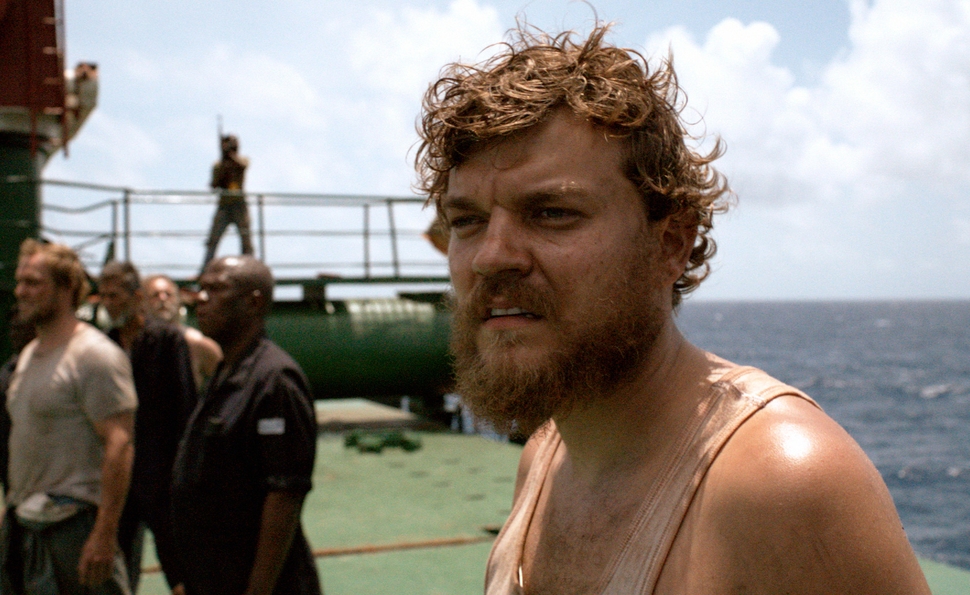
By strange coincidence, there was another film about a Somalian pirate hijacking released in 2013, the Danish film
A Hijacking, about a fictional ship hijacking. While less conventionally thrilling than
Captain Phillips, it's often a perfectly paired thematic counterpart to
Phillips. The film doesn't solely focus on the hijacking but on the negotiations between the pirates and the company that owns the ship, and the story is even more concerned with how larger, modern business structures eat up the little man. Counterpointing the desperation and humanity aboard the ship with the clinical, rational negotiations (which are treated more like a business meeting in a board room rather than a hostage crisis), the film underscores the inhumanity, greed and destructive power of corporations and their singular interest in the bottom line. There's tension in the film, but the film often purposely sucks some of it away to emphasize the awful conditions that set in once the negotiations become protracted. Unlike
Phillips which occurs over a brief but harrowing period of time,
A Hijacking's story sprawls over a nearly two hundred day period, during which the ship runs out of supplies, everything begins to smell foul, and cabin fever and psychosis sink in. While it's a film keen on showing how corporate capitalism is inhumane, there's plenty of humanity in the film, as the film finds the human cracks in the business attire and reminds us of the human cost expended amidst the negotiations.
★★★


No comments:
Post a Comment