It's to the credit of director Eric Rohmer that none of the behavior in Claire's Knee feels predatory, but rather romantic, sweet, delicate and aloof. When Jerome goes to sell his family's home, he ends spending the time playing out an odd experiment for old friend Aurora. Neighbor Laura, who's only 16, clearly has a crush on Jerome and Aurora wants Jerome to test how far Laura is willing to push her infatuation. Jerome finds it a bit silly but goes along with it; he says for the sake of Aurora but he's also sorting out some of his own feelings now that he's about to get married to a woman who he's had a tumultuous on-and-off-again relationship with for nearly six years. Jerome is the kind of person who claims he could never settle down and love one person, not fully at least. He's a lover of the world who's not satisfied with any one lover, but yet he ultimately finds himself cold towards everyone but his bride-to-be (who we never actually see, except once in a photo). He and Laura recklessly push forward with a game of chicken as to how far they're will to push their little affair but it ultimately doesn't amount to much (a simple kiss that never leads anywhere), and Jerome's eyes start falling upon Laura's recently arrived step-sister Claire who he finds himself mesmerized by even though he says he has no desire for her. The title refers to his fascination with her knee, which he claims holds the key to her psycho-sexual feelings, and imagines if he can just caress will alleviate any strong feeling he has for her.
There's a breezy, amiable, at times sensuous feel to the film marked by its gorgeous French countryside locales and meandering, casual dialogue. Rohmer pokes at the issues of romance, love, and fidelity from multiple different angles never suggesting to us that there's any one right away about them.
Grade: A
Wednesday, September 18, 2013
The Powerful, Painful "Who's Afraid of Virginia Woolf?"
Mike Nichols' domestic drama Who's Afraid of Virginia Woolf is a test of willpowers. Firstly it's a test of willpower between the larger-than-life Martha and George (Elizabeth Taylor and Richard Burton giving equally excellent, powerful performances, although Taylor has the slight upper-hand for how catty, unvain she's allowed to be) and the struggle for supremacy in their rotten, long suffering marriage. But it's also a test of the will of the audience to witness this slowly unraveling domiciliary hell. Ernest Lehman's script (adapted from the play by Edward Albee) lets the affair unfold so that we see every bitter, dirty little detail to this caustic, codependent nightmare. As the night goes on, secrets are revealed, old wounds and resentments are revisited, and the two test how far they're willing to push the other before the captive audience of another younger couple who has no clue what they've signed themselves up for (dragging them unceremoniously down to their level). It's searing, painful, all-too-real and powerfully acted.
Grade: A
Grade: A
New Girl: "All In"
Throughout most of New Girl's fantastic second season I reviewed it week-to-week, an experience that I enjoyed a lot, especially as the series hit a well-spring of countless memorable, hilarious episodes. New Girl didn't just become a better show from season one to season two, it became one of the best network comedies (I'd still say Bob's Burgers is ahead of every other comedy on network television but that's a whole other argument) and simply one of the best television shows period. In its best moments the series became that water cooler program that is electrifying to witness because not only is it a pleasure to watch, a treasure trove of jokes, tone, timing and character, but it was also earning deeply rewarding, satisfying moments that had something worthwhile to say about not only these characters but also about being in your thirties.
I unfortunately don't have the time to continue reviewing New Girl regularly, and that's really a crying shame. If the season three premiere is any indication though, the show doesn't plan to lose much of its momentum, charm or quality. Picking up where the season two finale left off, it dives right into the real implications of Jess and Nick dating as well as the consequences due to this of the four roommates not having eachother to tie one another down. The other unanswered question from the finale about Schmidt's choice between Cece and Elizabeth which dovetails with the division of the central four as Schmidt, lacking the help of Nick, stupidly chooses ... both of them, to infuriating and, not surprisingly, very funny results. Everyone is avoiding confronting their problems and this only causes things to escalate to a point where Nick is arrested by hotel police in Mexico and, in her scrambling efforts, Jess asks for the help of Schmidt and Winston, to Nick's chagrin. Plus we get Lamorne Morris saying some perfect line readings such as "I've decided to start a puzzle!" If that didn't have you laughing, you may not have a soul, but thankfully New Girl has a gooey, sweet one that sells moments like Jess's sappy "We're family" speech.
I've elided over a lot of plot here but the most important thing is that New Girl hasn't changed ... and that's great news! I might check in on it every now and again, but if it keeps this up it'll just be a lot of me saying "Wasn't that fun!"
Monday, September 16, 2013
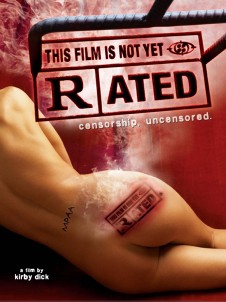
"This Film is Not Rated" is Provocative and Insightful if Not a Little Brash
There's no denying that director Kirby Dick's documentary This Film is Not Yet Rated is exploring and exposing some interesting and important issues about the Motion Picture Association of America (especially for anyone interested in film or freedom of speech). But he often does it in ostentatious and showy ways that hurt how his message comes across. Hiring private eyes to discover the true identity of MPAA raters is invasive and unflattering. And it speaks to a larger tone of pretentiousness that does a disservice to the film. The film is at it best when it simply interviews directors and film insiders about their experiences dealing with the board, which provides more careful, revealing insights than Dick's tactics for getting his message across elsewhere.
Grade: B
Grade: B
Breaking Bad: "Ozymandias"
Spoilers Below:
Last night’s Breaking Bad episode “Ozymandias” made me uncomfortable and I mean that in the best way possible. When movies and television shows are operating at their peak capacity they can grab our emotions and wrench every last possible ounce of feeling possible from us in a way few mediums are capable of. And Breaking Bad has always been very deliberate and calculated about earning every single last emotion. It’s never being manipulative but it almost always comes as a gut punch. And while this last stretch of episodes has been supremely intense, I’m not sure any came anywhere near as close to being quite as devastating as “Ozymandias”.
Where to begin is really the question. If the episode hit
you like it hit me, you ought to be flabbergasted. Plot turn after plot turn
was piling on to form moments that were utterly sickening even as they were
thrilling. It was like the twists of “To’hajiilee” but built more from
emotional and character shifts rather than cat and mouse games.
Only Breaking Bad would be so bold to end one episode in the
middle of a gun fight and pick up the following episode not during that gun
fight but in a flashback. But the flashback makes all that comes after it all
the more despairing. Walt and Jesse in one of their earliest cooks out in the
desert, pissing each other off; Walt calls Skylar to make up some lame excuse
about he’ll be home late. It’s powerful stuff and then director Rian Johnson
does something that really sells the moment home. Everything fades out like old
ghost who have long since stopped haunting a favorite hallowed ground.
Johnson fades back in after the theme to return us in frozen
motion to the gunfight where we discover that Gomez is dead but Hank is alive
although wounded. The business with Hank, Walt and the Nazis feels almost a
perfunctory bit of throat clearing. I don’t think many people suspected Hank
would make it out of this alive but it gives us one last moment where Walt
attempts to wheedle his way out of some inextricable situation and for once it
doesn’t work. In fact, it backfires miserably. Not only does Hank die (in a
moment that’s given no gravitas and quickly moved passed) but Walt has
disclosed the location of his money which is promptly taken away from him.
Uncle Jack leaves Walt one barrel as a twisted sort of finder’s fee and to look
good in the eyes of his golden boy Todd.
I say it’s throat clearing because it’s only the first of
many moments that stick with your gut and make you want to look away even as
you’re unable to. Another moment that follows shortly thereafter which feels
perfunctory is Walt telling Jesse he watched Jane die. The show seems to be
checking off plot points it needs to get through before things really start
going wrong. Oh, don’t get me wrong. Aaron Paul’s contorted expression and his
anguished wriggling as he’s carried away are pitch perfect, but the show treats
it as something it just needs to get over with before it gets to the truly
emotional, knock out material.
The first truly terrible moment, I think at least, is Marie
coming to tell Skylar that Walt has been arrested. Skylar’s dawning sense of
what she’s done and Marie’s haughty pride are undercut by our own knowledge
that Walt is free and Hank is – as Marie put it – dead to rights. Skylar’s face
crumples as she comes to terms with everything she’s done even though she’s
hated herself for it.
It’s a moment that is topped soon after by Skylar and Marie
revealing the truth to Walter Jr. about his father. R.J. Mitte has never really
gotten much screen time to show off his acting skills but he’s powerful here in
his disbelief and even more so later when he defends Skylar from Walt. This is
the one character who has been totally innocent and without culpability. It was
a character I really never wanted to discover the truth and it’s painful to
witness his realization.
Arguably the worst moment in this episode – in terms of:
Holy shit, is this really happening? -- occurs when Walt returns to his home
and tries to convince Skylar and Walter Jr. to pack their things and leave with
him. If his wheedling with Uncle Jack went terribly, it possibly goes even
worse here. Not only does Walter Jr.
know the truth about Walt now, but Skylar, from her conversations with Marie
and Walter Jr., has come to accept the depths of immorality she’s sunk to. And
Walt’s attempts to talk his way out of an impossible situation and win them over
goes south little by little until Skylar has pulled a knife on him to defend
herself and Jr.
The fight that ensues has no thrill to it. It’s brutal,
slow, and all too real. It’s not the badass desert shootout; it’s a quiet,
searing domestic abuse struggle. Look at the way Walt grabs her wrists. He’s no
longer interested in her well-being. She’s in so much pain and yet he keeps
twisting and viciously fighting for control of the knife. It feels like at any
moment someone could get stabbed or potentially die: Skylar? Jr.? Worse still:
Holly?
And as if it weren’t bad enough already, Jr. steps in to
stop the struggle. He gains control of the knife and stands between Walt and
Skylar. Walt is stunned and hurt in a way possibly he has not been previously. His
family has turned on him, and so he does something desperate and awful. He
takes Holly with him. My stomach dropped when that happened, and then it sank
further in a way that I didn’t know was possible as Skylar futilely attempted
to get Holly back.
It’s the last act of a desperate man. It’s nothing in line with
the “I’m one who knocks” vision Walt has been so pathetically trying to sell to
everyone. It is a desperation that is just as apparent in his wiretapped phone
conversation with Skylar – which he surely must know is wiretapped -- where he
says every mean thing he can think of to her. It’s despicable and loathsome,
plain and simple as that. Imagine the man from the cold open saying such
things. That man could barely pass off a lie about working late at the carwash.
But now before us stands “Ozymandias”. The titular “Ozymandias”
takes its name from an Egyptian ruler, famously described in a poem by Percy
Bysshe Shelley (recited by Bryan Cranston in one of the promotional trailers). Ozymandias
built up an empire only to watch it crumble before him. The title seems more
appropriate than ever. It’s hard to look at that shot of Walt standing alone in
the vastness of the desert after the gunfight and not imagine a man coming to
grasp that everything he’s achieved has gotten away from him and been
destroyed. To quote Shelley:
"My name is Ozymandias, king of kings:
Look on my works, ye Mighty, and despair!"
Come look upon Heisenberg’s works. And despair.
Stray Thoughts:
-I didn’t even get to talking to Jesse in detail. I think we
knew Jesse would make it out of this alive and it’s telling that Walt has so
given up on Jesse even in the face of Hank dying that he lets the Nazis have him
to do with him what they want. But death would have been a better fate for
Jesse who has now been made Todd’s prisoner and forcible meth cook. The device
Todd created to keep Jesse locked up in the meth lab is horrifying; it’s like a
dog’s leash meets a torture device. And the leverage over Jesse is the
knowledge the Nazis now have about Andrea and Brock. Ugh.
-The sound design for re-entering the gunfight is interesting. Heavy gunfire over a black screen followed by absolute silence. The calm before the storm. An unmistakable feeling of dread before the inevitable. The acknowledgement of how much has changed since that day in the cold open.
-“Sorry for your loss” – Todd, always the polite gentleman.
-Walt must assume Jesse will be dead soon, so to tell him
about Jane is all the more horrible. He’s just being cruel. It doesn’t serve to
gain anything. I wonder how those two’s paths will cross again; because who are
we kidding: they will.
-“You killed Hank”
-“What’s wrong with you. We’re family” – Walt lying to
himself to the bitter end.
-“He crossed me” – False baddassery, as always.
-And Marie's reaction to Hank being dead was crushing.
-The way Skylar just takes the abuse from Walt during the
phone call is just awful.
-“You’re the smartest person I know … and you’re too stupid
to realize they made up their mind ten minutes ago” – Dean Norris makes those
few moments he has left on the show really count.
-It seems oddly appropriate that Walt is done in by his
family. This was supposed to be for them; at least that was the excuse in the
beginning. Now, they want nothing of it.
-“I have some unfinished business”
Grade: A
Sunday, September 15, 2013
"Blackmail" is a Minor, Formative Work of Hitchcock
Alfred Hitchcock's Blackmail is a formative film. Made in 1929 as his first sound film (initially filmed as a silent film and converted into a sound one after the fact), Hitchcock had only made a handful of film's prior and, though it's a pretty good, at times shaky, movie, it doesn't have the competency, rigor or fullness of Hitchcock's later works. There's still lots of interesting ideas floating around, a surprisingly dark grey area of moral standards and behavior, and, not all that unexpectedly, a good deal of well-crafted suspense and tension. If it were just an interesting work to see to understand Hitchcock's evolution as a filmmaker that might make it enough to write it off but there's a fairly compelling story of a woman who kills a man she's having an affair with in self-defense and while being torn apart about it, she and her husband, a detective, soon find themselves blackmailed by a man who's put the pieces together about the incident. She and her husband try to stay afoot of the police while the man makes demand after demand. It's dated at times to its detriment but the film is still entertaining.
Grade: A-
Grade: A-
This Week in Film (9/8/13 - 9/14/13)
It was another average week at Popcorn and Existentialism where I continue my, thus far, year long trek into the depths of cinephilia. And if the films yet again seem to abide by no coherent logic or order it's because my tastes and interests and desire to explore as far flung afield neutered any opportunity for such a semblance of unity. There are some winning, strange horror movies, two very different historical dramas, a poetic road movie, a gangster movie that refuses to be a gangster movie, and brutal samurai epic. So needless to say, it's exactly what you'd expect from me here. Let's tally it up:
Paris, Texas (1984) - Wim Wender's road movie takes advantage of gorgeous Texas locales to create a stunning film about suffering and loss. It's meditations and enigmatic beauty create something poetic and achingly real.
Breaking Bad: "To'hajiilee" - Well. Fuck. Words can't really begin to not-spoilery describe the epic events of last week's fourth to last episode. Watch it.
Videodrome (1983) - David Cronenberg's thoroughly bizarre and unsettling horror movie feels ahead of its time, contemplating issues of technology and our dependency that are still relevant today. Also, there's some moments that will make you go "What the fuck!"
The Battleship Potemkin (1925) and What Movies Owe Us - I sort through why we place the kinds of expectations on film that we do and why that can be problematic.
The Host (2006) - Joon-ho Bong's horror blockbuster broke box office records in South Korea and for good reason: it's a lot of fun. Part horror movie, part political commentary, part melodrama, part idiosyncratic family drama, and all very entertaining.
No (2012) - Pablo Lorrain's latest film about the Pinochet government tackles the corruption of the regime with a good dose of humor as seen through an anti-Pinochet ad campaign that looks more like a 1980's Coke commercial than a political ad.
The Killing of a Chinese Bookie (1976) - John Cassavettes' loose film about a club owner who's ego and massive gambling debt suck him deep into a criminal underworld that's too seedy for even him to comprehend. It's got too many moments that awkwardly linger for far too long but the noir action is top notch.
Le Samourai (1967) - Jean-Pierre Melville's gangster movie is buttoned-down cool. The stylish and massively fun story of a contract killer who tries to lose the heat of the cops and the people who hired him after a job goes awry.
13 Assassins (2011) - This samurai epic owes a great deal to Seven Samurai and other classic samurai films but it takes their get-the-gang together narratives and brings them brutally into the modern film age without losing any of their contemplativeness.
Subscribe to:
Posts (Atom)