Wednesday, August 28, 2013

"It's Always Fair Weather" is Delightfully Fun Even With That Dark Heart Underneath

There's no denying that It's Always Fair Weather is a loose, at times surprisingly moody, movie, but it's also a film that's often enough having a lot of fun in its attempts to make us have a good time that it's hard to refuse it's gleefully playful dance and musical routines (even if melancholic, emotionally sour sentiments underlie many of them).

Take the film's best, most memorable sequence, an extended dance sequence where Gene Kelly dances on roller blades:


It's a bravura piece of choreography, fantastically executed by Kelly with the appearance of effortless, acrobatic grace. The physicality he puts into a routine that is already difficult to begin with is jaw dropping and makes the sequence all the more entertaining. Kelly revels in the chance to show off his abilities and he's having so much fun doing it that we in turn can't help but roll along with it.

And there's plenty of other beautifully staged dance routines set to music that are just as infectious and indelible -- two impressive ones worth noting are a tap dance routines with trash can lids and a three way split screen showing actors dancing in sync while in different locations. That most of the music is about friendship and love helps and fits with how the film treats its eye-popping Technicolor stage world. The film acts as if its world is a little unreal (though some of the underlying sentiments hit close to the Post-War home), even dropping in some mild but hilarious satire (notably the awful fake variety show "Midnight with Madeline" filled with absurd product placement and featuring a ditz --- Dolores Gray -- that puts Lina Lamont to shame).

Though it is as slapstickish and eye-candied as other MGM musicals, it's also a lot darker than many others. The broken friendship between former GI pals (Kelly, Dan Dailey, Michael Kidd) at the film's center gets surprisingly bleak; not to mention the film's subplot where Kelly's character preps to fix a boxing match. The story doesn't always work, and it doesn't help that the film keeps getting distracted by extraneous plots -- including a long break where Cyd Charisse's Madeline goofs off at a boxing ring (that while admittedly fun doesn't advance the plot at all). But the dance sequences are pretty splendid all the same and what is a musical if not its music and its dancing. 

Grade: B

Tuesday, August 27, 2013

Breaking Bad: "Confessions"

**Spoilers Below:**
 
Sometimes I feel it’s my goal in these little write ups to talk about theme and what makes Breaking Bad super effective and awesome beyond its super addicting action and plotting. And other times Jesse Pinkman douses the White residence in tons of gasoline prepping for conflagration, and I say “fuck it”. HOLY SHIT!

Of course, Breaking Bad zigged where I expected it to zag and Hank did not get the pertinent information he so badly desired from Jesse. This makes sense considering Hank’s history with Jesse (he did beat him up to the point of hospitalization) but it also left open the question of what happened with Jesse moving forward. His paperboy act with the millions of (illegally funded) dollars was never going to let him get a completely easy way out.

Jesse could have taken the new identity and gotten away from the poison that is Walt, but dramatically I’m not sure that would have been the most satisfying development. When Walt hugged Jesse out in the desert it was deeply uncomfortable and miserable. Walt is still deluding himself into believing he’s in control and that he can escape his past actions. But in the world of Breaking Bad actions always have consequences. Remember that this is a show that blew up planes in a reign of hellfire to judge its protagonist. 

Each episode this far in the last stretch of eight episodes has focused on a supporting character. On one level these episodes have been examinations of the role of the character in the series over its entirety, but they’ve also shown us where that emphasized character stood in the end game of the story. The premiere was Hank’s episode and placed him as the antagonist to Walt. “Buried” tested Skylar’s conflicted feelings over her duplicity and pushed her onto the side of Walt in the battle with Hank. And “Confessions” tackled the show’s currently most mercurial figure. 

“Confessions” at once refers to the fantastic, oddly astonishing and awful fake confession that Walt fabricates implicating Hank as responsible for all of his actions over the course of the year. It had never crossed my mind that this might be an option but it makes total sense; Walt will never give in (he’s too selfish, egotistical and hubris-driven to lie down) and he refuses to kill Hank so what better way to gain the upper hand then to counter corner him (of course, in typical Heisenberg fashion it comes in the form of a threat). 

The title, however, also refers to the information that Jesse learns from Saul after a fateful realization that Walt had Brock poisoned. Moments away from taking the criminal equivalent of witness protection, it dawns on Jesse just how deeply he’s been duped. The scene where Jesse waits for the car to arrive is shot largely from an extreme distance; he’s so tiny. He looks probably how he feels. 

And suddenly Jesse Pinkman goes nuclear. Does it make sense as a response? It’s extreme yet feels completely right and justified. But it also isn’t an action that Jesse can easily come back from, nor can the show. This isn’t to forget about the episode’s cold open which features Todd and his neo-Nazi uncle who are strolling their way into town. 

The revelations and cliffhangers keep coming. And if this is any indication we’re only just getting started. I for one can't wait.

Stray Thoughts:

- God, I love Dave Porter, who composes the music for the series. The music from Jesse's revelation to the end of the episode is gritty, pulse pounding and perfectly parallels the action.
- The dinner scene was hilarious. Walt would choose a highly public place and it would be the sort of place where the waiters are too chipper for their own good. 
- Walt's confession is terrible because it's an unexpected step further toward losing all redeemability.

Grade: A-

Saturday, August 24, 2013

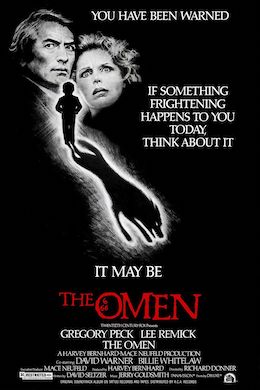
1976's "The Omen" is More Clumsy Than Scary Four Decades Later

I suspect that back in 1976 that The Omen was probably somewhat scary but taken a few decades removed a lot of it feels clumsy. It has its moments; those that have become part of the cultural lexicon in one form or another. But ultimately the film is merely a series of moments strung together in a frustratingly disjointed manner. This makes what doesn't work stand out so much more; the excessive zooms the 70's were infamous for are overused, as is slow motion, and the long stretch where Gregory Peck's Robert Thorn searches for answers is unnecessarily long and makes the movie drag.

The film simply works with too many elements. The seemingly most crucial, Damian (Harvey Spencer Stephens), the son of the Devil adopted by unsuspecting parents, is given a strangely minimal amount of screen time. In stead we spend time with a kooky priest, a suspicious photographer, a satanic baby sitter, and some demonic dogs; these are all elements that would be fine in small doses but are confusingly emphasized.

It's not all hamfisted. The infamous bike and bannister scene is still suspenseful and nerve-racking. But there's simply too many moments that are awkwardly shot. Jerry Goldsmith's score is deliriously scatterbrained and counterpoints scenes in terribly thought out ways. The Omen adopts parts of other films of the genre but can't make them stick together in a cohesive or interesting way. 

Grade: C+

Back to School

The bountiful amount of writing I do in my free time might distract from what I do in, well, "real life". I'm going back to college and starting classes in the next few days (where you might be surprised to learn that I am a History major -- working on slipping in a minor in Film and Media Studies). Though I intend to keep watching films and writing about them, I can't guarantee my output will remain at the level it has been. The summer gave me an opportunity to really dig into this side project of mine. And though I did a good deal of this last semester, it was admittedly at the cost of my academics (even as some part of me is totally cool with that). 

Whether I will be watching less movies or watching the same, or nearly the same, amount of films and writing about them less has yet to be seen, but I post this forewarning the likely event of a drop in writing. I love doing this but right now it's only a fun hobby. I love it but I have to be honest with myself. 

I have only scratched the surface of movies out there. If you look through the films watched and written about this year, they have nearly all been films I have never seen before (nearly 98 or 99% -- no joke!). And that still doesn't amount to a hill of beans in this crazy world. The pleasure of enjoying films is that as many as you've seen, you still haven't seen everything and discoveries are just around the corner. Fellini, Bresson, Bunuel, Hawks, Ford, Hitchcock, Cassavettes, Peckinpah, Wyler, Kar-Wai; to name a few, are on a long list of directors I hope to sneak in at least one more movie of before years end. That's not to mention genres and eras of film that I've neglected (I hope to see some more musicals, Westerns, and romance before the years out).

We'll see where it goes and how I treat writing about it. Perhaps I will do shorter reviews or more summary things. I hope that if you follow this blog though that you stick with me. Please remember that comments and suggestions are entirely welcome, even encouraged. Writing is nothing without discourse.

I'm not going away. I'm just changing with the times.

This Week in Film (8/18/13 - 8/24/13)

It's another fine week for movies as always and there are plenty films that I've queued up that are begging for discussion. I've attempted once again to balance between older films, glimpses into film heritage, and newer releases. Lets tally it up:

Ginger and Rosa (2013) - There's a reason "Think Young" is one of the 1960's most ubiquitously remembered platitudes, and appropriately Ginger and Rosa transports us back to 1968 to show growing up in all its messy glory. Carried by the phenomenal performance of Elle Fanning as Ginger, the film will infuriate as much as it pleases and also make you wonder why no one has figured out how to utilize Fanning so well before this.

Breaking Bad: "Buried" - The breakneck pacing that began in last week's premiere doesn't let up in the second episode of the last eight for this fantastic television drama. It's an episode that is every bit as good as the premiere and should give fans hope that this very well could all end on a high note. 

Invasion of the Body Snatchers (1978) - It's that rare re-make that's every bit as good, if not better, than the original. Though it loses some of the subtext of the original in favor of an all out paranoid atmosphere, it's still a suspenseful and fun time to watch the dread sink in as the protagonists realize that aliens are masquerading as human beings. 

Only God Forgives (2013) - Nicholas Winding Refn's follow up to the visually gorgeous crime thriller Drive carries over the wonderful visual composition but loses the underlying mechanics that made Drive such a surprise. The film is barely tolerable at points and boring at others and the bloody revenge tale isn't interesting or deep enough to make the hypnotic imagery really sing.

What Maisie Knew (2013) - The harrowing portrait of a custody battle as seen through the eyes of a six year old girl played with beautiful unaffectedness by the child actor Onata Aprile. As Maisie becomes the unwitting pawn in the selfish games of her parents and the adults around her, the scorching realism becomes heartbreaking. 

The Exterminating Angel (1962) - Provocateur Luis Bunuel's surreal premise about party guests who just can't seem to leave the room after a dinner party is absurd yes, but also simultaneously very, very funny and thought provoking. And Bunuel's attention to the details of the outlandish nightmare make it strangely plausible in context.  

Ugetsu Monogatari (1953) - Considered one of director Kenji Mizoguchi's two or three best films and one of the films that helped him gain a greater recognition outside of Japan. Hauntingly ethereal and grandly Shakespearean, the tale of 16th century farmers seeking fame and fortune is a fable but it also feels very true to life.

Amour (2012) - Michael Haneke's unflinching look at love in the face of illness is as hard to watch as it is rewarding. The towering performances of Emanuelle Riva and Jean-Louis Trintignant build up a relationship that feels as if the couple has known each other all their lives and that makes it all the more devastating to watch as Anne deteriorates from a stroke and Georges keeps persevering despite the inevitable.

Targets (1968) - Peter Bogdanovich's debut film is a scrappy little thing, strung together from mismatched parts that shouldn't work but come together in a fantastic final act. The film contrasts an aging horror film star (Boris Karloff) with the horrors of a modern world, a milquetoast man who snaps and goes on a killing spree. 

The Butler (2013) -  Lee Daniel's sweeping historical epic takes on the broadstroke history of the Civil Rights Movement with a little too much sentimentality and simplicity. On the other hand, the film is filled with enough excellent performances from an ensemble cast, especially Forest Whitaker as the titular butler Cecil Gaines, to make up for its familiarity and how skin deep it is.

"Back to School" - I discuss what returning to college means for the output of my writing on the blog.

The Omen (1976) -  Taken removed all these years from its release, The Omen largely falls apart. On its face, it has the classic horror storytelling of Rosemary's Baby and The Exorcist but, unlike those other films, really seems more concerned with shocking us than telling a cohesive and engaging story.

"The Butler" Glosses Over the Complexity of its History but It's Still Entertaining

Star power can be intoxicating. It can salvage even the worst of films and make films that are kind of lousy tolerable or seem surficially good. For example, The Help is an exceptionally well acted film and its acting often distracts from its inability to tackle the race issues it claims to contend with. Director Lee Daniel's latest film The Butler is a film that rolls out the welcome wagon for star after star. It's a star-studded affair with Forest Whitaker front and center in the lead role as Cecil Gaines (based on the real life figure of Eugene Allen), giving a performance like he's out for an Oscar nod.

It's a powerfully acted work with actors even just in passing roles getting moments to really chew the scenery. Though it's well-acted, The Butlers' true story of an African-American White House butler who worked under every administration from Eisenhower to Ford is an ill-formed thing. Other than the titular performance and its passing interest in race issues, the film has hardly any through-line to connect one segment to the next. The film jumps from administration to administration with no real sense of direction and ends abruptly during the Reagan administration for reasons that though apparently based in reality seem to come out of nowhere in terms of the story. Yes the film is on one level a biopic but it attempts to use this empowering, at times fascinating, under-told story to give glimpses into the larger history of the time, specifically the evolving issues regarding race and race relations. In the process it loses a sense of what we're supposed to take away about Cecil, or even the history the film is in conversation about. The film's look at race issues is ultimately only skin deep.

The film is still  entertaining, balancing moments of tugging on your heart string and (more often then you might anticipate) hitting your funny bone. And even when the film gets too sentimental and maudlin the acting is typically strong enough to save the film. The film's approach to the portrayal of the various presidents is refreshing. The actors (Robin Williams, James Marsden, Liev Schcreiber, John Cusack, Alan Rickman) don't fall into caricatures of the people they play but simply versions of the people (the make up and the voice work is never overdone).

A surprising amount of time is dedicated to Cecil's relationship with his son Louis (David Oyelowo -- which ends up forming the spine of the movie's story) who for much of his life he has an estranged, complicated relationship as Louis gets interested in civil rights protests and later the black power movement. Cecil is mostly true to his older generational roots and conflicted over his feelings about racial issues, and the film is at its best when it deals with this. Though it usually avoids complicating matters too much and sticks to sentimentality and familiar plot beats, it's still good comfort food.

Grade: B-

Thursday, August 22, 2013

"Targets" is Erratic but Sharply Satirical and Shockingly Violent

There are two very different stories taking place in Targets. At times they feel like two different ideas for films sutured together haphazardly. But there's a gambit being played that pays off in the film's amazing final act set at a drive-in move theater. The two stories, one of Hollywood insiders attempting to escape or survive the industry and the other of a mild manner man (Tim O'Kelly) who snaps and goes on a killing spree, slowly start to comment on one another. The first story of a Hollywood writer (Peter Bogdanavich -- who wrote and directed the film, in his directorial debut) attempting to convince an aging star Byron Orlok (Boris Karloff with a character name that recalls Nosferatu) to back his script for a new horror movie is all about how the old-school horror of Frankenstein and Dracula (that Boris Karloff helped launch) is going the way of the dodo. The second story is the new horror in action. This new horror story is described by Byron early on as he reads a newspaper article describing the murder of children; a new age of terrors begs for a new type of horror to critique the new horrors of the day.

Bogdanavich slips in this social commentary into a brisk, bitingly sardonic film. Though it's shaky and loose in places, the satire is sharp and funny (and even frighteningly clear sighted) and the dovetailed ending is super intense and a fantastic statement of the film's themes.

Grade: B