Sunday, June 23, 2013

"Warm Bodies" - Film Review

Warm Bodies feels like a film that shouldn't work. It's harebrained premise seems too silly and lame to really amount to much. And certainly, there are elements to the film that fall flat. There are entire inner monologues from our protagonist all in the name of exposition or convenient thematic explanations. There's also a number of flashbacks that never fit in neatly into the film's storytelling. There are also a fair amount of things that feel too cute, too cloyingly attempting to be sweet and win us over. But as the film moves along you might just find yourself enjoying the film in spite of yourself. Sometimes a daffy, inscrutable charm is enough to carry a movie for the day, and Warm Bodies abounds in silly, syrupy charm and tone.

The film's central star-crossed, paranormal romance doesn't try to rise above its cliches embracing the obvious and inevitable relationship between zombie with a soul R (Nicholas Hoult) and human Julie (Teresa Palmer) who he rescues after falling maddeningly head over heels for her at first sight. We root for it to work out for these two crazy kids because the relationship is all very sweet and sincere. Watching R attempt to win over Julie slowly is far more fun than it has any right to be. If where all this is heading seems too obvious and predictable than this movie probably isn't for you, but it fits with the light subversion of the genre the film plays around with throughout. The film poses zombies as products of circumstances who only eat humans because its in their nature and not because they have anything especially against the human's they snack on. And the film finds a convenient way for an easy target to step up and take the place of the role of villainy in the freaky looking Bonies (zombies who've desiccated to the point where all humanity has been removed).

The film isn't anything special, but it's surprisingly entertaining. There's enough charm and sincere (refreshingly unapologetically so), easy going storytelling throughout the film to make it a pleasant if unassuming viewing experience.

Grade: B-     

Saturday, June 22, 2013

The Domestic Drama (and Spy Capers) of the Great First Season of "The Americans"

 Spoilers Below:

Meet your neighbors. The Jennings. Phillip and Elizabeth. They’re your average American family, with two kids, running a travel agency. What could be more normal?

Of course the Jennings aren’t entirely what they seem. They’re undercover Russian spies who have integrated themselves entirely into a typical, boring suburban American life of the 1980's. The real interesting thing here though is that they’re the protagonists of The Americans. We’re meant to root for them in spite of the fact that you might imagine them as the “bad guys” and they’re destined to fail (History, go figure!). We root because the spy stuff the show pulls off is pretty exciting, because if the Jennings ever get caught their kids would be taken away (and likely devastated), and because they have a lot in common with us.     

For all the cool intrigue inherent to the premise of The Americans, the show works as well as it does not because of the spy capers (although it can pull them off with aplomb) but because of the personal relationships the series examines. Much like The Sopranos was a domestic drama with mob action on the side, The Americans is a show that’s about the domestic and mundane more often than it is about international cat-and-mouse games. This might make it sound boring, but it’s not. You get to have your spy caper cake and eat it, but you also get some of the best exploration of marriage happening on television (among many other very nifty thematic aims). 

The character work on The Americans, more than anything else it gets right (and gets a lot of things right) is what makes it so fascinating to watch. This is particularly true of the relationship between Phillip and Elizabeth Jennings (Keri Russell and Matthew Rhys), but it’s also true of a number of other equally interesting and complicated supporting characters. The series has done a fine job of building a supporting bench filled with characters that are compellingly written and acted. Noah Emmerich’s performance as FBI agent Stan Beeman, who’s hot on the Jenning’s trail and living next door to them, is every bit as interesting to watch as our spies next door. In the last stretch of episodes, Emmerich gives in some career best work, blowing the lid off the quiet rage hiding under Stan. 

This rage is frightening to see unleashed, unexpected and unsettling, and it demonstrates another thing the show does well: unstated states of mind. The series is one of great subtly and ambiguity. This fits well with one of the show’s biggest themes: trust. The Jennings are married only in appearance but it’s a marriage of convenience, created as a cover for their spycraft. They only met when they first got married, and there’s little love between them, especially from the direction of Elizabeth. Phillip cares about her but receives minimal reciprocation. Elizabeth has so thoroughly dedicated herself to the cause that she has trouble seeing or understanding anything else. She’s pragmatic in her relationship with Phillip but a tad overly passionate when it comes to work. Conversely Phillip is pragmatic when it comes to work but overly emotional when it comes to his family (He spends the pilot considering flipping). Phillip is also much better with the kids; Elizabeth finds herself having trouble relating. 

They spend the season contemplating perhaps making an actual go of their marriage (Perhaps best captured in their later separation which is filled with lovely soulful longing and unstated desires). They’ve been pretending to be married for so long that they’re within spitting distancing of establishing the necessary connection of the real thing. But the two have spent so much time doubting and mistrusting one another, keeping secrets and treading lightly, that they’re not sure what’s real in their relationship and what’s an act. This is further complicated by the fact that both have former lovers that neither is quite over.

And this is to say nothing of the spy narrative that’s also a major part of the series’ appeal.  There are plenty of low tech spy adventures filled with some crackling pre-millennial tension throughout the season. The spy stories are typically tied rather nicely together into the domestic storylines of the episode. A good example of this is “Trust Me” (which also coincidentally restates the show’s big theme). In it Elizabeth and Phillip are separately abducted, leaving their kids, Paige and Henry stranded at a shopping mall. The stakes for the scenario are that they might die or get hurt in the line of duty and that their kids might get hurt as well (which is quite possible as they choose to hitchhike and are picked up by a big old creeper – Don’t worry! They make it out safe). The balancing act between the tension of home life and, um, work life is part of what gives the show much of its tension and drive (This is a quite nicely stated in the final shot of the season which features Paige just shy of discovering the truth about her parents).   

But the spy stories are also the thing that sticks with me the least. Fun in the moment as they may be (I mean: that car chase in the finale is freaking awesome). But the specifics sort of get lost in the fabric. Bugs get planted. Elizabeth and Phillip pop on some cool disguises (with some ridiculous wigs) and fool people into believing they’re someone else (which provides one of the season’s best subplots where Phillip’s alternate identity as “Clark” gets him into a serious relationship with a woman, Martha, working for the FBI – they eventually get married of all things). Stan does some counterintelligence work to figure out what the Russians are up to, and the aims of the Americans and Russians so often nicely parallel or dovetail. But honestly all you need to understand is that there’s a covert secret war taking place between the Russians and the Amercians. This is a Cold War, people! And the show is really one of cold wars, rarely hot ones. There’s a cold, distant quality to the series, and it’s got a surprisingly slow pace for a show about undercover spies. But then again, The Americans isn’t a show concerned with politics, or even war. It’s interested in the personal. People tend to do things in the name of self-interest or to please people not for any cause (They might espouse that it’s for the cause but that’s usually just self-deception and an easy excuse). 

But it’s okay that we don’t spend as much time watching people play cat and mouse. They’re already doing it constantly in their own life. This isn’t just the case for the Jennings, but for the Beemans as well. Stan and his wife Sandra (Susan Misner)’s marriage is on the rocks, and his increased focus on work only expands the gap between them. This is made all the more problematic as Stan falls for Nina (Annet Mahendru), the Russian woman working at the Russian embassy that he’s turned. When they consummate their feelings and begin an affair, Stan’s marriage all but falls apart.

The issues of trust work twofold; this is the Cold War (with spies!) so no one is quite sure who they can trust, but in the situations where they should have the most trust of all, they’re waters are even less certain. Everyone is deceiving everyone else. The show doesn’t make all that many blatantly explicit parallels between the Cold War and the personal conflicts at hand, but the Cold War acts as a good general metaphor for these messy relationship problems. 

The Americans has turned this intimacy to its advantage. It’s never certain when someone will force the conversation towards confronting the issues in their relationship. And by pushing these confrontations further and further off, making them bubble up every so often but never resolving them, the show has created tension out of moments that aren’t all that intense in of themselves. This emotional reserve has made the show all the more engaging and all the more devastating. (The show has wrung devastation out of the deaths of rather minor characters, such as Amador and Gregory, in a way you wouldn't have anticipated). The shows rhythm make for a style of storytelling where this is completely unexpected while entirely plausible, and it mines tons of emotional resonance even when it doesn’t entirely seem possible. This is a credit to a combination of the writing and the acting which can elevate even some of the more contrived or shoehorned elements.   

The Americans personal approach to spy capers has made for one of this season’s best television shows, and you should check it out.

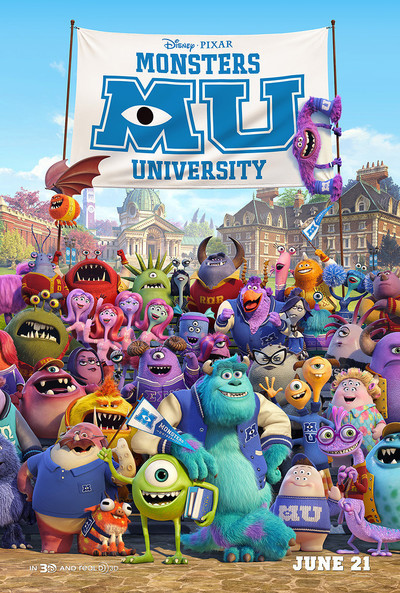
"Monsters University" - Film Review

About a little over halfway through Monsters University, Mike (Billy Crystal) and Sully (John Goodman) look down into the Monsters Inc. factory we know they're destined to be employed at. They jinx eachother while seeing a supposedly famous monster saying, “He’s lost speed but his technique is flawless”.  And in that quote the two have unintentionally described Pixar. When Pixar came on the scene back in 1995 with Toy Story, it was revelatory, with its impressive CGI animation and equally impressive storytelling. Since then the studio has garnered both critical and commercial success for a number of films that are all rightfully well-praised. So it almost felt inevitable when Cars was released and it appeared to signal that the studio had lost some steam (something reconfirmed even more strongly with the release of the widely panned sequel Cars 2). Post-Cars hasn’t been bad. In fact, the studio came back with a string of their best film’s to date including Ratatouille, Wall-E, Up, and Toy Story 3. But there was still a hanging dread that the next film could be that film that shows Pixar has lost its touch (or even worst: sold out). 

There’s almost a dividing line in the filmography of Pixar that starts with Cars 2. Now the two films (including this one) produced after Cars 2 haven’t been bad (Brave was a favorite film of mine from last summer). But all the same, Monsters University and Brave feel like they’re missing something. The animation is still gorgeous. There’s still plenty of funny, fun, heartwarming storytelling that works for both kids and adults. But there’s also inexplicably something missing. It’s hard to put your finger on it, but to my mind it’s that special creative spark that sets a film apart. 

Pixar has become a brand name, and so perhaps they’ve become just a little bit comfortable. They’re not making things as ambitious or creatively exciting as they used to. Even Toy Story 3, as fantastic as it was, isn’t anything new. Monsters University is a prequel. The fact the studio is relying on sequels in itself is a little unnerving as if they’re running out of ideas and need to put out a sequel to please their overlords at Disney. Monsters University is even less of a necessary sequel than the Toy Story sequels. The story has so few places to go that it goes backwards rather than forward, setting the story back when Mike and Sully met at college.     

I don’t want to overstate my problems with the film because it’s really not a bad movie. But it’s also just slightly disappointing (which itself is a loaded term I realize) to see it coming from a studio that used to be capable of far more (and who knows, I still trust Pixar, they might still come out with something that blows me away – it’s just not this). 

The film takes us back to the odd couple, buddy comedy days of college. The two get on eachother’s nerves and eventually get themselves expelled. Sully is a lazy fratboy; Mike is a studious geek (The film does a good deal of reduction to these two characters, painting them in fairly broadstrokes). Shenanigans ensue. They begrudgingly team up (along with a bunch of losers in a lowly, nerdy fraternity) to play in a competition to regain their position in the university. They strike up a deal with the sinister dean of the school (Helen Mirren). It’s all just a little too neat and predictable. 

There’s no special premise to the film. You could easily have this film take place without the monsters. There are plenty of films set on college campuses where people get expelled and strike up some desperate deal to reclaim their place at the school (i.e. Animal House, Old School - but much less raucous). There are callbacks to the original film and they’re cute and fun, but they don’t even need to be there. This film has little connection to that first film besides the characters.

Most of the characters besides Sully and Mike are gone. We’re introduced to a number of new characters. The supporting characters become pretty fun in their own right. This is especially true of the luckless fraternity members that Mike and Sully team up with. 

There’s an ending that somewhat redeems all the familiarity. It’s a very Pixar-y mode of storytelling where they deepen the basics of the story and throw us for a turn we’re not anticipating. I won’t spoil it (not that’s it that big of a thing to even spoil) but it’s the most surprising thing that occurs in the film.   

Expectations can kill a film. We’ve come to expect so much from Pixar (perhaps too much). And if you expect too much from Monsters University it might just be a letdown. But I think it’s still worth giving a chance. It’s still colorful, funny, fun, and moving and sad in places.  

Grade: B

Friday, June 21, 2013

"Downton Abbey" Hits Some Sophmore Slumps in Its Less Than Stellar Second Season

Downton Abbey has always been soapy, but in its second season its more overtly soap operatic elements threatened to derail the show. The first season was a soap wrapped up in period piece gloss and the immersion prevented the soap from getting too crazy. The show was doing stories that were both specific to this time period and these characters, and in that blend the writers found a sweet spot. I would have never guessed that my affections would fall so heavily for a show about turn of the century aristocrats and their servants, but the show managed it by never letting the soap become the sole reason for tuning into the show. Soap dramas often get dissed for their outlandish plot twists and reveals to convince viewers to tune in next time. Season one had largely avoided this. But season two dabbled in it more and it caused the show to be too often insane (and also insanely stupid). The show became less character centric, and that meant plots seemed to be dragging characters along rather than character affecting change and driving the narrative (as had been the case in the first season). There were no clear arcs like there had been in season one. Stories just seemed to happen and then never get mentioned again. And some of these stories were baffling and laughable in their absurdity. Take the example of the burn victim who claims he’s a long lost heir. It’s a story that stretches all plausibility and feels like it belongs in a very different show from the one we’re familiar with. And it takes place over the course of a single episode after which it never gets mentioned again.  

World War I wracked some serious damage in real life but never would you have imagined that it would enervate Downton Abbey so immensely, making it feel like as if it was mired in mud. At times, the show dragged, where in the past it had felt so breezy and light on its feet. The schmaltziness that had defined the series from the start (and also was part of its pleasure) failed to avoid falling into excessive, pandering idealism and sentimentality. The demonstrations of patriotism got a little too pointed at times and the show became far too self-serious at times (any time anyone discussed the “war” and what it means or how important it is was a time where the show just felt like it was shoving a message down my throat). Too many stories felt as though they were running in circles repeating themselves for diminishing returns (case in point, Mary and Mathew’s tension of “will they/won’t they” is a contrived and poorly handled  long term storyline that always felt like it was hitting the same notes over and over). This repetition comes at us like a sledgehammer. Hitting us over the head with much less subtly and nuance than the first season had offered (The series has never been exceptionally subtle but the first season looks thoroughly subtextual in comparison to this season). For instance, Bate’s arrest and trial is so heavy handed, so attention grabbing (and feels rather pointless) that it stops being a dumb narrative direction and simply a baffling one. 

There were stories I liked throughout the season’s run but they were far too often buried, solid sub-plots suffocating in favor of less engaging storylines (I've always been a fan of Sybil's stories - and it helps that Jessica Brown Findlay is one of the better performers - and anytime Maggie Smith is on screen its golden). This was part of a larger problem of the season having much less focus and attempting to fit far more stories than usual into each episode. Without a center to hold it together like last season (with the question of who would be heir), things muddled around a lot more.

Downton Abbey is still a fun show but it was much less uniform in its sophomore efforts, more fits of delicious soap drama than stretches where you can't stop watching. Shows that burn through lots and lots of plots have this problem (see other plot burners: Vampire Diaries, The O.C.). Effective plot burners are rather entertaining but more uneven series because of the way in which they churn through so many stories. In the process of consuming so many stories, some of those stories will be bad or at least poorly executed. Plot burners will still reach highs though. The Vampire Diaries' fourth season this year has been bumpy but it still remains something I really enjoy watching. And Downton Abbey remains a show I like watching but my love affair with it (much like that of Mary and Matthew's) became a little more complicated and less universal during the second season.    

"Late Spring" - Film Review

Yasujiro Ozu mostly made films that were about family. They were about the things we do to eachother and to ourselves in the name of family. They’re quiet melodramas. Austerely, minimalistic films that are unassuming. The camera rarely moves, and the story moves along at a slow but assured pace. It's hard to not make this sound textbook or to cheapen the impact and craft of this. Best put, he's observing these people, not telling a story about them. Ozu’s simplicity is deceiving; the tales he spins are specific and yet highly universal.

Late Spring is about marriage and father-daughter relationships, and out of such subject matter we might expect a watered down and overly familiar story about the value of family and the meaning of marriage. But the real genius of Ozu is how he paints out the perspectives of multiple characters, all differing, and then never states which should be the one we take home with us. These perspectives are all the more affecting as they come from people of different generations (another Ozu thematic favorite).

There’s an understated generational conflict at the center of this film. The daughter Noriko (Setsuko Hara) doesn’t want to marry. The father Shukichi (Chishu Ryu) wants her to get married. But the father doesn’t want her to marry because he’s being paternalistic and patriarchal (he never forces her to get married, only makes the suggestion). Certainly he’s doing it because of the values of traditional Japanese society, but he’s more importantly doing it so he’s no longer a burden to his daughter. She’s taken care of him her whole life, to the point where being his caretaker has become her life. She doesn’t mind this though; she loves her father and is upset that she won’t be able to help him anymore. 

Here we see a generational gap. The daughter is part of a generation moving away from traditional values, in this case in regards to marriage. Her friend is a stenographer, living for herself. She considers entering this line of work.  

Everyone in the film throws out their opinion on marriage and its importance. It’s telling that nearly everyone who gives an opinion isn’t married. They’re widowed, divorced, or single. But they’re all quick to speak the praises of marriage and its virtues. Everyone keeps attempting to set her up with someone. They’re looking for it to happen so much that they mistake an engaged man as a potential suitor. 

She does end up marrying by film’s end, but it’s on some level a great sacrifice for both her and her father. There’s a lot of undeniable love and affection between these two and they’re giving up something they care about dearly to ensure the happiness and betterment of the other.   

Her father convinces her to marry when he tells her that he himself is getting remarried (He's lying). This is something that startles, and slightly repulses, Noriko. Despite her shift away from tradition, she's still traditional in this regard. These are humans; selfish, jealous, sometimes thoughtless, sometimes too thoughtful. They contradict, they compromise, they hurt, they settle. And life keeps moving along. 

Ozu really makes the story hit home. It feels so true to life that it's emotions are deeply felt. Ozu has this inexplicable, mesmerizing power to slowly draw us into the story; the first half is leisurely, languid, while the second is driven, eventful, drawing in events from earlier on. We sympathize with these characters because we all know someone like this. Late Spring quietly and movingly makes you consider your own family, your own life. This father and this daughter try to make eachother happy, and in the end they tear eachother apart.

Grade: A   

Thursday, June 20, 2013

"Persona" - Film Review

If I told you I understood what took place in Persona, I’d be lying to you. It’s not really one of those films you understand but you just let wash over you with its imagery, knotty ideas, and intricate, slightly convoluted storytelling.  David Lynch took inspiration from it for Mulholland Drive if that gives you a sense of its frustrating, weird nature.

The film is somewhat experimental. It begins with a flashing set of random, avant garde-like imagery that is a bit unsettling (Make no mistake this initial imagery is disturbing and also feels slightly unnecessary). Eventually we get to an actual story, but the early montage parallels the film’s later quality of being surreal, dream-like, and fractured. The film is about two women. One is quiet, reserved (she almost never speaks). The other talkative, warm. The first is a stage actress (Liv Ullmann) who just had a mental breakdown (claimed to be insane). The other is the nurse (Bibi Anderson) assigned to help her. As the film progresses this relationship becomes ever more complicated. Initially it appears that the nurse is helping her patient but then it takes a turn to make it seem as though the patient has helped her caretaker achieve a breakthrough discussing her own problems.  

Or does she? The film is one about identity. Both women are coping with troubled pasts. Pasts that might just have a lot more in common than they realize. Pasts that are weighing on them; forever preventing them from leading entirely normal lives. The one woman is an actress. Actresses (as the film notes at one point) are performers; they swap out identities constantly. They pretend to be someone else. They put an outward appearance of what people believe them to be. And both these woman are doing that to an extent. 

As the film advances it becomes increasingly difficult to determine what is real and what is imagined. Is this all in the head of one of them? Both of them? Is their difference? The less certain what is reality, the more the visuals take on a hauntingly hypnotic quality. If the story feels too convoluted and confusing than perhaps the imagery will win you over here. I found the film thematically rich but that of course isn’t for everyone, especially in a film that chooses not to give us answers. Like a maddening horror film that descends into a chaos and insanity, the film becomes frantic and strange in its final stretch of sequences. Imagery repeats and perspectives shift. Our understanding of past and current events becomes increasingly farther out of reach. And if that weren't enough: the film keeps reminding us that we're watching a movie. At one point, the film stops projecting, burning up in flames; the problem is fixed returning us to our previously scheduled programming.   


The film's combination of director Ingmar Bergman's exceptional direction and the performances is what makes Persona such a rich, tantalizing film. In the hands of some other director, this would feel self-righteous, pretentious. Bergman lets the ideas simmer intentfully. He's just as much interested in sorting through the film's ideas as he is its images, and the images and the weighty ideas behind them compliment one another. The ideas almost take on new purpose without a more straightforward narrative; they're more ponderous, sticking with us like a sick sinking feeling in the pit of our stomach.     

Grade: A

Wednesday, June 19, 2013

"This Is The End" - Film Review

This is the End has the feel of a sketch comedy. Sketch comedy’s goal is to get you to laugh as often and hard as it possibly can. It’s a format of comedy that’s loose on plot and that isn’t afraid to go for anything and everything in the name of getting a laugh. This means that not every joke will land, but when it does whew boy.

This is the End is loose, and lumpy and loopy. There’s a plot in there but it’s a really thin one that you shouldn’t really concern yourself with all that much. The world ends, there’s the rapture, and a bunch of actors playing themselves try to survive in the midst of all this. There’s also a surprisingly good story of friends growing apart as they get older and life changes them. But fuck it. That’s not really what you’re going to care about. What will sell the film for you is whether you find it funny or not.

Initially the film isn’t terribly funny. It’s trying to do the heavy lifting of getting us to the better comic setpieces that are the highlight of the film. There are some funny moments, particularly involving a parade of cameos where celebrities play hilarious versions of themselves, but it’s all just marking time until we get to the really juicy material. However, as the film progresses it starts to take on a weird, delirious momentum. The film picks up speed and immerses you more into its absurdity and everyone is so utterly game for whatever crazy joke is at play that it works in spite of its ridiculousness.

The film has the sensibility of a bunch of good friends getting together and just filming things they find funny. A lot of this could feel as if you’re missing out on some inside joke that you’re not in on (where the actors are having more fun than we are), and at times it has that quality. But for the most part, the film avoids being a vanity project and there's enough self-deprecation that it doesn't fall into total self-indulgence. The actors (who all play themselves) make jokes that are very specific to their perceived Hollywood personas and film careers. This specificity doesn't always work; there’s a parody/reunion of Pineapple Express that never lands because it pushes the film into an area of comedy where the writers and actors are just dicking around way too much. It’s also a portion of the film that speaks to how much the film is a series of sequences that are very loosely strung together. Some of these sequences made me laugh more than I have at a movie in theaters in a long time (There's a Rosemary's Baby parody that is brilliantly, screamingly hysterical). And yet others were really tedious and felt somewhat pointless. 

Ultimately though, the sequences that do work are enough to carry the movie. The promotional material involving Emma Watson was not leading you on; her appearances in the film are some of the more memorable sequences of the film. The cameos in general are all rather effective – including a surreal one from Michael Cera and one from Channing Tatum that I won't spoil for you. The film has just enough critique of celebrity and Hollywood excesses, with a wry winking self-aware irony, that these cameos don’t seem attention grabbing but simply part of the films larger goal to make us laugh by any means necessary.    

This is the End falls into a tradition of comedy where the writers and actors throw everything at us they can possibly come up with and hope it sticks. It’s anarchic, with little logic. It’s silly, and at times stupid and outrageous. It plays up these actors’ (Seth Rogan, James Franco, Craig Robinson, Danny McBride, Jonah Hill, Jay Baruchel) perceived personas, and yet the excesses of their persona’s and this celebrity lifestyle somehow fit in surprisingly well with the excesses of apocalyptic, end of the world movies. Much of the film’s humor comes from the characters’ total ineptitude in the face of their circumstances. The actors are willing to make fun of themselves, and the film isn’t afraid to not take itself seriously. And in this the film discovers some jokes. Weird, ballsy, satirical, occasionally stupid, jokes. Some work; some don’t. But those that do are pretty damn funny. 

Grade: B-