Tuesday, June 18, 2013

"Seven Samurai" - Film Review

Seven Samurai is one of those film epics that don't seem to get made anymore. It's at once grandiose, filled with action and adventure, and yet also filled with a good deal of intimacy and thoughtfulness. It's a film that even non-film buffs seem to have at least a passing knowledge of; perhaps this is due to it being remade, most notably in the form of The Magnificent Seven. But it's influence can be felt in countless action films and it spawned the whole genre of samurai films.

The story is a simple one; a poor village is threatened by bandits and so, desperately, decides to hire out some samurai to defend them. They have no money to pay these men though and so can only offer to feed them. This means anyone who would take the job is either really nobleminded or luckless. Much of the early going of the film is about finding the titular seven. In deed, the film's notable action doesn't come until well over two hours into the movie. There's nothing wrong with this though; the film does some establishing here, introducing characters and tone. The characters are colorful; they're archetypes at times but they're also a lot of fun in the hands of these actors, particularly Toshiro Mifune as a brooding badboy Kikuchiyo and Takashi Shimura as the weary, noble leader of the samurais Kambei (both of whom were regulars in director Akira Kurosawa's films). The characterization is sharp and well realized; Kurosawa manages to find ways to balanace the many characters, giving them all little shining moments. While he leans more heavily on some characters than others, it's always clear who's who.

The tone is important here. The film is serious and buys into the lofty virtues of loyalty, honor and bravery it espouses. But it's also far more playful, fun and occasionally silly than your average action blockbuster. The film spends a fair amount of time showing character joking around and pulling pranks. What's surprising is how funny the film is. The film does a nice job of balancing between being fun and merry, and also sad and tragic. The tonal shifts are always well-handled, and Kurosawa keeps the film humming along with a sense of purpose and energy. The film never feels its length.

In the hands of Kurosawa, the film has a big budget scope with an arthouse heart. Visually the film is at times moody, shadowy. The film consistently takes stock of what's at stake and the cost eventually exacted upon the characters. The film isn't really concerned with propulsive action; it takes it's time to get to the fighting and even once there it finds downtime between battles to have the characters reflect upon their feelings about the conflict. Kurosawa understands that the action isn't the real purpose of Seven Samurai. It's about telling a story, and Kurosawa is storyteller, weaving a tale of fading dreams and broken hopes that just also happens to have some very entertaining swordplay in the third act. The battle is not a goal in of itself to get to, but an outward reflection of the fight for the values that the characters believe in.

The samurai were a dying class in the period Kurosawa brings us back to (The Warring States Period). The villagers are initially scared of the warriors arrival; samurai in their new found desperation were doing anything to scrape by. To find samurais that still believed in the virtues that idealistically had defined the group was unexpected. The ending reaffirms the sentiments carried throughout the film. This is a film showing us the end of an era; this is the last hurrah for the kind of men who find it a worthy cause to defend an ailing farming village for three square meals. This bitter-sweetness underlying the conflict makes it all the sadder and more poignant.

There's clunky elements to the film, and there are stories here that just don't really work (there's a romantic subplot involving the youngest samurai that never takes off or feels necessary - though how that story ends almost redeems it). However, the film has solid storytelling, wonderful visuals, exceptionally staged action and great performances. It's thrilling, funny, sad and just a whole lot of fun. I wish more action movies had half the brains or at least half of the inventiveness of Seven Samurai.

Grade: A

Monday, June 17, 2013

Mad Men - "The Quality of Mercy" - Review

You grow up dirt poor. You want to escape but you’re trapped. Your parents are terrible and treat you like crap. You want out. So one day you see an opportunity and you reinvent yourself. It’s mostly harmless. No one will miss the old you. The new you starts succeeding and people starting questioning “Who is this person?” They start digging deeper and they discover that you’re not who you say you are. But at this point the reinvention is so ingrained and feels so real that it might as well be the real thing. And so everyone shrugs it off. 

That’s the story of Don Draper but as we learned tonight it’s also the story of Bob Benson. Bob's big secret is not that he's gay as last episode suggested (although he is gay) nor is he what any of the wacky theories out there have suggested. No, he’s just a man who had a crappy life and decided to flee it. He adopted a new identity and was lucky enough that no one chose to question it. That is until now when Pete takes over for Ken’s Chevy account and is forced to work with Bob. Pete looks to get Bob fired and asks Duck Phillips to help him with this. Duck does some digging and learns that there is no "Bob Benson". 

Pete has learned from experience though that it’s not worth attempting to take down this kind of person who isn’t who they say they are (a nice resonance of the first season). He lets Bob stay; he isn’t harming anyone, he’s apparently pretty good at the job, and as long as he gets rid of Manolo and flirting with Pete, Pete will let sleeping dogs lie (there's potentially more to be gained from letting him stay than forcing him to leave).

You have to imagine Don was Bob at some point. In flashbacks in the past we saw his eager, can-do attitude get his foot into the door of Sterling-Cooper. This attitude likely persisted until he got to the place of power that he has. In contrast, the Don of today is a mess. He starts the episode looking haggard, sleeping in Sally’s bed, unable to shake the memory of what he’s done to her (something felt more strongly due to the heavy presence of Sally in this episode – but more on that later). Don ends the episode being called a monster by Peggy, and it’s a reminder (a little bluntly) that Don has fallen far from the days where he looked like Bob Benson. He’s pushing everyone away from him; he’s lost Betty, he’s lost the respect of Peggy, he’s lost the love of his daughter, and Meghan is slipping away from him. 

Don is out of sorts initially but he seems to snap back in place when he runs into Ted and Peggy at the movie theater (seeing Rosemary’s Baby). Don goes out of his way to wreck what exists between Peggy and Ted. At the campaign meeting with Saint Josephs, Don suggests to the client that Ted has “personal reasons” for choosing a campaign centered around a Rosemary’s Baby parody. Don lets the suggestion linger there long enough that everyone gets the hint that he means Ted and Peggy are interested in eachother before swerving in another direction and claiming it was the last idea of the late Frank Gleason.

Don is right that the office romance is no good but he’s not really concerned about it for that reason. If he can’t be happy, if he can’t have Peggy, well, than no one can. Ted may want his juice (a company he loses this episode) but Don wants his juice too. And Sunkist, not Ocean Spray, is ultimately the company they go with, for the sake of money. Don has the money to get whatever he wants and inevitably money corrupts. Money made the company chase after Jaguar, money caused Lane Pryce to commit suicide, and money could buy off Betty, Sally, and Meghan (for a time at least). When Sally tells Betty that her father never gave her anything, it’s true up to a point. He bought her lots of nice things and gave the semblance of a strong relationship, but Don’s interests have continually drifted elsewhere. He loves his children, and he wanted to be the good parent that his own parents never were. But he’s just so goddamn selfish that misses the forest for the trees.  

Though Sally wants to distance herself from her father, she’s behaving quite destructively herself. Sally is no longer speaking to or visiting her father. She decides she wants to go to boarding school to get away from both her mother and father (both of whom have now disappointed her). She stays overnight and the girls she’s stay with hold over her the fact that they will be evaluating her. Sally has Glen bring over alcohol and pot. She ends up alone with the friend Glen brought who tries to hook up with her. Sally has Glen beat up the guy, claiming he tried force himself on her (which he didn't but came very close to doing). On some level she does it because, hey, Rollo is a fucking creeper. But it also seems as though Sally wishes it were Glen making a move on her. Does she want to ruin Glen’s chances with the other girl? Or does Sally want to screw over both guys? It’s probably a combination of all these things (and the fact the guy was a pretty creepy). 

This is in an episode that has a lot of say about what you want versus what you need. Sally doesn’t want to go to boarding school, but she doesn’t see any other options. She’s trying to fill up that hole inside herself that comes with the territory of being a Draper. Don wants to fix things with Sally (and probably needs to as well for his piece of mind). Don wants Peggy to answer to him and not Ted. Ted wants them to go with Ocean Spray out of loyalty rather than Sunkist, who they need for the money. But sometimes what you want is just not the best option. Ted and Peggy want eachother, but that’s likely not a good thing to act upon. They need to keep it professional. 

You want to reinvent yourself into a new person. You don’t need to. But now that you have, you need to make sure no one reveals who you really are because that could be the end of you. 

You can become Don Draper. You can become Bob Benson. You can become Sally Draper 2.0 (more defiant than ever). But you’re still fundamentally yourself, trapped with your lonely self at the end of the day. And you know this, and so perhaps you lash out because you don’t know how else to act. It’s better than confronting the real problem, confronting yourself and asking yourself what you really need.    

Stray Thoughts:
*Lots of violence or potential violence in this episode. The Nixon ad that plays in the episode talks about violence and crime. Ken gets shot in the face and now wears an eye patch (yea that happens, largely without comment). There’s the potential sexual violence bubbling under the surface of Sally’s story.  The psychological abuse of Peggy and Ted could also possibly be tied to this as well.
*Also lots of blackmail or the threat of blackmail. Sally gets blackmailed by the girl’s at the school. Bob fears getting blackmailed by Pete. Don holds his knowledge about Ted and Peggy over them. So, not entirely blackmail I suppose, but there’s an element of coercion there.
*Rosemary's Baby is oddly one of the more effective pop culture choices the show has utilized. Don refuses to grow up!
*Ken getting shot is a very WTF moment.
*Don sees Meghan on television. He’s closer to her in this moment than in real life.
*Don isn’t the only one picking up on the feelings between Ted and Peggy. Ginsburg is frustrated by Ted ignoring all ideas that aren’t Peggy’s. (And Joan clearly picks up on it as well)
*Using Rosemary’s Baby for a children’s aspirin’s ad seems incredibly bizarre.
*Children’s aspirin could thematically tie to the relief for pain that Don can never get and him acting like a child.
*Sally eats McDonald's on the car ride up. Although those fries do not look like they came from McDonald’s.
*Betty gives Sally a cigarette. They’re bonding! Sort of.
*Of course, Sally doesn't want to sleep with Rollo after seeing her father having sex last episode. That shit will scar you.
*Lot of effective, crackling tension throughout the episode. The meeting with the aspirin company, Pete confronting Bob, and Sally defending herself were all intense moments.

Grade: A

Sunday, June 16, 2013

"Antichrist" - Film Review

Going into watching Antichrist, you will likely be forewarned that it’s “fucked up”. But that doesn’t even begin to scratch the surface of its strangeness. It’s at times ploddingly dull and tedious, and at times surreally painful and uncomfortable.

There’s not much in the way of plot to the film and the best way to enter the film is to not really know what to expect. Antichrist has a story (one that eventually descends into convolution) but that story is almost secondary to the feeling the film gives off; it’s a film about an experience (frequently a repulsive one). 

This is true from the film’s first scene, a bizarre slow motion scene that’s so self-serious and overly stylistic that it’s almost laughable. It is both a sex scene and a death scene. A couple loses their son when he falls out of a window (while they’re having sex and opera music plays over – because: why not). The incident shakes both of them but particularly seems to breakdown the mother (Charlotte Gainsbourg). The father (Willem Dafoe), a psychiatrist, takes on his wife as a patient and has her toss out her prescribed medication. 

He delves into what is hanging over his wife that she’s so endlessly grief stricken. This leads to a sojourn to a cabin they own that holds some power over her. As he attempts to discover the reason, things get … weird. Except “weird” is putting it lightly. The boundary between real and imagined break down and new information is revealed that doesn’t clarify but makes things all the murkier. And did I mention that it gets weird? 

I won’t get into specifics because part of the effectiveness of the film is in the craziness of events taking hold of you and upending you. But needless to say they seem to come out of nowhere and they get under your skin. They’re bloody and sexual and disturbing and possibly religious. The film is potentially a metaphor for the story of Adam and Eve (the cabin is located in a place called Eden).  

The film is sumptuous. It’s visually dark, intimate and lush. But it’s beautiful, opaque imagery may not be enough for you to sit through the film in its entirety. The film has inspired controversy and is critically divisive.

I was disgusted by film’s end. And yet, it made me think and it made me remember what films can do when they take advantage of their strongest asset: their visuals.  Director Lars von Triers is thoroughly in command of his vision and getting it across, even if that vision is almost entirely hard to stomach.

Like a thorn in your side, Antichrist will stick with you long after you’ve finished watching, even if you wish it wouldn’t.

Grade: C+

Saturday, June 15, 2013

"Nosferatu" - Film Review

Before there was Dracula there was Nosferatu. Director F.W. Murnau adapted Bram Stroker’s novel without having acquired the rights though and so officially Nosferatu was not Dracula despite how clearly it borrows plot from the story (there would be a court case over the lack of film rights). Nosferatu though isn’t your typical Dracula story, in many ways it’s darker and more sinister. The name alone “Nosferatu” instills so much more foreboding than its counterpart. Nosferatu is also not your typical vampire; unlike Bella Lugosi’s handsome and smooth Dracula of 1931, Nosferatu is ugly, rat-like. There’s no allure here to draw people. Perhaps animal magnetism is the appeal that lures people to their demise by this vampire’s hand.

Thomas Hutter (Gustav von Wangenheim) is sent to draw up the real estate paperwork for Count Orlok (Max Schreck), a mysterious, reclusive man living in Transylvania hoping to move into the house across from the Hutter's. Hutter is an unsuspecting go-getter and so takes the assignment from his bizarre boss Knock (Alexander Granach), a man that’s sketchy and a bit into the occult. Knock is working for Orlok; he’s obsessed with his “master”. 

Hutter heads up to Orlok’s castle and the closer he gets, the more warning signs he receives that this is a bad decision. The carriage taking him refuses to go beyond a certain point. Townsfolk in the shadow of the castle stop their chatter immediately at the mere mention of Orlok’s name; outside in the distance horses run off and a hyena howls. 

He goes in spite of this. But his arrival quickly leads to actual suspicions. Orlok’s carriage flies by at freakishly fast speeds. The man sleeps the day away and stays up in the night. In one of the film's great scenes, Hutter accidentally cuts his finger at dinner and the blood attracts Orlok; he sucks on it hungrily. Hutter becomes increasingly fearful for his life. Rightfully so, Orlok is all but prepared to chow down on his guest when he sees a photo of Hutter’s wife Ellen (Greta Schroder) and decides he wants her. There’s an eerie immediate connection between Ellen and Orlok. Murnau cuts between the two to suggest a powerful bond exists despite the distance. 

Orlok sets out to go to Ellen. Hutter follows shortly after. The film builds up momentum as the two race to get back first. On the boat ride home, Orlok picks off the crew members who start to suspect someone is below. In two of the film’s memorable shots, the crew members investigate the coffins on the ship. The first reveals dirt and lots of rats. The second reveals Nosferatu who rises intently, floating up almost mystically. 

Hutter arrives first but Orlok moves into the home across from them. Orlok needs to feed and starts picking off townspeople. The town believes that a plague was carried by the ship and paranoia slowly creeps in. They turn on Knock, already imprisoned for his strange behavior and now escaped on the lam, blaming him and killing him for the plague (they’re not  entirely far off but it’s a brutal act of mob mentality).   

The film returns to Orlok. Ellen reads that the only way to take down the vampire is to have a maiden lure him and distract him so that he forgets to worry about the sunlight so deadly to him. The scene is intense. We see Orlok approaching only by the profile of his shadow, and Murnau draws out the scene for maximum impact. Elena sacrifices herself and the day is saved from the vampire. 

Nosferatu is as creepy and evocative as ever. The film was made during the German Expressionist period of the 1920’s. It’s a story that’s set in the shadows. Murnau switches between blue and yellow filters to distinguish between night and day, lightness and darkness. 

Nosferatu is still chilling, using atmosphere and imagery to create a haunting vision. 

Grade: A

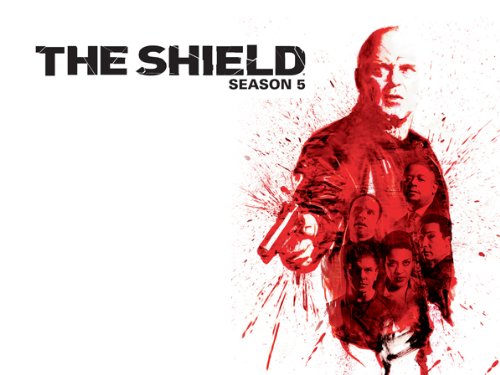
Obsession, Loyalty, and Self-Preservation on the Fifth Season of "The Shield"

Spoilers Below on The Fifth Season of "The Shield":

The Shield has always been a heavily serialized television series. It’s a show with a sense of continuity where past actions, events, and character development carry over time to affect the story. But the fifth season (and to a different extent the fourth season as well) felt more so than ever as if the show was always building towards some end narrative. The fifth season, perhaps more than any other season prior, took a number of story threads from the past and wove them into a new narrative that added weight and meaning to these old story points while expanding them outward to create greater emotional stakes.  The Strike Team finds itself haunted by its past like never before, forced to face the consequences of past actions including the money train (the major plot of season two and three), the fight with Antoine Mitchell (the major plot of season four), and the killing of Terry Crowley (a major plot point of season one). These were all things that could have jeopardized them in the past on their own terms but the team managed to weasel their way out of it. But these now past problems combined with a new looming threat posed the fifth season as the season where the shit officially began to hit the fan for the seemingly always beleaguered Strike Team.  

Now the team was up against arguably their toughest antagonist yet, Lt. Jon Kavanaugh, a cunning, magnetic and ferocious Internal Affairs agent ruthlessly investigating the past misdeeds of Vic and his partners. Kavanaugh is played with electrifying intensity by the great Forest Whitaker, and the season pits him against the Strike Team in a cat-and-mouse game of wits.

The fifth season is one heavy with obsession. Kavanaugh ceases to merely investigate the case and make it his vendetta to take down Mackey by any means necessary. This in turn stirs an obsession in Vic to take him down. But obsession plays out in smaller scale versions throughout the season. The Dutch continues to worry about Claudette’s growing illness with unyielding concern. Claudette attentively, desperately attempts to take down a serial killer who is clearly guilty, if they just had the evidence to shake him down. Corrine’s fears for Vic and herself lead her to worry excessively about the investigation against the Strike Team. Rookie cop Tina Hanlon worries about how she’s perceived by everyone in the department, needlessly considering her appearances at the cost of effective police work.

These obsessions, micro and macro, proved themselves albatrosses for all concerned. Dutch’s concern wasn’t unfounded but strained his relationship with Claudette and hindered their ability to get the job done. Tina’s image consciousness nearly got herself and others killed and let criminals escape. Corrine’s fears magnified the problem when she let it slip information that could build a stronger case against Vic.  Kavanaugh’s obsession inevitably brought him low but not before he managed to drag down Vic and the Strike Team down through the much with him. This also came at the cost of effective use of police department as Claudette furiously says at season’s end (an impassioned speech that wins her the captain’s position). This relentless focus didn’t lay low everyone; Claudette eventually got the confession out of her perp. Preoccupation, when well placed, can yield good results. 

Kavanaugh’s fixation on the Strike Team isn’t bad in of itself, but in time he approached it in such a self-serving and destructive way that we couldn’t help but root for the Strike Team. He leaves the realm of reasonableness into the area of bullying and revenge. 

The other element that plays out heavily throughout the season is loyalty. This is most apparent in the Strike Team itself. It’s initially uncertain whether Lem will turn on his fellow members when pinned with the illegal possession of heroin. The season quickly dispels this and turns to the group’s attempts to combat the case against them. They stick together even though those most at risk are Lem and then Vic. Ronnie serves to gain the least from this with his near spotless record. But they come together to put up a front against Kavanaugh. Kavanaugh is loyal only to himself and the advancement of his career. In this way, he’s not far removed from Aceveda who has throughout the show’s run chosen political advancement over the considerations for anything else. Loyalty is tested elsewhere in the season, largely between partners. Claudette and Dutch’s relationship becomes strained throughout the season as they move in different directions. Tina and Julian’s partnership is put to the test as Julian’s trainee screws up and he refuses to relent.  

The ultimate test of loyalty closes out the season though. Uncertain of Lem’s allegiances, Shane makes a drastic, devastating choice to kill his friend. Believing his ass was on the line, Shane chose self-preservation. The Shield is a show that’s always been interested in self-preservation. Farmington doesn’t want to upset the waters too much. People will give a pass to the Strike Team if it means people are happy and safe. Corrine will ignore the clues that Vic’s unfaithful and corrupt if it means her family is well off. The department will hire out Billings because he’s a “yes man” who will keep things status quo. The Strike Team will do everything in their power to ensure they don’t go to prison and lose their jobs.   

Loyalty and self-preservation occasionally dovetail, but they’re also fundamentally different value systems. 

The Shield has continually raised the stakes as time has gone on by incorporating its past. It accepts past events and the writers build in undercurrents of the past into present stories. It would be easy for the Strike Team to overcome one problem and then to never hear of it again. But the show constantly refers back to its past, making for an increasingly claustrophobic feel. Tensions rise because it becomes less certain who can be trusted and what people will do to save themselves.

In this way, The Shield uses serialization to novelistic effect. As the show heads into its penultimate season, we begin to gain a sense that things are falling apart. We sort of always knew this was always going to happen, but the fifth season marks a point where it seems all but inescapable. People have cornered themselves into fates that will be the end of them (I’ve yet to see how the show ends, so this is only a guess). People have been provided escape hatches and safety nets and they’ve continually rejected or ignored them. Vic could have let up on Kavanaugh. The other members of the Strike Team could have chosen to turn on Lem. But people fall back into old ways, attempting to avoid responsibility. Billings’ nanny cam to discover whose been stealing from the vending machine is this in miniature. He never learns but instead causes more problems for other people and the department when photos of Tina half-naked are leaked.  Rather than accept he fucked up, he bribes Tina with career options. Self-interest is the never ending name of the game on The Shield.     

Friday, June 14, 2013

"The Kid" - Film Review

The Kid is essentially one big excuse to throw Charlie Chaplin’s Tramp together with a kid (Jackie Coogan). It’s a conceit that actually has a lot of what if potential and the film captures this extraordinarily well. The Tramp is practically a big old kid and so putting him together with an actual kid is an amusing sight gag in and of itself.

A Woman (Edna Purviance) loses her child and the Tramp of course comes across him abandoned in an alleyway. He wants to get rid of the kid right away but his sense of decency inevitably causes him to raise the child. So we have a big man-child amusingly attempting to raise a kid. The film cuts ahead five years so the film can utilize an adorable five year old garbed up like a street urchin.  

If The Kid doesn’t always reach the unqualified masterful heights of Chaplin’s other works (Modern Times, Gold Rush, City Lights), it still has much in common with them. There’s a deep reserve of humanism that Chaplin draws upon in his stories, turning something that could be maudlin into something with a great deal of deeply felt emotion. When the Tramp loses the Kid, it’s incredibly tragic and sad. When the Woman runs into the Kid without realizing he’s her kid, it pulls at all the right heart strings. 

The film is also a rather funny one. Chaplin uses his physicality for some glorious slapstick, and he uses the Kid’s pint sized nature to make some visual contrasts that are hilarious. The Kid dupes a bumbling cop; he squares off against a bigger kid (and then his truly big brother) – with the Tramp’s pride leading him to encourage and join in on the fight. 

The blend of humor and pathos is arguably the film's best quality. When agents from an orphanage attempt to take away the kid, the Tramp stumbles across roof tops risking his life to get the kid back. It's simultaneously rather funny and also heartfelt and sad.  

It’s also a film of inventiveness and playfulness. There’s a dream sequence at film’s end that doesn’t entirely work but is pretty brazen. The Tramp imagines himself in heaven. Here Chaplin takes advantage of the setting (the appearance of angels) to show people “flying” for brief periods of time. 

There's even a small dose of social commentary in the film. While it's nothing as sharp as Gold Rush or Modern Times, there's still a solid message in there about the effects of poverty.  

The Kid is a great silent comedy; moving and funny in equal measures. 

Grade: A

Thursday, June 13, 2013

"The Big Sleep" - Film Review

The Big Sleep is one of those films where everyone talks fast and thinks even faster. It’s a good old fashioned mystery wrapped up in a noir hardboiled detective narrative.

It’s a film that’s constantly playing around with shadows (as noir’s do) and in the lighting we’re given much of the sense of ambiguity and complexity that drives The Big Sleep. The intricacies of the mystery become ever more interwoven as the film progresses (to the point of convolution) but you don’t need to get every little detail to enjoy The Big Sleep. The pleasures of the film are in its performances, in its dialogue and in its atmosphere. 

It’s a film where every person is smart. Every person is trying to outwit every other person around them. When people speak, their words are sharp and biting; they’re knowingly clever. The script by William Faulkner, Leigh Brackett, and Jules Furthman is filled with some memorable one liners and some dialogue that’s so fast paced it’s occasionally overlapping. The dialogue crackles. Of course, this is perhaps best seen in the film’s two star headliners Humphrey Bogart and Lauran Bacall (who were married in real life). Humphrey Bogart feels like an individual born to play a private eye (and he did on a few occasions including The Maltese Falcon). Bacall is the necessary femme fatale who Bogart’s detective Phillip Marlowe is drawn to despite himself. Bacall isn’t a typical beauty but this is all in her favor; she’s pretty but in a nontraditional way, sultry, dangerous. 

Marlowe is hired to learn who is blackmailing a family. This inevitably becomes more complicated and involves an array of colorful characters, played by some great supporting actors. One memorable supporting performance comes in the form of Bacall's sister, a charmingly deceptive ingenue, played by Martha Vickers, and Dorothy Malone steals her one scene as a shop girl.

The Big Sleep allows us to learn things as Bogart does. The film’s perspective never shifts away from Bogart as he investigates. The mystery is so effective, despite how little sense it makes, because Bogart is smart but he’s always two steps behind trying to catch up. And he does in due time but it’s a good deal of fun to watch Bogart figure out every piece of the puzzle, especially as he falls into a scrapes with criminals and operators. The best of these run ins though are between Bogart and Bacall; this is their movie and it's their sparring that elevates the film above what storytelling problems it may have.    

The film may be dark at turns, but it’s also rather playful. The dialogue has the care of someone who just loves the use of language. The repartee between various characters is so strong that the mystery is just an added bonus. 

The Big Sleep is a fun and thrilling noir mystery carried by a great script and winning performances especially from Bogart and Bacall. 

Grade: A