Thursday, May 2, 2013

New Girl - "Virgins" - Review

Once upon a time New Girl was a very bad show. There was no way around it. The pilot wasn’t half-bad for a pilot, seeing as most sitcom pilots aren’t very good to begin with. But the early going of season one of New Girl was filled with so many missteps and flat out not enjoyable episodes that it was hard to imagine a version of this series where it was actually good. I had largely written it off.

Of course, the story has changed dramatically since then. New Girl in the back half of its first season improved significantly, finding ways to develop supporting characters and put them on an equal footing with Jess. It also became a whole lot funnier in the process. The best humor from the show has stemmed from the bantering between these very funny cast members (even undeveloped characters such as Cece and Winston can be wonderfully hysterical when necessary, although that may be more due to the performers than anything else). 

Then something suddenly happened in “Cooler” that demonstrated just how much this series had matured: Nick and Jess kissed. Suddenly, the implied tension between the two rose above its subtext. This might have killed a lesser series. (Heck, it would have killed this series towards the beginning of its first season) But oddly enough and thankfully so, it not only has been pulled off with aplomb but the show has become a whole lot funnier, sexier, and, dare I say, addicting due to this plot decision.   

The first episode that really gave me the inclination that New Girl could be so much more was season one’s “Injured” in which Nick waits for the medical results that will tell him whether he has cancer. It’s a surprisingly emotional episode and it hits upon emotional beats that the show couldn’t have managed prior to that episode. New Girl is a funny show, especially in its second season, but it’s also one that can strike a nerve when it needs to. Think back to the sub-plot in “Models” where Schmidt gives Nick a cookie. The muttering of Nick as he says, “Give a cookie. Get a cookie” is touching, funny, and sweet, and it’s all in the modus operandi of New Girl. That’s a fantastic scene and I simultaneously giggle and get teary eyed at the thought of it. 

These aren’t the only types of emotional moments that New Girl has been nailing though. We don’t usually think of sexual content as emotional, but when it’s done between two characters we’ve come to like and it feels so personal, sexy, and messily realistic, well it can't help but resonate with us. The scenes between Nick and Jess have been very good all this season. Pre-kiss their conversations were wonderfully intimate and lovely. For example, “Fluffer” is filled with these nicely observed moments between the two characters where they discuss their friendship and their problems (and also, in hindsight, the episode foretells their eventual hook up). But their scenes post-kiss have been electrifying; there is such a wonderful charge of chemistry between the two and whenever they’re placed together it's exciting. We want to see them kiss but we know they can’t (well, at least, we know they’re avoiding it). We know they want to kiss; we want them to kiss; and they do and it’s awesome! 

Well, actually, they do much more than kissing in "Virgins". And before they get it on, they and the rest of the gang talk about how they lost their virginity, and it’s all, of course, very awkward stories (except for Cece who is just immune to these things). The best of these is probably Schmidt’s, mainly for him wrestling with Nick covered in lube (which sounds weirder than it actually is). Jake Johnson, in general, does a fantastic job in the episode. He’s great both in the present day where he barely conceals how much he just wants to hook up with Jess and in the flashbacks where it’s like seeing versions of Nick from alternate universes (he’s a stoner in college and an absolutely adorable nerd before that).

I agree with Erik Adams assessment that the last five minutes of New Girl are almost the best show on television. So much happens in those last five minutes, especially in these recent episodes. And this episode is a fun but light episode until that final moment where Nick and Jess start playing like bunnies and suddenly it’s elevated that much further. Sure, everything had been fun before that but it takes what was already a wonderful episode and turns it into a tier further in enjoyableness. 

Even when New Girl isn’t at its best (say “Bachelorette Party” or “Cabin”) it’s still damn funny and it’s a delightful ensemble comedy that’s having a lot of fun and in turn that means we’re having a lot of fun right along with it.

Monday, April 29, 2013

How I Met Your Mother - “The Bro Mitzvah” - Review

How long can How I Met Your Mother sustain itself on twists? Many of the show’s most recent episodes have only been elevated above their shortcomings by some reveal that forces us to reconsider everything we’ve watched prior. “The Bro Mitzvah” is another example of this and besides its reveal it's a very middling episode.  

Part of the problem is that it’s just not a very funny episode. At times the laugh track would play and I would find myself saying, “But that’s not funny!” That’s not to say none of this is amusing. Ralph Machio’s appearance is a well-chosen if underutilized cameo. The clown jokes provide some chuckles. Even the misunderstanding of Robin being a virgin is sort of smile inducing.

The actors do their best to sell lines and gags. Alyson Hannigan is stuck in a really inane joke about her obsessing over Ralph Machio and it’s only funny because Hannigan is selling the hell out of it. 

But the episode suffers from being yet another effort to stall once more before the series can get to the wedding.

I also don’t know how long the series can continue to reconcile Barney’s dickish ways with his choice to settle down. The events of the episode only occur because Barney is such a total asshole that he’d unknowingly fall into this trap set by his friends. 

There’s no way around it. This is just a truly disappointing effort from the show.

Grade: C+

Game of Thrones - "Kissed By Fire" - Review

 
“Kissed By Fire” is a lot less explosive and propulsive than last week’s installment, but it’s none-the-less another great episode from the series. There are moments in the episode that are as compulsively watchable as Dany’s city sacking and the mutiny at Craster’s, but there are also a lot of the quieter moments that make Game of Thrones so much more than a fun, action-packed fantasy romp. There are plenty of political machinations for every epic trial by combat, and there are a number of great character moments for every holy shit moment. And on the whole, this is another episode that does what Game of Thrones does best, it engrosses you in its storytelling so much and so thoroughly that it’s almost like watching magician doing a magic trick. It distracts you from all the manipulations (and scattered plot strands) with some deft sleight of hand.

This is all helped by the fact that a number of major plots are suddenly in full motion. Jon is finally given the first big test of his commitment to his current double agent status. Jaimie and Brienne get to the destination they’ve been heading towards since the second episode (and their relationship advances even further to a mutual understanding and respect). Littlefinger continues his scheming and continues to push for Sansa to leave with him for the Vale. Stannis is made to feel a little guilty about imprisoning Davos (due to his daughter Shereen – man this show’s casting is phenomenal, but if you want to really see just how good it is look no further than the child actors). Robb makes a questionable decision to kill one of his lieutenants and it forces him to make a bold, possibly foolish decision to court the Frey’s favor. Arya is forced to confront all the increasingly tragic crap that’s been thrown at her. 

Now I could go on and on about the Hound’s trial by combat (which was very, very cool), but for a moment I’d like to talk about some of the smaller moments of the show. Big moments are cool in of themselves but what really sells them is having a reason to care about the characters that they’re happening to. Take Jaimie telling Brienne about how he got the nick name “Kingslayer” and the absolute burden he carries for killing the Mad King Aerys. This is the moment where I really started sympathizing with the show version of Jaimie (it’s also a great moment for evolving the relationship of Jaimie where Brienne isn’t just sympathizing with him because his hand got cut off but because it’s one more damn insult to the life he’s living). It’s also a really good way that the series takes things, in the book, that would typically be learned largely through inner monologues and finds way to elaborate on it that are just as interesting and just as telling.

This is all posturing on Jaimie’s part. He accepts the hatred of everyone around him for breaking his oath because it was a necessary evil. The king would have killed thousands, and so Jaimie killed the king and took the flack that came with it. Posturing takes place all throughout the episode. Jon acts tough in front of the wildlings, but we can see it’s only a thinly veiled disguise. He’s suppressing his actual feelings (he clearly still supports the Night’s Watch – just look how incredibly hesitant he is to give up the details of the Watch's defense). Stannis acts like he can never forgive Davos but he knows that Davos is too loyal of a supporter and friend and too good of an advisor to give him up so nonchalantly (it also doesn’t help that adorable kids are questioning his decision making). Robb gives off the appearance that he’s in control, killing Lord Karstark so he doesn’t look weak, but he’s increasingly desperate in his war efforts. Tyrion is masking his true self all the time; he hides behind wit and barbed jests, but it’s all to hide his inward self-loathing and his hatred towards all the constant judgments he receives. 

Not everyone is posturing. Olenna has long since stopped caring for what others believe about her, and immediately gets straight to the point. We see this when she cuts to the chase as Tyrion asks for help financing the upcoming royal wedding. Cersei acts rather giddy as Tywin gives the news about Tyrion’s new betrothal to Sansa (a nice oh shit episode coda). But she’s quickly put a façade back on the moment Tywin notes that she’s to marry Loras. Tywin rarely postures and he retorts coldly, “My children: you’ve disgraced the Lannister name for far too long”. 

This brings me back to the trial by combat. Arya is a character who is almost always trying to convince other people that she’s somebody that deep down she’s not (in the books this is even more explicit as she adopts new identity after new identity). Arya is a tomboy and she pretends she’s much fiercer and stronger than she is. But deep down she’s a troubled little girl who misses her dad. The fight between the Hound and Beric Dondaron is thrilling, but what’s exceptional about it is how little it often has to do with these two warriors. If anything, the fight is more about Arya. The scene is constantly being framed from her perspective as she barely avoids getting caught be some side blow from the swords. Aray watches the whole fight with a feverish intensity and when the Hound survives, she rushes out to stab him with a dagger, barely failing to get the knife in him. The fight scene works because we know what’s at stake for everyone involved, for the Hound, for the Brotherhood With Banners, and especially for Arya. 

It’s only after the fight that we see the true colors of Arya. She wishes for her father’s life back and tearfully yells at Gendry for choosing to leave her (When she cries out, “I could be your family!”, you have to be dead inside not to get a little teary eyed).

People rarely get what they want in Game of Thrones though and it’s why there’s such a large desire for creating a persona to hide behind. Anytime you try to be yourself, say to be the good guy who saves the day (Ned Stark) or  the young, naïve maiden (Sansa), you get seriously screwed over. Davos shouldn’t be in a prison sell (his assassination attempt on Melisandre is one of the boldest things he’s done to date), and Arya should get justice, and Tyrion shouldn’t have to marry Sansa or be the Master of Coin. But that’s what life has dealt them, and in Game of Thrones you accept your lot in life with a brave face or a quick jest and hope no one sees through the act.

This may have been less high octane than last week's episode, but it was just as compelling and gripping. This series has become first and foremost about its characters, and this was a really good episode for economically and memorably exploring and moving these characters forward.

Stray Observations:
-New location on the map: Yunkhai.
-Flaming swords are never not awesome. Also, the chants of “guilty” during the fight formed this wonderful, dark atmosphere to the fight.
-On the whole, this was a fantastic episode for Maisie Williams. The range of emotions she had to play was really diverse and yet she was great in all of the scenes (this is an angry, sad and confused kid who has come to believe violence is the only solution to her problems now).  
-“You swore some vows. I want you to break them”
-Roose Bolton is a maniacal one; when he makes Jaimie squirm by temporarily convincing him that Cersei died in the Battle of the Blackwater, it’s an all-around dick move. But it’s a nice little piece of character information; Roose is conniving, cold individual.
-Olenna is disappointed that Tyrion is a clever individual.
-“It took five of you to kill two unarmed squires?”
-“Hang him last so he can watch the others die first”
-Berric Dondaron has now died and come back to life six times. Also, the Brotherhood worships the Lord of Light (aka Melisandre’s god)  
-So Stannis’s wife is crazy (the stillborns preserved in jars – What in Seven Hells?) and a devout follower of Melisandre. She won’t accept Stannis’s apology for cheating on her because Melsandre says it was god’s will.
-Littlefinger sends one of his spies to sleep with Loras to acquire information. Thankfully it wasn’t just another random sex scene.
-Brienne standing up in the tub was a a nice, defiant moment.

Grade: A

Sunday, April 28, 2013

The Office - "Paper Airplane" - Review

One of the greatest assets and also biggest weaknesses to television as a medium is longevity. Sometimes we wish a film had a few more hours to tell its stories. There might be some aspect we would have liked it to play up but it had to cut down on for time constraints or maybe we just want to inhabit that world for a little while longer. Television, on the other hand, has time to spare. But the downside of television having all this time to tell its story is that it sometimes overstayed its welcome. Films might under stay their welcome but they often don’t have enough time to feel as if they’ve expired countless hours earlier.

Everyone has a different point where The Office began to feel like a stale but comfortable show (it was starting it for me somewhere around the fifth or sixth season). You knew what you were getting and it was perhaps a safer bet to watch The Office than take up a new show that might get canceled or whose lack of familiarity made it difficult to get into. The series was clearly declining before that point but you got trapped in the series like a security blanket. Longevity does that. It builds up a connection between you and the show, and that’s one of the crucial aspects of television, but it also allows television to get lazy and stop trying as hard to be appealing. 

There’s nothing wrong about a show acting as comfort food. Some of the best television has been purely about creating a nice little space to kill a half-hour or so. But The Office has increasingly become a show without a rudder. There are a lot of the same characters and there’s a lot of the same style and outwardly it looks much the same as ever (minus a Michael Scott and a Kelly Kippur). But often times I’ll be watching and asking myself, “What am I watching?” This season and recent seasons have felt like Office-lite. It’s similar jokes and occasionally similar scenarios but they don’t make me laugh as often or consistently and sometimes the jokes and the plots have me raising an eyebrow and actively questioning my viewing experience. 

Final seasons have a harder time than almost any other season of a series (besides may be the first season). A good final season has to achieve closure. The finale in particular needs to do this but on the whole if a final season isn’t doing something where there’s a sense that you know what happened to these characters and this world beyond the series end point than the show has failed. And right now besides a very, very small number of characters, I’m incredibly nervous that The Office is oblivious as to what it’s seeking to do with these characters. What is the show doing with these characters? Angela and Dwight are … skirting coupling. I think; it’s honestly hard to tell if that’s just a plot point to kill time in this episode or if that will go somewhere down the road. Andy is getting into acting, which has no real end goal in sight other than to keep being used as a gag. Erin and Pete are dating and it’s mostly cute, but there’s nowhere for that to go if they just stay together or if it doesn’t take a step further, which is doubtful.  What else from this episode has any potential to go anywhere? Kevin sucks at making paper airplanes as only Kevin can. Nellie is oblivious and apparently likes refereeing events. Toby is generally awkward and gets his eye temporarily eye patched – None of these stories have the ability to grow into something where we might be pleased to see the show expand upon it and use it to tell some final story about the characters. 

Take what they’re doing with Andy. Now Andy is a character this season has dropped the ball on. A show doesn’t need to have real characters, but The Office has led us to believe that it exists in a world that’s mostly very close to our own (though it’s lost that sense in recent seasons). And yet I have no idea what is going on with Andy. Granted, sometimes Michael Scott’s antics were so goofy and outlandish that they could take you out of the moment, but for the most part they kept him likable and believable enough that you were willing to put up with his craziness. There’s a type of logic that many individuals abide by and I’m a strong supporter of it. It has many names but the common one is “Fridge Logic”. In essence, it’s the notion that if you didn’t question the logic or the plotting of something in the moment you were watching it, you can’t really have qualms with it. If a tv show or a film engrossed you enough to convince you that its logic and storytelling was sound, it doesn’t matter that that in hindsight there might be problems with the plot or logical inconsistencies. It succeeded. The Office lately hasn’t been winning in the Fridge Logic department. Andy is prime example where the show is failing at this. I can roll with the idea that Andy would want to get into acting (even if I think it’s a pretty useless storyline) but the way Andy treats his acting gig is so completely strange and so completely unreal that it was hard to buy the way Andy was behaving. 

Now I don’t really give a fuck about Andy anymore. I could probably list the handful of characters that interest me on this show and Andy isn’t one of them. Kevin occasionally makes me grin, mainly due to Brian Baumgartner’s commitment to the performance. Erin is a tall glass of whimsical cutesy and Ellie Kemper is admittedly delightful at times due to her abundant enthusiasm. Other bit players still make me chuckle here and there such as Stanley, Phyllis, Darryl, and Creed. But on the whole, I just don’t care what happens to these people. We had a vested interest in Michael Scott’s story and it paid off really well. Now the only story we still have a vested interest in is Jim and Pam.

Because we have a vested interest in this story and the writers recognize this fact, Jim and Pam’s story remains to be really, really good. When Pam runs to Jim and then Jim can’t even begin to find the words to express how sorry he is and simply hugs her, it’s spine tingling. 

It’s almost as if the series knows this is technically the only story it really needs to tell in full at this point and everything else is merely filler to fill up the edges of the rest of the half-hour. I perk up in my seat when I see Jim and Pam on screen, but I slouch down immediately after the story cuts to anyone else. The moment it pops in on any other character I know it will at best be mildly amusing and at worst disappointing. When a show goes on as long as The Office has, it reminds us of the downside of the television medium. Television has always been given flack for creating content that’s passable but not great because television’s real goal is to sell ad space and last as long as it possibly can to do that. Television was created with the mindset of appealing to the broadest base of individuals to sell ads and NBC will keep on a sizable hit like The Office on long after its expiration date if we’ll tune and drop out for a little while longer; even if we’re mostly only doing it out of a desire for completism and a vague hope of closure. 

Grade: C+

Saturday, April 27, 2013

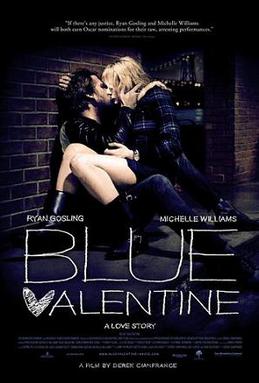
"Blue Valentine" - Film Review

There’s a soul aching pain that pervades Blue Valentine. The film contrasts the breakdown of a married couple’s relationship with their initial meeting and courtship. In the present, they have fallen out of love with each other and there’s a world weary, sad, and unnerving tone to the story. This is made all the bleaker by how sweet the flashbacks are. It’s observing two people unexpectedly being swept up in romantic spontaneity. But now they have a kid (who as it turns out isn’t the husbands, which complicates matters further) and they’ve become bitter and resentful.

The film owes much of its power to its cinema-verite style. The docu-realistic take on the subject matter leads to some truly chilling moments. There is an emotional intensity that it hard to sit through at times. The film has a shaggy quality, letting moments linger just a little longer than the typical film might which makes the impact of the scenes even stronger. This is particularly true in the more uncomfortable and claustrophobic moments in the film. 

This is notably the case in a number of sex scenes in the film. These scenes are some incredibly honest and intimate depictions of sex. They’re painful and awkward at times; one scene gets uncomfortably close towards being a rape scene. But they’re also, in a separate instance, tender and sweet (the sex scene when they’re younger is fun and hot, and yet completely advances the story of the characters and never feels like it’s there merely for the sake of having a sex scene). 

Much of the film’s realism stems from the improvisational, raw performances of Ryan Gosling and Michelle Williams. Watching the relationship unravel is as upsetting and affecting as it is due to Gosling and Williams. Not only do they have great chemistry, but, more importantly, they also make the jumps between the past and present carry the weight of change and time. The contrast between the past and present gives it all a terrible bittersweetness. Switching back and forth between the two times, it’s almost like seeing a different set of individuals, and the the youthful love affair is simultaneously all the more joyous and yet all the sadder due to this. 

It’s at once painful and sad, but also at times sweet and funny. Williams and Gosling create fully formed characters, which makes the relationship’s break down all the more disheartening and harrowing. The film’s intimate, personal portrait of a couple is powerful and poignant.  

Grade: A-

Thursday, April 25, 2013

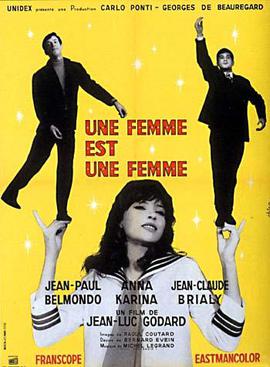
Patrick Vs. "A Woman Is A Woman" (Thoughts on "A Woman Is A Woman")


Patrick Versus A Woman Is A Woman 

In this week's episode: Patrick takes on one of the slighter efforts of director Jean-Luc Godard

I don't have time for a complete review so here are some random thoughts:

-Very colorful, light and fun. It would have been nice if it were more substantial but the film generally has enough charm that it doesn't matter.
-Slightly pretentious at times. Jean-Luc Godard at times seems really self-aware that he's being completely flippant and unconventional and that becomes distracting and frustrating at times.
-Though typically classified as a homage to American musicals, it has very little in the way of music. The sound is unnecessarily experimental at times. Music plays in synch with people's talking at times, and, in one instance, Anna Karina does actually sing, but the music is almost besides the point.
-Anna Karina is a lot of fun; she's young and vibrant and it's pleasant to watch her coo or play coy, but overall Angela is a less of a character and more of a delivery system for whatever Godard wants her to say. The same is true of most of the characters.
-Did Angela need to be a stripper? It almost seems pointless, and that sure is a tame strip club.
-Angela's desire to get pregnant is also totally unexplained. Although it does lead to a great ending.
-I guess the real problem is nobody's motivation for anything is clear and the plot doesn't have a strong enough sense of forward momentum to overcome this. (For instance, the love triangle almost seems to exist solely for the sake of existing rather than because these people actually have a genuine interest in one another)
-The scene where Angela and Emile use book titles to express themselves is really cute and funny.

Consensus: Overall it's all very light and the film jumps around a lot, uncertain as to what it wants to be. It's amusing but forgettable, and Godard produced better works.

Grade: B-

Tuesday, April 23, 2013

"The Red Balloon" - Film Review

You know when you feel really good; you’re all giddy and smiley and exuding a bubbliness. Well, that feeling is pretty comparable to The Red Balloon, which is a straight shot of pure unadulterated good to God happiness.  

It’s so fucking twee that you might think it’s exuberance of positiveness and colorfulness and general cuteness might be overwhelming and excessive. But it’s not. It’s charming and delightful from start to finish, and your soul has to be pretty black and empty not to smile.

A boy (Pascal Lamorisse) finds a balloon of the red persuasion and soon grows rather attached to the big shiny ball of helium. He begins taking it everywhere with him. 

What quickly becomes clear is that the balloon has a sort of consciousness to it. It moves by its own freewill as it damn well pleases. 

The boy tells the balloon to stay put but it just can’t help itself and follows the boy around. Some Looney Toons-esque classical music plays as the balloon sneaks behind the boys back and hides in doorways to avoid him looking back in time to see him. It’s adorable; actually correction: it’s the most adorable thing I’ve seen in a long, long time. 

The boy goes to school and he’s forced to leave the balloon outside. When the schoolmaster puts the boy into detention, the balloon follows the man outside of the school and taunts and harasses him to highly amusing effect. 

The red balloon sees a girl (Sabine Lamorisse) holding a blue balloon. Ah, it’s destiny! The two balloons attempt to escape their owner’s clutches to be together, but the kids are too young to get the heads up and keep moving along. 

A gang of kids keep chasing after the boy. They want the balloon, but the boy won’t let them get it. He outruns them for a while but inevitably they catch up. A rock hits the balloon and it deflates, collapsing to the ground. The boy is forced to euthanize his friend by stomping on it. And damn if it isn’t the most oddly moving thing you’ve ever seen put to celluloid. The balloon has become a character in its own right, if not the outright protagonist of the film. The film has just killed its main character!

Suddenly, in the film’s most effervescent moment yet, every balloon in the city, as if immediately aware of the balloon’s death, swarms to the boy and he finds himself lifted up by countless balloons. He’s flying high above the city. 

The film is at times like a silent film. It tells most of its story through eye catching and vivid visuals that are highly effective and leaves the sound to a minimum. This is actually a really great decision. The film doesn’t need much dialogue to impact us; it’s visuals are so wonderfully pleasing and simple that they do the job just fine on their own. 

This short film pops. The colors are bright and a whimsical, child-like wonder pervades it at every turn. Fun, charming, and utterly feel-good, it’s an absolute joy. 

Grade: B+