Monday, April 1, 2013

The Vampire Diaries - "American Gothic" - Review

There’s a lot to talk about in tonight’s episodes, but before we go any further, can I just say ELIJAH!!!! 

“American Gothic” was a good episode prior to Daniel Gillies arrival, but the moment he appeared as Elijah everything began clicking even more. Part of this stems from the fact that Gillies is awesome as Elijah; he seems to relish every scene he does and he also seems to bring out the best in the other performers in the scenes he’s in. Whether it be Nina Dobrev as Elena in an awesome (a word that tends to get thrown around frequently when Vampire Diaries is on its A-game) new mode of emotionless outlook or a much welcome return from the always delightfully devious Katherine or Claire Holt as a wonderfully vulnerable Rebekah, Gillies sucks you into every single one of these scenes. He has an unmistakable presence and it shows. 

Elijah is back in the picture because of another character’s lovely return, Katherine. Katherine has the cure and intends to use it to bargain for her freedom from the ruthless Klaus who has been hunting her for nearly 200 years. Of course, Katherine can’t make the deal directly and so has struck up a relationship with Elijah. This leads to one of the funniest scenes of the episode. “He can’t have much of an impeccable taste if he’s friends with you,” Steffen quips. “When I say friend. I mean friends,” Katherine informs. Cue disgusted reactions from everyone. Priceless. 

Elijah’s smarter than this though, right? “She’s playing you,” Elena is quick to inform him. Elijah still holds hope that “Katerina is behind this Katherine façade”.  In yet another excellent scene, he draws parallels between his inability to escape his feelings for Katherine to Damon and Steffen’s endless pining for her and their ceaseless desire to turn her back into human Elena. Well, Elena is fed up with Damon and Steffen trying to “fix” her. 

The proof is the pudding by episode’s end. Damon and Steffen try to give her another of the clichéd, repetitive talks to convince her she’s lost her senses, and, well, Elena’s tired of this shit. She snaps the neck of the waitress and admonishes that her death is on them: “Like I said: consequences”. 

As if this new version of Elena weren’t fantastic enough, Katherine and newly devil-may-care Elena get to spend some quality time sniping at eachother, and wouldn’t you know it, Elena and Katherine have excellent chemistry (it’s almost as if they’re played by the same actress).  

But there were so many pairings of characters that worked so well this episode, including Damon and Steffen, who get some much overdue brotherly bonding time. Steffen is fed up with Elena altogether; he intends to get out of dodge the moment she’s cured. Meanwhile, Damon has a “lapse of judgment” and purposefully allows Rebekah to take what appears to be the cure. He immediately regrets it. Damon has changed to the point where there’s no satisfaction to be gained from being with this new version of Elena. The old Elena challenged him in a way that made being with her ws an exciting possibility. Now she’s just a drain on him. 

Putting together three of the best chess pieces the series has had throughout its run on the board (Katherine, emotionless Elena, and Elijah) turned “American Gothic” into one of the funnest episodes of the series in a long time. Seriously, this was the type of pure fun The Vampire Diaries was pulling off at its peak when it was phenomenal and peerless. And yet this was simultaneously one of its best episodes at delving into these characters, and processing where they’re at this point in the show. In combination that made for one of the best episodes in a long, long time. 

Stray Observations:
-In the subplot, Silas tricks Klaus into believing he’s Caroline. Candice Accola proves to be far more adept at shifting into this role than David Alpay seemed to be. This is another very entertaining piece of business, and it demonstrates the direction the series is taking Silas in, which has oddly enough been in the background of much of the season in recent episodes. Silas is a scary mother fucker, needless to say. He tricks Klaus into thinking he has the white oak stake stuck in his back, and due to this he was in endless agony.
-Katherine compelled the whole sleepy town to do her bidding. Clever girl.
-A perfect piece of music playing when we first enter the diner: Forget Me Not by The Civil Wars
-Rebekah’s jabs at Katherine were great: “Not quite slutty enough”; “Just the right amount of contempt and hidden insecurity”
-Just the way Nina Dobrev carries herself you can detect a difference between Elena and Katherine. The meet up between them could have very quickly felt like writer’s wish-fulfillment, but Dobrev nails those scenes, and there’s a noticeable, inexplicable difference between the two characters even when they’re acting incredibly similar.
-Katherine has a point. Suddenly becoming mortal isn’t going to fix all the massive baggage Rebekah has.     
-Elijah immediately picks up on the change in Elena being emotionless because Elijah is a badass.
-Vervaned fish tank. Pretty sweet.
-Katherine snapping Elena’s neck, actually took me by surprise. Not because it was unexpected but because of where the conversation was with Elijah and Elena. The twists really worked this episode in a way they haven’t been a lot this season.
-Rebekah and Elijah’s scene was really touching. Whenever Claire Holt is asked to show the more sensitive side to Rebekah, she captures that tragic, child-like quality to Rebekah and it’s really incredibly sad and well-acted.

Grade: A

Friday, March 29, 2013

"Would You Rather" - Film Review


I watch a lot of bad movies. Sometimes I watch these bad movies by choice with the intention of making fun of them. And sometimes a film is so bad that there’s no room to make fun of it but to sit there displeased at the failures of the films. Would You Rather isn’t the worst movie ever, but it’s frequently pretty odious.

It’s a film with a thinly conceived excuse for torture porn horror excesses. I can take violence and gore and blood spatters galore, and a number of my favorite films and tv series use violence to great effect. But Would You Rather fails to understand the point of violence and especially of violence to excess in a film. 

It establishes a scenario (desperately in need of money, people choose between two awful, violent actions to win said money and stay alive) in which people are forced to do awful things; awfully violent things. At first it’s tolerable and then the justifications and the nominal thoughtfulness fade away and what remains is a film doing terrible, terrible things to its characters for seemingly no other reason than because it can. The film takes a weird, semi-fetishistic pleasure in forcing its characters do despicable things to themselves and eachothers in order to survive and to make money, as well as to fuck over other people. 

And what all this eventually leads to is you feeling like total, absolute shit. I felt lousy and a little unclean after watching Would You Rather.

There are familiar faces in the film, notably Jefferey Combs hamming it up endearingly as the sadistic host Shepard Lambrick, but also Sasha Grey as the peggable winner (she’s not there to make friends!) and an underutilized John Heard. Obligatory blonde Iris (Brittany Snow), the protagonist, is provided a thin prologue backstory to make us sympathize with her, a pat, generic story involving a sick brother in need. But we end up caring about really none of the character because they’re so underdeveloped and none of their motivations make real sense (even often from a primal stand point). 

It's not a totally unentertaining film, but it never earns the excessive bloodiness or the scenarios they take place in.

Grade: D

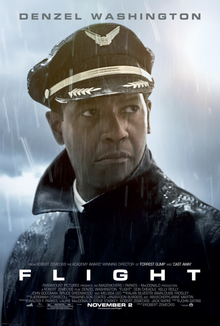
"Flight" - Film Review


There are those films that come straight out of the gate. They’re fully formed right from the very first scene. This doesn’t mean they’re necessarily good. But films that have identity crises, that can’t settle on what they want to be, are often too problematic to fully work and be enjoyable. Flight is an example of this latter type of film.

It’s all over the place. There’s entertaining things happening on occasion but for what purpose, it’s frequently tough to tell.

Denzel Washington was nominated for an Oscar for his work as in Flight, and though I don’t know if the nomination was justified, Washington is one of the better aspects of the film. Whip Whitaker is an airline pilot with major addictions, largely to alcohol. He shows up to work drunk and high on cocaine, and when the plane malfunctions, going into a nosedive, he flips the plane upside down to level it out in order to make an emergency landing in a field. The plane crash sequence is genuinely exciting and one of the film’s highlights, but afterwards the film becomes something far more brooding. 

It chooses to delve into the self-destructive tendencies inherent in Whip. Whip initially decides to go cold turkey after discovering the flight attendant he was having a fling with died in the flight (saving a child no less). He quickly returns to his old ways, however, when he learns that the toxicology report has him pegged for manslaughter for the six people who died on the flight. A fact that’s complicated by the fact that the real cause of the crash seems to lie in the plane’s mechanical failures and Whip appears to have pulled off a feat that no one else could have.

For awkwardly developed, slightly contrived reasons, Whip befriends Nicole (Kelly Reilly) a recovering heroin addict he first meets at the hospital. She tentatively tells him where she lives, and in a drunken haze, after failing to rekindle relations with his estranged son and ex-wife, he saves her from the deadbeat she owes drug money to. With his help, she kicks her drug habit (eventually joining AA – he goes along for one meeting, but quickly leaves, turned off by the whole idea), but has to watch as Whip continues to destroy himself slowly, guilt stricken by the crash and consuming increasingly excessive amounts of liquor. 

This has all happened within the first hour of a film that’s over two hours long. And it isn’t that it’s not entertaining or not well-acted or poorly directed, in fact, Flight is entertaining, well-acted, and well-directed by Robert Zemeckis (though it has some major pacing and structural problems). The individual moments and scenes work well in of themselves, but holistically it’s kind of a mess. The film early on is bouncing between Whip’s relationship with Nicole and his preparation for the trial. These two aspects are interesting but they’re often at odds with one another, having little to do with eachother and clashing tonally. 

At times, it’s cheesy or clichéd but Washington and a really great cast that also includes Don Cheadle as the lawyer Hugh Lang assigned to him for the case, who’s simultaneously disgusted and in awe of Whip, and John Goodman as his druggie best friend Harling Mays (who’s incredibly underdeveloped and who’s introduction is terribly handled). However, the ending undercuts much of the moral complexity the film had established and shoves a far, far too simplistic message down our throats.

Flight is an entertaining film, but the its initially interesting premise gets lost in the shuffle of a grab bag of ideas that work with varying degrees of success. 

Grade: B-

Thursday, March 28, 2013

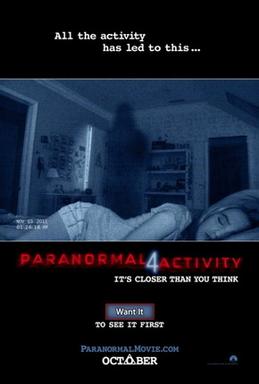
"Paranormal Acitivity 4" - Film Review


Why do we like the found footage genre?

I’ve always found it to be due to our desire for being immersed into something that appears, at least on the surface, real. In the first Paranormal Activity film (the best of the series), there isn’t a big budget and there aren’t any large scares (besides a conclusive moment). Nothing really happens. In the first film this works because there’s a sense of verisimilitude: this could happen in real life.

By the fourth film, what’s the appeal of watching people be occasionally, abruptly be freaked out by demonic beings (beings which they can’t even see in the first place)? If the story were to immerse us into this world, and have us buy into the notion that there’s a legitimate threat to the people we’re watching than perhaps we might care. Or perhaps if these were fully realized, well-developed characters worth liking and worrying about. 

Instead we’re made to watch unrealistic, one-dimensional people … and mostly they’re not even being haunted. They’re going about their daily lives and every now and again we’re reminded that oh, right there’s demonic foul play afoot!
 
Paranormal Activity 4 features long stretches of voyeuristically witnessing the day to day lives of a family. There’s dialogue that’s repetitive, uninteresting, and doesn’t advance the plot. And every once in a while the film remembers that it’s supposed to be a horror movie and has some moment that has us jump.

The would-be protagonist teenager Alex (Kathryn Newton) suspects something is up when the neighbor’s son Robbie (Brady Allen) creepily keeps appearing at their house. He’s forced to stay with them when his mother takes ill (the mother being the demonically possessed woman from the first film, but that’s almost beside the point). He’s helping the demon try to take possession of the family’s son Ben (Matt Shively) and in the meantime the demon dicks around and messes with this family in some supposedly, but not really, scary moments.      

Not only is Paranormal Activity 4 not very scary, it’s also very illogical. It’s necessary to accept the found footage concept to buy into the premise, but the film doesn’t even do a nice job establishing the basis of this found footage. Why is the daughter filming all the damn time? Does she have an interest in filming? Does she like documenting stuff? Why is she recording stuff with computers all the time? Why do they have so many damn computers?

A boring film that fails to achieve the one thing it’s supposed to (ya’ know: be scary), and that’s frustratingly, distractingly fallacious.  

D

New Girl - "Chicago" - Review


The best television comedies have a zany spark. This inspired energy they exude. An unpinnable je nais se quoi that makes them a pleasure to watch. It’s that quality they give off when the writing, the acting, and the production design culminate in a finished product that’s simply a pleasure to watch.

Even when New Girl isn’t making me laugh (and this episode wasn't its funniest), it leaves me smiling, self-satisfied at watching a show that’s in its prime; that’s new, exciting, and immensely fun. New Girl doesn’t always re-invent the wheel. In fact, it’s often very formulaic. Its bigger arcs for this season are relationship narratives we’ve seen time and again on sitcoms. And yet those stories remain a delight to watch because it’s all so fresh, charming, and, yes, funny.

The moments that sell this inexplicable joyousness to a good series is captured, for me, best in “Chicago” by Jess’s Elvis impersonator performance. Not only does it come totally out of left field but it’s also hilarious and it provides the episode’s biggest laugh. And yet it’s heartwarming, goofy, and lovable and completely in the vein of jokes that New Girl is known for. The second best example of this style of joke-telling comes early in the episode. In a moment that’s equally funny and sad, Nick tells his roommates that his dad has died just at the moment that they’re sucking in helium from balloons, and thus they are forced to provide sympathy while sounding like munchkins from the Wizard of Oz. 

This balance between humorous and sad continues throughout the episode and is handled incredibly well. Funeral episodes are often about characters taking stock of their lives. Death forces us to consider where we are at with our lives. New Girl does this largely with two of its characters.

In the less serious storyline, Schmidt is being very Schmidt-like. He, of course, makes the funeral for Nick’s recently deceased father all about himself. We don’t learn anything new about Schmidt from this story, but Max Greenfield continues to nail Schmidt’s bizarre enthusiastic, neurotic commitment to everything he does. In this case, Schmidt is scared of death almost to a fault, and he’s afraid to see Mr. Miller’s corpse. This leads to the first very amusing Schmidt scene. Winston coaches him through his fears by pretending to be a dead body, a method that’s working up until the moment Winston shifts out of his coffin pose and freaks Schmidt out. In the second of Schmidt’s thanatophobia scenes, Schmidt protects the chain on Dennis Farina’s corpse from one of Nick’s family members (played by Bill Burr – who some might remember for his memorable cameos in Breaking Bad). The kicker where he finally overcomes his fears and then continually bobs his head into the coffin like a drinking bird toy is a very funny capper. 

The largest chunk of screentime though is dedicated to Nick reacting to the news that his father has passed. We learn the odd, amusing fact that when Nick’s dad left town, he was forced to pick up the slack and take responsibility for his family. “Don’t laugh when they call him responsible,” Schmidt quips. Nick immerses himself in the plans for the funeral, becoming more responsible than perhaps we’ve ever seen him. The big task, the one he’s hesitant about, is giving a eulogy, at the behest of his family. He assigns the writing of the speech to Jess, who not unexpectedly fails at this task. This causes Nick to spiral, getting super drunk just before the funeral. Jess helps sober him up just in time to make the eulogy, a moving, funny, honest speech that is one of the episode’s highlights. 

In the early days, New Girl would never been capable of the delicate balance between sentiment and jokes. But now it does it as effortlessly as an impromptu Elvis karaoke sing-a-long. 

Stray Observations:
-The casting for Nick’s family was epic. Nick Kroll, Margo Martindale, Bill Burr. Doesn’t get much more perfect, and the little details of this worked so well (Grandma: “Don’t trust the cops”). Those Chicago accents were just on the right side of exaggerated.
-Lamorne Morris is very funny in the scene where Winston's attempts to stall the funeral fail when his feelings for his father figure overcome him.
-Though the death of this character comes out of nowhere, and it is a secondary character, the show sold it to me.
-“He loved me more than he loved you” “Yea, he told me that too”
-“Except for that 1 hour I committed fraud with him” “That’s all you need to know”
-“It’s bad to see a body before a funeral”
-“You’re mad at me. You’ve got your mad face”
-“This is every day in North Korea”
-“I really feel transported to the ghetto”

Grade: A-

Tuesday, March 26, 2013

Thoughts on Season 1 of "Parenthood"


Many series’ first seasons are uneven. Few series come fully formed out of the gate. Some of the best television series ever made have had to take time to find themselves. Buffy the Vampire Slayer’s first season is pretty awful at times, and its spin-off Angel had possibly even larger problems in its first season. Breaking Bad’s shortened first season didn’t give it enough time to develop itself properly.

Television is a medium we give leeway to when it’s bad; in the hands of the right creative talent tv shows can go from bad or guilty pleasure to must see series (This is definitely the case with The Vampire Diaries). Often times shows are better off for sucking early in their runs because it allows them to figure out what does and doesn’t work for them. In the long run this means they’re less likely to stumble (not always – odds are they’ll still stumble, but the crème de la crème will still produce some good episodes even past its peak, take Lost or Friends for example).

Parenthood is a series with great pedigree. Creator Jason Katims was fresh off of producing the excellent Friday Night Lights. Peter Kraus had starred in HBO drama Six Feet Under, and Lauren Graham had honed her dramatic and comedic chops on Gilmore Girls. 

Despite this talent though, and the talents of a mostly very good ensemble, the series struggled in its infancy. The same note kept being repeated for Erika Christensen’s Julia whose conflict always kept being her high-strung workaholics undermining her relationship with her daughter. Dax Shepard is an actor of limited range who often failed to capture the seriousness of Crosby discovering he has a son. A number of storylines stretched credulity, particularly mother and daughter Sarah and Amber simultaneously falling for the same teacher. 

The show initially struggled to rise above its clichés. A family with sons and daughters at far too perfectly spaced out ages is something we’ve seen a bit too much before. But it’s an idea that in the right hands could be used to deal honestly and earnestly about the titular theme of the show: parenthood. But not just parenthood, but growing up and small scale problems we face on a daily basis. Shows don’t need crazy nonsense happening on a regular basis. I love Game of Thrones as much as the next guy, but I certainly don’t need to see sword fighting and dragons to become invested in a series. 

There was promise in Parenthood though. In time the show became better and better at observing the small moments its concept assured. Jason Katims’ last series was the great tv drama Friday Night Lights. What set Friday Night Lights apart from the rest of the dramatic pack was how emotionally raw the series could frequently be. As critic Alan Sepinwall described it, “Most dramas, even the really good ones, will take you so close to the characters' emotions and no closer, as if they fear the audience will grow uncomfortable if there isn't some distance between themselves and the characters… [Friday Night Lights] shatters any kind of barrier between viewer and viewee.” When you watch Friday Night Lights, an odd bond is formed where it almost seems as if we’re feeling everything the characters are feeling. Though this sense of powerful, intense emotion isn’t felt nearly as often in Parenthood, there are a number of moments where the world around me faded out and I was there with the characters experiencing their joy and their pain. That’s a powerful experience that few shows are capable of and it was happening enough that (coupled with the tremendous likability of the cast) kept me coming back.

When these moments weren’t occurring though the cast of Parenthood drew me in time and again. This is a great, very large cast. It’s so big that a number of actors were short shrifted or given material that didn’t appropriately show off their talents. It took a long time for the series to utilize the grandparents Zeke and Camille (Craig T. Nelson and Bonnie Bedelia). Thankfully when they did it was possibly the strongest storyline of the season, dealing with the possible divorce between the long suffering couple, and it subsequently trickled down to elevate everything on the edges of this plot. Other actors were simply being given material that was weaker than what they were capable of, including Mae Whitman and Erika Christensen.  

Overall though this is a very pleasing start to a series, especially one with a shortened season. I look forward to what I’m told is a series that continues to get better as it progresses.

"Seven Psychopaths" - Film Review


Seven Psychopaths is kind of a mess, particularly in the early going.

It feels like the sort of the movie the studio greenlit even though it had an incomplete script, and much of the movie comes off as if it’s based on the first draft of a screenplay. Many of the ideas are half-formed and amorphous, never truly amounting to much.

The first half the movie is filled with scenes of varying quality that don’t seem to flow in an easy, natural order. The scenes seem to be tossed together haphazardly with no consideration for their placement. 

Though it picks up halfway through the film (the film’s best scene occurs a little over halfway through, involving one of the characters describing his imagined perfect film ending), it continues to be hamstrung by everything that’s come before it. The early portion of the film never finds its footing and it hurts everything that comes after. 

A struggling screenwriter Marty Faranan (Colin Ferrell), whose an alcoholic (because why not), is writing a movie entitled “Seven Psychopaths” (Man, how meta!). A number of these he ends up adopting from real life, including a mysterious murderer who only kills mid to high ranking Italian mafia members or yakuza. Some he makes up and, get this, they turn out to be real (Woe, man). 

He’s joined by his lousy best friend Billy Bickle (Sam Rockwell) who makes a living kidnapping dogs, only to return them to their owner to garner the reward. When one of these dogs belongs to a crazy criminal boss Charlie Costello (Woody Harrelson), he tracks down the dog and Billy and Marty, along with Marty's business partner Hans Kieslowski (Christopher Walken), suddenly find their lives in grave danger. 

It’s one of those films that thinks it’s a whole lot smarter than it actually is. There are a number of self-aware, meta commentaries on films in general and the film itself, and some work really well, but others just feel half-baked. It’s also a film that squanders a great cast, and the cast is frequently better than the material they’re being given.

It's got a lot of zany energy and at times it's pretty amusing, but it's too loosely formed to work as well as it should. 

Grade: B-