Wednesday, February 27, 2013

New Girl - "TinFinity" - Review

The best ensemble comedies can take any of their characters, stick them together, and watch as they bounce off eachother. Once characters have become well defined, writers can pair any combination of characters and get different jokes and stakes for a situation.

This is where a show like The Walking Dead constantly fails. So many of the characters have been and continue to be underdeveloped and thus when certain characters are given air time we have no real reason to care about them. Too many of the character don’t have a defined set of character traits that can be reliably returned to and that determine how they’ll act in any given situation. 

Besides the occasionally erratic Winston (who, to be fair, they've gotten better about), the five main characters of New Girl are well-realized. When a character makes a joke, I know it’s a Jess joke or a Nick joke or a Schmidt joke and it speaks to that character and thus the joke is ultimately funnier for being a well-observed character moment rather than just something designed to create a reaction.  

This is the beginnings of a comedy that’s amusing but it’s the shows that go one step further that are really brilliant. The next step is to play these characters off one another to explore different dynamics and examine relationships. New Girl continues to do this incredibly well. 

It’s present in the A-plot which revolves around Schmidt throwing a 10 year anniversary for him and Nick being roommates. There’s laughs to be had at they’re odd couple bickering over the party’s details, but the scene that truly sells this episode’s pairing of them is the scene towards episode’s end where Nick comforts a heartbroken Schmidt (who has just witnessed Cece getting proposed to by Shivrang). 

It also exists in the ongoing awkwardness between Nick and Jess as they dance around suppressed feelings and general uncomfortableness. The show has handled the fallout from the kiss really well (more than I could have ever imagined). It’s landed every beat of this story, and the aftermath remains to find new ways to express the tension between these two characters that don't feel repetitive. 

It’s even there in the Jess-Winston plot where they fight for the attention of a footballer named Jax McTavish. This story may not go far enough, but it’s still a nice look at Winston and Jess that reminds us why their friends. There’s a competitiveness here that speaks not just to vied affection but the type of rivalry that could only arise between two longstanding friends. 

It’s this consideration to character that makes the show work so well. This is especially true when the plots aren’t particularly very good. The whole B-plot about Jax the football play isn’t new or interesting, nor is him revealing a more feminine side, but the plot doesn’t feel pointless or needless because it remains squarely about Jess and Winston and what this situation means to them. New Girl can get away with plots that I might find less than stellar because its character work is too good not to elevate some occasionally second rate material. Which isn't to say this episode is all second rate material, the Schmidt material in general is great and it's a really good exploration of his relationship with Nick. Plus this continues to deal with the longstanding plots of the relationships between Cece and Schmidt, and Nick and Jess in a way that still resonates.

Stray Observations:

-Jess’s continued inability to articulate sexual desires remains hilarious: “I need a different mouth on my mouth” “I want to French you”
-Schmidt is not above writing a strongly worded email to his florist.
-“Now that our mom’s approve, you want to do this thing?”
-“Take your football back to Europe”
-Nick is proud about his decision to buy a portapotty: “I’m a small business owner”
-Nick to Jess on convincing people to use his terrible portapotty: “Really sell it”
-Jess on the ongoing problems between her and Nick: “You think this is about a portapotty?”
-Max Greenfield’s acting when Schmidt sees Cece get proposed to is excellent and so damn heartbreaking.
-Jax proves to be a real problem: “I found my third wife”
-Apparently hot air balloons need propane to work. Go figure. 

Grade: B+

"My Dinner with Andre" - Film Review

Films are often obsessed with getting somewhere; to propulsively lead us to the final scene. But when a film plots itself in such a way that it’s all build up to that one moment, the journey itself feels a little less meaningful. The films, and many films that don’t quite understand the value of a plotting, often stage themselves to tell a story and hit all the necessary narrative beats we’ve come to expect from a film. But these beats, in turns, can appear artificial or superficial. The question of “what does it all mean?” remains unanswered. A really well-wrought, tightly constructed story can work incredibly effectively, but usually those films also have some extra umph setting them apart.

My Dinner with Andre doesn’t contain your typical plot. There’s one set, a New York City restaurant, that the film primarily stays in and we stay there for almost the entirety of screentime besides a brief beginning and ending voiced over montage. For the majority of the film’s story it’s not entirely clear where the movie is going. If this were an average, ordinary film, the scene at the restaurant would be brief, minimalized, infantilized, reduced to the point of short hand and of abstraction. Perhaps it would be the catalyst to snap Wallace Shawn (playing himself) out of his stupor and cause him to realize the wonders of life or some other formaldehyded, stock cliché.

Andre is a story about a man whose been avoiding a friend he’s since lost contact with (Andre Gregory playing himself) and rediscovering why he was friends with the guy in the first place. Wallace is hesitant about the dinner; he believes he’s gonna want to get in and out, but then Andre starts recounting his worldly adventures, an odd theater shop in Poland, an intriguing trip to Tibet, a bizarre time in the Saharan Desert. As he realizes the rumors he’s heard about Andre have misguided his perceptions, he’s slowly won over by Andre’s peculiar charm and abundant storytelling capabilities (muchof the first half of the film is just Wallace listening to Andre talk at length). Soon Wallace starts opening up, revealing a side of himself he’s often nervous to show. They get to talking about the problems of modern living and theater, trading worldviews and enjoying good, meaningful conversation. Before either knows it the rest of the restaurant is empty and they’ve talked the night away.

The film works so well because it’s unpredictable. It isn’t really worried about getting from point A to point B to point C. Rather, it’s content just to observe these two interesting people and the experience they share.  

My Dinner with Andre is an unconventional but wonderful character piece carried by strong performances from its two leads. 

Grade:B+

Tuesday, February 26, 2013

How I Met Your Mother - "Weekend At Barney's" - Review

Part of a show’s success is suspension of disbelief. Our ability to tune into a show and a slip away into its world. How I Met Your Mother doesn’t really succeed at this anymore.

There’s some funny lines and gags here, but I’m at the point where I just don’t care. 

Lily is an art consultant. But what is the point of her and Marshall visiting an art exhibit? In what way does it advance the plot of Lily’s career or her relationship with Marshall? If it were just a story about 30-soemthings growing up and it felt true to real life, than it might be passable, but that’s a different story, and a type of plot the series has shied away from lately. 

Ted breaks up with Jeanette, but what’s the point of watching Barney coach him (terribly) using the Playbook. There’s some amusing failed attempts to use the schemes, always ending with Ted offering to show his penis. However, we know Ted’s not going to end up with any of these people and it doesn’t service a forward direction towards meeting the mother. Jeanette had already broken up with Ted, and her return felt needless. The end where Ted’s stuff lies in ruins from Jeanette going crazy was a cop out. It (unsurprisingly) didn’t add up with how explosive and big the show suggested it would be. 

Robin is missing for most of the episode (enough so that I was starting to question the decision), but it pays off in one of the better scenes from the episode. After discovering that Barney hasn't actually destroyed the Playbook, Robin storms out. Barney’s reminder that their relationship is built on lies made me consider temporarily why these two are together; when you think about it, it’s fairly unstable foundation, one only upheld by Barney's love for Robin, and it’s a fact the show should play around with more. Of course, Neil Patrick Harris plays this all too sincerely and charmingly not to be won over just as much as Robin is.

The Robin-Barney scene was the only scene where I was drawn in, sucked in to the point where I forget "Oh yea, I'm watching a tv show". It's a great moment, but elsewhere this episode just doesn't have the heart or the feeling of purpose that earlier seasons had in abundance 

Stray Observations:

“Thank God. There’s no concert”
-“We don’t want to miss what their one big song was”
-Jeanette returns Ted’s grandmother’s ring: “She was buried wearing this”
-Two great smash cuts to Barney and robin’s reactions to Ted breaking up/getting back together with Jeanette.
-“Wow, even his scarf is up and coming”
-Lily describing her many “nip slips” was both a nice character beat and very funny.
-After all the references to the 80's flick throughout the series's run, it was only a matter of time before we got a Weekend at Bernie's spoof. 

Grade: B-
   

Girls - "Video Games" - Review


The title of this Girls’ episode is “Video Games”; it comes from a line from the women, Petula, Jessa’s father is currently shacking up with. She’s a spacey free-spirited hippy obsessed with being organic. And she suggests that life is like a video game. The only way to move forward is to “level up”. 

This piece of advice sounds like empty hokum but when you actually consider it, it’s essentially the argument the whole series has always been making. Our protagonists, Hannah, Jessa, and Marnie (and as last week demonstrated Ray as well), are no longer kids anymore and they need to start growing up and accepting responsibility. Girls began with Hannah’s parents cutting all funding to Hannah, forcing her to face adulthood head on. And yet Hannah has constantly avoided being honest with herself. Even little breakthroughs such as the one in “One Man’s Trash” never really get taken to heart. Hence her lack of real advancement. 

The show has handled the implications of the brash self-involvement of the characters rather well so far, but it’s a theme and character dimension that can only be plumbed so much. So here, instead, we get a different aspect of our characters, one that suggests what’s wrong with them. If “Video Games” is about anything, it’s about parent problems. In another sense, it’s about the unintended effects parents can have on us. Jessa may deny that her and Hannah’s parents have nothing in common, but that’s not entirely true: their parents raised them in such ways that they’re both massively incapable of living.

We finally meet Jessa’s father this episode. He’s a mopey, loser-like fellow who keeps making excuses from the word go. When he doesn’t pick up Hannah and Jessa from the store at episode’s end, it’s not really surprising; this guy is a deadbeat that was never there for his daughter. Yet Jess can’t help but seek his approval. 

I like all the above in theory, but it didn’t need an entire episode dedicated to it. Nor did we need anyone else there besides Jessa. I would have liked to have seen the other characters (just in their own stories). Jessa has been underutilized this season, but there were other ways that she could have been sent over the edge. It’s not implausible that she’d up and leave without warning after the awkward meetup with her dad, but we know next to nothing about this guy and it didn’t tell us anything we didn’t already know about Jessa. 

Stray Observations: 

-The moment Jessa’s dad started calling her “you beautiful creature”, I knew  he was an ass.
-“It’s not a theory, Camry drivers are cunts”
-“You’re the cushion”
-“She was a masseuse at the last rehab he went to”
-They eat pet rabbits in this family.
-Jessa’s dad can’t spend time with her because there’s lecture based on a Japanese study on “nuclear toxicity”.
-Drug of the Week: Whippits
-“I wrote a paper on corporations once. They’re evil”
-Lesson learned: don’t ever have awkward graveyard sex.
-“I was just trying to have continuity with you”
-“Who was your first time with?” “A girl…”
-Jemima Kirke's is very obviously pregnant by this point.
-The show should stop letting Hannah steal the spotlight of the story. It never seems to fully trust letting other characters carry stories. 

Grade: B-

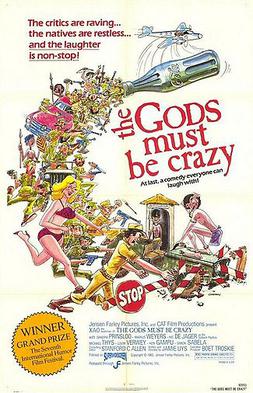
"The Gods Must Be Crazy" - Film Review

The Gods Must Be Crazy is a one-note movie. Granted, its central concept sounds brilliant (and it initially is), but much of the film feels like it’s merely a justification for that one interesting idea.

When a Coca-Cola bottle is dropped carelessly out from a plane onto an African bushman village, the tribe has never seen such a thing before and soon becomes obsessed with the object. They assume their gods must have sent it down from the heavens for them to use. But when it begins to change their way of life for the worse, they send off one of their own, Xi (Nǃxau) to go to the “end of the world” to get rid of it.

It’s an amusing little story in the beginning and it hits all the right beats regarding the bushman’s reactions to the Coke bottle. But then the film begins to branch out and it starts to get convoluted. The film loses sight of the bushman and the Coke bottle and increasingly focuses on the story of a news reporter whose decided to teach children in Africa and the scientist helping her get to the town she’s supposed to work in. 

The film devolves into a series of sight gags of varying quality. Some of which just don’t seem all that necessary. Between the sight gags and the slapstick, the film has an aura of silent film homage.

One of the better aspects is the light but amusing satire. The criticisms of American consumer society in particular are only surface level deep but their still funny. There’s also other hit or miss jabs at African dictatorships and warlords, and ethnographic documentaries. 

The Gods Must Be Crazy doesn’t live up to its premise’s potential, but it’s a pleasant if not disappointing film. 

Grade: C+

The Walking Dead - "I Ain't a Judas" - Review

The Walking Dead has never been a great series. It’s a good series with occasional glimpses of a show that could be great; a show that would take its zombie façade to create gleeful horror setpieces and penetrating morally grey questions in equal measure. That is to say, it’s a version of the show that’s always been just out of reach from the writers’ grasps.

There’s so much potential here. For my money, there’s not another series on par in unused potential. Even episodes like the first three episodes of the backhalf (which have been mostly a letdown)  have all the makings of something that leaves you in awe and wanting more. 

For starters, there’s the obvious but potentially interesting parallel between Rick and the Governor’s descents into madness. It’s an instance where the show never makes the point explicit enough. The show could ask the question, one it keeps dancing around, about why Rick and co. are better than the people of Woodbury. Andrea’s decision of choosing between both camps could be deeply exciting and complex, but instead the show keeps returning to moral reductivism: Rick and the rest of our protagonists are the good guys because… they’re the protagonists. 

Another frustrating problem is that the show finds it near impossible to let the characters take seriously the leadership of anyone besides Rick. This logical fallacy makes no sense though; the way Rick’s been acting lately, Glen, Darryl, or a number of other characters could step up, and it would create new dynamics that would keep the show fresh. Rick going crazy isn’t idiotic because it’s bizarre; it’s idiotic because it hasn’t led anywhere (besides getting Tyrese to go to Woodbury). 

The show finds itself content to always return back to basics every time it opens up the possibility for new, captivating directions. Darryl off with Merle away from the rest of the group was a story that could have gone on for a few episodes more if the writers wanted, but, nope, Darryl has to plow through a character arc to make sure the status quo is maintained. Rick doesn’t trust Michonne and wants to send her packing; oh wait, Michonne is part of the group now. 

If the series had conviction in the stories it was telling, if it acted as if everything I was watching mattered and merited my attention, than it would be very entertaining. Such a plot treatment would mean characters are developing, alliances shifting, and dynamics changing. However, the only sense I’m getting here is that Woodbury and the prison will soon be at war with one another; a fact we’ve known since the beginning of this season.

This was a conflict the show made me look forward to at the start of this season, but, in the wake of the mid-season finale, the show is failing to make the aftermath of the first skirmish weigh heavily, consequentially enough on the characters and how they act. In terms of theme and character, it just isn’t working, and the plot just keeps chugging along with no real purpose other than “Oh, hey look zombie splattering”.  

Stray Observations:

-Andrea’s return felt very stilted. The reactions from everyone were in-character, but Andrea’s “I’m in the dark” act always strained just a little bit. Plus Andrea is the most poorly defined character.    
-Why are they so deadset on fighting the people from Woodbury? Yes, people have died, but they are outnumbered; it just doesn’t seem like a sound decision unless they can find some way to get the upper hand.
-The scene between Andrea and Michonne was great. I believe that’s the most expressive Michonne’s ever gotten.
-Merle is uneasily accepted as part of the group, although probably a bit too quickly. 

Grade: B-

Monday, February 25, 2013

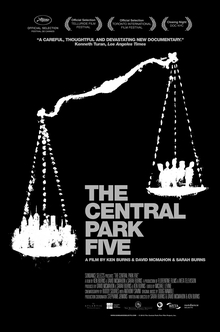
"The Central Park Five" - Film Review

Before I get into my review, I want to speak about documentaries more broadly. We close off documentaries as a genre of films separate from all other kinds of movies. Too many people are unwilling to watch documentaries and it’s a shame because some of our best filmmakers are making documentaries and they don’t get the press they deserve. I know I’m as much to blame for this phenomenon as anyone else, but it’s my sincere goal to watch more documentaries in the future.

Everyone perceives documentary as people telling the “truth” about real life events. But the fact of the matter is that documentaries are carefully calculated and how documentarians present information to us is often just as manipulative as many well-wrought fictional narrative.  

The Central Park Five tells the fascinating story of five African American and Latino teens falsely accused of the rape and murder of a white woman in Central Park in 1989. The case soon blows up, and, pressed to find the culprit, the predominantly white New York police force coerces a confession out of the five teens. Years later the actual person responsible, a serial rapist terrorizing New York in that same year, admits responsibility to the crime. It’s too late though; the five have been gone through 6 to 12 year prison sentences and their lives have been forever changed. 

Co-directors Ken Burns, Sarah Burns, and David McMahon focus the story on the five victims as they recount events. Through their testimonies, the film creates a deeply humanistic, moving, frustrating story of racial strife and political expediency.

The film does a great job of couching the personal stories in greater social, historical, and cultural trends. It grounds the incident in a larger narrative of racial animosity, rising crime, and urban decay in New York City in the 1970s and 80’s.

It’s at times uncomfortable to sit through as one injustice after another is retold, but it’s an engrossing, captivating story that’s not only well-crafted but told with compassion and resolve.    

Grade: A-