Tuesday, January 22, 2013

"Punch Drunk Love" - Film Review

It’s weird to admit it but I think I actually liked Adam Sandler in a film. But Punch Drunk Love isn’t really an "Adam Sandler Movie" but rather a Paul Thomas Anderson film that just happens to feature the polarizing star. Comedians have recently taken a shining to starring in more unexpected dramatic work. Jim Carry appeared in The Truman Show and Eternal Sunshine of a Spotless Mind. Ben Stiller starred in Greenberg. Here Anderson is able to get Sandler to rid himself of all his “Sandler-isms” (No goofy voices or weird, unnecessary variations in tone of voice) in order to get out of him an incredibly believable and fascinating character study (similar to Terry Gillam’s attempts to get Bruce Willis to stop his “Willis acting clichés”, such as his well-known steely gaze, for Twelve Monkeys). There’s times that you forget that this is Adam Sandler as the lead of the film Barry Egan. It’s a total departure and it’s tremendously satisfying to see him demonstrate real depth as a performer, bringing deep sadness and darkness to the quiet exterior of the main role.

The cinematography by Robert Elswit is nicely distilled and detached in a Kubrickian manner. Every shot is pale, white, and sanitized, revealing little and obscuring all. This is matched wonderfully by Jon Brion’s hyper, evocative original score that speaks volumes to the inner state of Barry. Sandler’s performance is understated with bursts of violence and rage, but more often than not it’s a minimally drawn upon slate where every slight muscle movement says so much of the deep struggles in Barry’s troubled mind. 

Barry appears to be plucked out of his stupor by a friend of his sister. However, Emily Watson who plays Barry’s love interest Lena Leonard isn’t a manic pixie dream girl. Though she finds something worthwhile in damaged, awkward, unstable Barry, there’s hints that she’s a tad fucked up herself (that whole scene where they’re having sex and saying things like, “I want to smash your skull in”, as if that’s the most sincere, heartfelt pillow talk, is deeply disturbing). 

Paul Thomas Anderson continues to produce striking films. While Punch Drunk Love is much more low-key and personal than Anderson’s other works including Boogie Nights, There Will Be Blood, and Magnolia it remains quite unlike any other film out there. His films are visually bold, thematically rich, and filled with great performances, and Punch Drunk Love is no exception. While Punch Drunk Love is more slight and less imposing than these other films, it’s still an interesting character study with an improbably great performance from Sandler that’s filled with Anderson’s typically unique, memorable visual and stylistic choices.

Grade: B+

"Jackie Brown" - Film Review

Quentin Tarantino’s movies have been known to draw controversy; in fact, he tends to invite it with his hyper-violent, unapologetic, sensationalist film style. Long before people were crying foul at Django Unchained for its racial and exploitation elements, there were similar criticisms being thrown at Jackie Brown. The film borrows heavily from Blaxploitation of the 70’s and 80’s, and Pam Grier feels like one of the strong black female leads from many of the best Blaxploitation movies (such as those that Grier herself starred in including Coffy and Foxy Brown). The soundtrack is largely lifted from Blaxploitation movies or is the type of funk or soul music that would often be featured in those types of films.

The problems that exist in Jackie Brown though primarily aren’t from the racial themes (although they’re probably too surface level for a film so drenched in Blaxploitation influence). The film is too sophomoric in its efforts. As to be expected from Tarantino, there are memorable moments, inspired shots (the opening title sequence is great, as is the way he chooses to film the murder of Christ Tucker’s Beaumont Livingston), and great dialogue, but the film feels far too casual and aimless. Unlike other Tarantino flicks which feel like they build towards some narrative end (think of the Mexican standoff in Reservoir Dogs, the burning theater in Inglourious Basterds, or Django seeking vengeance); Jackie Brown feels far too content to wander along without any real purpose or drive.

The whole subplot with a very unmotivated Robert De Niro as a recently released convict doesn’t really have any business being part of the narrative despite a brief role in the climax of the movie. De Niro seems to care so little about being in the movie and reads his lines with the enthusiasm of drying paint. Similarly, while I enjoyed Bridget Fonda as Melanie, it’s just another character we spend time with for no particularly pressing reason.Now Tarantino has taken aimless meandering before and used it for real purposes and great effect (for example, the bar scene in Inglourious Basterds that ends up erupting in violence). While how Jackie plays both the cops and Ordell is fairly interesting and impressive, it’s dragged out for far too long. 

Grier is great as Brown though; she shifts effortlessly from cooing sweetly to exploding with rage. Samuel L. Jackson is essentially playing a variant on every character he’s ever played before (except this time with a weird looking pony tail), but he’s still as fun to watch as ever as he flies off the handle at everyone in his vicinity.  

I suspect much of what holds back the film is that it’s an adaptation of Elemore Leonard’s novel “Rum Punch”. Jackie Brown is the only Tarantino film adapted from another work, and it lacks the kinetic energy of many of his other films. Tarantino followed the novel’s plot rather closely and this totally limited the creative capacity of Tarantino to achieve a more interesting creative vision. 

Jackie Brown is an interesting blaxploitation influenced crime drama that’s entertaining but lacks the ambitions of Tarantino’s best films.

Grade: B

"In the Mood for Love" - Film Review

If In the Mood for Love were made in the U.S., it would be about the other two spouses we don’t see having an affair, bored with their marriage. Instead, it’s the more interesting flip side of the equation: Chow Mo-wan (Tony Leung) and Su Li-zhen (Maggie Cheung) slowly coming to the realization that their distant, estranged spouses are having an affair and likely with the other one’s partner. Out of loneliness and a shared sense of connection from their problems, they begin a deeply meaningful but platonic relationship that grows as time goes by. Though they keep saying they want to be the better people and not act on their budding feelings, the tension between them remains rife and palpable. The more time goes by, the more we desire to see them tell their adulterous spouses off and get together.

Like Shigeru Umebayashi’s reoccurring, motivic “Yumeji's Theme”, the film is ferverous, passionate, and ready to boil over at any moment, but also filled with undertones of sadness, melancholy, longing, and lost.

The film is at once grounded and realistic, and yet stylistically and aesthetically interesting and ambitious. Auteur Wong Kar-wai fills the film with vivid imagery and interesting shots. The colorful, buoyant appearances formed from its 1960’s period piece dressing are undercut by long, slow moving sequences of isolation and sadness and shots framed to suggest how alone and trapped characters are (characters framed in doorways is a frequent motif of the film).  

Damaged, quiet and resilient, the characters keep fighting through their suffering and longing, hurting themselves and eachother more and more. Leung and Cheung have such obvious chemistry and give wonderfully understated performances. 

The film lets shots speak for themselves. Small gestures such as the caress of a hand, or longing looks, and sober, sorrowful expressions speak far more volumes than any amount of dialogue. 

Visually immersive and stylish, and quite unlike any typical romantic narrative, In the Mood for Love is a masterfully unique film. 

Grade: A

Monday, January 21, 2013

"The Help" - Film Review

When we think of the South as depicted in pop culture we tend to have certain conceptions of it our mind. Southern gentlemen; southern belles; a bit of rednecks and hicks; a stubborn honorable streak. But we often times forget about just how densely populated the South is with the African American communities of our country. More than half of the black population of the U.S. resides in the South. Which means the story of our southern states is largely the story of what happened to those individuals who struggled under the prejudices and racist strains so prominent in the South.

The Help tells the story of frizzy haired, noble minded Eugenia “Skeeter” Phelan (Emma Stone) who’s looking to become a journalist, but can only find work writing for a domestic advice column. Skeeter has always been compassionate towards the black help that are in almost every home in Jackson, Mississippi. She recognizes that her own maid Constantine Bates (Cicley Tyson) had a greater hand in raising her than her own kind but far too appearance minded mother (Allison Janney). She decides that she has an obligation to tell the story of the help from their perspective, and slowly but surely she wins over the likes of temperate Aibileen Clark (Viola Davis) and feisty Minny Jackson (Octavia Spencer) to tell their stories.

The Help could have been just another conventional story about the civil rights movement, and at times it’s exactly just that (the racial questions are probably not delved into as deeply as a film with this subject matter ought to have been). However, the film forms a heart at the center of the story by creating several likable, memorable characters. These characters don’t simply do the right thing because it’s right (in a wash our hands and be done with it sort of way) but rather have to struggle with what the consequences of standing up against the injustices of the time will be. Skeeter doesn’t win over Aibileen and Minny immediately; she has to get them to talk slowly and begrudgingly against their better judgements so that when the predictable happens and they do speak, it’s all the more satisfying. 

The film is both laugh out loud funny (that whole business about the “chocolate pie” is too, too funny) and tearjerker touching (and abundantly features both – Stephen Colbert’s tagline for his book immediately comes to mind: “I laughed, I cried, I lost 10 pounds” and would totally be fitting for this film). But these tonal shifts never feel jarring or bizarre. In fact, each tends to affect the other. Minny’s struggles to teach the ditzy, naïve Celia Foote (Jessica Chastain) domestic work are very funny at times, but they inform what ends up being some very moving moments where Celia treats Minny as not just a confidante but a trusted friend. 

The film features so many great performances that are given really great material to work with (from writer/director Tate Taylor). You never once doubt that Stone’s determined, wide eyed Skeeter actually cares about the plight of the help. Bryce Dallas Howard is frustratingly convincing as Hilly Holbrook, stuck up Stepford Wife whose racist antagonism drives so much of the need for Skeeter to write the book in the first place. Octavia Spencer brings such warmth and humanity to a character who very well could have become a caricature in the wrong hands. Similarly, Jessica Chastain brings so much sadness and heart to a character that is borderline stock character. Even smaller roles are given so much to work with; Sissy Spacek is deeply funny for her brief stint as Mrs. Walters. 

The Help is a compassionate, funny, moving film bolstered by a great cast. 

Grade: B

How I Met Your Mother - "Ring Up!" - Review


I’ve badmouthed How I Met Your Mother a lot over the course of this season. It’s not just that we’re waiting for the inevitable to happen; it’s that it hasn’t been all that fun to participate in that waiting for the inevitable. “Ring Up!” however demonstrates a lot of what the show was lacking before. 

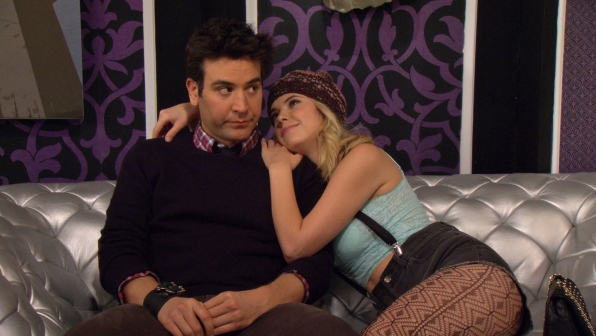
It’s a very funny episode and it’s funny in a way that the show has always been best at: the gang is riffing off eachother and we get more jokes in this half-hour than we have in perhaps any other episode recently. When Ted walks in with a wrist-bracelet on and everyone begins making great joke after great joke (with wonderful comedic timing) at his expense, it had me laughing more often and more consistently than How I Met Your Mother has in a long while. 

While some of these jokes will perhaps please some more than others, it’s still at a rate and quality that has me really pleased. I may not have been the most enthusiastic person about the “old people” jokes made at Ted’s expense, but the back and forth between Ted and Barney holds too much chemistry, zippy pace, and go-for-broke feel to not win you over just a little bit. Similarly, Robin’s flashback to musical numbers exaggerating her experiences is a little out of place despite being incredibly charming and amusing.

On the other hand, Marshall and Lily’s sub-plot where Marshall feigns being a broke rockstar to roleplay his way to sex during a dryspell in the wake of Marvin’s birth starts out amusing but then gets a little grating and pointless (although the visual of Marshall’s giant hand formed from an allergic reaction to the wrist band was rather funny). 

The reveal that the girl Ted hooks up with is Barney’s half-sister was unexpected and jarring, but I have the suspicion this will have implications for how Ted meets the mother so I’m willing to forgive it a bit. Plus Barney staging a wedding for the two of them to feel less tainted by Ted sleeping with his sister was totally amusing and in-character. 

This episode will work or not work for you based on whether you found these jokes funny, but for me, this was an early season HIMYM level of joketelling at times, and the series is at its best when it lets its stars just tell jokes and finds ways that allow them to tell as many as possible. There were also some nice visual gags that the series has often gotten away with due to the nature of its narrative (including Robin’s engagement ring acting like the ring from Lord of the Rings). This is the type of storytelling the show does well and I wish it did more often. Though these stories in of themselves aren’t particularly spectacular or special, they’re told well enough and humorously enough to justify themselves. 

Stray Observations:
-Marshall’s speech on true love and only seeing one person was really touching. The joke about how the emanating light coming from Lily could possibly be due to a combination of strong antibiotics and alcohol was also really funny.
-Ted in trying to make a connection with his girlfriend jumps on the opportunity of Star Wars only to discover she’s only seen the new ones.
-The whole running gag of Barney winking got great payoff when Ted and his sister wink when they say they’re not going to have sex anymore.
-The visual of Robin’s beer floating by itself because she’s “invisible” was another amusing visual. The excellent, overstated sound effects that accompanied it were also great.

Grade: B-

My Thoughts on Season 2 of "Fringe"

Olivia, Peter, Walter, and Broyles investigate an exploding man.
Spoilers on Season 2 of Fringe Below:

Damn if Fringe didn’t step up its A-game in its 2nd Season. There was some faultiness still to be had, and the procedural work could become a crutch at times. Episode concepts, such as the one featured in “The Bishop Revival” (essentially a giant weird metaphor for the Holocaust), didn’t really sell themselves too well. The fact that “Unearthed” is an episode Fox simply chose not to air during its first season was thoroughly annoying.  However, what Fringe had accomplished over the course of its 2nd season was a sight to behold; it came into its own finally and offered creative ambitions both impressive and entertaining.  

To discuss the 2nd season of Fringe, there’s really no way around talking about the episode “Peter”. Minus bookend scenes at the start and end of the episode, the story is told entirely in flashbacks to 1984, where we see a young Walter Bishop make a desperate, tragic choice with massive implications for the rest of the series. Walter breaches the void between the two universes in order to cure the Peter of the other universe, but when the vile breaks, he’s forced to bring him back to Earth-1. Once back, he couldn’t bear to let down his wife, and so Peter remains. 

It’s a creative highlight of the series. The show gave us answers to longstanding mythology, tied it to the main characters (thus forging a new emotional currency for the series), and elevated the show to a new level of storytelling. This could be felt in all the episodes that came afterwards.

But even before “Peter”, the series was much more effective. The emphasis remained on procedural, but the writing was tighter, the pacing wasn’t as sluggish and uncertain, and the characters handled more deliberately and precisely. Lance Reddick’s Agent Broyles was fleshed out more (even getting an episode dedicated to his back story in “Earthling" – while I’d rather Broyles get a backstory attached to a better procedural episode, it provided a nice showcase for Reddick). Even Jasika Nicole’s sadly underused Astrid got some nice emotional, character work through her relationship with Walter. The scene in “Snakehead” where a devastated Walter holds himself responsible for Astrid getting attacked in the lab and can’t begin to find the words to apologize is deeply touching and moving. Reveals of information were forthcoming as early as episode 8’s “August”; a great episode that provided some answers as to what the deal with the Observers is. The constant sense of threat from Earth-2 and the shapeshifters sent from the parallel universe, as well as the integration of these oncoming concerns with standalone episodes made for a more deeply involving and enjoyable season. 

Post-“Peter” the series continued to have the best string of episodes up to that point. “White Tulip” and “Brown Betty” were structurally, and stylistically ambitious episodes that shook up the standard format of the series. “White Tulip” featured an interesting use of time travel that tied nicely to Walter’s anxiety over whether he should tell Peter about being from the other universe. “Brown Betty” was perhaps the most purely fun episode of the show, in which Walter tells a 1920’s noir detective story (with musical numbers!) to Olivia’s niece Ella (who had appeared enough times for the emotional work done with her up to this point to really get to me, especially in the finale) and through cutaways we see the characters in the various roles of the tale garbed up in period appropriate costumes. 

Finally, there was that finale (“Over There”), a wonderful episode that raised the stakes for the series. Olivia, Walter, and three other cortexifan-ed individuals hop over to Earth-2 to stop Walternate from tricking Peter into becoming a martyr figure in his twisted play to destroy the other universe. With a flashforward that had me deeply invested from the get go, plenty of answers as to what’s what on Earth-2, doppleganger versions of our favorite characters (including a returning Kirk Aceveda as Charlie Francis), and a thoroughly exciting cliffhanger, it’s no surprised that I’m left wanting more and looking forward to future episodes.

Girls - "I Get Ideas" - Review

“I knew you were gonna get like this” – Sandy

There’s a lot of plot to get to in this episode, but there’s an obvious gateway to touch upon the major themes so let’s just confront it: black Republicans. Or to be more precise: a single black Republican in the form of Hannah Horvath’s current boyfriend Sandy. When Donald Glover was casted, it felt like Lena Dunham was simply attacking the claims of lack of diversity by putting a token African American character on the show. But when you consider it longer, Donald Glover is an odd choice for a token black character. Glover isn’t just any African American star right now; he’s a big freaking deal. He writes, raps, and produces his own music; he acts; he does stand up; he’s written for tv shows. The question isn’t really “what can he do?” but “what can’t he do?” If you wanted to cast somebody to be merely the token African American, you would cast any old star, not one of the hottest talents on the market. If you wanted to write a token black character, you wouldn’t make him the love interest for the season. And then you wouldn’t in turn make them such a strange personality as to be that rare thing of an African American Republican. It’s almost as if it’s a commentary on the nature of tokenism. Dunham knows what she’s doing; she’s proven time and again that she discusses topics with an eye for scrutiny. Yes, the main characters are privileged and selfish because of that privilege, but the series makes clear that this is bad behavior and puts it under an exacting lens. 

There’s even the great scene where Hannah and Sandy argue about their beliefs. When Hannah asks for Sandy’s thoughts on the essay she asked him to look at, the conversation ends up devolving into them questioning their whole relationship in the first place. He says that all white girls who want a black guy for a boyfriend want him so that he can take them to dark and dangerous places. Hannah throws it right back in his face pointing out that black people must believe that that’s the only reason white females would date African Americans at all. In turns, it’s a statement on tokenism. All black people must be like that; all white girls must be like that: well no! Such a specific, fully realized individual as Sandy, African American Republican, really could never qualify as a token character. All the main characters of Girls are privileged and selfish for it, but their personal histories don’t affect them all the same way; they’re different personalities dealing with problems of their 20’s in different ways. 

It’s a running theme throughout the episode where some individual holds some feigned sense of what has always been or what a group is imagined to always be. Elijah’s boyfriend believes that all people who think their bi make up the excuses that Elijah is and that they’re not being honest with themselves. Marnie thinks that just because she’s always had a job in the art world that her career path will always remain in that industry. Adam feels that because Hannah was always drawn to him that she’ll continue to crawl back to him. Always, always, always. All, all, all. 

Sometimes people say they want realism in the shows that they watch without really considering what that means. Realism means you’re often going to get people who are terrible human beings doing terrible things time and again. They may be white and they may be privileged. They may be black and they may be a Republican. Or they might be a Democrat. Or Hispanic. Or in the city. Or in the suburbs. The moment a show attempts to given dimensions to its characters, it has to paint them in a poor light. Human beings are terrible at times. It’s not enough to ask for diversity, and then not consider what the nature of diversity is. It’s not enough to cry nepotism and then not consider why you’re saying that in the first place or if it really applies. Girls puts to the forefront the problems and flaws of its characters and then never fears to make them look as ugly and stupid and mean and wrong as possible.

The first season was all about telling us who these four main characters were and what they believed, and then spending the rest if the season deconstructing the worldviews of those four characters. There was lot of bullshit to be had and to be thrown into question and Girls made the argument that said bullshit could only be cut through when someone was being completely honest and sincere (i.e. Shoshanna – who is always sincere – Jessa –who’s honest to everyone but herself– and Adam – who’s honesty you could sometimes forget because he is an unrepentantly weird character). The second season appears to be doing the same with race, but also with familiar subject matter from last season. Hannah really hasn’t learned much. She keeps telling herself she’s going to deal with things in her life differently after the events of last season, but she’s done little to prove this thus far.

Stray Observations:

-Adam’s not taking the break up well. He’s made a whole video album of bad, acoustic songs. I don't know if I totally buy this sudden reversal of him but it's leading to some interesting, funny things.
-Speaking of Adam, man did he get really weird (even for him) in this episode when he showed up at Hannah’s apartment. Was anyone else pissed off by Hannah when she denied making the 911 call? (The call itself in the first place was appropriate though because Adam was getting very uncomfortably creepy)
-Elijah is choosing not tell Hannah about hooking up with Marnie. Marnie wants to tell her though. Well, this will end well.
-Marnie interviews for a job. The interviewer (Ms. Dunham’s mother Laurie Simmons) tells her she may not be suited for the art world.
-The scene in the bathroom with Sandy and Elijah arguing was hilarious and utterly brilliant.
-Not much Shoshanna and Ray, but they’re off being blissful.
-BTW Jemimah Kirk is pregnant so have fun watching out for how they shoot her scenes to avoid it being noticeable.
-Jessa and her new husband got matching tiger tattoos. Um, alrighty then.
-“I’m always impressed by what you with what you’ve got” –Wow, Thomas is a total douchebag.
-Jemimah Kirk’s appearance is brief but she gets in some great lines: “This is what life is like after the hunting is over”, “Republicans. Democrats. They’re all dirtbags”, also the whole thing about the Glass-Steagal act was too funny.
-“Your rights happened. And your rights happened” –I love how Ashlie Williams says “Thank you” in response to this. Great line reading.
-“Blacks, republicans, et al” – And Hannah just described one person.
-“That is space rape!”
-Adam has a record for two parking tickets and a summons for public urination. 

Grade: A-