There’s a tendency to perceive Josef von Sternberg’s films
as decadent or indulgent; his films looks exquisite and he likes focusing his
lens on and packing his frames with lavish objects. But the graceful gaze of
von Sternberg is ultimately deceptive.
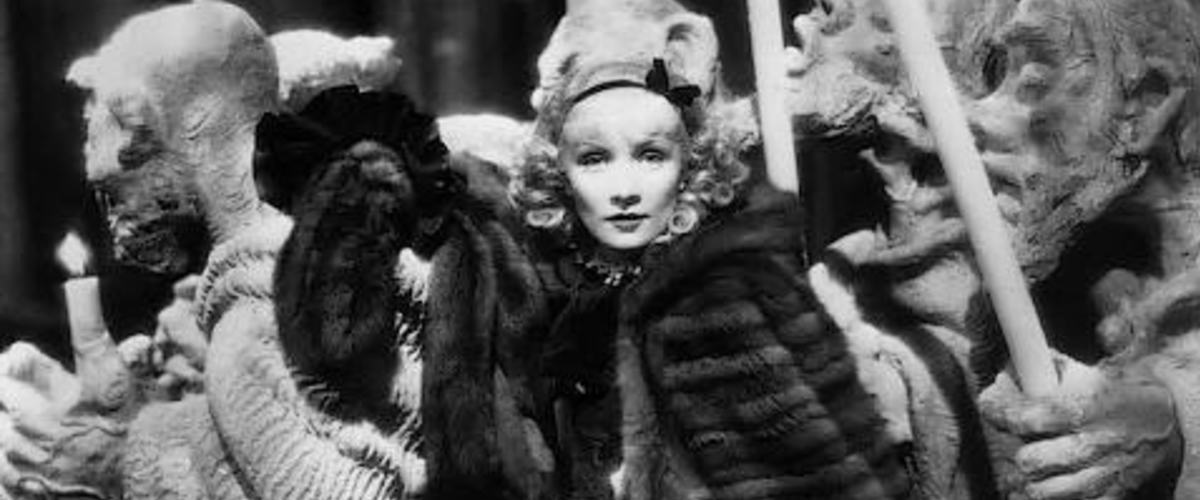
The Scarlet Empress is a film about the
rise of Catherine the Great (von Sternberg’s frequent collaborator and muse
Marlene Dietrich) to power, and it’s slightly unsettling just how little
message or pointedness von Sternberg provides to the journey. He’s ambiguous,
another consistent complaint. However, he’s less ambiguous than usually given
credit. The film has its eyes set on the trappings of aristocratic life, but it
also pauses to consider what the real price is to all of this decadence. This
primarily comes in the form of dark power politics and fascinating gender
politics. Catherine slowly discovers agency and a sense of self inside a system
that sees her as either a pawn or ornamentation. The Russian tsarist system
wants her around only for the sake of producing an heir, but when she grows
dissatisfied, after discovering her arranged marriage is to the dimwitted and
brutish Peter III (a delightfully bonkers Sam Jaffe), Catherine realizes that she can play the game to her
advantage. All she has to do is produce heirs -- not necessarily by Peter's constitution -- and play nice around the right
figures, but outside of her duties (which, it’s worth noting, are based on
appearances) she can find satisfaction and power. She just has to play her
cards right. Part of this comes from playing to her expected role as a female.
Catherine is exploited here, but she’s also quick to realize how she can
subvert gender roles. She’s not the only one. The ruling Empress before her, her mother-in law Empress Elizabeth (Louise Dressler), understands the realities for women in the 18
th century but she never
succumbs to them. The place where von Sternberg’s ambiguity can be troubling is
in its treatment of Catherine’s character arc.* Catherine’s enters a naïve child
and exits a ruthless monarch, and von Sternberg makes no judgment of it. The
film ends its final moments as if they’re triumphant, but they’re also fairly
disturbing. Catherine has gained so much, but at what cost? Well, it doesn't really matter when Dietrich is on screen and von Sternberg seems to forget he's supposed to be telling a story. He focuses on, really fetishizes, her, and in these moments von Sternberg's detractors might be right in letter but scarcely in spirit. I could watch those gorgeous surfaces all day.
Grade: A
*I'd just like to note I'm fine with its ambiguity and prefer it that way.

No comments:
Post a Comment