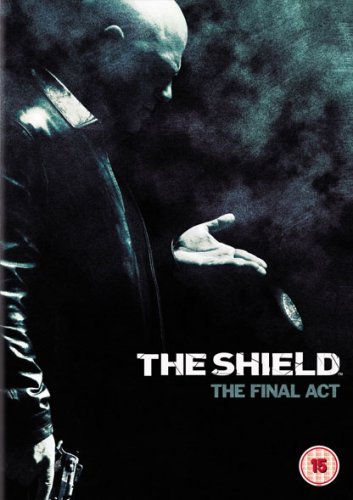
The nature of the beast of television requires that episode after episode after episode gets churned out. The end result is to have enough episodes to re-package for a syndication deal (the most profitable thing a television series can do, especially for the broadcast networks). In the mean time a show's job is to sell ad space. And this is in part the reason television has been looked down upon as a second rate cousin to film. Film's can tell neatly contained, well-wrapped up narratives. Television can reach highs but has to keep spewing out content even if its long ceased making sense from a quality perspective to keep a show on the air.
Serialization was something that was not really possible for the most part (outside of, say, a mini series). Some shows played with it, but attempting to draw in as many viewers as possible made that, for the most part, a toxic concept to the networks. Then The Sopranos became a sizable success, and though it wasn't a hugely serialized series, it had enough that that element was scooped up by shows born in its wake. Serialization is a a serpent eating its own head though. Yes, you can tell a long form story but the plot in turn becomes hugely important to how people perceive and enjoy the show. And when a finale or final season doesn't pay off fan's expectations or falls somewhat flat it recolors audiences' views of the show as a whole (as was the case with the divisive finales of Lost and Battlestar Galactica or even The Sopranos - which frustrated people less because it was bad and more because it was just weird).
This a long-winded, roundabout way of saying that The Shield's final season has the massive burden of culminating in a satisfactory way because of how plot heavy it is. To end on a story note that was lackluster would make so much of the journey before feel just a tiny bit of a let down. The Shield had been a relentless plot machine for six seasons and that didn't end in its final season. The Shield was so consistently good though that expectations were weighing more heavily than with a show that's lost its way. The show's penultimate season is arguably its weakest season but its weak by standards of The Shield, which is to say it still damn good television. The sixth season acts like a giant bridge to the final season setting up storylines that payoff so well in the final season, however, that it almost feels worth it to spend that extra season getting to the last stretch.
Critic Alan Sepinwall once said that bad finales don't ruin a show but that good ones make a show. This has perhaps rarely been truer of The Shield. I don't want to overstate this, but simply put: the show ends about as perfectly as one could hope a show could end. This final season is so very, very good that it almost retroactively sweeps over whatever issues the show may have had (though to be fair, they were few).
I could discuss at length what happened over the course of the season but what makes the season as strong as it is is its culmination in the last few episodes. The season is almost more plot heavy in this last season then it was before, densely, intricately plotted, slowly building to a point of excruciating emotional devastation. And the payoff feels so thoroughly rewarding and plays off of so much of the history of the narrative and the characters that its equal parts gutwrenching and satisfying.
We knew the Strike Team would get their comeuppance at some point. The central conceit of the show had been about how the team barely survived one scrape after another. The question wasn't really if it would blow up in their faces but how. The direction the writers chose to go in was for maximum damage. The Strike Team's familial bonds implode and the members turn on eachother (after Shane believed he had no other choice but to murder Lem in a previous season). The conflict centers on Vic versus Shane, master versus protegee. As they attempt to outwit one another, they dig themselves further into a hole that becomes increasingly inescapable. Their myopia in trying to exact vengeance screws all of them (including Ronnie, the cleanest of the members. The character started out as a recurring character in early seasons before becoming a regular. The writers brilliantly built him up in later seasons, turning him into one of the most important characters -- the fate of Ronnie turns out to be every bit as a devastating as everyone else).
In the last few episodes, the plot slows down at times, something more intense and disturbing than the typical, pulp action. The show becomes quiet as if taking a breath after such unyielding plot machinations. Before revealing everything to gain immunity Vic pauses for forty seconds, a short amount of time but lengthy for television and it feels like forever. One of the final shots of the show is Vic sitting at his new desk job. He contemplates all he's done, the people he's screwed over in the process, the family he's lost due to it, and the fates he's resigned himself to. Waves of emotions slowly dawn on his face and Michael Chiklis makes his face crumple further and further inward to the point where you can't imagine there's another level of agonizing pain and weary self-realization that can be expressed, and yet there is. It's a beautiful piece of acting and it's a fantastic final shot (well, right before Vic grabs his gun and goes off into the night - where to? The right note of ambiguity to end on for a character who never could sit back and accept his fate).
The Strike Team's story is excellent but the stuff around the edges is often every bit as good. The continuing tension between former partners Claudette and Dutch (Claudette now as captain of the Barn) is just as much of an emotional payoff, exploring their relationship and its meaning to both of them. Claudette's new position as captain and her frustration in the face of an increasingly difficult medical condition cause her to take out her anger out on Dutch. Dutch, knowing her too well though, suffers through it because he respects and admires Claudette too much and knows she's the best person possible to run the police department.
Not every character and story feels as though it gets a conclusion worthy of its longstanding nature. Acevada is left to be the self-serving, selfish political opportunist he's always been (though that's arguably the whole point of why it ends that way). Julian's crisis of identity between his faith and his homosexual feelings he doesn't agree with seemed to be dropped. However, everything else is so strong and so well-handled and executed that it doesn't matter. The Shield's final season justified the seven seasons we spent with it. I wouldn't trade those seasons as they were some accomplished programming, but this final season made it all the more worth it.

No comments:
Post a Comment