Tuesday, May 21, 2013

"Before Sunrise" - Film Review

Despite how cynical and jaded I may be about relationships, at heart I’m really a hopeless romantic. I want to believe in true love, and I go out of my way to watch rom coms because no matter how bad there’s something incredibly appealing about these romantic dalliances. But where the contrivance of romantic films so often undermines them, After Sunrise succeeds by taking a familiar story of a fleeting affair and turning it into something tremendously bittersweet.

The film manages this by taking the small steps towards the two lovers Jess (Ethan Hawke) and Celine (Julie Delpy) falling for eachother. At first, they’re merely intrigued by the other person, and in the spur of the moment they decide to get off the train and spend the day with eachother, ditching their original plans. But slowly their infatuation grows and grows, and the film, despite making this all preordained, makes it thoroughly satisfying to find the two become engrossed in their romantic feelings. The best part of this is how the film doesn’t bullshit us; it doesn’t build this up to the moment where they admit their feelings and get together. They’re talking about life, love, whatever comes to mind. They walk around Vienna, watching dancers, getting their palms read, and falling more and more for one another. But these two know they like eachother and they let everything about themselves and their feelings hang out there in the open. 

The film provides this all with a great sense of energy and spontaneity that you can’t help but root for these two. The Kiss, the one that was all but destined to happen, is dealt with fairly early on, and this removes much of the tension. Now they can be much more open with eachother, and their limited time together in turn becomes that much more problematic. They say that it’s for the best if they never see eachother again, never exchange numbers or addresses. But they’re really only fooling themselves.    

Much of this works due to Ethan Hawke and Julie Delpy's amazing chemistry and how thoroughly they inhabit these characters. The pair is having an exciting, fun, memorable, occasionally transcendent, time, and thus we are too. 

The film’s pleasure comes in part from how simple this story is, and the little events that take place throughout the day. It feels very true to life. The conversations and incidences that take place come off as if they’re just occurring in that moment. But that simplicity is deceiving has it unravels to demonstrate hidden depths and really sweet and sad things to say about relationships, love, and life. 

After Sunrise is deeply romantic and bittersweet tale, and simultaneously very fun and rather sad.   

Grade: A-

"Room 237" - Film Review

About halfway through, Room 237 becomes absolutely mindnumbing. And it’s not because it’s a bad film (in fact, I’d say it’s a very good film), but rather because the theories it’s allowing people to elaborate on about Stanley Kubrick’s The Shining are totally insane.

At times it’s easy to laugh them off, but other times the theories are so baseless and off-point that it becomes frustrating and painful: people actually believe this nonsense? These obsessive cinephiles have taken semiotics analysis to its most extreme trying to penetrate through the exacting perfectionism of Kubrick's vision. The perectionism that has them convinced that every little detail was purposely placed (and even has implications about the staging of the moon landing, the Holocaust, and the slaughter of the American Indians).
 
Like a horror movie that crawls under your skin, the documentary is unsettling and disturbing because it drags you into the strange and twisted views of people who have read into The Shining way, way too much. 

But the film also never looks down upon or judges its interviewees. It simply presents their arguments and leaves it for us to decide how we feel. In fact, we never actually see any of these indvidual but merely hear their voices. While they often come off as having a few bolts loose, we've all had that experience where we read into a piece of art too much and were convinced our theory was right.

Room 237 systematically unfolds these theories and provides a fascinating window onto an intriguing subject matter. 

Grade: A-

Monday, May 20, 2013

"Stranger Than Paradise" - Film Review

 
I imagine the best mood to be in to watch Stranger Than Paradise is to be super depressed, just full on doubting humanity.

The film isn’t morbid and it doesn’t traffic in sadness, but everything about the film screams loneliness. We constantly find characters isolated, either in desolate cityscapes, empty apartment or hotel rooms, or rundown cars. 

And no one seems really all that content; they’re restless and frustrated, and they don’t really know how to articulate it all that well. Everyone is deadpan, which at times is used for humorous effect. These people are hapless and unmotivated.

When his cousin Eva (Eszter Balint) flies in from Hungary, Willie (John Lurie) isn’t happy to see her but rather is just really angry about the burden of dealing with her for a week. He’s a real jerk, dismissing her and never inviting her out anywhere. But over time a begrudging respect forms between the two. Enough so that when Willie decides to go on a vacation a year later with his friend Eddie (Richard Edson) they head out to Cleveland to visit her. They’re on better terms this time around, and the experience convinces Willie to head down to Florida with his cousin (title carded as “paradise” - although it feels like a warmer version of the shitty locales they've already been). But Willie keeps treating Eva lousy, ignoring her entirely, and he eventually blows their money gambling. She’s had enough and after running into some money through a misunderstanding (supposedly a miscommunicated drug deal) she hops on the next flight back to Europe. Willie runs to the airport but is too late to prevent her from heading home.  

Not much happens in the film. The plot is rather minimal, largely observing people and then at that mostly watching them sit around bored and disinterested. The film often feels more concerned with acting as a mood piece than telling a story. The film has a strong sense of atmosphere conveyed especially well by its low budget, black and white cinematography. Most of the time there’s not even dialogue, but just the actors inhabiting the places they’re in. The stripped down minimalism would be a point of inspiration for later American independent films and its style is familiar of many later indies.

There's a lot of low-key, understated humor to be found in the film and the obliviousness of its characters, as well as the occasional absurdity of events.      

A funny, dark, understated film that takes pleasure and finds humor in the everyday and the mundane. 

Grade: B 

Game of Thrones - "Second Sons" - Review

The Second Sons (the mercenary group who provide this episode with its title) are a second rate mercenary group. They’re frequently looked over in favor of the more reliable Gold Company, who supposedly have never broken a single one of their contracts. Here we find them hired out to defend Yunkai from Danaeries and her Unsullied. It’s a fitting name not only for the company but for a lot of the characters of this series, as many of them are bunch of “cripples, bastards, and broken things”, to use another turn of phrase from this show.

Dany herself was long suffering as a “second son”, playing second fiddle to her brother Viserys, who also found himself never receiving the respect or glory he believed he felt was owed to him. But in a way, Dany isn’t the “second son” of this storyline, it’s Yunkai (and to a lesser extent the Second Sons themselves). Yunkai is rightfully scared after their southern sister city Astapor was sacked by Dany. Dany’s steely resolve in the face of the treachery of a bitter, resentful city and an atrocious and violent mercenary corps is making her enemies. But her enemies are also slightly baffled that someone as feminine and young as Dany would be so militant and headstrong. It flies in the face of what someone who is a supposed “second son” ought to be acting. 

Indeed, besides Daario the captains of the Second Sons want to kill Dany and get rid of this nagging problem which to them is just a short term issue. Daario is a second-in-command who has yet to receive the respect he feels he deserves. But he foresees the opportunity to hop ship and turn the mercenaries over to Dany (not only that but he’s also quite infatuated by Dany). 

“Second Sons” is a surprisingly focused episode by Game of Thrones standards, besides scenes with Arya and Sam at the beginning and end of episode, the show mainly seems content to hone in on three big stories: Dany and the Second Sons (and the mercenaries in fact get more screentime here than Dany), Tyrion and Sansa’s wedding, and Melsandre’s scheme to sacrifice Gendry. Some stories are welcome reprieves to be away from (especially the always torturous, pun intended, story of Theon) and some are sorely missed, but it’s nice to see stories play out across an episode in a way they typically don’t.  

The wedding is a lovely drunken affair (the Lannisters, in general, love their wine) filled with plenty of awkward encounters, sniping, and people speaking amusingly or despicably frankly. Tyrion and Sansa are a weird pairing, there’s no denying it, but in some respects it’s a very good match for both of them (though Sansa might not fully see this and Tyrion may dread it). Tyrion is looked down upon, never given the attention or respect he deserves, and constantly made a mockery of (Joffrey stealing the step stool so Tyrion can’t get the cloak on is simply the worst!). Sansa, in her current position, is not going to find someone who will treat her as kindly as Tyrion. She’s a prisoner and anything is better than the option of Joffrey (who threatens to rape her in a disgusting, atrocious scene). 

The story on Dragonstone finally picks up steam after a long stretch of absence. Melisandre sets a trap for Gendry to fall into. Stannis becomes increasingly uneasy about the whole sacrifice and goes to Davos to clear his head. Davos is pardoned on the condition that he never tries to kill Melsandre again; he agrees but refuses to stop speaking his mind. This season has been doing a much better job with Stannis, Davos, and Melisandre. The characters are being given much necessary depth that wasn’t filled in last season. Melisandre’s encounter with Thoros two episodes ago shows she’s not completely in control and at times, making this up as she goes along. Stannis’ interaction with his wife and daughter clued us into why he’s just a little screwed up. His conversation with his daughter and his scene here with Davos present just enough hesitation about the plan he’s going forward with that it becomes much more interesting to watch, and makes Stannis more a character than a plot device. While that whole sex business with Gendry just comes off as more weird than intriguing, the steps put forward leading up to the scene shade it in a way where it’s still really interesting and exciting to watch.  

The final scene with Sam, while very cool, felt a little out of place. Game of Thrones has many pleasures to it, but for a number of viewers I’m guessing it’s the very big, insane moments. While I love these moments, I also love many other things about the story it’s telling and the way it goes about telling it. At times, it appears as though the writers are purposely putting a big awesome moment like Sam killing the white walker just to get us to come back for the next episode (believe me I’d be returning even if it didn’t feature a gargantuan, titillating moment at the end of every episode). But the episode didn’t need a moment like this leave us wanting more. If the Dragonstone story rubbed you wrong or the Dany plot didn’t get your blood boiling (which I could potentially see as these stories have their problems), I really hope that the wedding left you very pleased. It’s filled with all these nicely observed, tiny moments that are an absolute delight to watch. Tywin being enraged; Olenna throwing off a quip; Cersei being bitchy; Peter Dinklage getting to play a wasted Tyrion; Joffrey being the worst little shit on the face of the planet. 

Here’s the thing; the Battle of the Blackwater might have been very cool, and the sack of Astapor as well, and countless other moments. But a series can only get away with such massive, thrilling moments by giving us characters that are worthy of following into that shit storm. The real pleasure of Game of Thrones is following these very well-realized characters and hoping against all hope that George RR Martin’s story doesn’t thoroughly fuck them over irrevocably, whether it be by mercenaries, an arranged marriage, a sacrificial ritual, an ice monster, or a former knight. For the moment, they’re safe, but as we head into the penultimate hour how long will that still be true? For when you’re a second son, you’re not given many options or much hope.

Stray Observations:
-Arya and the Hound are a lot of fun to watch together even very briefly. The series is very good at mismatched duos. 
-“A man who fights for gold can’t afford to lose to a girl”
-Cersei explains the Lannister house diddy "The Rains of Castamere" which essentially recounts the time the Lannister's committed the medieval equivalent of genocide to the family line of house Castamere.
-Cersei so doesn't give a fuck about Loras: "No one cares what your father once told you".
-Drunk Tyrion threatening to cut off Joffrey's dick. Could we get a more intense and hilarious moment?
-Shae finding the clean bedsheets was a very  nice moment that had me smiling a wide grin.  

Grade: B+

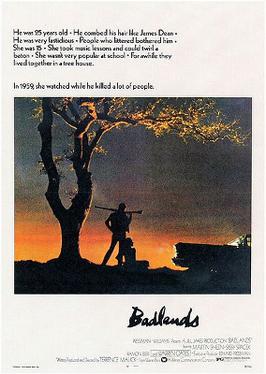
"Badlands" - Film Review

You know how the old story goes. Boy meets girl. Boy and girl fall in love. Girl’s father disapproves of boy. Boy kills father. Boy and girl flee the state.

Things only proceed to escalate from there as we quickly learn that the shy, naïve Holly(Sissy Specek)’s boyfriend Kit (Martin Sheen) is a bit stark raving mad and bit a trigger happy, a combination that makes them wanted criminals as they hop scotch across the Midwest. 

Wherever they go, Kit soon kills someone, forcing them to take off once more. Holly slowly realizes that she doesn’t quite have this guy all figured out. 

Badlands is a film that’s slow and contemplative. It enjoys pondering about life, love, really anything that’s on writer-director Terrence Malick’s mind. It’s languorous and drawling, letting things tease out before having tiny explosive moment where all seems to go to hell. And even then the moments of violence seem dry and matter-of-fact.

It’s never entirely clear why Holly falls for Kit or sticks with him through the madness of the road trip and killing spree. Perhaps it’s because she’s quiet and no one has really noticed her before. Perhaps it's cause she's a little crazy herself. She doesn’t seem terribly upset at the death of her father, shocked but not saddened. She seems to be in a trance as she goes along with burning down her house so they can fake their deaths.

Kit, as played by Sheen, has an undeniable charm. He’s got James Dean good looks and a smooth talking way with words. It’s never entirely clear what exactly is going through this guy’s head (the film is from the perspective of Holly and she narrates the film). Sometimes it’s simply baffling as to why Holly has shacked up with this guy, and just as indecipherable why this guy went gun-ho criminal (he’s obviously got a few bolts loose but it’s all just a little impenetrably vague). Their initial courtship is really sweet, but twenty minutes in the film takes a turn for the more unusual, bizarre, and unexpected.  

While the film never recaptures that immediate sweetness, there’s an odd pleasantness that abounds. As seen through Holly’s innocent doe-eyes, the story becomes at times a case study of the wonders of life and the tiny details that make life so fascinating and strange. 

Badlands takes its title from the terrain of the Midwest where the story is set. This geography is dry, arid, and flat; the lands are “bad lands” in how they’re seemingly of little use to humans. Badlands sometimes takes its title seriously; there’s a treachery to this world we live in, certainly (these two individuals are in deed a little treacherous, a little off. Just a little too dispassionate about their crimes). But the film also is passing off its title slightly ironically: may be the geographical nickname has got it wrong. The film contrasts how disconnected the characters are with some beautiful, vital imagery. There are plenty of weird and grand, frightening and awesome, terrible and great things in the badlands if you look hard enough. 

Badlands doesn’t always have the most cogent of throughlines to its narrative, but it’s carried by the strong performances of its two lead actors, a fascinating and strange story, and a wonderful ambiance.  

Grade: B+

Sunday, May 19, 2013

"The Bird with the Crystal Plumage" - Film Review

The Bird with the Crystal Plumage is a terribly disturbing film. For all its occasional clunkiness, when director Dario Argento wants to scare us, the film thrills and unsettles like few horror films do.

While much of the film is a by the books slasher film, spiced up by some intriguing amateur detective work by the protagonist, it takes its familarness and mines it for some truly delightful and unnerving thrills and chills. Part of the film’s seeming familiarity is how many times the film’s premise and style have been copied; the film sparked the Italian horror genre of giallo.

While many later giallo films would use the genre for cheap thrills of violence and nudity, Crystal Plumage crafts a solid narrative that though not without its faults (the whole visit with that artist is just idiotic and clumsy) is very entertaining. The murders are frightening and creepy, especially since they’re shot largely from the perspective of the serial killer. The film turns these stalking sequences and the attacks on the life of Sam Dalmas (Tony Musante) and his girlfriend Giulia (Suzy Kendall) into highly exciting scenes that often leave you on the edge of your seat. 

When Sam witnesses an attempted murder, he rushes to save the woman in distress and soon finds himself caught up in the investigation for the killer. He initially wants nothing to do with the case, hoping to return home to the United States. But the more he looks into the murders, the more engrossed he finds himself to the point of near-obsession.  The greater his involvement becomes, the more he puts himself and those around him at risk. 

The film is helped along by some lovely cinematography that’s at times sumptuous and exquisite, accentuating its colors at the just the appropriate moments to build a wonderful sense of atmosphere. 

Crystal Plumage is disturbing and thrilling horror film that’s still a great deal of fun to watch. 

Grade: B

Patrick Vs. Buster Keaton

Patrick Versus the Works of Buster Keaton

In this weeks episode: Patrick takes on two films by silent film auteur Buster Keaton.

Summer means I have more time to watch stuff, but I also don't want to neglect my writing. To compromise I'm trying out this shortened format so that I can get in a lot of content but still get in some thoughts here about what I've watched.

Steamboat Bill Jr.
-Keaton has a wonderful ability to articulate everything he wants to say. Sure, a lot of this is sight gags, but its sight gags with underlying meaning.  There's never a moment without a point to it and there's never a moment where it's unclear as to what or why is happening.
-At its heart, it's really a very sweet and funny story about starcrossed lovers as well as a father-son relationship.
-That final sequence with the storm is incredibly exciting. All the visuals of this are wonderful, especially the now infamous gag of the house falling on top of Keaton.
-There's some pretty questionable elements about masculinity, but it's more of a sign of the times then an outright offensive suggestion. 

Sherlock Jr. 
-Buster Keaton sure is an amazing physical comedian. The amount of near death experiences Keaton has due to collisions with cars and trains in this film is kind of astounding. Keaton put himself out there and his commitment to the performance and the gags sells them.
-The extended fantasy sequence that takes up most of the film is absolutely delightful. From the astral projection, to the constantly changing film stock that throws Keaton for a loop, and all the wry self-aware meta humor about the scenarios Keaton's character is thrown into. Just a fantastic film sequence that demonstrates the capabilities and magic of cinema.  
-Keaton apparently has a weird obsession with trains and boats as clearly suggested by these two films. This one has nothing to do with trains and yet it features trains multiple times. On at least two occasions for physical, near-death experiences for comedic effect.

Consensus: Buster Keaton's films are very funny comedies from the silent film era. They're tinged with a great sincerity and earnestness to them. Keaton finds wonderful ways to get tremendous amounts of humor and pathos out of very little.

Grade:
Steam Boat Bill Jr.: A
Sherlock Jr.: A