Sunday, April 27, 2014

Game of Thrones: "Oathkeeper"

 Spoilers Below:

There is a segment of the Lord of the Rings fan community who flipped a shit when Tom Bombadil was excised from the film adaptation because they really liked that part of the book series and anything that wasn’t hopelessly devoted to J.R.R. Tolkien’s vision was just wrong, dammit!

I think people who hold adaptations of books to that insane level of scrutiny and expectations are foolish. 

I recently saw the film adaptation of Divergent and it’s a pretty bad adaptation. It’s not the worst movie but it fails to make enough considerations for how a visual medium tells it stories and why some things that worked like gangbusters in the written form just don’t translate well to film. Game of Thrones is constantly gauging how much of the series can stay true to what Martin has written and thus satisfy the serious book fans while still working on its own terms. If the show begins to break off into its own original storylines and starts to change things it may no longer be entirely an adaption of the books but it's own different beast entirely (And this is increasingly becoming true as the show outpaces Martin's writing).

This became highly apparent last week when the show re-wrote a moment from the books from a consensual moment of sex into a rape scene. I think there’s reasons for this change, in part due to the change in placement time-wise from when it occurs in the books, but it still comes off very dark and very uncomfortable. This is not least of which due to Jaimie’s motivations not feeling completely justified or earned, even as this understandably skids into to the growing dissolution between Jaime and Cersei. But if it’s meant to be a further act of self-destruction for the once happy (though admittedly slightly creepy) relationship, it tried way too hard, and exploited us to achieve that effect. 

I bring up the books -- when I typically try to avoid this cause it's largely a fool's game (and don’t worry this review will largely avoid spoiling anything from the books except as it relates to what’s happening now in the series) -- because “Oathkeeper” does a number of things that are radical and meaningful departures from what Martin wrote. And, ya know what, that’s totally okay, and even in some instances I think it helps make the show work better as a television series.

The big changes revolve largely around events occurring in and around the Wall. Notably this whole plan to get rid of the mutineers at Craster’s Keep never takes place, and yet I find it to be an excellent departure from the books. One of Game of Thrones’ problems is that there is rarely ever story arcs carried across a single episode and that’s why it can often feel a bit aimless. Now though, Jon suddenly has a goal and he’s set out to achieve it. It’s not a particularly noteworthy story arc, and so much of how we feel looking back on it will depend on the payoff down the line when Jon and his volunteers get to Craster’s, but for now it makes the episode feel less slack.

Another big change involves Bran being at Craster’s and Jon having knowledge that Bran is beyond the Wall. In the books, it’s a lot easier to have characters set apart from one another but in a show you need known characters interacting otherwise our investment diminishes. If a character we care about gets in conflict with or talks to a nameless figure it just doesn’t work nearly as well. Having storylines click together and relate is necessary, especially if you’re going to have dozens of different stories play out simultaneously.

Sometimes this doesn’t even require making drastic shifts from the source material but by pointing out how these stories all take place in the same world and how ripple effects can be felt everywhere. Last episode Davos and Stannis discussing Joffrey’s death may not have felt like a big deal but it reminded us that these characters aren’t simply off in their own well-produced chamber dramas but are important agents off in a different corner of Westeros. Here the show has Littlefinger’s dialogue regarding the allies he struck a bargain with carry over into the scene between Margaery and Olenna. Hey, it’s not subtle but then again I think this show doesn’t always have the option to aim for subtlety.  

Again, I think the series has gotten a lot better at making these connections. It’s there in all the ways we see the episode's title playing out with people breaking or committing to their oaths. Brienne sets out, at Jaimie’s suggestion, to find and protect Sansa, as she had promised Catelyn, and Brienne, in turn, acknowledges that while Jaimie may have broken his Kingsgaurd oath in letter, and in the process earned himself the title of “King Slayer”, he didn’t violate it in spirit. Jon broke his Nights Watch vows by colluding with the wildlings to gain their trust and information, and he now seeks to kill members of the watch who broke their vows and are making Craster look like a saint. Sam broke his promise to Bran to not tell Jon that he was heading beyond the Wall, and Bran continues to ignore Jojen’s mandates to stop warging into Summer. Dany promised to free the slaves of Mereen and punish their cruel masters and she does so in highly brutal and ruthless fashion. Locke has assured Ramsay he will infiltrate the Watch to get to Bran, and he has quickly insinuated himself. Margaery has Tommen promise he won’t tell anyone about their secret midnight meetings. 

I feel like I’m beating a dead horse by pointing these things out because they feel so utterly transparent, and it’s not like we go to Game of Thrones for a series of great depths. As Sam Adam rightly noted recently Game of Thrones is not an “especially profound show” and rarely does it ever prompt very insightful conversation beyond an interrogation of how effective its plot is and how effective its more titillating elements may be. I’m not knocking those aspects of the series because at the end of the day they’re why I watch and often love the show. 

But sometimes I get to my word document and find myself incapable of saying anything more meaningful than listing what happened and trying my best not to simply say, “OH MY GOD! DID THAT JUST FUCKING HAPPEN!”

As I’ve argued I find the show to have more going on than just its plot, but sometimes I wish the different pieces of the show snapped together like clockwork. Changing around some elements from the novels and making each episode work more on its own terms is a start.

At the end of the day, we watch Game of Thrones for these characters and the intriguing stories they’re put though. But I also find that an intense level of over-thinking is one of the key pleasures to this show, keeping us guessing and wondering and engaging with what just might happen next and doing it in compelling ways. I’m as gobsmacked by that ending as everyone else and I can’t wait to find out what it fucking means. And who cares what quibbles I might have; it may not be how the book set about telling it but damn it’s intoxicatingly involving and fun television. 

Stray Thoughts:

-This episode was directed by the fantastic Michelle MacLaren who is one of the best re-occurring directors who has worked on this show (She previously directed last season's “The Bear and the Maiden Fair” and “Second Sons”), and here she creates one of the most visually memorable episodes of the season. Each scene has such a perfect, dripping sense of atmosphere and mood. 

-Another change from the books is that final scene with the Whites which is absolutely bonkers and I still have no idea what to make of. The Whites are a much more ethereal presence in the books than they are in the show. 

-The scene between Margaery and Tommen was a wonderful bit of comedy. Dean-Charles Chapman’s deer-caught-in-headlights reaction was priceless. 

-The episode’s opening scene is the most extended amount of time we’ve spent with Missandei and Grey Worm and it’s notable for giving us the perspective of the former slaves Dany is so proud to be freeing but also fails to recognize the god complex it’s helping to create. 

-Sansa acclimates to her new circumstances fairly quickly and is bold enough to ask Littlefinger a number of questions regarding Joffrey’s assassination. 

-Bronn tells Jaimie about how Tyrion’s first choice for his champion when in need of trial by combat at the Eyrie, back in season one, was Jaimie. This leads Jaimie to visit his brother and realize Tyrion was not responsible for Joffrey’s death. Cersei is furious at Jaimie for admitting this and this coupled with last week's rape leaves their relationship almost non-existent.

-With the Craster’s Keep scene, we get even more examples of violence against women, something the show has made feel almost like a natural occurrence, which only serves to make it all the more disturbing.  

-Some viewers question the level of feelings between Brienne and Jaimie. Not to get into weird shipper territory but I think that's reading a bit into their relationship; it's platonic but based on real affection, devotion and understanding. Why define the ineffable beauty of it? It just feels right.

Grade: B+

Sunday, April 20, 2014

Game of Thrones: "Breaker of Chains"

 Spoilers Below:

I found myself appreciating last week’s emphasis on the wedding while watching “Breaker of Chains”, a good but not especially memorable hour of Game of Thrones. 

The show returned to its old structure, which meant a lot of this felt, as per usual, like a lot of disparate, very well-written, well-acted scenes that didn’t quite connect. It’s a bit of a placeholder episode, an episode bridging things. And in a show that too often feels like its bridging its way to the next big holy shit moment that can make things feel just a tad loose and lackadaisical. 

However, while I’ve done some fingerwagging at the series’ bifurcated structure, I also have to admit that so much of what makes Game of Thrones tick is its crazy storytelling style (unimaginable on television only just a few years ago).

In a great essay two weeks ago, Phillip Maciak argued that Game of Thrones draws strength from the fact that it lacks protagonists. People talk up how the show was ballsy to kill off its “protagonist” Ned, but Maciak rightly points out that Ned getting put out of the picture allowed the show to open up its story to the characters that the series deep down wanted us to follow. Maciak argues, “Game of Thrones likes spending time with characters who are aggressively told that they’re not protagonists. The margins will control the center, and, on HBO, they have for a while now.”

The show recognized that Tyrion and Arya and Jon and Dany, and whoever else you want to add to the list of side characters, were and still are so compelling because they lack access to power and traditional means of obtaining it. So Ned Stark comes strolling into town to save the day, and sadistically deep down we kind of want him to fail. We don’t realize it at first, but it works on a level far more than mere audacity. For most of us out there, we’re not Ned Stark; we’re the misfits and we’re tired of stories telling us we’re misfits: we’re the hero of the story, dammit!

And so rather than grounding the story with an obvious center the show gives us countless centers to gravitate too. That sometimes doesn’t make for the neatest episodes of television but it makes me want to come back week to week.

How else do you explain my fist pumping as Sansa escaped from King’s Landing? 

I will never quite understand or really tolerate the segment of the fanbase out there who doesn’t like Sansa – because she plays by the rules and she’s girly and she wants to be a lady and get married and have kids. To me, Sansa is simply one of many female characters drawn up by this world and she’s on one part of the spectrum of what it means to be a woman in this world. And it was absolutely glorious to finally see her get a reprieve from the terrible shit she’s been suffering through since the end of the first season. 

Granted it is a reprieve that comes with strings attached, in the form of Littlefinger, who she discovers orchestrated her escape and Joffrey’s death. Littlefinger has rarely come off quite as sleazy and sinister as he does in this moment, and Aiden Gillen doesn’t shy away from making the moment queasy and uncomfortable (Dude had some crazy eyes going on). Littlefinger kills Sir Dontos and destroy the necklace Dontos gave to Sansa, getting rid of any evidence of the Hollard family lineage. Suddenly, Sansa’s gratefulness and relief turns into a new sense of fear and captivity. 

But this is one of many moments where people think they’re freeing people but what they’ve done doubles as a new prison sentence. The episode's title, “Breaker of Chains”, can refer to Dany saving numerous slaves and attempting to save many more at Mereen. But it can also, perhaps not surprisingly, refer to multiple other characters. (And one thing I can say in the show's defense is that it has gotten much better at making various stories feel connected through thematic relations)

Take the person the episode starts on, Joffrey. Joffrey’s death frees the Seven Kingdoms from his cruelty, but it only serves to open up a power vacuum for new, potentially worse, individuals to install themselves into power. Tywin very quickly understands this and makes certain that Oberyn is content, by offering him a meeting with the Mountain and a place on the small council and as one of Tyrion’s judges, so that he won’t stir up trouble. Tywin also makes certain that Tommen, Joffrey’s younger and far kinder brother and the new king, will be docile and obey his command. 

Olenna claims that Margaery is better off now that she’s freed of her bondage to Joffrey, but Margaery can only see it as yet another hindrance to her desire to be queen and wield power (which has occurred twice now counting Renly's death back in season two). Olenna tells her that Tommen will be easier to control and make her position of power more secure. However, until that happens Margaery is just another pretender aiming for standing but still lacking it. 

Sam moves Gilly to Moletown, the better to be safe from the sex-starved men on the Wall, but Gilly only sees it as a slight against her. Gilly, being from a completely different cultural background, doesn’t understand why Sam won’t accept his feelings for her and vice versa. Sam is trying to protect her but Gilly takes offence to being shut out both literally and figuratively. 

Tyrion has been freed of Joffrey’s constant snide ridiculing, but it is at the cost of being a real prisoner rather than spiritual and mental one. Tyrion finds himself helpless in coming up with a defense and he realizes how isolated he has become. Once the King’s Hand and the man who saved King’s Landing back in “Blackwater”, he has fallen just about as far as he possibly can. 

Dany informs the slaves of Mereen, “I bring you a choice”. But sometimes breaking chains isn’t a choice if the shattering of those chains was forced upon you, and in freeing someone from those bonds you never know what unintended consequences you might create. 

Stray Thoughts:

-Before the wildlings attack the random village we get a very Leave It to Beaver moment with a father and son bonding only for the dad to get an arrow through his head. As if the show hadn’t made me feel unclean and sickly enough as is we get the leader of the Thenns informing the boy that he’s going to eat the kid’s parents. 

-I love the contrast of Daario and the fighter on the horse. Daario gives no sense of ceremony but he gets the job done. I think the Hound might like Daario (Not that they’ll ever meet). 

-Olenna sheds some light on what has made her who she is, recounting her awful marriage done in the name of power. That sharp wit has always felt like it comes from a place of real understanding and experience and I’m pleased to see Olenna be more than simply a very amusing voice of reason. I'm also pleased to see Margaery show some vulnerability as she has also seemed a little too self-satisfied in playing the gender and power politicking.

-Sansa’s escape was beautifully shot. I really liked the fog on the harbor as they approached the ship. It added really nicely to the tension.

-Cersei was very displeased to see Tommen fall under the sway of Tywin. That scene was told from the point of view of her, and it reminds us of how Cersei wants to be in power but keeps getting shut out. Also, she’s the only one mourning Joffrey.

-Not sure what to make of Jaimie raping Cersei. It makes sense and I believe he would do it, but did it really need to take place? I’m sure some people’s sympathies regarding Jaimie are still on the fence and this isn’t helping any. 

-I’m also not sure we needed another Oberyn every-which-way-you-like-it sex scene. We got it the first time; Dornish culture is different and Oberyn’s sexuality is too. 

-I don’t really know what to say about Arya and the Hound. I have a lot of feelings about their scenes but they're very rambly. It continues to remind us of how Westeros is desperately ravaged and ruined due to the war. Arya fabricating identities is pretty entertaining and fits with her past choices to adopt identities. The sequence probably isn’t totally necessary but it puts the Hound and Arya in yet another seemingly irreconcilable impasse. I also think it plays into this episode playing around with the question of people defining you versus you defining yourself; the Hound embraces the fact he’s a “thief”, and Arya refuses to be looked down by the man and his daughter. Davos defines himself by being a “smuggler” and not a “pirate”. Gilly refuses to be labeled a “wildling”. 

-The traitorous Night’s Watch members who killed Crastor have taken over his home and now pose a threat to the remaining brothers on the Wall; Jon realizes they have to kill them before they expose just how undermanned the Wall is to Mance Rayder and the wildlings marching on the Wall. This plot is shaping up to be pretty exciting.

Grade: B

Wednesday, April 16, 2014

My Film Review of "Noah"

About two weeks ago I reviewed Noah for my college's newspaper. Noah is a strange movie, and digging into it and its strangeness made for one of my favorite pieces of writing I've done for the paper.

Monday, April 14, 2014

Mad Men: "Time Zones"

 Spoilers Below:

If the season premiere of the seventh and final season of Mad Men is anything to go on, it’s going to require a strong stomach to make it through these final fourteen episodes (divided into two sets of seven episodes due to weird contractual reasons)

Mad Men has increasingly become a haunted series. Last season drew flack for sticking us in the impenetrable cloud of self-loathing of Don. Stripped bare of the all the glamour that his stunningly good looks initially suggested, and seemingly incapable of changing in any meaningful or necessary way, Don was rarely a likable or pleasant presence. 

“Time Zones” does little to try to change that; and very little of that beautiful moment of small but powerful connection with his daughter Sally in last season’s finale can be read throughout the premiere. If anything the show continues to suggest things will get much, much worse before, or even if, they get better. 

On a thematic and narrative level this fits with what has always been the show’s modus operandi. Beneath the intoxicating surfaces of nostalgia and period piece allure lies something rotten. There always has been and there likely always will be. Mad Men is a show about people stuck in holding patterns, striving to fight back against change rather than accepting it as inevitable. 

The show simply refuses to give Don a reprieve, and by extension us. And “Time Zones” returns us to this world with almost everyone, especially our dual protagonists, in mirrored throes of misery, at all-time lows.

Don has all but been fired from SC&P. He tries to sell copy through Freddy Rumsen (who somehow is better off than Don, especially when it comes to handling his drinking problem). His marriage with Megan is essentially dead with both of them going through the motions of being married, but only when Don visits her trying to get her acting career off the ground in California. Don can hardly muster up any of his false charisma or charm, turning down an affair with a stranger on the flight back home, seemingly because he doesn’t feel like putting any effort in anymore. 

Meanwhile Peggy keeps hitting creative roadblocks due to a dull, narrow-minded new head of creative who appears to disdain Peggy for being both a woman and for refusing to take the path of least resistance. Living in a lousy neighborhood with insufferable neighbors, and constantly being reminded of the romantic failures -- by Ted’s appearance in the office -- that have driven her to this awful circumstance, Peggy, in a devastating moment, breaks down crying in her apartment. 

The premiere suggests the old adage that the more things change, the more they stay the same. Joan is still not taken seriously for her clear and brilliant business acumen because she’s a woman. Roger has fallen into a life of hedonism, but it still leaves him empty because this boozing and womanizing has always been a distraction at best. And Don Draper still can’t find reason to change and better himself, and perhaps even find satisfaction and peace. 

Or perhaps there’s not any chance for this? Perhaps, like this show’s spiritual predecessor The Sopranos, these characters are doomed to never change, and repeat themselves over and over. They’ll never reach a true breakthrough, just a manufactured one like all those great ad campaigns.  

I’d like to believe otherwise, but, boy, was this ever a despairing way to enter 1969. Despairing in all the right, immaculately mounted ways, but still despairing.

Sunday, April 13, 2014

Game of Thrones: "The Lion and the Rose"

Spoilers Below:

So let’s get the obvious joke out of the way: it might not be such a good idea to attend a wedding in Westeros.  

There’s a reason for weddings being instances of seismic shifts in the world of Game of Thrones. Even if the shocking twist at the end of “The Lion and the Rose” hadn’t left Joffrey Baratheon First of His Name dead, presumably by poison, and Tyrion a soon-to-be-prisoner as suspect number one, the wedding would have created a new era for the Seven Kingdoms. Though Tywin has largely sured up power, last episode reminded us of the fault-lines in the Lannister power: Tywin can barely get his own house in order, Jaimie is a scarcely able to function as a soldier, Tyrion is stuck in a thankless marriage, and Cersei is a high-strung spring ready to snap (as she does at the end of tonight’s episode). 

Marriages are a microcosm of this world. They are carefully planned social contracts that help create and sustain power. They’re displays of pageantry and pomp that reinforce power and authority. They’re symbolic acts weighted with social and political expectations. Most importantly, they’re events where people’s public and private lives collide. We see this in all the small interactions where people dance around essentially how much they kind of don’t like and are hoping to use one another. 

The marriage between Margaery and Joffery was intended to be a moment in which Tywin took control of the cracks in the Lannister narrative and sealed them up. Its symbolism would have spoken volumes. How many could match the combined power of the Tyrells and the Lannister? With most other contenders for the Iron Throne non-existent or licking their wounds, the Lannisters should have had it all. Yet in the world of Game of Throne being too certain in your power is the quickest way to craft your own demise.  

The centerpiece of the episode is the Joffrey-Margaery wedding, and it is easily the best part of the episode. Even before we get to Joffrey’s demise, the sequence is great. The show has become much more confident in telling its story. The wedding sequence goes on forever in terms of this series (Just like last week's episode let the Arya scene go on a little long and have time to breathe and was also all the better for it). In this time, not especially much happens. But Alex Graves' direction and George R.R. Martin’s script capture with equal parts humor and pathos the many little power dynamics at play right now in King's Landing. Perhaps best of all is how this feels like the characters got really, really drunk and started saying exactly what’s on their mind. 

It reminded me of the wedding ceremony between Tyrion and Sansa last season in “Second Sons”, which took its sweet time and simply took time out to observe where different characters currently stood with a healthy dose of wine to help move things along. In both episodes, Tyrion gets super drunk and starts getting himself into trouble. Then it was with Tywin (who just wanted to see Tyrion stop making a fuss and get Sansa pregnant to ensure the Lannister hold of the North) and now it’s with Joffrey. 

Even before the triumphant and terrifying final moments, Graves and Martin amp up the tension by focusing in on Joffrey trying to take advantage of Tyrion. Tyrion, more than a little soused, responds as he does to most things in life by tossing back a witty jape, one that goes way, way too far. Everyone in the crowd waits with bated breath for this to completely blowup and end badly. 

I love how the series has fleshed out a pretty deep cast to draw upon. Outside of Kings Landing we could use a few more recognizable supporting faces, but here there are so many familiar faces to simply train the camera on, and observe how they react to something that’s minor (by modern standards), but that is explosive in this world of hierarchies, aristocratic manners and relationships, and power politics present in Game of Thrones. 

One of the criticisms Game of Thrones has received is that it is such a plot heavy series that it often fails in other areas of storytelling. And while the larger narrative often comes first and often at the expense of other aspects of the show, I’d counter that this criticism often does a disservice to what the series does well.

There’s no question that Game of Thrones is a plot heavy show, but what underpins the plot is far more nuanced. Joffrey dying has shock value, but it comes from an apparent character arc. This was not just a despicable person but a volatile one, and a person who was simply a bad king. In the parlance of this show, Joffrey played the game of thrones poorly. 

Put another way, this series has a psychological realism that supports it. Joffrey getting poisoned is exciting because we know him and what made him who he was, and in the hands of the excellent Jack Gleeson (who will be greatly missed) he always came off as never anything less than human. A monstrous one for sure, but one who felt real and who felt like a product of his society and upbringing, not merely a character for us to easily and conveniently despise. 

Beyond the psychological foundation, which is always so specific and well-observed, the series often comes off somewhat like a period piece. Recently I read of critics who enjoyed watching Game of Thrones more than Mad Men because the former is simply more “fun”. But Mad Men has a lot in common with Game of Thrones. Both are obsessed with power and power dynamics, both create inviting but also frequently disturbing worlds, both are highly interested in gender politics, and both vicariously allow us to enjoy, root for and often feel awful about a world set in the past but that too often resembles our own.

Strip away the dragons and the magic and some of the geographical specifics and Game of Thrones looks a lot like medieval Europe (not entirely surprising as the books are partly inspired by the War of the Roses). Mad Men puts us inside the headspace of its characters and forces us to wallow in how miserable or bored or lost they feel. Game of Thrones, instead, observes characters by way of plot. Hence why it’s supposedly more fun (that and it has far more swordfights and deaths – though both are death obsessed). 

Note the scene where a group of hired dwarfs re-enact the War of the Five Kings, and how the scene eventually stops being concerned with the specifics of what the fight means but rather how the characters are responding to it. Notably the scene lingers on Sansa who has become a walking ghost; she’s so withdrawn from the world that almost none of this registers a reaction. It acts as a reminder of her awful marriage. The show doesn’t need to do a lot of repetitious dialogue to get the point across. A few well-timed reactions from, say, Natalie Dormer as Margaery (“Look, the pie is here!”) help to convey what’s not being said here.

So, yes, it’s a plot-heavy show but its plot relies so much upon our sympathies and regards for the characters for this to work. Not only this but the series thrives by turning the miseries and shortcomings of its characters into what propels our entertainment (which really should make us more often a little sick but too often thrills us). Yes, Joffrey was awful, but he was a human being, and that is a feat plot on its own simply can't pull off. 

Elsewhere “The Lion and the Rose” was all over the place in terms of quality. I’m not sure what voodoo stuff is going on with Bran but it does feel as though the writers don’t exactly have the clearest idea where his story is headed (Though his trippy dream was pretty stunningly shot). Meanwhile, Theon’s transformation into "Reek", a person helpless to do anything but obey the command of Ramsay Bolton, doesn’t feel fully realized. However, the Dreadfort scenes, at least, provided us with the first interaction between Roose and Ramsay Bolton. Ramsay like all too many characters on this show has some daddy issues and is trying so desperately to please someone who will likely never be pleased with his child. 

Then there were the scenes on the Dragonstone, which served to remind us of Stannis. I don’t think it’s insignificant that one of the contenders for the throne appeared in an episode where the current king met his death. These scenes don’t just remind us that Stannis is a small but notable threat, but that his house is hardly in order. His supporters still haven’t entirely been won over by Melisandre and her new god. Meanwhile, his wife is slightly crazy and his daughter is scared and confused, and this isn’t helped by the fact that Melisandre is sent to assuage her worries. 

Last week’s episode felt fuller, but with a setpiece as exquisite and wonderful as the wedding, any shortcomings were largely easy to dismiss. 

Stray Thoughts:

-Another instance of great world building involves the deployment of Bronn, who here becomes Jaimie’s secret sparring partner as Jaimie tries to train his left hand in swordfighting. (For those who’ve read the books: I kind of like this change). 

-I’m not sure we needed that opening involving Ramsay viciously hunting a helpless woman. We get it: Ramsay is a sadistic, insane bastard.

-On the advice of the always practical Varys, Tyrion finally goes through with getting rid of Shae, and, as was to be expected, it ends very badly. Tyrion is forced to stoop to yelling that she's a "whore", and it was as painful in its own way as the later cup-bearing scene. It's an understatement to note that this was a really lousy episode for Tyrion.

-Ser Dontos informs Sansa that the chaos of Joffrey's death is a convenient opportunity to high-tail it out of King's Landing.

-This episode’s title is reminiscent of the great season one episode “The Wolf and the Lion”. That episode was the first to really have those “Game of Thrones moments” where the series pulls off something audacious and thrilling and it leaves you kind of breathless. We get that here too. Both are also about the reigning titular houses facing irreconcilable differences and, at times, coming to blows, and both are series' turning points that had large consequences for the future of the season (Well, presumably, but I have few doubts that this episode will get the major stories of the season rolling).

-I would have been fine with the episode just being the wedding. The episode is very slow and shapeless prior to the sequence, but it found its footing once it got there. I understand why it is difficult to have an episode that focuses only on one of the many, many stories as there’s simply too much plot to feasibly get through otherwise, but it’s odd watching something so well-integrated as last week’s episode, which oddly enough had far more plot, and then see this episode where the earlier non-wedding stuff often came off like an afterthought. 

-The strays could be made up entirely of moments from the wedding but I’ve already written a ton. Cersei and Pycelle. Jaimie and Loras. Olenna and Tywin. Oberyn and the Lannisters. Lots of people making clever, underhanded snipes at one another. 

Grade: B+

Saturday, April 12, 2014

"The Texas Chainsaw Massacre" (1974)

Exploitation classic The Texas Chainsaw Massacre is a nasty piece of business. For all its long-time clawing to the top of the horror classic pantheon, it is somewhat startling to see, in spite of the film’s well-earned reputation, that the film features little to distinguish it as something obviously entertaining. It is frightening but not in a conventional sense. Unlike the slasher flicks it would help inspire, the film has little interest in turning the picked-off murders into an act of moral damnation or mounting tension. Despite a grisly sense of black humor, the film is ugly, brutal and unrelenting. It sits more comfortably with the extreme horror films of today, such as The Devil’s Rejects or Hostel, than the horror of its heyday. Texas Chainsaw is horror in the most literal sense, where there is no sense of escape and people seem to suffer because the world is cruel, menacing and unforgiving. Its ceaseless sadism, filtered through a gritty docu-realistic style, left it little loved in its own time but it slowly developed into a cult classic. Five young people, two of which are a wheelchair bound guy and his sister, take a trip to an old, dilapidated house (where some of them used to live) and slowly they get picked off by a nearby deranged family of cannibals, including the now infamous Leatherface. Like Last House on the Left, some of this could be seen as a commentary on the Vietnam War and the needless violence and casualties. But the political subtext (which, in fact, the cast and crew deny) is buried and far from the film’s primary interests. Instead, the film thrives more on a disturbing sense of atmosphere and a refusal to let up on the unbearably excruciating action on display. But there’s a real sense of craft underneath the unabated terror that director Tobe Hooper and cinematographer Daniel Pearl lend the film. This is a vividly yet viciously roughshod vision of Texas.

Grade: A-

Wednesday, April 9, 2014

"The Firemen’s Ball" (1969)

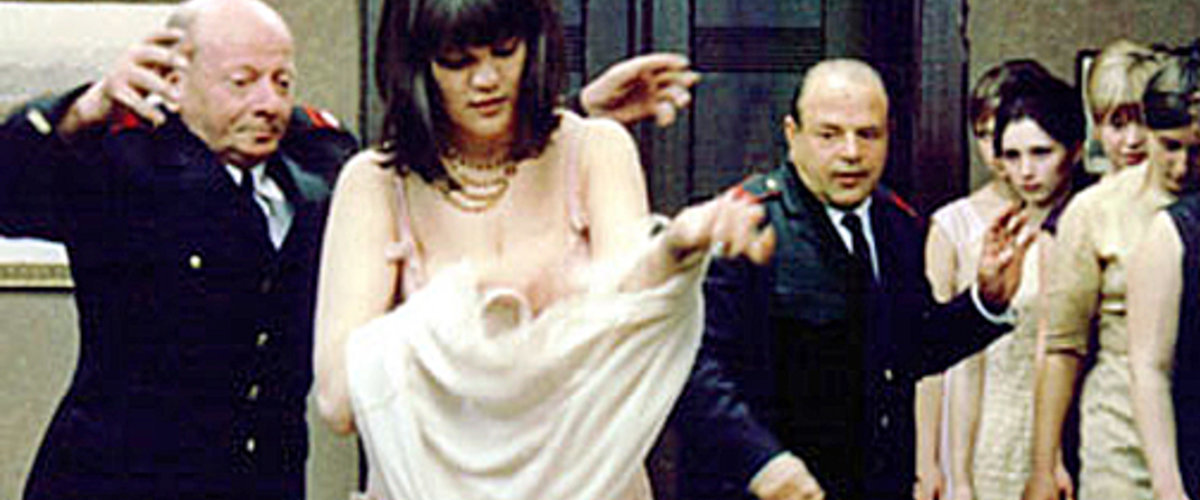
The party that takes place in The Firemen’s Ball is a disorganized mess. Scarcely any thought or care has been put into it, and ultimately it only appears to exist to present a gift to the aging chairman of the fire brigade, a man who most of the firefighters constantly forget the existence of. But that real purpose is so far from anyone’s mind. There isn’t a whole lot of plot or incident in the film. Milos Forman is more concerned with observation; he’s aiming to capture the rhythms of social gatherings and human foibles. The film gains what little narrative it does from the fire brigades desperate, half-hearted attempts to organize a beauty pageant that they delusionally believe will make up for their lack of effort or concern elsewhere. (Well, that’s not entirely true: there is a raffle, which leads to an amusing running gag where prizes slowly, casually get stolen). The pageant gives the men an excuse to blatantly gawk at significantly under aged females. This might seem exploitative or creepy, but these guys are all so clearly dolts. They’re old, out of shape and smell of desperation, and the girls (of course, not the knock-outs they’d hoped for) are all giggly and excited at getting attention and confused because the event is so informally structure and poorly handled. So much of the humor errs on the side of farce. Characters are selfish and slapstick-ish as they seek their narrow-minded pleasures, but Forman lets the film’s abundant charm ease us into liking and sympathizing with these doddering fools. They might be losers but they’re all too human ones, and delightfully lacking self-awareness ones, at that. The films of the Czech New Wave used effervescent slice of life stories to slyly critique their Soviet betters. Here the fire brigade stands in for the communist government and its failings (The fire brigade can’t even seem to put out a fire right, as so happens in the middle of the party). You don't need to understand that to enjoy the film though; we've all known or been that bumbling fool, and we've often done it in similar company.

Grade: B+