Grade: ★★★
Monday, December 23, 2013
"Ms. 45" (1981)
The rape-revenge story is one of exploitation cinema's trickier set of films to get behind. Too many of the films sexualize the rape incidences or use it as a convenient plot device to justify the vengeance that follows. Ms .45 largely avoids both of these by coming at its story from all sorts of unexpected angles. The two successive rape scenes are brief yet painful to watch, and complicated by the fact that the protagonist (Zoe Tamerlis) immediately kills her second attacker in the process of trying to save herself. The film turns initially into her disposing of the body bit by bit, while also recovering from the trauma of what happened to her. The film takes her trauma seriously and acknowledges the psychological damage this kind of event would leave on someone, and her actions, at first, stem from an uncertainty about how she feels over what's been done to her and how to handle it. Soon she channels this trauma into a hell-hath-no-fury empowerment, seeking vigilante justice not on her attackers but on all of mankind. She finds chauvinistic assholes who deserve some comeuppance and brings about a distinctive brand of feminist smackdown, which garners her the increasing attention of the police and media who dub her "Ms .45" for the caliber of pistol used. The empowerment is all the more potent for the mousy nature of the character who literally is unable to speak -- she's voiceless in a way Holly Hunter's character is in The Piano -- and the film suggests she was exploited and taken advantage of long before she was sexually assaulted; the incident simply awakens something deep inside her that she's been holding back. And yet director Abel Ferrara never lets the blood-strewn path she creates go completely indulged. The film notes the progressively morally slippery slope she's falling down as the targets she pick become more and more arbitrary. It's the rare rape-revenge narrative which often earns its bloodbath and seriously considers the consequences both of its protagonist's victimization and the questionable actions she takes to regain her sense of self.
Grade: ★★★
Grade: ★★★
"The Driller Killer" (1979)
Piggybacking off the success of the slasher film, Abel Ferrara's Driller Killer is a gory exploitation film about an impoverished painter who simply snaps. While it owes a debt to so many slashers, it's often more subversive and unconventional than the prototypical slasher. Ferrara seems more content indulging whatever interests him, observing underground subcultures and punk scenes, than telling a generic horror film. In fact, the film is more in lock step with other 1970's films like Taxi Driver and Martin about restless loners done in by urban decay and isolation. Though wildly uneven and unfocused, Ferrara creates some startling and vivid, almost hallucinogenic, images out of the trashy violence on display. There's a reckless energy to the film that aligns with its protagonist and his decaying state of mind.
Grade: ★★
Grade: ★★
"Crystal Fairy" (2013)
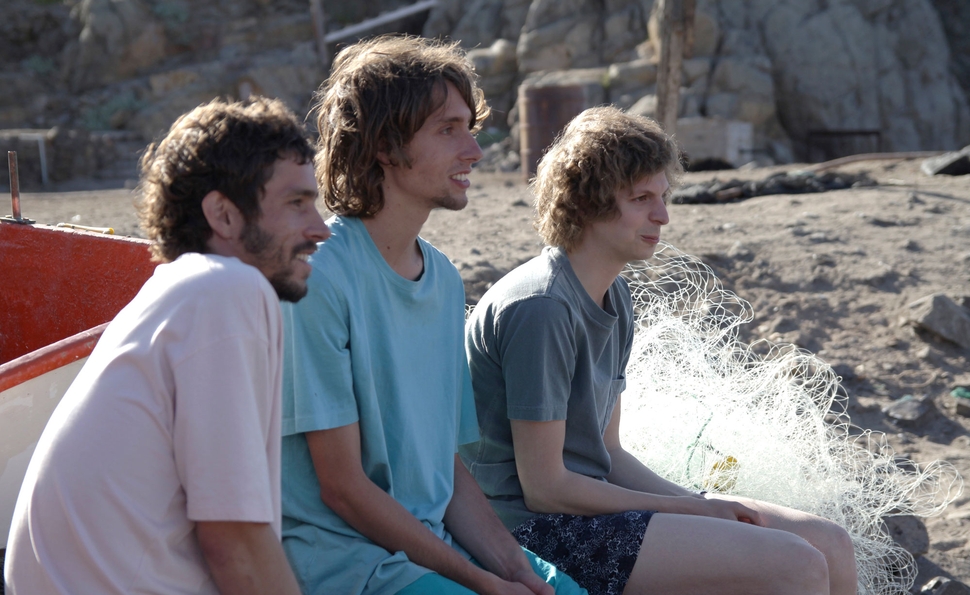
Most people, heck, all people, are afraid of expressing themselves, of showing genuine emotion. We hide behind a carefully crafted veneer, built for the world to see and to hide our true selves. Crystal Fairy is a film about a young man, Jamie (Michael Cera), who can't stand to be emotionally honest. He can only show his true colors when buzzing on a drug high. He's visiting Chile and at a party meets a free-spirited woman named Crystal Fairy (Gaby Hoffman) who is also from the United States. In his stupor, he invites her on a trip that he and his Chilean friends are going on to a distant beach. The big-to-do for this trip is acquiring a San Pedro cactus, which when ingested have hallucinogenic effects.
After the revelries of the previous night, Jamie wakes having completely forgotten about his invitation to Crystal. She calls and he is suddenly miffed like a petulant child. His friends are decent and realize they can't go back on their promise. Crystal is a quirky indvidual, but she is no manic pixie dream girl. There is hidden sadness behind her oddness. She seems the most open of all the characters but she is putting on a show like everyone else. Jamie keeps trying to convince the other members of the trip that it might be wise to ditch Crystal and her strange behavior, but they are kinder and less selfish than him. Cera strips himself of all vanity in his performance. This is a character who is utterly unlikable at times. During the roadtrip, Jamie gets on the other characters nerves, but he slowly gets on ours as well.
Cera's put-on attitude is petty but it belies the internal struggle of an indvidual who can't stand to be honest with anyone, especially himself. When confronted with an indvidual who so outwardly chooses to be everything he is afraid to be, he fights back against it. When they ingest the cactus, the drug trip makes him more willing to open up, but it can't get him to go the full mile. Consider the stories Crystal and tell at the end of the film. They reveal how little his narcissism has come, and how far he has to go until he really exposes his inner life.
Grade: ★★★
"John Dies at the End" (2013)
Some films are so overstuffed that when you start to think about them a little bit, they start falling apart at the seams. John Dies at the End should be such a movie, but it moves with so much energy and speed that it becomes hard not to simply get on its level. The greatest virtue of the film is is its abundance of genre-mashing ideas. It's a film overflowing with so many original and nifty ideas and it blends them together into an impossibly dense and slightly convoluted narrative. Moreover, it realizes its a convoluted mess, constantly acknowledging the very unwieldy bonkerness of its premise.
David Wong (Chase Williamson) recounts a strange tale to a skeptical journalist (Paul Giamatti). David is a paranormal investigator along with his friend John (Rob Mayes). After a wild party, David receives a strange phone call from John that sounds crazy even coming from somebody who stops demons for a living. From there things only get worse as John and David are both dosed with a drugs they call "soy sauce" which heightens their senses and allows them to foresee future events. David essentially becomes a bumbling begrudging, noir-esque detective in the middle of a time traveling, universe traversing, supernatural-sci-fi conspiracy. It's Primer by way of Sam Raimi.
Director Don Coscarelli is no stranger to crazy horror with surreal comedy, having helmed films like Phantasm and Bubba Ho-Tep. Coscarelli's familiarity with handling delightful genre films just on the right side of junk keeps Jon Dies from completely derailing. Unraveling its story, the film eventually plays around with nearly every genre imaginable, dabbling in horror, science fiction, and comedy, and has lots of fun throwing everything but the kitchen sink at us. Though it loses steam towards its end, for a long time the film's sheer self-delighted exuberance in telling its story is hard to resist.
Grade: ★★★
"Frozen" (2013)
Frozen begins on a simple, powerful moment as devastating as anything in Disney's repertoire. It recalls Bambi in how direct and economical it is at establishing the emotional core of Frozen's premise, and it gains resonance the further the film pushes what the moment means for its two protagonists. More importantly, it is a moment, much like the rest of the film, about the relationship between two sisters, Elsa (Idina Menzel, of Wicked fame) and Anna (Kristen Bell). There is time for romance in Frozen and it takes on a Disney Princess film vibe at times, but the film is most concerned with what is at stake for the bond between the sisters. In that sense, this is a surprising and pleasing departure from Disney's usual animated storytelling.
Tangled's success caused Disney to produce another non-Pixar CGI animated film, and Tangled is part of Frozen's DNA. It is about young women locked away from the world, only to be forced to leave and discover the virtues, wonders and treacheries of the world beyond their castle. Elsa has secret magical powers which allow her to control and create snow and ice. Anna lacks magical abilities but is in awe of her sister's magic. Elsa shows off her powers and by accident hurts her sister. Her parents take her to magical trolls, rock-like creatures, who erase memories and inform them that if she does not hide her powers she could be in grave dangers. And so her parents keep Elsa hidden away, and separated from Anna. Once so close, the sisters' relationship is slowly strained, and we watch them grow into adults, wanting to make a connection but unable to. When their parents die, Elsa turns even further inward unable to tell her secret to anyone. When she comes of age, Elsa must open the castle gates and become coronated as queen. Yet things go awry at the ceremony and Elsa's secret is revealed, and Anna tries to reconcile things with her sister.
Frozen shares much of Tangled's lovely animation -- perhaps too much so. It is a colorful film with smooth, round animation. It is also a film with plenty of wonderful music, and the music as good as anything to come out of a Disney movie. It is fun and catchy, but also rich with emotion. Anyone not stirred by the show-stopper "Let It Go" is a heartless bastard.
Though it's storytelling feels consistently text-book to a fault, the devil is in the details. Frozen is often playful and unexpected in its storytelling. It pokes fun at itself and Disney films more generally. Anna gets engaged to a man she just met and rather than being pleased Elsa is absolutely baffled. Later befuddled a character says, "You just met the guy, and you're getting married?" And in its climactic moment, the film chooses to take a surprisingly different route than what we might anticipate and it is cheerworthy in its audacity. It's small touches but for any fan of Disney films, it will bring a smile to your face.
Grade: ★★★
"The Heat" (2013)
There seemed to be a near universal agreement after the release of Bridesmaids that Mellisa McCarthy was the film's undisputed breakout star. So it was only a matter of time before a studio hoped lightning could strike twice with McCarthy's signature brash, filterless truth-telling smack. By pairing her with Sandra Bullock, no stranger to comedy, the film seemed poised to re-create the raunchy femme humor which garnered Bridesmaid much love and attention. But The Heat feels like a toned downed version of all the things which made Bridesmaids so well-regarded. Director Paul Feig, who also directed Bridesmaids, always seems to be holding back his stars, never letting them go too far. With McCarthy now in a lead rather than a supporting role, she's no longer allowed to run amuck nearly as much, always being pulled back in order to serve the needs of the narrative. At every turn, there always feels like studio notes stepping in to censor McCarthy's lovable recklessness.
There's certainly untapped brilliance in crafting a female equivalent to so-many 80's and 90's buddy cop comedies, such as Lethal Weapon and 48 Hours. The police case is almost besides the point serving as a convenient structure for whatever silliness the writers and actors can come up with. McCarthy and Bullock play familiar roles of straight-woman and loose-cannon, but they bring their own distinctive spin on it and have a great deal of fun and have a good rapport. Bullock is an FBI agent trying to get a promotion and forced to work with McCarthy's local Boston officer in order to take down a drug kingpin. In time they come to respect and understand one another, and yada, yada, yada.
For being an action-comedy, The Heat disappointingly skimps on the action. In stead, the film focuses on the give-and-take and the comedy of manners in the mismatched pair. While it's funny, the action almost becomes an afterthought. The film primarily borrows the comedy portion of its sources, and ends up being shaggier, sillier, and even a little more lightweight as a result. Now, the combination of McCarthy and Bullock is winning, especially McCarthy who is in command of her caustic schtick.
Grade: ★★
Friday, December 20, 2013
"Drug War" (2013)
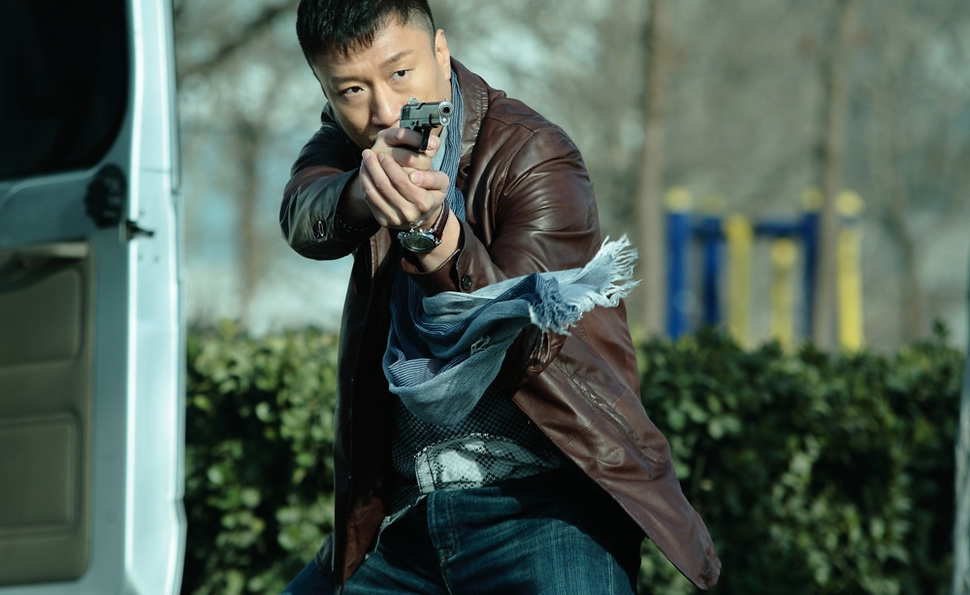
Drug Wars is a relentlessly taut crime thriller, always seeming like it's on the verge of spilling over into explosive action or extensive bloodletting. Though it owes much to a number of East Asian genre films including John Woo's oeuvre and Infernal Affairs, it's wholly its own work and often more thematically hefty than its genre counterparts.
When the police attempt to stop a drug ring specializing in methamphetamine, they discover a complex hierarchy of connections and players out for a piece of the pie. In the middle of this is, a drug manufacturer taken in by the police who makes a deal to take down the illegal enterprise in exchange for suspending his death sentence. Much of the film's tense excitement comes from wondering whether Timmy Choi (Louis Koo) will keep his promise to the police. Timmy appears to be playing the criminals to bring them to justice but it consistently becomes hard to tell how much of this he's also doing for his own self-gain, and potentially at the expense of the police. The police captain Zhang Lei (Honglei Sun) gives him the benefit of the doubt while his colleagues are more skeptical, and it's the relationship between the captain and Timmy that stands out most sharply. A begrudging partnership is created between the two men where they tentatively trust one another even as they harbor major, justified reservations.
The film goes out of its way to humanize both the criminals and police. This isn't a film that condemns the criminal lifestyle or choosing to be involved in drug trafficking. The police are often not nearly as competent or smart as they believe themselves to be, and though there's some bungling on the part of the drug pushers, they show skill and intelligence in their own way and, at times, outwit their pursuers. The film is more of an indictment of drug wars of any kind. It's critical of the cost of waging war on drug trafficking; how it only increases violence and instability and makes selling and manufacturing drugs more profitable and thus more likely to continue regardless.
The expense of gazing into the abyss though plays out in the background. The film is firstly an expertly crafted crime drama, unfolding with the assured deliberation of a procedural but acting more like a game of cat and mouse. The film reveals all the gritty details of the process involved in the creation and sale of illegal drugs. The police follow up the food chain, moving away from petty low-lifes making chump change to the heads of the operation. Through it all, the police try to stay one step ahead of their targets with the uncertain help of Choi. The task is at its most intense when police members put on disguises and pretend to be members of the criminal operations, wondering whether they've been left out to hang high and dry.
Grade: ★★★
Subscribe to:
Posts (Atom)