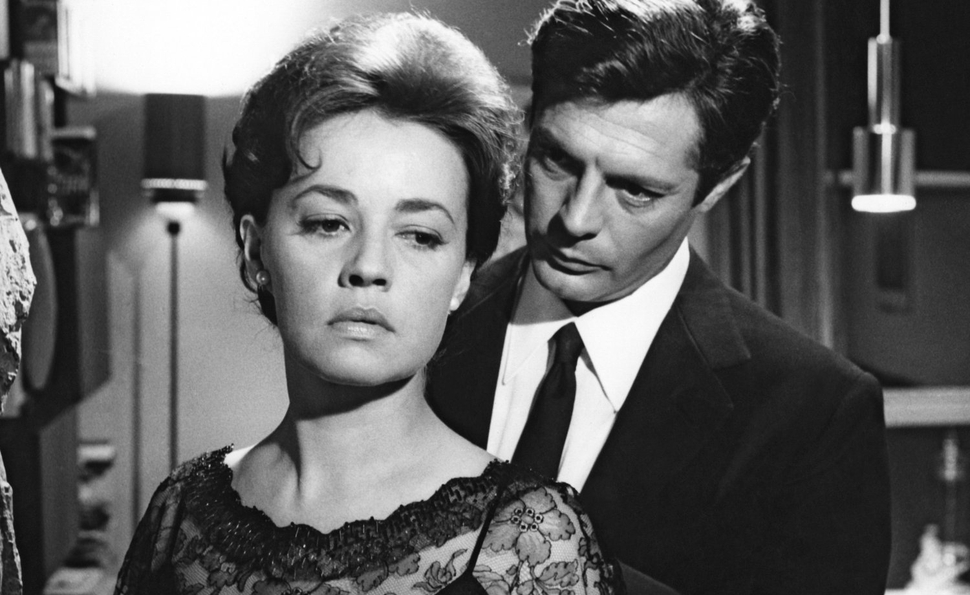
Giovanni (Marcello Mastroianni) and Lidia (Jeanne Moreau) don't love each other anymore. They tolerate one another, and they avoid the prickly subject matter of Giovanni's infidelity (which he has done on more than one occasion since the film began). They don't want to be together, but they also can't imagine not being together. Writer-director Michelangelo Antonioni purposely separates them for much of the story, as they can't seem to stand being around one other. Whenever they are together though, they're stilted and formal. Giovanni talks about only himself, and Lidia is tired of listening. Giovanni doesn't realize just how good he has it.
Cinematographer Gianni Di Venanzo emphasizes the loneliness, isolation and longing of the couple. The film is gorgeously moody. But Antonioni also trusts Moreau's face to convey the depths of her depression and unhappiness. It's a beautifully understated film, and nowhere is this more apparent than in Moreau's performance. Mastroianni's character is flashier; he's a brooding writer, trying to find muses in all the wrong places, when he should have long since been drawing inspiration from his wife.
Antonioni provides a clear-sighted and bittersweet portrait of a disaffected marriage on its last leg. The couple consistently finds themselves near or within crowds, particularly once they arrive at a party that neither wishes to be at. But both of them, for the most part, seem to be miles and miles away from those around them. Lidia offers up the suggestion that they go out and do something; it's a desperate last ditch effort to try to stir up whatever chemistry and connection exists between them. But they end up talking past one another (and that's when they're talking at all). Yet sometimes people would rather have someone to talk past, rather than no one to talk to at all. However, listening and hearing are often times very different things though. By the time Giovanni and Lidia do the latter, it's much too late.
Grade: ★★★


