Monday, October 14, 2013

"The Blair Witch Project" (1999)

It's hard to appreciate how fresh and unaffected The Blair Witch Project was upon its release. The film and its ideas have been so heavily parodied, re-purposed and remade that it can be difficult to recognize how not only influential the film was but also how good it continues to be. The film didn't invent the found footage genre but it certainly popularized it with an unexpectedly hugely successful turn at the box office catalyzed by a viral Internet marketing campaign that was one of the first of its kind. While recent found footage concepts such as the Paranormal Activity series have aped its ideas, few of the films since feel as inspired or as legitimately scary as Blair Witch. Its not just its shoddy, shaky cam VHS-look that Blair Witch gets right but utilizing that stylistic choice not for gimmick but for verisimilitude. The film is psychologically nuanced. The scares aren't from being startled but from watching the three Gen-X, would-be film students (Heather Donahue, Joshua Leonard, and Michael C. Williams) slowly unravel. Blair Witch also has an initial concept that nicely determines how the film plays out. The three characters are investigating a local legend, one they don't actually buy into. It's a simple framing device but its highly effective; the characters start out as skeptics but as they get lost in the woods and strange things happen they realize that they've tempted fate by failing to tread lightly. The film is also exemplary for how to stretch a shoestring budget. Blair Witch is convincing because it focuses on its characters and their fraying relationship, and it does this because it has so little else to rely on. The film goes for big scares once, in its final moments, and that painfully demonstrates the limitations of the budget to the point where it can feel disappointing. The most frightening moments are when the frailty of human nature is on full display -- perhaps seen best in the film's most remarkable moment where Donahue makes a chilling confession straight to the camera. For a long time there's simply the possibility that there's nothing supernatural afoot just madness sinking in as they get more deeply, irrevocably lost in the woods.

Grade: 3.5/4 ★★★

Sunday, October 13, 2013

"Escape From Tomorrow" (2013)

For many, going to Disney World is the ultimate dream. Escape From Tomorrow turns that dream into a nightmare. Shot DIY, under the radar of Disney's restriction of filming at the theme park, the film plays off Disney's sunny, innocent facade by suggesting something more sinister and evil lies underneath the surface of the amusements and rides. A family goes to the park and the father Jim White (Roy Abramsohn) starts slowly losing his grip on reality. In one sense, the film is about a father whose frustrated by losing the life he had now that he's married and has children (Writer-director Randy Moore claims the film is based on his own experiences with his father when his parents were getting divorced). He stops caring about his children and his spouse, predatorily stalks two nubile French teens, and begins seeing inexplicable, disturbing things creeping into the background. The faces of the people in It's a Small World start looking like demons hiding in plain sight. A single mother becomes an enchantress who bends reality. In short, nothing is quite what it appears to be and that works well for playing against expectations of what the happiest place on Earth ought to be like. The black and white look of the film feeds into this; there's a trippy, darkly alluring quality to the film. It slowly draws you in by being both highly mundane and yet uncannily surreal. The film really is only able to manage this feat for so long. The last third of the film gets a little too bonkers for its own good and the film loses some of its dark seductive appeal in the process. This last third wholly embraces the craziness that has only been suggested up to that point (for much of the first two thirds, there's hints that this might all be inside the head of the father). Still, Escape From Tomorrow largely succeeds at being unsettling and entrancing by taking something familiar and flipping it on its head in ways that feel a little too close to reality for comfort, even as it seems otherworldly.

Grade: 3/4 ★★★

"The Innkeepers" (2011)

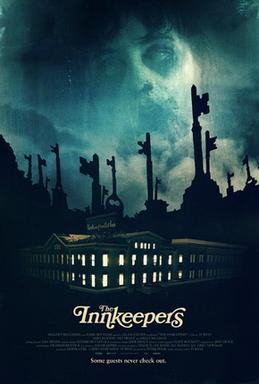
The Innkeepers is a movie that buys into the potential virtue of seemingly nothing happening. It's a horror movie that doesn't obsess with getting right to the scares, and in the process it becomes a well-crafted piece of dread inducing cinema. The longer nothing happens, nothing even remotely frightening, the more we wonder when something might happen. Director Ti West used this same notion to even better effect in his terrific House of the Devil. In some ways, the film is indebted to horror movies such as The Shining where the story and imagery get to us in our gut by being unsettling and surreal rather than from startling us. Set in a creepy old hotel on its last weekend in business, the film largely focuses on the two employees overseeing the building in its last days. They split time between dealing with their residents -- utilized primarily for comic effect -- and investigating the paranormal phenomenon allegedly haunting the place. Luke (Pat Healy) clearly has a crush on Claire (Sara Paxton) and he's using the ghost talk as a chance to woo her. She's completely oblivious to this even as it's obvious to us, taking the talk about spirits as a welcome distraction from the humdrum minimum wage job. However, in time, Claire becomes more invested in the ghost hunting than Luke and the film focuses on her. The Innerkeepers has many virtues, chief among them is its sharp characterization. Claire is one of the better female character horror has written in recent memory; strong and curious yet unmistakably nervous and doubtful. The interplay between Luke and Claire is also especially strong and speaks to the film's small doses of humor and playfulness. West is great at composition. He uses the early going of the film to establish the lay out of the hotel and its winding corridors, and to develop characters. The Innkeepers is a throwback to older horror movies where the story rather than the scares was the top priority. The film weaves a simple but deliberately told story that isn't worried about being a little slower going in the early proceedings, building a creeping sense of paranoia. Although it ultimately isn't able to stick the landing, with an ending that feels like an unintentional anticlimax, everything that comes before is a confidently told with visual panache.

Grade: 3/4 ★★★

Saturday, October 12, 2013

New Grading Policy

I've always found the letter grading system slightly problematic for grading movies. The significance between grades becomes somewhat arbitrary in some instances. What's the real difference between a "B" and a "B-"? I couldn't really tell you in all honesty. Grading comes from the gut and it becomes even more instinctive and guess-work based the more flow within the grading system there is. That's why I've decided to move to a more solid and dependable grading system: the four star system.

Yes, in actuality, grading altogether is pretty arbitrary but it's in some ways a necessary evil. The letter grading will likely remain for television reviews I do but the star system is going to be applied to film reviews, at least for a little while on a experimental basis.

"Much Ado About Nothing" (2013)

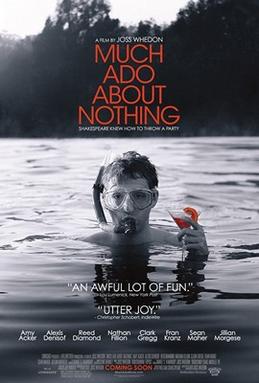
Much Ado About Nothing is a curiosity. A swanky, chic, wine-drenched (seriously, alcohol seems to be getting consumed in nearly every scene) black & white adaptation of Shakespeare's play transposed to the present day by writer-director Joss Whedon. The film features a host of Whedon regulars from past film and television work, including Amy Ackler and Alexis Denisoff in the lead roles as quarreling, barbed witted sparring partners Beatrice and Benedick, who are tricked by their friends into falling in love with one another. Much has been noted about the circumstances under which Whedon filmed the movie; filmed entirely at his Santa Monica, Californian home, a Tuscan villa styled house, over the course of 12 days, the movie at times feels like a bunch of friends casually putting on a home-theater production of the bard's work. At other times it feels like we're getting a glimpse into a very private and well-acquainted group of friends putting together a movie for their own amusement. The juxtaposition of Shakespeare's dialogue and the present day setting is at times jarring -- although it eventually settles into a pleasing rhythm -- and setting it all in one location at times noticeably limits the options for the ways the story can be told. (Locations keep getting re-used over and over and the low budget becomes painfully obvious in certain instances). Jay Hunter's cinematography is gorgeous and intoxicating; it's dazzling and energetic at points. These performers clearly have a lot of chemistry and there is, perhaps not surprisingly being based on a Shakespearean comedy, plenty of funny moments, particularly parallel moments of dedicated slapstick from Ackler and Denisoff and the winning appearance of Nathan Fillion as bumbling police officer Dogbert. However, Much Ado feels far too indulgent. Too often there's the sense we're on the outside of some joke that only those involved in the production quite get. Still this is good, charming performers wonderfully reciting Shakespeare's impeccable writing and having a great deal of fun doing it.

Grade: 3/4 ★★★

"Evil Dead 2: Dead By Dawn" (1987)

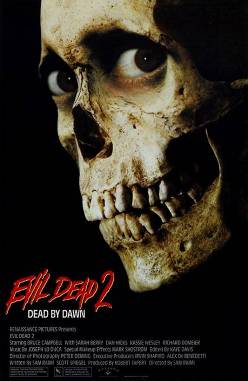
Evil Dead 2 is one of the most purely fun films. This is a film brimming with ideas, imagination, ambition and style to spare. By the time our ever faithful protagonist Ash lands himself back in medieval Europe we have gone through an exhausting amount of plot, furiously burned through with savage delight. That ending is unimaginable when initially Ash appears with his girlfriend in a beaten down old yellow sports car. But writer-director Sam Raimi and co-writer Scott Spiegel go for broke testing out every last weird, interesting and wonderful idea they can come up with. Evil Dead 2 isn't so much a story so much as it's a series of stolen moments. The first third especially is fragmentary moments that only loosely connect to one another. Let me foolhardily attempt to describe it briefly: Ash arrives at the abandoned cabin, his girlfriend is taken over by evil spirits, beheaded and buried, Ash is possessed, saved by the break of daylight, drives away only to find the bridge home destroyed, chased by spirits, and goes raving mad, his possessed girlfriend rises from the grave and he kills her with a chainsaw, and finally he fends off his turned-demonic hand. Mind you that the film is only an hour and twenty-four minutes long, but it moves along with a measured clip and packs so many inventive and fun things into that brief time. The film is ostensibly a sequel to the original Evil Dead and in another sense a remake. The film borrows the basic horror premise of the original but it only uses it as a jumping off point. Evil Dead 2 diverges tremendously from its predecessor; make no mistake: Evil Dead 2 is not a horror movie. It's a comedy. For much of its runtime, it's essentially a one man show for Bruce Campbell. Campbell is a huge part of the film's appeal. He does some fantastic Three Stooges slapstick. But it's also in the expressions and microemotions that Campbell conveys that really sell the film. There are moments that are so funny and endearing merely because the chiseled face of Campbell pauses to give a goofy grin or shoot off a one-liner. Then there's the glorious amounts of blood spewed out from the walls and evil spirits; it's so over-the-top and so clearly not real blood that its excesses become hilarious. The special effects are some excellent designs. Some superb low-budget technical craftsmanship is on display; a homage to old B-horror movies and Ray Harryhausen.

Grade: A-

Friday, October 11, 2013

"The Kings of Summer" (2013)

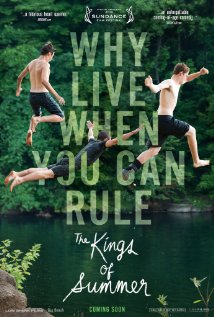
The Kings of Summer is one of those light coming of age stories that keeps getting made in recent years, particularly on the indie scene. I say light because it too often glosses over the real pains of the time, place and age that it deals with. Like The Way, Way Back, there's a charm and wit about The Kings of Summer that makes it entertaining and fleet -- although it drags in the last third. Also like Way Back, it has a lot of good performers elevating material that is a bit too familiar and, at times, simple. Nick Offerman as one of the fathers gives nuance to the part by just the ways he delivers his lines in unexpected and bitingly funny ways. All the young performers are charismatic if not especially memorable; Moises Arias as the kooky member of the trio of boys Biaggio gives a quirky and committed performance that stands out, and it's a nice meeting of writing and acting that really works well. The other two boys Joe and Patrick (Nick Robinson and Gabriel Basso) are resentful of their parents and longing to get out from under their thumb. In the course of events they inevitably learn to grudgingly respect and even love their parents. They go out deep in the woods, build a make shift home, and suddenly believe themselves to finally be "real men" (adults!). The cinematography is at points rather lovely; there's a beautiful naturalistic feel that highlights the forested locales and contrasts the drab suburban settings the guys are escaping from with the their new nature-hideaway. One unfortunate story point involves a girl that Joe pines for; she dates a douchey guy for a brief stint and Joe then thinks he has a chance with her. He invites her to the forest retreat where she falls for Patrick thus leading to the inevitable falling out between the two friends. The Kings of Summer never rises above its cliches or its simplicity; there's something more painful and bitter under the surface but it always seems to avoid it whenever it comes too close.

Grade: B-