Friday, October 11, 2013

"Child's Play" (1988)

There is an absurdity inherent to the premise of Child's Play that in its most entertaining moments the film embraces whole-heartedly. The notion of a serial killer transferring his soul into a child's doll has a built in level of incredulity to it. At first the film tries to take its premise seriously and be a more straightforward horror movie but the closer the film gets to inevitable reveal, the more it seems to recognize that there is a comedic goldmine to be had in a cute little cherub-faced toy doing things that clash with that cute, innocent sensibility. So when Chucky stops pretending to be just a child's plaything and begins spitting out offensive epitaphs, it's more funny than scary; the moment is made all the more hilarious by the fact that the actress, Catherine Hicks, is clearly at points acting with a doll that she's shaking around for effect. The film's action sequences increasingly accept this campy, comic tone. Initially they're shot from the point-of-view of the doll but once they cease to and we just get a Chucky outright attacking his victims with a knife these moments are simultaneously thrilling, creepy and rather funny. This isn't to say Child's Play isn't scary; there's a menacing quality to the film but it's always mixed with or undercut by a humorous tinge. Whether this is intentional or not, it makes for a fun time all the same.

Grade: B

Wednesday, October 9, 2013

"Three Colors: Blue" (1993)

I'm not entirely sure I understand what I saw in Three Colors: Blue but I'm also certain that I wasn't supposed to, and I'm okay with that. The film is about a woman Julie (Juliette Binoche, in a beautifully understated performance) who survives a car accident but loses her husband and daughter in the incident. It's a film that feels impenetrable and abstract at times because the story is exploring Julie's fractured psyche in the aftermath of the incident. She grows erratic, closed off and disconnected. She sells her home and hides away from all people she formally knew. Tiny things happen to her that are never made clear. At one point she befriends a prostitute; she listens to a flute player whose music she finds intoxicating; she goes swimming -- perhaps to feel something; anything. Julie was married to a great composer. It's suggested at one point that she actually wrote his music. It's never revealed whether this is true but she does seem to have knack for music. She hears her husband's old music at every turn; it haunts her mind like old ghosts, coming at her like micro-flashes of lightning. Director Krzystzof Kieslowski shoots the film is a gloomy, mysterious and alluring style -- and, perhaps to be expected, it's bathed in blue tones of every shade and variety. The film doesn't make a fine point about what certain imagery means but some images are so haunting and transcendent that it really doesn't matter; they're hypnotic and seductive and can be appreciated for their own sake. The story has the quality of a symphony; sumptuous, lavish; high emotions and somber low-points. At once, deeply felt and yet distant and hard to pin down. It's an elegant, gorgeous and challenging mood piece.

Grade: A-

Tuesday, October 8, 2013

"Trans" (2012)

Trans is an important documentary with a good message. The film is about what it means to be transgender and the struggles and lives of transgendered individuals. But even more so it's about getting people who aren't aware or feel uneasy about the issue to come to accept transgendered people. It's a worthwhile, considerate message; one presented through compassionate and sensitive interviews with individuals who are transgender. It shows how they're just like anyone else.

I'm not quite sure how it conveys that message is always one that works though. Trans forgoes recounting the history and terminology of its subject in order to dive us in head first into an emotional identification with the individuals who live with being transgendered. At times it feels emotionally manipulative -- and I say this as someone who agrees with and supports the message of the film. But ultimately the film's message is strong enough and presented with such humanity and warmth that it doesn't matter.

Grade: B

Monday, October 7, 2013

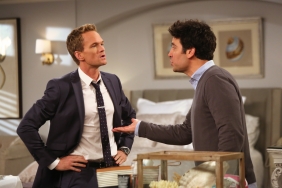
How I Met Your Mother: "The Broken Code"

Unlike last week's episode, "Last Time in New York", this week's episode, "The Broken Code" felt like it actually had a story that was worth telling and that needed to be told. There's nothing wrong with sitcom antics and it's expected that they'll have diminishing returns in later seasons, but How I Met Your Mother's central conceit forces it to give the burden of proof in order to feel truly well and satisfying. I don't find Barney and Robin that interesting of a couple and so my opinions of their storyline avoiding their elderly relatives -- on top of the fact that that joke about old people felt very one-note and uninspired -- was bound to be meh.

Here though the main story about Barney being uncomfortable about Ted's still lingering feelings and Ted attempting to deny them felt like it had some weight to it that the last episode didn't really have. Most importantly there felt like there were actual stakes; Barney and Ted' friendship very well could have been seriously compromised and no doubt will be on an uncertain footing going forward -- and that's all for the better. This season needs to throw out complications to make it have a sense of purpose, conviction and, most importantly, energy. Weddings tend to be fraught with complications and thus far the complications have been too light and disposable (Thankfully we got that old people joke out early and lets hope there's nothing quite as bland as it going forward). 

But even the less meaty subplot between Lily and Robin felt as though as it wasn't completely a throwaway story. The story ultimately moved past the weird tics and insecurities of Robin in regards to her inability to make female friends and onto reaffirming the relationship she has with Lily. HIMYM has always been a show grounded in relationships and character dynamics and in recent seasons it has been at its best when it examines those relationships and assesses what they mean to these characters. Inevitably the commentary is thin here but it elevates a story that while amusing felt needless.

Like I said, a tv show doesn't have to make such purposeful statements all the time; if it's funny and energetic enough then we can roll with it even if it's not suggesting something meaningful (although inevitably they'll be some statement no matter what). But the central conceit of the series and the show's general emphasis on its relationships has unfortunately played against the stories it can meaningfully tell and that are actually satisfying.

Final seasons are statements of what the writers believed the show was about. To me it has always been about these characters, but I'm just a viewer not the author of this work and therefore what I felt this show was about and what it actually will end up being could be very different. I doubt the gap between those two perceptions will be that far apart, but it's still frustrating nonetheless when it loses track of these characters.

This was a good episode that made me feel as though the wedding weekend structure could actually work (and oddly enough it had little to actually to do with the wedding). We could do with more of this and less of what we got last week.

Grade: B

"Go West" (1925)

Buster Keaton is often praised for being the Great Stone Face. True enough Keaton's dead pan expression at all the increasingly crazy antics in Go West is one of its most notable aspects. The humor stems from the disconnect between Keaton and the slapstick he performs with dutiful commitment. But it also comes from Keaton playing characters that are totally serious and dedicated. Keaton isn't emotionless; he's a Charlie Brown-esque figure sighing a wearing, aware sigh at the lot life has dealt him. This makes it much easier to accept the plot of Go West, which is essentially about Keaton (credited as "Friendless") befriending a cow, Brown Eyes. Sure it's a silly plot but it's not one Keaton entirely wants us to take seriously. Keaton's character takes it so damn seriously that we're meant to rightfully laugh in the face of the absurdity of it. Keaton spends the back-half of the film trying to save the cow from going to the slaughterhouse while getting the rest of the herd to their destination -- the second task he takes upon himself because he's simply too darn earnest not to help out his boss. The train the cattle is on gets put off course by a group of bandits and Keaton is forced to take an alternative route. In the film's most memorable sequence, he lets loose the hundreds of cattle upon an unsuspecting city where they upset traffic and at one point make good on the expression "bull in a china-shop". Then the film's best moment is its final joke; "I want her," says Keaton pointing, presumably to the boss's daughter. Nope, to the cow. It should be cheesy but the expression on Keaton's face sells the moment home. He means it and because he believes it so do we, and thus we can't help but laugh.

Grade: A-

Sunday, October 6, 2013

Left on the Cutting Room Floor: Films I Watched But Didn't Review This Year

For various reasons I occasionally don't review films that I watch and though it's a rarity it sometimes makes me feel as though there's a lack of completism to the blog. So I decided to dig up the films that for one reason or another I didn't feel like or didn't have time to write about.

Breathless (1959) - The deeply influential French New Wave film about a petty criminal fleeing to Paris from cops after he kills a police officer is filled with then groundbreaking technical innovations, but what stands out about Jean-Luc Godard's debut film is its attitude. It still feels lively and bursting with energy and ideas despite how long it's been since its release. 

Twilight: Breaking Dawn Part 2 (2013) - It's not as though it's the worst film I've seen (I've seen lots of less watchable films than Twilight just in this year alone) but I was feeling unmotivated to write about a movie where there doesn't feel as though there's much to say beyond how lazy and uninspired it is. And as it seems so patently obvious and widely acknowledged that came across as redundant to me.

Jaws (1975) - Steven Spielberg's horror classic helped establish the summer blockbuster but it feels so far removed from the blockbusters it helped inspired that it almost feels quaint to describe it as a blockbuster. Spielberg was a New Hollywood brat and he fills the film with little, artsy touches that make it more than just a horror film. Although he does provide plenty of exciting horror in spades. The mechanical difficulties with the shark forced Spielberg to be more creative and show it less which helps make the film into something so thrilling: the biggest fear we have is that of the unknown.

Life Aquatic with Steve Zissou (2004) - Wes Anderson has always had a droll visual flare that makes him the dictionary definition of quirky. He supplies plenty of melancholy underneath his well-manicured, highly stylized fantastical visions, but some of the human element gets lost in Life Aquatic (possibly the worst of Anderson's oeuvre). It's humorous and whimsical but the tale of an Jacques Cousteau-like oceanographer, documentary maker feels a little too hollow for its own good.

North by Northwest (1959) - Alfred Hitchcock had made and would continue to make some of the best suspenseful thrillers anyone ever has but few were quite as purely fun as North by Northwest. The crop-duster and Mt. Rushmore scenes are two of the most expertly crafted action sequences in cinema and otherwise the film is a cracker-jacking good time of mistaken identity, wordplay, and espionage.

Run Lola Run (1998) - The kinetic and highly stylish film about a young woman tasked with getting 100,000 dollars in twenty minutes or her boyfriend will die comes at you like a jolt of lightning. The film is shot with a frenetic and pulsating style that makes it utterly cool and exciting to watch.

Citizen Kane (1942) - What can I say about Citizen Kane that hasn't already been said. Widely regarded as one of the greatest films ever made -- if not the greatest -- and rightfully so. Orson Welles' modernist masterpiece broke new grounds by synthesizing film techniques into a brilliant examination of power, perception and loss.

Touch of Evil (1958) - Yet another fantastic film by Orson Welles about a seedy American-Mexican border town at the peak of the noir tradition. It's shot in a fabulously moody lighting scheme and features one of the most iconic opening sequences in all of cinema, an amazing unbroken long take.

Double Indemnity (1944) - Billy Wilder's masterful, picthblack noir about a femme fatale who ensnares and conspires with an insurance salesman to kill her husband and walk away with the insurance money. Wilder's brilliant screenplay features sparkling, immaculate dialogue that is beautifully recited by Fred MacMurray, Barbara Stanwyck, and Edward G. Robinson.

Dancer in the Dark (2000) -  Lars Von Trier provokes and emotionally manipulates at every turn in this wrenching human tale of a slowly going blind factory worker saving money to stop her son from suffering the same physical fate. In order to escape the misery of her existence (a misery that grows to disturbing limitations of tolerability), Selma (singer Bjork) imagines herself in musical numbers that grow organically out of the noise of the environments around her and save her from confronting the tragedy of the life surrounding her. 

This Week in Film (9/29/13 - 10/5/13)

In recent days I have been both bogged down with school work and coming down with a cold. That's unfortunately detracted from my ability to both watch and write about movies. Though my output has declined a bit (and I can't necessarily say that will change as next week is in some even more hectic), I'm strong in my resolve to keep at it as best that I can. This previous bit of polite statement likely sounds a little strange since I did still manage a number of reviews during this time. Movies (and to be fair television shows as well) are my comfort and my escape, and to give up on them in the face of the ups and downs of life, well, that just seems silly.

Let's tally it up:

Breaking Bad: "Felina" - The finale of Breaking Bad hasn't detracted from its well-earned place in the pantheon of great television dramas but it's been somewhat divisive critically with some feeling it wrapped up a bit too neatly. I agree but I also enjoyed and appreciated what took place in the finale too much to let that entirely dissuade me.

The Rules of the Game (1939) - Jean Renoir's masterpiece comedy of manners that sneaks in some sly -- and then extremely controversial -- class critique. It's hilarious even as it's deeply humanistic. 

The Great Dictator (1940) - Charlie Chaplin's transition into sound film isn't the most concise effort but even in its shakiness there's still a lot of brilliant comedy that could have only come from the great comic director's imagination.

Cat People (1942) - The first of the Val Lewton horror films that displays the low budget scares of implying the supernatural forces just offscreen and in turn creating something far more frightening than anything that could actually be shown to us. 

Seven Up (1964) - I provide some thoughts on the first film in this renowned documentary series that stops in on a group of individuals every seven years starting at the age of seven.

My Man Godfrey (1936) - A classic screwball comedy about a homeless man turned butler for a nutty aristocratic family.