Jean Renoir has a lot of affection for human beings and human behavior; his view of humans is somewhere between delighted, bemused and frustrated. The Rules of the Game is gently mocking its characters but there's still an odd sense that Renoir sort of still loves them all the same. If it's not initially clear that this is a send up than the film's wonderful third act makes that point very clear. Renoir allows the whole proceeding to devolve into one giant farce. So absurd and hilarious is this sequence that a character even exasperatedly comments at one point "What is this a farce!". But the whole joke really is that it is a farce; far before we get to the breathless sequence where character's paths endlessly intertwine and escalate to dizzying heights of exhilarating silliness the film is treating everything we see as a figurative farce. The literal farce is just a recognition of how petty and stupid the lifestyles of the French aristocracy are. The oh-so-noble and heroic Andre responds to Christine finally admitting she loves him by saying "But darling the rules ..." He's noting the titular "rules of the game" which in one sense is the charade that passes for codes of romance and love amongst the upper class -- a honor code with so many contradictions and general hypocrisies that it can hardly qualify as a set of rules. But in another sense it refers to the rules of society that determine what's appropriate for the different social classes. At the crux of The Rules of the Game is a strong critique of classism. And yet there's still the affection for humanity in spite of societal strictures; Renoir's signature, naturalistic style is so warm and tender in the way it observes the characters. The camera glides with such effortless gracefulness and Renoir's renowned use of deep focus allows for him to capture the many stories simultaneously which proves a vital asset as the plot leaps into its delirious, heady final stretch.
Grade: A
Monday, September 30, 2013
Breaking Bad: "Felina"
**Spoilers Below**:
“I did it for me. I liked it. I was good at it. And I was really … I was alive” – Walter White
Expectations for how Breaking Bad was going to end were
exceptionally high. And considering we place so much weight on how tv shows end
in the first place that meant things were so loaded against it being completely
satisfying no matter what happened. But I have to say, all the same, that as far as things can
give you everything you’d hope for, Breaking Bad did a pretty phenomenal job
right up until the bitter end.
This was Breaking Bad revisiting every last meaningful
aspect of what made it great. On a character level this was pretty perfect.
This was a version of Walt we haven’t ever seen. He came full circle to accept
that he was selfish and vicious and simply wrong. The quote above is to me the
crucial moment of the episode. I expected, and I’m sure many of you might have anticipated,
that Walt would still skirt the question of responsibility. If you think about
it the one thing Walt has wanted for so very long is death. When his cancer was
in remission he punched the towel dispenser because now he no longer had an
excuse to justify his behavior. Death would be the ultimate reprieve for him
but he hadn’t quite earned it yet. He had yet to show remorse and guilt.
The cold open of the episode is essentially Walt having a
conversation with this twisted universe that has allowed him to get away with
so much. This world has become a character unto itself; it’s a world with a certain
logic and with a high conception of morality. For a while the quote that I thought
would appear above was a completely worn down Walt whispering “Just get me home…
I’ll do the rest”. And for once the universe was like, “Well, dag-nabbit, may
be Walt is being honest for once! Let’s see how this plays out!” (For some
reason apparently the universe is a wizened hillbilly in my mind).
For a brief window the episode is misdirecting us into
considering that perhaps Walter means to take down Elliot and Gretchen as part
of his plan. But after an excruciatingly intense and drawn out sequence where
he enters their home (unbeknownst to them) and then threatens them into giving
Walter Jr. what remains of his money, we realize that nope: the Nazis and
Gretchen are the real intended target, as many suspected. I think there would have been some level of
catharsis to Walt taking down the two individuals that really were, supposedly,
the first to bring out the worst to his pride, but it also likely would have
been a little hollow. Walt has shifted mental gears and there would be no real
pleasure in this kind of vengeance.
The callbacks in this episode are actually quite astounding.
Think for a moment how the show gives us one last appearance of Skinny Pete and
Badger. It didn’t need to, but man if it was not really pleasing (A big old
grin was on my face at the sight of them and their low-brow antics). The stoner
Abbott and Costello duo pointed laser pointers at Gretchen and Elliot to trick
them into thinking hitmen were watching them. The initial moment is pure badass,
pulp Breaking Bad where Walt watches as the red dots land on his former
colleagues chests and forces them into submitting to his scheme. But the moment
after is pure black comedy Breaking Bad with Skinny Pete and Badger bickering.
And then the show shifts into morality play Breaking Bad. Another contender
definitive quote of the episode comes when Skinny Pete and Badger question the
morality of their actions. Walt hands them some money and ask them how their actions
feels now; a little better they reply. That scene is Breaking Bad in a
nutshell. People do bad things, feel bad about it but find excuses to justify their
immoral actions.
The show then quickly pushes through the events we’ve
already seen in the flashforwards. It only pauses briefly to have Walt once
again contemplate what he’s done. He looks at the “Heisenberg” written in spray-paint
on his old living room wall. He flashes back to the pilot episode when Hank
suggested he take a ride with him some time to check out one of the meth labs
he busts up. “Get some excitement in your life,” Hank presses. “Someday,” Walt
mutters. There was no turning back from that moment. Walt used the cancer as an
excuse to finally step outside his milquetoast self.
Walt then takes on the first of his intended targets. Even
if director Vince Gilligan hadn’t done that really explicit shot of the stevia
into the coffee we would have picked up on the fact that the ricin was slipped
in. Sometimes Gilligan underlines points too much. But it’s rare enough that it
doesn’t matter. Gilligan really is a ferocious, daring and intelligent
director. Gilligan makes an excellent use of visual space in this episode.
Notice how he shoots Gretchen and Elliot’s home. There are the more obvious
shots such as Walt hiding in the shadows to the obliviousness of the couple. But
there are more subtle things at work as well; look how he creates the spatial relationship
between Walt and the unsuspecting Gretchen and Elliot and builds up the tension
to the point where Gretchen and Elliot will realize that Walt is there. Take
another scene, that of Skylar and Walt. If my use of the term visual space is
confusing then hopefully the placement of Bryan Cranston in this scene will
make it clearer. We think we know everything about what there is in this
apartment, but Gilligan uses that sneaky pole (reminiscent of the one in Pete
Campbell’s old office on Mad Men). In
the restaurant scene Gilligan doesn’t overstate the point that Walt is sitting
at a nearby table; he lets us come to that realization on our own.
Walt also uses the opportunity at the restaurant to gain
entrance to the Nazi compound, using his shaggy state to alleviate worries of
any foul play. Walt then proceeds to go to Skylar, but not before Skylar
receives a phone call from Marie warning her that Walt is back in town. The
coup de grace of this scene is Anna Gunn’s stifled, painfully mustered “Thanks”.
The character, relationship coda given to Marie and Skylar is one in a checklist
that Breaking Bad exactingly goes through in the finale. We start with Gretchen
and Elliot; barely visible characters after early on. We then proceed to minor
but lovable characters Skinny Pete and Badger. We then move on to Marie’s send
off. She’s as prickly and self-concerned as ever and we wouldn’t have it any
other way.
Walt and Skylar’s conversation is brief. Skylar is
broken-down. Her voice is barely audibly above a whisper. She’s furious but she’s
suffered too much to really display anymore emotion. Walt gives her the lottery
ticket and notes its significance (“It’s a burial site”). The best moment in
all of this, if you couldn’t tell from the quote that opens this piece, is
where Walt attempts to explain himself. “If you say you did it for the family
one more time,” she begins fed up. Walt calmly steps in: Nope, I did it for me;
I’ve come to accept that. The best part of that moment and that quote is the
last part. Walt begins, “I was really” before trailing off; he could say any
number of things but he quickly lands on the truth. He felt alive. He had
become so white bread bland and self-loathing for everything he could have been
but never was.
Walt briefly visits Holly. The great part of this scene is
how Walt exits. He doesn’t even say good bye to Skylar, look at her or pay her
notice. He walks out recognizing that there’s no more appropriate way to leave than
as quietly and without protestation as possible. He then watches Flynn from a
safe distance. The camera lingers on this moment for a long time. There’s a
fantastic camera choice where the camera slowly dollies in onto Cranston’s face
and it’s just maybe twenty or thirty seconds but that’s infinity in television
time. It’s the last inhale of breath before the action that follows.
The last stretch of the episode is really about Walt and
Jesse, and, well, that felt absolutely appropriate (if anything I wanted more
time spent with these two, but c’est la vie). We know the Nazis are going down
(at least, we’re pretty sure – knowing Vince Gilligan it could very well have
gone very wrong in those last moments) so it’s less about Walt taking them down
and more about him having this final bit of time with Jesse.
The action is, of course, a wonderfully intense sequence.
From the moment Walt drives up to the gate, Gilligan draws out the sequence.
When Walt attempts to get his car keys to set off the jerry-rigged remotely
activated M-16, it’s every bit as exciting as anything the show has ever done
before.
But the best part of these last few scenes is Walt and
Jesse. Walt tackling Jesse to save him is almost cheer-worthy. Their
confrontation in the aftermath where Walt kicks a gun over to him and begging
Jesse to kill him is a necessary, cathartic one. For a second we think perhaps
Jesse could go through with killing Walt but it’s not in him and then he gives
himself the out when he notices the gunshot wound to the chest. And then
Gilligan gives one last capper to the relationship. They stand at a distance
from one another, drenched in shadows. They nod to one another. The nod speaks
volumes; it’s an action that speaks depths of emotions I could not begin to
articulate in writing.
All that’s left is for Walt to die. He goes to the meth lab
and looks at the equipment. Is he remembering all the thrilling times he had
making meth? He looks at the equipment with a weary grin; he’s self-satisfied.
He’s perhaps the most truly satisfied he’s ever been. And then he collapses,
smearing blood on the pristine silver lab equipment, dirtying things as much in
death as he did in life. We end with a bird’s eye view, pulling up and away
from the dead, spread eagle Walt. At that moment it’s as if we’re the universe
looking down at Walt in judgment and satisfaction.
Stray Thoughts:
-The song selection for this episode is pretty fantastic. Marty Robin’s “El Paso” which plays at the end
of the opening scene and provides the episode with its title “Felina” in its prescient
lyrics: “Maybe tomorrow/ A bullet may
find me/ Tonight nothing's worse than this/ Pain in my heart”. Badfinger’s “Baby
Blue” which plays over the final scene and has the fittingly opening lyrics: “Guess
I got what I deserve”.
-Betsy Brandt never is given enough credit. Her appearance
here is brief but it’s every bit as good as ever. Marie was a purposely grating
character and Brandt made her sympathetic even occasionally likable despite her
shrillness.
-Marie has some hilarious trouble attempting to remember Becky's, uh, I mean Carole's name.
-The moment the keys fall out from the car visor felt like a Schrodinger's Cat kind of moment; the keys could or could not have been there all along, the Universe just had to decide whether Walt deserved them to be there.
-“Should make one hell of a story”, says Walt posing as
David Lynn, New York Times journalist. It sure did Walt.
-I love how Walt closes the doors to the Schwartz’s home. He’s
patient and precise even in this moment. The scene feels like a horror movie
right down to Elliot pulling the knife on Walt. “If we’re gonna go that way you’re
going to need a bigger knife,” Walt replies. I don’t think he believes it but
he’s aware they’ll buy it all the same.
-The counterpointing classical music in that scene is just
perfect and a little eerie. It makes the shift to Dave Porter’s menacing
electronic score when the laser pointers appear all the more disturbing.
-I don’t know if the orange glow fantasy sequence in Jesse’s
head was necessary but it’s still heartbreaking all the same. They made Aaron
Paul look awful and more fractured than ever. Anyone have any ideas about the
box he was making in the dream and what it meant?
-Uncle Jack’s pride ultimately does him in. He can’t be
associated with a rat. And that gives Walt just enough time to kill him. Pride
does wonders in the Breaking Bad universe, doesn’t it?
-How do we feel about Jesse killing Todd? It’s well-earned
but I was hoping that Jesse didn’t have to kill any more people.
-Uncle Jack has one last cigarette like in an Old Western.
-Oh, how Walt has changed. He doesn’t even care about Uncle
Jack’s babble about the money.
-I wish we had been able to spend more time with this new
version of Walt as it’s so radically different from anything we’ve seen from
him before. However, the show did an excellent job of believably earning this
new state of being in such a short time.
-“Say you want this,” Jesse implores Walt like he did back
in “Confessions” and for once Walt is completely honest and says that he does
want Jesse to kill him. Jesse can’t give Walt what he wants at this point
though. It’s interesting but this is the most honest we’ve ever seen Walt.
There’s no manipulation or falsity to his conversations with Skylar or Jesse. Even
when he’s playing Lydia, Todd and the Nazis, the act is nowhere near as
convincing as it was when Walt was at his finest acting.
-It’s very telling that Walt feels Jesse has earned the
right to kill him.
-Second to last scene of the episode: Jesse escaping
triumphantly; Walt standing isolated, bleeding out. The way Gilligan cuts it
draws a connection between the two characters. It’s a triumphant moment for
both even if for Walt it feels a little less so.
Grade: A
Sunday, September 29, 2013
This Week in Film (9/15/13 - 9/28/13)
This wasn't a cult week in the most exact sense of the definition but on the whole it might as well have been. Even going back to some of the movies from last week (with Jason and the Argonauts and Sonatine -- even Cabin in the Woods feels like it's got cult potential) and carrying into this week, I've been watching more cult films than not and I can't say that was intentional but it makes an odd sort of logic for understanding my impulses this week. Even the exceptions (Days of Living Wild and The Celebration), while not being cult movies, have cult vibes to them (Other Wong Kar Wai and Dogme 95 films have been labeled cult films so it's not too far of a stretch). So enjoy the kind-of-sort-of cult week. Lets tally it up:
Sweet Smell of Success (1957) - This excellent late noir film finds Tony Curtis as the wonderfully slimy Edie Falco, a press agent trying to rise up in the newspaper industry by any means necessary. He desperately wants to get out from under the thumb of J.J. Hunsecker (a scarily commanding Burt Lancaster) even going to great, despicable lengths to crush Hunsecker's kid sister's relationship with a small time jazz player.
Breaking Bad: "Granite State" - It's essentially just a bridge to the finale but Breaking Bad makes it feel like less like a bridge and more like a hellish descent into absolute decay and resignation. All that means is the show is, as always, doing things on its own fearless terms and what could be better.
Wet Hot American Summer (2001) - The film takes pot shots at every last 80's movie and trope it can think of with really mixed results but there's enough inspired silliness so that it mostly doesn't matter.
How I Met Your Mother: "The Locket"/"Coming Back" - For the most part, HIMYM starts off its final season strong, proving its odd structuring centered around the wedding can be mined for genuine, deeply felt pathos as well as some pretty good laughs.
Kiss Me Deadly (1955) - A dark and punchy film that sends up film noir by embracing the darkest, ugliest aspects of the genre. It also features one of the most memorable and cool endings in the history of cinema.
Bride of Frankenstein (1935) - A worthy expansion of the Frankenstein franchise that is moodier, more thoughtful and more provocative than its predecessor while losing none of the high camp and expressionist values that made the first so good.
The Celebration (1998) - One of the better examples of Dogme 95's quest to distance itself from traditional, conventional Hollywood filmmaking. The Celebration is a searing and honest portrayal of the psychological fallout that comes with sexual abuse.
Insidious: Chapter 2 (2013) - Once again I was given the chance to write a review for my college's newspaper. This time around it was for a scary but not necessarily very good film.
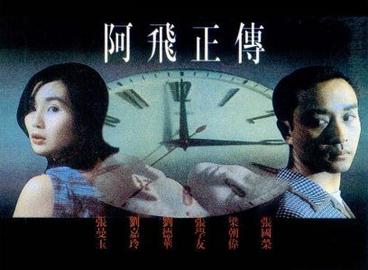
Days of Being Wild (1990) - One of director Wong Kar Wai's earliest films is an eerie, alluring mood piece about unbridled passions and the toll they have on a group of young people that Kar Wai observes with a hauntingly beautiful, evocative gaze.
"Days of Being Wild" (1990)
Days of Being Wild has two modes of storytelling: melancholic contemplation and uncontrolled passion. The film mostly sticks to the former, but at times bursts into fits of fiery intensity. Everyone in its small cast of characters is yearning after something. In the moment that seems to be romance or affection, but it's also often something more soulful and primordial, something they lost long ago that they can't attain, that they're searching after. The look and feel of the film is quite lovely at conveying this; director Wong Kar Wai is wonderful at composing imagery that's evocative and gorgeous yet very understated. The film's story is also part and parcel with this minimalism often being elliptical and brief (There are random inner monologues that seem to come out of nowhere and nearly everyone gets at least one detailing massive amounts of information in tiny clips of time). But the the information put across in these small windows is rich, moody and at times thoroughly erotic. Set in the 1960's Hong Kong -- mostly to align with the sexual revolution -- Yuddy (Leslie Cheung) is a young, frustrated man who has unbridled passions that he unleashes on two very different unsuspecting women (Maggie Cheung, Carina Lau) -- both of whom he's withholding towards even as he clearly has feelings for them. Meanwhile he's confronting the discovery that the woman that raised him isn't actually his biological mother -- an irascible, hard to please spinster -- which only serves to make his outbursts all the more unpredictable and explosive.
Grade: A-
Grade: A-
Friday, September 27, 2013
My "Insidious: Chapter 2" Review
Once again I was fortunate enough to get the chance to write a review for my school's newspaper The Lafayette. Not sure this review is quite as well written as my previous one but I'm still really grateful for the opportunity, and hopefully you' ll read and enjoy it (Also, I did not come up with the headline for this one. Although I'm not entirely sure I could have come up with anything much better).
I also wrote an article for last week's edition previewing a recent film festival, but that's merely for those who really want, for some odd reason, to read everything by me, which isn't at times even me.
Wednesday, September 25, 2013
"The Celebration" (1998)
The first thing you're likely to notice while watching The Celebration is its look. It's a film of stark minimalism; the lighting and camera quality is very low budget; the cameras are handheld and shaky and besides a handful of scenes there's not a whole lot of incredibly technically impressive shots beyond the fact that it's kind of impressive that anything got filmed under such limited circumstances. This is all deliberate though; writer-director Tomas Vinterberg was a founding member of Dogme 95, a Danish film collective that wanted to make movies that stayed away from Hollywood conventions of filmmaking. The emphasis was character, theme, etc. and all that good stuff that special effects and big studio budgets had increasingly been diluting movies of. The Celebration could easily be told without sticking to the rules of Dogme 95 but the style of the film feeds into the story. It's shot with a claustrophobic intimacy that only makes the revelations at the 60th birthday of Helge Kligenfeldt all the more unbearable and relentless to witness. Helge's son Christian proposes a toast during the festivities -- except it's not your typical toast -- he says he and his recently deceased twin sister, who committed suicide, were sexually abused by their father -- and the confession suddenly starts making everyone more combustible and surreally, unpleasantly in denial. Christian, and the family in general, has to keep pushing forward to crush the denial and to come to terms with what has happened.
Grade: B+
Grade: B+
"Bride of Frankenstein" (1935)
The Bride of Frankenstein picks up right where Frankenstein left off but you could get away with not seeing the first film as the connection between the two is tenuous beyond a handful of characters. The Bride of Frankenstein assumes you know who Frankenstein and his monster are and proceeds on to becoming weirdly soulful and lyrical. Frankenstein had made the monster (Boris Karloff returning to the iconic role) a sympathetic, misunderstood outcast but Bride really goes out of its way to underline this point. Everyone is hunting him down or running away at the sight of him until he comes across a blind man who sees the inner beauty of the monster; they both lack a sense (sight and the ability to speak respectively). The blind man teaches the monster some words and shows him kindness only for the hunters to catchup once again and ruin it. If nothing else, it strengthens the monster's resolve to finally make a friend and start asking deep questions, like whether it was best he was never brought to life in the first place. This dovetails with Frankenstein's mentor Dr. Pretorius's (a wonderfully campy Ernst Thesiger) plan to create a female monster to marry off to the poor misunderstood guy. But the Bride (a fantastic bit of costuming and makeup design) rejects the monster as well and he accepts that he's not meant for this world, in a poetic and deeply sorrowful ending. The film is filled with a moody vibe, from its wonderfully atmospheric lighting to its Gothic sets, and expands nicely upon the themes from the first film.
Grade: A
Grade: A
Subscribe to:
Posts (Atom)