Alfred Hitchcock's Blackmail is a formative film. Made in 1929 as his first sound film (initially filmed as a silent film and converted into a sound one after the fact), Hitchcock had only made a handful of film's prior and, though it's a pretty good, at times shaky, movie, it doesn't have the competency, rigor or fullness of Hitchcock's later works. There's still lots of interesting ideas floating around, a surprisingly dark grey area of moral standards and behavior, and, not all that unexpectedly, a good deal of well-crafted suspense and tension. If it were just an interesting work to see to understand Hitchcock's evolution as a filmmaker that might make it enough to write it off but there's a fairly compelling story of a woman who kills a man she's having an affair with in self-defense and while being torn apart about it, she and her husband, a detective, soon find themselves blackmailed by a man who's put the pieces together about the incident. She and her husband try to stay afoot of the police while the man makes demand after demand. It's dated at times to its detriment but the film is still entertaining.
Grade: A-
Sunday, September 15, 2013
This Week in Film (9/8/13 - 9/14/13)
It was another average week at Popcorn and Existentialism where I continue my, thus far, year long trek into the depths of cinephilia. And if the films yet again seem to abide by no coherent logic or order it's because my tastes and interests and desire to explore as far flung afield neutered any opportunity for such a semblance of unity. There are some winning, strange horror movies, two very different historical dramas, a poetic road movie, a gangster movie that refuses to be a gangster movie, and brutal samurai epic. So needless to say, it's exactly what you'd expect from me here. Let's tally it up:
Paris, Texas (1984) - Wim Wender's road movie takes advantage of gorgeous Texas locales to create a stunning film about suffering and loss. It's meditations and enigmatic beauty create something poetic and achingly real.
Breaking Bad: "To'hajiilee" - Well. Fuck. Words can't really begin to not-spoilery describe the epic events of last week's fourth to last episode. Watch it.
Videodrome (1983) - David Cronenberg's thoroughly bizarre and unsettling horror movie feels ahead of its time, contemplating issues of technology and our dependency that are still relevant today. Also, there's some moments that will make you go "What the fuck!"
The Battleship Potemkin (1925) and What Movies Owe Us - I sort through why we place the kinds of expectations on film that we do and why that can be problematic.
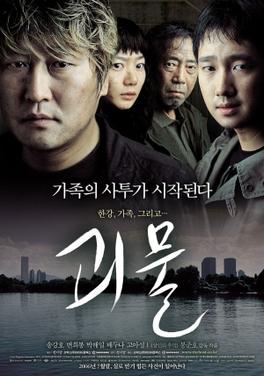
The Host (2006) - Joon-ho Bong's horror blockbuster broke box office records in South Korea and for good reason: it's a lot of fun. Part horror movie, part political commentary, part melodrama, part idiosyncratic family drama, and all very entertaining.
No (2012) - Pablo Lorrain's latest film about the Pinochet government tackles the corruption of the regime with a good dose of humor as seen through an anti-Pinochet ad campaign that looks more like a 1980's Coke commercial than a political ad.
The Killing of a Chinese Bookie (1976) - John Cassavettes' loose film about a club owner who's ego and massive gambling debt suck him deep into a criminal underworld that's too seedy for even him to comprehend. It's got too many moments that awkwardly linger for far too long but the noir action is top notch.
Le Samourai (1967) - Jean-Pierre Melville's gangster movie is buttoned-down cool. The stylish and massively fun story of a contract killer who tries to lose the heat of the cops and the people who hired him after a job goes awry.
13 Assassins (2011) - This samurai epic owes a great deal to Seven Samurai and other classic samurai films but it takes their get-the-gang together narratives and brings them brutally into the modern film age without losing any of their contemplativeness.
"13 Assassins" is the Samurai Epic For a Modern Era
13 Assassins is a film heavily indebted to Akira Kurosawa's classic samurai epic Seven Samurai. It takes the simple premise of bringing together samurai for a noble task and turns it into something more brutal, violent and showy. In the shogunate era of Japan, a number of samurai hatch a desperate scheme to kill a sadistic feudal lord and heir apparent to become shogun. The lord's sadism is displayed to almost excessive gruesomeness within the film's earliest moments that all but belies any attempt to sympathize with him -- although this brutality is fitting for director Takashi Miike, best know for his extreme horror films. The film is surprisingly soulful despite being very one-sided. The fighting is cool, but it's also fairly depressing. The film's primary message is about futility; about how there's essentially no point to this conflict and little to be gained from it. It's a suicide mission. The film has heavy, simplistic storytelling but it uses it in the first hour to establish characters and make us understand their motivations before unleashing a furious, imaginative, and fantastically staged extended action sequence. The film drags in places and could use some trimming down, and a few too many of the titular assassins don't get enough development. But it's that rare action movie that has some things it's trying to work through and think about and that actually earns its hugely entertaining climactic moments.
Grade: B+
Grade: B+
"Le Samourai" is a Cool, Slick Neo-Noir Thriller
Scott Tobias in his New Cult Canon columns mentioned a type of movie called the "'cinema of cool' that pantheon of movies with enough style and attitude to reduce critical thinkers into drooling fanboys and fangirls". He was referring to Army of Darkness, a pure unabashed, unashamed thrill ride with not much else going on, but that does it with so much panache that it ends up being hard to fault it. Jean Pierre-Melville's Le Samourai could fall similarly into this category at times. A hyper-stylized neo-noir thriller filled with pop sensibilities and a suave, cold-as-ice contract killer taking heat from the cops (Alain Delon) as its protagonist. The film is a throwback to 1940's gangster movies but updated for a contemporary setting. While it adopts the whip-smart dialogue of older noir, it takes leave to become more stylistically bold and freely formed. It's also a film that's incredibly fun; taut, thrilling, and utterly cool.
Grade: A
Grade: A
Friday, September 13, 2013
"The Killing of a Chinese Bookie" is Pure John Cassavettes For Better and For Worse
John Cassavette's gritty, bruising neo-noir The Killing of a Chinese Bookie sags in places (particularly in its unnecessarily extended night club scenes); but when it embraces its crime drama, it's a thrilling, intense, audacious piece of film-making. Ben Gazarra is fantastically sleazy as strip club owner Cosmo Vitelli, who acquires a gambling debt that he can't pay off; in order to reduce the debt and save his club, he is forced to commit an unthinkable criminal act, kill a "Chinese bookie". But nothing goes quite as planned in the story. Cassavette's directorial style gives the film a loose, languorous quality that doesn't always tonally suit its subject matter. It's shot in an uncomfortably intimate, claustrophobic style with lots of close-ups. Cassavette didn't compromise, even in the face of a genre narrative, which surely will displease those going in for its action rather than its philosophical musing about human nature.
Grade: B
Grade: B
"No" Tackles Its Serious Subject Matter With a Wry, Intelligent Sense of Humor
Humor is Pablo Larrain's No's defense mechanism. The film's story of an ad campaign that helped topple the dictatorial Pinochet government is a bleak one that withholds no punches. But it's livened by a dark, intelligent humor. The ad campaign is filled with cliches, showboating, grandstanding and attention grabbing tactics. It's a desperate sunny side up attempt to slip in some political critique of Augsto Pinochet and his regime. Pinochet has only allowed a counter campaign to the 1988 referendum vote on whether he should maintain power to appease the United Nations; the Chilean government allots fifteen minutes of ad time at a God-awfully late hour. Most of the people working on the campaign, including and especially ad man Rene Saavedra (Gael Garcia Bernal), don't suspect it will have any impact and do it because as Atticus Finch said "real courage is ... when you know you're
licked before you begin, but you begin anyway and see it through no
matter what". The election is going to be rigged so that Pinochet ultimately wins even if he doesn't get the votes and there's still a good chance he actually wins legally. But if they can used the blessed little television time they have to actually get across an alternative, rarely heard opinion than perhaps that will be its own reward. The film is fantastic at capturing the vibe of the late 1980's and rich with tiny period details. It's shot as if being played on a worn out videocassette tape -- which could be gimmicky but is fitting for the film's look at the subversive, malleable power of news, video and television can have on us. At times it falls into the trap of hitting too many by-the-books, historically-based dramatic beats but it overcomes it with its sharp thematic underpinnings and a good, biting sense of humor.
Grade: B+
Grade: B+
Wednesday, September 11, 2013
"The Host" is a Damn Entertaining, Genre Bending Horror Film
The strange world of Joon-ho Bong's The Host is hard to put into words. It is a surreal and absurd horror comedy about a fish monster created from the improper disposal of toxic chemicals into the Han River. A fish monster so gloriously schlocky that you might think you'd stumbled upon a sci-fi original movie if it weren't for the film's dark as night black comedy. The film is deeply cynical about humanity and human nature and takes stabs at it from the decidedly political (even geopolitical) to the mundanely character specific. And in the middle of this inventive, insane and amusing horror is a surprisingly moving family drama with a man and his family chasing down his daughter who has been taken by the monster. Bong's tonality is quite unlike that of any film, at points dead to rights hysterical and at others unexpectedly moving and filled with sentiment without ever getting sentimental, and, as any proper big spectacle horror movie, filled with lots of scares and thrilling action.
Grade: B+
Grade: B+
Subscribe to:
Posts (Atom)


.jpg)