Monday, September 9, 2013

Breaking Bad: "To'hajiilee"

Even if Breaking Bad were to falter in these last eight episodes (which thus far it hasn’t), I’m not sure it would matter. First off, the show has crafted such compelling and high quality television already over the past five plus years, but also because I’m certain it would be faltering in such ambitious, audacious and interesting ways that it largely wouldn’t matter. What I want more than anything else from the television series I watch is to never know what’s going to happen next, and Breaking Bad has always kept me guessing. Not only that but it has only become harder to determine where it will take us as it has headed into its end game.

The ending to last night's "To'hajiilee" is likely what most comes to mind when I say this but throughout this was an episode thick with edge of your seat tension and wonderful twists and turns. It is a chess match between Walt and Jesse to try to outwit the other. Jesse shares with Hank his plan to discover Walt’s hidden money, while Walt tries to flush out Jesse so that Todd and his uncle can kill him. Walt is clever but he’s getting desperate; he’s been cornered since “Blood Money” and more than ever there is a sense that he’s running out of ideas and options. His visitation with Andrea and Brock is smart (and a little awful – but what more would you expect from Walt by this point), but he is two steps behind Hank and giving too much credit to Jesse, who he outright calls family to Uncle Jack. 

Hank and Jesse stage Jesse’s death (using some gross looking animal brains) for an unsuspecting, and far from the brightest, Huell. Huell spills everything he knows which is enough for them to set a trap for Walt to reveal the location of the money. I think it’s brilliant for Huell to be the loose end that helps catalyze this. Breaking Bad has always been great at taking tiny parts of the story and reconnecting them to the bigger picture. 

The final stretch of the episode is another breathless bravura from the show. Whenever we think the big final moment has come (because we’ve been taught by this point that the final episodes will be heavy with searing intensity and forward momentum) it is suddenly aped by a moment even more intense and bold. Walt drives at breakneck speeds, revealing nearly everything on the phone, which must be wiretapped, to Jesse. But it is only the beginning. Walt pulls out his gun to face off against Jesse only to realize he’s been played and preps Todd’s uncle, providing the coordinates. He calls it off though when he learns that Hank is with Jesse. He gives himself up, gets his Miranda Rights read and is tossed into the van with handcuffs (not before a cheer worthy moment where Jesse spits in his face). 

But then there are still seven minutes left in the episode and we know something else has to happen. Hank calls Marie and lets her know he nailed Walt (a moment that’s meant to be happy and triumphant but rings false; something is off) … and then Walt sees something in the rear-view window: cars driving in. And we know it must be Todd, his uncle and their crew. They pull up and draw their guns. Hank and Gomie point their guns back at them. We’re just waiting for it to all go wrong. Hank informs them that they’re the police, Todd’s uncle asks for some identification to prove it (though we can tell he could care less), and they stare down for an uncomfortable amount of time. 

Walt is screaming that the hit is off but he’s muffled by the car and his handcuffs prevent him from getting out of the car and calming the crisis (though it might not matter even if he was able to). Guns start going off and a gun fight ensues, Jesse tries to flee the car to a safer hiding place, Walt throws himself down (glasses flying off his face), and Hank and Gomie take cover behind the van… And the episode just ends. In the middle of the gun fight.  

It’s as if Vince Gilligan is saying, “Yea, that’s pretty cool, but trust me this is only the start of things” (I imagine with his ever charming Southern grin wide across his face). The last few episodes have faded out of moments that felt inextricable: Hank and Walt staring down in the garage, Jesse dousing gasoline on Walter’s house. And then just cutting away, begging us to return for next week.

But I’m okay with that. Some shows, most shows really, wither away long before they end, and even the best of them get to their endings uncertain about what should be done or how to go out. Breaking Bad, by contrast, has been looking at its final episodes with a gleeful pleasure. It’s as if the writers are saying, “We can do that now?! Well, dammit let’s do it then!”  

Stray Thoughts:

-I want Jesse to find out about Jane but I guess that may not happen by this point. I thought Walt might tell Jesse during the phone call.
-How Huell and Cuby became such memorable characters in their own right is a testament to how well the writers make their supporting characters.
-Walt hid his money at the titular To’hajiilee, AKA the first place he and Jesse ever cooked. There’s a shot in the episode where Walt looks down the road anticipating Jesse’s arrival that recalls the opening shot in the pilot.
-That Walter White Luck Jesse described last episode is on display in those last moments except in a way that Walt is totally against.
-People have speculated about Walt killing off one or more main characters, including Hank and/or Jesse, but he may not even get that chance if things continue to go the way they were at episode’s end. My money is on at least one of them surviving (more likely Jesse).
-Skylar gives Walter Jr. some lessons on how to deal with customers. Jr. questions the “Have an A-1 day,” slogan as I’m sure many of us have.
-"Coward," Walt spits at Jesse. It might be the most pathetic and despicable thing he's ever said. He doesn't care that it's his fault Jesse turned to Hank or that it was in Jesse's best interest. He only cares about himself and having thought too much of Jesse.
-Todd's emotionless reaction to the hit being called on Jesse is really fucking creepy. 
-The director for the episode is once again the fantastic Michelle MacLaren -- directing her last episode for the series -- who over the course of Breaking Bad’s run has composed some of its most striking and memorable episodes. One personal favorite shot is the low angle shot we first get of Hank with the blue sky coming through overhead; Hank is bathed in a dark, blue glow and paces back and forth – the scene is shot and lit like Hank must feel. That final stretch is beautifully composed from the way Walter's speeding car is shot to his slow walk across the desert to Hank. It’s simply another gorgeously shot episode.  

Grade: A

"Paris, Texas" is a Sublime, Poetic Film

Paris, Texas is an sure handed, gorgeous, and deeply unique film.  In terms of its look, feel and narrative, the film is enigmatic, mysterious and often achingly real. The cinematography by  Robby Muller is like that of the Midwest just before a sunset -- ethereal, wistful and beautiful -- and director Wim Wenders takes advantage of a number of vast, open ended, beautiful natural and urban Texas locales. There's a sense of haunting longing underlying the searing, pulsating look to the film. A longing that becomes jaggedly painful the more we discover about the past of cryptic, inscrutable protagonist amnesiac Travis Henderson (Harry Dean Stanton). Travis appears in a Texas desert with no recollection of how he got there and little memory of the past few years during which he inexplicably went missing. His brother Walt (Dean Stockwell) is shocked when he receives a phone call from a doctor who treated Stanton after he passed out. Walt had presumed him dead and has since been in care of his seven year old son. He goes to pick up Travis but his brother is noticeably strange; he is near mute, walks away at random, will only sit in the back seat of the car and has a panic attack when they try to ride a plane. He's tight lipped about where he has been or why, only dropping impenetrable hints about what happened. Eventually they make it back to Los Angeles where Walt and his wife Anne (Aurore Clement) have been raising his son for nearly the past four years -- she isn't too keen on the idea of returning custody back to Travis. Travis attempts to awkwardly and slowly reconnect with his son before realizing he needs to track down his missing wife Jane (Nastassja Kinski). Using information acquired from his sister-in-law, he takes his son with him back to Texas to find her and fix the irreparable mess he has caused. It involves a painful, powerful reckoning to come to terms with what he has done in a spine-tinglingly observed climactic scene. Wenders holds our attention with a lack of predictability, stunning cinematography, sharp characterization and strong acting.

Grade: A

Sunday, September 8, 2013

This Week in Film (9/1/13 - 9/7/13)

It's time once more to round up the usual suspects and dig into the films I have written about this week. Lets tally it up:

Breaking Bad: "Rabid Dog" - The richest relationship articulated throughout Breaking Bad has been between its leads Walter White and his sometime partner in crime Jesse Pinkman. The series is about to make long time fans do emotional somersaults as it determines the fate of that relationship.

Broken Blossoms (1919) - D.W. Griffith's silent classic has aged about as well as can be expected of a heavy handed melodrama but there are still some surprisingly powerful moments in the film.

Broadcast News (1987) - Albert Brook's great script about the television news industry is brought to life by three great performances by Brooks, William Hurt, and, most notably, Holly Hunter. The film splits its time between satire of the industry and a love triangle, but what really shines is Hunter's fantastic performance as television producer Jane Craig, a wounded, neurotic workaholic who is constantly torn between her inner demons and her personal and professional troubles.

Pather Panchali (1955) - This powerful, humanistic drama of a rural Bengali family is masterpiece of poetic realism. Shot with naturalism and unfolding with a quiet, meandering observational style, the film becomes about what it means to live -- in all its good and bad; all its joy and pain.

Hiroshima Mon Amour (1959) - Director Alain Resnais' influential New Wave film explores issues of memory and the past through a doomed, brief love affair between a French actress and a Japanese businessman.

The Wild Bunch (1969) - Director Sam Peckinpah's exceptionally, beautifully violent western about aging lawmen fleeing from and recovering their losses after a botched job drags in a few too many places for its own good. But when The Wild Bunch embraces its dogged, intense action, it creates some fantastic, deeply entertaining and, surprisingly, simultaneously thoughtful sequences.

White Heat (1949) - James Cagney's magnetic performance as gangster Cody Jarret turns White Heat into one of the most psychologically nuanced and entertaining classic gangster movies.

The Cabinet of Dr. Caligari (1920) - This silent expressionist masterpiece uses its set designs to create a strange and horrifying world unlike any other.

The World's End (2013) - I was gratefully given an opportunity to publish a review with my school's paper for this very funny and thoughtful sci fi homage about former high school pals re-attempting an old pub crawl.

M. Hulot's Holiday (1953) - Writer, director and performer Jacques Tati's Monsieur Hulot exists on another plane of existence right alongside silent film showmen Charlie Chaplin and Buster Keaton, and Tati fills the film with slapstick feats of stunning timing and execution. Perhaps best of all though is the film's inimitable vibe; the film lives in a space of whimsical, day-dreamy pleasantness.

Away From Her (2006) - Sarah Polley's excellent directorial debut stares down Alzheimer's disease with understated sincerity and honesty. The film rarely falls into sentimentality but never lacks for a tenderness while looking at its subject matter or its characters, played with fantastic nuance by Julie Christie and Gordon Pinsent.

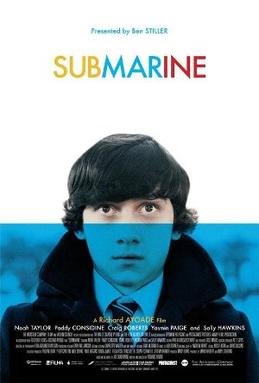
Submarine (2011) - Richard Ayoade's confident directorial debut is a sharp, achingly real teen comedy about an adolescent's twin pursuits of sex and saving his parent's marriage and the selfish and insular laser focused drive to get both.

"Submarine" is a Funny, Irreverent Young Adult Narrative

Writer-director Richard Ayoade's assured directorial debut Submarine is a droll, impressionistic film about young love. It is quirky, self-deprecating and self-destructive as indie and young romance so often tends to be. Cinematographer Erik Wilson fills the film with lovely, intimate imagery (nostalgic, warm, highly-stylized and angst-ridden) that match protagonist Oliver Tate's (refreshingly played by Craig Roberts in a performance reminiscent of Bud Cort in Harold and Maude) revealing, dark and selfish inner voice over. The film captures the narrow focus of an adolescent mind and the messy, strange and sometimes cruel results of believing you're the center of the universe. Self-preservation is Oliver's goal and he ignores everyone's happiness and feelings in the process. He grows obsessive over his parent's marital problems but only in so far as it benefits himself and he pursues Jordana (Yasmin Paige) only to advance his own social status. There's an idiosyncratic charm to the film, flitting between effervescent and prickly, and it constantly leavens even its darkest of moments with a brazen sense of humor. Ayoade has a strong sense of composition even when the story is lacking just a little bit; he confidently moves the film forward passed even its most questionable and acidic moments.

Grade: B+

Saturday, September 7, 2013

"Away From Her" is a Wise, Tender Look at Alzheimer's and a Fine Directorial Debut From Sarah Polley

Alzheimer's is a disease of powerlessness and memory, and writer-director Sarah Polley's assured directorial debut Away From Her explores both with melancholic sincerity. Though it falls into sentimentality at times, the performances of Julie Christie and Gordon Pinsent in the lead roles, as a couple, Fiona and Grant, dealing with the effects of Alzheimer's, are first rate. Polley's loose, jumpy editing of the film's narrative initially hinders the the story and contrasts with the direction's subtlety almost universally elsewhere, but it plays into the film's look at memory. This isn't just in the form of Fiona's mental deterioration but a look at her relationship with Grant which is not as idyllic and undying as Grant would like to play things off. Grant wonders at one point if some of Fiona's erratic behaviors are a means to punish him for his past transgressions. Grant's rose colored the past to a degree; he keeps returning to the day Fiona proposed to him (shown to us in tinted, filtered flashbacks hazed by Grant's memory). The title literally refers to the first month that Grant must spend away from the care facilities that he has put Fiona into -- though it is Fiona who takes the initiative and not Grant -- but it also refers to the distance that begins to grow as Fiona recognizes him less and less. "I never wanted to be away from her. She had the spark of life," Grant tells a nurse. Now that spark is fading and Fiona starts to look like a very different person -- she still glows but she is dimming bit by bit. Polley shoots the film with compassion, tenderness and wit, plumbing wisdom, painfully so, from the story.

Grade: B+

"M. Hulot's Holiday" is a Whimsical, Charming Vacation From the Real World

Jacques Tati's M. Hulot belongs more to the silent characters of Charlie Chaplin and Buster Keaton than to reality. Hulot is classically vaudevillian cut figure, right down to is ubiquitous outfit with beach hat and pipe dangling from the mouth. There's a breezy, lighthearted charm about M. Hulot's Holiday. The film is set to a jaunty score by Alain Romans and brightly lit to suggest whimsy and quaintness. Plot-less, purposeless and often a lot of fun, the film is a delight of slapstick and sight gags pulled off with expert timing and execution -- the best of which is a case of mistaken identity at a funeral. Hulot finds himself at a beach resort on vacation surrounded by familiar vacation goer types and stirs up havoc in their little paradise. He moves along irascibly from one moment to the next with little to no consequence or repercussion. He gurgles out half muttered words here and there, but they seem to be projected from the film's soundtrack rather than actually spoken by our protagonist. The sound, in general, is almost entirely absent and non-diegetic and Tati uses it to project sentiments about people, draw caricatures and make amusing satirical comments. Holiday recalls a simpler time of film comedy where the goal was largely not to have a goal but rather just to make the audience laugh as much as possible through physical and visual gesture. The story comes along in spurts, stops to smell the roses on some subplots and snaps back into focus for the ending. And it charms effortlessly, warmly, gracefully even through the lackadaisical gallivanting. 

Grade: A-

Friday, September 6, 2013

My "The World's End" Review

I was fortunate enough to be able to write a review of The World's End for the most recent issue of my school's paper The Lafayette. I'm really happy for the opportunity and very pleased with how it turned out. You can check out my very enthusiastic praise for the funny, intelligent, thoughtful film at the link here.