Monday, September 2, 2013

"Broadcast News" is as Sharp About Relationships as It is About the News

With the help of a sharp script by writer-director Albert Brooks, Broadcast News moves past its broad satirical jabs at the television news industry and moves on to become a nuanced character piece. While its satirical bite provides the film with some of its funniest and strongest moments, the film becomes more satisfying as it just lets its well-shaded characters talk and unload. The performances of the three leads, Brooks, William Hurt and Holly Hunter, carry the film and give characters of potentially one-dimensional nuttiness and romantic entanglement an earnest lived-in quality. Hunter slowly turns in the film's best performance, in time becoming the film's lead (and most interesting, compelling) role and giving so much damage and uncertainty to the type A television producer Jane Craig. Brooks is essentially playing himself as camera shy, snobbish news reporter Aaron Altman but that still makes for a very funny character, and the film's "flopsweat" scene is arguably its funniest. Hurt turns news anchor Tom Grunick into more than the dumb hunk and gives the character enough charisma that we can buy his success. But it is still Hunter's film; relatable yet frustrating; affable yet selfish. She gives such richness to the working woman torn between her inner turmoil, and her personal and professional uncertainties; I feel as if I've met this person and know her in my own life.

Grade: B+

"Broken Blossums" is Still Devastating Despite Being Dated

We watch Broken Blossoms more for its artistry and historical significance than for its entertainment value. And true enough, watching a movie made pre-1920's can feel more like a chore than a good time and Broken Blossoms is at times incredibly hammy. But the way director D.W. Griffith makes the story come together in the final moments is still devastating. It's one part morality play and one part social commentary, and in order to sell home both, everything that could possibly go wrong does so spectacularly. Move past the blatant racism made apparent in details such as naming the Chinese character "The Yellow Man" and there's a surprisingly sympathetic portrait of an Asian character (even though played by a Caucasian, Richard Bathelmess) in a time when Asian hostility was huge. A character only marginally less sympathetic than the other tragic figure of Lucy (played by the wonderfully expressive Lilian Gish) who the Yellow Man takes in to care for after her abusive father (Donald Crisp) goes too far. It's mawkish and sentimental but there's a surprisingly good message about tolerance and the film's stylistic touches -- notably a mist effect -- stop its staged quality from feeling totally dry.    

Grade: A

Sunday, September 1, 2013

Breaking Bad: "Rabid Dog"

One of the biggest decisions creator Vince Gilligan made early in Breaking Bad’s run was to keep Jesse Pinkman alive. Gilligan had planned to kill the character off towards the end of the first season but the writer’s strike prevented him from following through. Gilligan quickly realized based, partly on how great Aaron Paul was in the role, that Jesse was too good of a character to lose that early in the show’s run. In time, Jesse became arguably equally as important and integral to the show as Bryan Cranston’s Walter White. Gilligan began splitting the episodic time between the two characters and using this time spent with Jesse to slowly switch our sympathies away from Walt and onto Jesse.

Some argue that Hank, in time, has slowly become the series protagonist in disguise but that argument could very well be made for Jesse as well. I have long since stopped rooting for Walt. I’m interested in what Walt does but less on an emotional level and more on a narrative level. The power of Breaking Bad draws from its deep bench of supporting characters who have turned into stand-ins for the humanity that Walt has increasingly been lacking. Nowhere has this been truer than with Jesse Pinkman. Jesse is the moral compass of the show now, and in a show all about morality and the consequences that come when you start “breaking bad”, being the moral compass is a big freaking deal. Whenever Jesse has considered something to be “wrong”, within the logic of the show it has been very, very wrong.

So if you’ve been a hold out on the Dislike Walter White Front, surely the reassurance of the show’s moral center will make you realize that Walt is, in the words of Jesse himself, “the devil”. But I bring up the equal screen time dedicated to the two characters because it almost feels more fitting that the final conflict of the show is coming down not to Walt and Hank but rather Walt and Jesse. 

Jesse wasn’t going to burn down the house. We know in nine months when Mr. Lambert arrives back to Negro-Arroyo Lane that his house is still standing. So when Walt arrived to find his house gasoline drenched but otherwise unharmed, it wasn’t really a surprise. Nor was it a surprise to watch Walt weasel his way out of yet another mess. There’s a tonality to Bryan Cranston’s voice when Walt starts lying. It has a sickeningly confident rhythm to it. By now it has a quality of trying too hard to convince whoever is hearing it; there’s a playing acting feel to it. Skylar immediately picks up on its falseness and asks Walt to drop the act once they’ve reached the hotel (When she asked how Saul was, I was cheering. Walt’s routine has gotten old). Walt keeps lying to those closest to him even when he ought to know it isn’t going to work. He lied to Jesse’s face in “Confessions” and Jesse spit back, “Quit working me!”      
  
No, what was surprising was the series shifting away from its clockwork, real time storytelling midway through to show events from Jesse’s perspective. It was a necessary storytelling decision – one that arguably could have been handled in a slightly different manner – but it still was a little jarring. The show couldn’t lose its momentum when showing things from Walt’s point of view, so it made sense. On the other hand, at this point, the show has earned the right to tell things how it wants to. 

Hank talked Jesse down from the edge of oblivion and proceeded to use him to build his case against Walt. Hank is driven by a sense of justice but he’s selfish about his pursuit. The way he talks about taking down Walt isn’t about doing the right thing but the satisfaction of it. When Hank tried to convince Skylar in “Buried”, he was unconcerned about her interests or feelings, and he’s even less concerned about Jesse. Steve Gomez, Hank’s partner, is more cued into how Jesse feels and how he might be right, but Hank dismisses Gomie’s suggestions. 

So Hank has a confession from Jesse but a “my word versus his word" situation and some potent but circumstantial evidence in the form of a voice message Walt leaves for Jesse. Jesse is weary about taking the meet up with Walt, but Hank recognizes the strong feelings Walt holds for Jesse. 

Then we come to that final scene. Breaking Bad has crafted some intense, visceral moments but in these last few episodes it has made some of its best. In that moment as Jesse approaches Walt on the park bench anything could happen. I know that’s a cliché phrase but it’s rarely been a truer sentiment than for Breaking Bad. Breaking Bad is a show that constantly surprises us and it does it ways that are astounding, ambitious and set it apart from nearly every other show on television. Consider the possibilities in that moment: Jesse goes over to Walt and is killed (by Walt, by that strange man), Jesse goes to Walt and they talk (he gets no useful information, he makes Hank’s case), Jesse turns away and goes back to the van fearful for his life, Walt realizes Hank is listening and does something to counter, and so on and so on. And we could buy any of these eventualities. 

But the show seems insistent that Jesse find a way to get back at his former mentor. And at the same time Walt seems insistent to stop anyone from taking him down, even his adopted son. For five seasons the show, intentionally or not, has been earning the right to set up a conflict like this between its two protagonists. And, well, I couldn’t be more excited and sick to my stomach (in a good way of course). 

Stray Thoughts:

-Marie’s reaction to Jesse staying over at the house is fantastic. That’s two characters that have been kept apart for too long and together make the stuff of pitch comic blackness. All in all -- including the therapy scene -- a very good episode for Betsy Brandt.
-Walt claims he’s in it for his family but everyone that is in his family is in no way better off because of his actions. Take your pick. One worth mentioning: Walter Jr.’s heartbreaking hug. He’s the only one still in the dark and it is devastating. Also in a fitting bit of irony, Jr. calls out Walt on his lies. Walt should be better at this by now.
-The way Aaron Paul is able to instill so many emotions into saying “Mr. White” is a thing of acting beauty.
-Perhaps I’m reading into it too much but the gasoline seeping into the floor too deep to be gotten rid of feels like a commentary on how Walt’s gone too far to get away with things this time.
-The episode's title, "Rabid Dog", recalls the season four episode "Problem Dog" where Jesse in an AA session describes Gale as a dog that needed to be put down. 

Grade: A-

This Week in Film (8/25/13 - 8/31/13)

It's Master Post time once again! The offerings this week are as eclectic as always and that's the way I like it. Film is a smorgasbord that has you eating fruit one day and a car tire the next. Lets tally it up:

Breaking Bad: "Confessions" - The show may be winding down but it feels like it's just getting started. Few shows go out on a creative high; Breaking Bad is prepared to hit one that is every bit as good as anything it has ever accomplished.

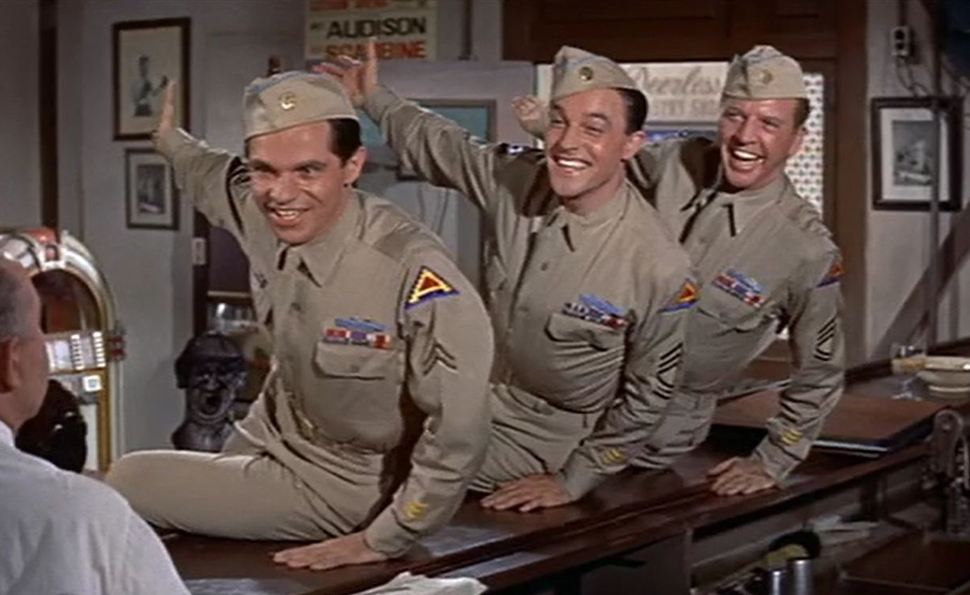
It's Always Fair Weather (1955) - Gene Kelly and MGM had produced some striking musicals for years but few were as dark as this story of former army buds who discover a decade later that their friendships might have been a sham.

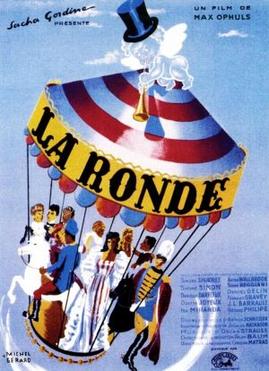
La Ronde (1950) - Round and round storymaking and lovemaking go, and La Ronde explores both with coy awareness, self-referentiality and elegant, stately allure.

Frankestein (1931) - Boris Karloff's iconic performance as the monster draws a deeply sympathetic hold over you and makes Frankenstein more sickening than his creation.

Shadow of a Doubt (1943) - One of Alfred Hitchcock's earliest and best films about a killer named Charlie (Joseph Cotton) and the quiet, little hamlet he preys upon.

Saturday, August 31, 2013

"Shadow of a Doubt" is a Dark, Suspenseful Masterpiece

Alfred Hitchcock's Shadow of a Doubt draws so much of its tension and power from dualities. The domestic, familiar and comfortable versus the sinister, destructive and unknown. Young Charlie versus Uncle Charlie. This comparison is drawn immediately from the first two scenes where we see the contrast of the two lives of the vastly different Charlies. When Charlotte (sharply played by Teresa Wright) comments that she thinks that she and her uncle are very similar, the the film is drawing out the sad irony of the line's inaccuracy. Charlotte is certainly different from her other family members, quickly realizing that something isn't quite right with her uncle, but she's also rather similar to them in that she's so used to a quiet and uncomplicated life. The film's initial tension comes from everyone missing the danger that Charlie's (a serial killer on the run) entrance into their lives entails -- something made all the more pressing when two detectives appear posing as census takers. But as the film moves past this tension towards something more open, and in turn frightening, the film gets darker and more cynical. Of course, Charlie (played with cool, compelling menace by Joseph Cotton) has got to get his just deserts (in the wonderfully intense and gorgeously shot train scene climax) -- this was made in 1943 after all. However, everything prior to that point is laced with such seethingly suspenseful scenes where what the two Charlies know and don't know becomes crucial.

Grade: A

Friday, August 30, 2013

"Frankenstein" Still Has the Power to Unsettle

There's a reason Frankenstein is titled after the mad scientist rather than his monster (monster actor extraordinaire Boris Karloff). Mary Shelley's story turns the re-awakened corpse into the tragic figure of our sympathies, while Dr. Frankenstein increasingly becomes hell bent on hubris and power. There are few moments in film history quite as sickening as Colin Clive's delighted gasps of "It's alive!" The film's closing moments where Frankenstein's new father-in-law raises a toast to the future of the House of Frankenstein is underlined by bitter irony.

Frankenstein is admittedly clumsy at times with scenes so clearly set on pre-fabricated sets that it's hard to take seriously (It's just on the right side of Ed Wood). However, the staginess of the play is occasionally super effective; it's not a film that's predicated on suspense but rather atmosphere and philosophical quandaries. In its best moments, the film is shot in a highly expressive style (reminiscent of Nosferatu) where the sets and lighting turn the film into something as moody, sullen and despairing as Frankenstein's actions and their consequences.     

Grade: A

Thursday, August 29, 2013

"La Ronde" is a Fancifull, Elegant Tale of Love and Art

Max Ophuls's adaptation of the Arthur Schnitzler's Austrian play La Ronde is shot with a vivid, hallucinatory quality. Ophuls seems less concerned with the plays investigation of sex and love and more interested in the very nature of storytelling itself. He adds a self-aware ringmaster, the Raconteur (Anto Walbrook -- relishing every moment on screen), who keeps popping up in various roles, nudging the story to its necessary ends and making sly, postmodernist commentary on the narrative unfolding (as well as the very role of the medium itself in telling it). The new emphasis turns the story into one about cyclicality, inevitability, and the artifice of stories. Ophuls' lighting choices and camera movements turn the world the characters inhabit into a trance induced, dream-like place. Despite this there are moments of startlingly true-to-life realism (at times painfully real) that flit past the calculated gauziness that break through in the characters' extended monologues -- especially between a long suffering married couple long past their romantic golden years -- that form the core of the story.   

Grade: A