Wednesday, August 14, 2013

The Thoroughly Charming "Roman Holiday"

I really ought to only have to say one thing about Roman Holiday and that should be enough: Audrey Hepburn -- in her debut performance. (There, this review can end there).

Hepburn is so well-suited for the role of the princess (she even looks like a princess) who flees her stuffy position of royalty in order to have a world wind day on the town with news reporter Gregory Peck that it's hard to imagine anyone else in the role. She makes her excitement at everything she's never been able to experience have so much sincerity. Peck is probably not the best actor to place opposite her (he's a little too old) but he does fine. But it's Hepburn's film. She's that rare sort of actress who immediately makes a film  more charming and memorable (like Marilyn Monroe and Maryl Streep). Of course, she's sophisticated, well-spoken, and sweet, but Hepburn is also very funny. The film is filled with moments where her doe-eyed lack of understanding is not only incredibly cute but hysterical as well.

Sure, Roman Holiday is screwy, but it also seems to really believe in the romance underlying its premise. Paired with the city of Rome, taking in the beautiful sights of the city (shot beautifully on location in black and white), the romance has the right setting for its exceedingly improbable premise. The film also benefits from how "un-Hollywood" it so often is. Peck's character is a lot more of a greedy opportunist than we might expect a romantic male lead typically to be. The ending is also is far more grounded and bittersweet than the usual romantic comedy, taking stock of the realities of this spectacular meet cute.

It's a funny, sweet little film. Silly at times, but charming and fun all the same. Ultimately it's hard not to be delighted by it. 

Grade: A-

Monday, August 12, 2013

Breaking Bad: "Blood Money"


**Spoilers Below**:

There’s only so much time left before the cancerous rot kills what little is left of Walter White’s soul, along with the actual cancer that has returned to haunt him yet again. So let’s dig into the midseason premiere while there’s still a chance left. 

The flash-forwards this season put Breaking Bad into an interesting territory. They put the series on a head on collision with a puzzle, something it’s tried before in the past (the season two pink teddy bear flash forwards) with mixed consensus. Breaking Bad has never been one for mysteries in the Lost sense of the concept. People have been in the dark but the audience, for the most part, has been in on all the dirty little steps to Walt’s poisonous path forward.  I hope the show doesn’t do many, if any, flash-forwards because the show could overreach, creating an anticipation for something that can never live up to what we expect or hope it to be. Considering there’s a tremendous amount of hype and expectation behind the series as is, that may not be the best course to chart forward.

However, the flash-forwards, besides being a very delightful, enigmatic tease, serve as a context for the present events that unfold over the course of the episode post-theme. THIS is where we’re headed and clearly it does not end well. No matter how hard Walt manipulates, lies, coerces and sneaks his way out one mess after another things will catch up to him. And on some level don’t we want to see Walt get his comeuppance. May be not in the form of death, perhaps even more so in the form of judgment and a punishment that emasculates, humiliates and leaves him wishing he had died. Yes, that’s wishing on my part and we don’t know the specifics yet, but clearly something public and terrible happens. Walt wants people to say and remember his name and by series end the wider area of Albuquerque seems to know who the great and mighty Heisenberg is (presumably to Walt’s ironic displeasure). 

But speculating is a fool’s errand even though you should expect a healthy amount here over the next few weeks because what is the pleasure of television, especially serialized, if we can’t do a bit of guessing. Meanwhile, in the present day, the show gives us a sense of where all the major players are in the equation. The episode largely spends its time splitting its focus between Walt, Hank, and Jesse. Walt and Jesse are both out of the meth business but being out has taken widely different tolls on them. Hank having had his holy shit (literally) revelation about Walt is starting to piece together a case against Walt. 

And then there’s that moment at episode’s end that just begs to be mentioned so let’s clear the deck of it already. The moment the garage door starts slowly cranking down at Hank’s the goose bumps should have arisen on every arm of every person watching. Here was a show that has had a good dose of surprising twists and here was potentially its most unexpected. The series confidently blew up a plot that a lesser show would have sat on for a couple episodes. 

Bryan Cranston directed the premiere, “Blood Money”. This is the third episode Cranston has directed for the series, all three of which have been premieres. Besides the revelatory, but honestly inevitable end scene, there are number of other revelations and a number of story strands being juggled here, but the episode smoothly moves from one to the next. Breaking Bad has always been plot-heavy but it may be even more plot heavy this season (which already had a rather lengthy montage that glossed over several months of time in “Gliding Over All”) in order to get the timeline up to speed with when the flash-forwards take place.

Let’s get to the other reveals that are likely to go more undiscussed. Well, for one thing, Skylar and Walt plan to buy a new car wash. (I’m kidding of course). There’s the fact that Walt’s cancer has returned and that his family doesn’t know. But Jesse has finally wisened up to the fact that Walt is responsible for the death of Mike, and who knows what else. 

Jesse’s knowledge has led to another spiral downward as if the writers enjoy seeing Aaron Paul act miserably (which he does fantastically as always). Jesse attempts to get rid of the titular “Blood Money” first by trying to give it to Mike’s granddaughter and the family of the child killed in the train robbery during “Dead Freight”. But when that fails, due to Saul roadblocking him, Jesse starts simply throwing the money out his car window at houses. What does the money matter when you can’t stand how you got it?

Breaking Bad has always been a moral show (arguably the most moral show on television). It’s a morality play dressed up in domestic drama, crime drama, pulp adventure trappings. Walt argues to Jesse that they’re already going to hell for what they’ve done, which is the least helpful thing he could say to the bruised moral compass of the series. Jesse has the potential for redemption as he’s come to hate everything he’s become and done. Walt, on the other hand, has accepted his fate, and at times taken great pleasure in the life he’s leading. 

Walt is comfortable now. He’s freed of the burden of the drug trade (for now anyway). He’s a little more nebbish perhaps; Skylar has reasserted her dominance a little. Watching her put down Lydia is one of the greatest smackdowns the show has done and hopefully gives the Skylar Haters out there a run for their money. Though it looks as though Walt is “good” (getting out of the biz, spending time with the family, etc.) the cracks of the menace lying underneath the reformed persona shine throughout. When he lies to Jesse, it’s infuriating and insulting. And when he sneers “I would tread lightly,” to Hank, he’s saying it as Heisenberg not Walt. 

This was Breaking Bad as searing, dark, funny and thrilling as ever. And I look forward to where it may take us, M-16 and all. 

Stray Thoughts:
-In the flash-forward the neighbor drops a bag full of oranges, a long established symbol for the series that something bad is going to/just happened. (A choice lovingly stolen from The Godfather)
-Walt’s air freshener pitch to Skylar is an early, hilarious moment that tells us everything about the dynamic between Skylar and Walt.
-A moment topped perhaps only by Badger’s very funny spec script idea for Star Trek which I would totally watch.
-We finally get a montage that isn’t of meth being cooked. Here Hank piecing the case together against Walt. Every bit as evocatively shot as any other montage the show has done.
-Walt vomits in a manner all too reminiscent of Gus Fring in season four’s “Salud”.
-The Walt-Jesse scene is as painful and saddening as anything the series has done between these two characters. Walt lies, Jesse knows he’s being lied to, and part of us wants to see them mend things even though it’s all but impossible by this point.
-The pull away shot after Walt discovers the tracker is fantastic and perfectly chosen.
-I still wonder how Saul and Marie will fit into the events to come. They’re in positions where they seem somewhat secondary to the proceedings.
-Did you buy how quickly Walt recognized how Hank knew he was Heisenberg?
-I ought to have talked about Hank more above. This is in some ways Hank’s episode as he preps to take on Walt before having the conflict fall right in his lap. And Hank stays true to his beliefs in spite of the fact that Walt is family.
-Walt offering up the cancer as a counterargument is sniveling, pathetic and desperate. So it’s exactly what we’d expect of the man. 
-Who's the ricin for? One of many, many flash-forward questions.

Grade: A

Sunday, August 11, 2013

This Week in Film (8/4/13 - 8/11/13)

It's Master Post time once more! That means it's time to round up the posts that have been floating around this week; this time it's all reviews for recently released films. It's been a slower week due to my own busy-ish schedule and my desire to re-watch Breaking Bad in time for the premiere of the second half of the final season (which I intend to review). But there is still a collection of good to great movies here all of which I would recommend to some extent or another. Hopefully this following week offers up more variety and more films in general, but for now, let's tally it up:

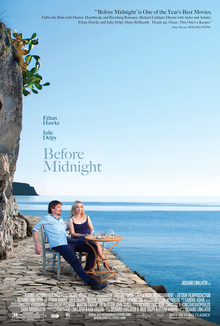
Before Midnight (2013) - The fantastic sequel in this romantic trilogy picks up nine years after we last saw Jesse and Celine and the fate that awaited them after their fateful meet up in the equally great Before Sunset. It's best to watch the first two films before tackling Before Midnight as the three films work in concert with eachother, and this film plays off so much of the history of the series in massively rewarding fashion.

The Way, Way Back (2013) - Liam James' relatably inarticulate turn as Duncan is only one of many great performances on an extensive list of solid casting. Though it's technically James' film, the film in some ways is an ensemble piece with so many performers (including Steve Carrel, Sam Rockwell, and Allison Janney) elevating material that could so easily have been cliche. Its got its flaws but its sticky, familiar look at coming into your own is really funny, charming, and sweet.  

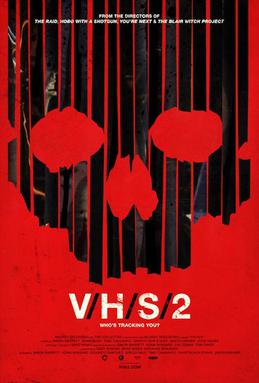
V/H/S/ 2 (2013) - The film is a bit of a mess when it comes down to it, but it's full of creativity and cool ideas and that saves it from completely getting swallowed whole. It's certainly an improvement from the first V/H/S which dashed from its peak to a number of valleys too often. The short films here have nifty horror concepts and a building sense of freakiness and dread, culminating in some killer third acts.

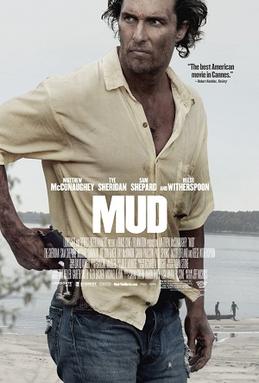
Mud (2013) - A small, lazy, naturalistic film set in a Southern bayou. It's the sort of film that has a character named simply Mud (played wonderfully by Matthew Mcconaughey) and that's the kind of simplicity and directness the film has. The story beats here are familiar but it tells them with ease and there's a nice, low-key coming of age story that somehow dovetails somewhat well with, an at times, exciting crime drama.

"Mud" is a Good Ole, Sleepy Little Southern Yarn

There's a mysterious man who only speaks in folksy platitudes and goes simply by the name Mud (Matthew Mcconaughey). He's a cuddly, warm, charming enigma that two young Bayou boys stumble upon on a deserted island. Soon the boys are bringing him food and taking in mentoring from him. It doesn't get too much more complicated than that in Mud, which has a tremendous amount of faith, affection and understanding for people in spite of the things they may have done. The film undercuts the mentoring business a bit by having Mud be a little less of the infallible wisdom deliverer he initially appears to be. It's nice to see this but the film is otherwise fairly straightforward. The boys meet Mud, one, Ellis (Tye Sheridan), is trusting, the other, Neckbone (Jacob Lofland), is more doubtful; they teach eachother things and learn things and grow as people. Ellis discovers that the world isn't as idyllic as he had built up in his head.

The film is lazy and languorous; occasionally the tension ratchets up (particularly at the end, which feels somewhat out of place in the film despite how exciting it is) but it's largely slow to the drawl. Mud is hopelessly in love with a woman (Reese Witherspoon), who keeps straying from him; he bides his time on the island waiting for a time to reunite with her. He can't leave due to extenuating circumstances (ones that would make the less sympathetic turn on this man) and requires the boys help. Much of their time is spent helping Mud build a boat so that he can get out into open waters away from legal concerns and prying eyes.

Mcconaughey continues his turn towards work that bucks our expectations of what the actor is capable of. His pseudo-spiritual, one with nature persona is totally fitting for the part, and his utter sincerity helps along the part (We believe and like Mud just as much as the boys because he's so damn affable and seemingly harmless).

Lying in the film's background are issues over how our parents, and parental figures, raise us (or fail to). Ellis' parents (Ray McKinnon, Sarah Paulson) are on the rocks and all but ready to get divorced. Neckbone doesn't know his parents and is raised by his uncle (Michael Shannon). Mud had a similar upbringing; raised by an adopted father Tom Blankenship (Sam Shephard), who just happens live on the opposite side of the river from Ellis. Mud ends up filling the role of E.T.-like figure, dropping into Ellis' life just as he needs him and going away right when Ellis comes to accept the saddening and disappointing way things are in his life.

Mud is a warm, good-hearted, inviting film. It strikes a surprisingly workable balance between crime drama and family entertainment (though its sharper than your typical family film) -- at least until the end where it falls apart for a time. Though its gender politics are questionable (It's a little too reductive and one-note with its female characters), the feel for the locale, the assurance in its characters and lazily getting where it needs to go make it pleasing to watch. 

Grade: B

Friday, August 9, 2013

"V/H/S 2" is Very Uneven and More Freaky Than Scary, But It's Still Inventive and Fun

VHS 2 unfolds with the logic of a nightmare. Made up of four different segments that are part of a horror anthology, and told through a framing device with its own sense of quicksand freakiness. VHS 2 is told similarly to its predecessor. People stumble upon a large collections of strange videos and watch them, discovering they have some weird, horror-y stuff on them. Meanwhile, in the background horror stuff starts to occur in between video watching. However, VHS 2 is far better at using this framing device (It helps that there's a sounder reason for the people to be there; the man is a private investigator and the woman is his girlfriend). It doesn't stray too long on setting up the appearance of the videos (and the horror stuff here is far more unnerving and shocking in its own right). The videos are also far more consistent. This is helped by the fact that they're mostly much shorter. The different segments aren't really scary rather than super freaky and crafty. The nightmare logic is their strongest quality; we never know where they're going and that creates a sense of dread for the most part. By the third act things shift into high gear and everything that could possibly fall apart falls apart spectacularly. The different short films vary in quality but they all milk their shoestring budgets and have a lot of imagination. One features aliens, one the point of view of a person turned zombie, another a demonic cult, and the other technology gone awry and paranormal (All ideas that feel far more creative and rewarding than some of the shorts from the first film). The short film nature is actually a blessing; some of these segments aren't sustainable things and all of them devolve in the end into more atmospheric acts of disorientation than actual pieces of well-grounded horror. There's a lot of good ideas in the film, some nice special effects, and a pleasing sense of possibility. Though it's often lacking in terms of storytelling and the found fotoage aspect often plays against the film, there's a wonderful attempt to make us totally uncertain of where the story could go at any moment. 

Grade: B-

"The Way, Way Back" is a Warm, Breezy Coming of Age Story

Co-writers and co-directors of The Way, Way Back Jim Rash and Nat Faxon's previous work, The Descendents, is also about a broken family and one of its more minor aspects is about George Clooney's daughter (played by the fantastic Shailene Woodley, who is starring The Spectacular Now, another coming of age story that I've yet to see but hear is good). In that subplot, there's the very, very small hints of The Way, Way Back. Rash and Naxon appear to be interested in young people coming to accept the awful truths about the world and adulthood, and this gets fuller expression in The Way, Way Back, a very funny, well-drawn coming of age story.

In The Way, Way Back, Rash and Faxon, shift the focus away from the adults and center it on a young protagonist, socially awkward, mumbling 14 year old Duncan (Liam James), who is misunderstood by most everyone around him. This includes the self-righteous (and pretty awful) boyfriend (Steve Carrell) of his mother (Toni Collette), who when the film first opens asks him what he thinks he is on a scale of 1 to 10, before labeling him, in all seriousness, a 3.

The only people he's able to relate to are the slacker owner of a near by water park (Sam Rockwell - a part that feels almost as if it was written with Rockwell in mind), in whom in finds a much needed father figure, and the girl next door (AnnSophia Robb) to the summer home his family goes to, who he not all that surprisingly falls hard for and the film sets apart from the other female youngins by making "quirky" (She'd rather read than go swimming!).

The film has the feel of family summer vacations down pat. From the long, stuffy car ride to the oddball people (Allison Janney chews up every scene she gets) that you meet when your on vacation to a town that gets most of its income from vacationing families in the summer, the film puts us right into what its like to be a kid stuck with your family on vacation. This is not something that would make anyone all too pleased but it's exceptionally difficult for the outcast Duncan, who slowly but surely opens up and becomes more confident in himself.

His mother ignores him as she worries what her boyfriend is thinking (all the adults take advantage of their time from "real life" to get super drunk and avoid responsibility), and this is when Duncan begins, unbeknownst to everyone else, hanging around the water park Water Wizz. He soon gets a job, and Rockwell takes him under his wing. 

There's a number of overlapping storytelling methods from The Descendents (the darkness behind seeming paradises, the strained relationships between parents and their child, etc.). One of the things Rash and Naxon do really well is characterization. They're painting in a lot of broadstrokes here but they quickly establish who everyone is and have a knack for making likable, lived-in characters (It helps that they have a great, deep supporting bench to fill the roles). The film also has very simple compositions (sometimes too simple); it's a very static film. The dialogue and the mood (which alternates between sweet and sour, as fits childhood) are the important parts of shots (though it's often too direct with both). It's a far more sweet and sincere film than The Descendents (which was dealing with more irrevocable issues). But when push comes to shove the film is able to take some dark turns and makes them all the more painful because of how thoroughly it sticks to its single point of view.

At times, its too simply drawn, too representative, but Rash and Faxon's great script and the all around good performances of the cast turn that familiarity into something fresh.

Grade: B

Tuesday, August 6, 2013

"Before Midnight" is a Deeply Rewarding Film That Builds Lovingly on the Films that Came Before It

The "Before" film series has two of the most unnecessary sequels in the history of film, as well as two of the best. No one was asking to find out if the one night romance between Jesse (Ethan Hawke) and Celine (Julie Delphy) went any further than that night. And no one was wondering if the equally ambiguous ending to the sequel Before Sunset, set 9 years later, needed to be stripped of its beautiful open endedness. But just because something is not needed does not mean it is unwanted, and Before Midnight is an excellent film that is a combination of fantastic scripting and acting. Before Midnight picks up once again 9 years later to stop in on these characters, and the series begins to reveal itself as a grand experiment of fictional storytelling, a potential counterpart to the "7 Up" documentary series. 

Before Midnight proves itself to be at times even stronger than its predecessors by taking what we knew from the last two films, our interest in what happened in the intervening years, and our affection for these characters and using all of it to create something even richer and more complex. Before Midnight, like the films that came before it, takes its time, at times with languorous assuredness (Many of the scenes are shot in unbroken, long single takes). But it its meandering is deceptive. The film isn't plot heavy but it's slowly dropping pieces of information, trusting us to fill in the blanks ourselves, before dropping a bombshell of a penultimate scene that has a thrilling sense of reckless abandon. The characters speak so frank and candidly that it feels intense, unsettling and hugely relieving. Its the moment we have been waiting for all film and it builds so knowingly off the series' history and the history of these characters.

I won't reveal any more; it is a scene best taken on its own as is much of the rest of the film. We learn what Jesse decided to do at the end of Before Sunset and the consequences of that decision. We discover that that decision has had unexpected, unforeseen consequences. But to divulge what the specifics to this are would be to spoil the fun of stopping in on these two and glimpsing their lives for the briefest of time. The film rewards our knowledge and our time spent with these characters and our devoted interest in what has happened to them and what will happen to them.

The film is interested in dialogue. Its almost entirely a film of people talking, and talking with wit and intelligence. There's painstaking delicateness to much of the writing (credited once again to Hawke, Delphy, and director Richard Linklater). There's the series usual interest in romance, love, and relationships, but there's an even greater preoccupation with the myth of the ideal relationship. The film deconstructs further and further; the romance (as well-grounded as it was) of the first film continues to shed away in favor of something far more knowing and mature.

Once upon a time two people met on a train and they fell for eachother as they walked and talked in Vienna. Nine years later we picked up their story in Paris wondering what had happened. And we pick up once again, this time in Greece, stopping in on two old friends and how their fairy tale one night together became something more entangled and in turn more gratifying.

Grade: A