Friday, June 7, 2013

"Pickpocket" - Film Review

The self-stated purpose of Pickpocket doesn’t take place until the final fifteen minutes. In that sense, much of the rest of the film doesn’t seem to surficially jive with what the master plot’s main aim is. It’s a romance disguised as a thriller disguised as a morality play (and even then Robert Bresson might just be mocking the way genres tell stories). In this sense, it’s much like a pickpocket; someone who disguises themselves as an ordinary person and while you’re not paying attention steals away your possessions.

The film is the story of a pickpocket’s escalating efforts of petty theft. During this time the police get more suspicious, he gets more paranoid and by befriending other pickpockets he becomes more deeply involved in a life of crime. 

It’s all told through narration, in flashback. The film shows writing down his memories of the events. In the hands of another director this might be a convenient plot device (in deed it does allow Bresson to gloss over large stretches of time, including a two year stint in London we never get to see any of). But Bresson uses this narration saturation to over-stylized specificity where it begins to transcend rather than simplify. The film is highly elliptical and economic in this way; it only tells what’s absolutely necessary, clocking in at just 75 minutes long. Yet it tells so much in that short time.  

The film is somewhat of a character study. Michel (Martin LaSalle) doesn’t seem like a terrible person. He’s a criminal but he’s not the smoothest operator. He gets caught on a few occasions, including by his mother, who he has trouble seeing. He likes the money he gets from the thefts but he hates the way people might see him. Michel isn’t a slimy person; he’s often sympathetic in spite of his lack of law-abiding. He comes off as too nervous to be in this line of work. Somewhere along the line someone or something or just society in general let him down. Michel does an awful lot of self-justifying, even at one point putting across an argument that certain special individuals are superman and deserve to get away with crime.  

His crimes, his pickpocketing, are on display for the majority of the film and there’s a strange gracefulness to the whole dirty deed. Bresson breaks down every little detail of the act and turns it into a balletic balancing act, highly coordinated, highly calculated.

Pickpocket is an examination of crime and redemption but the whole film seems just a little bit at arm’s length. There’s a distance away from the subject matter. Bresson isn’t making a judgment. He’s just telling it like it is. 

Grade: A-

Thursday, June 6, 2013

"On the Waterfront" - Film Review

What can I say about On the Waterfront that hasn't already been said to death. Well, for starters, it's every bit as masterful as everyone claims it to be, holding up extremely well all these years since its release. It's a superbly constructed, magnificently acted, and thought-provoking film. It is funny, sad, moving, thrilling, and triumphant. At its best the film is simply mesmerizing. It combines tour-de-force acting, striking visuals, and a simple yet powerful story.  

The greatness of the film comes from the film making it clear that something needs to be done about the corruption on the waterfront, but also making action against the mafia seem insurmountable. This story should seem contrived and done to death (as should the romance of the film), but it's the way director Elia Kazan and the performers handle the material that elevates it. 

The film is about choices and crises of conscience. The film opens with Marlon Brando making a decision that he quickly regrets and that leads to the death of an innocent man, the brother of his romantic interest Edie (Eva Marie Saint). He didn’t want that; he deceived himself into believing the guy would only get roughed up. The whole lot of longshoremen have done this same sort of self-deception, turning a blind eye to the illegal activity of Johnny (Lee J. Cobb) and his goons. 

No one wants to take a stand. Deep down they know they probably ought to, that they can’t keep on like this much longer. Their wages have slowly gotten cutback as have their hours. And these are all working class people who can only take this for so much longer. However, they don’t say anything because they know there’s not much work for them elsewhere. Why shakeup the status quo when it could mean you can’t provide for your family, or worse get killed.

Brando is one of these guys. He doesn’t want to call the wrath of the mob down upon him. His brother Charley (Rod Steiger) is the right hand man in the mob and Brando’s become ensnared in their web, forced to do odd jobs for them. But deep down he knows it just isn’t right. Brando had a chance to get out of this working class life; in the film’s most famous scene, he tells his brother Charlie that “I coulda of had class; I coulda been a contender. Instead of a bum which is what I am lets face it”. It's every bit as powerful to deserve the cultural lexiconical nature it's reached. His brother kept making him take the fall and his boxing dreams were squashed, and it's Brando at his best. 

Brando brings deep humanism to the role of Terry Malloy. He’s a sensitive soul underneath all that outward machoness. We sympathize with this guy. He’s a product of circumstances. Finally he can’t take it any longer. Inspired by Father Barry (Karl Malden) and Edie, it dawns on him that if he doesn’t do something about it, no one will and the mob’s grasp will continue over the union, strangle-holding the workers.   

The film is filled with such a sense of place. Boris Kaufman's cinematography evokes a sense of loss and longing. It’s constantly contrasting shadows and lights, perhaps suggesting how caught up in this hanging, seemingly inescapable darkness Terry is. This sense of place is also helped along by some tremendously sympathetic and realistic depictions of the working class as well as the church. Through Father Barry, the film paints a well-observed picture of Catholicism. The religion is never an overt element of the film but rather just a part of this world it’s engrossing us in (it would be a less honest a portrayal if we got no glimpses of the church which plays such a large role in these people’s lives). 

Terry’s relationship with Edie is also nicely handled. The film makes this a romantic plot but one that fits into the larger story of Terry’s development. Before he can take on Johnny, he has to be honest with her and potentially ruin the one good thing he’s made of his life in ages. The scene where he tells about his role in her brother’s death is a powerful scene that’s told almost hauntingly wordlessly.

On the Waterfront is a tremendous film with a powerful story, commanding visuals, and excellent performances. 

Grade: A

Wednesday, June 5, 2013

Orphan Black - Endless Forms Most Beautiful - Review

For an episode that was blowing up plots left and right, Orphan Black’s finale feels fairly slow moving. It’s not necessarily slow per se, but it’s far more methodical than one would expect from a show so heavily reliant on forward momentum. At times it comes off as the writers are checking off boxes for plot points they need to deal with to get the show setup for next season. This occasionally provides it with a slightly jumpy quality. But before it appears as if I’m being totally down on this finale, I must say that I was gripped into this world like I continually have been throughout this terrific season.

This slowness comes from a sense of functionality. Take the many twists of the episodes. Besides the one that wraps up the hour, the show is confronting plot points it’s been beating around the bush about. We still haven’t learned who Allison’s watcher is. We still don’t know why Dyad is interested in the clones. The police still haven’t come after Sarah. And thusly, the show finally shows some of its hand.

The business with the police quickly blows over with the help of Dyad shutting down the case (of course moments before Sarah reveals the truth to Art). The cops obviously can’t learn what’s what just yet, but this is not going to stop Art from getting to bottom of it. Much like a number of places plots end in this episode, this is more ellipsis than period. A to be continued. But it's okay because there's simply too much else going on to be completely let down by plots ending in these sorts of places. 

Dyad is apparently run by one of the clones, Rachel, a woman raised with awareness of her clone nature (called "ProClone") and has devious plans in mind for our other clones. She attempts to get Cosima, Allison, and Sarah to sign contracts with the company. The episode is essentially about the three of them pondering over whether they should or shouldn’t considering what’s happened over the course of the past nine episodes. Now it turns out the contracts are bullshit (not really surprising); Cosima with the help of a returning, apologetic Delphine discover that the clone’s DNA is intellectual property that the company will own if they sign the contracts. 

Allison signs before she learns this. She’s understandably still concerned about her children. The most interesting development in Allison’s story though is that she essentially commits the murder of Aynesley, the nosey woman she presumes to be her watcher. It’s a lovely, dark, ridiculous scene where Aynesley’s scarf gets caught in the garbage disposal and Allison hesitantly decides not to do anything about it. She thinks she’s freed of observation but that’s totally not the case. Turns out her first guess was her best guess and her husband is her watcher. 

The other big story of the finale is Sarah dealing with Helena. Their birth mother has just revealed herself to both of them. Only problem (in a nice bit of plotting) is that when the police arrived, Helena used that time to break free. Helena pretends to be Sarah and kills their mother. Sarah has had enough and kills Helena, which means we won’t get any more wildcard crazy from Helena, but then again that act was a tad one-note and was starting to get old anyway. 

This moment has some interesting implications though. Sarah kills Helena despite the fact their sisters (which was what she kept claiming as her reason for holding back). On the other hand, technically Cosima and Allison aren’t her sisters and yet her bond with them has grown into something rather sibling like. The bickering between them has the quality of sibling rivalry and sibling concern. Similarly, when we saw Allison and Felix together in past episodes, there was a sibling-like quality as they looked out for eachother. Identity has been an underlying theme of the season, and while it’s never been the most blatantly discussed piece of the show, it’s hard to ignore in a show that’s about clones. Now we know that the only thing that really matters for Sarah is Kira, and so she’s willing to give up any potential connection with her sister as it’s become too dangerous to keep her around. By contrast, Mrs. S is not an individual who has blood ties, nor is Felix, and yet Sarah has strong bonds with them; she considers them family. 

This is ultimately why it’s so devastating when Mrs. S runs out with Kira (this was how I took it, not as an abduction). It seems to suggest Mrs. S has been lying to her all along. While Sarah has been doing miraculous identity shape-shifting and balancing acts, apparently her own adopted mother has been playing the biggest deception of all. It fits with what the season has consistently done taking someone we think we know and deconstructing that (not just with the clones but also supporting players such as Paul, Art and Felix). And yet it still comes as a massive shock. It’s all the more unbelievable due to Kira being involved. Kira has been more of a plot-device than an actual character, and I’m still a bit weary that the show has continued to use this as a point of redemption and character nuance, but she’s also been made out to be this pure entity that above all else needs to be kept safe. If that’s her purpose than that’s her purpose (even if I think it’s kind of a stupid one), and if that’s the way the series wants to play it than this simple act of up and leaving in the night is the worst imaginable thing that could happen. 

Sarah has been defined by Kira. Kira was the one good thing she had done in her life, and her quest from the start, from taking Beth’s money onward, has been about her choosing to do things to be with Kira or keep Kira safe. It’s her whole reason for being, and it’s now been taken away from her.  

Stray Thoughts:

-DEAR LORD! Tatiana Maslany can fucking act!
-Acting Exhibit #1: Sarah about to reveal the truth to Art in the interrogation room. Chills.
-I’m not really a fan of Delphine. But, hey, I want Cosima to be happy so, live and let live.
-Speaking of Cosima: what’s with her coughing up blood?
-The computer coding/DNA mumbo jumbo just wasn’t all that interesting. I get its purpose, but we could have spent less time with it.
-Rachel remains far too mysterious at this point (probably purposely so), but it does sap some of the tension out of her presence. Nice bobcut though!
-Paul has never been interesting to me as a love interest or character in general so his brief appearances to me were just meh.
-There’s a dark absurdity to Aynesley’s death. The show wants to force the story to a point where Allison has to make a choice. The moment is entertaining enough to cover for the fact it’s forced, and Maslany’s acting is so good in that moment that what it’s saying about Allison’s character is wonderful in spite of this.  
-I like how the series doesn’t make the point too finely about the seeming moral consequences of killing Aynesley, especially after it’s revealed that Allison’s husband is the watcher. The show doesn’t hold it over Allison.
-The elevators in Dyad feel very clichéd with their white, cubed appearance.
-Matt Frewer’s performance is a huge reason that Leekie is at all interesting. He gives the character just the right touches that he doesn’t get stale.
-Vic returns. And he’s reformed! These scenes are all very funny.
-Art now knows about Allison. His obsession with this case is only going to grow with that knowledge. I am very curious how he fits into the show’s future. 
-Helena with the blowtorch is a beautiful, creepy shot.
-Helena impersonating Sarah was a well-handled twist and totally took me by surprise. 
-The evolution of these characters across the season is so impressive. Lots of changes for lots of different people but especially Sarah, Allison and Felix and our understanding of them.

I Try to Find Some Serenity in TV's "Firefly"

If you were look up the definition to "cult show" in the dictionary, you're liable to see Firefly come up as the exemplar of this type of television series. Unsurprisingly the film that concluded the short-lived, canceled show, Serenity, is also a cult film. A cult series is a lot like the titular rickety ship of Firefly; it's typically a smaller show, not widely watched but those who watch it are uniquely passionate in their devotion and obsession for the show. Creator Joss Whedon is pretty good at creating series destined for cult status, and usually also cancellation. All of his shows have hit cancellation and only one of them (Buffy the Vampire Slayer) was properly able to finish its run. He's a guy who likes tinkering around with genre series (sci-fi, horror) and coming up with something familiar yet utterly distinctive.

Firefly conceptually is something quite unlike anything you've ever seen. The premise is simple: a bunch of rogues holed up in a smuggler ship take jobs just under the radar of the law to scrape by (Yea, yea! I know there's more to it than that but lets just keep it simple). Firefly blends science fiction and westerns, and it seems like something that shouldn't work but in the hands of Whedon it amounts to something that's quite a lot of fun. That's because underneath its sci-fi-western genre mashup is a lot of throwback storytelling. Unlike grittier, darker sci-fi series of late such as the Battlestar Galactica reboot, Firefly feels like much older sci-fi series that were more concerned with just telling a good old fashioned story (think Star Wars if the rebels had already lost out with a cast led by a Han Solo-type). There's still some nice (albeit familiar) thematic discussion about honor, loyalty, loss, community, power, family, even marriage, but the real treat of it all is seeing Whedon throw so many disparate personalities at eachother and watching them have at it (It's here where you can see the talent that would make The Avengers such a success). This is another instance within the show's makeup where something shouldn't work but in the hands of Whedon it's pulled off with much panache. Whedon is juggling lots of different characters (almost too many), but they're all so lively, colorful individuals and Whedon pulls off the tricky balancing act. (The complicated character dynamics are part of the show's charm). This is primarily done by having the ship's captain Mal Reyolds (played with tremendous swagger by Nathan Fillion) be the central focus and having the other members of the crew only occasionally take significantly greater prominence in the story.

Not every episode is entirely a success; it's really not until episode four "Shindig" that the show becomes the crackerjacking good time that everyone remembers the series being, and episode thirteen "Heart of Gold" is kind of a clunker. However, on the whole it's such a unique show that's capable of being thrilling, dark and pretty funny. The show's highlight, episode eight "Out of Gas", is a prime example of this; "Out of Gas" demonstrated structural ambitions, a wonderful sense of atmosphere and dire stakes that brought out the most from the characters. It's also an episode that features an examination of one of the series' strongest elements: the bonds between the members of the ship. These people shouldn't work well together, shouldn't honestly even logically stick together; Mal has every reason to throw out the Tams from his ship once he discovers what their deal is. But Mal is a cynical romantic underneath all that bluster, and really the whole show takes a romanticized approach to viewing the crew. The series seems keen on the importance of community, and we find the crew forming a pseudo-family.   

Whedon recognized that science fiction has a fair amount of overlap with westerns. In deed, many sci-fi stories are essentially westerns in space, and Whedon chooses to emphasize these aspects, pushing them to the forefront. What we end up with then is a show that features horses, saloons and gunplay, but also has spaceships, genetic experiments, and alien-like creatures called Reevers. This mix and match doesn't always work; episode five "Safe" plays up the western genre story about being forced to leave companions behind in an unfamiliar town in order to complete a mission outside the town. But it works a whole lot less well visually when we see our heroes fly off in a spaceship rather than ride off on horses. Don't get me wrong, there's plenty of very entertaining things even in episodes that have problems. In "Safe" there's still some great exploration of River and Simon's relationship and Mal's reasons for keeping them on board the ship. Or take a fan favorite episode "Jaynestown" whose significant shortcomings (there's way too much going on in the episode) can be overlooked because the central premise is so damn amusing. Improbably and due to misguided chance Jayne finds himself a local folk figure and hero in a town where they sing catchy songs praising his virtues; it's every bit as hilarious as it sounds and it's simply too much fun to not gloss over the problems inherent to the episode.

Most people who watch Firefly find themselves disheartened by the fact it's merely a season long. It's the same issue with a lot of short lived series. There are better shows than Firefly but in Firefly's one season I can see all the potential in the world; you can just tell Whedon is building up stories (the Alliance, the failed rebellion, the Reavers, River's backstory, etc.) that would have eventually paid off down the line. Thankfully we were given Serenity so that the show could receive a proper conclusion, but Firefly was a television show and the conclusions it truly could have used are the kind only a tv show could have achieved in full.

Don't get me wrong; Serenity is highly entertaining film that services this narrative rather nicely. But it also feels like a patch on a wound. I also chose to make Serenity part of this review rather than it's own review, since even though it is a film and works as a separate entity, it really takes watching Firefly before it to appreciate what it's trying to do. Serenity has to provide non-fans with a lot of backstory to catch them up on what's going on but Whedon largely avoids letting this tie him down. It holds the film back a little bit, but he uses that time to re-state major themes and issues of the story (though the voiceover at the film's beginning is pretty perfunctory) and he does it snappily. In this sense, Serenity works well as its own standalone effort. But it often also feels as if there's just too much going on here. The film wants to explain the Reavers, and explain River, and tell a separate story that features these elements at its crux. In the process the film doesn't get to spend too much time on every plot point like we might wish it would. For starters, a number of supporting characters are just sort of there, and while they continue to be as distinctive and fun as ever, some just don't get much to do (the way Inara and Booth are left off the ship from the start is, um, awkward to say the least).

Whedon wants this to work for non-fans (thus just be a film and a pretty good one at that) and act as a finale for the show (one that's satisfying for a show that never should have gotten a finale in the first place). It comes off at times like its own work though; the look of the film is different from the show (although it's easy to quickly get over that) and there's a larger budget to work with this time around. The tone is slightly off, the rhythm of the dialogue so specific to Firefly doesn't come out entirely the same with the extra time to breathe. But whatever we takeaway Serenity as, it's two hours of some solid sci-fi entertainment, filled with nifty action, a memorable villain, and lots of wit and a can-do adventurous attitude.

Rest in Peace Firefly a genre bending, good ol' fashioned time. Whedon ends Serenity on the perfect note though doesn't he? Serenity is taking off into space and in that moment you can just imagine all the adventures that Mal and his crew are going to have. That's what a good show does; it lives on forever. Not necessarily on the screen, but just off it ... it flies off into space to fight another day.

Tuesday, June 4, 2013

"Orphan Black", Episodes 7-9 - Capsule Review

Spoilers Below:

Shows with weird and unusual stories aren't inherently more or less likely to be bad. Show's with that loaded, so frequently divisive term "mythology" are actually some solidly entertaining shows even as they tend to provide diminishing returns in later seasons. The X-Files may have lost its master plot along the way but for several seasons it was genre storytelling at its best. Lost may have split fans on how it wrapped up its mysteries in its final season, but up until the end it was providing some indelibly addicting drama.

No, what bothers us most is the sense that the writers are just making it up on the fly, creating the story as they go along with no real direction. What pisses us off is the nagging feeling that they have no plan for how to end this. This is to say, though I don't want to get my hopes up, John Fawcett, Graeme Manson and the rest of the writers* appear to have a plan.

*This is primarily an all male writing staff (which is not an anomaly in of itself) but it's interesting note because of how heavily the cast of characters skews towards being female. There's stuff they've done that's a tiny bit reductive (they rely heavily on maternalism), but the way they've handled things for the most part has me very pleased. (Editor's Note: I wrongly stated that this was an all male writing staff when I first published this. That's not true. Karen Walton is a female writer and wrote two memorable episodes. This is why I need Felix here to call me on my shit!) 

Now is this true? Heck if I know, but I also don't know anything to suggest that they don't know where they're going with this story. This season thus far has been rather well plotted. Each episode has been effectively the show tackling a series of in the moment problems, resolving them, and then switching it up just enough by episode's end to allow for further intriguing complications. The science corp plans of Dyad and the Neolutions aren't the most interesting thing to me,** but, hey, it's a direction forward that feels like it fits within the genre this show is playing around in and could have logical solutions to problem the show has been confronting throughout this season. Eventually if a series, especially a series playing around so heavily with these genre mysteries, doesn't start slipping us some answers, it loses all grounding and flies off into space. Orphan Black has been smart about how and when it doles out its answers.

 **Conspiracy narratives so often burn themselves out or overreach. More importantly, this comes off as cliched in a show that's so frequently nuanced. 

While those answers might not always be something that entirely peaks my interest, how it's been effecting the many clones and clone affiliates absolutely has. Allison, someone I used to dislike, has since turned into my personal favorite and it's utterly delightful to watch her reclaim her sense of self and get back at her watcher.*** Meanwhile, Cosima's heartbreak over discovering the truth about Delphine is as deeply felt as anything the show has done up to this point.

 ***Felix and Allison are also one of the best pairings the show has come up with to date. The way they play off eachother is too good.

The real treasure of watching Orphan Black though continues to be watching Tatiana Maslany constantly do acting somersaults performing all these different characters. She's so damn good that you often forget that these people are played by the same person and you never forget for a second who any one of them are. She inhabits these roles with such commitment.

The odd thing about Orphan Black is that it's at once a really exceptional character study and also a science fiction series. In fact, the show is at its finest when we just watch Maslany playing the clones figure their way out of one mess or another, and in turn the way these stories reveal more about these characters (even crazy outlier Helena). Sometimes the genre stuff just doesn't work and can seem out of place. The show has built up from a more grounded, gritty place and expanded out into more stereotypical genre storytelling elements. The grounded nature still finds it way in there often enough that the sci-fi hoopla doesn't totally detract from the show, but it does make me worry about the show's future going forward. But for now: onwards and upwards to what I'm sure will be an insane and terrific finale (yea, I'm calling that shit now!). 

"Martha Marcy May Marlene" - Film Review

Ever have one of those days where you feel as if you're losing time. Like you're in a fog. Martha Marcy May Marlene is at once about that experience for a young woman.

Martha escapes from a cult who has indoctrinated and brainwashed her. It's never entirely clear why Martha (assumed name at this communal society Marcy May) joins this cult or even how she met them. What is clear though is that it's been an understandably traumatic experience; one met with violence, rape, and patriarchal subordination.

She flees at the break of dawn from the shared home and makes a dash for the woods. She gets out by the skin of her teeth, and calls her long estranged sister Lucy (Sarah Paulson). Her sister comes and picks her up to stay at her vacation home with her and her husband Ted (Hugh Dancy). Here she begins recalling the events from her time with the cult; they come to her like half-forgotten dreams.

The film is at times intentionally confusing and opaque. It keeps jumping back and forth in time between the present where Martha is all but on the verge of a mental breakdown and the past where we come to understand why she's so unstable. It's never entirely stated why certain weird, erratic behaviors are being taken by Martha. Part of it is her simply readjusting to normal life and part of it is her coming to terms with her time with the cult, but some behaviors are a bit more open to interpretation as to what exactly is setting her off.

The film is filled with a number of great supporting performance, including John Hawkes as the cult leader,  but the real power to the film, and how realistically uncomfortable it is at times, is Elizabeth Olsen's exceptional performance in the central role. Olsen demonstrates an amazing ability to handle a range of complicated emotions.

The more time we spend with Martha, the more we plunge into her fractured psyche and the more the film becomes highly unsettling. This is a psychological drama that disturbs us because it's all too real; it's all so very sadly plausible.

Carried by the phenomenal debut performance by Elizabeth Olsen, Martha Marcy May Marlene is a gripping, chilling drama, fascinating exploration of cults, and an unsettling portrait of a mental breakdown.   

Grade: A-

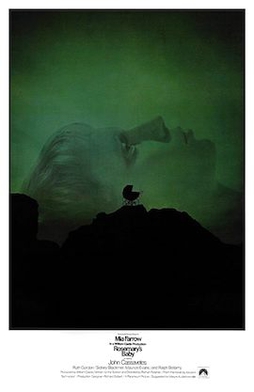
Horror Classic "Rosemary's Baby" Is Still Able to Get Under Your Skin

  Patrick Versus Roman Polanski
In this week's episode: Patrick takes on Roman Polanski's horror classic Rosemary's Baby.

For a film about a woman getting pregnant with the spawn of Satan, Rosemary's Baby is a surprisingly sane film. Besides an incredibly effectively freaky and creepy forced impregnation scene, the film doesn't really do anything hugely attention grabbing. In stead the film chooses to be much more cerebral, turning inward to the decaying psychological state of Rosemary.

The film is rather deliberately plotted playing out in three acts. In the first, the film drops hints about the unsettling things afoot that all but seem to fly over the heads of Rosemary and her husband. In the second, this horrible foulplay afoot begins to have consequences for Rosemary. Finally, she wises up to the craziness around her and attempts to take matters into her own hands.

There's some wacky stuff in there about satanic cults and black magic, but it largely takes a back seat to the ever growing conflicted state of Rosemary. The demon baby is almost besides the point. Rosemary never really appears pregnant, something the script attributes to the complications of having the son of Satan en utero. It's psychological horror placed in the middle of a supernatural horror film that doesn't even really play out on screen.

But the film becomes pretty exciting as a sense of unease begins to pervade the film more and more. Honestly that's likely a much more interesting and entertaining film than one that played up the Satan baby aspect.

Stray Thoughts:

-The film starts out slow but it totally becomes worth it once we get to the Satan sex scene.
-Speaking of the Satan sex scene: it's the best thing in the film. This is some pitchperfect direction from Roman Polanski.
-Also, it's a rape scene, a fact the the film glosses over a little too quickly. 
-No reveal of the demon baby, which I think was the right way to go. No way that would ever live up to expectations.
-How does it not become clear something is up when you're not being prescribed any sort of pills by your doctor?
-You would think Satanism is for a younger crowd, but the lesson of Rosemary's Baby is that it's an old man's game.  
-I was surprised to see that Mia Farrow's famous hair-do doesn't crop up until pretty late in the film. It was distracting me until it got cut.
-Best Product Placement Ever: Scrabble. Used effectively here for some help with some anagramming.
-I don't know; the fame the coven gives Guy feels pretty small scale. May be he didn't get any otherwordly help and is every bit as good as he claims to be.
-This movie is so very 1960's. I know: not surprising for a movie made in 1968 at the height of the stereotypically culturally remembered part of that era. But there's lots of little things you'd only find in a movie of this time, especially Rosemary's outfits.  
-That ending is so very bizarre and disturbing. On the one hand, it feels anticlimactic but on the other feels totally appropriate for what the film has just put us through. 
-And if you liked this film, check out Polanski's Repulsion which is another psychological horror movie and possibly even better than this.

Consensus: Rosemary's Baby is an engrossing, thrilling, unsettling psychological horror film guided with surehanded direction by Roman Polanski and anchored by the strong central performance of Mia Farrow.

Grade: A