Thursday, February 21, 2013

"La Strada" - Film Review

La Strada exists in that feverish place between reality and surrealism. It’s an Italian Neorealist film by writer-director Federico Fellini, but, though it tells a very grounded, very realistic story, there’s a level of lyricism to it that makes it almost poetic at times.

“La Strada” translates from Italian to “The Road”, the location we spend the majority of the film on. The story takes us to one town, seashore, and circus after another, and observes the lives of the two protagonists, brute Zampano (Anthony Quinn) and good hearted Gelsomina (Giulietta Masina), and the people they come in contact with.  

Desperate and impoverished, Gelsomina’s mother sells her into the employ of Zampano. Zampano is a strongman who goes around performing feats of strength for people he meets along the way. 

Gelsomina cares for Zampano, may be even loves him, but Zampano is no good for anyone. He’s a drunken lout who hits on other women and ignores Gelsomina’s kindness. 

Even after raping and beating her, Gelsomina can’t shake her affection for him. “If I don’t stay with him, who will?” she asks herself. 

We want her to escape this terrible situation she’s in, but every time she’s given an out, she just won’t take it. And it’s heartbreaking. 

Gelsomina, in the hands of Masina, is adorably wide-eyed and sincere. When she first leaves home, she’s just happy that she’s going to finally get to see other parts of the world. 

When that unequaled, exuberant smile begins to fade… well, a little bit of hope starts to dissipate from the world with it.

Nino Rota’s score is wistful yet melancholy. The tune feels like carnival theme, which is oddly fitting, both for the film’s ties to the circus as well as Gelsomina’s childlike nature.  

The film lends a level of compassion and sympathy in its portrayal of the people that inhabit it. Even Zampano is allowed to be more than a one note character, eventually finding redemption.

Beautifully shot, the simple tale is filled with vignettes that are funny, moving, and sad.

This is one of Federico Fellini's best early works that looks forward to his more fantastical later films; it's also a great example of Italian Neorealism.  

Grade: A-

Wednesday, February 20, 2013

New Girl - "Parking Spot" - Review

New Girl is a show that works as well as it does because its characters are always consistent. The writers have these characters down to a peg, and every line and interaction feels true to what these characters would actually do and say.

It’s this attention to character detail that turns characters from joke delivery machines to individuals we want to follow on a weekly basis. 

The chase to get to the parking spot is a funny scene, but it works as well as it does because it plays off what we already know about these characters. Jess stopping to pick up trash is an amusing moment, but it’s also totally in character, and those little character beats elevate New Girl from just another show about twenty-somethings to one of television’s best ensemble comedies. 

The interactions between Nick, Schmidt, and Jess as they confront the situation of who gets the great, open parking space (and eventually the kiss-shaped elephant in the room, or “rum” as Schmidt would pronounce it) is filled with nicely observed character moments that are at once very funny and yet all the funnier for how specific the jokes are to these characters. 

Take the parking spot sit-in scene for example. Schmidt pees himself, Jess brings hard candy, and Nick essentially eats garbage. Those three actions in of themselves aren’t funny; in fact, if you told me that some show was doing these things to get laughs, I probably wouldn’t watch it. But in the context of these characters, it works and it’s funny. 

The integration of the ongoing tension between Nick and Jess into the main storyline also works really well. Rather than turning this into its own plot that would probably start to get predictable and distracting, the writers find ways for it to play off of the current antics. Jess “flirting” with Nick by wearing his hoodie and talking for what passes as sexy for Jess advances both storylines while remaining hilarious and in-character.

This cast features some great performers and the writers utilize them well to tell meaningful, endearing, entertaining stories where I never question a character's actions or decisions but look forward to seeing what those might be.

Stray Observations:

-The opening toothbrushing scene also worked really well. I particularly liked the way both Nick and Jess kept saying “Sucked face”.
-Schmidt was scrubbing out the backside of a dumpster when he discovered the parking spot.
-Schmidt asks Nick rhetorically what the Constitution says to do: “Don’t share stuff”
-The roommates play their particular trump card. Jess: female. Winston: race. Nick: lazy drunk. Schmidt: found the spot first.
-“Justice may be a lady, but Victory has a dick”
-Coach gets mentioned when Schmidt discusses the “Nail Oath”.
-Winston doesn’t have money on him and really wants to get laid: “I am in desperate need of condom,” he yells to the store’s other customers.
-“What do you think, mono is just some sort of joke?”
-“If I had kissed Winston, you’d be the first person I told”
-Jess tries to purple nurple Schmidt and can’t find his nipples … Alrighty then?
-Winston in his desperate search for a condom goes to Cece, who is the middle of trying to fix her relationship with the Indian “chemical engineer” Shivrang (Satya Bhabha) her mom's set her up with.
- “Did you just pee inside yourself?”
-“Know what drives men? Sex and competition. It’s why the U.N. was created. It’s why women aren’t allowed on pirate ships”
-“You nailed my mouth. And you nailed it good”
-Schmidt kisses Jess to defuse tensions … and it so does not work. They left this whole story a little too unfinished. It needed about a minute or two more to resolve itself before Winston barged in.  
-“You are literally sitting in a pile of your own piss”
-“Is everyone having sex but me?” - Mainly for Lamorne Morris' delivery

Grade: A

What's in a Grade?: On the Difficulty of Assigning Grades and My Process

I’ve actually found the back-half of the 8th season of How I Met Your Mother to be much better than the first half of the season. But everywhere I’ve turned I’ve seen people tearing to shreds episodes that I may not have found to be the show’s finest work, but also didn’t perceive as the worst offenders either.

Perhaps I should grade the series more harshly, but since HIMYM has already so significantly disappointed in the past, I go light with the critical heat when the series may be middling but isn’t glaringly awful. 

A show has to go severely off course and lose all sense of self in order for me to actively despise it, which is why The Office is privy to my most damning reviews, whereas HIMYM gets off more easily.

But then again, the grades I assign are essentially arbitrary. I’m sitting on a cloud of judgment handing down qualitative markers that, when it comes down to it, don’t mean crap. 

I’ve never felt comfortable assigning grades, even when I was doing it early on (and perhaps more so then because I had a worse grip on it). It comes down to a gut feeling and my opinion is wont to change. Plus grades are just so completely loaded in the first place.  

I choose to give out grades to challenge myself and to add another facet to the review to make it more interesting. I could do it in a non-letter grade format, but the letter grade format ultimately feels like it’s the most challenging method to dole out grades with, and hence why I chose it. With numbers and stars you can split hairs more easily. 

My general approach to grades is this: If it’s anything below a B- it’s probably pretty bad. If it’s a C+, it may not be the worst thing in the world, but the film/episode has significant enough problems that any of its noteworthy qualities (if any) are mostly overshadowed. Anything below a C- is highly unseemly and deeply disappointing. It doesn’t have to be poorly made; it can be a high quality production that’s purposefully mediocre. And, well, hopefully I never watch anything in my free time that gets the dreaded F.  

A’s are exceptional and should be given out sparingly. I know I’ve given a Pandora’s Box’s worth of A’s out lately to the films I’ve watched, but that’s because I’m purposefully watching films I know to be/have heard to be good. Even for these films though I’ve been tough on a couple of them that others would say I judged too harshly or didn’t understand (I’m thinking: Eraserhead, Re-Animator, Last Year in Marianbad. All of which I actually softened the blow of my review for.)

Generally speaking, a work should aim to land somewhere between an A and a B+. The B+ is often times more niche, more curio, more cultish, and/or falls short here or there, but is still usually brilliant. B+’s for me tend to be movies I deeply enjoyed but aren’t as artistically significant or holistically masterful as A’s and A-‘s. 

The line between grade to grade is string thin. While a work may be obviously in the A-range or B-range or C-range, the distinction between one grade and another is just what feels right. 

I’m talking about art, and art is subjective.   

"Tokyo Story" - Film Review

What elevates Tokyo Story above the typical melodrama is how honestly and accurately (and sometimes profoundly) it captures family dynamics and intergenerational conflicts. The film articulates itself with an incredible amount of emotional nuance, complexity, and clarity.

Shukichi and Tomi Hirayama (Chishu Ryu and Chieko Higashiyama) are a  retired couple living with their youngest, unmarried daughter Kyoko (Kyoko Kagawa) in the countryside of southwest Japan in the small town of Onomichi. They decide to visit their children who have settled down in Tokyo. 

They arrive to find their son Koichi (So Yamamura) and daughter Shige (Haruko Sugimura) too busy with family and work to actually entertain them or have next to anything to do with them. The visit almost feels like an afterthought, and the parents just feel like they’re in the way. 

The only person who actually takes the time to show them around the city isn’t even technically family, but rather their widowed daughter-in-law, Noriko (Setsuko Hara), who does it out of a sense of lonliness and obligation. 

Eventually Koichi and Shige decide that it’s best to send their parents to a hot spring spa at Atami, than to try to deal with them. It’s a poorly thought out plan though; the hotel is overcrowded with young, noisy people who stay up for all hours and disrupt their sleep.

By the reunion’s end, the children are annoyed and bothered by their parents interfering with their everyday lives, and the parents are disappointed by what their children have grown up to be.

As the aging couple returns home, Tomi falls ill and the children rush back to be with her, at once feeling terrible about their treatment of their parents and yet never truly grasping the ramifications of their actions. 

Director Yasujirō OzuIt’s filmic style was known for a lack of camera movement, letting shots and content within speak for themselves. The film moves with a deliberate pace, taking its time with somber simplicity to depict small but meaningful moments. A keen, well-observed sense of detail turns these conflicts and misunderstandings between the parents and children into something at times painfully real. Each of the characters are well-drawn and their relationships are nicely mapped out to the point where every interaction speaks of whole unstated histories. 

It’s at once simple and specific, and yet beautifully complex and universal. As a meditation on aging, a sincere portrayal of intergenerational and family conflicts, and a moving drama, Tokyo Story delivers in strides. 

Grade: A

Tuesday, February 19, 2013

"His Girl Friday" - Film Review

Charles Leder’s script for His Girl Friday (based on the play “The Front Page” by Ben Hecht and Charles MacArthur) has dialogue that feels like it’s meant to be recited. It’s the kind of dialogue that you want to see great actors speak at a rapid-fire pace, as you try to keep up with all the double entendres, play on words, and general witticisms.

Walter Burns (Carry Grant) and Hildy Johnson (Rosalind Russel) are quarreling exes who trade jabs and barbs at one another with an ease that’s astounding. Hildy is engaged to and plans to get married to Bruce Baldwin (Ralph Bellamy), but Walter will let nothing of the sort happen: he plans to win her back, making her realize she doesn’t want to give up newspaper writing. 

He sucks her into writing a story about a man accused of murdering a cop, and, before either one knows it, the story is snowballing more and more until neither can think of anything else but making sure the paper has an exclusive scoop on the story. 

His Girl Friday is a classic example of screwball comedy. Screwball comedies peaked in the 1940's, and featured farcical situations, fast paced repartee, mismatched pairings, and plots about relationships and marriage. The genre was used by studios to get away with risqué elements under the Hays Code. Though the genre has mostly died out, its elements still remain alive and well today in many comedic and romantic movies.  

Russel and Grant give some fantastic performances, and it remains as hilarious today as it was over seventy years ago. 

Grade: A-

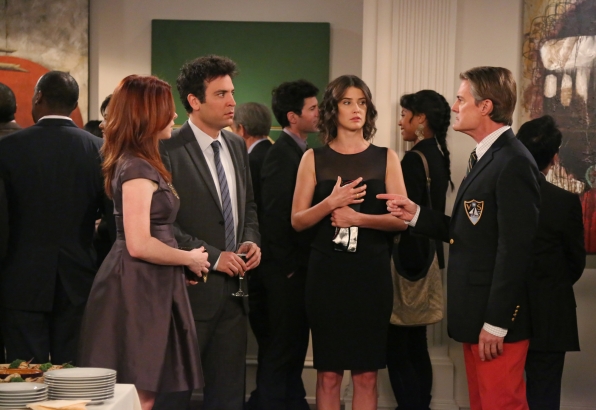
How I Met Your Mother - "Ashtray" - Review

Initially “Ashtray” is a massively contrived episode where the jokes aren’t landing and the concept feels incredibly pointless. I’d rather not remember the times of the Zoe era, and I never found the jokes related to the Captain particularly funny.

And then something unexpected happens about a third of the way through the episode, the series starts playing around with structure and perspective to make some hilarious and heartwarming moments. 

This is the type of temporal jumping that the show used to do so well but hasn’t pulled off too well lately.

But it worked where it hadn’t often in recent seasons because it didn't feel like it was just going through the motions. The series often seems to do these just because it's become expected of them, rather than doing it for a legitimate and meaningful reason. In this episode we actually learn new things each time we popped back to the story being told; not only that, but the story, which on the surface didn’t feel pertinent, eventually lead to a great emotional moment (but more on that later). 

It managed this by retconning Ted and Robin’s description of their night with the Captain (Ted was high, and Robin drunk). When we see Ted say what he believed to be his inner monologue out loud the second time around, it played off what we already knew to land a rather amusing joke. The third retelling found Colbie Smulders nailing drunken Robin’s lines such as “Art consultant? What’s that?” A line made all the funnier for how we had now seen it used in three very different contexts. 

This was some well-structured and well-executed joke telling. It worked that much more for the touching moment where Lily tells Marshall that the Captain knocking her choice to be “just a kindergarden teacher” has seriously shaken her. Lily is a character the series has lost sight of in recent seasons, and it’s a shame because she was one of the best emotional foundations early in the show’s run (remember when she up and went to San Francisco?). Early episodes centered around Lily such as “Best Prom Ever” and “How Lily Stole Christmas” still hold some of the best earned emotional moments. So as a fan of Lily, I was pleased to see her get some solid storytime, and I was equally pleased to see her get an art consultant gig working for the Captain.

Stray Observations:

-Barney keeps trying to insert himself into the story even though he wasn’t there… until oddly enough he was. The jokes about him pretending he was there started to get grating, but it paid off in that “Archduke” joke.
-Who did the chapstick gag better: Robin or the Captain?
-Ted’s scream whenever he saw the Captain was priceless.
-“Nothing happened” “That just means hand stuff”
-Robin falls asleep on top of the Captain after he pathetic attempts to hit on him.
-The return of “Aldrin Justice”! I can’t remember the last time that’s been used.
-According to Barney, Robin’s life passion is “pleasing me sexually”

Grade: B+

What did everyone else think?

The Walking Dead - "Home" - Review

Structurally “Home” is a far better episode than last week’s “The Suicide King”. It doesn't feel like a mixed bag of good but incohesive pieces that don't add up to something greater.

For a time, it even feels like the episode is going to continue  the slower pace the backhalf of the season seemed intent on taking. This wouldn’t have made the episode bad; in fact, much of the problems the series had last season with its quieter, slower moments have been fixed. There’s better characterization and the individual moments feel purposeful rather than stalling tactics.

However, if anything is going to stick in your mind, it’s that final sequence which is another breathtakingly well-executed, intense setpiece that is perhaps the best managed to date.

Everything leading up to that moment is mostly pretty good, although some of it we could have done without, and establishes “Home” as the calm before the storm (with the storm coming sooner than anticipated). I should have seen the Governor’s arrival coming when he mysteriously went awol, but we moved away from Woodbury long enough that it completely slipped my mind. That’s a moment in the hands of less confident writers would be built up to and placed in a later episode, possibly even the finale. Glenn scouring over a chalk map and nervously assessing a defensive strategy against the Governor suggested that the attack would take place much later down the road. But it’s to the show's advantage: constant threats on The Walking Dead are actually a good thing, not a mindless one. In a world with zombies, there always needs to be threats, zombie or non-zombie, otherwise there’s nothing to drive the plot.

Which is where the problems with the episode primarily come in: it's the slowest episode this season. The character-work is necessary, but the noticeably dialed down pace could be distracting or not all that enthralling. Though the end sequence with its return to breakneck pace is arguably the best moment in the episode, the prior content isn't bad.

Before the firefight, we do find ourselves getting some interesting character exploration. Rick’s breakdown has me questioning what’s being done with him (the visions of Shane and Laurie feel like something out of a completely different show). But Andrew Lincoln plays this great, and he’s always at his best when Rick is at his most emotionally vulnerable.

Glenn, without Darryl around and Rick on his crazy bender, is nominally in charge, and in the wake of the Governor’s sexual assault on Maggie, he’s starting to go a bit crazy. He’s so insistent on vengeance upon Woodbury and he’s acting so insensitively about Maggie’s psychological state that it’s starting to drive a wedge between him and Maggie. 

Darryl is questioning his decision to go backwoods trekking with Merle. It’s a transition that feels like it happens to quickly (probably to get him back in time for the fight at the prison), but it’s a rewarding, believable development that shows emotional shades from Darryl we don’t see often enough. The other zombie sequence of the episode is also a great scene, not just because it’s a well-staged, exciting scene, but also because it purposefully moves forward Darryl’s character arc. When Darryl sees a group of people being attacked by walkers, his immediate thought is to help them, while Merle insists they ignore them. When Merle prepares to rob them, post-zombies, Darryl can’t stand it anymore; he pulls the crossbow on Merle and lets the people leave.

By episodes end, we’ve been reminded why we’re meant to care about these characters in the first place. It isn’t just because zombies or other threats could kill them at any moment; it’s because we’d rather not see them suffer such a fate even though that possibility totally exists.

This episode felt much less shakier than last week's episode, and more cohesive in terms of plotting and theme even if it's primarily too slow for its own good. 

Stray Observations:

-The ethereal music that played during Rick’s scenes made them come off as if they took place in a heightened reality.
-The Governor makes Andrea leader, but it’s all for show, he doesn’t trust her and asks Milton to keep tabs on her.
-Wait, when did Michonne become part of the group?
-Axel gets character development just in time for him to die. It’s shame because I liked the character, and Melissa McBride was pretty great in these scenes as Carole, a character who is starting to grow on me.
-Darryl and Merle planned to rob the camp blind, but never got the chance. Here’s the thing: Darryl reminds me of Sayid from Lost. Sayid was told his whole life that he wasn’t a good person; that he’d always be a killer, and he began to accept that as his lot in life even though he never truly believed in it. Similarly, Darryl has been led to believe that he’s a bad person; he had a tough, shitty life; one in which the best person in it was racist, sexist Merle. Finally, he’s found respect and he’s found a sense of place he never had before. But he’s torn. He can’t accept that anyone would see him as good because he’s still troubled by his past.
-A gunfight where no one gets hurt or injured except for Axel and a no named fighter. This was starting to stretch plausibility.
- That final sequence may have initially been abrupt but once it got going, damn if it wasn’t intense and engrossing. 

Grade: B