Wednesday, January 30, 2013

"The Player" - Film Review

 The Player starts off with a tracking shot, a long take that’s incredibly tricky to pull off. The scene clocks in at 7 minutes and 47 seconds without a single cut; it’s an impressive and memorable sequence that establishes what the film is all about: a satirical hyper-meta film about movies and the film industry.

Griffin Mill (Tim Robbins) is a writer’s executive for a major unnamed film studio. His job is endangered by up and coming Larry Levy (Peter Gallagher). If this weren’t enough, David Kahane (Vincent D’Onofrio), a screenwriter whose story he dismissed, keeps sending him postcards threatening to kill him. He goes to confront Kahane to get him to stop, but this only causes things in Mill’s life to spiral even further.  

The film has a twisted, sardonic, self-aware sense of humor, undercutting conventions or lovingly buying into them to dark or cynical effect. The film is thoroughly immersed in references to cinema and it uses these references to pay homage and to make commentaries on its own structure. When a dead screenwriter begins to figuratively haunt protagonist Mill from the dead, a poster for the film Laura is framed soon after in the background of one of the shots. Laura is an Alfred Hitchcock film about a dead wife’s lingering presence causing trouble for all the people still alive from her life. When Kahane harasses him, he calls into the office with the name of Sunset Boulevard’s doomed protagonist Joe Gillis to tease the imminent demise he seeks to bring upon Mill. Besides these more subtle references, there’s an abundance of cameos from notable Hollywood actors too long to count; a fair number of whom lightly mock their established public personas (including an amusing appearance of Julia Roberts as herself in a fake film and Malcolm MacDowell angrily scowling at Mill for no seeming reason other than star based egotism). 

Director Altman had never been a fan of the Hollywood studios. He had made politically bent films in the past (i.e. M*A*S*H* and Nashville) and purposefully went out of his way to challenge his audience’s viewing experience (he would record actors talking over eachother to make it more naturalistic as well as more difficult to follow). Here in The Player, the film studios are stripped bare before us, depicted as shallow, callous, selfish, greedy entities who have no interest in making “films as art” (as Mill so eagerly, falsely lies to us about in a speech at one point). 

The film has a Jackson Pollock like energy to it, and like many of Robert Altman’s previous films it features a collage-like quality of strung together vignettes and smaller incidences that carry a larger narrative. Altman establishes peculiar personalities and interesting scenarios, but he lets his stories meander and wander, emphasizing character work more often than plot.

The Player deftly handles its satire (as well as its homages and meta commentary) whilst managing to tell an intriguing story of its own. It’s populated with extensive, talented casts; none of whom, besides a sweaty, crazy-eyed Tim Robbins, dominates the film but instead are given small, well-observed scenes. This is a very funny film that uses satire to imaginative, smart, and hilarious effect. 

Grade: A-

Tuesday, January 29, 2013

"The Lady Vanishes" - Film Review

Alfred Hitchcock was always very good at balancing widespread Hollywood appeal and artistic auterustic stylishness. This finesse for balancing an entertaining story with interesting artistic flourishes is apparent in The Lady Vanishes. The film was one of the last films Hitchcock made in England where he first gained notoriety. Despite being one of his earliest films, it’s also one of his most competent and efficient films, as well as one of his most entertaining.

Though the film starts out slow and unfocused, it allows itself to take the time to establish the characters so that when they eventually get onto the train, we have a sense of who everyone is and a reason to care about them. Once on the train, the action really starts to pick up. Iris Henderson (Margaret Lockwood) befriends elderly Miss Froy (Dame May Whitty) after getting hit on the head with a fallen plant holder. When she falls asleep and finds kindly Miss Froy missing she begins to inquire, but everyone else seems to have no recollection of Miss Froy ever having been on the train. As she investigates the incident, the more baffling and conspiratorial the case of Miss Froy’s disappearance turns out to be. 

The film excels at slowly escalating events; gradually earning it’s more audacious and exciting turn of events as it goes along. It remains indelibly exciting in spite of the seventy plus years that have passed since its initial release; the film deliberately paces itself to effectively draw us in more and more as the film progresses. 

The film also manages to be surprising comical and humorous. Charters and Caldicott (Basil Radford and Naunton Wayne) in particular provide some of the film’s most memorable, funniest lines as cricket enthusiasts rushing back to England to see a match. There’s also an incredibly memorable sight gag in one of the fight sequences involving a height deficient Iris having trouble taking away a knife from her attacker. 

Some of the most distinctive shots of the film are the stylish touches that Hitchcock added, but rather than being empty and pointless they’re used to progress the film. Seeing “FROY” written in the mist clinging to the window as the train passes through a tunnel is both a very cool visual and a great way to further Iris’s investment in her suspicion. The incredible shot of Gilbert (Michael Redgrave) climbing on the outside of the train as another train passes by is wonderfully exciting and a plausible challenge (especially since that's something that a stunt person would have to actually have done) for Gilbert to confront while attempting to get into the neighboring passenger car. 

Hitchcock always had a tremendous gift for getting great character work out of his actors. The chemistry between Lockwood and Redgrave is incredibly palpable and sells much of the film. and even minor, fleeting characters are given some nice screentime including Cecil Parker as Mr. Todhunter and Linden Travers as “Mrs.” Todhunter.

Though it’s almost too obvious that Iris and Gilbert will end up together, and that Miss Froy will show up again at some point, and the “good guys” will triumph over the “bad guys” up to no good on the train. And though a lot of these characters are lovable but clear stock characters, there is something to be said about being the first to do something and to do it well. As critic Ryan McGee so accurately noted, “Another trope? Sure. But tropes often last because of their continual applicability, not simply because they are an easy go-to for a show looking for a plot.” Though McGee was referring to television, this is also true of films; when put in the right, capable hands of talented individuals, it doesn’t matter that we’ve seen some of this before. When it’s this entertaining, and this exciting, and this engrossing, and at times, deeply, purely fun, why would we want to get nitpicky about the structure? Not only that, but in 1938, the film industry was still on a learning curve, and Hitchcock was an innovative, smart guy that took advantage of the medium to make interesting, engaging stories and he was the first to make them quite like he did.  

Grade: A

Monday, January 28, 2013

Bob's Burgers - "Broadcast Wagstaff School News" - Review

Damn if Bob’s Burgers isn’t having one of animated television’s best seasons, and one of this tv season's best and most consistent seasons of television. The series appeared to have peaked in “Mother Daughter Laser Razor”, but last night’s episode “Broadcast Wagstaff School News” is wonderfully funny and features some of the series best gags to date. It may not be nearly as heartwarming and touching as “Mother Daughter Laser Razor” and it may not be as maddeningly absurd and laser focused as “An Indecent Thanksgiving Proposal”, but it still demonstrates much of the idiosyncratic, offbeat humor and character driven comedy that makes Bob’s Burger the endearing, quirky comedy that it is.

The show has always been brilliant at taking something that at face value is a dark, weird Family Guy-esque piece of humor that in the wrong hands could be childlike and forgettable. In this case the show tackles scatological humor and finds a story worth telling while also making joke after joke about poop. It’s a good thing that at the heart of this story is Tina, who’s so utterly sincere that the idea of her investigating a serial pooper is totally amusing. 

The formatting of the school news show, and the ideas for some of their stories for the news program allows for a faster pace and rate of jokes than typical for the series. The quick establishment of Tina’s story and heading straight into the story makes for one of the most efficient episodes the series has done. The news channel also allows for the return of some of the series best supporting characters including Ollie and Andy, and  Jimmy Pesto (dancing as always).  

The highlight of the episode though is an amazing sight gag where Gene, after learning his father looked a lot like him as a kid, decides to reform himself in the exact, spot-on image of Bob (bald-spot and all). He proceeds for the rest of the episode to imitate his father with surprising, hilarious accuracy (causing even his mother to forget at times that she’s talking to her son as Bob and not Bob himself – to the chagrin of Bob). The best scene to come out of this is one where Bob and Gene have an increasingly escalating “’Bob’ Off” in their crowded bathroom.

It’s not by any stretch of the imagination this series most memorable piece of storytelling, but it is very, very funny and it’s a wonderful example of this show having the confidence to tell understated, amusing, smart stories with an ease and comfort level that many other series lack. 

Grade: A-

Girls - "Bad Friend" - Review

“It seemed like you two shouldn’t have been roommates” – Laird

Girls isn’t just about Hannah Horvath, depressingly self-centered protagonist, but rather it’s often just as much about her former roommate and nominal best friend (and equally selfish, narcissistic human being) Marnie. The last two episodes their relationship has been sidelined, which make sense since they’re no longer roommates. There was a single scene in each episode where Hannah spewed out the polite bullshit of “I’m so busy” as to why they haven’t hung out as much since their fallout last season. However, there’s more to it than these simple epitaphs holding back the two of them from continuing their bond uninhibited, and it’s not merely that Elijah and Marnie had the obligatory awkward sex scene written into the contracts of the regulars of the series. The simple fact, as the surprisingly spot-on quote from downstairs neighbor and recovered drug addict Laird notes, is that Hannah and Marnie aren’t exactly the most suitable pair of people for eachother. Their deep seeded self-interest and their naiveté about other people’s feelings and the way the world works is easily combustible when put under enough pressure (as we already saw happen last season).

This blow-up didn’t need the spark of Elijah and Marnie boning for an infinitesimal amount of time. Some action or event was going to lead to this down the road. However, no matter the cause of the blow-up, Hannah probably wouldn’t have reacted much better had she been cocaine-free when the big reveal came. She might not have headed over right away to pseudo-intellectual poser Booth Jonathan’s apartment and created an even more disastrous mess than already existed. But she would have confronted Marnie and it in all likelihood would have ended very, very badly.

This aspect of the episode intrigued me immensely, but elsewhere a fair amount felt cartoonish. The internet company “JazzHate” (its name bizarre and funny, but stretching credulity) is oddly broad and unbelievable. I totally buy into Hannah attempting to get a job with some company; I buy even more so that at best she’d only manage to scrounge up a freelancing gig. However, it begins to descend into a Dhali’s melting clock like self-aware oddness when the interviewer Jame (Not Jamie!) provides freelance suggestions, including having a threeway with people on Craig’s List, and, the one she eventually attempts, to write about her experiences trying cocaine. The strangeness of this scene isn’t from the typical observation of small character beats or the peculiar nuances of something (which the series is very good at writing), but the wholesale imagination of a company whose motto is: “This is where the magic happens” (a joke hard to describe in fullness without the visual imagery and Jame’s explanation accompanying it). However, Hannah is so desperate for a job and money that she goes to her junkie neighbor Laird (who of course until Marnie brings it up Hannah didn’t realize was a junkie but thought instead he had leprosy) and has him buy her cocaine.

Similarly, Booth Jonathan is an almost implausibly fucking weird dude who isn’t cool, but rather just deeply dickish and even possibly disturbed. If his pet project art designs have any indication (the dollhouse inspired by newspaper accounts of murder featuring the iconic Shining phrase “Redrum” would suggest Marnie is an idiot for having an interest in this guy), the guy is just a weirdo with not much real talent (WHAT IN FUCKS NAME WAS THAT BOOTH WITH THE TELEVISIONS??!!). But as Hannah notes, Marnie is perhaps a little “obsessed” with the guy. She finds (in that young twentysomething way) his art to be transcendental or “fucking genius” when it’s really just empty and pointless and makes no real meaningful statement. But as we’ve seen the past (e.g. last season's "All the Adventurous Women Do", in fact, where we first meet Booth) Marnie is very naïve, hopeless and desperate when it comes to relationships. She’s emotionally unstable and vulnerable. She’s susceptible to the charms of people confident enough (and honestly skeevey and douchey enough as well) to tell her what they want her to do and be. She became frustrated with her relationship with Charlie because Charlie was a “yes man” who didn’t challenge her or push her to be anything she didn’t want to be (and at the same time now, she truly does miss Charlie being in her life and the hole now left in his wake). So of course she has the creepiest, most awkward, most unsatisfying sex of the week with Booth (who has her describe a creepy, blank gazed China doll he has placed watching them fuck). It’s totally in-character that Marnie would do this sort of thing, but Booth reads like a walking cliché, spouting off such string thin faux intellectualism as “The early 90’s were so suburban”.

If we’re being honest, all this previous build up made the episode into the least strong of the first three episodes thus far this season. At least, that is until Hannah arrives at Booth’s apartment to yell feverishly at Marnie. That final scene feels like it put everything that came before it into sharper focus, as if everything prior was “all prologue” to the oncoming train wreck. It actually took me completely by surprise that Elijah’s coke-fueled state would push him over the edge and lead him to confess to Hannah that he slept with Marnie. It’s the type of plot development that in the hands of a lesser show they’d drag out melodramatically, hanging it like a dark plague over all the forthcoming events of the season. However, Dunham pulls the rug out from under us and provides a far more interesting and exciting direction for the series that will hopefully lead to some much needed exploration of the relationship between Hannah and Marnie.

I haven’t even gotten to the best part of this blow-up, which is the piece of dialogue which provides this episode with its title. “May be you’re not the good friend and maybe I’m not the bad friend!” Hannah accusingly sneers at Marnie and a heartbroken Marnie has no course of action but to stand there and take the piling on of crap against her. It’s all true to an extent but it’s done so tactlessly and mean spiritedly that it once against makes Hannah look like a total asshole and leads our sympathies to shift to Marnie. I have my qualms with Marnie, but when she blurts out, “Alright! I’m a bad friend,” it’s a painful and sad moment that’s coming from an incredibly damaged individual.

Drugged up Hannah leaves infuriated and unfulfilled, not even able to enjoy her coke-filled adventures from earlier in the episode, and so she wants to forget her troubles and bury them. What better way to achieve this than to hook up with some random schlub? Well, perhaps, that rando shouldn’t be your downstairs neighbor (who has a weird stalkerish obsession with you). But Hannah has never been one to shy away from doing something rather stupid and questionable, and this is actually perhaps her least eye raising action to date. In the wake of breaking up with Sandy, unhinging Adam, and falling out with Marnie, it’s not entirely surprising, but it’s hard not to cry out: “Why Hannah?!” Hannah may never learn, and her taking to heart a life lession in full would probably make this series stale and unmemorable; however, she’ll still coke up and rage out even when there’s no sensible logic to it. But then again, who needs logic when you’re in your twenties?

Stray Observations:

-“Yea, all the junkies at my place hang out by the mailbox” – Why is there not more Shoshanna?! She is the best underutilized character. We do, however, learn that she’s still with Ray and has the sort of relationship complaints next to no one cares about (Hannah, in perfect character beat, ignores Shosh and cuts her off midway to discuss her cocaine plans).
-Also: next to none Jessa, who is illegally selling wares of clothing on the street in front of her apartment.
-“I get that it takes what it takes to get through life” – Hannah feigns to know what it’s like to be a drug addict.
-“You work here… that’s depressing” – Booth may be a total weird dick, but he has a point. I also can’t stop thinking about Elijah’s beautifully spot-on description of Marnie’s work outfit from last episode: “Slutty Von Trapp”. It is burnt into my mind.
-Apparently there’s a proper dress code for doing cocaine. I never would have guessed. Elijah describes his outfit choice for Hannah: “It’s inspired by a girl I went to middle school with who fucked her uncle and dad”.
-“She’s feeling sassy…?” “No she’s sad” - Does it really matter? I’ve heard of fetishes before but …
-“I was supposed to be your last” – There’s a level of new patheticness to this whole statement. How insecure do you have to be that this holds some value for you?
-Laird wants Hannah and Elijah to take his heroin away from him. Elijah is very enthusiastic about this prospect, while Hannah is not.   

Grade: B-

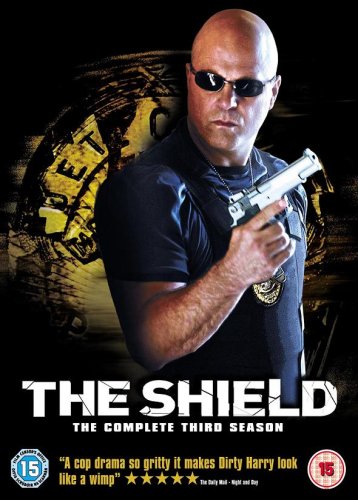
My Thought on Season 3 of "The Shield"

Spoilers on Season 3 of "The Shield" Below:

The 3rd Season of The Shield isn’t nearly as good as the previous two seasons that came before it. It’s not that it was bad (the show was still far outperforming most other tv series), but the show had become more unfocused. The stakes didn’t feel as high and a number of characters felt poorly utilized (Danny is barely given any major story time). The reason for this became clear to me at the end of episode 9’s “Slipknot”; the Strike Team really hadn’t been the Strike Team all season long. Under the watchful gaze of Claudette as their new supervisor, the Strike Team wasn’t out on the street beating up on drug dealers, prostitutes, and the like.

There were still complications as per usual; most notably the consequences of the Money Train blowing up in the Strike Team’s face, but the Strike Team didn’t feel like the ground would come out from them at any moment like in the second half of the 1st season or almost the entirety of the 2nd season. 

Much of the conflicts thrown at the Strike Team were contained, too brief, or episodic, and this led to a stop-and-start feel that undermined the season. The consequences of Tayvon and Shane’s gruesome, bloody fight and the undercover squad blew over too quick and too forgettablely.  

There remained to be some incredibly interesting character and plot decisions. Aceveda getting forcibly raped was unnerving and disturbing, and ultimately brought out a battered, damaged side out of the character seen too infrequently. The Dutch received the opportunity to show a bit of the shattered, dark psyche underneath the brilliant (albeit desensitized) investigative mind (when he kills the cat to recreate the emotional experience of a rapist, it’s not just unsettling but tinged with deep isolation and sadness). Shane was given more screentime that humanized him far more than in the past, where he could at times be too needlessly, caricaturely mean and cruel. Racial questions that had been dealt with fleetingly or as subplots garnered entire episodes that handled them more fully, including “Slipknot” and “Riceburner”.

But too much of the third season was territory far too well-trotted; Vic and Claudette being at odds was too familiar at times, as was Vic and Aceveda butting heads. When the Dutch and Vic came into conflict at the end of the season (Wagenbach got the inclination that Vic had a hand in the money train) it felt like the plausible and grounded, but unexpected character turns and plot movement that had got me invested in the series in the first place.

The Shield in some respects remained inimitably, indelibly good. But in failing to shake up its formula enough this late in its run, it began to feel like it was just going through the motions.

Saturday, January 26, 2013

"Audition" - Film Review

 Splatter films re-emerged at the turn of the 21st century, but many lacked the intelligence or craftsmanship of their forbearers (e.g. Dawn of the Dead, Eyes Without a Face, Black Sunday, and Bad Taste). These new splatter films were dubbed by detractors as “torture porn”. They excessively turned up the blood and nudity (often at the expense of the characters and character development). Some of the films noted as part of this trend, such as the Saw and Hostel franchises, literally feature torture. The newer films misunderstand the point of the buckets of blood of their predecessors. Older films used gleeful amounts of blood (on smaller budgets) not just because it was entertaining, but because it began to broach a level of uncomfortable, self-aware absurdity; the blood and violence was a commentary. The new films feature all the blood but none of the brains. The blood is a means in of itself for the latest batch of splatter horror. For the older films, there was something entertaining to be had from it for sure, but not at the cost of making an interesting, memorable, thoughtful film.

While Audition is more of a psychological horror film than a splatter movie, it does end very bloody. However, Audition builds the groundwork to justify its use of the blood and the context in which it’s used. It earns the moments where it shocks and disturbs us.

Audition is a film that’s meant to provoke; to get a reaction. The last 30 minutes are so disturbing, unsettling, and jarring that they feel like a very different film at times from what we’ve seen before it (including a dreamlike montage that’s disgusting and disconcerting). But there have been hints that this is the ultimate direction the film is leading to. The suggestions up to this point should lead us to believe that Yamazaki Asami (Eihi Shiina) is perhaps not the most stable or normal or even sane of individuals (including a particularly memorable, creepy scene where we first get to see the inside of Asami’s apartment).

Aoyama Shigeharu (Ryo Ishibashi) may be a lonely widower desperate for, and encouraged to, marry someone. But the way he goes about finding someone to marry is rather misogynistic and devious. Shigeharu, at the behest of a friend who works for a television company, fakes a tv show audition in order to "audition" young women for the “role” of his wife. Shigeharu narrows the resumes down to the top 30, but becomes fixated on Asami when he reads her essay about an injury that stopped her from performing ballet ever again. Imagining she has real emotional depth, he becomes absolutely obsessed with Asami, too blinded to pick up on the fact that sometimes emotional depth is caused by deep psychological damage and trauma.  

Shigeharu ultimately gets payback for his questionable actions. I won’t get into much detail, but boy is it fucked up. Asami may be crazy but she’s definitely been wronged in the way she’s been chosen as Shigaru’s future wife, and so on some level we root for her vengeance against the man who objectified and mislead her. The ending is a slight cop out though that ties up things a little too nicely for a film that is so thoroughly marked by deep, vivid psychologically unnerving imagery. 

Audition will disturb and unsettle you; it gets uncomfortably under your skin, and it doesn’t hold back its horror punches that it builds up wonderfully to and then forces you to stew in. There are better horror movies, but there aren’t many quite like director Takashi Miike’s Audition. 

Grade: B+

Archer - "The Wind Cries Mary" - Review

Jokes at the expense of gay characters for being gay is overplayed and often in poor taste. Archer manages to get away with it though because the character that’s the target of these jokes and jabs is paragon of masculinity Sterling Archer.

The high concept of the Bob’s Burger crossover has subsided, and though we don’t get anything nearly as interesting or memorable, this episode is far more focused, standard fare for an Archer outing that gets in more jokes per minute than the previous episode (which became so hung up on how to justify the Bob’s Burger crossover that everything was overshadowed by it).

While a good deal of the supporting players aren’t nearly as involved as I would have liked (there’s  not a whole lot of Cheryl, Pam, and Ray – and besides a bizarre running gag involving radioactive ants, there’s not much Krieger ). But that’s okay because this half-hour is all about Sterling and chipping away at his drunken, womanizing exterior. Archer is forced to accept more and more that his good friend Lucas Troy (an always welcome Timothy Olyphant) was probably gay and, more importantly, probably gay for him. This is territory well-worth exploring and the series does it in typically absurd, funny fashion.  

Grade: A-